
Does Pregnenolone Increase Testosterone? The Key Data
This post contains affiliate links. As an Amazon Associate, we earn from qualifying purchases.
Taking pregnenolone does not reliably increase testosterone levels in men, according to the best available human study. A single 50 mg dose did not significantly alter standard hormonal markers (testosterone/epitestosterone or testosterone/LH ratios). The body can convert it to testosterone, but this pathway is slow and inefficient in human testes, and boosting levels through supplementation is not a guaranteed outcome for everyone.
That finding comes from a 2005 study in the journal Steroids, which is the most direct human evidence we have. It changes the conversation from theoretical biochemistry to measurable results, and a key question it addresses is: does pregnenolone increase testosterone?
What follows is a breakdown of that study, the real-world reports from people who’ve tried it, and where pregnenolone might still fit into a hormonal health strategy, along with what to try first.
Key Takeaways
- A 50 mg oral dose of pregnenolone did not significantly change testosterone/epitestosterone or testosterone/LH ratios in a human study, showing it’s not a reliable direct booster.
- Detection of pregnenolone use requires specialized carbon isotope testing, not standard urine tests, which explains why some athletes have historically used it.
- Real-world user reports often describe improved mood and cognitive function rather than measurable testosterone increases, aligning with its role as a neurosteroid.
- Supporting your body’s natural production of pregnenolone through stress management, sleep, and foundational nutrients like zinc and vitamin D is a more reliable starting point than supplementation.
- If you choose to supplement, start with a low dose and track subjective effects like mental clarity and stress response before expecting hormonal changes.
The 2005 Human Study: The Key Data
The only study that directly answers the question in humans is the place to begin. Researchers gave five men a single 50 mg oral dose of pregnenolone. They then tracked everything, standard anti-doping markers and specialized metabolic fingerprints.
The results were clear. The testosterone/epitestosterone (T/E) ratio didn’t budge. The testosterone/luteinizing hormone (T/LH) ratio stayed flat. These are the urinary markers that would spike if testosterone synthesis had been meaningfully stimulated, which directly informs the does pregnenolone increase testosterone question. They didn’t.
The 2005 Steroids study concluded that “ingestion of PREG has no significant effects on the testosterone/epitestosterone (T/E) and testosterone/luteinizing hormone (T/LH) ratios.” The detectable signature of its use was a difference in carbon isotopic values (δ13C-values) of 3.0‰ or more between androstenol and pregnanediol, not an elevation in androgen markers.
So how did they know the men actually took it? They used carbon isotope ratio mass spectrometry (IRMS), a precise method that can spot synthetic steroid signatures. They found a telltale difference in the carbon isotopes between two metabolites, androstenol and pregnanediol.
The takeaway is twofold. First, a moderate dose didn’t move the needle on standard testosterone markers. Second, the fact that you need an IRMS machine to detect it explains why pregnenolone has been on the radar in sports where standard tests are used.
Why the Theory and the Reality Diverge
The biochemistry chart is seductive. Pregnenolone sits at the top of the steroidogenesis cascade. It’s the precursor to progesterone, DHEA, cortisol, and yes, testosterone. The logic seems flawless: more raw material equals more finished product.
The problem is the human testis isn’t a simple factory line. Research into testicular tissue metabolism shows the conversion from pregnenolone to testosterone in humans is slow and proceeds almost exclusively through the “delta-5” pathway (via DHEA), which is central to the does pregnenolone increase testosterone inquiry. It’s not the primary or preferred route. The enzyme that kicks off this conversion, Δ5-3β-hydroxysteroid dehydrogenase, has a host of other steroids competing for its attention.
Think of it like traffic. Adding more cars (pregnenolone) to a highway that’s already congested and has multiple off-ramps (pathways to other hormones like cortisol and progesterone) doesn’t guarantee more cars will reach one specific destination (testosterone). Some will, but it’s inefficient and unpredictable.
| Biochemical Theory | Human Reality (Per Study Data) |
|---|---|
| As the central precursor, more pregnenolone should lead to more testosterone. | A 50 mg oral dose did not increase standard testosterone markers (T/E, T/LH). |
| The pathway is direct and efficient. | Conversion in human testes is slow and faces competitive inhibition from other steroids. |
| Supplementation is a logical way to boost levels. | The body tightly regulates steroidogenesis; adding precursor doesn’t override this regulation for a single endpoint. |
What Real Users Report (And What It Means)
If the clinical study is modest, why do people keep buying pregnenolone supplements? The answer is in the anecdotes, and they point somewhere else.
Scour any long-term user thread on forums, and a pattern emerges. Few people report dramatic changes in muscle mass or libido directly tied to pregnenolone. The consistent themes are mental.
- “Brain fog lifted.”
- “My mood stabilized.”
- “I felt a sense of calm focus.”
These reports aren’t about testosterone; they’re about neurosteroid function. Pregnenolone is a potent neurosteroid in its own right, influencing GABA and NMDA receptors in the brain. This is its strongest, most consistent area of effect in real-world use. Someone taking it for “testosterone” might feel better because they’re less stressed and sleeping more soundly, outcomes that themselves support healthier hormone levels.
Where this goes sideways: Expecting a testosterone booster and getting a subtle cognitive enhancer. The disappointment leads to higher dosing or stacking with other products, chasing an effect the compound isn’t built to deliver.
Some users report trying low-dose pregnenolone protocols to track subjective effects like mood and sleep. The bottle promised hormonal support. What I got was a slight edge in morning mental clarity, useful, but not what I’d call a hormonal shift. No noticeable change in drive, recovery, or anything else I’d link to testosterone. It felt more like a very mild nootropic.
Pregnenolone vs. Other Common Supplements
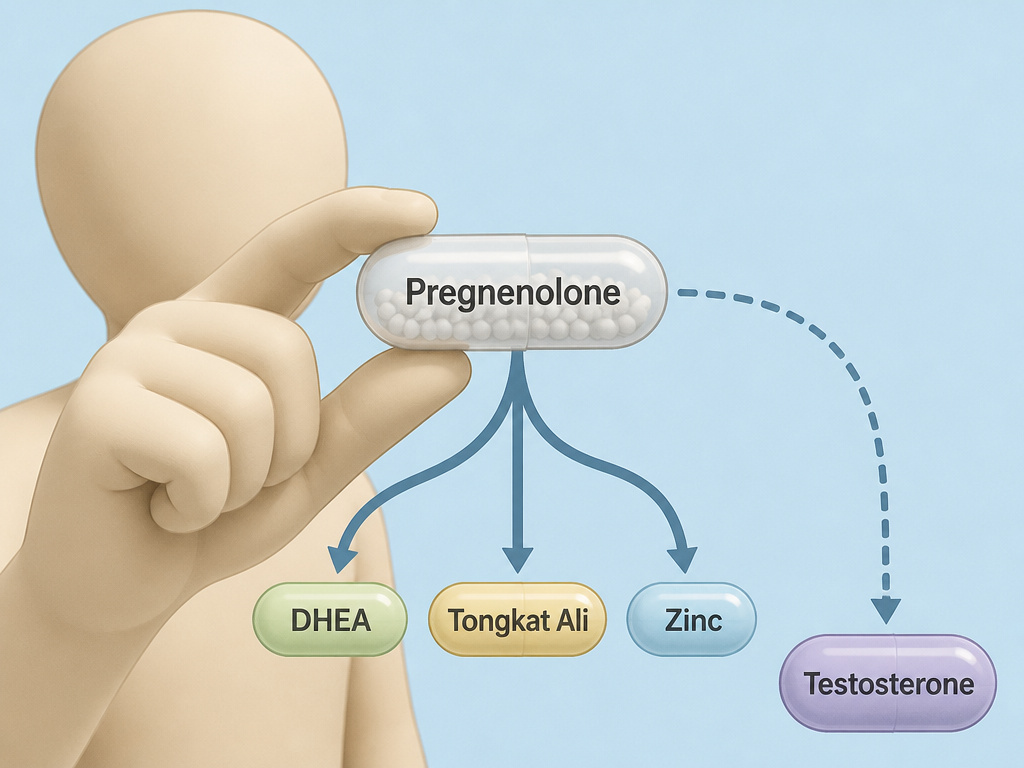
When you’re looking at hormonal support, pregnenolone is one option in a crowded field. It’s helpful to see how it stacks up against other common players based on evidence and typical use.
- Pregnenolone: Precursor hormone. Best evidence for neurosteroid (cognitive/mood) effects. Minimal direct evidence for boosting testosterone in humans.
- DHEA: Direct downstream metabolite of pregnenolone. More human studies on its effect on testosterone, especially in older or deficient populations. The conversion of DHEA to testosterone is more direct, but results still vary widely.
- Tongkat Ali (Eurycoma longifolia): Herb. Several human studies show it can increase total testosterone, particularly in stressed or marginally low individuals. Its mechanism is different, it may reduce cortisol and increase luteinizing hormone.
- Zinc: Essential mineral. A deficiency will crush testosterone production. Correcting a deficiency can restore levels dramatically. This is a nutrient repletion effect, not a pharmacological boost.
For most people, the hierarchy of action looks like this:
- Fix deficiencies (Zinc, Vitamin D, Magnesium).
- Consider herbal supports with broader evidence (like Tongkat Ali for stress-related low T).
- Look at direct precursors (DHEA) if levels are measured and low.
- Pregnenolone sits here, as a more foundational precursor, best considered for its neurosteroid benefits with hormonal effects as a secondary, uncertain possibility.
If you’re researching DHEA supplements, understand you’re moving one step closer to testosterone in the pathway, but the “if it works for you” rule still applies strongly.
How to Approach Pregnenolone Safely
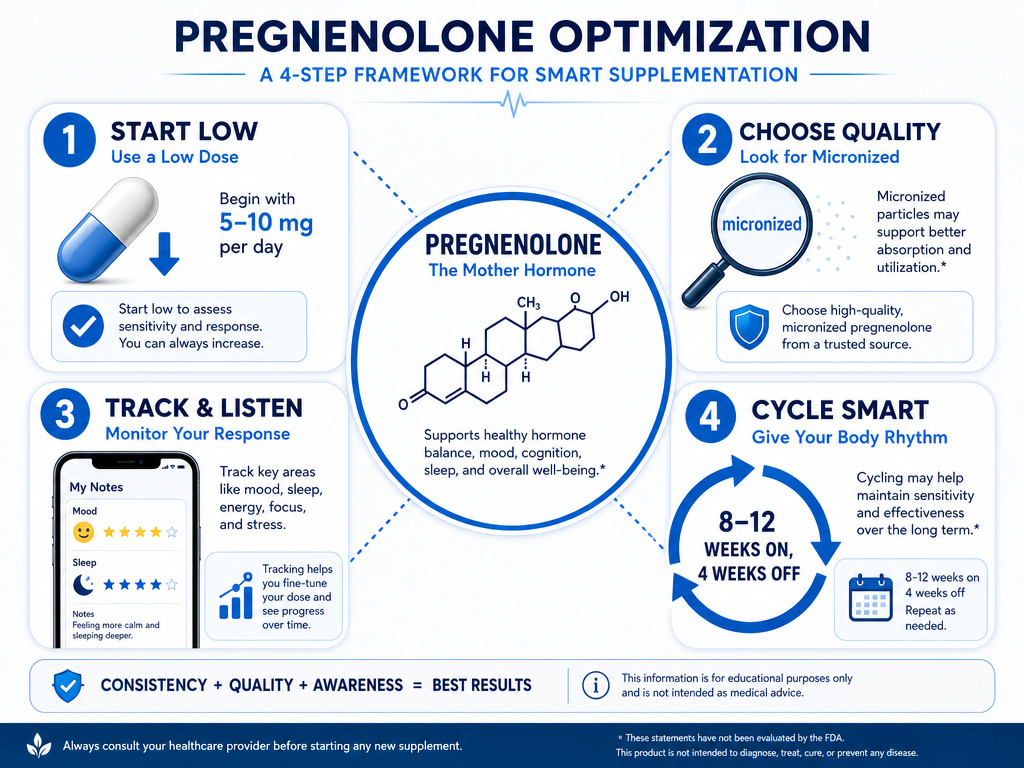
To be blunt. Throwing a precursor hormone at a complex system without data is a guess. If you’re interested in pregnenolone after all this, here’s a practical, safety-first approach.
First, Don’t Start Here.
Your first move should never be buying a pregnenolone supplement. It should be a blood test. Check your total testosterone, free testosterone, LH, and FSH. This tells you if your body is trying to make testosterone (LH/FSH high) or if it’s just not getting the signal. Also, test vitamin D and zinc status. Correcting a low vitamin D level often does more than any single supplement.
If You Proceed: Dose, Form, and Cycling
- Start Very Low: A low daily dose is a common starting point for cognitive support, which is far below the 50 mg used in the study. The goal is to assess tolerance and subtle effects, not to flood the pathway.
- Pick Micronized: Choose a micronized form, such as those offered by Thorne or Pure Encapsulations, for better absorption. Many reputable brands like Thorne or Pure Encapsulations offer it in this form.
- Track Subjectively: Use a simple notes app. Rate your mood, focus, sleep quality, and stress levels daily. You’re looking for the neurosteroid effect, not lifting PRs.
- Consider Cycling: There’s no established protocol, but a common-sense approach is to cycle off after 8-12 weeks for a 4-week break to see how you feel without it and prevent potential downstream adaptation.
Common mistake: Using pregnenolone as a first-line “testosterone booster.” It’s a specialized tool, not a foundation. The foundation is diet, sleep, resistance training, and foundational nutrients.
You must involve a doctor if you have any hormone-sensitive condition, are on medication, or are trying to address a diagnosed deficiency. This is not a casual supplement.
The Role of Natural Production
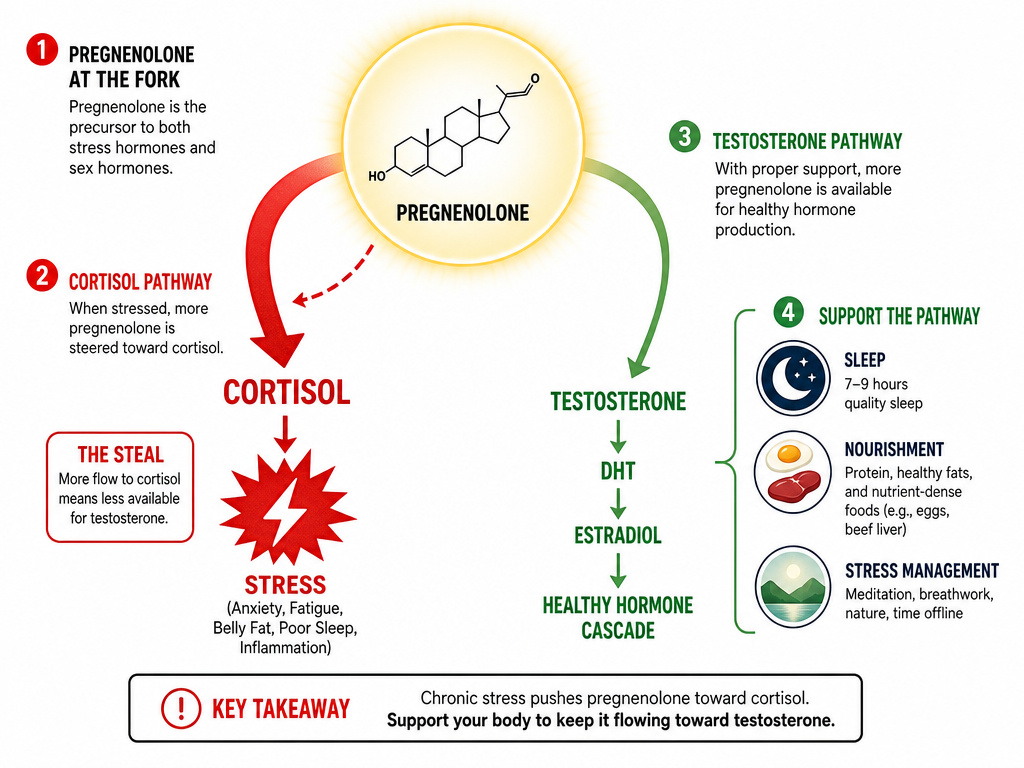
The most reliable way to have adequate pregnenolone is to help your body make its own. Chronic stress is the arch-nemesis of endogenous steroidogenesis. High cortisol production literally steals the precursor molecules (pregnenolone) away from the sex hormone pathways, a process sometimes called “pregnenolone steal.”
Your natural testosterone optimization strategy should prioritize the factors that support your entire hormonal cascade:
- Sleep: 7-9 hours of quality sleep. This is essential.
- Stress Management: This is the direct lever on the cortisol-pregnenolone balance. Walking, meditation, or simply doing less.
- Dietary Cholesterol: Pregnenolone is synthesized from cholesterol. Adequate intake from eggs, red meat, and liver supports the raw material. I used to fear egg yolks. That was a mistake, tossing the yolk throws away most of the choline and trace nutrients.
- Foundational Nutrients: Zinc and Vitamin D are co-factors in countless enzymatic processes, including steroidogenesis. When I tracked my diet, a weekly serving of beef liver closed more nutrient gaps than half the supplements in my cabinet.
These steps support the entire system, allowing your body to allocate resources where they’re needed, rather than forcing a single pathway with an external precursor.
How does pregnenolone compare to other testosterone treatments?
Pregnenolone is not a direct or reliable substitute for established therapies like testosterone replacement therapy (TRT) or enclomiphene. Research shows a single oral dose does not significantly alter key hormonal ratios that would indicate increased testosterone production. This suggests its effect on testosterone levels is minimal or absent. In contrast, TRT directly supplies the hormone, and enclomiphene stimulates the body’s own production. Therefore, combining pregnenolone with these therapies is unlikely to provide a synergistic boost to testosterone. For individuals considering treatment, consulting a healthcare professional about proven options is the recommended path.
Frequently Asked Questions
What are the real benefits of taking pregnenolone?
Based on the human study and widespread user reports, the most consistent benefits are related to its role as a neurosteroid: potentially improved mood, reduced brain fog, and a sense of calm focus. Evidence for direct benefits like increased muscle mass, strength, or libido from raised testosterone is lacking.
Is pregnenolone safe to take daily?
The long-term safety of daily pregnenolone supplementation is not well-established by large-scale human studies. At low doses (5-10 mg), it appears to be well-tolerated by many. However, because it is a hormonal precursor, there is a theoretical risk of disrupting your natural steroid balance with prolonged, unsupervised use. Cycling the supplement and involving a healthcare provider for monitoring is the prudent approach.
How long does it take for pregnenolone to kick in?
User reports suggest subjective cognitive and mood effects may be noticed within a few days to two weeks at low doses. If you are expecting measurable changes in testosterone levels, the 2005 study indicates that even a 50 mg dose did not produce a significant signal, suggesting you may not “feel” a hormonal kick at all from typical supplementation.
Should I take pregnenolone or DHEA?
This depends on your goal and your levels. Pregnenolone is the upstream precursor to DHEA. If you are looking for potential neurosteroid benefits, pregnenolone may be the choice. If you are aiming for a more direct (though still variable) impact on testosterone and have tested low in DHEA, then DHEA supplementation might be considered under guidance. They are different tools.
Before You Go
The evidence is clear: pregnenolone is not a reliable testosterone booster. The single best human study we have shows no significant change in key androgen markers after a standard dose. Its real-world reputation is built on neurosteroid effects, mood and cognition, not anabolic outcomes.
If you are trying to raise testosterone, your first steps are concrete: test your levels, fix deficiencies in zinc and vitamin D, manage stress, and prioritize sleep. These actions support your body’s entire steroidogenesis system. Herbs like tongkat ali have more direct human evidence for supporting testosterone in stressed individuals.
Pregnenolone has a role, but it’s a specialized one. Consider it only after the basics are nailed down, start with a low dose to assess its subtle cognitive effects, and let go of the expectation that it will move your testosterone needle. Sometimes the most powerful supplement strategy is knowing what not to take.
