
Do You Have to Stay on TRT for Life? How to Stop Safely
This post contains affiliate links. As an Amazon Associate, we earn from qualifying purchases.
Testosterone Replacement Therapy (TRT) is typically a long-term treatment for confirmed hypogonadism, but it is not always a mandatory lifelong sentence. Whether you must stay on it depends on why you started, how your body responds, and if the underlying cause is reversible. Most men continue because symptom relief outweighs the commitment, but structured discontinuation is possible, especially for functional cases or if benefits don’t materialize.
The decision hinges on a specific medical distinction: primary versus secondary hypogonadism. That distinction, more than any marketing claim, dictates your natural restart potential. It also determines the monitoring schedule your doctor should follow from the first prescription.
What follows: the clinical benchmarks that define “low,” the 3-6 month trial period that decides continuation, the realistic crash if you stop, and the step-by-step protocols for a safe restart when it’s an option.
Key Takeaways
- TRT suppresses natural production, so stopping causes a predictable crash; recovery can take months and isn’t guaranteed.
- The VA recommends a 3-6 month trial for patients without a clear hypogonadism history; if symptoms don’t improve, they advise stopping and retesting.
- Your chance of restarting naturally depends heavily on whether you have primary (testicular) or secondary (brain-signaling) hypogonadism.
- Post-Cycle Therapy (PCT) with medications like hCG or enclomiphene is often needed to safely restart your body’s hormone axis after stopping TRT.
- Fertility planning is critical before starting; TRT can significantly impact sperm production, and recovery isn’t automatic.
The Medical Benchmarks: What “Low Testosterone” Actually Means
A total testosterone level below 264 ng/dL on a CDC-certified assay is the threshold suggested by Endocrine Society guidelines for diagnosing hypogonadism. The VA notes that males with very low serum testosterone levels (<150 ng/dL) require evaluation for possible secondary hypogonadism. But these numbers aren’t universal.
Labs that aren’t CDC-certified use their own reference ranges, which can vary widely. More importantly, a single borderline test isn’t enough. Diagnosis requires consistently low levels, often defined as two morning tests averaging under 275 ng/dL, alongside symptoms like low libido, fatigue, or loss of muscle mass.
Age adjusts the frame. A healthy 30-year-old is expected to be near the top of the range. Citing Travison et al., the lower limit of the total testosterone reference range for males ages 19-39 years is 229 ng/dL, and for ages 80-99 years it is 119 ng/dL. Late-onset or functional hypogonadism is characterized by a 1.0-1.5% annual reduction in total testosterone. In fact, about 63% of men maintain levels within the normal range past age 70. The key is whether your levels are low for you and causing problems.
Why TRT Feels Like a Trap (The Suppression Mechanism)
When you introduce external testosterone, your brain gets the signal that there’s plenty in circulation. It dials back its production of luteinizing hormone (LH), the chemical messenger that tells your testes to make testosterone. The testes, receiving no signal, go dormant.
This isn’t a side effect; it’s the direct, intended mechanism of treatment. Your natural production is intentionally suppressed to allow the steady, therapeutic dose from TRT to take over. The problem arises when you want to stop. Your body doesn’t just flip a switch back on. The hypothalamic-pituitary-testicular axis, the communication loop between your brain and testes, has been idle and needs to be carefully rebooted.
This is why simply stopping TRT cold turkey leads to a crash. Your external supply is gone, and your internal factory is shut down. You’ll feel worse than you did before starting, often within weeks. This stark contrast between feeling optimized on TRT and feeling terrible off it is the primary psychological and physiological driver behind the do you have to stay on trt for life question.
What Happens If You Stop TRT?
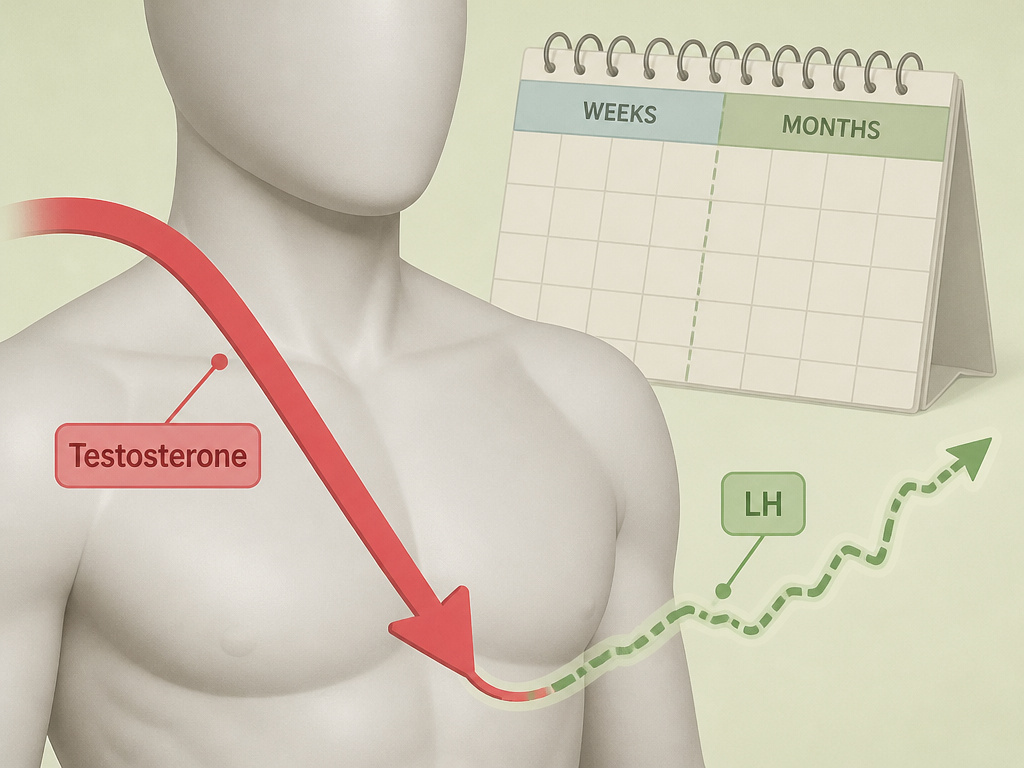
You will feel worse before you have any chance of feeling better. The timeline is predictable.
Within weeks of your last dose, testosterone levels plummet below your pre-TRT baseline. Energy vanishes. Motivation flatlines. The brain fog returns, thicker than before. Joints might ache, and sleep often fractures. This is the crash, and its severity is what convinces most men to restart therapy.
The physical low point typically lasts for several weeks. After that, if your axis is capable of restarting, LH production begins to flicker back. This is where patience is mandatory. Noticeable improvement in mood and energy might take several months. It can take many months for testosterone levels and sperm count to fully normalize, if they ever do.
Where this goes sideways: Stopping TRT without a restart protocol. Going cold turkey leaves your hormone axis in limbo, extending the crash window and potentially compromising long-term recovery of natural production and fertility.
Your odds depend on the original diagnosis. Men with secondary hypogonadism (a brain-signaling issue) have a better chance of recovery with proper post-cycle therapy than men with primary hypogonadism (testicular failure). This is why you must understand your TRT pros and cons before you start, including the do you have to stay on trt for life dilemma.
The 3-6 Month Rule That Changes the Answer
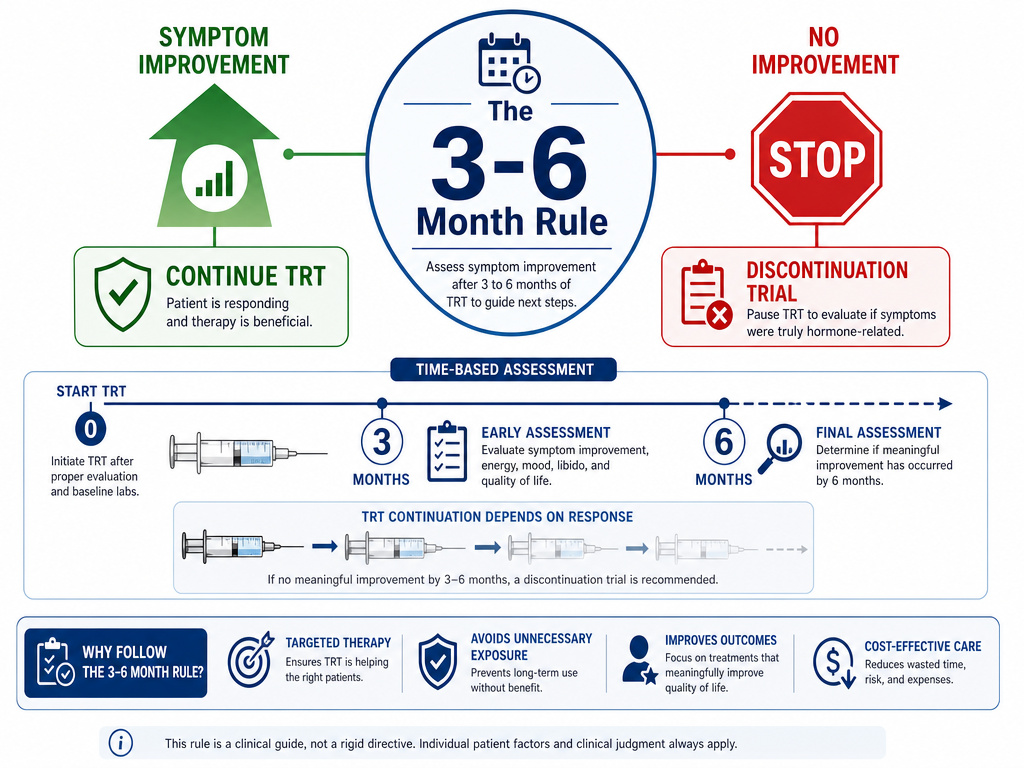
Clinical guidelines aren’t just about starting; they provide a structured off-ramp. According to the VA clinical recommendations for TRT, doctors should consider a discontinuation trial after 3-6 months for a specific group: patients on TRT who lack a clear, documented history of organic hypogonadism.
The logic is straightforward. If your symptoms of low energy, low drive, or brain fog haven’t meaningfully improved after half a year of normalized testosterone levels, then low testosterone might not have been the core issue. Continuing indefinite therapy for no benefit introduces unnecessary cost and monitoring burden. The VA protocol says stop, let the exogenous testosterone clear, and re-evaluate your baseline biochemistry.
This directly clashes with another authoritative view. The European Menopause and Andropause Society states that benefits like improved body composition “worsened after therapy discontinuation” and that treatment is “effective only as long as it is applied.” They see it as a sustained therapy. The VA introduces a trial period, a built-in checkpoint that answers “do I have to stay on this?” with data, not assumption.
| Scenario | Typical Protocol | Goal of Discontinuation |
|---|---|---|
| No Symptom Improvement (per VA) | Stop after 3-6 months, retest | Determine if low T was the true cause |
| Functional/Reversible Hypogonadism (e.g., due to obesity) | Treat underlying cause, use TRT as adjunct, plan withdrawal | Restart natural production after root cause resolved |
| Confirmed Organic Hypogonadism with good symptom response | Long-term, indefinite therapy | Sustain quality of life and health metrics |
| Patient desires fertility | Plan PCT before stopping TRT | Restore fertility and natural production |
How to Stop TRT Safely (The PCT Blueprint)
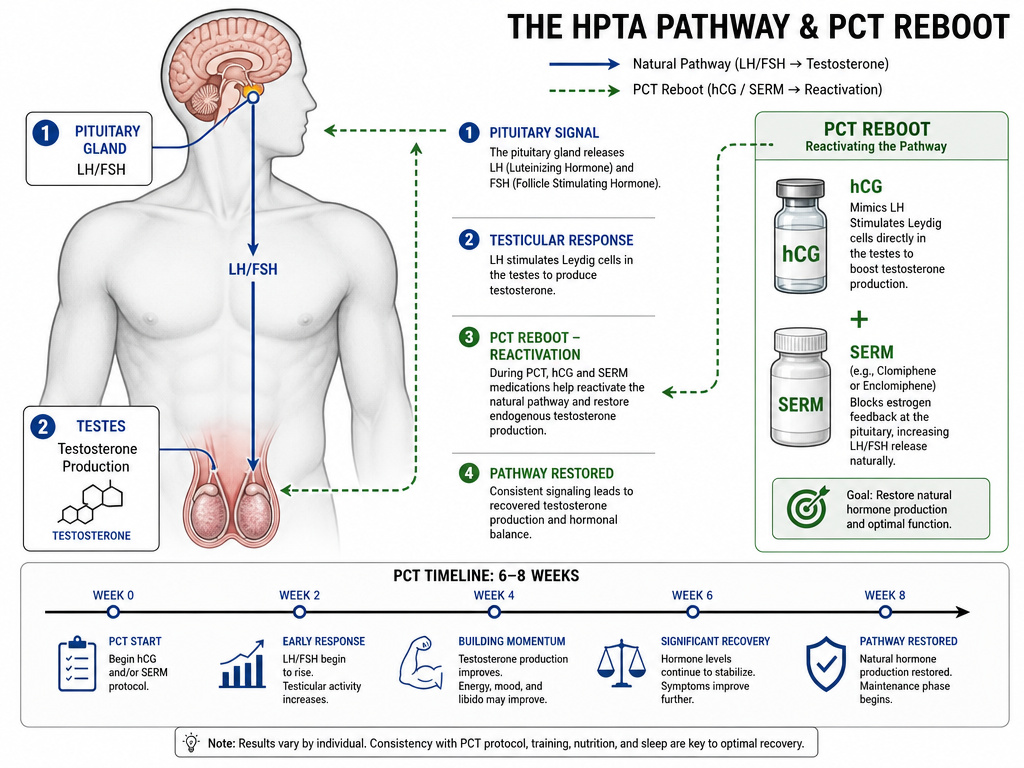
Stopping isn’t just about throwing away your vials or patches. It’s a managed medical process called Post-Cycle Therapy (PCT). The goal is to jump-start your brain’s pituitary gland to resume sending LH signals to your dormant testes.
A typical PCT protocol lasts 6-8 weeks and involves medications like:
- hCG (Human Chorionic Gonadotropin): Mimics LH, directly stimulating the testes to produce testosterone and prevent atrophy. Often used in the weeks leading up to and overlapping with the end of TRT.
- SERMs (Selective Estrogen Receptor Modulators): Drugs like enclomiphene citrate or tamoxifen block estrogen receptors in the brain, tricking the pituitary into producing more LH and FSH (the hormone that stimulates sperm production).
This isn’t a DIY project. PCT requires a doctor’s supervision for dosing, monitoring for side effects, and tracking recovery with blood work. The choice between enclomiphene vs TRT is relevant here, as enclomiphene is sometimes used as both an alternative to TRT and a PCT agent because it can boost natural production.
The entire process of how to come off TRT safely hinges on this structured reboot. Without it, you risk prolonged low testosterone and the possibility that your natural production never fully recovers.
When TRT Is Almost Always for Life
For some men, the question is settled by biology. If you have primary hypogonadism, where the testes themselves are damaged or non-functional due to genetic conditions like Klinefelter syndrome, injury, or chemotherapy, your body cannot produce adequate testosterone naturally. TRT isn’t a trial; it’s permanent hormone replacement, akin to insulin for a diabetic.
The same is often true for men with permanent secondary hypogonadism caused by pituitary tumors, radiation, or other irreversible brain-signaling damage. In these cases, the benefits of sustained therapy for bone density, muscle mass, cardiovascular health, and mental well-being far outweigh the commitment of ongoing treatment and monitoring.
For these men, the focus shifts from “Can I stop?” to “How do I manage this optimally for life?” This involves regular monitoring of not just testosterone levels but also hematocrit (red blood cell count), cholesterol, and prostate-specific antigen (PSA).
The Prostate Monitoring Mandate
Long-term TRT management includes vigilant prostate monitoring. The VA testosterone replacement therapy protocol is clear on the triggers for a urology referral:
- A PSA rise of >1.4 ng/mL within any 12-month period.
- A PSA level >4.0 ng/mL at any time.
For men over 70 starting TRT, the Endocrine Society advises getting a PSA baseline and checking it again within the first year to catch any significant jump. This monitoring is an essential part of the lifelong commitment for those who stay on therapy. It’s a key point to discuss when weighing TRT with your doctor.
Frequently Asked Questions
Do you have to stay on TRT for life once you start?
Not necessarily, but it is commonly long-term. You must stay on it to maintain the benefits and avoid a crash. Stopping is a deliberate medical process, not a simple pause. Whether you can successfully stop for good depends on your original diagnosis and how you manage discontinuation.
Is it safe to stay on testosterone forever?
Under a doctor’s supervision with appropriate monitoring, long-term TRT is considered safe for men with true hypogonadism. Safety requires regular blood work to watch for polycythemia (high red blood cells), cardiovascular markers, and prostate health. The VA TRT management recommendations provide a framework for this ongoing surveillance.
Can you live a healthy life on TRT?
Yes. For men with symptomatic hypogonadism, TRT can restore quality of life, improve body composition, support bone density, and improve mood. It is a chronic condition management tool. Living a healthy life on TRT also involves maintaining a healthy lifestyle, diet, exercise, and sleep, not just relying on the medication.
Does taking TRT take years off your life?
Current evidence does not show that TRT, when properly prescribed and monitored for appropriate candidates, reduces lifespan. Some long-term observational studies even suggest potential cardiovascular and mortality benefits for hypogonadal men. However, TRT is not recommended for men with untreated severe heart failure or recent heart attack/stroke.
Before You Go
The most practical checkpoint is the 3-6 month mark. If you’ve started TRT without a rock-solid diagnosis and don’t feel meaningfully better by then, the VA guideline gives you a clear, evidence-based reason to stop and reassess. That’s your first real decision point.
If you are considering TRT primarily for fertility concerns, stop. Look at TRT alternatives that preserve fertility first, like enclomiphene. Understand that the link between TRT and infertility is strong, and restarting sperm production is a separate, uncertain battle.
For everyone else, the long-term view is about management. It’s about committing to the blood tests, the PSA checks, and the honest conversations with your doctor about whether the therapy is still serving you. It’s not a life sentence, but it is a long-term partnership with your own biology.
