
Should You Take Anastrozole on TRT? Key Risks and Uses
This post contains affiliate links. As an Amazon Associate, we earn from qualifying purchases.
Taking anastrozole on testosterone replacement therapy (TRT) is an off-label decision for managing high estradiol (E2) levels, guided by specific bloodwork thresholds and symptoms. It is not a default add-on. Clinical protocols consider anastrozole 0.5mg three times per week for estradiol levels above 60 pg/mL, or levels between 40–60 pg/mL with symptoms like breast tenderness. This approach normalized levels for 76% of men in one study, but the drug carries documented risks for bone density and cardiovascular health.
That protocol. E2 >60 pg/mL or 40–60 with symptoms, is the clearest starting point the research offers. It moves the question from “should I take it?” to a more specific should you take anastrozole on trt question based on “does my lab work and how I feel meet this specific bar?” The answer hinges on matching a number from a vial with a physical symptom you can point to.
What follows is a breakdown of that evidence, the conflicting data on what anastrozole does to your body long-term, and the essential step of ruling out other causes before you ever consider adding a pill. This analysis directly informs the should you take anastrozole on trt decision. By the end, you’ll know the exact conversation to have with your doctor.
Key Takeaways
- Anastrozole is considered for estradiol above 60 pg/mL, or levels between 40–60 pg/mL with symptoms like nipple tenderness.
- In a 2021 study, 76% of men normalized E2 on a dose of 0.5mg taken three times per week.
- The VA warns that aromatase inhibitors raise cardiovascular risk in those with preexisting cardiovascular disease and can decrease bone mineral density.
- Conflicting studies show anastrozole may increase lean mass in some men, as seen in a 2018 study, but other research, such as a 2008 study, found it had no effect on body composition.
- Never take anastrozole with hormone replacement therapy (HRT) or menopause herbal supplements, as they can render it ineffective.
What Anastrozole Does (And Doesn’t Do) on TRT
Anastrozole is an aromatase inhibitor. Its job is simple: it blocks the enzyme that converts some of your testosterone into estradiol. On TRT, if your testosterone dose is high or your body aromatizes heavily, estradiol can climb into a range that causes problems.
This is a featured-snippet target: Anastrozole (brand name Arimidex) is a type of medication known as an aromatase inhibitor. It works by competitively binding to the aromatase enzyme, which is responsible for converting androgens like testosterone into estrogens like estradiol. In the context of testosterone replacement therapy, it is used off-label to lower elevated serum estradiol levels that may cause side effects.
The classic error is taking it “just in case.” Crashing estradiol too low, a state often called “crashed E2”, can leave joints achy, libido flat, and mood off. That ironically looks a lot like the low testosterone you were trying to fix in the first place. It’s a corrective tool, not a preventative one.
Your body needs some estradiol. It’s crucial for bone health, lipid metabolism, and sexual function. The goal of adding anastrozole is never to eliminate estrogen, but to bring it back into a healthy, individualized range where symptoms resolve.
When Is Anastrozole Actually Considered on TRT?
The decision isn’t based on a hunch. It follows a two-part check: a lab number and a subjective symptom. Research provides a specific framework.
A 2021 study in The Journal of Urology offered a clear protocol. Men were started on anastrozole if they had either estradiol levels >60 pg/mL regardless of symptoms, or levels between 40–60 pg/mL with subjective symptoms like breast or nipple tenderness. The dose used was anastrozole 0.5mg three times per week.
| Scenario | Lab Value (Estradiol) | Symptoms Present? | Action per Protocol |
|---|---|---|---|
| 1 | > 60 pg/mL | Not Required | Consider anastrozole |
| 2 | 40 – 60 pg/mL | Required (e.g., breast tenderness) | Consider anastrozole |
| 3 | < 40 pg/mL | Any | Likely not indicated |
This is why proper testing of estradiol levels is required. You can’t manage what you don’t measure. The study found this approach was effective: median estradiol dropped from 65 pg/mL to 22 pg/mL, and 76% of men achieved normalized levels.
Where this goes sideways: Starting an AI because you “feel bloated” or are worried about developing gynecomastia without a confirming lab test. Symptoms of high E2 overlap with dozens of other issues. The blood draw comes first.
It’s also worth noting what didn’t predict success in that study. Age, the presence of comorbidities, or the type of testosterone therapy (injection vs. Gel) were not reliable indicators of who would normalize their E2 on anastrozole. The raw number and the symptom were what mattered.
The Risks and Trade-Offs of Anastrozole
This is where the conversation gets serious. Anastrozole is a powerful drug with side effects that extend beyond just crashing your estrogen. The most current official guidance highlights significant concerns.
The 2026 VA Formulary Advisor clinical recommendations are blunt. They state that aromatase inhibitors like anastrozole “raise the risk of ischemic cardiovascular events in patients with preexisting cardiovascular disease, increase central body fat… And decrease bone mineral density.”
We’ll examine that. The cardiovascular warning is a major red flag, especially for older men or those with any heart condition history. The bone density note is particularly important because it conflicts with other research on why we need estrogen.
A 2018 study in the Journal of Bone and Mineral Research concluded that aromatization of testosterone to estradiol is required for maintaining bone mineral density in older men. In that same study, anastrozole did not improve lumbar spine BMD, unlike testosterone gel. The VA warns that aromatase inhibitors decrease bone mineral density, while mechanistic research indicates aromatization of testosterone to estradiol is required for maintaining it, highlighting a key area of concern and disagreement.
The takeaway? Using an anastrozole isn’t a free pass. You’re trading off potential high-E2 symptoms for potential long-term risks to your heart and skeleton. This trade-off is the core of the aromatase inhibitor pros and cons.
Dosing, Timing, and What “Normalization” Looks Like
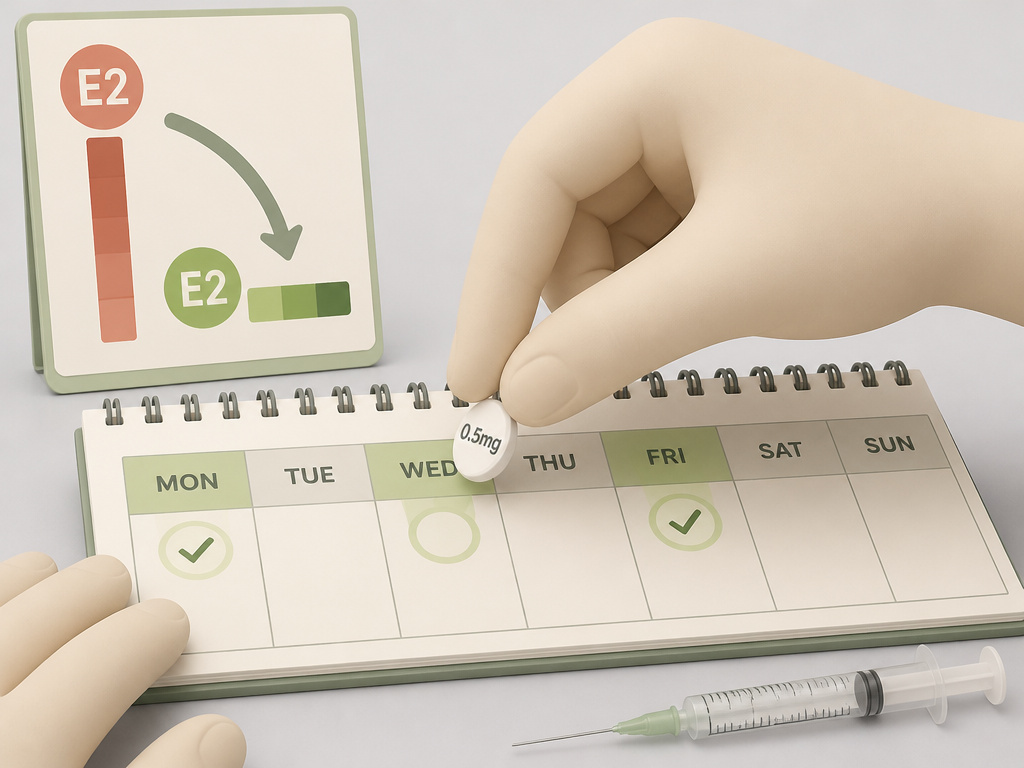
If you and your doctor decide to proceed, dosing is critical. More is not better. The studies show efficacy at very low, intermittent doses.
The successful protocol from the 2021 study was anastrozole 0.5mg, taken three times per week (e.g., Monday, Wednesday, Friday). This is a fraction of the 1mg daily dose used in breast cancer treatment and even in some other men’s studies. It highlights the “start low” principle.
Why does this low dose work? It’s likely enough to dampen the aromatase enzyme’s activity without shutting it down completely. Remember, the goal is modulation, not annihilation. This protocol reduced median estradiol from 65 pg/mL to 22 pg/mL, a solid drop into a healthy male range without a crash.
Timing relative to your testosterone injection can matter for some men. However, the three-times-weekly schedule seems to smooth this out effectively.
Normalization isn’t a single number. It’s the resolution of the symptoms that prompted treatment and an E2 level that is appropriate based on clinical assessment. It requires consistent monitoring estradiol, not a one-and-done check.
What to Try Before You Consider an Aromatase Inhibitor
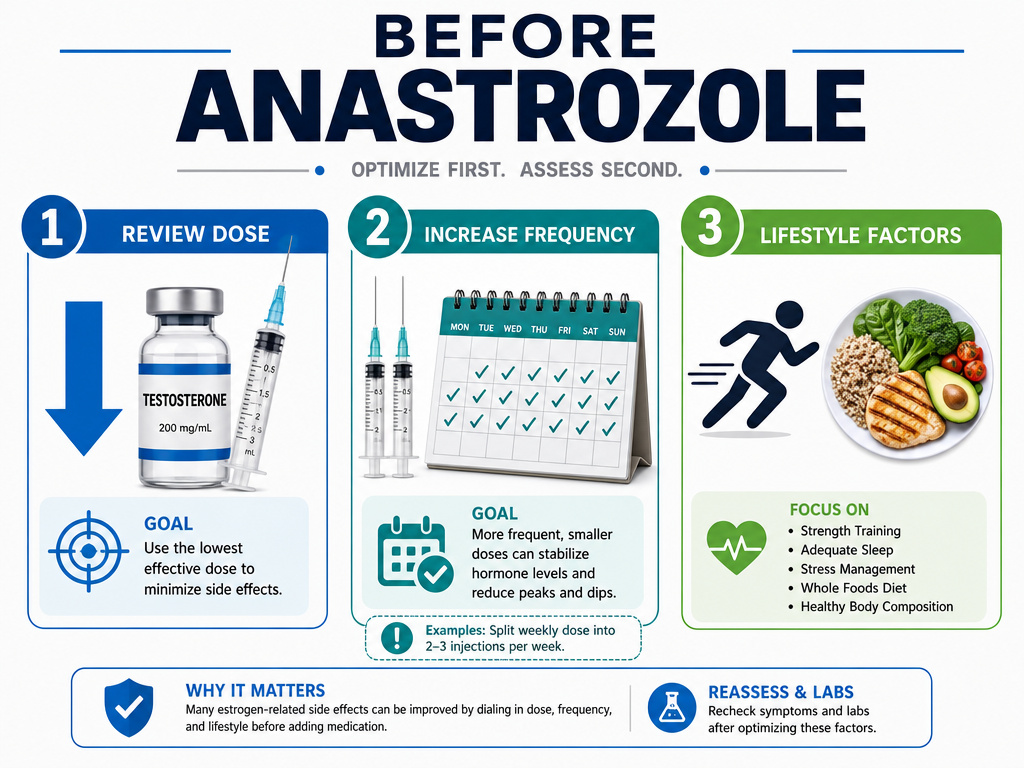
Reaching for a prescription should be the last step, not the first. Several adjustments can often manage estrogen effectively without adding another drug.
First, review your testosterone dose. The most straightforward way to lower estradiol is to lower the amount of testosterone available to convert. If your total T is consistently above your target range (e.g., above 1000 ng/dL in some protocols) and E2 is high, a dose reduction may be considered. This is often the first sign your TRT dose is too high.
Second, consider injection frequency. Switching from a large, once-weekly injection of testosterone cypionate to smaller, more frequent doses (e.g., every other day) can prevent the sharp peaks that drive heavy aromatization. This leads to more stable levels of both hormones.
Third, assess lifestyle factors. High body fat percentage increases aromatase activity. Improving diet and incorporating exercise can reduce estrogen production naturally.
These steps address the root cause. An AI like anastrozole merely treats the symptom of high conversion. Starting with these adjustments is the conservative, sustainable approach.
Contraindications: When TRT and Anastrozole Are Not Options
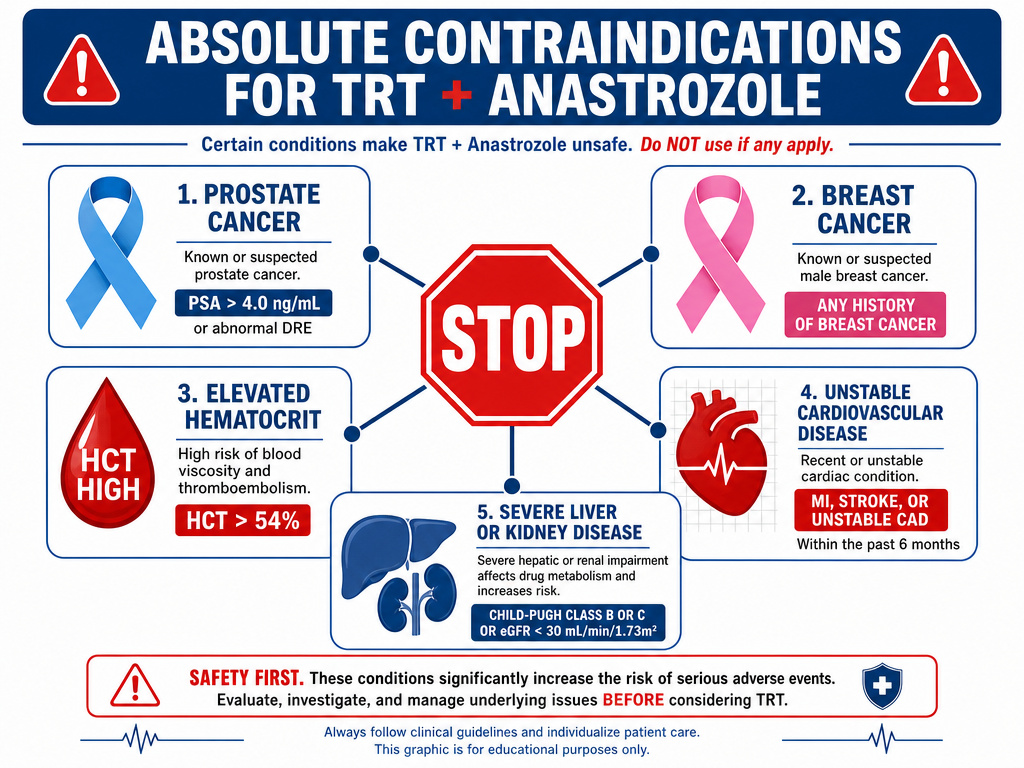
This isn’t just about estrogen. Before anyone even considers TRT, let alone adding anastrozole, absolute contraindications must be ruled out. The VA guidelines provide a strict list.
Active prostate or breast cancer is an absolute no. So is uncontrolled erythrocytosis (high hematocrit), severe untreated sleep apnea, or an elevated PSA (>4 ng/mL). Other key contraindications include inadequately controlled congestive heart failure, a recent heart attack or stroke (within 4 months), severe liver or kidney disease, and a history of unprovoked blood clots.
Before you start: TRT and any adjunct medications like anastrozole require a full clinical evaluation. This is not a self-manageable protocol. The listed contraindications, such as active cancer or recent cardiovascular events, are serious, non-negotiable stop signs that only a physician can properly screen for.
This is why thorough blood work on TRT is the essential foundation. It’s not just about testosterone and estrogen. It’s about checking PSA, hematocrit, lipid panels, and metabolic markers to ensure the therapy itself is safe for you. Ignoring this step is how men get hurt.
Frequently Asked Questions
Can I take anastrozole while on TRT?
Yes, but only under a doctor’s supervision for a confirmed case of high estradiol (typically >60 pg/mL, or 40-60 pg/mL with symptoms). It is an off-label use and is not needed by most men on TRT.
Why do men take anastrozole with testosterone?
They take it to lower elevated estradiol levels that can cause side effects like gynecomastia (breast tissue growth), water retention, emotional sensitivity, and fat gain. It is used to correct a specific imbalance, not as a standard part of therapy.
When should I start anastrozole on TRT?
The clinical benchmark is to consider it when blood tests show persistently high estradiol, specifically above 60 pg/mL, or between 40–60 pg/mL if you are also experiencing physical symptoms like nipple tenderness or swelling.
Will anastrozole raise my testosterone?
Indirectly, yes. By blocking the conversion of testosterone to estradiol, more of the testosterone you inject or produce remains as testosterone. However, the primary goal is to lower estrogen, not to boost T levels, which should already be managed by your TRT protocol.
How does anastrozole compare to other options like letrozole?
In a letrozole vs anastrozole comparison, letrozole is considerably more potent. This means the dosing margin for error is smaller, and it can crash estrogen levels more dramatically and quickly. Anastrozole is generally the preferred first-line AI in men’s TRT due to its milder strength and easier dosing.
The Bottom Line
The decision to add anastrozole comes down to a verified lab value and a tangible symptom. It’s not for optimization or prevention. The protocol with the clearest data is 0.5mg three times per week for an estradiol level above 60 pg/mL, or between 40–60 pg/mL with breast tenderness.
You must weigh this against real risks: potential harm to bone density and a noted increase in cardiovascular risk for those with preexisting conditions. The research on benefits like improved body composition is genuinely conflicted, one reputable study shows a lean mass gain, another shows none.
So, should you take anastrozole on TRT? If your bloodwork and symptoms hit the specific thresholds, and you’ve ruled out dose adjustments and lifestyle fixes first, it’s a tool you and your doctor can discuss. But treat it with the respect a prescription drug demands. Your first job is always to get the necessary labs to check for estradiol levels >60 pg/mL or 40–60 pg/mL with symptoms, and have that conversation in the exam room, not the forum.
