
9 Best Multivitamins For Kidney Disease in 2026
This post contains affiliate links. As an Amazon Associate, we earn from qualifying purchases.
Our best overall multivitamin for kidney disease is the Dialyvite 800 with Zinc Mineral Supplement, formulated specifically to replace water-soluble vitamins lost during dialysis. We also highlight the nephrologist-formulated Nephroceuticals ProRenal+D and the long-supply value of Dialyvite 800 Ultra D. Choosing the wrong supplement can introduce harmful nutrients like potassium or excessive vitamin A, complicating renal health. This research-based guide compares nine specialized options, helping you discuss an informed choice with your healthcare team.
Top 9 Multivitamins For Kidney Disease in the Market
Certain content that appears on this site comes from Amazon. This content is provided "as is" and is subject to change or removal at any time.
The Best Multivitamins For Kidney Disease, Reviewed
Dialyvite 800 with Zinc Mineral Supplement

What We Like
- Formulated specifically for dialysis patients
- Excludes potentially harmful vitamins A and K
- Uses bioactive Methylcobalamin B12
- Consolidates multiple essential nutrients
Trade-offs
- Tablet form may be difficult for some to swallow
A formulation that excludes vitamins A and K addresses a critical safety concern for those on dialysis, where these nutrients can accumulate to toxic levels. This makes Dialyvite 800 a fundamentally safer starting point than a standard multivitamin. Its high-potency B vitamins and methylcobalamin B12 are targeted at replenishing exactly what dialysis strips away, which is why it suits someone managing the specific nutritional deficits of that treatment.
Dialyvite 800 is specifically formulated to replenish the vitamins and minerals lost during dialysis, which means it’s intentionally not a general-purpose multivitamin. Its safe formulation excludes vitamins A and K that can accumulate dangerously in individuals with impaired kidney function, making it a targeted choice for that clinical need. This focused design leaves other nutritional requirements, like iron supplementation, to be managed separately with a doctor’s guidance.
Product photos
Nephroceuticals ProRenal+D Kidney Multivitamin
What We Like
- Nephrologist-formulated for kidney health
- Excludes potassium and phosphorus
- Includes 1000 IU of Vitamin D
- Provides B complex vitamins and iron
Trade-offs
- 90-day supply may be a larger initial commitment
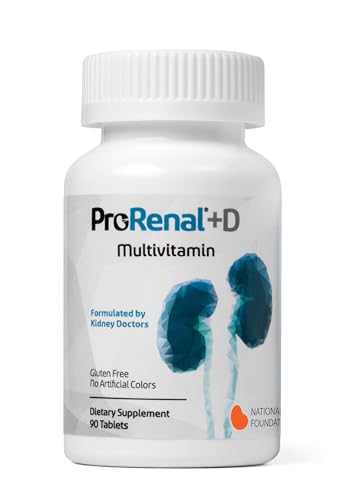
The fact that this is a nephrologist-formulated multivitamin means its nutrient profile is intentionally designed for kidney-conscious support, not just a standard formula with a new label. It directly addresses a key dietary restriction by omitting phosphorus and potassium, which simplifies the daily routine for someone already managing a complex diet. The inclusion of 1000 IU of Vitamin D is a notable feature, as deficiency is common and supplementation often needs to be precise.
By deliberately excluding phosphorus and potassium, this multivitamin serves a specific dietary need rather than functioning as a general daily supplement. It is formulated as an essential daily multivitamin to support kidney health and everyday nutrition, making it a clean, specialized option for foundational daily intake where avoiding those specific nutrients is the primary goal.
Product photos
RUGBY LABORATORIES 00536-1415-01 Multivitamin
What We Like
- Focused formula of essential B and C vitamins.
- Single daily tablet simplifies the routine.
- Gluten-free formulation for dietary sensitivity.
- Trusted brand in professional pharmacy channels.
Trade-offs
- No vitamin D included
- Contains no added minerals like zinc
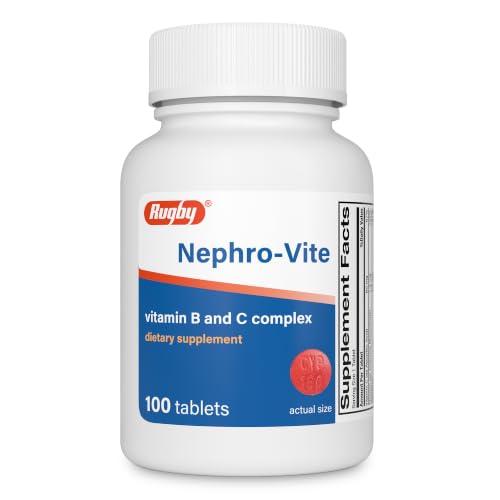
A single daily tablet delivers a focused complex of B and C vitamins, which supports energy metabolism and nervous system function without overcomplicating a supplement regimen. This makes it a straightforward choice for someone whose primary concern is maintaining baseline nutritional support for general wellness, particularly if their doctor has advised a simpler, gluten-free formula without additional minerals. The trade-off is its specificity. It doesn’t contain the tailored mineral profiles or vitamin D often recommended for kidney support, placing it in a different category than a comprehensive option like the Dialyvite 800 Ultra D. Think of it as a foundational piece rather than a complete renal-specific multivitamin solution.
Product photos
Dialyvite 800 Ultra D Multi-Vitamin
What We Like
- Six-month supply offers significant convenience
- Superior methylcobalamin B12 requires no conversion
- High-potency 2000 IU vitamin D addresses dialysis needs
- Manufactured in a GMP-certified US facility
Trade-offs
- Tablet form may be difficult for some to swallow
- Requires a doctor's consultation for dosage adjustment
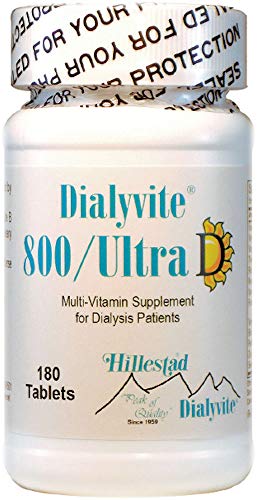
A 180-count bottle translates to a six-month supply, which is the primary reason it stands out for anyone tired of frequent reorders. It’s formulated specifically for the nutrient depletion common in dialysis, with a methylcobalamin B12 that’s ready for the body to use and a substantial 2000 IU of vitamin D. For the skeptical tinkerer, that’s a straightforward, no-conversion formula backed by decades of clinical recommendation, making it a logical baseline for someone who trusts specs over marketing.
The trade-off is the tablet format itself, which can be a practical hurdle if you have difficulty swallowing pills. It also lacks the added zinc found in Dialyvite’s own ‘with Zinc’ formula, so if your bloodwork or protocol calls for that mineral, you’ll need to look elsewhere. Compared to something like the Nephroceuticals ProRenal+D, which comes in a 90-day supply, this value size is less about trying a new formula and more about committing to a long-established, doctor-recommended staple.
Product photos
KidneyAide Renal Replacement Therapy Multi Vitamin
What We Like
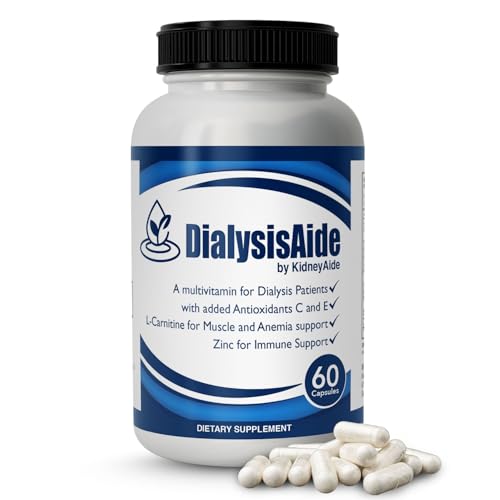
- Comprehensive formula designed by a nephrologist
- Includes L-carnitine for muscle health support
- Small, easy-to-swallow capsule format
- Rigorous third-party safety and purity testing
Trade-offs
- 30-day supply requires more frequent ordering
- Excludes iron and calcium some may need
A formula designed by a board-certified nephrologist is the main event here. It’s built specifically for renal replacement therapy, bundling the expected water-soluble vitamins with extras like L-carnitine for muscle function and antioxidants for immune support. This makes it a strong, thoughtful pick for someone on dialysis who wants a comprehensive, targeted supplement to address the broad nutritional gaps that come with the territory. The focus is on supporting overall vitality, not just replacing a few vitamins.
You trade off some convenience for that comprehensiveness. It’s a 30-day supply in capsule form, which means reordering more frequently than with a value bottle like Dialyvite 800. It also wisely leaves out minerals like iron and calcium, which are often restricted and need individual dosing. If your protocol already includes those, this avoids doubling up. But if you’re looking for an all-in-one that includes them, you’d be comparing it to something like Mason Natural Renal Multivitamin instead.
Product photos
Renadyl Advanced Multivitamin for Kidney Health Multivitamin
What We Like
- Sugar-free and allergen-free formula
- No added phosphorus or potassium
- Designed to complement Renadyl probiotic
- Made in USA by kidney research company
Trade-offs
- Requires two gummies daily for a serving
- Gummy form may not suit all supplement routines
- Companion, not replacement, for Renadyl probiotic
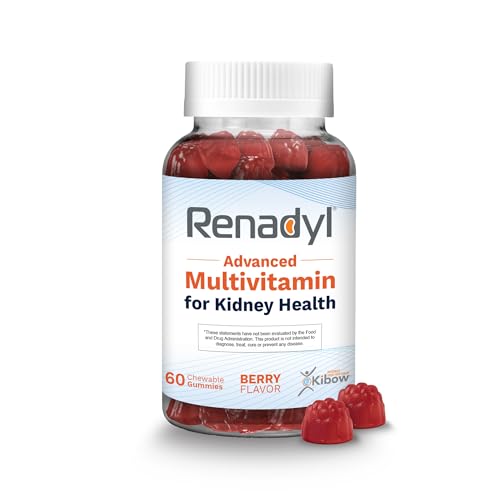
A sugar-free, berry-flavored gummy offers a genuinely palatable alternative for anyone tired of swallowing another pill. This multivitamin is specifically formulated with zero phosphorus and potassium, which makes it a sensible choice for those managing dietary restrictions. It suits someone looking for a clean-label, vegan supplement that sidesteps common allergens while still delivering optimized levels of essential nutrients and CoQ10. The design acknowledges that supporting kidney health can be a long-term process, and a pleasant daily habit is easier to maintain.
The trade-off is that it’s explicitly a companion to the Renadyl probiotic, not a standalone solution. You’re buying into a two-part system for what the brand calls ‘more complete’ support. Compared to a straightforward tablet like the Dialyvite 800 with Zinc, this is a different approach, focusing on compliance through taste and dietary purity rather than maximal mineral supplementation in a single pill. It’s a thoughtful product for someone whose priority is a gentle, restrictive-diet-friendly multivitamin that works in tandem with a probiotic protocol.
Product photos
Mason Natural Renal Multivitamin
What We Like
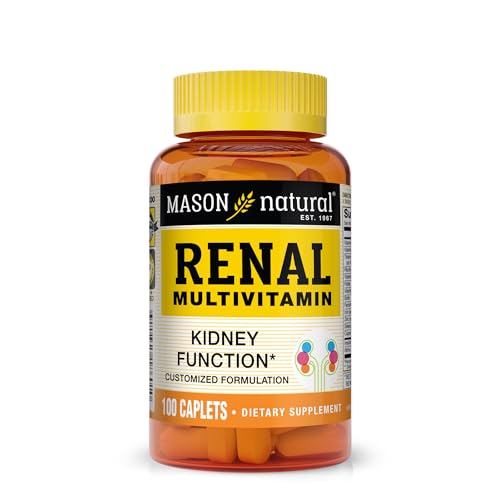
- Includes alpha lipoic acid for antioxidant support
- Clean formula suitable for vegetarians
- Comprehensive B-vitamin and mineral profile
- Brand with over 50 years of manufacturing history
Trade-offs
- Contains iron, which is not suitable for all kidney patients
The inclusion of alpha lipoic acid sets this multivitamin apart for those seeking that specific antioxidant support alongside foundational renal nutrients. It suits someone looking for a straightforward, clean-label formula from a long-established manufacturer, and who has confirmed with their doctor that supplemental iron is appropriate for their situation. The one-caplet daily regimen is straightforward, fitting neatly into an existing supplement routine.
Because it contains iron, this multivitamin is not suitable for kidney patients who must strictly limit that mineral in their diet. Anyone with that specific dietary restriction should instead examine products explicitly formulated without iron, such as Dialyvite 800 with Zinc Mineral Supplement, for a more appropriate comparison. This illustrates why a detailed ingredient list, rather than just a general ‘renal’ label, is crucial for determining suitability.
Product photos
Cypress Pharmaceutical 016001 Multivitamin

What We Like
- Multi-pack provides 300 tablets for extended use
- Tablet form allows for easy daily incorporation
- Formulated specifically to support kidney health
- Designed for use under medical guidance
Trade-offs
- Tablet form may be difficult for some to swallow
Three bottles totaling 300 tablets means you’re set for a long stretch without reordering, which simplifies a daily regimen built around medical oversight. This is for the adult who values consistency above all and wants to minimize the administrative hassle of managing their nutritional support. It’s a straightforward, bulk-oriented option for those following a structured kidney health program.
Designed specifically for adults as part of a kidney health program, the Cypress Pharmaceutical multivitamin provides nutritional support under medical guidance. Its formulation contains vitamins and minerals for renal wellness, which helps support overall kidney function and nutrient balance. Each bottle contains 100 tablets, and the pack of three provides 300 tablets for extended daily use.
Product photos
Rena-Vite Kidney Support Multivitamin

What We Like
- Provides essential B-complex vitamins and vitamin C
- Supports energy production and overall nutritional health
- Helps replenish vitamins lost during dialysis
- Easy-to-swallow tablet form
Trade-offs
- Six-bottle pack is a large upfront commitment
Its explicit formulation to help replenish vitamins lost during dialysis makes it a focused choice for a very specific need. This is a product built around a single, critical event in a patient’s routine, aiming to address the documented nutritional depletion that occurs with that process. For someone undergoing regular dialysis, that targeted promise is the entire point of the product, positioning it as a straightforward nutritional support tool rather than a broader wellness supplement.
Rena-Vite focuses on B-complex vitamins and vitamin C, so it replaces core nutrients lost during dialysis rather than offering a wider mineral profile. Its formulation directly supports energy production and overall nutritional health for patients undergoing that specific treatment. Consider this multivitamin a targeted replenishment tool, not a broad-spectrum supplement for every aspect of kidney care.
Product photos
How We Evaluated Multivitamins For Kidney Disease
We examined manufacturer specifications, nephrologist recommendations, and patterns in expert round-ups to identify formulas designed for renal limitations. Key criteria included the exclusion of potentially harmful nutrients like potassium, phosphorus, and vitamin A, and the inclusion of essential, often-depleted vitamins like B-complex and specific forms of vitamin D. We prioritized products clearly intended for patients with kidney disease under medical guidance. A research-led evaluation cannot assess individual biochemical needs or replace a doctor’s advice on whether you require supplemental iron or activated vitamin D.
Our analysis focused on finding renal-specific formulas that address common deficiencies without adding risky excess. We scrutinized labels for the absence of restricted minerals, the type of B12 used, and whether the vitamin D dose aligns with protocols for kidney health. The safety of any supplement hinges on your specific stage of kidney disease and treatment plan, which is why consulting your nephrologist is the essential first step.
What To Look For In Multivitamins For Kidney Disease
Selecting a multivitamin requires careful attention to ingredients that support renal function while avoiding those that can cause further harm. Your choice should be guided by your treatment stage and specific dietary restrictions prescribed by your care team.
Look for formulas that exclude potassium and phosphorus and use bioactive B12. Avoid general multivitamins with vitamin A or high-dose vitamin C. Always choose a product designed for kidney patients and discuss it with your nephrologist.
Nutrient Exclusions
Kidney disease often requires limiting minerals the kidneys cannot properly filter. A safe multivitamin will explicitly exclude added potassium and phosphorus. Many will also omit vitamin A, which can accumulate to toxic levels when kidney function is impaired. Products formulated for dialysis patients are particularly vigilant about these exclusions, as losses during treatment are specific. Checking for a “no added potassium” or “renal formula” claim is a fundamental first filter.
Essential Inclusions
Look for comprehensive B-complex vitamins, including methylcobalamin (a bioactive form of B12), and folic acid to support red blood cell health and combat anemia common in CKD. The need for vitamin D is also critical, as damaged kidneys struggle to activate it; some formulas include higher doses, but the exact type and amount should be medically guided. Some advanced formulas may include L-carnitine for muscle support or alpha lipoic acid as an antioxidant.
Form and Practicality
Consider the delivery format, such as a tablet, capsule, or gummy, and your ability to take it consistently. A six-month supply offers convenience but requires a larger upfront purchase. Most importantly, check if the formula includes iron; some patients need it, while others must avoid it. Your decision should fit smoothly with your overall care plan.
- Verify the label states “for kidney patients” or “renal formula.”
- Confirm it lacks potassium, phosphorus, and vitamin A.
- Check the B12 form (methylcobalamin is preferred).
- Note if iron is included and whether that aligns with your care plan.
- Assess the serving size and format for long-term adherence.
The most important rule is to never self-prescribe; use this research to have a more informed conversation with your doctor.
Multivitamins For Kidney Disease Compared
The following table compares key features of our top picks side-by-side to help you see the differences at a glance.
| Product | Tablet/Capsule Count | Key Vitamins/Nutrients | Form |
|---|---|---|---|
| Dialyvite 800 with Zinc Mineral Supplement | 180 tablets | B1, B2, B6, B12, folic acid | Tablet |
| Nephroceuticals ProRenal+D Kidney Multivitamin | 90-day | Vitamin C, B complex, iron, zinc | N/A |
| RUGBY LABORATORIES 00536-1415-01 Multivitamin | 100 tablets | B & C complex | Tablet |
| Dialyvite 800 Ultra D Multi-Vitamin | 180 tablets | B1, B2, B6, Niacinamide | Tablet |
| KidneyAide Renal Replacement Therapy Multi Vitamin | 60 capsules | B-Complex, Vitamin C & E, L-Carnitine, Zinc | Capsules |
| Renadyl Advanced Multivitamin for Kidney Health Multivitamin | 60 gummies | CoQ10, B vitamins, Vitamin C | Chewable gummy |
| Mason Natural Renal Multivitamin | 100 day supply | Alpha lipoic acid, B vitamins, C, D | Caplet |
| Cypress Pharmaceutical 016001 Multivitamin | 100 tablets | N/A | Tablet |
| Rena-Vite Kidney Support Multivitamin | 100 per bottle | B-complex, Vitamin C | Tablet |
Frequently Asked Questions
What is the best multivitamin for people with kidney disease?
The best multivitamin is one specifically formulated for kidney patients and approved by your nephrologist. Our top pick, Dialyvite 800 with Zinc, is an excellent example for dialysis patients, as it excludes harmful nutrients and replaces those lost during treatment. The “best” varies individually based on your stage of CKD, dialysis status, and specific nutrient needs like iron.
Which multivitamin is safe for kidney patients?
Safe multivitamins are those designed for renal health, typically excluding potassium, phosphorus, and vitamin A. Look for terms like “renal vitamin,” “for kidney patients,” or “dialysis formula” on the label. Products like Nephroceuticals ProRenal+D and KidneyAide Renal Replacement Therapy Multi Vitamin are built with these safety exclusions in mind.
Should I take a multivitamin if I have kidney disease?
Not everyone with kidney disease needs a multivitamin. However, many patients, especially those on dialysis or with dietary restrictions, develop deficiencies in water-soluble B and C vitamins. A nephrologist or renal dietitian can determine if you need a supplement and recommend a specific type, as general store-bought multivitamins can be harmful.
What vitamins should you not take with kidney disease?
You should generally avoid supplements containing potassium, phosphorus, and vitamin A, as these can accumulate to dangerous levels. High-dose vitamin C can increase oxalate and risk of stones. Always avoid general “one-a-day” multivitamins and any supplement not reviewed by your kidney care team.
Can I take a regular multivitamin for kidney support?
No, regular multivitamins are not appropriate. They often contain potassium, phosphorus, and vitamin A at levels that can be harmful to compromised kidneys. They also may not provide the correct forms or amounts of nutrients like B12 and vitamin D that kidney patients specifically require. Purpose-built vitamins for kidney health are essential.
The Bottom Line
For individuals undergoing dialysis, the Dialyvite 800 with Zinc Mineral Supplement is our best overall pick for its targeted replacement of lost nutrients and careful exclusion of harmful ones. If you need a nephrologist-formulated daily supplement without potassium or phosphorus, consider the Nephroceuticals ProRenal+D. Budget-conscious shoppers or those needing a long supply should look at the Dialyvite 800 Ultra D Multi-Vitamin. Ultimately, the single most important factor is choosing a product designed for renal health and using it only under the guidance of your medical team.
