
Do Beta Blockers Lower Testosterone? Action Steps to Take
This post contains affiliate links. As an Amazon Associate, we earn from qualifying purchases.
The answer depends entirely on which beta blocker you take and who is taking it. In healthy men, older studies show mixed results: some indicate drugs like propranolol can suppress testosterone, while others show chronic propranolol use can elevate it. The class is not monolithic.
That “it depends” isn’t a cop-out. It’s the specific, study-backed reality that generic health articles miss. They often state beta blockers “can lower testosterone” as a blanket side effect, which oversimplifies a landscape where one drug can have the opposite hormonal effect of another in the same class. A key question is: do beta blockers lower testosterone?
What follows breaks down the primary research, the mechanisms at play, and the critical variables, like existing hypertension or acute versus chronic dosing, that flip the script. By the end, you’ll be able to read past the generic warnings and understand the specific hormonal profile of the beta blocker you or your doctor are considering.
Key Takeaways
- Bisoprolol and nebivolol raised testosterone by 75.7% and 56.8%, respectively, in a two-month study of men with high blood pressure.
- Carvedilol lowered testosterone by 19.2% in the same study, proving “beta-blocker” is not one hormonal outcome.
- The patient’s health status is critical; effects seen in healthy volunteers often don’t match those in hypertensive patients.
- Penile blood flow improved with all three drugs (bisoprolol, nebivolol, carvedilol), suggesting sexual side effects may stem from other mechanisms.
- Never stop a prescribed beta blocker due to hormone concerns without consulting your doctor; the cardiovascular risks are immediate.
The Beta Blocker Testosterone Spectrum
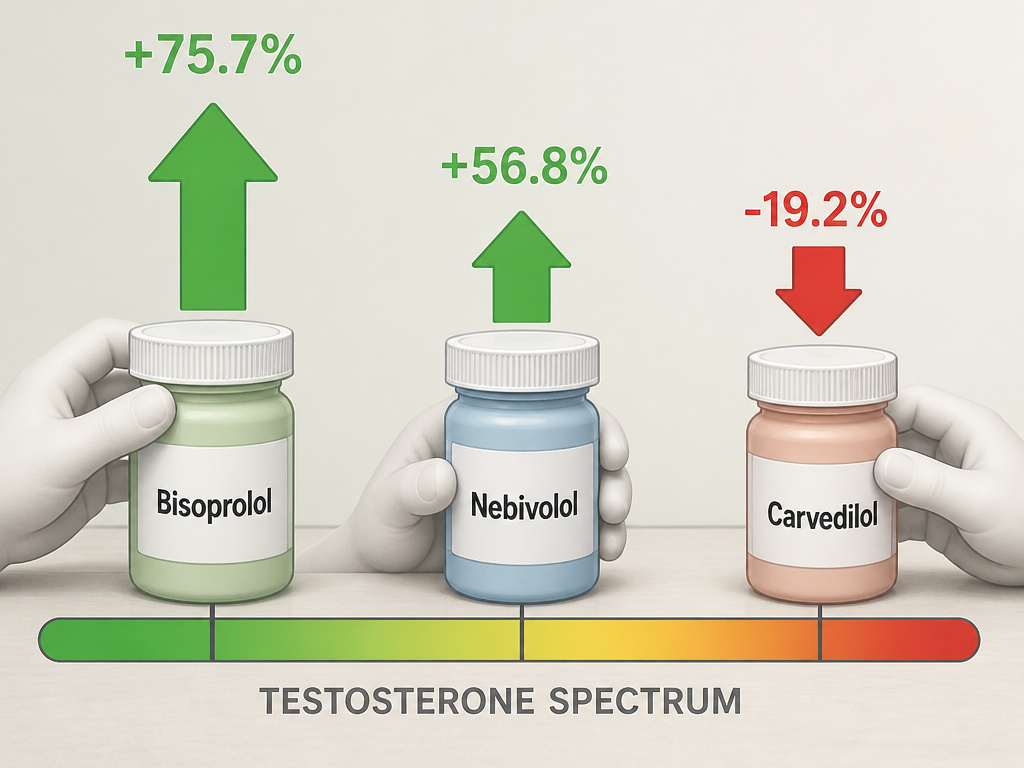
Forget “yes or no.” The real question is which beta blocker, taken by whom, for how long. The most clarifying data for the do beta blockers lower testosterone question comes from a 2010 study published in the Journal of Hypertension, which put hard numbers on the hormonal effects of three modern agents.
After a four-week placebo period, they were split into three groups for two months of monotherapy with either bisoprolol, nebivolol, or carvedilol. The hormone changes were stark and divergent.
Monotherapy of bisoprolol and nebivolol significantly increased the levels of testosterone (75.7% and 56.8%)… Monotherapy of carvedilol characterized by the decreasing the concentration of testosterone (19.2%).
. Source: Journal of Hypertension, 2010
Here’s what that spectrum looks like in one table. Notice that while testosterone moves in different directions, other hormones like prolactin and luteinizing hormone (LH) also shift, painting a complex picture of the entire pituitary-gonadal axis.
| Beta Blocker | Testosterone Change | Prolactin Change | Luteinizing Hormone (LH) Change | Key Property |
|---|---|---|---|---|
| Bisoprolol | +75.7% | +54.8% | -26.9% | Superselective beta-1 blocker |
| Nebivolol | +56.8% | +69.7% | -25.7% | Superselective beta-1 blocker, nitric oxide vasodilator |
| Carvedilol | -19.2% | -40.7% | -29.3% | Non-selective beta-blocker, alpha-1 blocker |
The takeaway is blunt: you cannot extrapolate the effect of one beta blocker to another when you compare a do beta blockers lower testosterone study. A drug like carvedilol, which is non-selective and blocks both beta and alpha receptors, operates on a different hormonal pathway than the highly selective beta-1 agents. This is why reviewing your specific medication on a resource like Drugs.com is more useful than worrying about the entire class.
How Beta Blockers Interact with Your Hormone System
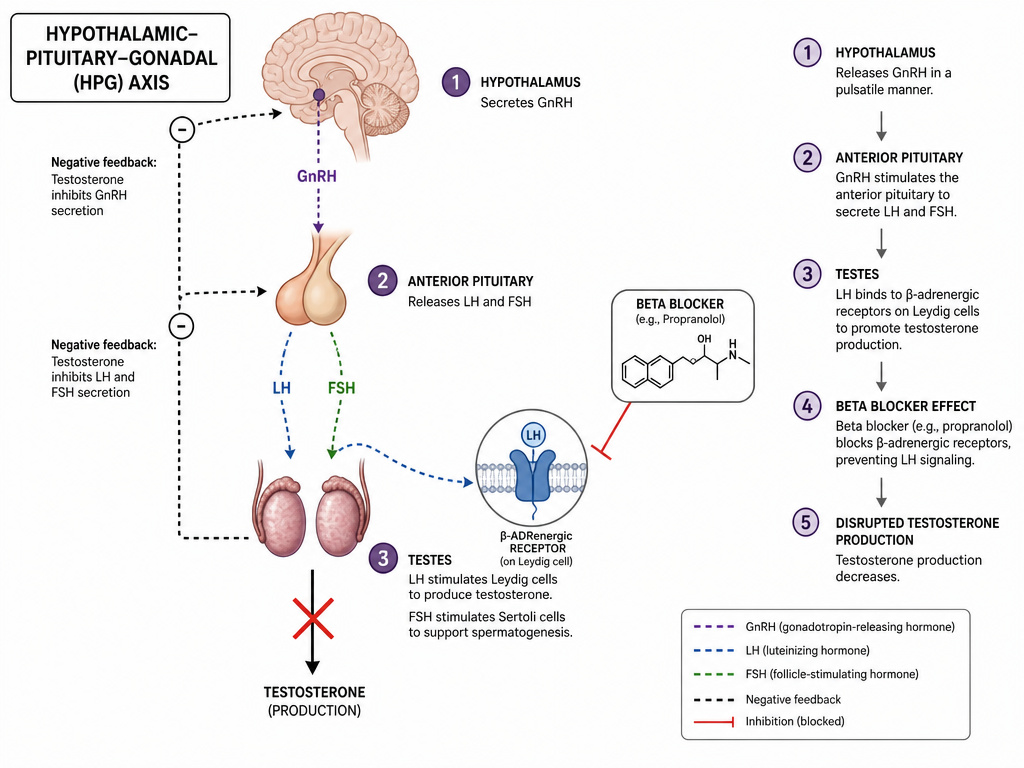
To understand why these drugs have such different effects, you need to know what they’re actually doing. Beta blockers don’t directly target testosterone-producing Leydig cells in the testes. Instead, they influence the complex signaling cascade that tells those cells to work.
The chain of command runs from your brain’s hypothalamus (releasing GnRH) to the pituitary gland (releasing LH and FSH) to the testes (producing testosterone). This is the hypothalamic-pituitary-gonadal (HPG) axis. Beta-adrenergic receptors are present throughout this system, and blocking them can disrupt the signals.
The 2010 study provides a clear why-layer for the testosterone increases seen with bisoprolol and nebivolol. Both drugs significantly decreased luteinizing hormone (LH) and follicle-stimulating hormone (FSH). Normally, less LH should mean less testosterone. The fact that testosterone rose sharply suggests these selective beta-1 blockers may be acting directly on testicular blood flow or Leydig cell sensitivity, overriding the pituitary signal. It’s a reminder that human physiology often compensates in unexpected ways.
Common mistake: Assuming a medication’s primary action tells the whole story. A drug prescribed for blood pressure can have off-target effects on enzyme systems or local blood flow that dramatically alter the expected hormone response.
Conversely, the broader action of a non-selective drug like carvedilol appears to suppress the axis more uniformly, leading to the observed drop in testosterone. An older rat Leydig cell testosterone study found that beta antagonists could directly inhibit testosterone production in vitro, providing a potential mechanism for the kind of suppression seen with carvedilol.
The Critical Variable: Healthy vs. Hypertensive
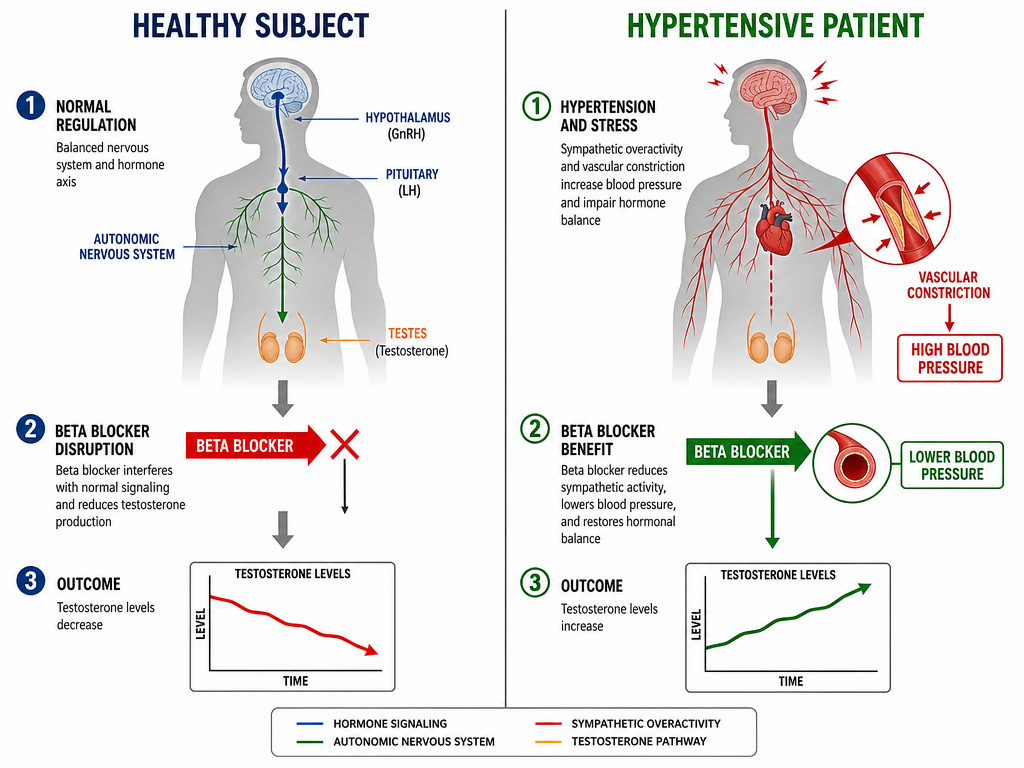
This is the part that flips the script. Most of the alarming studies showing beta blockers tanking testosterone were conducted on healthy young male volunteers. The effects in men with the condition these drugs are actually prescribed for, essential hypertension, are often different, as the 2010 data shows.
In healthy subjects, the body’s sympathetic nervous system and hormone axis are in a different baseline state. Introducing a beta blocker can be more disruptive. For example, a beta-blocker sexual function study in normal males found that non-selective agents like propranolol caused the greatest reduction in testosterone. But that finding doesn’t necessarily transfer to a 50-year-old man with a decade of high blood pressure, whose system is under chronic stress.
In hypertension, the disease itself is a major disruptor. Chronic high blood pressure damages blood vessels, including those supplying the testes and penis, and is independently linked to low testosterone and high blood pressure. When a beta blocker effectively lowers blood pressure and reduces systemic stress, it may create a net positive environment for hormone production, which could explain the surprising rises with bisoprolol and nebivolol.
The lesson is to always check the study population.
The Role of Penile Blood Flow and Sexual Function
When men worry about beta blockers and testosterone, what they’re often really worried about is sexual function, libido and erectile quality. Here, the data introduces another twist.
| Artery Measured | Bisoprolol Improvement | Nebivolol Improvement | Carvedilol Improvement |
|---|---|---|---|
| Right Cavernosal | +32.6% | +46.3% | +36.6% |
| Left Cavernosal | +35.6% | +36.8% | +48.4% |
| Dorsal Penile | +44.5% | +34.9% | +35.8% |
Improved blood flow did not translate into subjectively better erections or libido during the short two-month trial.
This disconnect is vital. It suggests that sexual side effects from beta blockers may be less about raw hormone levels or even blood flow, and more about central nervous system effects like fatigue, reduced motivation, or a dampening of the sympathetic “excitement” response. It also highlights why simply checking a testosterone level may not explain sexual dysfunction; the issue could be neurological or vascular in a way a standard hormone panel misses.
What About Other Common Beta Blockers?
The 2010 study gives us a deep look at three drugs, but many people are prescribed older, more common agents like metoprolol, atenolol, or propranolol. The data here is messier and often comes from those healthy volunteer studies.
- Propranolol: The picture is contradictory. This acute-versus-chronic discrepancy is a major reason you can’t rely on simple answers.
- Atenolol & Metoprolol: Studies in healthy men, like the one cited above, generally show these selective beta-1 blockers can reduce testosterone.
The lack of clean, modern data for these older drugs in hypertensive patients is a genuine knowledge gap.
Action Steps: What to Do If You’re Concerned
If you’re on a beta blocker and worried about your testosterone or sexual function, here is the sequence I’d follow. It’s the same one I use when evaluating any potential side effect from a long-term medication.
- Do Not Stop Your Medication. You must not do this. Abruptly stopping a beta blocker can cause a dangerous rebound in heart rate and blood pressure. The cardiovascular risk is immediate; any hormonal concern is long-term.
- Get Objective Data. Before you assume anything, get a blood test. A standard testosterone panel (total T, free T, SHBG) gives you a baseline. This is crucial because symptoms of low T, fatigue, low libido, overlap perfectly with side effects of beta blockers and the underlying stress of hypertension.
- Review Your Full Medication List. Beta blockers are rarely the only suspect. You need a full picture.
- Schedule a Informed Conversation. Take your bloodwork and a list of your concerns to your doctor. Ask specific questions: “Given the study showing nebivolol monotherapy increased testosterone levels by 56.8% after two months, is it a suitable alternative to my current beta blocker?” or “Could my fatigue be related to my metoprolol, and can we test a switch?” Frame it as optimizing treatment, not rejecting it.
Your goal isn’t to self-prescribe, but to become an informed partner in managing both your heart health and your overall vitality.
Lifestyle changes to support testosterone/libido
While medication effects vary, focusing on foundational health can support your hormonal and sexual health. Research on beta blockers shows their impact on hormones and penile blood flow can differ, but these changes did not translate to noticeable differences in sexual function for patients in key studies. This highlights that libido and performance are influenced by many factors. Practical steps include maintaining a healthy weight through balanced nutrition and regular physical activity, as excess body fat can disrupt hormone balance. Prioritizing quality sleep is crucial for testosterone production. Managing stress through techniques like mindfulness or dedicated relaxation can also help, as chronic stress elevates cortisol, which can negatively impact testosterone. Reducing alcohol consumption and avoiding smoking support better vascular health, which is essential for erectile function.
Psychological factors (anxiety, depression) affecting libido
Mental health is a powerful driver of sexual desire and function, often independent of medication effects. In studies of men taking beta blockers for hypertension, measured changes in testosterone and blood flow did not lead to considerable changes in their reported sexual function. This disconnect suggests psychological factors like anxiety or depression can be primary contributors to libido issues. The worry about sexual performance itself can create a cycle of anxiety that further inhibits desire. Conditions like depression commonly reduce interest in sex. If you are experiencing low libido while on medication, discussing these feelings with a healthcare provider is a key step. They can help determine if the issue is related to medication, an underlying psychological factor, or a combination, and guide you toward appropriate support or management strategies.
Frequently Asked Questions
Which beta blocker is best for testosterone?
Based on the 2010 clinical study, nebivolol appears favorable for testosterone levels in men with hypertension. It significantly increased testosterone (by 56.8%) while also providing vasodilatory benefits and improved penile blood flow. However, “best” depends on your total health profile; your doctor must choose based on your specific heart condition.
Do beta blockers cause erectile dysfunction?
They can, but the mechanism may not be hormonal. While some beta blockers like carvedilol may lower testosterone, others that raise it (bisoprolol, nebivolol) still report ED as a possible side effect. The cause is likely multifactorial: central fatigue, reduced cardiac output during activity, or altered nervous system signaling. The improved penile blood flow seen in studies suggests the issue isn’t purely vascular.
Can I take testosterone replacement therapy (TRT) with beta blockers?
This is a decision for your cardiologist and endocrinologist. There is no direct pharmacological conflict, but the combination requires careful monitoring. TRT can increase red blood cell count and slightly worsen sleep apnea, while beta blockers manage heart rate and blood pressure. The underlying state of your cardiovascular system is the deciding factor. Never start TRT while on beta blockers without full cardiac clearance.
How common is low testosterone from beta blockers?
There is no single percentage. The incidence is tied to the specific drug. For newer selective agents like bisoprolol and nebivolol, the effect appears to be positive. You must look at the data for your prescription.
Will switching beta blockers fix low testosterone?
It might, but it’s not guaranteed. If your low testosterone is primarily driven by your medication’s specific action (e.g., you’re on a suppressing agent like carvedilol), switching to a neutral or positive one like nebivolol could help. However, if your low T is due to other factors like obesity, sleep apnea, or other prescription drugs and testosterone interactions, switching beta blockers alone may not resolve it. Testing and a holistic review are key.
Before You Go
The relationship between beta blockers and testosterone is a case study in why you must dig deeper than drug class labels. We have one drug that lowers it, two that raise it, and all three improving the physical capacity for erections without changing how men actually feel. The evidence refuses to be simple.
If you take away one thing, let it be this: the variable that matters most is you, your diagnosis, your specific prescription, and your unique physiology. Use the hard numbers from studies like the one discussed here to ask better questions. Bring the phrase “essential hypertension” to your doctor’s appointment. Mention nebivolol’s 56.8% increase. That specificity changes the conversation from vague worry about side effects to a targeted discussion about optimizing your regimen.
Your heart health is paramount. But managing it shouldn’t mean resigning yourself to a fog of fatigue or low drive. The data shows there are options within the beta-blocker category itself. It’s work to find the right fit, but that work, partnering with your doctor, is how you solve for both parts of the equation.
