
What Is Androgen Receptor Sensitivity?
This post contains affiliate links. As an Amazon Associate, we earn from qualifying purchases.
Androgen receptor sensitivity is how effectively your cells respond to androgens like testosterone. It’s determined by the function of your androgen receptors, which is heavily influenced by the length of a CAG repeat sequence in the AR gene. Longer CAG repeats mean lower receptor sensitivity, so two people with identical testosterone levels can have vastly different biological effects. This genetic factor is why some men feel energetic with moderate testosterone while others feel sluggish despite high levels.
Think of it like a lock and key. Testosterone is the key. The androgen receptor is the lock. Sensitivity is how smoothly that key turns the lock to open the door to cellular action. If the lock is sticky or worn, even a perfectly cut key struggles. This is a practical illustration of what is androgen receptor sensitivity.
What follows is a breakdown of the mechanism, the genetic dial that controls it, the clinical disorder that happens when it fails, and the practical reality of how this changes the game for diagnosing low testosterone and personalizing treatment.
Key Takeaways
- Your androgen receptor sensitivity is largely set by the number of CAG repeats in the AR gene, longer repeats correlate with lower sensitivity.
- This explains why total testosterone is a poor health metric; two men with the same level can have different symptoms based on their unique receptor function.
- Emerging research suggests ratios like FT:CAG may be better for diagnosing hypogonadism than testosterone levels alone.
- Androgen Insensitivity Syndrome (AIS) is the clinical proof of concept, where non-functional receptors prevent male development despite normal hormone levels.
- While genetics load the gun, lifestyle factors like sleep, body composition, and chronic stress pull the trigger by further influencing receptor density and function.
The Androgen Receptor: Your Cellular Gatekeeper
The androgen receptor is a protein inside your cells, waiting for a signal. That signal is usually testosterone or its more potent cousin, dihydrotestosterone (DHT). When one of these hormones arrives, it binds to the receptor. This isn’t a passive connection. It changes the receptor’s shape, allowing it to move into the cell’s nucleus, latch onto specific parts of your DNA, and turn genes on or off.
The androgen receptor attaches to androgen hormones to form a complex, which then binds to DNA to regulate the activity of genes that play a role in male sexual development, hair growth, sex drive, and muscle protein synthesis.
This process directs everything from deep voice and beard growth to muscle maintenance, bone density, and red blood cell production, which is central to the what is androgen receptor sensitivity question. It also has roles in both men and women for regulating hair growth, libido, and energy metabolism. The receptor isn’t just in sexual tissues; it’s widespread, in your brain, skin, muscles, and bones.
The system’s efficiency hinges on one thing: how well that initial binding and gene-activation process works, which is the core of what is androgen receptor sensitivity. That’s receptor sensitivity.
The CAG Repeat: Your Genetic Sensitivity Dial
Buried in the genetic code for the androgen receptor is a short, repeating sequence: CAG. This sequence instructs the cell to add a chain of the amino acid glutamine to the receptor protein. The number of repeats varies from person to person.
Here’s the crucial part: the length of this CAG repeat chain is inversely related to receptor sensitivity. More repeats mean a longer glutamine tract, which makes the receptor less efficient at activating genes after it binds testosterone.
The research is clear on the mechanism. A peer-reviewed article in Nature Reviews Urology states: “In vitro, transcription of androgen-dependent target genes is attenuated with increasing length of CAG repeat tracts.” In plain English, longer repeats dampen the signal.
| CAG Repeat Length | Receptor Sensitivity | Practical Implication |
|---|---|---|
| Shorter (e.g., 9-18 repeats) | Higher | May experience stronger androgen effects (e.g., more muscle growth, more body hair) at a given testosterone level. |
| Middle of Normal Range (e.g., 19-26 repeats) | Moderate | Represents the most common population average. |
| Longer (e.g., 27-37+ repeats) | Lower | May require higher testosterone levels to achieve the same biological effect as someone with shorter repeats. |
The normal range is wide, anywhere from 9 to 37 repeats, according to a clinical AR sensitivity CAG repeat study. Most people fall somewhere in the middle. This genetic variation is why the standard lab range for “normal testosterone” is almost meaningless on an individual level. It’s the reason one guy feels great at 500 ng/dL and another feels exhausted at 700 ng/dL. His receptor might simply be less sensitive.
This polymorphism doesn’t just affect muscles. Studies cited in that Nature Reviews article link longer CAG repeats to differences in bone density, body fat distribution, and even aspects of cognitive function and mood in healthy men. The receptor’s efficiency echoes throughout the body.
Androgen Insensitivity Syndrome: When the Receptor Breaks
The most definitive proof of the receptor’s importance is when it doesn’t work at all. Androgen Insensitivity Syndrome (AIS) is a genetic condition where variants in the AR gene create a dysfunctional receptor.
According to the MedlinePlus genetics guide to AIS, “If androgen receptors cannot bind to androgens, the body cannot use androgens, even if there are normal levels of these hormones in the body.”
The body produces testosterone, but the cells are deaf to it. The clinical outcome depends on the severity of the receptor defect.
| AIS Form | Receptor Function | Typical Physical Presentation | Prevalence |
|---|---|---|---|
| Complete (CAIS) | No functional response. | Female-typical external genitalia. Undescended testes, no uterus, sparse pubic/underarm hair, infertile. | 2 to 5 in 100,000 newborns. |
| Partial (PAIS) | Partially impaired function. | Genitalia can appear female-typical, ambiguous, or male-typical. Often infertile. | At least as common as CAIS. |
| Mild (MAIS) | Mildly impaired function. | Male-typical genitalia at birth. Often infertile, may experience breast enlargement at puberty. | Much less common. |
This syndrome illustrates the absolute distinction between hormone levels and hormone effect. A person with CAIS has testosterone levels in the typical male range, but their body develops as female because the signal isn’t received. It’s the ultimate example of low androgen receptor sensitivity.
Where this goes sideways: Assuming normal testosterone levels guarantee normal androgen action. In AIS, and in subtler cases of long CAG repeats, the hormone is present but the cellular machinery can’t use it effectively.
Why This Changes the Diagnosis of Low Testosterone
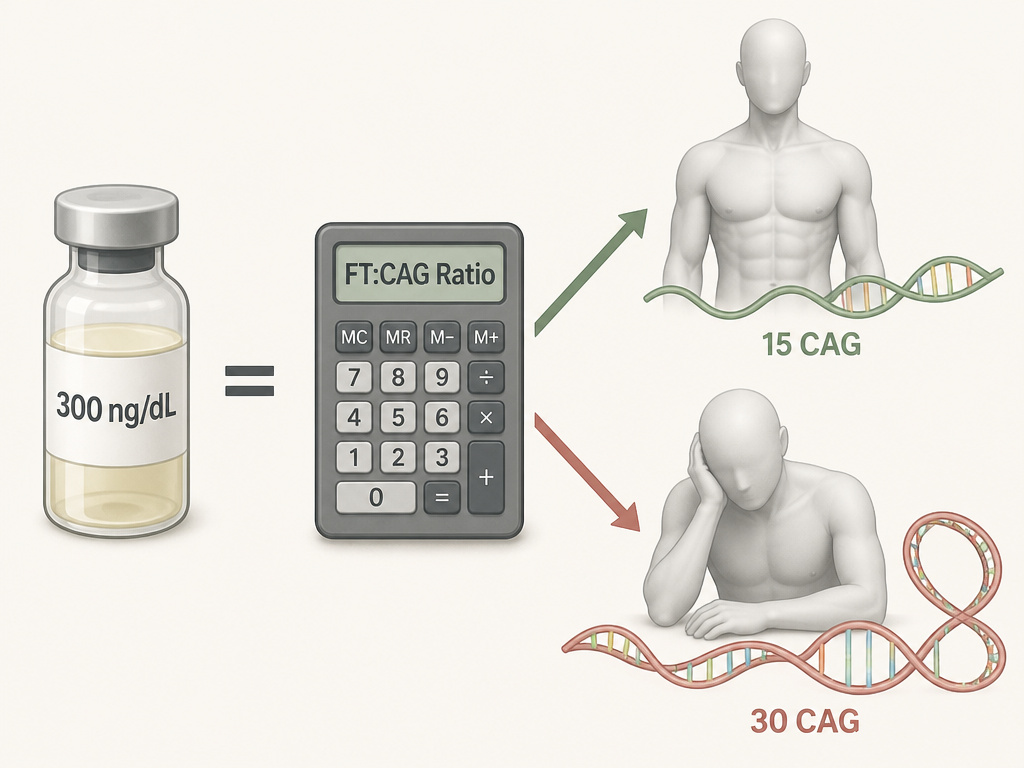
The traditional diagnosis for male hypogonadism focuses on a single number: total testosterone falling below a lab threshold. This misses the entire picture of receptor sensitivity. A man with a long CAG repeat might have “normal” total testosterone but still experience every symptom of deficiency because his cells aren’t responding.
A 2024 study aimed to fix this. Researchers divided men into groups based on symptoms, not just blood levels. They measured total testosterone, bioavailable testosterone, and free testosterone, and then divided each value by the individual’s CAG repeat number, creating TT:CAG, BioT:CAG, and FT:CAG ratios.
The results, published in a PMC article on AR polymorphism, were telling. The FT:CAG ratio had the greatest area under the curve for differentiating between symptomatic and asymptomatic men. The study concluded these ratios “may be better biochemical tests for diagnosis of Male Hypogonadism” than testosterone levels alone.
The higher the ratio, the greater the effective androgen status. This is a more personalized metric. It acknowledges that 300 ng/dL of testosterone means something different for a man with 15 CAG repeats than it does for a man with 30.
This has direct implications for testosterone replacement therapy (TRT). The Nature Reviews article notes that “effects of testosterone substitution are markedly influenced by the number of CAG repeats.” Future treatment may involve tailoring the TRT dose based on a patient’s genetic profile to achieve the desired biological effect without overshooting.
Can You Change Your Androgen Receptor Sensitivity?
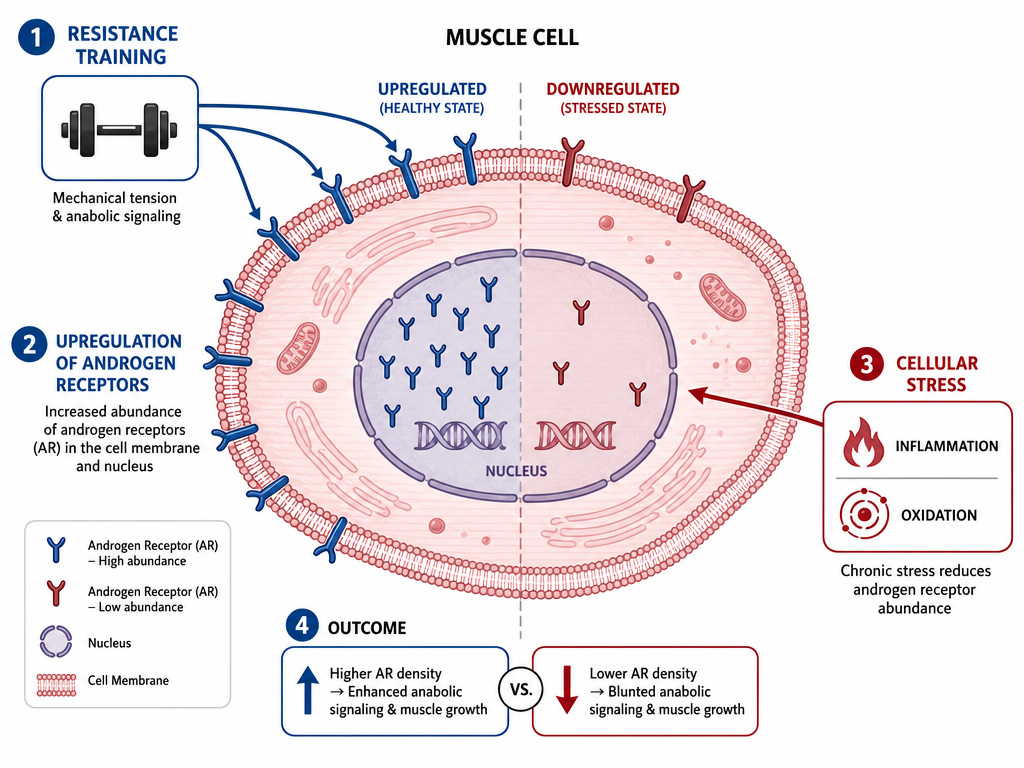
This is the million-dollar question. Your CAG repeat length is fixed at conception, you can’t edit your genes. But receptor function involves more than just genetics. Two key areas are under your control: receptor density and the cellular environment.
- Receptor Density: Your body can increase the number of androgen receptors on certain cells in response to demand. Heavy resistance training is the classic example. It upregulates AR expression in muscle tissue, making the muscle more sensitive to available testosterone. This is one reason exercise can influence hormonal health.
- Cellular Environment: Factors that create cellular stress can hamper receptor function. Chronic inflammation, oxidative stress, and poor metabolic health (like insulin resistance) can disrupt the signaling pathway. Conversely, a nutrient-rich diet supports cellular repair and efficient function.
Various supplements are marketed to influence testosterone or its effects. Let’s apply a skeptic’s lens:
- Zinc: A true deficiency will impair testosterone production and likely general cellular function. Correcting a deficiency helps. Mega-dosing beyond sufficiency does not increase sensitivity.
- Magnesium: Similar to zinc, vital for hundreds of enzymatic processes. Sufficiency supports baseline health, but it’s not a sensitivity “hack.”
- Ashwagandha: Its primary, well-documented effect is reducing cortisol. Since chronic stress and high cortisol can downregulate androgen receptors, ashwagandha may support sensitivity indirectly by improving the hormonal environment. It’s not a direct receptor activator.
- Boron: The evidence for a meaningful, sustained impact on free testosterone or receptor function from boron supplementation is not established in the provided sources. It’s often overstated.
Lifestyle factors can influence receptor density and cellular environment. You can’t change your CAG repeat number, but you can ensure your receptors are plentiful and operating in a healthy cell.
Androgen Receptors in Women’s Health
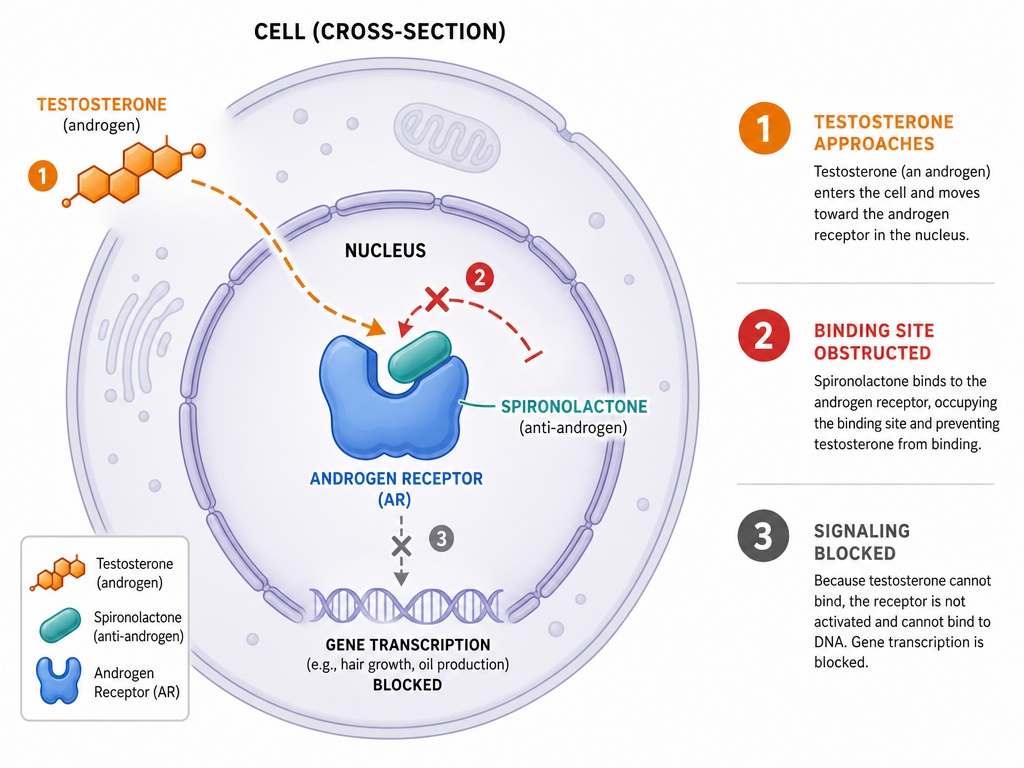
The conversation often centers on men, but androgen receptors are critical for women too. Women produce testosterone, albeit at lower levels, and their receptors use it for maintaining muscle mass, bone density, libido, and overall energy.
The principle of variable sensitivity applies. A woman with lower receptor sensitivity might experience symptoms like low libido or fatigue even if her testosterone levels are in the “normal” female range. In women, as in men, androgen effects depend on both hormone levels and receptor function.
Furthermore, some medications used in women’s health, like spironolactone, work as androgen receptor blockers. They treat conditions like hormonal acne or hirsutism by physically blocking the receptor from binding testosterone, clinically reducing its effect. This is a therapeutic reduction of sensitivity.
Frequently Asked Questions
How can I tell if I have high or low androgen receptor sensitivity?
There’s no direct home test. However, clues point to lower sensitivity: having testosterone levels on the higher end of normal but still experiencing classic low-T symptoms (fatigue, low libido, poor recovery from exercise). Conversely, developing pronounced body hair or muscle mass with relatively moderate exercise might suggest higher sensitivity. A genetic test for the AR CAG repeat length is the only concrete measure, but it’s not a standard clinical test.
Should I get my CAG repeat length tested?
For the general public, no. The clinical utility of this information within the normal range is still a subject of research. However, for men struggling with hypogonadal symptoms despite borderline-normal testosterone, or for those on TRT who need unusually high doses to feel an effect, the data could be informative. It’s a conversation to have with an endocrinologist familiar with androgen receptor pharmacogenetics.
What does the “testosterone saturation model” have to do with this?
Your personal saturation point is determined by both receptor density (influenced by lifestyle) and receptor sensitivity (influenced by genetics like CAG repeats). Someone with high sensitivity may saturate their receptors and feel optimal at a lower blood level.
Do SARMs work by affecting receptor sensitivity?
They don’t change your innate sensitivity but are engineered to be very effective at triggering the receptors they target, which is why they are powerful, and risky, compounds.
How does SHBG relate to receptor sensitivity?
It binds to testosterone in the blood, making it unavailable to receptors. High SHBG lowers free and bioavailable testosterone, the fraction that can reach receptors. So, you can have high receptor sensitivity, but if all your testosterone is bound by SHBG, the signal still doesn’t get through. It’s a two-part problem: hormone access and receptor function.
The Bottom Line
Androgen receptor sensitivity is the missing variable in the hormone equation. Chasing a higher total testosterone number is a futile game if your cellular locks are resistant. The evidence points to a more nuanced approach: understand that your genetic CAG repeat length sets a baseline, and your lifestyle, through sleep, training, stress management, and nutrition, modulates the final expression.
The pharmacogenetic implications of the CAG polymorphism are likely to have a significant role in future testosterone treatment. Future treatment may involve tailoring initiation thresholds and dosage based on a patient’s receptor polymorphism. Optimizing controllable factors like sleep, body composition, and stress management may support receptor density and cellular function.
