
9 Best Otc Fiber Supplements in 2026
This post contains affiliate links. As an Amazon Associate, we earn from qualifying purchases.
Our best overall OTC fiber supplement is Metamucil Psyllium Husk Fiber Powder, a long-established choice that offers multiple health benefits in one daily scoop. For sensitive systems, we recommend Tomorrow’s Nutrition Sunfiber Prebiotic Powder, and those seeking minimal gas should consider Citrucel Methylcellulose Caplets. Many people struggle to get enough fiber from diet alone, leading to digestive discomfort.
Finding the right supplement requires matching your specific symptoms and preferences to the correct fiber type and form. We researched product specifications, expert medical guidance, and patterns in owner feedback to identify these nine picks, helping you navigate a crowded market with confidence.
Top 9 OTC Fiber Supplements in the Market
Certain content that appears on this site comes from Amazon. This content is provided "as is" and is subject to change or removal at any time.
The Best OTC Fiber Supplements, Reviewed
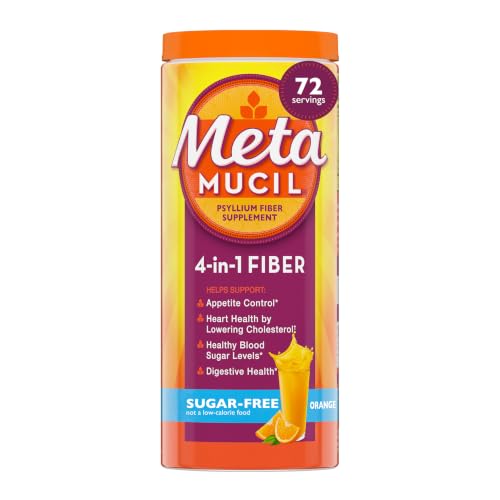
Metamucil Psyllium Husk Fiber Supplement Powder
What We Like
- Psyllium husk provides 4-in-1 health benefits.
- Sugar-free formula with a refreshing orange flavor.
- #1 doctor recommended fiber brand for 90 years.
- GLP-1 friendly and plant-based fiber source.
Trade-offs
- Psyllium husk forms a thick gel some find unpalatable.
Metamucil provides four distinct health benefits from a single psyllium husk fiber source, which means one daily supplement can support digestive health, heart health, blood sugar levels, and appetite control. For the many people who don’t get enough fiber from diet alone, this multi-benefit approach simplifies closing that gap. A ninety-year history as the number one doctor-recommended fiber brand offers considerable reassurance for daily use.
The sugar-free orange flavor is designed for palatability, but psyllium husk fiber inherently creates a smooth texture that some may find distinctive. If a completely undetectable fiber is preferred, products like Tomorrow’s Nutrition Sunfiber are listed as dissolving clear and tasteless. Metamucil’s focus remains on its singular ingredient delivering multiple functions.
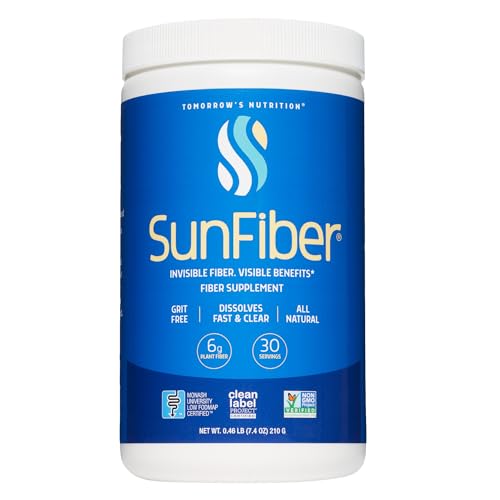
Tomorrow's Nutrition Sunfiber Prebiotic Powder
What We Like
- Gentle, low FODMAP formula for sensitive systems
- Dissolves clear without altering food taste
- Acts as a prebiotic for gut microbiome*
Trade-offs
- Powder form requires mixing, unlike caplets like Citrucel
A 6-gram serving of Sunfiber ferments slowly, which is the clinical reason it avoids the excess gas and bloating that derail so many fiber routines. This makes it a logical starting point for anyone whose digestive system tends to protest, especially those following a low FODMAP protocol. The powder vanishes into drinks without a trace, so you can add it to anything without turning your morning coffee into a chalky experiment.
Its gentle, low FODMAP-certified formula is designed to be well-tolerated by sensitive stomachs without causing excess gas or bloating, which means it’s a viable option for those who have struggled with other fibers. The trade-off is that it’s a powder you must mix into a drink or food, ruling it out if you strictly prefer swallowing a pre-measured caplet like Citrucel. While it provides 6 grams of soluble fiber per serving, someone focused solely on comparing fiber volume per scoop would need to check other products’ labels, as that specific data isn’t provided for all alternatives. For managing sensitivity while still promoting regularity and gut health, this formulation has a clear design advantage.
Product photos
Citrucel Methylcellulose Fiber Therapy Caplets

What We Like
- Methylcellulose fiber is non-toxic and non-irritant
- Clinically proven for occasional constipation relief
- Formula designed to minimize excess gas
- Physician-recommended among therapeutic fiber laxatives
Trade-offs
- Caplet form requires swallowing versus mixing a powder
- Product is sensitive to heat damage during shipping
Its methylcellulose fiber is the core feature for someone prioritizing a low-gas experience, as it’s specifically noted as non-allergenic and non-irritant. This makes it a straightforward choice for individuals who have reacted poorly to other fibers or who want to avoid the bloating that can sometimes accompany a new supplement regimen. The caplet form simplifies dosing without the need to mix powders, appealing to those who value convenience and dislike gritty textures.
Citrucel Methylcellulose Fiber Therapy Caplets are clinically proven to help relieve occasional constipation, so they address the core issue of irregularity directly. Their active ingredient is methylcellulose fiber, which is described as non-toxic, non-allergenic, and non-irritant, making it a gentle option for sensitive systems. Laboratory testing indicates this fiber won’t cause excess gas for most people, though individual results can vary, which is a common concern with other fiber types.
Kirkland Psyllium Husk Fiber Capsules

What We Like
- High 360-capsule count per container
- Convenient, pre-measured capsule form
- Compact, space-efficient cube-shaped bottle
Trade-offs
- Capsule form requires swallowing multiple pills
- No prebiotic or GLP-1-specific claims are listed
Kirkland Psyllium Husk Fiber Capsules deliver a 360-count supply of the same active ingredient found in Metamucil capsules, providing a straightforward source of daily soluble fiber. The product is listed as a bulk-forming laxative and fiber supplement. Its container is a three-inch cube, a shape that fits efficiently on a standard shelf.
As capsules, this format differs from drinkable fiber powders like the listed Metamucil Psyllium Husk Fiber Supplement Powder. The product’s description focuses on its role as a fiber supplement and laxative, while other listed products, such as Tomorrow’s Nutrition Sunfiber, mention prebiotic or GLP-1 support. This is a value-dense option with a high capsule count.
Product photos
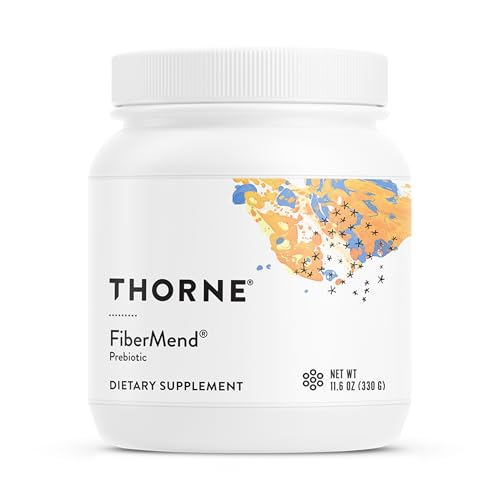
Thorne FiberMend Prebiotic Fiber Powder
What We Like
- NSF Contents Certified for label accuracy
- Claims no bloating, cramping, or gas
- Flavorless powder for easy mixing
- Trusted by professional sports teams
Trade-offs
- 30-serving size is smaller than many competitors
- Unflavored powder lacks taste options
This product carries NSF Contents Certified third-party verification, which means you can trust the label matches what’s actually in the tub. For someone who prioritizes verified ingredient integrity over all else, this certification is the main event. It’s a logical pick if you’re skeptical of supplement marketing and want a clinical-grade brand often recommended by practitioners. The formula is designed to be well-tolerated and flavorless, aiming to support digestive function without drama.
Thorne FiberMend comes in a 30-serving container, which prioritizes certified contents over high volume. The compact jar measures just under five inches square and stands a little over six inches tall, so it fits easily on a crowded kitchen counter or in a cabinet. This approach suits someone whose regimen requires a third-party tested formula from a brand trusted by over a hundred professional sports teams.
Product photos
Konsyl USDA Organic Psyllium Husk Powder

What We Like
- Single-ingredient, USDA organic formula
- Unflavored powder for versatile mixing
- Provides 5g of soluble fiber per serving
- Resealable bag maintains freshness
Trade-offs
- Powder requires thorough mixing to avoid clumping
- Larger 12oz bag is less portable than capsules
Konsyl’s formula contains just one ingredient, USDA organic psyllium husk powder, which defines its entire value proposition. This purity means the product serves as a clean, additive-free source of soluble fiber for those avoiding sugars, flavors, or preservatives. Its fine-ground, unflavored powder is intended for blending into beverages like smoothies or mixing into foods like oatmeal and yogurt. The resealable 12-ounce pack is designed to maintain freshness across the stated 60 servings.
The preparation requires user involvement, as the unflavored powder provides no inherent taste. This contrasts with flavored options like the Metamucil Psyllium Husk Fiber Supplement Powder, which is listed as orange flavored. Users must mix it thoroughly into their chosen liquid or food, offering control over flavor but adding a step to the routine.
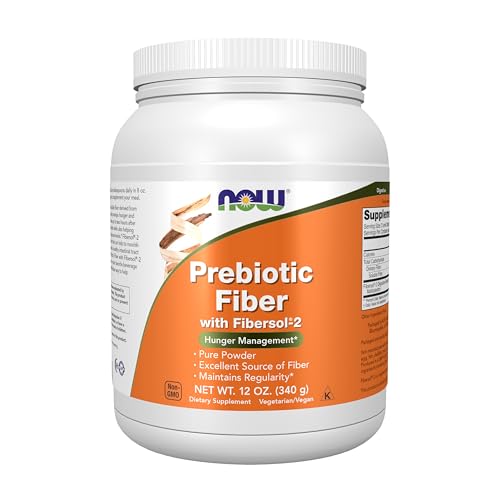
NOW Supplements Fibersol-2 Prebiotic Powder
What We Like
- Tasteless, soluble powder mixes into anything
- Acts as a prebiotic for intestinal flora
- Manufactured under high GMP quality assurance
- Promotes a feeling of fullness for up to two hours
Trade-offs
- Derived from corn, a potential allergen for some
A tasteless, soluble fiber powder that dissolves rapidly and completely disappears into any drink or food, which makes it the ultimate stealth operator for someone who just wants the functional benefits without altering a recipe’s flavor. It’s built around Fibersol-2, a specific prebiotic fiber that nourishes gut bacteria and helps manage hunger, backed by a manufacturer with a longstanding reputation for rigorous quality control. This is for the skeptical tinkerer who trusts a straightforward, single-ingredient formula over flavored blends.
Fibersol-2 is a tasteless, soluble fiber powder derived from non-GMO corn, which means it won’t alter the flavor of beverages it’s mixed into. This pure formulation offers total control over taste, but it provides no inherent flavoring, so users who dislike plain water must add their own palatability. Compared to products like the orange-flavored Metamucil powder, this one requires you to provide any desired flavor yourself.
Benefiber Prebiotic Fiber Supplement Powder

What We Like
- Dissolves completely in food and drinks
- Sugar-free and gluten-free formula
- Plant-based prebiotic fiber source
- Large 17.6-ounce container size
Trade-offs
- Only mixes into non-carbonated beverages
- Lacks the flavor options of some competing powders
A 17.6-ounce bottle delivering 250 servings puts a lot of functional fiber on the shelf for the money. The wheat dextrin is a plant-based prebiotic that dissolves without grit or taste, which makes it a practical choice for someone who just wants to close their fiber gap without changing their routine. It suits the buyer prioritizing sheer volume and straightforward utility over any specific therapeutic claims.
Benefiber Prebiotic Fiber Supplement Powder is an unflavored, plant-based fiber that dissolves clear and completely in non-carbonated beverages and food. This makes it a discreet addition to daily routines like coffee or oatmeal without altering taste or texture. The powder is sugar-free, gluten-free, and low in calories, which aligns with dietary preferences focused on simple, clean supplementation. Its wheat dextrin formulation is designed to support digestive health by nourishing gut bacteria. It is also positioned for GLP-1 support to help users feel fuller longer.
Product photos
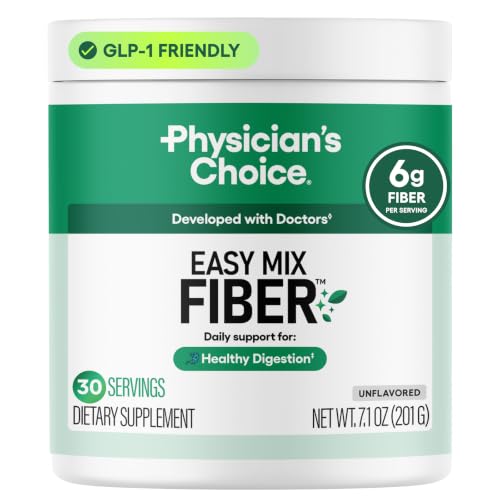
Physician's Choice Easy Mix Fiber Powder
What We Like
- Designed specifically for GLP-1 support routines
- Completely dissolves without clumping or sludge
- Clinically studied prebiotic fiber sources
- Third-party tested for safety and purity
Trade-offs
- Requires 60 seconds of stirring or blending
A formula built around soluble corn and guar fiber means it’s engineered to integrate smoothly into a GLP-1 regimen without the digestive shock some fibers cause. It suits someone prioritizing a predictable, grit-free addition to their daily drinks or food, where supporting the gut microbiome and maintaining regularity are the primary goals. The focus is on clinical backing and ease of use over a massive fiber punch.
The unflavored powder dissolves clear in hot or cold drinks and foods without changing the taste, so it can be added to water, coffee, or yogurt. It is described as having no clumping, grit, or sludge, unlike psyllium husk fiber powders that can quickly thicken. This makes it suited for someone prioritizing a texture-neutral addition to their daily routine.
Product photos
How We Evaluated OTC Fiber Supplements
Our evaluation relied on manufacturer specifications, clinical data, and patterns in expert recommendations and owner feedback. We prioritized fiber type and its suitability for common symptoms like constipation, bloating, or diarrhea. We also weighed product form, powder, capsule, or caplet, for convenience and palatability, and looked for third-party certifications or specific claims like low FODMAP or GLP-1 support.
This guide is based on available product information and general research, such as the clinically studied mechanism of methylcellulose or the prebiotic properties of certain fibers. It is designed to help you compare different options. For persistent symptoms or personalized advice, consulting a healthcare provider is recommended.
What To Look For In OTC Fiber Supplements
Choosing a fiber supplement is about matching the right type and form to your specific digestive needs and lifestyle.
The key is to identify your primary goal, like gentle daily support, constipation relief, or prebiotic benefits, and then select a compatible fiber type (e.g., psyllium, methylcellulose, inulin) in a form you’ll consistently use.
Fiber Type and Primary Use
Fiber supplements contain different active ingredients, each with distinct properties. Soluble fibers like psyllium husk form a gel that can help manage both constipation and diarrhea, making them a versatile choice for general wellness. Insoluble fibers add bulk to stool, primarily aiding constipation. Other fibers, like partially hydrolyzed guar gum (Sunfiber) or Fibersol-2, are known for being gentle and low-fermentable, which can minimize gas and bloating for sensitive individuals. Methylcellulose, a synthetic fiber, is clinically studied for relieving constipation and is specifically formulated to be low-gas.
Product Form and Ease of Use
The physical form of your supplement significantly impacts daily adherence. Powders offer flexibility in dosing and can be mixed into foods or drinks, but require preparation and thorough stirring to avoid clumping. Capsules and caplets provide pre-measured, portable convenience but require swallowing multiple pills. Flavored powders can improve palatability for some, while tasteless options are better for discreetly adding fiber to meals without altering flavor.
Certifications and Special Formulas
For shoppers with specific concerns, additional product attributes matter. Third-party certifications, like NSF Contents Certified, verify label accuracy and ingredient purity. Some formulas are designed for particular diets, such as USDA Organic or low FODMAP certified options for sensitive stomachs. Others target modern wellness routines, like blends with clinically studied prebiotics for gut microbiome support or fibers specifically noted for use alongside GLP-1 medications.
- Start with a low dose and increase gradually with plenty of water.
- Consider whether you need a flavored drink mix or a tasteless mix-in for food.
- Check for potential allergens, such as corn-derived fibers.
Consult your doctor before starting any supplement, especially if you have ongoing digestive issues.
OTC Fiber Supplements Compared
The comparison table below outlines key specifications for each of our picks to help you see the differences at a glance.
| Product | Fiber Source | Form | Servings/Count |
|---|---|---|---|
| Metamucil Psyllium Husk Fiber Supplement Powder | Psyllium Husk | Sugar-Free Powder | 72 teaspoons |
| Tomorrow's Nutrition Sunfiber Prebiotic Powder | Sunfiber | Unflavored Powder | N/A |
| Citrucel Methylcellulose Fiber Therapy Caplets | Methylcellulose | Caplets | 180 |
| Kirkland Psyllium Husk Fiber Capsules | Psyllium Husk | Capsules | 360 capsules |
| Thorne FiberMend Prebiotic Fiber Powder | N/A | Flavorless powder | 30 servings |
| Konsyl USDA Organic Psyllium Husk Powder | USDA organic psyllium husk | Fine-ground Powder | 60 |
| NOW Supplements Fibersol-2 Prebiotic Powder | Fibersol-2 from non-GMO corn | Soluble powder | N/A |
| Benefiber Prebiotic Fiber Supplement Powder | Wheat dextrin | Unflavored powder | 250 teaspoons |
| Physician's Choice Easy Mix Fiber Powder | Soluble corn & guar fiber | Unflavored Powder | N/A |
Frequently Asked Questions
What is the best over the counter fiber to take?
The best OTC fiber depends on your specific needs. For general, multi-benefit support, a psyllium husk powder like our best overall pick is a common choice. For sensitive stomachs, a gentle, low-FODMAP prebiotic powder is often recommended, while those prioritizing minimal gas might prefer a methylcellulose caplet.
Should I take fiber powder if I have diarrhea?
Certain soluble fibers can help manage diarrhea by absorbing excess water and forming a gel to add bulk to stool. However, it’s crucial to choose the right type; a gentle, soluble fiber like partially hydrolyzed guar gum is often suggested. Always consult a doctor for persistent diarrhea to rule out underlying conditions.
What fiber do gastroenterologists recommend?
Medical professionals often recommend starting with a soluble fiber like psyllium for its dual-action benefits. They emphasize choosing a supplement based on your dominant symptom, constipation, diarrhea, or bloating, and stress the importance of adequate water intake. Many also advise trying a doctor-recommended fiber supplement that has clinical backing.
Which fiber is better, Benefiber or Metamucil?
Benefiber (wheat dextrin) dissolves completely and is tasteless, making it a good mix-in for food. Metamucil (psyllium husk) forms a gel and offers broader health claims. The “better” choice depends on whether you want an undetectable fiber boost or a more traditional, bulk-forming supplement. Comparing the active ingredients in our comprehensive fiber guide can clarify these differences.
What’s the difference between soluble and insoluble fiber supplements?
Soluble fiber dissolves in water to form a gel, which can help regulate both constipation and diarrhea and support heart health. Insoluble fiber does not dissolve; it adds bulk to stool to promote regularity. Most OTC supplements are soluble fibers, like psyllium or inulin, but some blends contain both types. Understanding the different types of fiber supplements is key to selecting the right one.
The Bottom Line
Metamucil Psyllium Husk Fiber Powder is our best overall pick for its long track record and multi-benefit soluble fiber profile, ideal for someone seeking a single, daily supplement for general digestive health. If you’re on a tight budget, consider the high-volume Benefiber powder, and those needing third-party verification should look at Thorne FiberMend.
Your most important step is identifying your primary symptom, be it constipation, sensitivity, or bloating, and matching it to the appropriate fiber type. While our research highlights top options, a conversation with your healthcare provider remains the surest path to finding what works for your body.
