
10 Best Supplements For Diverticulosis in 2026
This post contains affiliate links. As an Amazon Associate, we earn from qualifying purchases.
Our research points to Benefiber Prebiotic Fiber Supplement Powder as the best overall supplement for diverticulosis because it dissolves completely and discreetly supports long-term gut flora. For those needing a sugar-free psyllium option, the Metamucil Psyllium Husk Powder is our best powder formula, while Citrucel Methylcellulose Fiber Caplets are the best gas-free formula for sensitive systems.
Managing diverticulosis often means finding a daily fiber source that fits into your routine without causing digestive upset. This review of ten leading supplements is based on expert medical guidance and patterns in user feedback to help you choose a product that supports your digestive health.
Top 10 Supplements For Diverticulosis in the Market
Certain content that appears on this site comes from Amazon. This content is provided "as is" and is subject to change or removal at any time.
The Best Supplements For Diverticulosis, Reviewed
Benefiber Prebiotic Fiber Supplement Powder

What We Like
- Dissolves completely in beverages and food
- Prebiotic fiber supports gut bacteria
- Suitable for GLP-1 support protocols
- HSA and FSA eligible
Trade-offs
- Powder form requires mixing, unlike caplets
- Only mixes into non-carbonated liquids
Benefiber’s wheat dextrin powder dissolves clear and tasteless, making it one of the easiest fiber supplements to mix into daily drinks or food without altering their flavor. Its plant-based prebiotic fiber is intended to nourish the good bacteria in your gut, which supports overall digestive health. This product suits someone who wants a consistent, no-fuss fiber source that works discreetly in the background of their meals.
The trade-off is that you must mix it into a beverage or food, a step pre-measured caplets like Citrucel avoid. It also requires a non-carbonated drink or soft food on hand each time. Since it dissolves completely and is grit-free, it avoids the texture issues some other fiber powders can have. The product’s focus is on daily prebiotic support for digestive health and GLP-1 support for feeling fuller longer.
Product photos
Metamucil Psyllium Husk Powder Supplement

What We Like
- Sugar-free, no-added-sweetener formula
- Promotes heart health by lowering cholesterol
- Helps control appetite between meals
Trade-offs
- Powder form necessitates mixing and measuring for each dose
A 1.5-pound canister of pure psyllium husk powder makes this a straightforward choice for managing diverticulosis. The sugar-free formula relies on a single, clinically-backed soluble fiber known to soften stool and support regularity, which is the core goal for a symptomatic flare. For the skeptical tinkerer who trusts established mechanisms over novel blends, this is a no-nonsense foundation. It’s a bulk buy designed for daily, long-term use by someone committed to a powder routine.
This powder requires mixing into a drink, unlike Citrucel’s methylcellulose caplets or Metamucil’s own capsule format. At 7.5 inches tall, the canister is taller than Citrucel’s 4.4-inch bottle. While Metamucil lists benefits for cholesterol and appetite, Benefiber’s powder explicitly includes prebiotic fiber support.
Product photos
Citrucel Methylcellulose Fiber Caplets

What We Like
- Clinically proven for occasional constipation relief
- Non-allergenic and non-irritant methylcellulose
- Easy-to-swallow caplet form
Trade-offs
- Caplet form requires swallowing versus mixing a powder
- At 0.5 lb, the container is less dense than bulk powders
- Requires careful storage to avoid heat or sunlight damage
Citrucel’s caplets contain methylcellulose fiber, which laboratory testing indicates won’t cause excess gas, though individual results vary. This can be a key consideration for managing occasional constipation when other fibers cause discomfort. The physician-recommended, easy-to-swallow caplets provide a dose-controlled way to add fiber without the mixing required for powders, fitting neatly into a daily pill routine.
Choosing these caplets means committing to swallowing pills rather than using a dissolvable powder that could be stirred into drinks. When compared to a product like Metamucil Psyllium Husk Powder, you are selecting a different type of fiber, methylcellulose versus psyllium husk, in a solid form. The product is clinically proven to help relieve occasional constipation when used as directed.
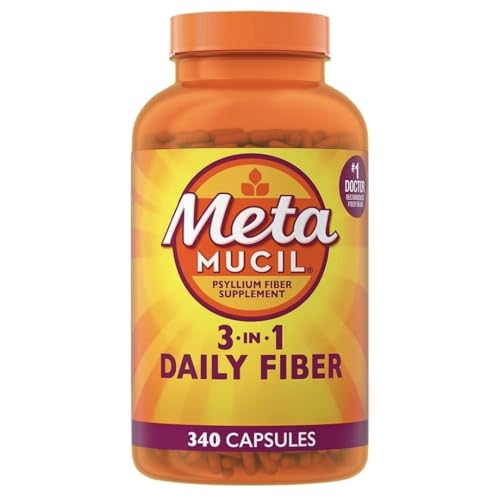
Metamucil Psyllium Husk Fiber Capsules
What We Like
- High capsule count in a value pack
- Capsules offer on-the-go convenience
- Made with only two ingredients
- Over 90 years of brand trust
Trade-offs
- Capsule form requires swallowing multiple pills
A 340-capsule value pack provides a long-lasting supply, meaning you can maintain a daily routine with fewer interruptions for restocking. This product fits those who want the precise, no-mess dosing of capsules and trust the Metamucil brand, which is noted as the #1 doctor-recommended fiber. It’s made with only two ingredients, including plant-based psyllium husk fiber, for a straightforward supplement.
The capsule format can be a challenge if you struggle with swallowing pills, especially since an effective fiber dose often requires taking multiple capsules. If you prefer a drinkable or mixable powder, the Metamucil Psyllium Husk Powder Supplement listed here offers the same brand in a different form. Compared to Citrucel Methylcellulose Fiber Caplets, this product uses psyllium husk as its fiber source.
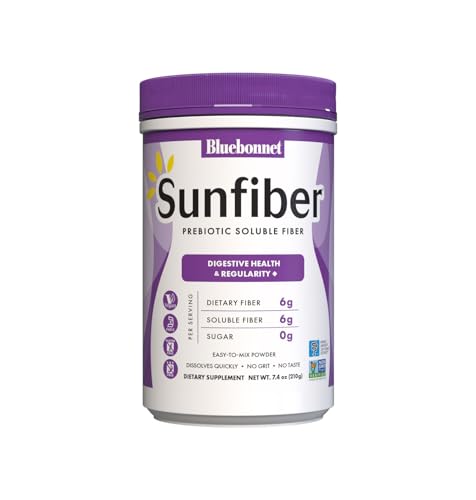
BlueBonnet Nutrition Sunfiber Powder
What We Like
- Soluble, slow-fermenting fiber minimizes gas
- Low-FODMAP certified for sensitive digestive systems
- Unflavored powder mixes clear in any liquid
- Prebiotic benefits support healthy gut bacteria
Trade-offs
- Powder form requires mixing, unlike ready-to-swallow caplets
- 7.4 ounce container holds less total product than many competing fiber powders.
BlueBonnet’s Sunfiber delivers 6 grams of partially hydrolyzed guar gum per serving, a soluble and slow-fermenting fiber the brand states is gentle and well tolerated. This Low-FODMAP Certified formula is positioned for those needing to support bowel regularity and gastrointestinal health without triggering digestive discomfort.
This fiber is described as soluble and slow-fermenting, intended for daily digestive support and prebiotic benefits. It is presented as an option for those prioritizing a gentle, well-tolerated addition to their routine over other types of fiber supplements.
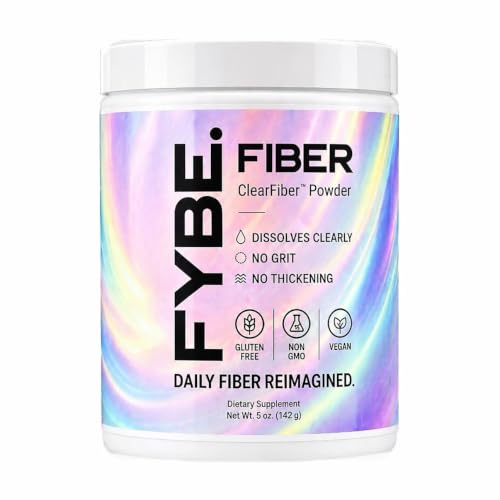
FYBE Clear Dissolving Fiber Powder
What We Like
- Dissolves completely clear with no grit or thickening
- Single ingredient with no flavors or sweeteners
- Unflavored design doesn't alter the taste of beverages
- Gluten-free, non-GMO, and vegan formulation
Trade-offs
- Only 3g of fiber per serving
- 35 servings per 5 oz jar
The single fact that this powder dissolves clear and doesn’t thicken your drink is the entire argument for it. For someone whose primary goal is to increase soluble fiber intake without altering their morning coffee or water, this is the tool. It suits the person who has tried and rejected gritty, gel-forming powders, and just wants a discreet, no-fuss additive to build their fiber total toward that 25-38 gram target. The clean, one-ingredient label is a bonus for the minimalist.
Each serving provides 3 grams of soluble fiber, which is less than the fiber content in many psyllium-based supplements. This lower dose per scoop suits a gradual approach, aligning with the manufacturer’s suggestion for those new to fiber to start with half a scoop. For someone requiring a higher initial fiber intake, a psyllium product may be a more direct option.
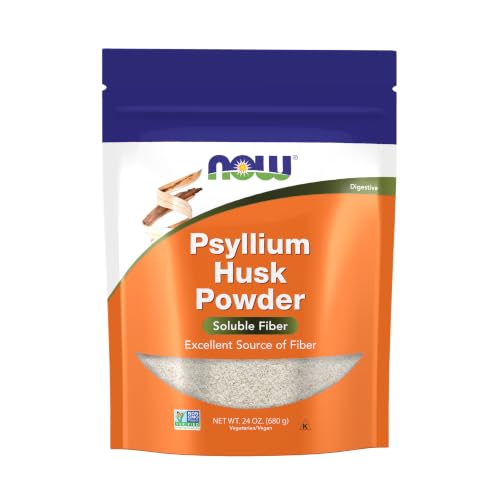
Now Foods 5978 Supplements
What We Like
- Single serving supplies most daily soluble fiber need
- GMP certification covers full manufacturing process
- Family-owned U.S. packaging operation
Trade-offs
- Requires immediate consumption after mixing 12 oz liquid
- Powder format necessitates vigorous mixing before use
A single tablespoon delivers six of the seven grams of soluble fiber recommended daily, so tracking your intake requires minimal calculation. This product suits someone who prefers a measured, high-potency fiber source and doesn’t mind the routine of mixing a daily drink. The rigorous GMP certification means the powder in the tub matches what’s stated on the label, which is the baseline for any supplement protocol.
This supplement requires a daily mixing ritual. You must vigorously stir it into a full glass of liquid and drink it immediately, which isn’t as convenient as a pre-measured capsule or a clear-dissolving powder you can add to a coffee. Compared to a product like Metamucil’s psyllium powder, this is a simpler formula, as both are unflavored and contain no added sweeteners. It’s a workhorse, not a convenience item.
Product photos
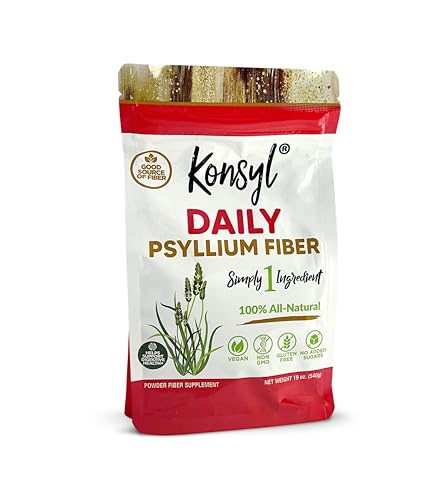
Konsyl Daily Psyllium Fiber Powder
What We Like
- Single-ingredient psyllium husk powder
- Unflavored and versatile for mixing
- Sugar-free, non-GMO, gluten-free, vegan
- Resealable pack for freshness
Trade-offs
- Powder form requires mixing a beverage
- Only one flavor option: unflavored
Konsyl Daily Psyllium Fiber Powder contains just one ingredient: powdered psyllium husk. This single-ingredient formula means you are getting pure soluble fiber without sugar, flavors, dyes, or preservatives. The fine-ground, unflavored powder is designed for blending into smoothies, juice, or oatmeal without changing their flavor, offering a straightforward way to add fiber to your preferred foods and drinks.
Using this powder requires mixing it into a beverage or food, a step not needed with fiber capsules like Metamucil’s psyllium husk capsules or Citrucel’s caplets. Unlike some flavored fiber supplements, Konsyl provides no taste masking, which aligns with its goal of being a versatile, additive-free powder for blending. For pure psyllium husk you can incorporate into your own recipes, this product delivers exactly that.
Product photos
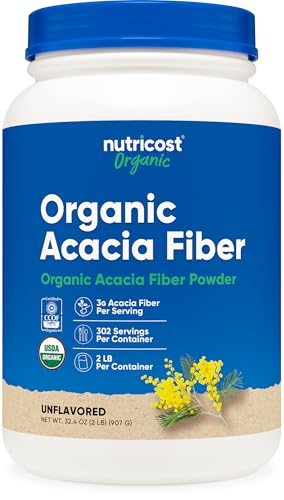
Nutricost Organic Acacia Fiber Powder
What We Like
- USDA Certified Organic acacia source
- Large 2-pound container offers bulk value
- Includes a dedicated measuring scoop
- Manufactured in a registered, compliant facility
Trade-offs
- Powder form requires mixing versus convenient capsules
A 2-pound tub of USDA Organic acacia fiber is a substantial commitment for someone prioritizing certified organic ingredients above all else. This makes it a fit for the buyer who views their supplement regimen through a strict organic lens and wants a bulk supply to avoid frequent reordering. The included scoop removes guesswork from dosing, and the manufacturing credentials provide a baseline of quality assurance that marketing copy alone cannot.
The most decisive fact is its USDA Organic certification, which means buyers seeking a verified organic fiber source have a clear choice. Each serving provides 3 grams of organic acacia fiber, a moderate dose that integrates easily into a daily routine. As a powder, it requires mixing into a beverage, which involves more preparation than simply swallowing a ready-made caplet.
Yerba Prima Psyllium Capsules

What We Like
- Double-pack provides a substantial supply
- Capsule form is easy to swallow
- No artificial flavors, colors, or added sugar
- Manufacturer with decades of experience
Trade-offs
- Requires swallowing 5 capsules three times daily for overall health protocol
- Each serving must be taken with at least 8 ounces of liquid
- Capsule form may be less versatile than a powder for mixing
A pack of two bottles, each containing 180 capsules, means you’re stocking up for the long haul, which is prudent for a daily fiber regimen. This is for the person who prefers the convenience of a capsule over mixing powders and wants a straightforward, additive-free psyllium source from a longstanding manufacturer. The protocol suggests starting with one serving daily and increasing as needed, which allows for a gradual adjustment that can be crucial for digestive comfort.
Following the suggested ‘overall health’ dosage of five capsules three times a day means taking a large volume of pills. That’s a commitment to swallowing them, which may not suit everyone. Compared to a powder format, you’re trading the mixing step for the convenience of a pre-measured capsule. For someone who travels often or dislikes the texture of fiber drinks, these capsules simplify the routine, but you’ll need to be diligent with your water intake to avoid any issues.
Product photos
How We Evaluated Supplements For Diverticulosis
Our evaluation was research-based, focusing on manufacturer specifications, clinical documentation, and expert medical round-ups about fiber supplements and colon health. We prioritized fiber type and its impact on symptoms, formulation convenience, and suitability for sensitive digestive systems, as these are the primary concerns for managing this condition. While we analyzed patterns in owner feedback for real-world use, this is not a hands-on test, and we always recommend consulting your doctor before starting any new supplement regimen.
What To Look For In Supplements For Diverticulosis
Choosing the right supplement involves balancing effective symptom support with personal lifestyle preferences. The goal is to find a product you can take consistently.
Look for a fiber supplement that fits your daily routine, minimizes gas and bloating, and aligns with any dietary restrictions like low-FODMAP or sugar-free needs.
Fiber Type and Source
Soluble fibers like psyllium husk, methylcellulose, and acacia are often recommended for diverticulosis because they add gentle bulk and soften stool. Psyllium husk is a common, clinically-backed choice, but some individuals find it more gassy. Methylcellulose, like that in Citrucel, is a non-fermentable fiber specifically noted for causing less gas. For those prioritizing organic sources or seeking a gentle, plant-based fiber, options like acacia or guar gum are also available, which can be part of a broader strategy for digestive health.
Formulation and Convenience
The format of your supplement determines its ease of use. Powders offer versatility, allowing you to mix fiber into drinks or soft foods without altering taste, which is ideal for long-term adherence. Capsules provide precise, portable dosing but require swallowing multiple pills. Consider your daily habits: if you enjoy a morning smoothie, a dissolvable powder might be simplest, whereas someone always on-the-go may prefer capsules. The right format is the one you’ll take consistently to support regular bowel movements.
Tolerance and Dietary Fit
A supplement is only helpful if you can tolerate it. For those with sensitive digestion, formulas certified as low-FODMAP or those using slow-fermenting fibers can significantly reduce gas and bloating. It’s also wise to check for common allergens and whether the product is sugar-free, gluten-free, or vegan if those are personal requirements. Starting with a lower dose and gradually increasing is a standard recommendation to assess tolerance, especially when using supplements for constipation relief.
Start low and go slow. Begin with a half-dose of a new fiber supplement and increase gradually over a week to allow your digestive system to adjust.
- Check the fiber content per serving to ensure it aligns with your daily goals.
- Look for unflavored options if you plan to mix the supplement into various foods and drinks.
- Verify third-party certifications if you require non-GMO, gluten-free, or organic products.
- Ensure the product includes clear mixing instructions if it’s a powder.
- Consider the total servings per container to gauge long-term value.
Supplements For Diverticulosis Compared
Our comparison table below highlights the key differences between our top picks, from fiber type to formulation, to help you see which aligns best with your needs.
| Product | Fiber Type | Form | Container Weight |
|---|---|---|---|
| Benefiber Prebiotic Fiber Supplement Powder | Plant-based wheat dextrin | Unflavored powder | 1.1 Pounds |
| Metamucil Psyllium Husk Powder Supplement | Naturally sourced psyllium fiber | Psyllium Husk Powder | 1.5 Pounds |
| Citrucel Methylcellulose Fiber Caplets | Methylcellulose | Caplets | 0.5 pounds |
| Metamucil Psyllium Husk Fiber Capsules | Psyllium husk fiber | Capsules | 0.6 pounds |
| BlueBonnet Nutrition Sunfiber Powder | Partially hydrolyzed guar gum | N/A | N/A |
| FYBE Clear Dissolving Fiber Powder | Partially hydrolyzed guar gum | N/A | 0.3 Pounds |
| Now Foods 5978 Supplements | Psyllium Husk Powder | Psyllium Husk Powder | 1.6 Pounds |
| Konsyl Daily Psyllium Fiber Powder | Powdered psyllium husk | Unflavored fine-ground powder | N/A |
| Nutricost Organic Acacia Fiber Powder | Organic Acacia | N/A | 2.0 Pounds |
| Yerba Prima Psyllium Capsules | Psyllium husk capsules | Psyllium husk capsules | 0.7 Pounds |
Frequently Asked Questions
What vitamins are good for diverticulosis?
While a balanced diet is primary, some research suggests certain supplements may support overall colon health. Probiotics are often discussed for their role in supporting a healthy gut microbiome, which can be beneficial. It’s crucial to consult a healthcare provider, as high doses of some vitamins, like iron or vitamin C, could potentially irritate the digestive tract during a flare-up.
What is the best probiotic to take for diverticulosis?
There is no single “best” probiotic, as strains and individual responses vary. Some expert reviews note that probiotics may help support gut bacteria and reduce inflammation, but more research is needed for definitive diverticulosis recommendations. If considering a probiotic, look for a product with clinically studied strains and discuss it with your doctor as part of a broader plan for digestive health supplements.
What to eat to calm down diverticulosis?
During a calm period, experts consistently recommend a high-fiber diet from fruits, vegetables, and whole grains to prevent symptoms. During an acute flare-up, however, a doctor may advise a temporary low-fiber or liquid diet to rest the bowel. The key is transitioning back to a high-fiber diet for long-term management, often aided by fiber supplements.
What not to take with diverticulosis?
You should be cautious with supplements that can cause gastrointestinal irritation or inflammation, especially in high doses. Some sources suggest limiting high-dose iron, vitamin C, and magnesium supplements unless specifically recommended by your doctor. Always disclose all supplements you’re taking to your healthcare provider.
What is the best fiber supplement for diverticulosis?
The best fiber supplement is one you will take consistently and that doesn’t worsen symptoms like gas. Our top overall pick, Benefiber Prebiotic Fiber, is excellent for its dissolvability and prebiotic support. For those who experience gas, a methylcellulose-based product like Citrucel may be a better choice, while pure psyllium husk powders offer a straightforward, doctor-recommended fiber option.
The Bottom Line
For most people seeking daily, discreet fiber support, Benefiber Prebiotic Fiber Supplement Powder is our top recommendation because it dissolves without altering taste and supports gut bacteria. If budget is a primary concern or you prefer capsules, consider the high-value Metamucil Psyllium Husk Fiber Capsules, while those with sensitive digestion should look at the gas-free Citrucel Methylcellulose Fiber Caplets. Ultimately, consistency is the most important factor, choose a supplement format and fiber type you can comfortably incorporate into your daily routine for the best long-term support.
