
10 Best Supplements For Ibs in 2026
This post contains affiliate links. As an Amazon Associate, we earn from qualifying purchases.
After reviewing clinical data and owner feedback, we selected IBgard Daily Gut Health Support as the best overall supplement for IBS. It uniquely targets both acute flare-ups and daily maintenance. For a targeted probiotic, Align Probiotic 70 Billion CFU stands out, and Hilma Gas and Bloating Relief is our top herbal choice.
Managing IBS means addressing different symptoms, cramps, bloating, irregularity, with specific tools. A supplement that works for constipation may not help with diarrhea, and quality hinges on delivery systems and strain specificity.
This guide is based on research into clinical studies, manufacturer specifications, and patterns in expert recommendations. We’ve identified ten options to match distinct needs, from fast-acting relief to long-term gut support.
Top 10 Supplements For IBS in the Market
Certain content that appears on this site comes from Amazon. This content is provided "as is" and is subject to change or removal at any time.
The Best Supplements For IBS, Reviewed
IBgard Daily Gut Health Support Dietary Supplement

What We Like
- Patented SST for distal gut delivery.
- Formulated for both flares and daily management.
- Avoids heartburn common with other peppermint oils.
Trade-offs
- Requires medical supervision for use.
- Packaging variations may confuse some users.
Its designation as a medical food for IBS management is the decisive detail, separating it from general wellness supplements. This formulation is specifically engineered for the dual role of addressing acute symptoms and providing proactive daily support. The patented SST delivery for its peppermint oil is a clear technical answer to a common complaint, aiming the active ingredient past the stomach where it can work without causing reflux. For someone navigating a diagnosed condition, that targeted approach and clinical intent provide a structured starting point for a conversation with their doctor.
The trade-off is the necessary involvement of a healthcare provider, which adds a step but also a layer of appropriate oversight. Compared to something like Align Probiotic 24/7 Digestive Support, which is positioned for general digestive maintenance, IBgard’s entire identity is built around a specific, diagnosed syndrome. It’s a tool for a defined job, not a broad-spectrum option. The package size is practical for daily use, though it’s notably bulkier on the shelf than many of the probiotic bottles in this guide.
Product photos
Align Probiotic 70 Billion CFU 6 Strain Blend

What We Like
- Contains the clinically studied Probiotic 35624 strain
- High 70 billion CFU count per serving
- Developed and recommended by gastroenterologists
- Targets bloating, gas, and abdominal discomfort
Trade-offs
- Contains only six probiotic strains, fewer than some broad-spectrum formulas
Align’s 70 Billion CFU formula is built around Probiotic 35624, a strain with over twenty years of specific research behind it. This isn’t a kitchen-sink blend; it’s a targeted approach developed by gastroenterologists for relieving occasional bloating and gas. For someone whose primary goal is managing those specific IBS symptoms with a clinically vetted ingredient, this focus makes it a logical starting point.
The trade-off for that scientific pedigree is a narrower six-strain profile and a modest thirty-capsule supply. If you’re looking for a more comprehensive, multi-strain daily probiotic, something like Physician’s CHOICE Probiotics offers ten strains and a prebiotic blend in a sixty-count bottle. Align is betting everything on the strength of its signature strain, which is either the point or the limitation, depending on what you need the bottle to do.
Hilma Gas and Bloating Relief Supplement

What We Like
- Multi-herbal formula targets gas and bloating
- Clean, non-GMO formulation with third-party certification
- Designed for use after meals, travel, or hormonal bloat
- Drug-free, natural herbal supplement
Trade-offs
- 50-capsule count may require more frequent repurchase
A blend of five clinically studied herbs like peppermint and fennel is designed to break up gas and soothe the digestive tract directly. This suits someone seeking a natural, drug-free intervention for post-meal or situational bloating. Its formulation is straightforward, focusing on herbs for gas relief without enzymes or live cultures. The Clean Label Project certification adds a layer of trust in its purity that marketing claims alone don’t provide.
Hilma’s supplement provides natural, herbal relief specifically for gas and bloating, so it’s a precise solution for post-meal or travel discomfort. Its formula uses clinically studied herbs like peppermint and fennel to break up gas and soothe the digestive tract. This makes it a tactical choice for addressing symptoms as they arise, not a daily supplement for general gut maintenance.
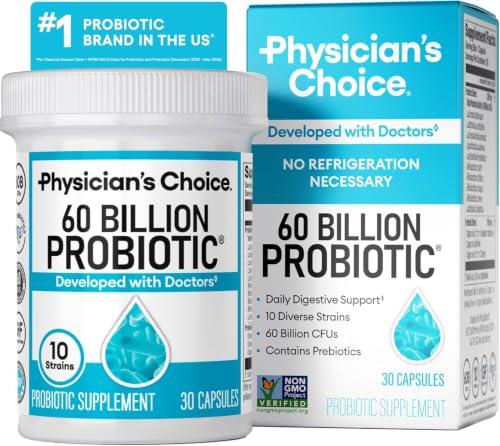
Physician's CHOICE Probiotics 60 Billion CFU
What We Like
- High 60 billion CFU count for potency
- Includes organic prebiotics for synergy
- Acid-resistant capsules for gut survival
- Third-party tested for purity and potency
Trade-offs
- Requires taking one capsule daily for a 30-day supply.
- Bottle dimensions are 4.5 by 2.4 by 2.4 inches.
With 60 billion CFU in acid-resistant capsules, this probiotic is formulated to survive stomach acid and reach the gut alive. Its blend of 10 diverse strains and organic prebiotics is designed to support a healthy microbiome and general digestive comfort, addressing occasional issues like constipation, diarrhea, gas, and bloating.
As a general-purpose formula, it is not specialized for a single symptom. Compared to other products, like herbal supplements, it takes a probiotic-based approach to foundational gut health. The strategy uses multiple strains working together, supported by third-party testing for purity and a shelf-stable, non-refrigerated design.
Align Probiotic 24/7 Digestive Support

What We Like
- Unique, well-studied probiotic strain
- DNA-tested for strain and potency
- Clinically developed by gastroenterologists
- Convenient shelf-stable packaging
Trade-offs
- Packaging may vary
- Contains one bacterial strain, not a multi-strain blend
This probiotic is the brand gastroenterologists recommend most, which means it carries a high level of professional trust for digestive support. Its formula centers on a single, well-studied strain of Bifidobacterium backed by over twenty years of research, offering a focused approach to naturally help soothe occasional abdominal discomfort, gas, and bloating. The shelf-stable, gluten-free capsules simplify a daily routine, and the brand’s DNA testing provides assurance of the specific strain’s presence in each dose.
The product’s specificity is its defining characteristic. It relies solely on its single, researched bacterial strain, unlike some other supplements that may combine probiotics with different active ingredients like peppermint oil or digestive enzymes. For someone whose needs are met by supporting their digestive system with this specific bacterium, it’s a precision tool. A doctor can advise if a different type of supplement is required for more complex concerns.
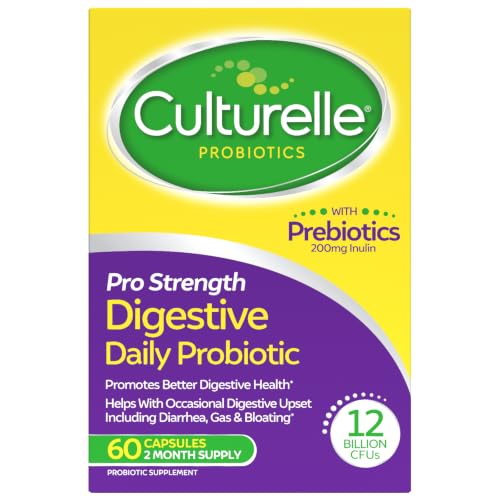
Culturelle Pro Strength Probiotics
What We Like
- Features the clinically studied Lactobacillus rhamnosus GG strain.
- Survives stomach acids to reach the intestines.
- Backed by over 1,000 scientific studies.
- Stable formula requires no refrigeration.
Trade-offs
- 12 billion CFU is lower than multi-strain formulas like Align's 70 billion.
- Single-strain approach may not suit those seeking broad-spectrum support.
This formula hinges on a single, deeply researched probiotic strain, Lactobacillus rhamnosus GG, documented in over a thousand studies. For the buyer who trusts clinical validation over sheer bacterial count, that’s the entire pitch. It’s a focused, no-nonsense option for someone who wants a well-characterized strain with a known safety profile, and the inclusion of the prebiotic inulin is a thoughtful touch to support the probiotics’ work. The stability at room temperature removes a common hassle.
Culturelle Pro Strength Probiotics relies on a single, clinically studied strain, Lactobacillus rhamnosus GG, which means its benefits are backed by over 1,000 scientific studies. With 12 billion CFUs, its potency is lower than multi-strain options like Physician’s CHOICE Probiotics at 60 billion. This formulation focuses on deep, proven research for digestive and immune support rather than offering a diverse blend of bacterial strains.
IBgard Peppermint Oil Capsules

What We Like
- Gastroenterologist-recommended brand for peppermint oil
- Patented delivery targets the gut specifically
- Clinically shown to manage multiple IBS symptoms
- Fast-acting relief reported with daily use
Trade-offs
- 48-capsule count requires frequent repurchase.
A claim of action in as little as 24 hours frames IBgard for someone needing to address a flare-up promptly. Its patented delivery system and status as a leading gastroenterologist-recommended peppermint oil brand lend credibility to its design for abdominal comfort. This makes it a logical consideration for those whose primary IBS struggle is sudden cramping, urgency, or bloating that demands a quick response.
IBgard focuses on managing a combination of occasional abdominal symptoms, including cramping, bloating, and irregular bowel movements, so it’s designed for daily relief rather than a fundamental probiotic regimen. While its peppermint oil is noted to help promote bacterial balance in the gut, the approach differs from multi-strain probiotic supplements that directly introduce cultures. The 48-capsule package offers a shorter supply than some 96-count options, which may require more frequent purchases for dedicated daily users.
Product photos
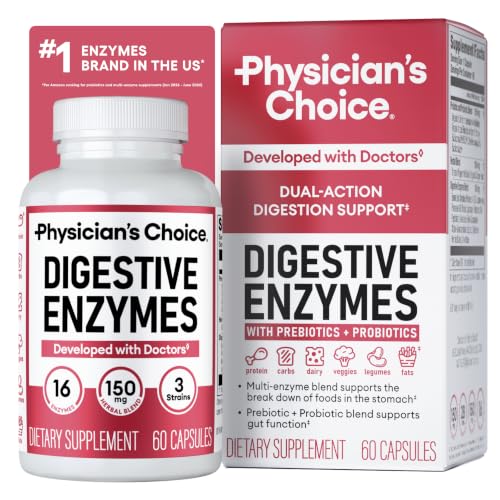
Physician's CHOICE Digestive Enzymes
What We Like
- Broad 16-enzyme blend for multiple food groups
- Survival-focused, soil-based probiotic strains
- Synergistic prebiotic and probiotic combination
- Third-party tested for ingredient integrity
Trade-offs
- 60-count bottle requires monthly repurchase
A 16-enzyme formula targets proteins, carbs, fats, beans, and dairy, which means it’s designed to handle a mixed plate rather than a single trigger food. This makes it a logical choice for those whose meal-time discomfort seems unpredictable or tied to general overindulgence rather than a specific ingredient. The addition of soil-based probiotics, selected for their survival, and organic prebiotics suggests a design focused on longer-term gut environment support alongside immediate enzymatic breakdown. It suits someone looking for a broad-spectrum, dual-action product from a brand that cites physician consultation and third-party testing.
Physician’s CHOICE Digestive Enzymes takes a broad, preventative approach. Its 16-enzyme formula works on digesting proteins, carbs, fruits, vegetables, beans, dairy, and fats, aiming to address discomfort before it starts by breaking down food components. This makes it a generalist for varied diets rather than a targeted solution. The 60-capsule supply indicates a regimen of two capsules daily, fitting a consistent maintenance routine.
Product photos
Digestive Advantage Daily Probiotics for IBS

What We Like
- Patented probiotic with a protective protein shell
- Includes three specific digestive enzymes
- Vegetarian and non-GMO formulation
- Large 96-count supply for daily use
Trade-offs
- 1 Billion CFU count is lower than many dedicated probiotics
- Lacks prebiotics, a feature in some competing formulas
This probiotic includes three digestive enzymes, protease, amylase, and lipase, for a dual-action approach that targets meal digestion alongside gut flora. Its patented BC30 strain is protected by a natural protein shell, designed to help more beneficial bacteria survive stomach acid and reach the gut alive. The formula combines 1 billion CFUs of probiotics with these enzymes in a single daily capsule, aiming to support overall digestive health and the immune system.
The trade-off is the probiotic potency. At 1 billion CFUs, it’s a foundational dose, not an intensive one. For comparison, the Physician’s CHOICE Probiotic offers 60 billion CFUs and includes prebiotics. So, this isn’t your pick if you’re seeking high-count bacterial repopulation. It’s for the person prioritizing enzymatic help with a side of targeted, survivable probiotics, all in a simple, long-lasting supply.
Product photos
BIOMA Probiotics with Xylooligosaccharides

What We Like
- Delayed-release capsules protect probiotics to the gut
- Includes prebiotic xylooligosaccharides to feed good bacteria
- Formula adds tributyrin, a researched gut-support compound
- Gluten-free and vegan, suitable for common dietary restrictions
Trade-offs
- 30-day supply requires more frequent reordering than 90-count options
- Specific Bifidobacterium blend may not suit those seeking Lactobacillus
The delayed-release capsule system is the central feature, designed to bypass stomach acid so more live probiotics reach your intestines where they’re needed. For someone navigating IBS, that targeted delivery matters more than a sky-high CFU count that might not survive the journey. It’s a thoughtful, science-forward pick for those who’ve tried basic probiotics without relief.
The supplement contains Bifidobacterium breve, longum, and lactis, focusing on these strains for digestive health and nutrient absorption support. It does not list a CFU count. Among similar products, Physician’s CHOICE Probiotics 60 Billion CFU includes 10 strains, while Align Probiotic 70 Billion CFU lists a 6 strain blend.
Product photos
How We Evaluated Supplements For IBS
This guide is based on a review of published clinical research, manufacturer information regarding ingredients and delivery methods, and consensus in professional clinical summaries. Preference was given to products with formulations specifically designed for IBS symptom management, supported by scientific evidence, rather than general supplements for digestion.
Key criteria included the type of active ingredient (like peppermint oil, specific probiotic strains, or enzymes), its delivery system for gut-targeted release, and the strength of evidence for its use in IBS management. We also considered practical factors like capsule count and suitability for daily versus as-needed use.
A research-based approach has limits; we cannot account for individual biochemistry or confirm every marketing claim. These findings are a starting point for informed discussions with a healthcare provider, especially since many supplements for IBS are best used under medical supervision.
What To Look For In Supplements For IBS
IBS supplements work through distinct mechanisms, so matching the formula to your primary symptoms is crucial. Look for targeted delivery, clinically studied ingredients, and a formulation designed for your IBS subtype.
Focus on symptom-specific ingredients: peppermint oil for cramping, specific probiotic strains for bloating or transit, and enzymes for food-triggered discomfort. Ensure the delivery system protects ingredients until they reach the gut.
Active Ingredient & Mechanism
The core ingredient dictates the supplement’s purpose. Enteric-coated peppermint oil, like that in IBgard, is clinically shown to relax gut smooth muscle, providing relief from cramping and abdominal pain. For bloating and gas, a multi-herbal blend with ingredients like fennel and ginger or a targeted probiotic may be more effective.
Probiotics require extra scrutiny; the strain is everything. Look for strains with documented research for IBS, such as Bifidobacterium infantis 35624 (in Align) or Lactobacillus rhamnosus GG (in Culturelle). A broad-spectrum enzyme blend can help if your symptoms are tied to digesting specific foods like fats or fibers.
Delivery System & Formulation
An effective delivery system ensures the active ingredients survive stomach acid and reach the intestines where they work. Delayed-release or enteric-coated capsules are critical for peppermint oil to avoid heartburn and for probiotics to ensure viable CFUs colonize the gut. Some formulas, like BIOMA Probiotics, use delayed-release capsules plus prebiotics to support the probiotics’ survival and activity.
Formulation also includes CFU count for probiotics and whether prebiotics are included. A higher CFU count isn’t automatically better; a lower count of a clinically studied strain can be more effective than a high count of unproven strains. For broader gut support, consider a multivitamin for IBS designed for sensitive digestion.
Suitability For Your IBS Subtype
IBS presents as diarrhea-predominant (IBS-D), constipation-predominant (IBS-C), or mixed (IBS-M). Your subtype should guide your choice. Probiotic strains like Saccharomyces boulardii may be better for managing IBS-D, while Bifidobacterium lactis can help accelerate transit for those with IBS-C. Peppermint oil and some multi-strain probiotics may benefit multiple subtypes.
- Check if the product description or clinical citations mention a specific IBS subtype.
- For constipation, also review dedicated supplements for constipation.
- For bloating as a primary concern, look at formulas focused on bloating relief.
- Discuss any new supplement with your doctor, especially if you have other conditions like inflammatory bowel disease.
Always start with a low dose to assess tolerance, and give a new supplement several weeks to show full effect, particularly for probiotics.
Supplements For IBS Compared
Use this table to quickly compare key specifications across our top picks, from ingredient type to capsule count.
| Product | Key Ingredient(s) | Capsule Count | Primary Use/Claim |
|---|---|---|---|
| IBgard Daily Gut Health Support Dietary Supplement | Peppermint Oil with SST | 96 capsules | Medical Food for IBS |
| Align Probiotic 70 Billion CFU 6 Strain Blend | Probiotic 35624 | 30 capsules | Digestive Health |
| Hilma Gas and Bloating Relief Supplement | Peppermint Leaf, Anise, Caraway, Fennel Seed, Lemon Balm | 50 Vegan Capsules | Gas and Bloating Relief |
| Physician's CHOICE Probiotics 60 Billion CFU | 10 probiotic strains | 30 capsules | Digestive & Gut Health |
| Align Probiotic 24/7 Digestive Support | Bifidobacterium 35624 | 56 capsules | 24/7 Digestive Support |
| Culturelle Pro Strength Probiotics | Lactobacillus rhamnosus GG | 60 capsules | Digestive Gut Health |
| IBgard Peppermint Oil Capsules | Ultrapurified Peppermint Oil | 48 capsules | Daily gut health support |
| Physician's CHOICE Digestive Enzymes | 16 enzyme formula | 60 CT | Bloating & Digestion |
| Digestive Advantage Daily Probiotics for IBS | BC30 (Bacillus coagulans) | 96 capsules | Daily Probiotics, IBS |
| BIOMA Probiotics with Xylooligosaccharides | Bifidobacterium breve, longum, lactis | 60 capsules | Digestive Health Probiotic |
Frequently Asked Questions
What is the best supplement to take for IBS?
The best supplement depends on your primary symptoms. For overall management of cramping and abdominal pain, enteric-coated peppermint oil like IBgard is strongly supported by research. For bloating and gas, a probiotic with a clinically studied strain, such as Align, or a multi-herbal blend may be more effective.
How can I fix IBS naturally?
Natural management often combines dietary strategies like a low-FODMAP diet with targeted supplements. Incorporating soluble fiber supplements can help regulate bowel movements for those with IBS-D, while probiotics and peppermint oil address gut flora and motility. Stress reduction techniques and identifying personal food triggers are also foundational natural approaches.
What is the number one trigger for IBS?
There is no universal number one trigger, as IBS is highly individual. However, dietary fermentable carbohydrates known as FODMAPs (found in foods like onions, garlic, and wheat) are a common and well-documented trigger for bloating, gas, and altered bowel habits in many people with IBS.
How do the Chinese treat IBS?
Traditional Chinese Medicine (TCM) for IBS typically uses complex, customized herbal formulas prescribed by a practitioner, not single supplements. These formulas aim to balance the body’s systems and may include herbs for digestion, inflammation, and stress. Acupuncture is also used as an adjunct therapy to potentially modulate gut-brain signaling and pain perception.
Should I take a probiotic or a digestive enzyme for IBS?
Choose a probiotic if your goal is to support long-term gut flora balance, reduce bloating, and modulate immune function. Choose a digestive enzyme, like Physician’s CHOICE Digestive Enzymes, if your symptoms are directly tied to meals and digesting specific foods like lactose or fats. Some products, like Digestive Advantage, combine both.
The Bottom Line
IBgard Daily Gut Health Support earns the best overall pick for its patented delivery of peppermint oil, addressing both acute IBS flares and daily maintenance with strong clinical backing. It’s the top choice for those with a formal diagnosis seeking a dual-action approach under a doctor’s guidance.
If your primary need is bloating relief, start with our best probiotic, Align Probiotic 70 Billion CFU, or the herbal Hilma Gas and Bloating Relief. For budget-conscious shoppers seeking a high-potency, multi-strain option, Physician’s CHOICE Probiotics 60 Billion CFU offers excellent value.
The single most important factor is matching the supplement’s specific mechanism, whether it’s a muscle relaxant, a probiotic strain, or an enzyme blend, to your predominant IBS symptoms. Always integrate any new supplement into your regimen in consultation with a healthcare provider.
