
Causes of Low SHBG in Men: Key Factors and Consequences
This post contains affiliate links. As an Amazon Associate, we earn from qualifying purchases.
Low SHBG in men is most often caused by obesity and insulin resistance, which suppress the liver’s production of this hormone-binding protein. Anabolic steroid use and conditions like hypothyroidism are also common culprits. The result is a hormone profile with more free testosterone available, but this is often a sign of underlying metabolic dysfunction, not a benefit.
That imbalance is the core issue. When your liver makes less SHBG, it’s usually responding to a metabolic signal that something is off. Common causes of low SHBG in men include this type of metabolic dysfunction. You don’t just wake up with low SHBG. It’s a marker that points back to your body’s current state.
What follows is a breakdown of the drivers, from the dominant one to the less common, and what the lab numbers actually mean for your next steps. This guide explains how to read your results, the real-world symptoms to watch for, and the actionable plan that starts with addressing the root causes of low SHBG in men, not just the number.
Key Takeaways
- The strongest driver is obesity, each unit increase in BMI decreases SHBG by 1.26 nmol/L, making excess body fat the most common cause.
- Insulin resistance and type 2 diabetes directly suppress SHBG production in the liver, creating a cycle that worsens metabolic health.
- “Low” is age-specific, a level below 12.3 nmol/L is concerning for men under 50, while below 23.5 nmol/L flags an issue for men 50 and older.
- Symptoms often mimic low testosterone (low energy, low drive) but stem from metabolic dysfunction, not primary hormone failure.
- The first action step is never a supplement, it’s getting a full hormone panel and addressing foundational lifestyle factors like diet and body composition.
The #1 Cause of Low SHBG in Men
Obesity isn’t just associated with low SHBG; it directly suppresses it. The liver produces most of your SHBG, and high levels of body fat, particularly visceral fat, send signals that tell your liver to slow down that production. The data here is specific. A study in the Journal of Clinical Endocrinology & Metabolism found that each unit increase in BMI decreases SHBG by 1.26 nmol/L. That’s a measurable, linear relationship.
Obesity has a strong, quantifiable association with low SHBG. Obese men (BMI >30) had mean SHBG levels of 36 ± 22 nmol/L, compared to 50 ± 27 nmol/L in non-obese men.
This isn’t a minor correlation. It’s the primary mechanism. Insulin resistance, which almost always accompanies obesity, compounds the problem. High insulin levels further inhibit SHBG synthesis in the liver. This creates a feedback loop: more body fat leads to more insulin resistance, which leads to lower SHBG, which can distort your hormone picture. This is why understanding the link between obesity and SHBG is critical for interpreting any hormone test.
The consequence is a condition sometimes called “pseudo-hypogonadism of obesity.” Your total testosterone reading might look low on a standard test because there’s less SHBG to carry it. But your free testosterone, the active form, might be normal or even high. Treating this with testosterone replacement therapy (TRT) misses the point entirely. The fix is metabolic, not hormonal.
Other Medical Conditions That Lower SHBG

While obesity is the heavyweight, several other health conditions reliably depress SHBG levels. A thorough investigation into the causes of low shbg in men reveals these often interconnect with metabolic health, forming a web rather than a list of isolated issues.
Hypothyroidism is a key player. An underactive thyroid gland slows your entire metabolism, including liver function. Since the liver is the SHBG factory, production drops. The CDC’s NHANES laboratory notes list hypothyroidism alongside obesity as a common accompaniment to low SHBG. If you have symptoms like fatigue, weight gain, and feeling cold, your thyroid needs to be on the radar. The relationship between thyroid hormones and SHBG is a two-way street that’s easy to overlook.
Type 2 Diabetes and Insulin Resistance act as independent suppressors. Even at a given BMI, men with poor blood sugar control tend to have lower SHBG. This is a direct effect of hyperinsulinemia, chronically high insulin levels, on liver cells. Research indicates that low SHBG in diabetes isn’t just a side effect; it can be an early marker for the development of metabolic syndrome.
Liver Disease directly impacts SHBG because the liver makes it. Conditions like non-alcoholic fatty liver disease (NAFLD) impair liver function and, consequently, SHBG production. If your liver is under stress from excess fat, alcohol, or other toxins, hormone synthesis is one of the first things to suffer. The role of fatty liver disease and SHBG is a clear example of organ health dictating hormone balance.
Acromegaly (excess growth hormone) and the use of androgenic/anabolic steroids are less common but potent causes. Exogenous androgens, the kind you inject or take orally, directly signal the liver to stop making SHBG. This is a predictable, dose-dependent effect that anyone using performance-enhancing drugs should anticipate.
| Condition | Primary Mechanism | Key Note |
|---|---|---|
| Obesity | Insulin resistance & adipokine signals suppress hepatic SHBG synthesis. | The most prevalent cause; effect is quantifiable per BMI unit. |
| Hypothyroidism | Slowed overall metabolism reduces liver production of proteins like SHBG. | Correcting thyroid levels often normalizes SHBG. |
| Type 2 Diabetes | Hyperinsulinemia directly inhibits SHBG production in liver cells. | SHBG can be an early marker for insulin resistance. |
| Anabolic Steroid Use | Exogenous androgens provide negative feedback, shutting down natural SHBG production. | One of the most dramatic causes; levels can crash. |
| Liver Disease (e.g., NAFLD) | Impaired liver function reduces capacity to synthesize SHBG. | A sign of declining overall liver health. |
How Medications and Supplements Affect SHBG
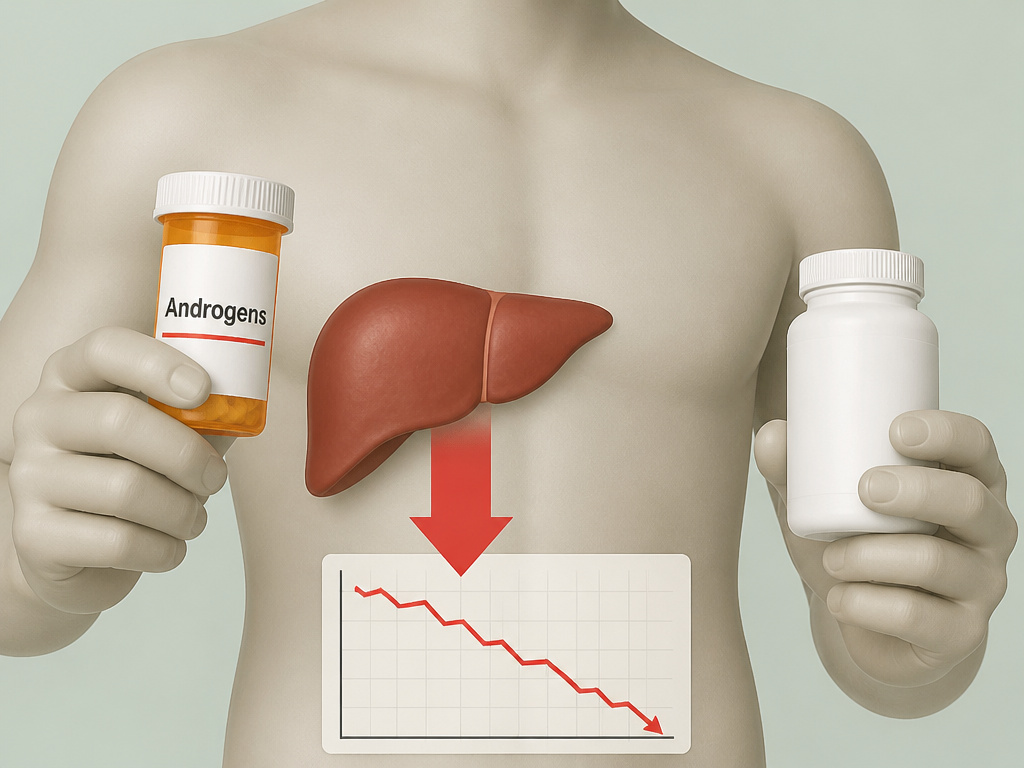
What you put in your body can override your natural settings. This is most obvious with prescription androgens, but other substances have a documented impact.
Anabolic steroids are the elephant in the room. They don’t just add testosterone to your system; they command your liver to nearly halt its own SHBG production. The result is a dramatic plunge in SHBG levels, often outside the standard reference range. This is a known, intended effect for some users seeking more free hormone, but it completely decouples SHBG from its role as a metabolic marker.
Glucocorticoids (like prednisone) and progestins can also lower SHBG. The effect is less dramatic than with androgens, but it’s consistent. If you’re on long-term corticosteroid therapy, it’s a factor to discuss with your doctor when reviewing hormone panels.
On the supplement side, the evidence is murkier. High-dose, unregulated “testosterone booster” products that contain actual androgenic compounds or precursors will likely suppress SHBG similarly to prescription androgens. For standard herbal supplements like tongkat ali or ashwagandha, the data on SHBG specifically is thin. They may influence total and free testosterone, but a direct, significant impact on SHBG production isn’t well-established. The rule here is simple: if a supplement powerfully changes your hormone levels, it’s probably influencing SHBG too.
Symptoms and Health Risks of Low SHBG
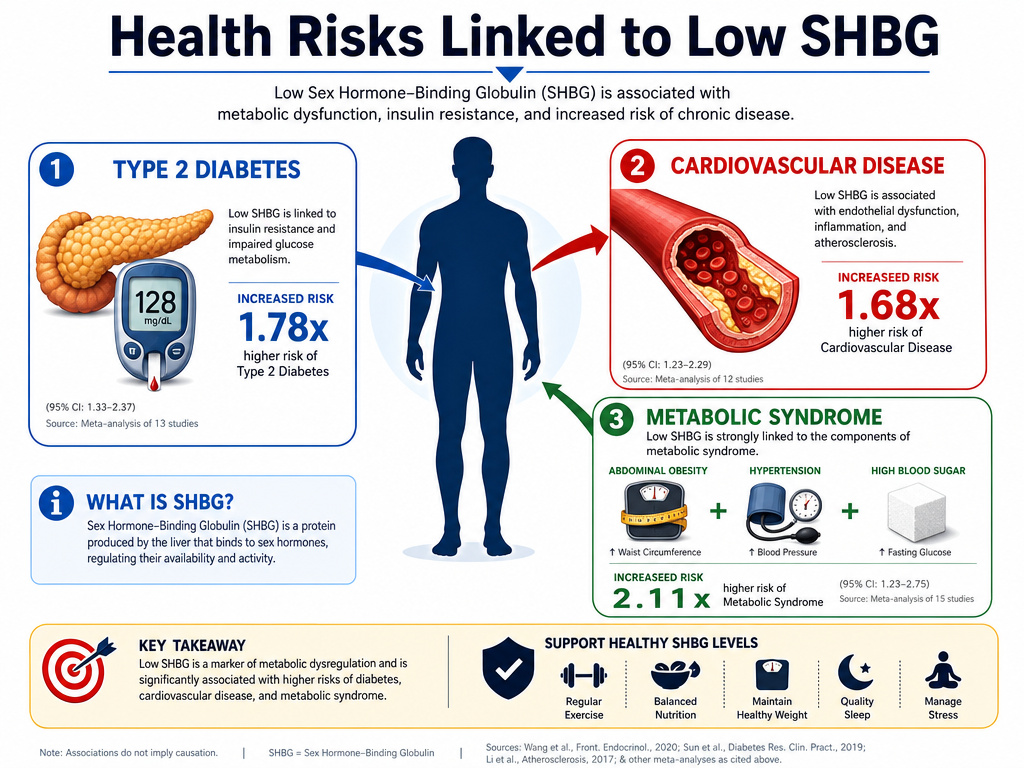
The symptoms of low SHBG are tricky because they’re usually the symptoms of what’s causing the low SHBG, not of the low level itself. You feel the metabolic dysfunction, not the protein deficiency.
Most men report a cluster familiar to low testosterone: diminished libido, persistent fatigue, reduced muscle mass, and sometimes mood changes like irritability or low motivation. Here’s the critical distinction. In true primary hypogonadism, these symptoms pair with low total and low free testosterone. In the low SHBG scenario, often driven by obesity, your total testosterone may read low, but your free testosterone can be normal. Your body might have plenty of active hormone, but the system is dysregulated.
Where this goes sideways: Chasing these symptoms with testosterone supplements when you have undiagnosed insulin resistance. You might temporarily feel better while the underlying metabolic problem gets worse.
The long-term health risks are where low SHBG shows its true colors as a warning sign, not just a lab oddity. Chronically low levels are independently associated with:
- Increased risk of type 2 diabetes. Low SHBG is a predictor, not just a companion.
- Higher risk of cardiovascular disease. The inflammatory, dysmetabolic state that lowers SHBG also damages blood vessels.
- Metabolic syndrome. Low SHBG is a core component of this cluster of conditions (high blood pressure, high blood sugar, excess body fat).
The risk isn’t from the SHBG molecule being missing. It’s from the unhealthy physiological environment that makes it go missing. This is why a narrow focus on SHBG and TRT dosing without a broader health assessment is a mistake.
How to Test for and Diagnose Low SHBG
You can’t guess this one. You need a blood test. But you shouldn’t order an SHBG test first.
The standard, logical sequence comes from the MedlinePlus SHBG blood test guide. It starts with a total testosterone test. If your total testosterone is low, or if it’s normal but you have classic low-T symptoms, that’s the trigger to add the SHBG test. The CDC’s lab protocol states it plainly: “SHBG levels are determined when total testosterone levels are inconsistent with clinical signs and symptoms.”
The test itself is straightforward, a standard blood draw. You don’t need to fast. The lab measures the concentration of SHBG in your blood in nanomoles per liter (nmol/L).
Interpreting the Number: The Age Split
This is the part most people miss. “Low” isn’t one number.
- For men under 50 years old, a level below 12.3 nmol/L is considered low.
- For men 50 and older, the threshold is higher, below 23.5 nmol/L.
Why the difference? The 2021 study uses these age-specific thresholds, while other sources, like MedlinePlus, note that SHBG levels normally decrease with older age. The CDC provides a reference range of 10–80 nmol/L for adult males, while a 2021 study defines low thresholds as < 12.3 nmol/L for men under 50 and < 23.5 nmol/L for men 50 and older. You can see how this compares to normal SHBG levels by age in more detail.
Your doctor (or you, with a savvy eye) will then use your SHBG and total testosterone results to calculate your free androgen index or bioavailable/free testosterone. This calculated value tells you how much hormone is actually active in your body. It’s the answer to the question the total test couldn’t resolve.
A Step-by-Step Action Plan After a Low SHBG Diagnosis
A low result is a starting point, not a verdict. The goal isn’t to “raise SHBG” as an isolated target. The goal is to improve the health of the systems that control it. Here is a prioritized action plan.
- Retest with a Full Panel. Before you do anything else, get a clearer picture. This means adding tests for fasting insulin and glucose, HbA1c, a full thyroid panel (TSH, Free T4, Free T3), and liver enzymes (ALT, AST). This data will point to the specific driver, insulin resistance, thyroid, or liver stress.
- Focus on Body Composition. If you have excess body fat or a high BMI, this is your primary lever. You don’t need to become an athlete. Sustained weight loss can significantly improve insulin sensitivity and boost SHBG production. The mechanism behind how obesity lowers SHBG is reversible.
- Optimize Diet for Metabolic Health. Shift to a whole-food diet that minimizes processed carbs and added sugars. This isn’t about a fad diet; it’s about reducing the insulin spikes that suppress your liver’s SHBG factory. Adequate protein and healthy fats support overall hormone synthesis.
- Review All Medications and Supplements with a Doctor. Be brutally honest about any androgenic steroid or prohormone use. Discuss the SHBG-lowering effects of medications like glucocorticoids. There may be alternatives or adjustments.
- Re-test after implementing lifestyle changes. After implementing lifestyle changes, recheck your SHBG, total testosterone, and metabolic markers (like fasting insulin). The numbers should move in tandem with your health improvements. This tells you’re on the right path.
Resist the urge to find a supplement that “raises SHBG.” It doesn’t work that way. The peer-reviewed clinical approach to obesity-related hypogonadism emphasizes treating the metabolic condition first. Supplements should only be considered as adjuncts to foundational lifestyle change and under the guidance of a healthcare provider. They treat the soil, not the plant.
Frequently Asked Questions
What happens if SHBG is low in men?
If SHBG is low, a greater percentage of your total testosterone is “free” and biologically active. While this might sound beneficial, it’s typically a sign of an underlying issue like obesity or insulin resistance that is suppressing SHBG production. The health risks are tied to that root metabolic dysfunction, not the free testosterone itself.
Is low SHBG good or bad for building muscle?
It’s more complicated than good or bad. Lower SHBG means more free testosterone is available to muscle tissues, which could theoretically aid muscle growth. However, since low SHBG is often linked to poor metabolic health and inflammation, conditions that hinder recovery and growth, the net effect for most men is negative. You can’t out-supplement a dysregulated metabolism.
Can you have low SHBG with normal testosterone?
Yes, and this is a common scenario. Your total testosterone level might sit in the normal range, but if your SHBG is very low, your calculated free testosterone could be quite high. This pattern is a strong indicator that something (like obesity or steroid use) is actively suppressing your SHBG, independent of your testosterone production.
How do you fix low SHBG hormone?
You fix it by addressing the cause. There is no direct “SHBG booster.” The fix involves improving metabolic health: losing excess body fat, improving diet to manage insulin levels, treating underlying conditions like hypothyroidism, and stopping medications or supplements that suppress SHBG. As your overall health improves, your liver will naturally increase SHBG production.
Does low SHBG mean high free testosterone?
Generally, yes. SHBG binds to testosterone. If there’s less SHBG available, more of the total testosterone pool remains unbound, or “free.” This is why doctors calculate free testosterone using both your total T and SHBG results. A very low SHBG will usually result in a high free testosterone calculation, even if total T is middling or low.
The Bottom Line
Low SHBG is a messenger, not the problem itself. The messenger is telling you that your liver is receiving signals, from excess fat, high insulin, a sluggish thyroid, or synthetic hormones, to slow down production. Chasing the number with a targeted supplement is a dead end. The path forward is metabolic.
Start with the full picture: a lab panel that includes SHBG, total testosterone, and markers for insulin and thyroid function. If your levels are low, let that be the catalyst for addressing the foundation. Improve your body composition, clean up your diet, and manage stress. Re-test in a few months. You’ll likely see the SHBG level rise as a byproduct of better health, and with it, a clearer, more accurate picture of your true hormone status. That’s how you answer the message.
