
Cortisol vs Testosterone: The Stress and Strength Dynamic
This post contains affiliate links. As an Amazon Associate, we earn from qualifying purchases.
Cortisol and testosterone exist in a push-pull relationship where chronic elevation of the stress hormone cortisol can suppress the production and effectiveness of testosterone. This happens through direct inhibition of Leydig cells in the testes, disruption of the hypothalamic-pituitary-gonadal (HPG) axis, and increased production of Sex Hormone-Binding Globulin (SHBG). However, research in specific populations like men with type 2 diabetes shows a positive correlation, indicating the relationship is contextual and not universally inverse.
The key is duration. Acute stress spikes cortisol briefly, which is normal. The problem is the chronic, sustained elevation that rewires your endocrine system’s priorities away from reproduction and toward survival, a dynamic often framed as cortisol vs testosterone. Your body cannot build muscle, maintain libido, and foster a sense of well-being while it is convinced it is in a long-term crisis.
What follows breaks down the three main ways cortisol impacts testosterone, explains why the science sometimes contradicts itself, and gives you a clear framework for testing and managing both hormones. You will leave knowing the difference between a lab curiosity and a clinical problem.
Key Takeaways
- The primary mechanism is cortisol suppressing the HPG axis and directly inhibiting testosterone production in Leydig cells.
- Research shows context matters: a study of men with type 2 diabetes found a positive correlation (r=0.1582), while mechanistic models describe suppression.
- The Testosterone/Cortisol (T/C) Ratio is a more useful marker than either hormone alone; a significant decline indicates a catabolic, stressed state.
- For testing, prioritize a properly timed morning serum cortisol (9 AM–12 PM) over at-home saliva kits for initial assessment due to variability.
- Lifestyle intervention, sleep, diet, managed exercise, can begin to rebalance hormones within a few weeks to a few months of consistency.
The Core Relationship: Antagonists or Partners?
Many sources describe the cortisol vs testosterone dynamic as working against each other, but research in specific populations like men with type 2 diabetes shows a positive correlation, indicating the relationship is contextual. Think of it as your body’s resource allocation system. Cortisol, the primary stress hormone, signals a threat. Testosterone, crucial for building tissue, libido, and competitive drive, becomes a lower priority. The body optimizes for immediate survival, not long-term vitality.
The clinical evidence for this suppression in the cortisol vs testosterone relationship is clear. A veterinary review notes that in bulls, elevated cortisol negatively interferes with the secretion of GnRH, LH, and testosterone. In men, the Institute for Comprehensive Gynecology states that prolonged high cortisol can suppress the HPG axis and directly impair Leydig cell function. Another clinical resource confirms that under stress, cortisol acts to suppress testosterone production.
Chronic activation of the stress response prioritizes survival functions over reproductive ones. CortisoI’s suppression of the HPG axis and direct action on Leydig cells are the primary pathways for reducing testosterone synthesis and bioavailability.
Yet, the data is not perfectly uniform. This is where a simplistic “cortisol bad, testosterone good” story falls apart. A study (Khan SU et al.) found that in men with type 2 diabetes, serum cortisol was significantly higher and testosterone significantly lower than in healthy controls, but within the diabetic group, there was a positive correlation between the two hormones. Similarly, research on guppy populations showed a significant positive relationship in the Small Crayfish River and Aripo River populations but no significant relationship in the Marianne River population.
The relationship is a dynamic influenced by underlying health, genetics, and the type of stressor. A system already under metabolic duress, like diabetes, may show a different linkage than a healthy system under acute psychological stress.
How Cortisol Suppresses Testosterone: The Three Pathways
Cortisol does not just vaguely lower testosterone. It uses specific, documented biological pathways. Understanding these turns a fuzzy concept into a clear mechanical picture.
1. Disruption of the HPG Axis. This is the command chain for testosterone production. It starts with Gonadotropin-Releasing Hormone (GnRH) from the hypothalamus, which signals the pituitary to release Luteinizing Hormone (LH), which then tells the testes to produce testosterone. Chronic cortisol feeds back negatively on the hypothalamus and pituitary, reducing the pulsatile secretion of GnRH and LH. No signal, no production.
2. Direct Inhibition of Leydig Cells. Even if LH gets through, cortisol can block the factory floor. Leydig cells in the testes convert cholesterol into testosterone. Cortisol inhibits key enzymes in this process, like P450scc and 17β-HSD. Under stress, the enzyme 11β-HSD1 becomes more active in the testes, converting inactive cortisone into active cortisol right at the source, creating a local suppression zone.
3. Increasing Testosterone Clearance. Cortisol can stimulate the liver to produce more Sex Hormone-Binding Globulin (SHBG). Testosterone binds tightly to SHBG, rendering it biologically inactive. You might have normal total testosterone on a lab test, but your free, usable testosterone is low. It is like having a full gas tank that is locked shut.
| Pathway | Mechanism | Result |
|---|---|---|
| HPG Axis Disruption | Cortisol inhibits GnRH & LH release from brain. | Reduced signal to produce testosterone. |
| Leydig Cell Inhibition | Cortisol blocks enzymes (P450scc, 17β-HSD) and increases local conversion via 11β-HSD1. | Impaired synthesis of testosterone in testes. |
| Increased Clearance | Cortisol raises SHBG production in the liver. | More testosterone is bound and biologically inactive. |
These pathways often work in concert. This is why managing chronic stress is not just about feeling better, it is about removing a physiological brake on your hormonal system.
The Testing Puzzle: What Your Labs Actually Show
Figuring out your own cortisol and testosterone status is the hardest part. The tools are imperfect, and timing is everything.
First, know what you are measuring. For assessing cortisol, a morning serum draw collected between 9:00 AM and 12:00 PM can help control for diurnal variation, as was done in the study on diabetic men. The study on diabetic men used this window. Saliva tests are popular for assessing free cortisol and the diurnal rhythm, but they are fragile.
Where this goes sideways: Relying on a single at-home saliva cortisol kit. Sleep, timing, and a single bad night swing it wildly. If stress is the suspect, start with a morning serum cortisol and a full thyroid and sex hormone panel.
For testosterone, a standard total testosterone test is the entry point. But you must also check Free Testosterone and SHBG to see how much is actually usable. A high total T with high SHBG can still mean low free T.
The most insightful single metric is often the Testosterone to Cortisol (T/C) Ratio. It is a snapshot of your anabolic (building) versus catabolic (breaking down) balance. Research using this ratio shows its sensitivity. The Alghadir et al. Study on aerobic training found the T/C ratio decreased significantly from 1.6 ± 0.22 to 1.12 ± 0.15 after four weeks of training, even though both hormones increased. This indicated a shift toward a more catabolic state despite fitness gains.
| Test | Best For | Key Limitation |
|---|---|---|
| Serum Cortisol (AM) | Assessing adrenal function & HPA axis. | Single snapshot, misses daily rhythm. |
| Salivary Cortisol | Mapping diurnal rhythm & free cortisol. | Highly sensitive to collection timing and stress. |
| Total Testosterone | General screening for low T. | Misses issues with SHBG binding. |
| Free Testosterone + SHBG | Assessing bioavailable, active hormone. | More expensive, not always in standard panels. |
| T/C Ratio | Evaluating anabolic-catabolic balance. | Requires both tests from the same time of day. |
A clear testing protocol beats random guesses. Start with a morning fasted blood draw for total T, free T, SHBG, and cortisol. Use that as your baseline before diving into more complex or variable saliva testing.
The Exercise Paradox: When Activity Raises Both
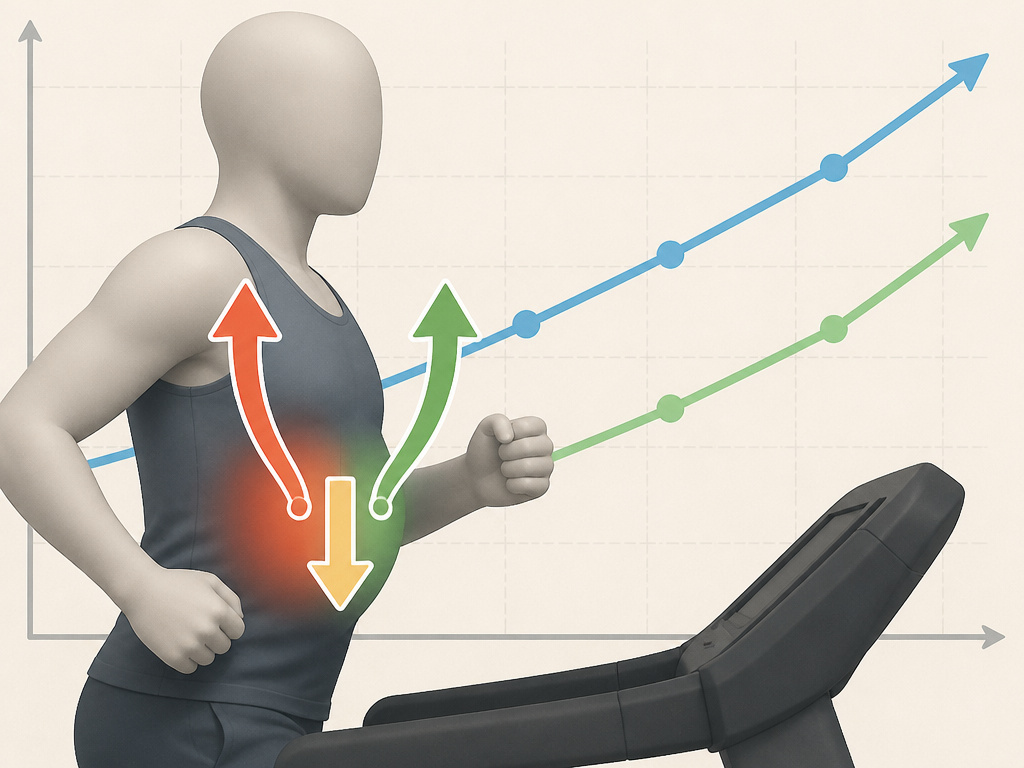
While a common narrative is that exercise reduces stress hormones like cortisol, the Alghadir et al. Study found that 4 weeks of moderate aerobic training led to a significant increase in salivary cortisol. The research reveals a more nuanced picture. Physical activity is a controlled stressor, and the hormonal response depends entirely on dose.
The Alghadir et al. Study is a perfect example. Sixteen healthy students (age 15–25 years) did moderate aerobic training (treadmill walking) three times per week for four weeks. The results were counterintuitive: salivary cortisol increased significantly from 17.51 to 37.2 pg/ml. Free testosterone also rose significantly. However, the T/C ratio fell.
This tells us two things. First, a novel exercise stimulus can raise cortisol as part of adaptation, this is not necessarily bad. Second, the falling T/C ratio suggests the body was under increased physiological strain even while adapting positively. This is distinct from the chronic cortisol elevation from psychological stress or overtraining, which suppresses testosterone without the anabolic boost.
Moderate training raised both hormones in this study. Overtraining flips the script, leading to chronically high cortisol and falling testosterone. The difference is recovery and adaptation versus systemic overload.
The takeaway is to understand that exercise is a hormone modulator, not a simple cortisol-lowerer. Balanced training with adequate recovery supports a healthy hormone profile. Excessive training without recovery is a direct route to the kind of chronic stress that lowers testosterone.
Managing the Balance: Action Over Abstraction
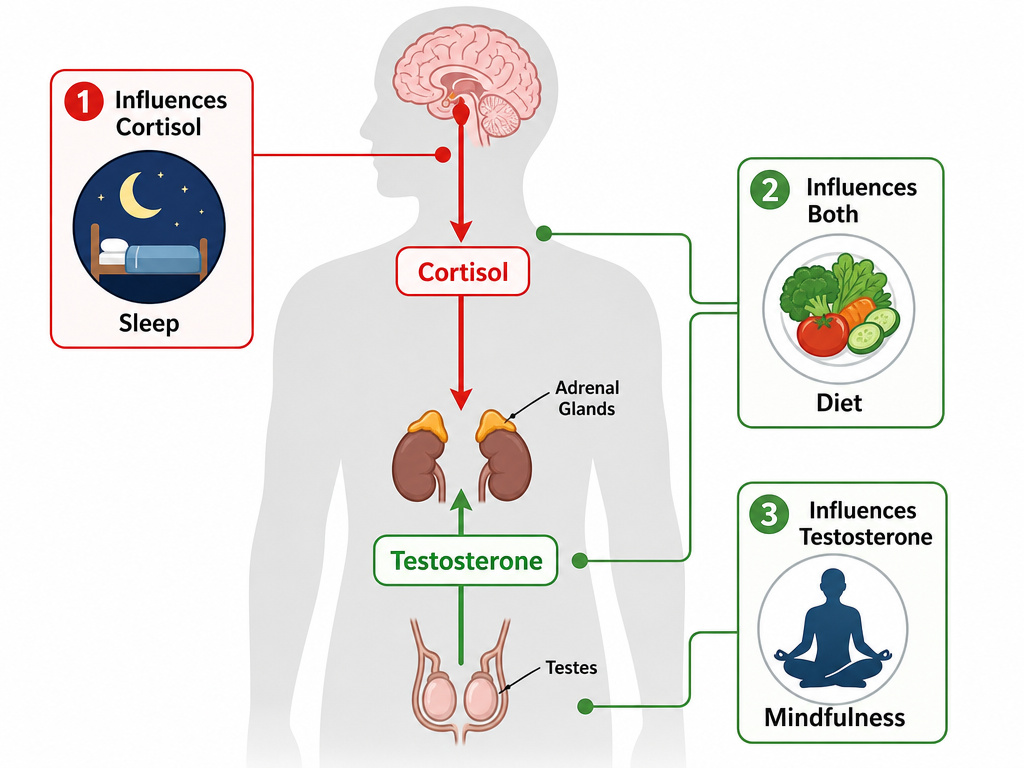
You cannot supplement your way out of a lifestyle problem. The foundation for managing cortisol and testosterone is built on sleep, diet, and stress management, not bottles. The ICGI resource notes that consistent lifestyle changes can start to impact levels within a few weeks to a few months.
Sleep is essential. Poor sleep, especially conditions like sleep apnea, directly elevates cortisol and crushes testosterone. It is the most powerful lever you have. Nothing in a capsule fixes five hours of broken sleep.
Diet sets the baseline. A diet high in processed foods and sugar promotes inflammation and cortisol elevation. Conversely, adequate intake of nutrients like magnesium and zinc supports enzymatic processes for hormone production and stress resilience.
Strategic supplementation can support the edges. Ashwagandha, for instance, is better understood as an adaptogen for stress and sleep support, which indirectly aids hormone balance, than a direct testosterone booster. The testosterone benefit in studies is often secondary to stress reduction.
Mindfulness and meditation are direct tools for down-regulating the HPA axis. They are not mystical; they are practice for your nervous system to disengage from the stress cascade, reducing the trigger for cortisol release.
The goal is to reduce the chronic alarm signal. When cortisol retreats from a sustained high level, the suppression on the HPG axis lifts, Leydig cell function improves, and your body can resume prioritizing testosterone production. This is how addressing burnout or chronic stress fundamentally changes your physiology.
How do cortisol and testosterone interact to affect behavior?
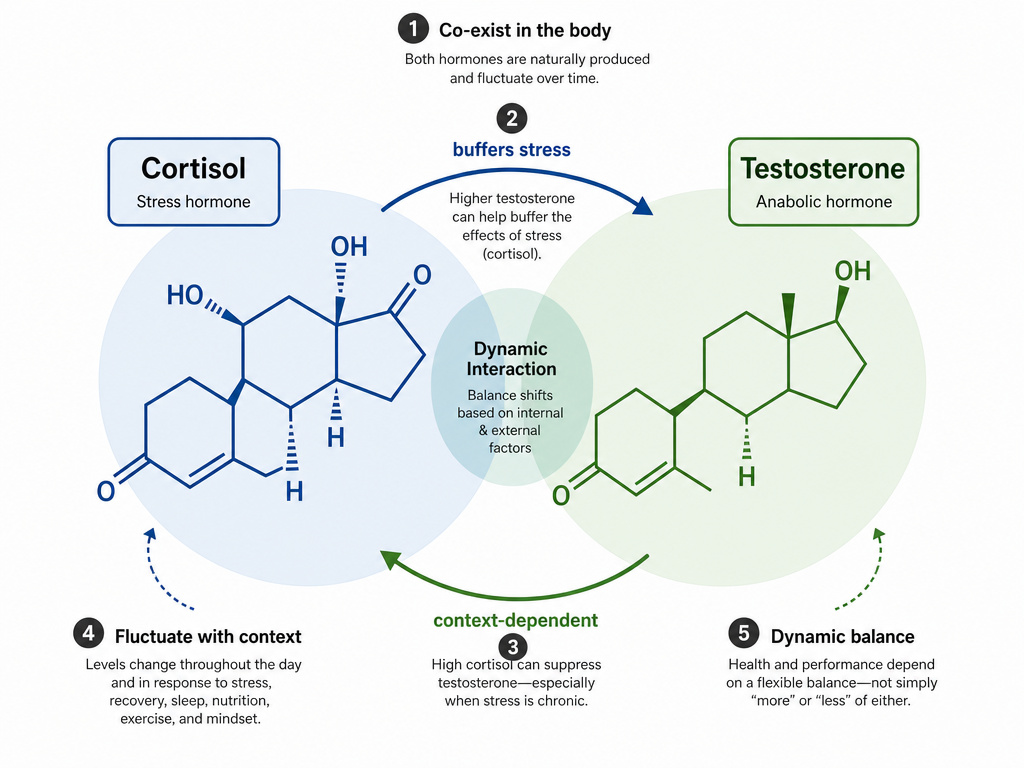
The dual-hormone hypothesis explores how these two hormones interact to regulate social behaviors like dominance and aggression. Research indicates that testosterone appears to reduce fear behavior and reduce cortisol reactivity to stress. This suggests that higher testosterone may buffer the stress response. However, the relationship is not always simple. Studies in specific animal populations have found a significant positive relationship between cortisol and testosterone, while others show no significant relationship. In humans, one study of men with type 2 diabetes also reported a positive correlation between the two hormones. This variability indicates that the interaction is context-dependent, influenced by factors like health status and environment, rather than a fixed rule.
How do cortisol and testosterone affect sexual function and fertility?
Cortisol directly interferes with the hormonal pathways required for sexual function and fertility. Prolonged elevation of cortisol can suppress the hypothalamic-pituitary-gonadal (HPG) axis, which regulates testosterone production. It also directly suppresses Leydig cell function in the testes, impairing testosterone synthesis. Cortisol can also increase Sex Hormone-Binding Globulin (SHBG), making the testosterone that is produced less bioavailable. This suppression of testosterone by stress-induced cortisol can negatively impact libido and reproductive function. In animal studies, elevated cortisol negatively interferes with the secretion of key reproductive hormones like GnRH, LH, and testosterone, highlighting a direct mechanistic link between chronic stress and reduced fertility.
How do cortisol and testosterone influence sleep?
Sleep and circadian rhythms are critical for regulating both cortisol and testosterone. Cortisol follows a strong diurnal rhythm, typically highest in the morning. Disruptions to sleep, such as from sleep apnea, can significantly elevate cortisol levels and lower testosterone. This creates a vicious cycle where poor sleep raises stress hormones, which then further disrupts sleep quality and hormonal balance. To accurately measure these hormones and account for their natural daily variation, blood samples are often collected in the morning, such as between 9:00 am and 12:00 pm. Managing sleep disorders and maintaining consistent sleep patterns are practical steps to help keep both cortisol’s daily rhythm and testosterone production in a healthier balance.
Frequently Asked Questions
Does high cortisol always cause low testosterone?
Not always, but it is a primary mechanism for low T in cases of chronic stress. Acute, short-term cortisol spikes are normal. The problem is sustained elevation, which suppresses the HPG axis and Leydig cell function. Some disease states, like type 2 diabetes, can show a different correlation pattern.
What is the biggest enemy of testosterone?
Chronic stress, mediated by persistently high cortisol, is one of the most common functional enemies of healthy testosterone levels in otherwise healthy men. It directly inhibits production and increases hormone clearance.
What are the signs of high cortisol?
Many of these overlap with low testosterone symptoms.
What lowers cortisol immediately?
Few things work “immediately” in a sustained way. Short-term techniques include slow, deep diaphragmatic breathing (5-10 minutes), brief mindfulness meditation, or walking in nature. For lasting reduction, consistent sleep, regular moderate exercise, and managing psychological stressors are required.
How do I test my cortisol and testosterone properly?
For a clinically actionable baseline, get a morning (9 AM-12 PM) blood draw for serum cortisol, total testosterone, free testosterone, and SHBG. This provides a controlled snapshot. Avoid interpreting a single saliva test without clinical context due to its high variability.
Before You Go
The cortisol-testosterone dynamic is a balance of priorities, not a simple on-off switch. Your body will not invest in strength, libido, and vitality if it is busy managing a perpetual state of alarm.
The most practical step you can take this week is booking a blood test to get that morning cortisol, total T, free T, and SHBG reading. Data beats guesswork every time. If your cortisol is high and your free T is low, you have a clear target: systemic stress reduction.
Remember the T/C ratio. It is a more telling number than either hormone alone. If you start a new exercise program or a stressful job, retest in a few months. A dropping ratio is a clear sign you are tipping into a catabolic state, even if your testosterone looks okay in isolation.
Finally, respect the timeline. Hormone rebalancing is not a weekend project. The research suggests meaningful changes take a few weeks to a few months of consistent intervention in sleep, diet, and stress management. Be patient, track your progress, and let the labs, not just how you feel, guide you.
