
Daily Testosterone Injections Pros and Cons: How to Choose
This post contains affiliate links. As an Amazon Associate, we earn from qualifying purchases.
Short-acting testosterone injections use esters like testosterone cypionate or enanthate, administered 2-3 times weekly. The main pro is rapid symptom relief within days and easy dose adjustment. The cons are significant: painful frequent injections, large hormone peaks and troughs that cause mood swings, and a higher risk of elevated red blood cells (haematocrit) compared to gels or long-acting shots.
That 2-3 times weekly schedule is the clinical reality behind “daily” injections, true daily shots aren’t standard for testosterone replacement therapy (TRT). The frequency creates a predictable rollercoaster. Your levels spike into the supraphysiologic range 24-48 hours after the jab, then slide back into the low-normal zone over the next two weeks. You feel the difference. Considering the daily testosterone injections pros and cons is important for understanding treatment options.
What follows is a breakdown of the data, the practical realities the clinical trials gloss over, and how this stacks up against the long-acting alternative that requires only a handful of shots each year.
Key Takeaways
- Short-acting injections like testosterone cypionate require dosing 2-3 times weekly, not daily, to maintain stable levels.
- The supraphysiologic peak 1-2 days post-injection is associated with hormonal fluctuations. Testosterone replacement treatment is contraindicated in males with haematocrit ≥54%.
- Symptom relief is fast but followed by a trough; mood and energy swings are common before the next dose.
- Fertility recovery after stopping can take 6-12 months, and up to 9-15 months for long-acting formulations.
- The optimal injection interval for long-acting testosterone undecanoate is a median of 12.0 weeks, but 23% of men need 14 weeks or more.
The Daily vs. Weekly vs. Long-Acting Trade-Off
The term “daily” is a misnomer. In practice, short-acting intramuscular injections (like Sustanon or testosterone cypionate) are given two to three times weekly. You get a rapid surge. A systematic review notes serum testosterone concentrations rise into the supraphysiologic range within 24–48 hours, then gradually decline into the low-normal range over 2 weeks.
That’s the rhythm: a strong start, a long fade. I learned this the hard way reading about SERMs. The clomiphene mix has two isomers, and enclomiphene is the one that does the testosterone-raising work. The other, zuclomiphene, hangs around for weeks and is blamed for mood swings. I stopped calling any of this ‘natural-feeling.’ It’s a prescription drug that blocks estrogen receptors, and I’d rather someone follow labs at 6 to 8 weeks than trust how they feel. Feeling great at week three told me nothing about my own numbers back when I tinkered.
The long-acting alternative, testosterone undecanoate (Nebido), flips the script. It’s administered only four to five times annually. The injection volume is larger, 4 mL, and it’s injected deep into the gluteal muscle. You might feel a dull ache for a day or two, a deep muscle soreness that’s different from the quick sting of a smaller cypionate shot. The trade is stability for frequency.
Testosterone Undecanoate (TU) Pharmacokinetics: Pharmacokinetic studies demonstrate that TU injections can return serum T levels to the eugonadal range 7–14 days after injection. Serum T levels slowly decline back to the hypogonadal range by 10 weeks after a TU injection.
| Formulation | Typical Dosing Frequency | Peak → Trough Timeline | Key Physical Sensation |
|---|---|---|---|
| Short-Acting (Cypionate/Enanthate) | Every 3.5-7 days | Supraphysiologic peak at 24-48 hrs; decline to trough over 2 weeks | Quick sting, potential post-injection site soreness for 1-2 days. |
| Long-Acting (Undecanoate – Nebido) | Every 10-14 weeks | Enters eugonadal range in 7-14 days; slow decline over 10+ weeks | Deep muscle ache from large volume (4mL), can last 2-3 days. |
| Transdermal Gel | Daily | Stable levels within a week; rapid return to baseline if missed. | Skin irritation, must wait 5-6 hours before showering. |
What Are the Real-World Injection Schedules?
The protocol isn’t guesswork. It’s in the manufacturer inserts and confirmed by observational studies. For short-acting esters, injections are administered two to three times weekly to maintain stable levels. Miss that schedule and the trough hits harder, low energy, irritability, a fog that feels like the hypogonadism returning.
For long-acting testosterone undecanoate, the loading phase is critical. Sources provide different recommended schedules: one systematic review states an initial dose should be followed by a second injection 6 weeks later, after which injections may resume every 12 weeks, while another notes some manufacturers recommend dosing at weeks 0 and 4 and then every 10 weeks thereafter. However, sources disagree on the fine print. One systematic review states injections may resume every 12 weeks after the 6-week load. Another notes some manufacturers recommend a 0 and 4 week load, then every 10 weeks.
Where this goes sideways: Assuming a 12-week interval is perfect for everyone. An observational study of nearly 300 patients found the median optimal interval was 12.0 weeks, but 23% required intervals ≥14 weeks and 7.4% needed ≤10 weeks.
This is why a six-month trial of any testosterone treatment is recommended. Beneficial effects may not be apparent for at least three months and the maximal therapeutic effect often requires 12 months of treatment. You don’t set and forget. You track, you get labs, and you adjust.
The Documented Pros: Why Men Choose Injections
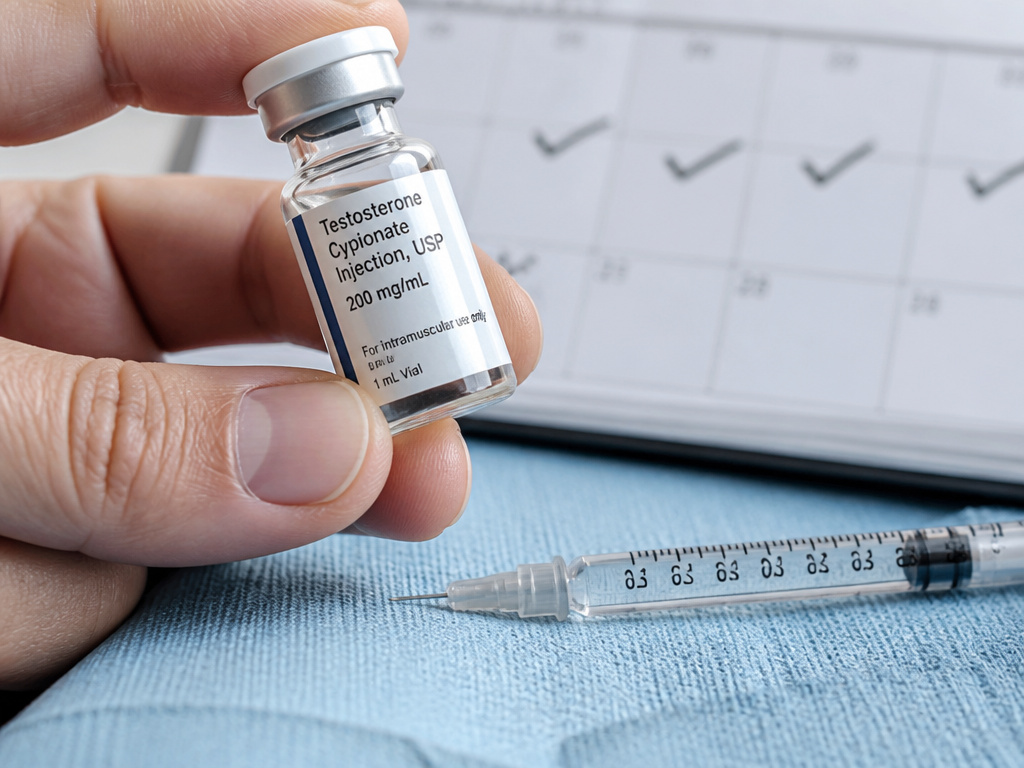
The benefits extend beyond simply raising a number on a lab sheet, a factor often highlighted in the daily testosterone injections pros and cons. The data points to consistent, measurable improvements in quality of life for men with confirmed hypogonadism.
- Rapid Onset of Action. This is the biggest draw. While gels take a week to stabilize, a short-acting injection delivers a perceptible surge in energy and mood within 24-48 hours. For someone in a deep trough, that speed matters.
- Dose Precision & Cost-Effectiveness. Injections are fully funded in many health systems and are generally cheaper long-term than gels or pellets. You can adjust the dose in small increments (e.g., 0.1 mL changes) with precision, something harder with fixed-dose gels.
- No Risk of Transference. Unlike gels, which require careful application and a waiting period before skin contact, injections eliminate the risk of accidentally dosing a partner or child. You also don’t have to plan your day around a 5-6 hour wait before showering.
- Improved Long-Term Symptoms. Studies following men on long-acting TU for up to 11 years show sustained improvements in erectile function, mood, body composition, and lower urinary tract symptoms.
The Cons and Risks: More Than Just a Needle

The disadvantages are what make this a medical treatment, not a lifestyle supplement, a crucial part of the daily testosterone injections pros and cons. They’re serious, and they require ongoing monitoring.
- Injection Burden & Pain. You must be comfortable with needles. Site reactions happen, pain, redness, itching. For long-acting TU, the 4 mL volume causes a deep, lingering ache. Sources report different measures for Pulmonary oil microembolism (POME): one systematic review found an incidence of 19 per 1000 injections, while an observational study reported a prevalence of 2.0%. It causes a sudden cough or shortness of breath minutes after the shot. This is why patients are observed for 30 minutes post-injection.
- Hormonal Rollercoaster (Short-Acting Only). The peak-and-trough cycle of weekly shots can manifest as acne, mood swings, irritability mid-cycle, and sleep disturbances. It’s the opposite of stable.
- Hematologic Risks. Injections, especially short-acting ones, carry a greater risk of raising your red blood cell count (haematocrit). This is a major safety focus. TRT is contraindicated if haematocrit is ≥ 54%, and used with caution if it’s 48 – 50%. High haematocrit thickens your blood, increasing the risk of clots, stroke, and heart attack. You’ll need regular blood tests to watch this.
- Impact on Fertility. This is a major con if you want children. TRT shuts down your body’s natural sperm production. Recovery isn’t quick. Normalization of semen parameters can take six to 12 months after stopping. For long-acting formulations, recovery from azoospermia could mean 9 to 15 months following the last dose. Restoration of spermatogenesis can take 12 months or more.
- Cardiovascular Risk Debate. The evidence is mixed and contentious. A 2013 meta-analysis cited by the European Medicines Agency (EMA) found testosterone therapy increased the risk of a cardiovascular event (OR 1.54). However, the EMA itself concluded the signal remains “weak and inconclusive.” The risk appears higher in older, frailer men with pre-existing conditions. In one study of older men with mobility limitations, 23 in the testosterone group had cardiovascular events vs. 5 in the placebo group over 6 months.
Common mistake: Starting injections without a clear baseline. Testosterone treatment should only be initiated in symptomatic patients with laboratory-confirmed hypogonadism on two separate occasions. Treating based on symptoms alone or a single low test is a recipe for misdiagnosis.
How This Compares to Gels, Patches, and Pellets

Injections aren’t the only path. Each method has a different profile, making the choice highly individual. Your lifestyle, needle aversion, and specific health metrics should guide the decision.
- Transdermal Gels (AndroGel, Testim): Applied daily. Pros: Stable levels, no needles. Cons: Risk of transference, skin irritation, must wait 5-6 hours to shower. They are often the preferred starting point because the dose can be easily adjusted or stopped.
- Patches: Similar pros/cons to gels, but with a higher rate of skin reactions for many users. They’ve largely fallen out of favor.
- Subcutaneous Pellets (Testopel): Surgically implanted under the skin every 3-6 months. Pros: “Forget-about-it” convenience. Cons: Requires a minor procedure, risk of infection or pellet extrusion, dose cannot be adjusted once implanted.
| Delivery Method | Dosing Frequency | Stability of Levels | Best For | Think Twice If |
|---|---|---|---|---|
| Short-Acting Injections | 2-3 times/week | Low (Peak & Trough) | Men who want low cost, fast onset, and don’t mind needles. | You dislike frequent injections or are prone to mood swings/polycythemia. |
| Long-Acting Injections (TU) | Every 10-14 weeks | High (Very Stable) | Men seeking minimal hassle, stable mood, and long-term consistency. | You want quick cessation if side effects occur (TU’s depot lasts months). |
| Transdermal Gel | Daily | High (With Daily Use) | Men with needle phobia, who want easy dose adjustment. | You have young children or a partner you have frequent skin contact with. |
| Pellets | Every 3-6 months | Moderate (Declines Slowly) | Men who truly want a “set and forget” approach. | You are uncomfortable with a minor surgical procedure or want fine dose control. |
Practical Realities: Pain, Sites, and Needles
We’ll keep this practical. The theory is one thing; jabbing yourself is another. The goal is to make it routine, not traumatic.
- Needle Size Matters: Appropriate needle size and technique should be discussed with a healthcare provider for safe intramuscular injection. The finer the gauge, the less the pinch.
- Site Rotation is Non-Negotiable: You must rotate sites to prevent scar tissue buildup. Common intramuscular sites are the ventrogluteal (hip), dorsogluteal (buttock), and vastus lateralis (thigh). Common intramuscular injection sites include the ventrogluteal, dorsogluteal, and vastus lateralis. You must rotate injection sites to prevent scar tissue buildup.
- Managing Pain and POME: Injecting the medication slowly may help manage discomfort. Inject slowly. If you feel a sudden, dry cough or tightness in your chest (signs of POME), sit down, stay calm, and breathe slowly. It typically passes in a few minutes but requires mentioning to your doctor.
The part nobody mentions: The psychological hurdle is often bigger than the physical one. The first few self-injections are tense. Your hand might shake. With practice, the process becomes routine. The fear dissipates.
Natural alternatives (lifestyle, weight loss)
Before considering injections, addressing lifestyle factors is a foundational step. For men with hypogonadism, especially those who are overweight or obese, weight loss and increased physical activity can sometimes improve testosterone levels and symptoms. A study noted that testosterone therapy in obese men could worsen markers of sleep apnoea in the short term, though this effect may dissipate with longer treatment. This highlights the potential benefit of first targeting the underlying condition through lifestyle modification. While not a replacement for medically necessary hormone therapy, improving diet, managing weight, and exercising regularly are practical, low-risk strategies that may offer symptomatic relief for some individuals.
Mixed/Unclear evidence for some benefits
The evidence for certain testosterone therapy benefits, particularly cardiovascular risk, is not clear-cut. A major pharmacovigilance review of numerous trials found testosterone therapy was associated with an increased risk of cardiovascular events. However, this signal was described as weak and inconclusive. The data showed a discrepancy: industry-sponsored trials found no increased risk, while non-industry sponsored trials did. Another study in older men with limited mobility reported more cardiovascular events in the testosterone group compared to placebo over six months. This conflicting information means the cardiovascular safety profile, especially for men over 65 where experience is limited, remains an area of ongoing evaluation and clinical caution.
Frequently Asked Questions
What are the main practical drawbacks of a frequent short-acting injection schedule?
The need for self-administering intramuscular shots multiple times per week can be burdensome and lead to injection site discomfort or anxiety. Managing supplies like needles, alcohol swabs, and proper storage adds to the daily routine complexity. This frequency also requires a consistent schedule that can be difficult to maintain with travel or a busy lifestyle.
How do hormone fluctuations from frequent injections potentially affect daily life?
The predictable rise and fall in testosterone levels can manifest as cyclical changes in energy, libido, and emotional state. Individuals may experience a noticeable “peak” of heightened drive or even irritability shortly after an injection, followed by a gradual decline in well-being as the next dose approaches. These swings can make it challenging to maintain a stable mood and consistent physical performance throughout the week.
Are there specific health monitoring requirements with this type of TRT?
Yes, more frequent blood monitoring is often recommended due to the sharper hormone peaks. Doctors typically monitor hematocrit and hemoglobin levels closely to guard against excessive red blood cell production, a risk associated with the supraphysiologic surges. Lipid panels and prostate-specific antigen (PSA) are also tracked regularly, as with any TRT, but the rollercoaster pattern may necessitate more attentive dose adjustments.
Can the injection frequency be adjusted if side effects occur?
Dose and schedule adjustments are a common part of managing this protocol, but options are limited by the medication’s short half-life. A doctor might slightly lower the dose per injection or attempt to increase the frequency to minimize peaks and troughs. However, moving to a less frequent schedule is not viable and would lead to even wider fluctuations, so managing side effects often involves fine-tuning within the multi-weekly framework.
The Bottom Line
Daily testosterone injections, in reality, mean short-acting shots 2-3 times weekly. They offer speed and cost benefits but demand acceptance of a hormonal rollercoaster, a higher hematologic risk profile, and a lifelong commitment to needles and monitoring.
The long-acting testosterone undecanoate alternative, with shots every 10-14 weeks, provides superior stability and is often a better fit for long-term management, if your body agrees with the interval. Remember, 23% of men need longer than 14 weeks between shots.
Your first step isn’t choosing a needle. It’s getting a diagnosis with two separate confirmatory blood tests. From there, the choice between injection methods, gels, or pellets hinges on your tolerance for frequency, your need for stability, and your future fertility plans. Whatever you choose, commit to the six-month trial and the ongoing blood work. Your response is the only test that matters.
