
Do Brazil Nuts Increase Testosterone?
This post contains affiliate links. As an Amazon Associate, we earn from qualifying purchases.
Do Brazil Nuts Increase Testosterone? Brazil nuts are a potent source of selenium, a mineral linked to sperm health and antioxidant function. While eating them can reliably raise your selenium levels, direct evidence that they increase testosterone in healthy men is thin. The strongest data shows benefits for sperm quality and auto-reported sexual desire, not hormone levels.
That gap between selenium status and a testosterone reading is where most articles get fuzzy. They point to studies on selenium supplements improving sperm parameters in infertile men and assume the nut does the same for hormones in everyone else. The research doesn’t support that leap cleanly.
What follows is a breakdown of the actual clinical trials, the safe daily limit (it’s lower than you think), and where Brazil nuts fit into a broader plan for hormonal health.
Key Takeaways
- Eating Brazil nuts significantly increases plasma selenium and the antioxidant enzyme glutathione peroxidase, but a major meta-analysis found no significant effect on thyroid hormones T3, T4, or TSH.
- The best human evidence comes from the FERTINUTS trial, where 60g/day of mixed nuts (including Brazil nuts) improved sperm count and auto-reported sexual desire in healthy men, but testosterone was not measured.
- Limit intake to 1–3 nuts per day. The tolerable upper intake level for selenium is 400 mcg daily, roughly the amount in four average-sized Brazil nuts.
- For a direct testosterone lift, lifestyle factors like sleep, stress management, and exercise have stronger evidence than any single food.
- If you are considering Brazil nuts for fertility support, view them as a selenium-delivery tool, not a hormone modulator, and get a blood test to check your levels first.
The Science Behind the Claim: Selenium, Sperm, and Sexual Function
The link between Brazil nuts and testosterone hinges entirely on selenium, which is why people ask do brazil nuts increase testosterone. Healthline states a 1-ounce (28-gram) serving provides 988% of the Daily Value for selenium, while other sources note one Brazil nut provides approximately 20–84 µg of selenium. Selenium is a cofactor for glutathione peroxidase, a key antioxidant enzyme that protects cells, including sperm, from oxidative damage.
The most cited human study is the FERTINUTS randomized controlled trial. It involved 119 healthy men who added 60 grams of a mixture of nuts (walnuts, almonds, hazelnuts) to their diet for 14 weeks. The results were clear for semen: significant improvements in sperm count, vitality, motility, and morphology. A secondary analysis of 83 participants also found a significant increase in auto-reported sexual desire and orgasmic function.
The FERTINUTS trial found no significant changes in nitric oxide or E-selectin, markers of erectile endothelial function, and did not report reproductive hormone levels (testosterone, FSH, estradiol). The authors note this limits extrapolation to populations with clinical erectile dysfunction.
That last point is critical. The study measured outcomes related to fertility and sexual function, not the hormone driving them. This is a common pattern. A scoping review on nonpharmacological testosterone interventions notes that most studies on selenium use supplements, not selenium-rich foods. It concludes that effects of non-drug interventions on testosterone levels are generally modest.
The mechanism makes sense for sperm, not serum testosterone. Selenium is incorporated into sperm mitochondria, affecting motility and structure. Fixing a selenium deficiency in an infertile man can improve sperm quality, which some supplement studies have shown. But that’s a deficiency correction in a clinical population, not a testosterone boost in a healthy one.
Where the Evidence Gets Mixed (and Why)
Headlines simplify, but the source material doesn’t. When you dig into the research, you find clear agreements and important disagreements that most summaries gloss over.
First, the solid agreement: Brazil nuts raise selenium levels. A systematic review on thyroid hormones that pooled data from seven randomized trials confirmed it. Consumption significantly increased plasma selenium by a weighted mean difference of 87.63 µg/L and boosted glutathione peroxidase activity. The mean dosage of Brazil nut in the included meta-analysis studies was 9.42 g/day.
The disagreements are more telling, especially around the do brazil nuts increase testosterone question. They usually stem from conflating different forms of selenium and different study populations.
| Source of Claim | What It Actually Shows | Key Limitation |
|---|---|---|
| Selenium Supplement Studies (e.g., 200 mcg/day) | Improved sperm parameters in men with infertility. | Uses isolated selenium, not whole Brazil nuts. Population had a fertility problem. |
| FERTINUTS Trial (60g/day mixed nuts) | Improved sperm quality and auto-reported sexual desire in healthy men. | Did not measure testosterone. Used a nut mixture, not Brazil nuts alone. |
| Healthline Article Summary | States research is “mixed”; some studies show high selenium had no effect or hurt sperm motility. | Aggregates conflicting supplement and food studies, reflecting the overall lack of direct testosterone data. |
The scoping review explicitly notes that most evidence for selenium and testosterone comes from supplements. Jumping from a 200 mcg selenomethionine capsule to eating three Brazil nuts is a guess. The other nutrients in the nut, fats, magnesium, other antioxidants, might modify the effect. We don’t have the trial that compares them head-to-head.
I learned this the hard way with other “miracle” foods. I once tracked my diet closely and found that a weekly serving of beef liver closed more nutrient gaps than several supplements I was taking. A single food is rarely the magic bullet; it’s a piece of a nutrient-density puzzle.
How Many Brazil Nuts Should You Eat? The Dose Dictates the Risk
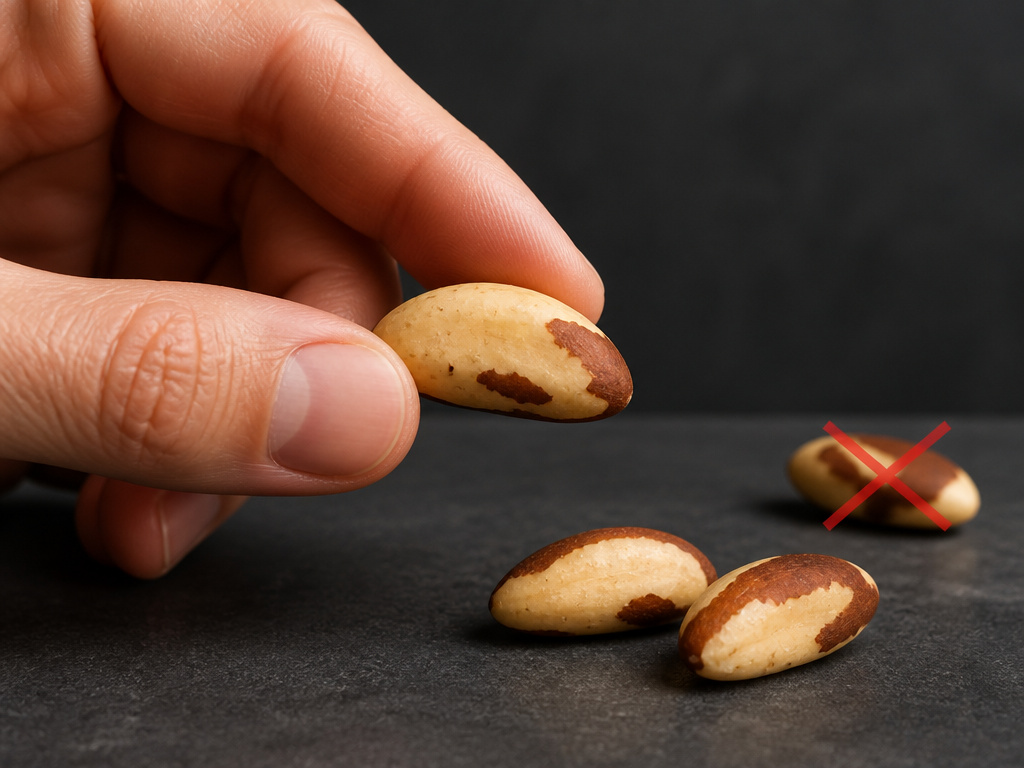
This is the most important section. Brazil nuts have the tightest safe window of any food I write about. Their selenium content is wildly variable, and the line between benefit and toxicity is thin.
One Brazil nut can contain anywhere from 20 to 84 micrograms of selenium. Soil concentration in the Amazon basin dictates this. That means just one nut can meet or exceed your entire daily requirement for selenium.
Common mistake: Eating a handful of Brazil nuts daily. Selenium toxicity, or selenosis, can occur at intakes above 400 mcg per day.
The established tolerable upper intake level (UL) is 400 mcg of selenium per day. Healthline advises that this equals about four average-sized Brazil nuts. Their recommendation, and the consensus from other authorities, is to limit yourself to one to three nuts per day to stay safely under the UL.
For consistent intake, don’t eyeball it. Two nuts on Monday and five on Thursday creates a weekly average that could push you over. I make it a rule: two nuts, three days a week, with a day off in between. This approach controls your average intake and makes room for other selenium-rich foods like eggs, tuna, or sunflower seeds.
| Daily Intake | Approx. Selenium (mcg) | Risk Level | Recommendation |
|---|---|---|---|
| 1 Brazil Nut | 20–84 | Low. Likely within daily needs. | A safe starting point for most. |
| 2–3 Brazil Nuts | 40–252 | Moderate. May exceed daily needs but is under the 400 mcg UL. | The widely cited safe limit. Do not exceed daily. |
| 4+ Brazil Nuts | 80+ | High. Approaches or exceeds the 400 mcg UL with variability. | Risk of acute toxicity. Not recommended. |
| 50+ Brazil Nuts | 5,000+ | Toxic. Associated with clinical selenosis. | Medical attention required. |
Brazil Nuts vs. Selenium Supplements: Which Is Better?
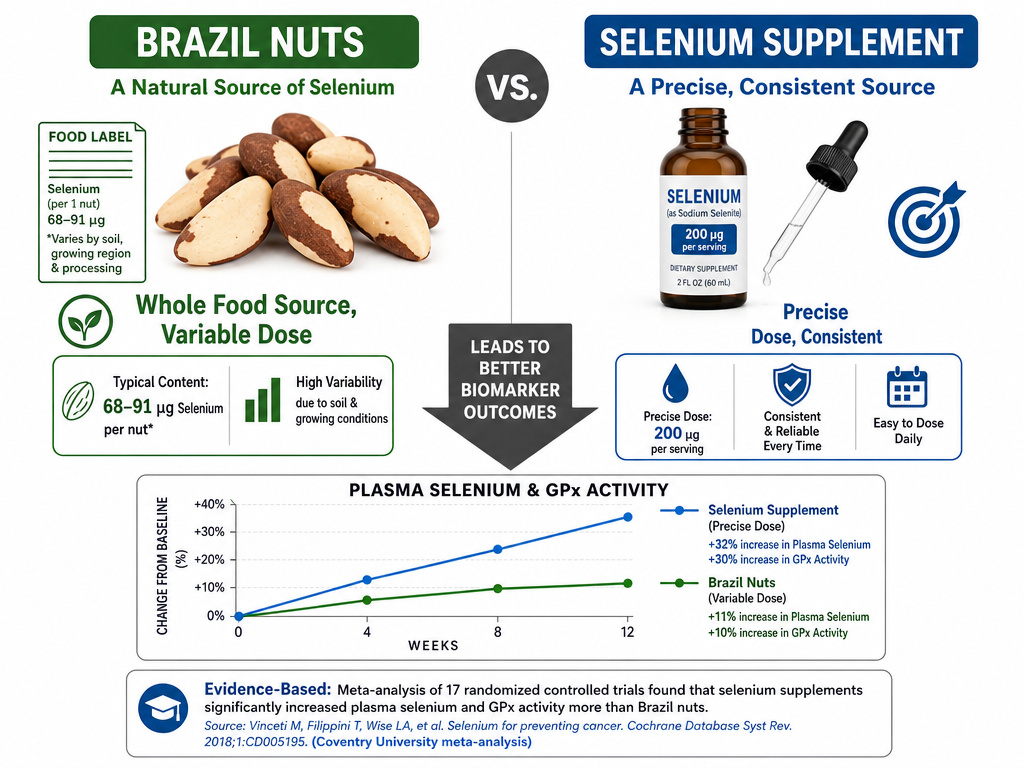
If your goal is to raise selenium status, whole Brazil nuts are effective. The Coventry University research publication meta-analysis confirms they work as well as selenomethionine supplements for increasing plasma selenium and GPx activity.
But goals matter. Are you correcting a documented deficiency? Supporting general antioxidant status? Or trying to influence a specific hormone?
- Choose Brazil nuts if: You want a whole-food source, don’t mind the dose variability, and are using them for general nutrient density as part of a diet rich in other natural food supplements.
- Choose a supplement if: You have a confirmed deficiency (via blood test), need a precise, consistent dose (e.g., 200 mcg), or are following a research protocol that used a specific form of selenium.
For fertility, some of the positive studies used a zinc selenium combo supplement. That’s a different tool. It’s also why I’m skeptical of most testosterone booster effectiveness claims, they often throw selenium into a proprietary blend at an unknown dose, making it impossible to replicate the research.
A Realistic Action Plan: Beyond the Nut
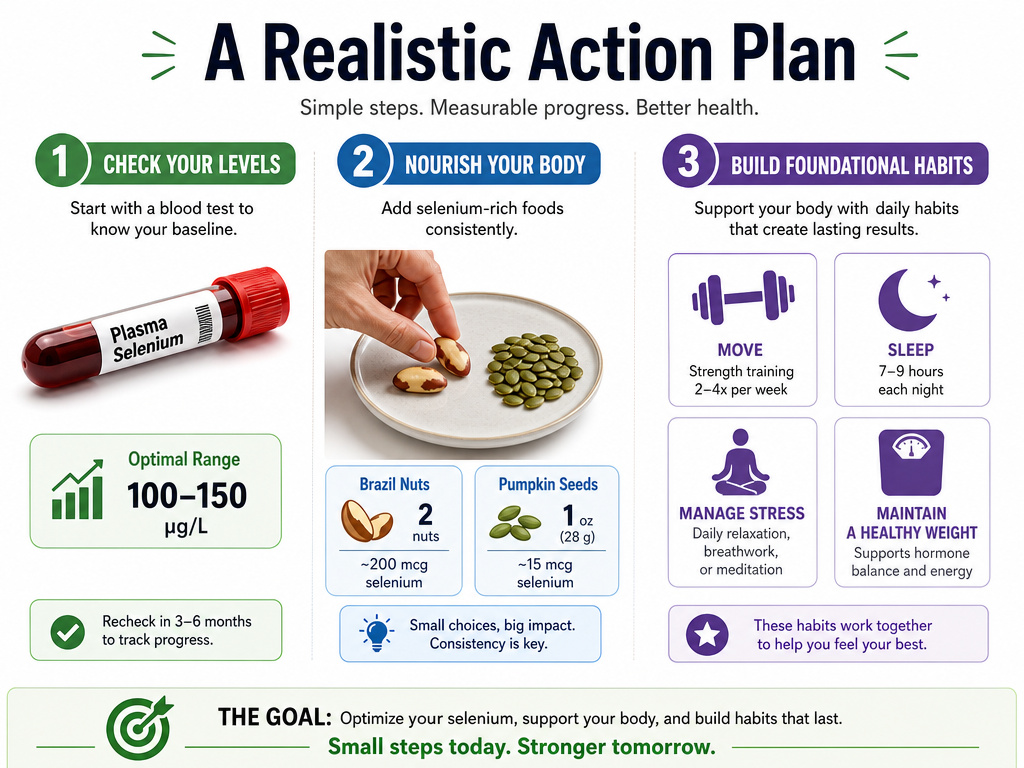
Brazil nuts are a tool, not a strategy. Placing all your hopes on one food ignores the systems that actually govern hormone production. Here’s how to fit them into a plan that works.
First, assess your need. A simple blood test for plasma selenium can tell you if you’re deficient, sufficient, or at risk of high levels. Guessing is a waste of time and potentially risky.
Second, integrate them mindfully. Add one or two Brazil nuts, 2-3 times per week, to a diet already focused on nutrient density. Pair them with other mineral-rich foods like pumpkin seeds for zinc or eggs for choline. This approach beats fixating on any single “boost.”
Third, prioritize the foundational habits that have robust evidence for supporting healthy testosterone levels: 7-9 hours of quality sleep, regular strength training, managing chronic stress, and maintaining a healthy body weight. No amount of selenium will offset the hormone crash from chronic sleep deprivation or obesity.
Where this goes sideways: Using Brazil nuts as a permission slip to neglect sleep, exercise, and a balanced diet. The nut is a supporting actor, not the lead.
If you’re exploring this for fertility concerns, the evidence is stronger for sperm health. In that case, view Brazil nuts as a helpful dietary addition alongside other researched steps like avoiding excessive alcohol and heat exposure to the testes. But for a direct, measurable increase in circulating testosterone, the current evidence points you toward lifestyle and, if deficient, targeted supplementation, not a bag of nuts.
General symptoms or importance of low testosterone
Low testosterone can impact more than just libido. While specific hormonal data was not reported in key nut consumption studies, the broader importance of healthy testosterone levels relates to sexual function, energy, and overall vitality. For instance, research on mixed nuts showed significant improvements in auto-reported sexual desire and orgasmic function, suggesting a link between nutrient-rich diets and aspects of male sexual health often associated with hormonal balance. Maintaining adequate levels supports general well-being, but effects from dietary interventions are typically modest according to reviews. If you suspect low levels, focus on a consistent, nutrient-dense diet and consult a healthcare professional for personalized advice.
Best time to consume Brazil nuts
There is no specific research pointing to an optimal time of day to eat Brazil nuts for testosterone or selenium benefits. The key is consistent, moderate intake to maintain stable selenium levels. Studies on Brazil nuts and antioxidant status involved daily consumption over periods ranging from 15 days to 12 weeks. Since the goal is to support your body’s antioxidant defenses and potentially benefit sexual health, as suggested by nut studies, incorporate one to three nuts into your daily routine at a time that fits your meal pattern. This helps avoid exceeding the tolerable upper intake level for selenium while providing the mineral regularly.
Frequently Asked Questions
What does eating Brazil nuts do for men?
For men, eating Brazil nuts reliably increases blood selenium levels and boosts the activity of the antioxidant enzyme glutathione peroxidase. The best human trial data shows they can improve sperm count, vitality, and motility when consumed as part of a mix of nuts. Some men also report improved sexual desire. They do not have a proven, direct effect on raising testosterone levels.
Why should you only eat 3 Brazil nuts a day?
You should limit yourself to about three Brazil nuts per day because of their extremely high and variable selenium content. The tolerable upper intake level for selenium is 400 micrograms per day. Since a single nut can contain a variable amount of selenium, eating four or more daily can easily push you near or past the 400 mcg limit, increasing the risk of selenium toxicity.
Is 2 Brazil nuts daily too much?
Two Brazil nuts daily is not too much for most people and falls within the commonly recommended safe intake of 1-3 nuts per day. However, given the variability in selenium per nut, consuming two nuts provides a variable amount of selenium. It’s a safe dose for maintaining selenium status but should be considered your maximum daily intake, not a minimum.
What 5 foods increase testosterone?
No foods directly “increase” testosterone in a clinically significant way for healthy men. However, several foods support the nutrient foundations for healthy hormone production: 1) Eggs (cholesterol, vitamin D, selenium), 2) Fatty fish like salmon (vitamin D, omega-3s), 3) Shellfish like oysters (zinc, for those deficient), 4) Pomegranates (antioxidants for blood flow), and 5) Leafy greens (magnesium). Their effect is supportive, not stimulatory.
Before You Go
The Brazil nut question shows a common pattern in natural health: we often focus on a single, simple food solution for problems that are actually complex and systemic.
The data is clear on two points. Brazil nuts are a potent, effective way to raise your selenium levels and support antioxidant status. And the best human studies show benefits for sperm parameters and aspects of sexual function in healthy men. The data is conspicuously absent on one point: a direct, causal link to increased testosterone.
So here’s the takeaway. If you like Brazil nuts and want their antioxidant and mineral benefits, eat one or two a few times a week. Track it. Don’t make it a daily handful. Pair them with a diet full of varied, nutrient-dense foods for testosterone support. And then, invest the real effort into the non-negotiables that genuinely move the needle: sleep, strength training, and stress management. That’s the combination that works, with or without the nut.
