
Does High Testosterone Increase Fertility?
This post contains affiliate links. As an Amazon Associate, we earn from qualifying purchases.
High testosterone does not increase fertility; it often decreases it. The relationship is not linear. Naturally high, endogenous testosterone within a normal range is fine, but adding exogenous testosterone (TRT, supplements) suppresses the brain’s signals to the testes, crashing sperm production. This is a documented contraceptive effect. For men trying to conceive, the goal is a balanced hormonal system, not a higher serum testosterone number.
That suppression happens through a specific, well-studied biological pathway. Once you understand that mechanism, the confusing advice about testosterone and fertility starts to make sense. A common question is does high testosterone increase fertility, and the pathway clarifies why the answer is not straightforward. It also explains why some men on TRT stay fertile while others become azoospermic, and why recovery timelines vary so widely.
What follows: a breakdown of how testosterone actually works for sperm production, the hard data on suppression and recovery, and the practical alternatives for men who need symptom relief but also want to preserve their chance of starting a family.
Key Takeaways
- Exogenous testosterone is a contraceptive. Adding testosterone from outside the body shuts down the brain’s production of LH and FSH, hormones essential for sperm production.
- Recovery takes months, not weeks. After stopping TRT, the probability of sperm count returning to 20 million/mL is 67% within 6 months and 100% within 24 months, per contraceptive study data.
- Delivery method changes the risk. Intramuscular injections suppress sperm faster, while transdermal gels may allow for slower suppression and different recovery speeds.
- Alternatives like clomiphene citrate exist. Medications that stimulate your body’s own testosterone production, like clomiphene citrate, can treat low-T symptoms without harming fertility.
- Get a semen analysis first. Before starting any testosterone therapy or supplement aimed at fertility, establish a baseline with a semen analysis. You can’t fix what you haven’t measured.
The Core Mechanism: How Exogenous Testosterone Affects Sperm
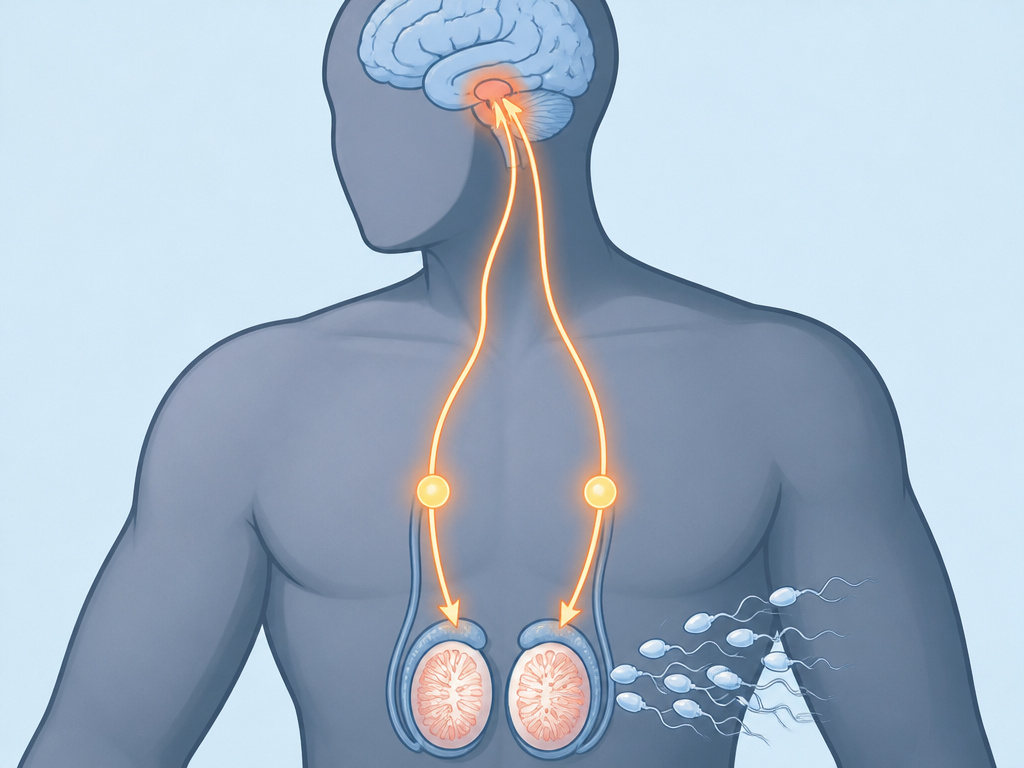
Your brain runs the show. The hypothalamus and pituitary gland act like a thermostat for your testosterone. When they sense low levels, they release gonadotropin-releasing hormone (GnRH), which tells the pituitary to secrete luteinizing hormone (LH) and follicle-stimulating hormone (FSH). LH tells your testes to make testosterone. FSH tells them to make sperm.
Adding external testosterone—whether by prescription gel, injection, or an over-the-counter “booster”—floods the system. The brain’s thermostat reads this as “plenty of testosterone here” and stops calling for more. It shuts off GnRH, which collapses LH and FSH production.
Exogenous testosterone can suppress intratesticular testosterone (ITT) to concentrations less than 20 ng/mL, a level at which spermatogenesis is dramatically compromised. The sperm factory inside the testicles doesn’t just slow down; it loses its primary fuel source.
Without LH and FSH, two things happen. First, the Leydig cells in your testes stop producing their own testosterone. Second, the Sertoli cells, which nurture developing sperm, stop getting the FSH signals they need. Sperm production halts. This is why the World Health Organization researched testosterone injections as a male contraceptive. In their studies, the mean time to achieve azoospermia with testosterone enanthate was 120 days, or about four months.
This is the fundamental disconnect. A man might feel better on TRT because his serum testosterone is high, but the environment inside his testes has become a desert for sperm. The relationship between testosterone and sperm is cooperative, not directly causal, which is why the does high testosterone increase fertility question is so complex. More in the bloodstream doesn’t help; it often hurts.
Naturally High Testosterone vs. Added Testosterone
This distinction is everything. A man with naturally high, endogenous testosterone and a healthy hypothalamic-pituitary-gonadal (HPG) axis is likely fertile. His system is in balance. His brain is still talking to his testes.
The problem is added, or exogenous, testosterone. It doesn’t matter if it’s a doctor-prescribed gel, an underground steroid cycle, or a “natural booster” that claims to spike levels. If it introduces hormones from outside, it risks suppressing that internal conversation.
Where this goes sideways: Assuming a “testosterone booster” supplement is safe for fertility because it’s “natural.” Many contain ingredients that can indirectly suppress the HPG axis or are laced with prohormones. The effect on your sperm production can be the same.
The data from male contraceptive trials is clear on the potency of added testosterone. A Chinese study using monthly testosterone undecanoate injections reported a 93-98% azoospermia rate. WHO studies using weekly testosterone enanthate reported 64-75% rates. The variation is attributed by some sources to ethnic differences in response and different dosing schedules, but the direction is undeniable when you compare a does high testosterone increase fertility scenario: added testosterone suppresses sperm.
This is why men with clinically diagnosed low testosterone who want children are steered away from traditional TRT as a first-line treatment. Treating the symptom (low serum T) can worsen the underlying fertility problem.
The Recovery Timeline: What Happens When You Stop?
So you stop the testosterone. How long until sperm come back? The answer isn’t simple, but the studies give us a staged framework.
After discontinuation in contraceptive studies, the probability of recovery to a sperm concentration of 20 million/mL (a common threshold for fertility) was:
- 67% within 6 months
- 90% within 12 months
- 96% within 16 months
- 100% within 24 months
A 2015 clinical study found median sperm concentration increased from 0 to 6.3 million/mL, with a median follow-up of 4.5 months. Notably, 21% of men in that study remained azoospermic during the observation period.
| Time Since Stopping TRT | Probability of Sperm Recovery (to ≥20 million/mL) | Notes |
|---|---|---|
| 6 Months | ~67% | Many men see partial return; a 2015 study noted a median of 6.3 million/mL at 4.5 months. |
| 12 Months | ~90% | The majority recover to a fertile range within a year. |
| 24 Months | ~100% | Virtually all men recover by the two-year mark, per contraceptive trial data. |
The method of TRT matters for recovery speed. One review noted that men discontinuing intramuscular injections recovered spermatogenesis in an average of 3.1 months. Men stopping transdermal gels took an average of 7.4 months. The theory is that gels provide a steadier, more consistent suppression of the HPG axis, which takes longer to reboot after you stop.
The process of how to restore fertility after TRT is one of patience and verification. It requires follow-up semen analyses every 3-4 months, not just waiting and hoping.
TRT and Fertility: Are There Safer Options?
If you have symptomatic low testosterone but want to preserve fertility, you have pathways that don’t involve shutting down your HPG axis. The goal shifts from replacing testosterone to stimulating your body to produce more of its own.
Clomiphene Citrate and Enclomiphene
These are selective estrogen receptor modulators (SERMs). They trick the brain into thinking estrogen levels are low, which prompts it to release more GnRH, LH, and FSH. Your testes get the signal to make both testosterone and sperm. Studies show it’s effective for managing hypogonadal symptoms while maintaining or improving semen parameters. It’s a cornerstone of fertility-preserving alternatives to TRT.
Human Chorionic Gonadotropin (hCG)
HCG mimics LH. If you’re already on TRT, adding low-dose hCG can provide the LH-like signal directly to the testes, helping to maintain intratesticular testosterone and spermatogenesis. Some protocols use it alongside TRT as a “fertility bridge.” For men not on TRT, hCG monotherapy can be used to stimulate testosterone and sperm production, particularly in cases of hypogonadotropic hypogonadism.
Aromatase Inhibitors (e.g., Anastrozole)
These drugs block the conversion of testosterone to estrogen. In men where high estrogen is suppressing the HPG axis, lowering estrogen can increase LH, FSH, and testosterone. They’re used selectively, often in conjunction with other therapies.
Natesto (Nasal Testosterone Gel)
This is a unique form of TRT. Research has shown it can maintain semen parameters in some men while treating low-T symptoms, and there are case reports of men converting from long-acting TRT to Natesto to resume spermatogenesis.
Choosing among these requires a doctor who understands male fertility. The first step is always a full workup: blood tests (total T, free T, LH, FSH, estradiol) and a semen analysis.
Lifestyle, Supplements, and Proactive Steps
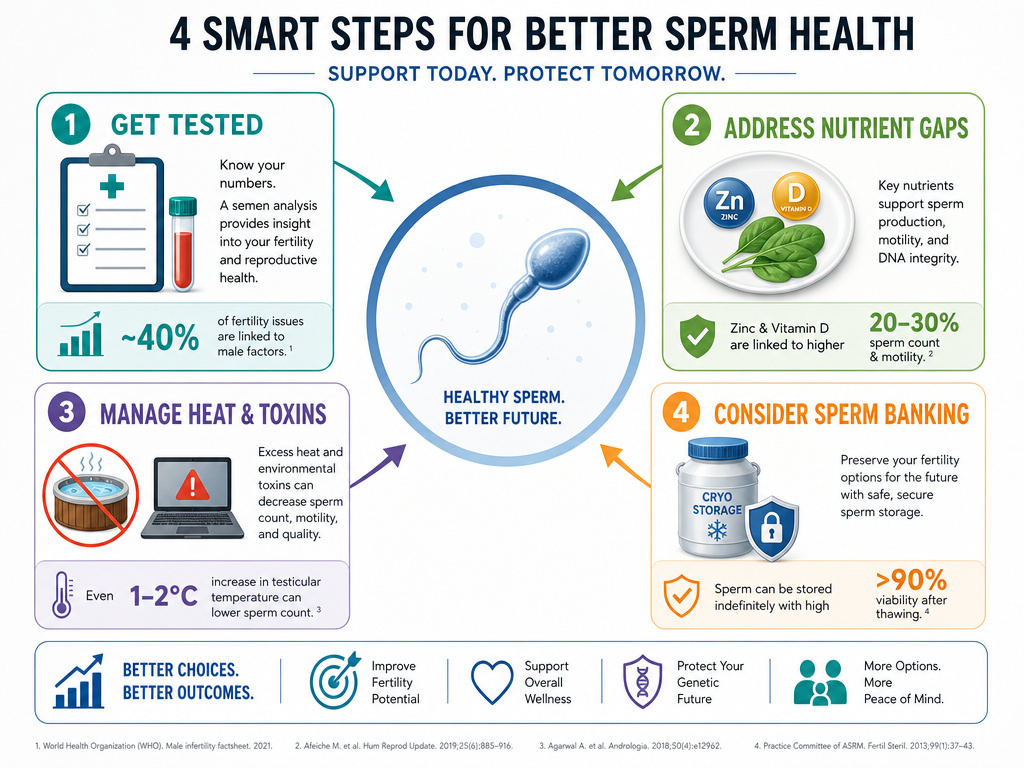
Before reaching for a prescription or a bottle, look at the fundamentals. They’re not sexy, but they’re the foundation.
Get Tested
You cannot manage what you don’t measure. A semen analysis is essential if fertility is a concern. It tells you the baseline. Blood work explains the “why” behind the numbers. This is more valuable than any supplement.
Address Core Nutrient Gaps
Deficiencies in zinc, vitamin D, selenium, and folate can impair sperm production. Fixing a deficiency is powerful. But more is not better. Food first, then supplement to fill specific, measured gaps.
Manage Heat and Toxins
The testicles are outside the body for a reason: they need to be cooler. Avoid prolonged hot tubs, tight underwear, and laptops on your lap. Review medications and environmental exposures with your doctor.
Consider Sperm Banking (Cryopreservation)
If you and your doctor decide that traditional TRT is medically necessary and you may want children in the future, banking sperm before you start is the most certain way to preserve fertility. It’s an insurance policy. The question of whether you should freeze sperm before starting TRT is a personal one, but having the option removes a major future worry.
Be Wary of “Fertility Booster” Supplements
The market is full of blends. Look for products that disclose exact doses of each ingredient. Avoid proprietary blends and outrageous claims.
Do over-the-counter testosterone boosters cause infertility?
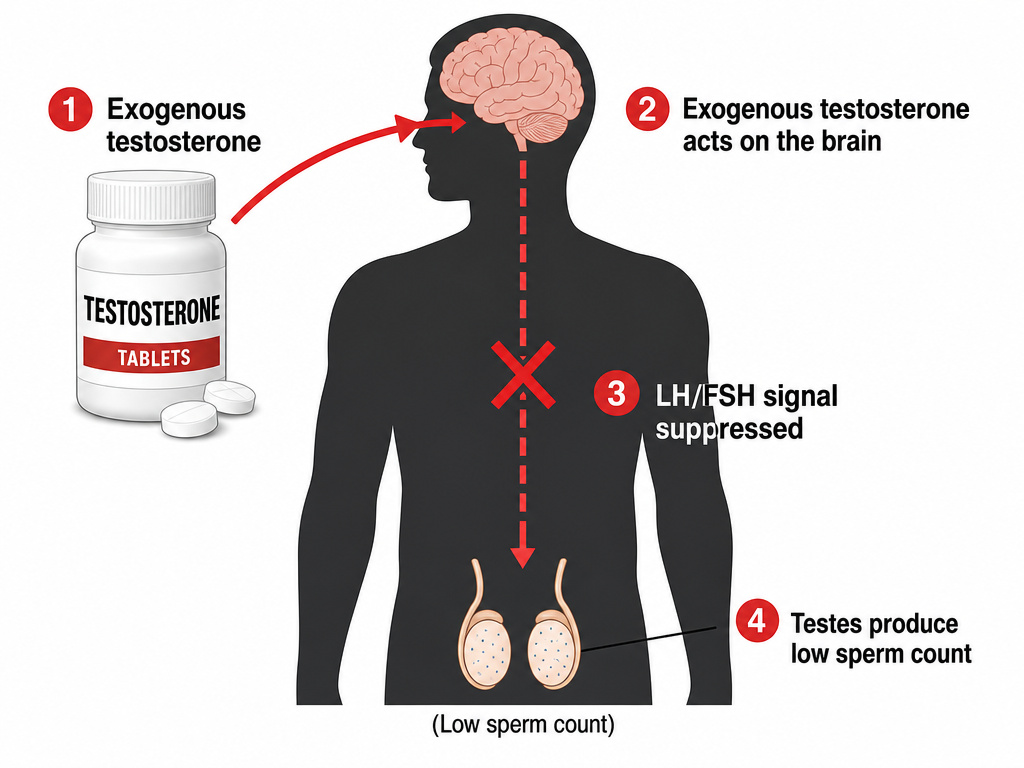
Over-the-counter supplements marketed as testosterone boosters carry a significant risk of harming fertility. The core issue is that introducing any form of exogenous testosterone, even from unregulated supplements, can signal your brain to shut down its natural production of luteinizing hormone (LH) and follicle-stimulating hormone (FSH). Without these signals, the testes stop producing their own testosterone and sperm. This suppression can lead to dramatically low sperm counts. Recovery is possible after stopping, but the timeline can vary. If you are considering any supplement for low testosterone symptoms while trying to conceive, it is essential to consult a doctor first to explore options that do not compromise sperm production.
Frequently Asked Questions
Does high testosterone make a man more fertile?
No, not in the way most people think. A healthy, naturally high level within the normal range is compatible with fertility. However, artificially elevated testosterone from therapy or supplements suppresses the hormonal axis needed for sperm production and reduces fertility.
Can you be on TRT and still get someone pregnant?
It’s possible but less likely. TRT suppresses sperm count, often to very low or zero. Some men on TRT maintain a low but detectable count. Using adjunctive therapies like hCG alongside TRT can improve the odds, but conception while on standard TRT is not the norm.
What is the #1 cause of male infertility from hormones?
The leading iatrogenic (doctor-caused) hormonal cause is the use of exogenous testosterone or anabolic steroids. These directly suppress the pituitary hormones (LH and FSH) that drive sperm production. This is a well-documented and preventable cause of male infertility.
How long after stopping testosterone will sperm improve?
Improvement can begin within 3-4 months, but it typically takes 6-12 months to reach a fertile range. Full recovery can take up to 24 months. The timeline depends on the type of testosterone used, the duration of use, and individual factors.
Are there alternatives to TRT that don’t hurt fertility?
Yes. Medications like clomiphene citrate or enclomiphene stimulate your body’s own testosterone production without suppressing sperm. Human chorionic gonadotropin (hCG) can also be used. These are core TRT alternatives for men concerned about fertility.
The Bottom Line
The relationship between testosterone and fertility is a paradox. You need it, but adding more from outside your body is one of the most reliable ways to lose it. The mechanism—suppression of LH and FSH—is not a side effect; it’s a direct, predictable consequence.
If you’re considering testosterone therapy and future children matter, the sequence is critical. Test first (semen analysis, hormones). Then explore fertility-preserving alternatives like clomiphene or hCG with a knowledgeable doctor. If you must start traditional TRT, discuss sperm banking first. And if you’re already on TRT and want to conceive, plan for a long, patient off-ramp with monitoring.
The evidence from decades of male contraceptive research is unambiguous. Your fertility is not about chasing a higher number on a lab report. It’s about maintaining the delicate, internal conversation between your brain and your testes. Don’t let one loud, external voice drown it out.
