
Endocrine Disruptors That Lower Testosterone
This post contains affiliate links. As an Amazon Associate, we earn from qualifying purchases.
Endocrine disruptors that lower testosterone include bisphenol A (BPA), phthalates like DINP, certain pesticides, polychlorinated biphenyls (PCBs), and, under specific conditions, acetaminophen. These chemicals interfere with hormone signaling, block receptors, or disrupt synthesis, with effects documented in human studies linking exposure to reductions in testosterone and poorer semen quality.
The key word is “specific conditions.” A single serving of tofu won’t crash your hormones, but a three-day work shift handling certain plastics might. The risk isn’t uniform; it hinges on the dose, the duration, and a critical developmental window.
What follows is a breakdown of the five most-documented disruptors, the science behind how they work, and a practical, tiered approach to reducing your exposure that starts with the changes that matter most.
Key Takeaways
- The masculinization programming window (MPW) during fetal development is a uniquely vulnerable period where exposure can cause lasting reproductive issues.
- Human fetal testes show greater sensitivity to low-dose BPA than rodent models, a critical detail often missed in generalized warnings.
- Occupational exposure provides the clearest human data: a study of plastics workers found short-term DINP exposure linked to lower testosterone and more self-reported erectile problems.
- Effects can persist after exposure ends; an animal study found a 24.5% decrease in testicular testosterone one week after the last dose of a phthalate.
- For most men, cutting alcohol and improving sleep will have a far greater impact on testosterone than swapping out every plastic container.
The 5 Most-Documented Endocrine Disruptors
Forget the vague fear. These are the chemicals with direct, peer-reviewed human or strong mechanistic evidence linking them to lower testosterone. The numbers come from the studies, not from supplement marketing.
The most straightforward evidence comes from occupational settings where exposure is high and measurable. A longitudinal study published in Occupational & Environmental Medicine followed 97 male workers in French plastics factories from 2015 to 2018. It found that increased urinary metabolites from diisononyl phthalate (DINP) over a 3-day work period were associated with a significant decrease in total serum testosterone. More self-reported erectile problems were also noted in workers directly exposed at their workstations.
This is the kind of cause-and-effect chain that’s hard to ignore. It moves the concern from theoretical to observable.
| Chemical | Common Sources | Key Human Evidence | Reported Testosterone Impact |
|---|---|---|---|
| Bisphenol A (BPA) | Plastic food containers, can linings, receipts. | PLOS One study: BPA at low concentrations (10⁻⁸ M) inhibited testosterone production in fetal human testes in culture. | Inhibition of production in fetal models. |
| Phthalates (e.g., DINP, DBP) | Vinyl flooring, shower curtains, fragrances, plasticizers. | Occupational Study: Short-term DINP exposure linked to lower serum testosterone in workers. NHANES Analysis: Urinary phthalate metabolites associated with 11.6–17.1% lower serum testosterone. | 11.6–17.1% decrease (population data); significant decrease (occupational). |
| Organochlorine Pesticides | Contaminated food, legacy environmental pollution. | Review Evidence: Teenage boys with high prenatal PCB levels had significantly lower LH and testosterone. Long half-life (years) leads to bioaccumulation. | Significantly lower levels in adolescents. |
| Acetaminophen | Over-the-counter pain relievers (Tylenol). | Science Translational Medicine: In a human fetal testis xenograft model, exposure to a therapeutic dose for 7 days reduced plasma testosterone in host mice by 45%. | 45% reduction in a model system. |
Where this goes sideways: Assuming all plastic is equally risky. A single-use water bottle is a different exposure universe than working daily with molten vinyl. The dose and duration define the danger.
How Do Endocrine Disruptors Lower Testosterone?
They don’t just “mess with hormones.” They use specific, measurable mechanisms to short-circuit your endocrine system. Think of it less like static on a radio and more like someone hijacking the broadcast signal.
The process often starts by mimicking or blocking natural hormones. A chemical like BPA can disrupt hormone signaling. Other disruptors, like certain phthalates, are associated with decreased testosterone production, making them part of the group of endocrine disruptors that lower testosterone. It’s a molecular sabotage.
The timing of exposure is everything. Research points to critical periods in fetal development. Disruption during these times can alter the development of reproductive organs, leading to issues like cryptorchidism (undescended testes) and potentially affecting hormone levels long-term.
The part nobody mentions: Effects can linger. An animal study on di-n-butyl phthalate (DBP) found a 24.5% decrease in testicular testosterone concentration measured a full week after the final dose of a five-week exposure regimen. The body doesn’t always reset the moment the chemical is gone.
Critical Evidence and Where Scientists Disagree
The science isn’t a monolith. Honest looks at the data reveal where the picture is clear and where it’s still developing. This is where most general-audience articles stop.
A major point of discussion is species sensitivity and life stage. A review in Environmental Endocrine Disruptors highlighted that using a fetal testis assay (FeTA) culture system, phthalates did not alter testosterone production in human fetal testes, while similar concentrations reduced it in rat fetal testes. However, other human studies, such as the NHANES analysis and the occupational DINP study, show associations between phthalate exposure and lower testosterone in adolescents and adults, indicating a disagreement in the evidence based on life stage or study type.
Similarly, the effect of BPA on fetal human testes at low doses shows some conditional nuance. The PLOS One study found BPA inhibited testosterone production at concentrations as low as 10⁻⁸ M, but noted that for the lowest doses, effects occurred only when no supporting gonadotrophin was added to the culture media. A review in Environmental Endocrine Disruptors also states that only human testes were affected at low doses, highlighting the sensitivity but also the conditional nature of the findings.
Worth knowing before you start: Studies on prenatal exposure to dioxins/PCBs have reached different conclusions regarding semen quality in offspring. An Italian study of men with prenatal dioxin exposure from the Seveso accident found lower sperm quality, while a Danish pregnancy cohort study found maternal PCB levels were not correlated with sons’ semen quality. This is science working as it should—refining answers, not delivering easy ones.
Everyday Products and Exposure Routes

You encounter these chemicals through a handful of predictable channels. Knowing where these chemicals are found helps you choose safer alternatives without unnecessary worry.
Your diet is a primary route. BPA can leach from the lining of canned foods. Phthalates can migrate from some plastic packaging. Pesticide residues on produce may be a source of exposure. It’s not about one bad apple; it’s the cumulative load.
The home environment is next. Phthalates are found in some vinyl products and fragrances. PFAS are used in some stain-resistant treatments.
I once replaced every plastic food container in my kitchen with glass in a weekend purge. It felt decisive. My notebook, however, shows my energy and sleep scores didn’t budge. The lesson wasn’t that the swap was useless, but that it was likely a lower-tier intervention for me at that time. The big levers—stress, sleep, and alcohol—were still firmly in the wrong position.
Practical Steps to Reduce Your Exposure
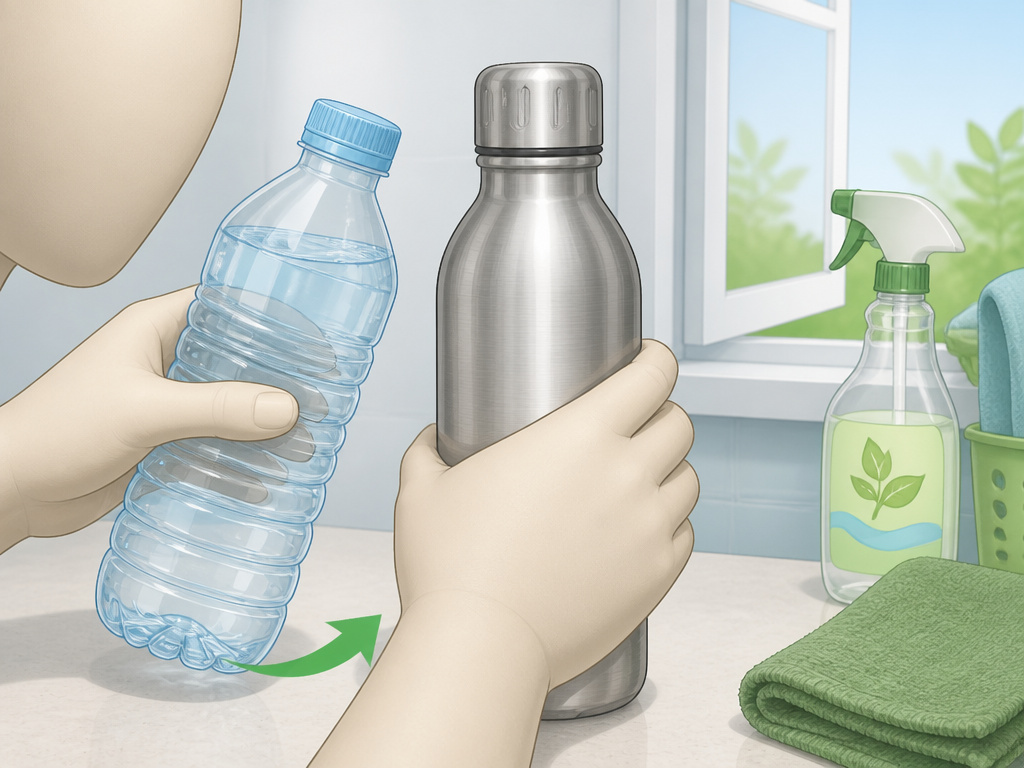
You can’t live in a bubble, but you can prioritize. This is a tiered list: start at the top, get those habits locked in, and then consider the next level. Change one thing at a time.
Tier 1: The High-Impact, Low-Effort Swaps
- Choose glass or stainless steel for water bottles and food storage. This directly cuts BPA and phthalate exposure from plastics.
- Ventilate your home. Open windows regularly to flush out volatile chemicals from furnishings, cleaning products, and fragrances.
- Wash your hands before eating. It’s a simple hygiene practice that may reduce ingestion of contaminants.
- Ditch the air fresheners and synthetic fragrances. Use essential oil diffusers sparingly or opt for fragrance-free cleaning and laundry products.
Tier 2: The Dietary Upgrades
- Buy fresh or frozen over canned to avoid BPA-lined containers. If you must use canned, look for brands that advertise “BPA-free” linings (though be aware some alternatives may have their own issues).
- Choose organic produce when possible, especially for the “Dirty Dozen” list, to reduce pesticide exposure.
- Filter your tap water. A simple carbon filter pitcher can reduce a range of contaminants.
Tier 3: The Home Environment Audit
- Check labels for “fragrance.” In personal care products, this term can mask phthalates. Choose products that disclose ingredients or are specifically labeled phthalate-free.
- Be mindful of vinyl. Consider alternatives to vinyl shower curtains, flooring, or children’s toys, especially in spaces with poor ventilation.
- Use non-stick cookware carefully. Don’t overheat it, and discard pans that are visibly scratched to minimize potential PFAS exposure.
The Limits of the Evidence and a Balanced View

It’s crucial to separate concerning data from panic. The fear around endocrine disruptors in the wellness space often outstrips the practical risk for the average person.
The most robust human data comes from high-exposure scenarios: occupational settings, specific contamination events (like Seveso), or population studies showing statistical associations. These prove the chemicals can cause harm. They do not, however, prove that the trace amounts in your single-use plastic bottle yesterday will crash your testosterone today. The body has detoxification pathways and a capacity to handle minor insults.
Furthermore, lifestyle factors can have a significant effect on hormone levels. Focusing solely on avoiding endocrine disruptors while ignoring other health fundamentals may be a misplaced priority.
Start with the basics you can measure and feel. Get a blood test to know your baseline. Track your sleep for a month. Log your alcohol intake honestly. The chemical environment matters, but it’s one piece of a much larger puzzle.
Can supplements or diet help protect testosterone?
The research focuses on the disruptive effects of chemicals like phthalates and BPA, showing significant decreases in testosterone from exposure. Since these chemicals are widespread, practical guidance centers on reducing exposure first. This means prioritizing actions like choosing fresh foods over processed items packaged in plastic, using glass or stainless steel for food and water, and selecting personal care products free of synthetic fragrances. Supporting overall health through a nutrient-dense diet is a foundational step, but the primary defense is minimizing contact with the documented disruptors.
Frequently Asked Questions
What is the #1 testosterone killer from the environment?
Based on the breadth of human evidence and ubiquity of exposure, phthalates are a leading candidate. Population studies like NHANES show a clear association between urinary metabolites and lower serum testosterone, and occupational research directly links short-term exposure to decreased levels. Their presence in everything from plastics to personal care products makes them a widespread concern.
Does BPA in plastic water bottles really lower testosterone?
The science suggests it can, but the risk is highly dependent on usage. A single, occasional use of a plastic bottle is a negligible exposure. The concern grows with habitual use, especially if the bottle is heated (like in a car) or used for long periods, which increases leaching. The PLOS One bisphenol A investigation showed fetal human testes are sensitive to low doses in vitro. For daily hydration, switching to glass or stainless steel is a simple, precautionary step that eliminates this variable entirely.
How can I test if endocrine disruptors are affecting me?
You can’t test for a direct causal link, but you can investigate two things: your exposure and your hormone levels. Some specialized labs offer urine tests for metabolites of common endocrine disruptors like BPA and phthalates to gauge your recent exposure. More importantly, a standard blood test can measure your serum testosterone, LH, and FSH. If your testosterone is low and exposure is high, it becomes a prime suspect. The best “test” is often an intervention: reduce exposure using the steps above for 2-3 months and then re-check your bloodwork.
Are natural chemicals like soy and flaxseed endocrine disruptors?
What’s more important: avoiding plastics or fixing my sleep?
For the vast majority of men with suboptimal testosterone, fixing your sleep is infinitely more important. Chronic sleep restriction is a powerful, direct suppressor of testosterone production. Prioritize 7-9 hours of quality sleep per night before you spend a dollar on glass containers or “detox” supplements. Addressing sleep, stress, and nutrition moves the needle in a way that marginal chemical avoidance rarely can.
Before You Go
The evidence on endocrine disruptors that lower testosterone is compelling enough to warrant smart precautions, but not so definitive that it should be your primary health obsession. The data shows effects at high, sustained exposures—think occupational settings or specific contamination events.
Your most powerful move is to understand the hierarchy of risk. The factors lowering testosterone that you can control most directly are not hidden in your shower curtain. They are in your sleep schedule, your stress management, your alcohol consumption, and your body composition. These are the levers that pull hard.
So, test, don’t guess. If you’re concerned, get a baseline blood panel. Then, implement one high-impact lifestyle change—like committing to 7.5 hours of sleep—for eight weeks. Re-test. Let your own body’s response guide you, not fear. The goal isn’t to live in a sterile world, but to make informed choices that stack the odds in your favor, starting with the changes that matter most.
