
Foods That Lower Testosterone: The Evidence-Based List
This post contains affiliate links. As an Amazon Associate, we earn from qualifying purchases.
Foods that lower testosterone work through a few specific mechanisms: acute post-meal hormone suppression from large doses of protein, fats, and carbs; chronic lowering from diets high in polyunsaturated fats and low in overall nutrients; and interference with testosterone metabolism by compounds in foods like tea and licorice. The effect depends heavily on dose, your starting weight, and what else you eat.
The data here is messy. One study says protein crashes your levels, another says it raises them. The difference comes down to the type of protein, the dose, and who’s being studied. This is about understanding the levers, like the specific foods that lower testosterone, so you can pull the right ones, rather than creating a list of forbidden foods.
What follows breaks down the hard numbers from the clinical trials, explains why the studies sometimes disagree, and shows you where the real dietary pressure points, including foods that lower testosterone, are for testosterone. This section explains the immediate effects of meals, long-term eating habits, and particular foods containing compounds that disrupt hormone metabolism.
Key Takeaways
- A single 400-calorie drink containing 30g of whey protein hydrolysate can drop serum testosterone by 80 ng/dL, with suppression lasting for 320 minutes.
- Ingestion of 52g of polyunsaturated fat (PUFA) caused significant, prolonged testosterone suppression.
- Calorie restriction raises testosterone in overweight men but lowers it in normal-weight men, your starting body fat decides the outcome.
- Compounds in white and green tea can inhibit the liver enzyme UGT2B17 by over 70%, slowing testosterone clearance in a test tube.
- The acute testosterone-lowering effect of a glucose load disappears in men who are already on prescribed testosterone therapy.
How Macronutrients Cause Acute Testosterone Drops
Forget eating for a moment. Just drinking a 400-calorie shake can change your hormone reading within two hours. That’s the finding from a controlled trial where men drank solutions of pure dextrose (sugar), whey protein, or canola oil.
The PMC macronutrient testosterone study recorded baseline testosterone at 415 ng/dL. After the whey protein drink, levels fell to 340 ng/dL. The drop was larger and lasted longer than from sugar or fat in this study. Peak suppression hit 80 ng/dL at the 200-minute mark, and the effect lingered for 320 minutes. The sugar drink caused a 63 ng/dL drop at 130 minutes. The fat drink (canola oil) caused only a 10 ng/dL dip at 70 minutes. However, another study found that 52g of polyunsaturated fat (PUFA) caused significant testosterone suppression.
Oral ingestion of all macronutrients decreases circulating testosterone concentration, independent of LH secretion. The effect is more intense and prolonged after protein intake, and minimal with lipid ingestion. , PMC9627418
Why does this happen? The leading theory isn’t about the food itself, but about the energy rush. A sudden influx of calories signals the body to temporarily dial back energy-intensive processes, which may include sex hormone production. It’s a short-term regulatory hiccup, not a permanent shutdown.
This is a key reason for standardized testing protocols. If you get blood drawn an hour after a big protein shake, your result won’t reflect your true baseline. Schedule fasted morning labs.
The Fat vs. Carbohydrate Debate: Which Lowers T More?
Here’s where the evidence splits. The study above found fat had a minimal effect. But another pilot study on overweight men tells a different story.
In that MDPI pilot study, men consumed 52 grams of polyunsaturated fat (PUFA). Their serum testosterone dropped by 3.2 nmol/L after one hour and stayed suppressed for five hours. The net overall reduction was about 10 nmol/L × h. In the same study, a refined carbohydrate drink (orange juice) had “little effect on testosterone.”
So which is right? Both, within their contexts. The first study used canola oil (a mix of fats) in a single 400-calorie dose in a mixed-weight group. The second used a large, specific dose of PUFAs in overweight men. The takeaway is that large doses of refined PUFAs, common in processed foods and many vegetable oils, can be a potent suppressor, especially if you’re carrying extra weight, rather than that one macronutrient is universally bad.
| Macronutrient | Study Source | Testosterone Change | Key Context |
|---|---|---|---|
| Whey Protein (30g) | PMC9627418 | -80 ng/dL (peak) | Acute, single dose in healthy men |
| Dextrose (75g) | PMC9627418 | -63 ng/dL (peak) | Acute, single dose |
| Polyunsaturated Fat (52g) | MDPI 11(12):3059 | -3.2 nmol/L (at 1 hr) | Overweight/obese men, prolonged effect |
| Refined Carbs (OJ) | MDPI 11(12):3059 | Little to no effect | Overweight/obese men |
It’s the combined, chronic exposure that likely does the damage, not the occasional meal.
Foods That Interfere With Testosterone Metabolism
Some foods contain compounds that don’t lower production but slow down disposal. Testosterone is cleared from your body mainly in the liver by an enzyme called UGT2B17. It attaches a glucuronide molecule to testosterone, making it water-soluble so you can excrete it. Certain dietary components can block this enzyme.
A Frontiers in Endocrinology article tested this in vitro. White tea powder inhibited testosterone glucuronidation by approximately 90%. Green tea inhibited it by over 70%. Red wine showed up to 70% inhibition over two hours. The active compounds are catechins like epigallocatechin gallate (EGCG), which acts as a competitive inhibitor of UGT2B17.
White tea powder inhibited testosterone glucuronidation by approximately 90% in vitro. Green tea inhibited over 70%. Red wine inhibited up to 70% over a 2-h period. , Frontiers in Endocrinology Review
The situation is more complex. Hormone regulation depends on rhythmic production and clearance. Artificially jamming one part of the system can have unpredictable feedback effects on production over time. The clinical significance for a few cups of tea is probably small for most, but it illustrates a direct dietary interaction with hormone machinery.
Chronic Dietary Patterns and Testosterone
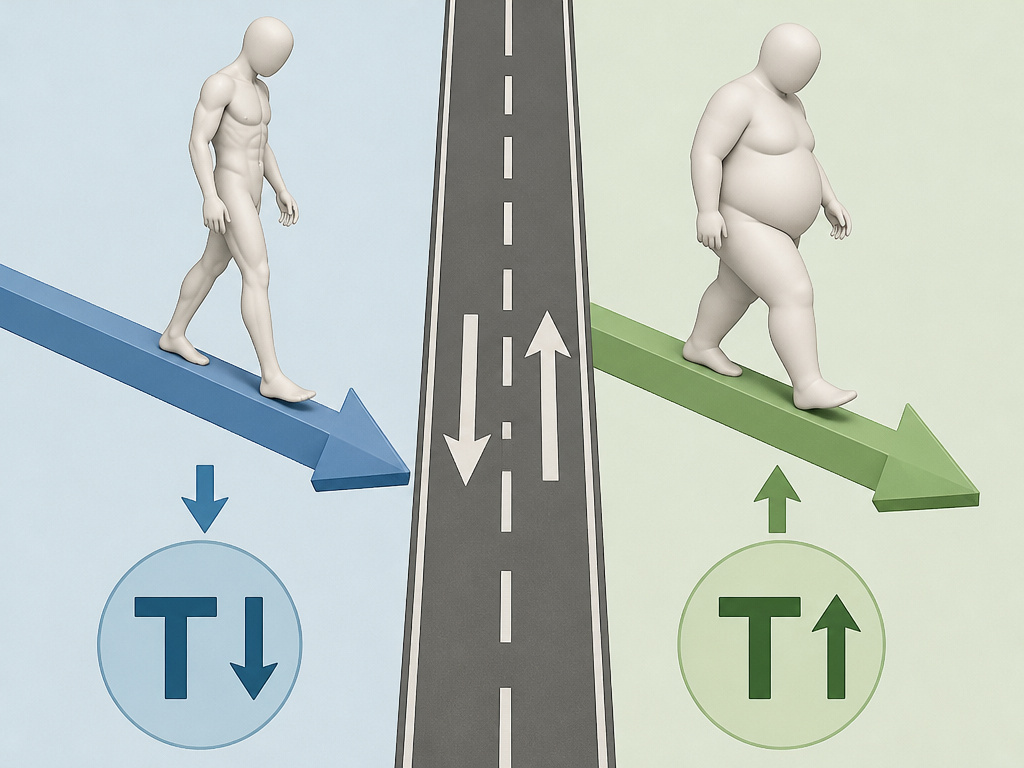
Shifting from single meals to overall eating patterns reveals two major levers: fat intake and calorie balance.
Another older PubMed dietary trial from 1983 specifically noted a reversible decrease in serum total and free testosterone in men during a lower-fat, higher-fibre diet intervention.
But the most striking pattern involves calories, not just macros. A meta-analysis on calorie restriction (CR) found it increased total testosterone in 3 of 4 studies with overweight/obese men. Conversely, it decreased testosterone in 2 of 3 studies with normal-weight men.
Your starting body composition flips the script. If you have excess fat, losing weight through a calorie deficit improves insulin sensitivity and reduces aromatase activity (the conversion of testosterone to estrogen), leading to higher T. If you’re already lean, a sustained deficit is read as a stressor, prompting the body to conserve energy by downregulating sex hormones.
This is why extreme dieting can backfire for athletes or lean individuals. It’s also a core part of understanding how obesity lowers testosterone in the first place, it’s a two-way street.
The Protein Paradox: Does It Lower or Raise T?
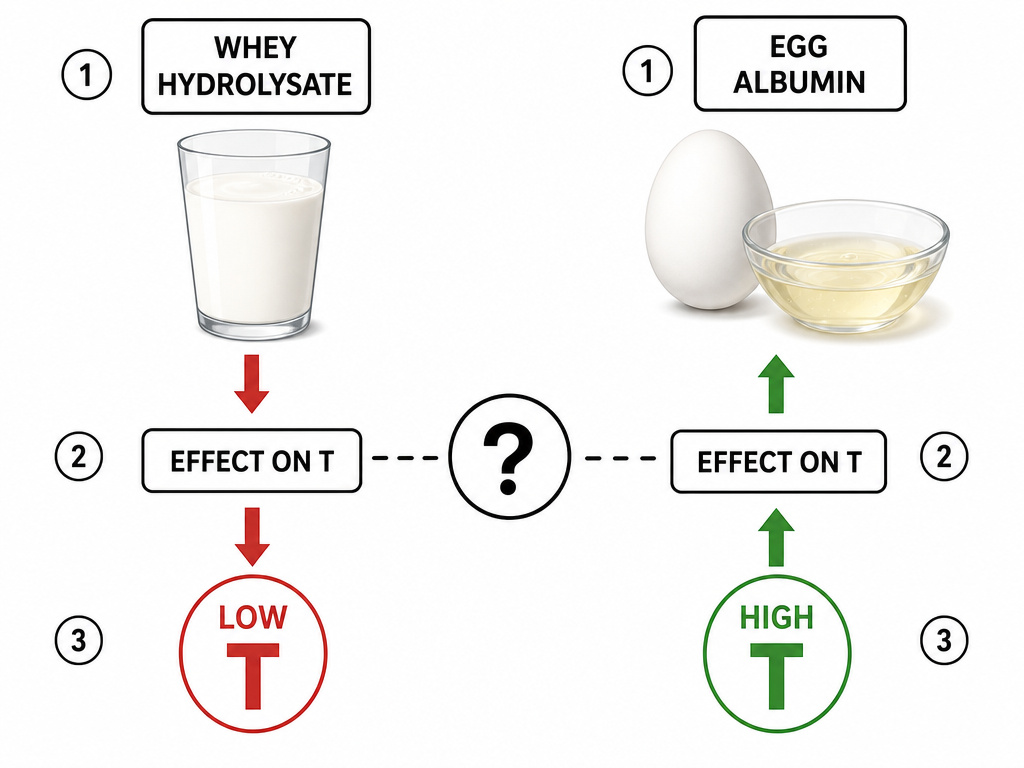
The PMC9627418 study showed protein (whey hydrolysate) caused the biggest drop. Yet, the MDPI 11(12):3059 study found that egg albumin increased net testosterone levels. What gives?
The discrepancy points to two variables: protein source and study population. The suppressing protein was whey hydrolysate, a fast-absorbing, isolated form. The raising protein was egg albumin. Whole-food protein sources come with fats, cholesterol, and other co-factors that may modulate the response. The populations also differed (healthy mixed-weight vs. Overweight).
Common mistake: Assuming all “protein” has the same effect. Fast-absorbing isolates in a pure bolus may trigger a stronger acute regulatory response than whole-food proteins eaten as part of a mixed meal.
The lesson is that protein is your most satiating macronutrient and critical for muscle, not something to avoid. The lesson is to not panic if you see a post-workout shake correlated with a temporary dip in a hormone panel. Look at your chronic, whole-food diet instead.
Does mint lower testosterone?
The fact sheet does not contain any specific information on mint, spearmint, or peppermint. For practical guidance, if you are concerned about testosterone levels, it is advisable to focus on broader dietary patterns that are supported by research, such as managing overall fat intake. Individual foods like mint are less likely to have a significant isolated impact compared to consistent dietary habits over time.
Do trans fats and unhealthy fats lower testosterone?
Research indicates that fat intake can influence testosterone levels, though findings vary. One study found that ingesting a large amount of polyunsaturated fat significantly decreased serum testosterone, with the suppression lasting for several hours. Another study using canola oil showed a minimal acute effect. A separate analysis notes that a low-fat diet caused a reversible decrease in serum testosterone. The type and quantity of fat, as well as individual context like body weight, appear to be key factors in determining the hormonal response.
Do nuts lower testosterone?
The fact sheet does not provide specific data on nuts. Nuts are a source of dietary fats, and research shows that fat ingestion can affect testosterone, but the impact depends on the type and amount. For practical guidance, consider that extreme dietary patterns, such as very low-fat or very high-fat intake, have been linked to changes in testosterone levels. Moderation and focusing on overall dietary balance are generally recommended over singling out specific foods like nuts.
Frequently Asked Questions
Which foods lower testosterone the most?
Based on acute clinical data, large doses of isolated whey protein and large amounts of polyunsaturated fats (52g of PUFA) can cause significant drops in testosterone.
Do eggs lower testosterone?
The evidence is mixed and likely positive. One pilot study found egg albumin increased net testosterone. Eggs also provide cholesterol (a precursor for hormone synthesis), choline, and vitamin D. For most people, eggs are a nutrient-dense food that supports overall health, including hormonal health.
What lowers testosterone levels quickly?
Single high-dose drink of whey protein (30g) can lower serum testosterone by up to 80 ng/dL, with effects lasting for 320 minutes. A large oral glucose load (75g) can also cause a rapid drop of about 63 ng/dL within 2 hours.
Do bananas lower testosterone levels?
There is no direct clinical evidence that bananas lower testosterone. They are a source of sugar and potassium, but as part of a balanced diet, they are unlikely to have a meaningful negative impact. The focus should be on overall dietary patterns, not single whole fruits.
Before You Go
Don’t walk away from this with a long list of foods to fear. That’s the wrong move. The goal is awareness of pressure points.
The single most actionable insight is about timing. If you’re getting bloodwork to assess your baseline testosterone, fast for 8-12 hours and schedule the draw for the morning. A recent large meal, especially one high in protein, will skew your results downward.
Fixing basic nutrient deficiencies and focusing on whole foods will do more for your hormones than obsessing over soy or the occasional pastry.
The data on tea and wine inhibiting metabolism is fascinating biochemistry, but its real-world impact for moderate consumers is likely minimal. Let the evidence lead, not the headline. Your diet is a system. Optimize the signal, don’t just chase out the noise.
