
How DHT Causes Male Pattern Baldness: The 5-Step Mechanism
This post contains affiliate links. As an Amazon Associate, we earn from qualifying purchases.
Male pattern baldness happens when dihydrotestosterone (DHT), a potent androgen converted from testosterone by the 5α-reductase enzyme, binds to androgen receptors in genetically susceptible scalp follicles. This binding triggers a cascade that shortens the hair growth phase and miniaturizes the follicle, producing thin, vellus hairs. The process is highly heritable, with twin studies estimating the heritability (h2) of early-onset male pattern hair loss at 0.81.
That’s the consensus answer. The details are where things get interesting, and where most explanations stop. DHT doesn’t just “shrink” a follicle. It reprograms the dermal papilla cells at its base to send a specific self-destruct signal, which is a key part of how DHT causes male pattern baldness.
The rest of this guide walks through that five-step attack cycle, the genetic odds that set the stage, and what the head-to-head research says about stopping it. You’ll see why one prescription pill beats a popular herbal supplement by a wide margin, and why timing your intervention matters more than most people realize.
Key Takeaways
- DHT is five times more potent than testosterone at activating the androgen receptor in hair follicles, driving the miniaturization process.
- Genetics explain up to 81% of susceptibility; the heritability is so strong that genetic deficiency of the key enzyme completely prevents balding.
- A randomized control trial showed better results with 1 mg finasteride than 5% minoxidil foam in 65 male patients.
- DHT acts fast at the cellular level, upregulating the destructive protein DKK-1 within 3 to 6 hours of exposure.
- Early intervention is critical; finasteride shows better hair growth in patients over 30, and treatment can require a full year before visible improvement.
The Genetic Hand You’re Dealt
Before DHT can do anything, your genes have to grant it permission. This isn’t a minor factor. Heritability (h2) of early-onset male pattern hair loss was estimated as 0.81 (95% CI 0.77–0.85) in early-onset MPHL families. Another analysis in pairs of first-degree relatives generated an h2 estimate of 0.62.
Those numbers tell you two things. First, the old myth about baldness coming only from your mother’s side is just that, a myth. The strong concordance between fathers and sons points to autosomal genes, not just the X chromosome. Second, if you have the genetic setup, you’re susceptible. If you don’t, you’re not. The condition is absent in individuals with a genetic deficiency of the 5α-reductase type II (SRD5A2) enzyme. That discovery in the 1970s was the single biggest clue that DHT was the central culprit.
The genetic component also explains the pattern. Your follicles are not created equal. Those on the sides and back of your head (the occipital region) are genetically programmed to be resistant to DHT. That’s why hair transplants work, you move DHT-resistant follicles to thinning areas, and they keep growing. The follicles on your crown and hairline lack that programming. When DHT arrives, they listen.
Where this goes sideways: Assuming you’re safe because your maternal grandfather had a full head of hair. The inheritance is polygenic and complex, meaning risk can come from multiple family lines. You need to look at your parents’ generation, not skip two generations back.
The 5-Step DHT Attack Cycle
The process isn’t a slow starvation. It’s a targeted molecular shutdown, which is the core of how DHT causes male pattern baldness. Here’s the step-by-step breakdown of how a normal terminal hair follicle gets miniaturized into a barely visible vellus hair.
1. The Conversion: Testosterone to DHT
Circulating testosterone enters the hair follicle. Inside, the enzyme 5α-reductase type II converts it into dihydrotestosterone (DHT). This isn’t a subtle change. DHT has a five-fold higher affinity for the androgen receptor than testosterone. Think of it as turning a standard key into a master key that fits the lock perfectly and won’t let go.
2. The Binding: DHT Locks Onto the Receptor
DHT binds to the androgen receptor (AR) inside cells of the dermal papilla, the command center at the base of the follicle. In susceptible follicles, these receptors are more plentiful or more sensitive. This DHT-AR complex then moves into the cell nucleus.
3. The Signal: Turning On Destructive Genes
Once inside the nucleus, the DHT-AR complex acts as a transcription factor. It binds to specific DNA sequences and alters gene expression. One of the most critical genes it upregulates codes for a protein called Dickkopf-1 (DKK-1). Lab studies show that exposing balding dermal papilla cells to DHT spikes their DKK-1 mRNA within 3 to 6 hours.
4. The Execution: The Apoptosis Order
DKK-1 is a secreted protein. It acts as a potent inhibitor of the Wnt/β-catenin signaling pathway. That pathway is essential for hair follicle growth and cycling. By blocking it, DKK-1 sends a pro-apoptosis (programmed cell death) signal to the keratinocytes in the follicle. The follicle’s growth phase (anagen) is abruptly shortened.
5. The Miniaturization: The Shrink Wrap
With each subsequent hair cycle, the anagen phase gets shorter. The follicle spends more time in the resting (telogen) phase. The result is a follicle that produces a progressively thinner, shorter, less pigmented hair. A robust terminal hair eventually becomes a fine, nearly invisible vellus hair. The follicle itself shrinks in size, this is the miniaturization you see as thinning.
This DHT-induced dermal papilla cells secreted 19.6 ng/ml of DKK-1 versus 5.7 ng/ml without DHT, as measured by ELISA in a 2008 Journal of Investigative Dermatology study. The signal strength is not subtle.
DHT’s Paradox: Body Hair vs. Scalp Hair
Here’s the confusing part that trips everyone up. DHT stimulates thick hair growth in places like your beard, chest, and armpits. So how can it both grow and kill hair?
The answer is body-site-specific programming. The genetic expression in a beard follicle is different from that in a scalp follicle. Beard follicles respond to DHT by enlarging and prolonging their growth phase, which contrasts sharply with how DHT causes male pattern baldness. Genetically susceptible scalp follicles interpret the exact same hormonal signal as a command to miniaturize.
It’s a perfect example of context in biology. The same hormone, acting through the same receptor, can have opposite effects depending on the local cellular environment and genetic wiring. This is why you can’t use a “DHT blocker” cream on your scalp to treat hair loss without considering systemic effects, it might also slow the beard growth you want.
How Common Is This, Really? The Prevalence Numbers
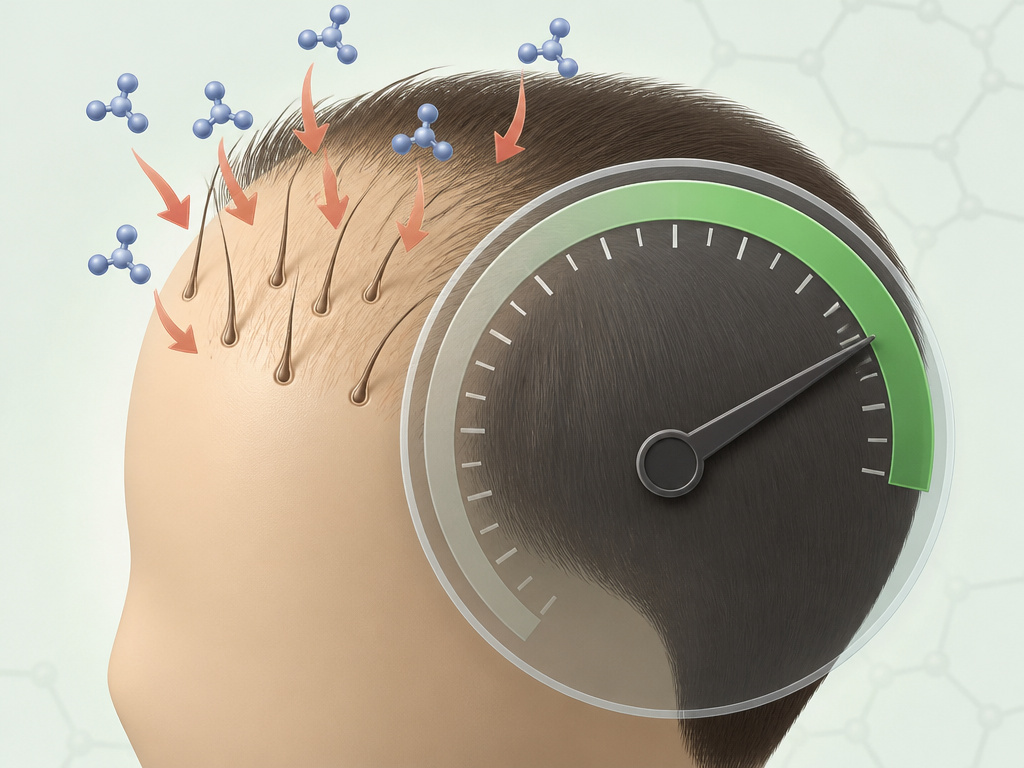
The stats make it clear this is the default for most men, not an exception. Sources show a range: one study reports up to 70% of older Caucasian men present AGA symptoms, while another reports affecting at least 80% of men by age 70 years.
| Source | Claim | Population |
|---|---|---|
| PMC10173235 | Affects at least 80% of men by age 70 | General |
| PMC10932098 | 50% of 50-year-old men, up to 70% of older Caucasian men | Caucasian-focused |
| PMC8719969 | At least 50% of men by age 50, up to 70% in later life | General |
| PMC10842561 | Up to 80% of European men experience some degree in their lifetime | European |
For women, the picture is different but significant. A study by Norwood cited in the research found 6% of women under 50 and 30–40% of women over 70 are diagnosed with female pattern hair loss. Another source notes it presents in 13% of premenopausal women and 37% of postmenopausal women.
The takeaway is universal: if you have the genes, time is the main variable. The process is incredibly common.
Stopping the Cycle: Prescription vs. Natural DHT Blockers
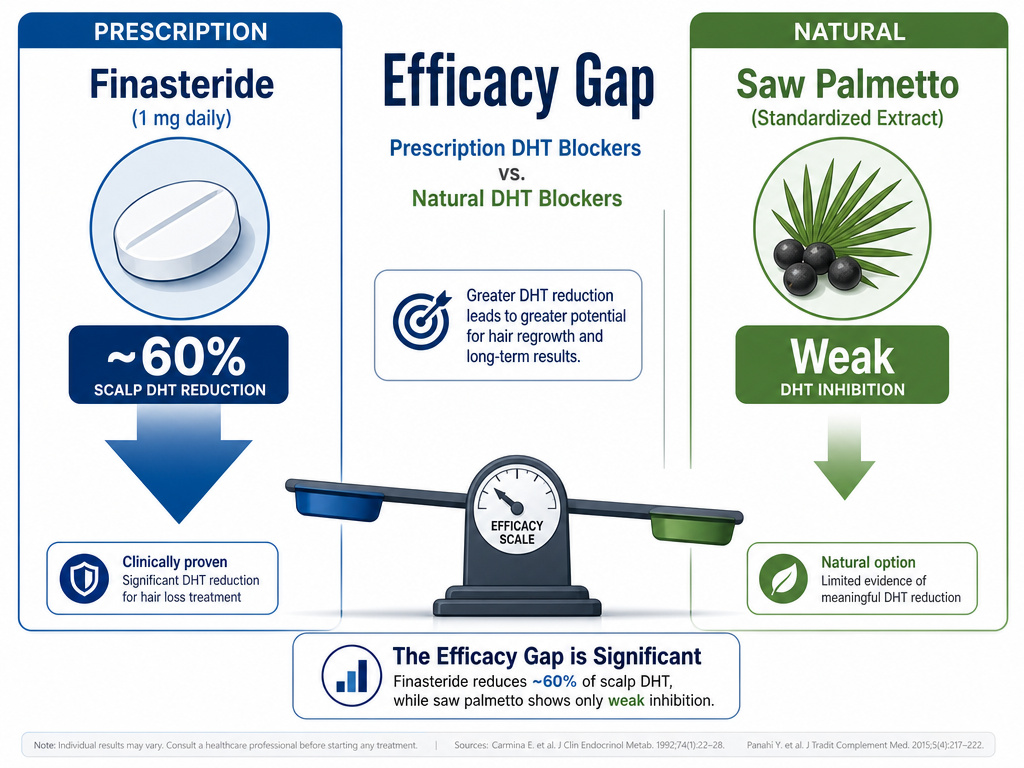
This is where evidence and marketing collide. You have proven medical interventions and a sea of herbal supplements with wildly varying data. We will compare them directly based on the research findings.
| Treatment | Mechanism | Key Efficacy Finding | Note |
|---|---|---|---|
| Finasteride (1 mg oral) | Inhibits 5α-reductase type II, reducing scalp DHT by ~60% | Better than 5% minoxidil foam in a 65-patient RCT. More effective at the vertex. Improvement within 1 year, continues up to 10. | The gold standard. Requires prescription. Contraindicated in pregnancy. |
| Minoxidil (5% topical) | Vasodilator; opens potassium channels, may prolong anagen. | 5% solution preferred in men. Both 2% and 5% effective in women. Can cause initial shedding in first 8 weeks. | Over-the-counter. Doesn’t block DHT; works alongside it. |
| Dutasteride (oral) | Inhibits 5α-reductase types I & II; ~100x and 3x more potent than finasteride. | More effective than finasteride at reducing serum DHT (>90%). Used off-label for AGA. | Prescription only. Greater DHT suppression, potentially more side effects. |
| Saw Palmetto (320 mg) | Thought to weakly inhibit 5α-reductase and block DHT binding. | In a 24-month comparison, 1 mg finasteride group had significantly greater outcomes. Saw palmetto only improved the vertex. | Over-the-counter supplement. Evidence for hair growth is modest and inconsistent. |
The randomized trial that pitted 1 mg finasteride against 5% minoxidil foam is a reality check. The prescription pill won. The 24-month study comparing finasteride to 320 mg of saw palmetto is another. In a 24-month comparison, the group receiving 1 mg oral finasteride experienced significantly greater outcomes than the group receiving 320 mg saw palmetto.
This doesn’t mean supplements like saw palmetto are useless. It means managing expectations. They may help in mild cases or as an adjunct, but they are not a substitute for the efficacy of a prescription DHT blocker like finasteride for significant pattern loss.
Common mistake: Starting a natural DHT blocker and expecting prescription-level results in the same timeframe. The clinical data shows a clear efficacy gap, especially for frontal hairline restoration.
What else does DHT do in the body?
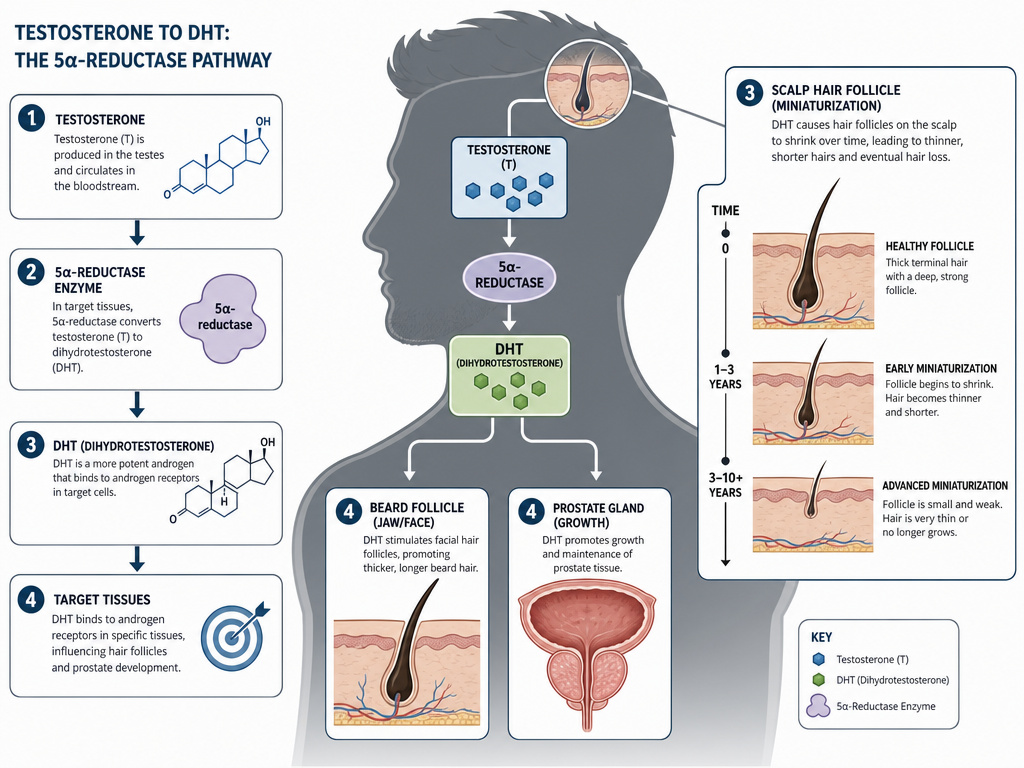
DHT is a potent androgen with a key role in normal male development. It is derived from testosterone and is significantly more powerful, binding to androgen receptors with greater affinity. During puberty, DHT drives the development of male secondary sexual characteristics like facial and chest hair. It also contributes to prostate growth and maintenance throughout adult life. The enzyme primarily responsible for creating DHT in certain tissues, including the scalp, is 5α-reductase type II. This normal biological activity becomes problematic only in genetically susceptible scalp hair follicles, where DHT signals them to miniaturize and eventually stop producing visible hair.
What are the side effects of DHT blockers?
Medications that block DHT, like finasteride and dutasteride, are effective but come with considerations. Oral finasteride is dosed at 1 mg/day for treating AGA. A primary concern is its contraindication for use by women who are or could become pregnant, due to the risk of causing birth defects in a male fetus. Some users may experience sexual side effects, though the incidence varies. When comparing treatments, a clinical trial found one milligram of oral finasteride produced better hair growth outcomes than a five percent minoxidil foam over the same period. Another study showed finasteride was significantly more effective than a high dose of saw palmetto after two years of use.
What else causes hair loss besides DHT?
While androgenetic alopecia driven by DHT is the most common form of pattern hair loss, it is not the only cause. Other conditions can lead to noticeable thinning or shedding. These include telogen effluvium, a temporary condition often triggered by physical or emotional stress, illness, or nutritional deficiencies that pushes many hair follicles into a resting phase. Alopecia areata is an autoimmune disorder where the body’s immune system attacks hair follicles, causing patchy hair loss. Scarring alopecias permanently destroy hair follicles. Certain medications, harsh hairstyling practices, and fungal scalp infections can also cause hair loss unrelated to the genetic DHT pattern.
Frequently Asked Questions
Why do men go bald from DHT?
Men go bald from DHT because they inherit hair follicles whose dermal papilla cells are genetically programmed to respond destructively to DHT. The hormone binds to receptors in these cells, altering gene expression to shorten the growth phase and miniaturize the follicle over successive cycles. It’s a specific genetic susceptibility, not just the presence of the hormone.
What naturally kills DHT?
No natural substance “kills” DHT. Some compounds may mildly inhibit its production or action. The most studied is saw palmetto extract, which may weakly block the 5α-reductase enzyme. However, their effect is modest compared to pharmaceutical inhibitors like finasteride.
How to tell if your DHT is high?
You can’t reliably tell if your DHT is high without a blood test. Symptoms like male pattern hair loss, acne, or aggressive beard growth suggest androgen activity, but they reflect your follicles’ sensitivity to DHT more than the absolute blood level. Two men with identical DHT levels can have completely different hair loss patterns based on genetics. A serum DHT test, while not routinely used for diagnosing hair loss, provides the only objective measure.
At what age is DHT the highest?
DHT levels generally peak in a man’s early 20s, coinciding with the end of puberty. This is often when the earliest signs of genetic hair loss, a receding hairline or temporal thinning, first become noticeable in predisposed individuals. The level may stabilize or gradually decline later in life, but the damage to susceptible follicles is cumulative, which is why hair loss progresses with age even as hormone levels may dip.
Can you reverse DHT damage?
You can partially reverse the miniaturization caused by DHT, but you cannot revive a fully atrophied, dead follicle. Medications like finasteride and minoxidil can revitalize follicles that are in the process of miniaturizing, thickening them back toward terminal hairs. This is why early intervention is critical, the goal is to rescue follicles before they cross the point of no return. A follicle that has been gone for years is not coming back without a transplant.
Before You Go
The DHT mechanism isn’t mysterious. It’s a well-mapped, five-step genetic cascade. Your decision tree is simple.
If you’re noticing thinning and it bothers you, talk to a dermatologist about finasteride. The data is unambiguous: it’s more effective than topical minoxidil and significantly outperforms herbal supplements like saw palmetto for stopping loss and regrowing hair. The catch is you have to commit for at least a year to judge it, and you have to start before the follicles are gone for good.
If you want to try the natural route first, manage your expectations. Look for a saw palmetto supplement that standardizes for fatty acids and gives you a clear dose, usually 320 mg daily. Monitor for six months with photos. If the thinning continues, you have your answer.
Check the label first. The goal is to make a choice based on evidence, not hope. Change one thing at a time so you know what’s actually working.
