
How Testosterone Affects Muscle Growth: Key Takeaways
This post contains affiliate links. As an Amazon Associate, we earn from qualifying purchases.
Testosterone builds muscle through a dose-dependent increase in protein synthesis, satellite cell activation, and direct signaling through androgen receptors. A landmark study found weekly doses of 25mg to 600mg of testosterone enanthate produced serum levels from 234 to 2,435 ng/dL; the 25mg dose was associated with a -4 ml change in vastus lateralis muscle volume, while the 600mg dose increased it by +48 ml. The effect is not linear, gains accelerate at supraphysiological doses, but translating mass into strength depends heavily on age and training.
Most guides stop at “testosterone increases protein synthesis.” They don’t give you the numbers that show how much and for whom. The relationship between a hormone level and a physical outcome isn’t abstract; it’s a curve you can plot, with breakpoints that separate a maintenance dose from a growth dose. Understanding how testosterone affects muscle growth is key. That curve, and the cellular machinery underneath it, decides whether a protocol builds noticeable muscle or just ticks a box.
What follows: the three cellular levers testosterone pulls, the exact dose-response data from human trials, the unresolved debate on whether workout spikes matter, and who actually sees their gym numbers go up.
Key Takeaways
- Testosterone’s primary anabolic lever is increasing muscle protein synthesis by activating the androgen receptor-mTOR pathway, not just reducing breakdown.
- Muscle growth follows a clear dose-response curve: a study showed 600mg/week of testosterone enanthate increased vastus lateralis volume by +48 ml, while 25mg/week showed a loss of -4 ml.
- Satellite cell activation is critical for long-term growth; the same 600mg dose increased satellite cell number by 29% in 20 weeks, providing new nuclei for muscle fibers.
- A meta-analysis found that significant improvements in physical performance from testosterone therapy are most reliably seen in older and diseased populations, not necessarily in young, healthy men, while other studies (e.g., an NEJM study on young men) have shown testosterone can increase muscle size and strength in young healthy men.
- The conversion of testosterone to dihydrotestosterone (DHT) is not required for its muscle-building effects, challenging a common assumption about androgen metabolism.
The Core Mechanism: Protein Synthesis, Satellites, and Signaling
Forget the vague “anabolic environment” talk. Testosterone builds muscle by giving three specific orders to your cells: make more protein, prepare for future growth, and do it now.
First, it directly boosts muscle protein synthesis. When testosterone enters a muscle cell, it binds to the androgen receptor. This complex doesn’t just float around; it heads to the cell’s nucleus and acts as a transcription factor, turning on genes that code for muscle proteins. More importantly, it activates the mTOR pathway, the cell’s central command for growth. This is the main event. While testosterone can also slightly slow protein breakdown, the synthesis boost is the dominant force. You’re building new bricks faster, not just saving old ones.
Testosterone signals through the androgen receptor to activate the mTOR (mechanistic target of rapamycin) pathway, a primary regulator of cell growth and protein synthesis. This direct genomic action increases the production of contractile proteins like actin and myosin, leading to fiber hypertrophy.
Second, it recruits satellite cells. Think of these as stem cells glued to the outside of your muscle fibers. In a dormant state, they do nothing. When activated by testosterone (and mechanical stress from training), they proliferate, donate their nuclei to the existing muscle fiber, and fuse with it. This is a masterstroke. A muscle fiber is huge, and one nucleus can only manage so much protein production. Adding new nuclei via satellite cells raises the fiber’s capacity to grow. It’s like adding more foremen to a construction site. A study using 600mg of testosterone enanthate weekly for 20 weeks reported a 29% increase in satellite cell number (from 0.10 ± 0.01 to 0.13 ± 0.01 satellite cells per fiber). That’s not a side effect; it’s the foundation for sustained hypertrophy.
Third, it influences the broader hormonal landscape. Testosterone can be converted to estradiol via aromatase. This isn’t a bug; it’s a feature. Estrogen helps regulate the growth hormone axis and improves muscle insulin sensitivity, aiding nutrient partitioning. It also supports tendon and ligament health, which matters when you’re pushing heavier loads. Blocking this conversion completely can hurt your joints and blunt some of testosterone’s systemic benefits.
What Does the Dose-Response Curve Actually Look Like?
“More testosterone equals more muscle” is true, but the relationship isn’t a straight line. It’s a curve that gets steeper after a certain threshold. The most precise map of this comes from a controlled trial published in the American Journal of Physiology-Endocrinology and Metabolism.
Men were given weekly injections of testosterone enanthate (TE) at 25, 50, 125, 300, or 600 mg for 20 weeks. Their muscle volume was measured via MRI, and blood levels were tracked. The results create a perfect dose-response ladder.
| Weekly Testosterone Enanthate Dose | Mean Serum Testosterone Level | Change in Vastus Lateralis Muscle Volume |
|---|---|---|
| 25 mg | 234 ng/dL | -4 ml |
| 50 mg | 289 ng/dL | Not specified |
| 125 mg | 695 ng/dL | Not specified |
| 300 mg | 1,344 ng/dL | Not specified |
| 600 mg | 2,435 ng/dL | +48 ml |
The story is in the extremes. At 25mg per week, a dose that puts serum levels just below the low end of the normal male range (300-1000 ng/dL), subjects actually lost a small amount of muscle volume. This highlights that a baseline level is needed just for maintenance. The 600mg dose, which created levels far above the natural ceiling, drove a +48 ml increase in vastus lateralis muscle volume.
This has concrete implications. First, it shows why natural testosterone optimization, through sleep, diet, or supplements, has a ceiling. You’re moving along the lower, flatter part of the curve. Second, it explains the dramatic effects seen with androgen abuse: the curve gets exponentially steeper at the high end. The PMC review on testosterone and IGF axis synthesizes this, noting the integration with the growth hormone axis becomes particularly potent at these elevated levels.
Where this goes sideways: Assuming a linear relationship. Doubling a replacement dose from 100mg to 200mg weekly won’t double muscle gains. The big leaps happen when you push far beyond what the body can naturally produce.
Muscle Fibers, Strength, and the Age Factor
Testosterone doesn’t bulk all muscle fibers equally, and the resulting mass doesn’t always translate to strength the same way for everyone.
The same high-dose study that measured volume also took muscle biopsies. They found that 600mg of TE weekly significantly increased the cross-sectional area of both type I (slow-twitch) and type II (fast-twitch) fibers. Type I fibers grew from 3,347 ± 253 to 4,984 ± 374 μm², and type II fibers from 4,060 ± 401 to 5,526 ± 544 μm². This is important because type II fibers have the greatest potential for hypertrophy and power. Testosterone preferentially helps them realize that potential.
But here’s the critical twist: more muscle doesn’t automatically mean more strength for everyone. A PubMed meta-analysis on testosterone effects made a key distinction. It found that while testosterone administration increased fat-free mass in young, older, and diseased males, significant improvements in physical performance were observed only in older and diseased males, not in young healthy males.
Think about that. A young man with already-normal testosterone levels who takes more may get bigger (adding muscle mass), but his bench press or squat might not jump proportionally. His neuromuscular system is already efficient. In contrast, an older man with low testosterone is losing both mass and neural drive. Restoring his levels recovers both, so his strength gains are dramatic. This is why the conversation about how testosterone affects athletic performance is nuanced. For a trained young athlete, the performance ROI on extra testosterone might be lower than the mass ROI.
The Great Debate: Do Acute Workout Spikes Even Matter?
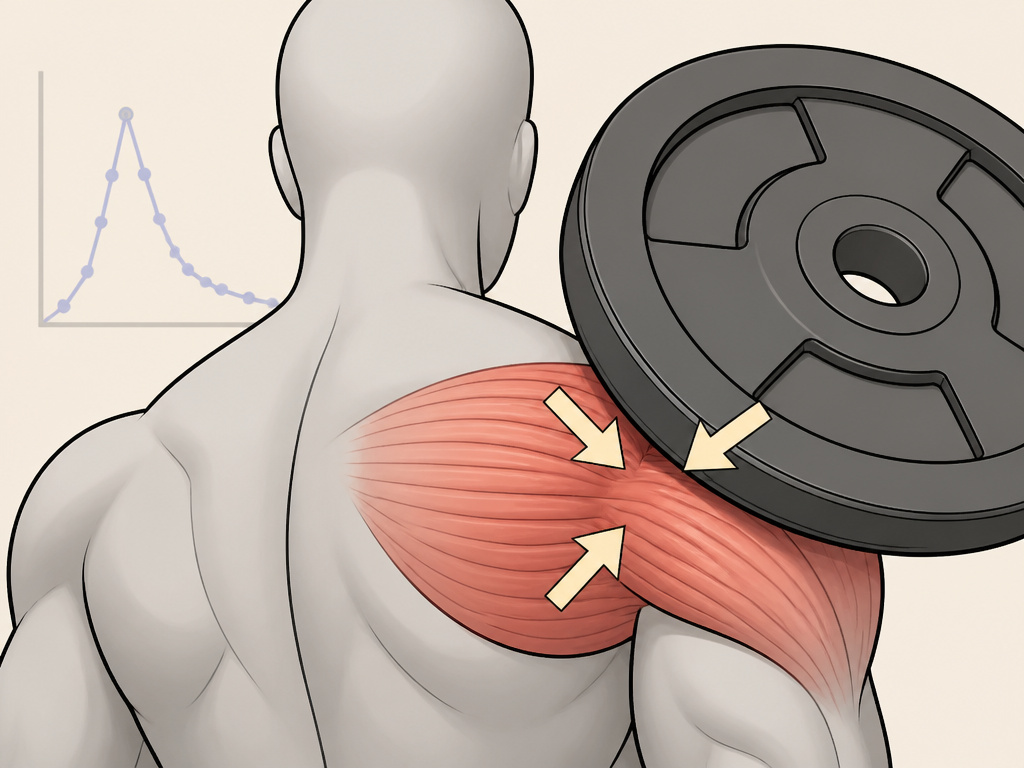
You finish a heavy squat session, and your testosterone is elevated for 30-60 minutes. Does this transient spike actually contribute to muscle growth? Some reviews argue that acute, exercise-induced rises in testosterone are ‘neither sufficient nor necessary’ for muscle growth, while other sources link these hormonal axes to anabolic processes.
For decades, the “hormone hypothesis” suggested these acute rises were a key driver of adaptation. Newer reviews have aggressively challenged this. The argument is that the spike is neither sufficient nor necessary for muscle protein synthesis or long-term gains. The evidence comes from studies where blocking the acute testosterone rise doesn’t blunt hypertrophy, and where protocols that cause huge spikes don’t lead to more growth than those that cause modest ones.
The real signal for growth appears to be the mechanical tension and muscle damage from the training itself. This local stress triggers mTOR and satellite cell activation directly. The hormonal environment sets the overall ceiling for growth, which is why someone with clinically low T struggles to build muscle, but the day-to-day workout spikes are just noise. They’re a byproduct of the nervous system’s stress response, not the primary driver.
This reframes how you should think about the process of how testosterone affects muscle growth when lifting weights. You’re not lifting to “boost testosterone.” You’re lifting to create the mechanical stimulus. Having a healthy baseline testosterone level allows your body to fully respond to that stimulus. Chasing the perfect program to maximize a 60-minute hormone flutter is a waste of energy.
Edge Cases and Important Limitations
The story gets murky when we move away from healthy young men. Two major edge cases highlight the limits of our knowledge.
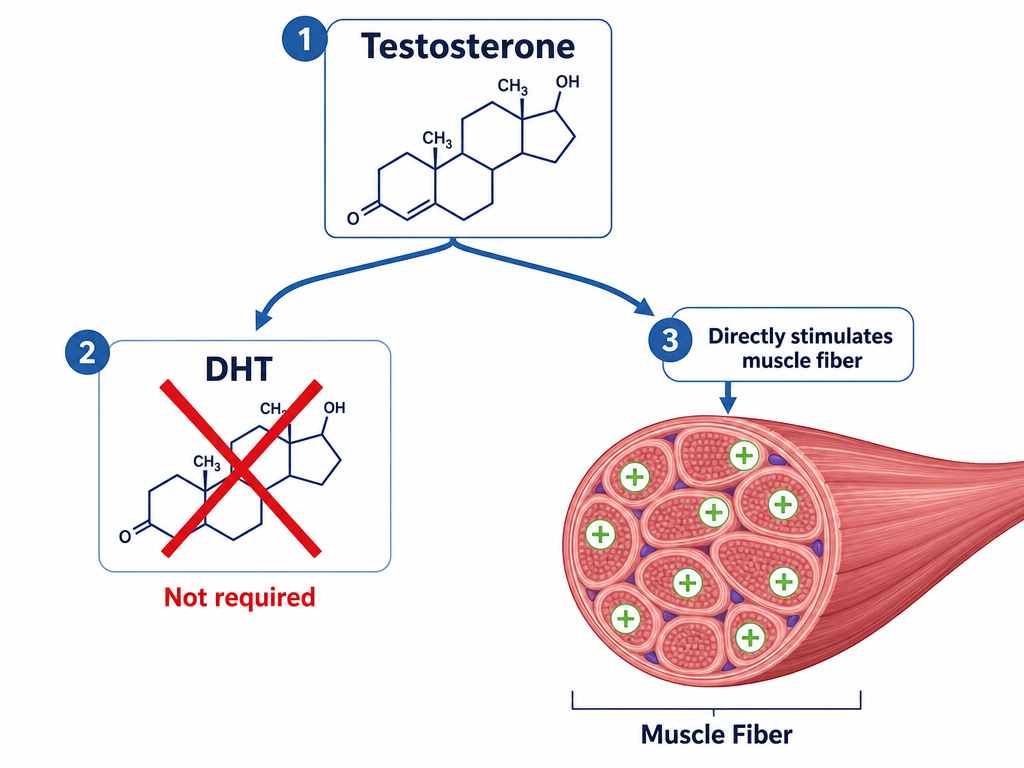
The Role of DHT: Testosterone is converted to dihydrotestosterone (DHT) by the 5α-reductase enzyme. DHT is a more potent androgen. A common assumption has been that this conversion is essential for muscle growth. However, a key review in Endocrine Reviews states clearly: “The conversion of testosterone to 5α-DHT is not required for mediating its anabolic effects.” Muscle cells have the tools to use testosterone directly. This matters for men using medications that inhibit 5α-reductase (like finasteride); the fear that they’ll completely block muscle growth appears overstated.
Women and Intramuscular Hormones: Almost all the concrete data is on males. For females, the picture is unclear. A systematic review in The Journal of Clinical Endocrinology & Metabolism concluded that findings on the association between intramuscular sex hormone concentrations and muscle mass/function in females are “conflicting” and “inconclusive.” Women have lower testosterone but can build muscle robustly, suggesting other pathways (like the IGF-1 system) may play a more dominant role, or that sensitivity to available androgens is different. This is a major research gap.
Symptoms and Diagnosis of Low Testosterone
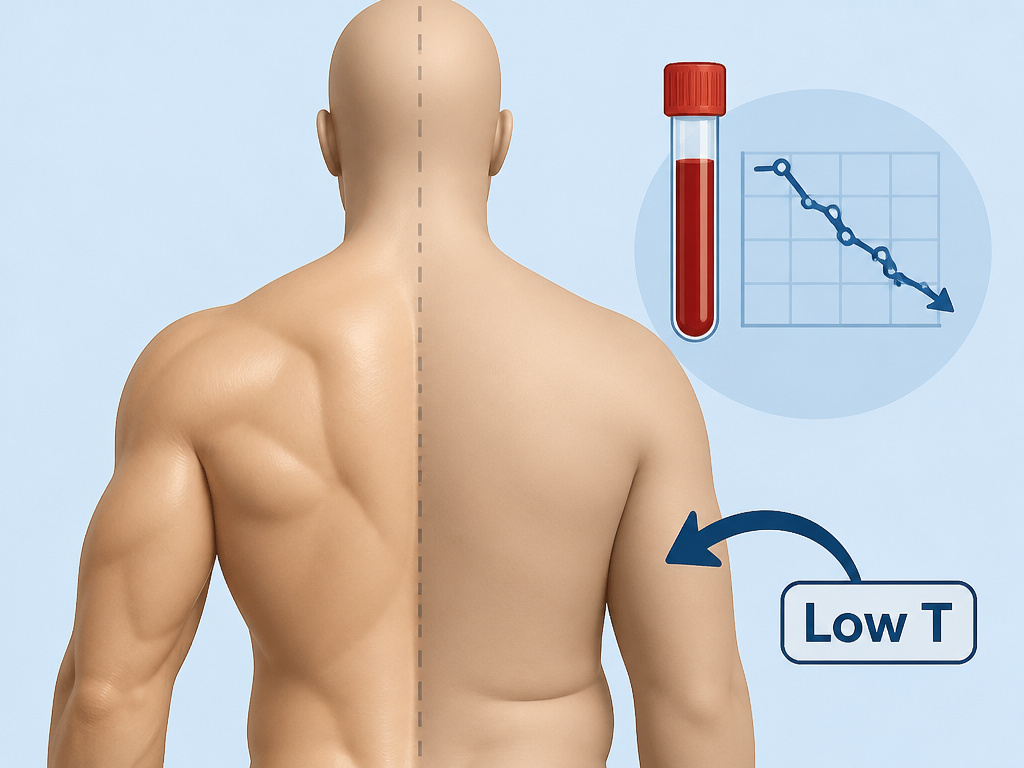
Low testosterone can manifest through a range of symptoms that affect both physical and mental well-being. Common signs include persistent fatigue, reduced motivation, difficulty building or maintaining muscle mass, increased body fat, and low mood. A formal diagnosis requires a clinical evaluation by a doctor. This involves discussing your symptoms in detail and confirming low levels through blood tests. It’s crucial to have these tests done properly, as testosterone levels fluctuate naturally throughout the day. A diagnosis is never based on symptoms alone; it combines your lived experience with specific laboratory results to guide appropriate management.
Role of Nutrition and Protein with Testosterone
Nutrition provides the essential building blocks that testosterone acts upon. Think of testosterone as the foreman on a construction site and protein as the bricks and mortar. Without adequate protein and overall calories, the body lacks the raw materials to build new muscle tissue, even with optimal hormone levels. Focus on consuming complete protein sources throughout the day to support muscle protein synthesis. This creates an internal environment where the anabolic signals from testosterone, central to how testosterone affects muscle growth, can be effectively put to use. A balanced diet rich in micronutrients also supports overall hormonal health, ensuring your body’s systems function properly to make the most of your natural testosterone.
Frequently Asked Questions
Will 200mg of testosterone every 2 weeks build muscle?
It depends entirely on your starting point. For a man with clinically low testosterone, 200mg every two weeks (equivalent to ~100mg/week) is a common replacement dose. It will restore his levels to the normal range and likely reverse muscle loss, allowing him to build muscle normally in response to training. For a man with already-normal levels, this dose would provide a minor supra-physiological bump and might lead to slight gains, but nothing compared to the dramatic effects seen at 300-600mg/week doses in studies.
Is 500 mg of testosterone a week enough to build muscle?
Yes, 500mg per week is a supraphysiological dose that will produce significant muscle growth in almost any man, even without exercise (though exercise amplifies it). This dose will elevate testosterone levels far above the natural range and place you on the steep part of the dose-response curve. The landmark NEJM testosterone trial and other studies using similar doses show clear increases in muscle size and strength. It is also a dose associated with a high risk of side effects and is not used in legitimate medical therapy.
Does not ejaculating for 7 days increase testosterone?
The short-term research on this is mixed and generally shows any increase is very minor and transient. A small 2021 study did observe a peak at 7 days of abstinence, but the change was within normal daily fluctuation. This is not a viable or meaningful strategy for increasing anabolic hormone levels to enhance muscle growth. Your time is better spent on sleep, nutrition, and consistent resistance training.
Can you build muscle with low testosterone?
You can, but it is profoundly harder. Low testosterone creates an anabolic deficit. Muscle protein synthesis is blunted, recovery is slower, and the motivation to train intensely can plummet. You’re trying to build a house without enough bricks or workers. You may still make some progress with perfect training and nutrition, but you will be fighting against your physiology. Addressing the underlying low T is the most effective first step.
Before You Go
The most practical takeaway isn’t about extreme doses. It’s about thresholds. If your testosterone is below 300 ng/dL, you’re on the part of the curve where muscle loss is a real risk. Getting into the mid-normal range (500-700 ng/dL) through lifestyle or TRT puts you on the positive, stable part of the curve where your training efforts pay off fully. Chasing levels above 1,000 ng/dL for marginal extra growth introduces risks that outweigh benefits for most.
For the natural trainee, this means stop worrying about tiny hormonal fluctuations. Focus on the big levers that support a healthy baseline: manage stress, sleep 7-9 hours, eat enough protein, and lift progressively. That’s how you work with the hormone, not for it. The evidence on acute spikes is a relief, it means you can just go train hard.
And remember, muscle is only one tissue. Testosterone’s effects on metabolism, bone density, and red blood cell production are part of the same system. Optimizing for health rarely means maximizing for a single outcome.
