
How to Improve Sleep to Boost Testosterone: Step-by-Step
This post contains affiliate links. As an Amazon Associate, we earn from qualifying purchases.
To improve sleep and boost testosterone, prioritize at least 3 hours of uninterrupted sleep with normal sleep architecture, this triggers the sleep-dependent hormonal rise. Fixing sleep apnea through weight loss or effective therapy can help, but data on CPAP alone is mixed. For most, consistent sleep timing and duration matter more than chasing perfect supplements.
The 3-hour threshold is the minimum block of normal sleep architecture, the progression through light, deep, and REM stages, that clinical reviews identify as necessary for the nightly testosterone pulse to fire. This is why learning how to improve sleep to boost testosterone is critical. Miss that, and the rise flattens.
What follows explains the mechanics, addresses the confusing data on sleep apnea, and distinguishes the most effective fixes from the minor ones. You’ll see where the evidence is solid and where it’s still debated, especially on the how to improve sleep to boost testosterone question, because treating sleep as a simple on/off switch for hormones misses the nuance that actually determines your results.
Key Takeaways
- The testosterone increase is sleep-dependent, not strictly circadian; it requires at least 3 hours of sleep with normal architecture.
- Treating obstructive sleep apnea (OSA) may increase testosterone, but the effect is strongly linked to concomitant weight loss, and CPAP therapy alone does not reliably raise levels in most studies.
- Sleep restriction lowers afternoon and evening testosterone in a time-of-day dependent manner, but some longer-term restriction studies show no change in mean concentrations, highlighting how timing and study design change the outcome.
- Misaligned sleep (e.g., night shift work) changes the diurnal rhythm of testosterone secretion without necessarily altering the 24-hour mean in the short term.
- Even replacement-dose testosterone therapy can worsen sleep-disordered breathing in the short term, a critical consideration for men on TRT with existing sleep issues.
How Does Sleep Actually Increase Testosterone?
Plasma testosterone levels have a daily rhythm, peaking during sleep and hitting their lowest point in the late afternoon. This isn’t just your body clock ticking. The increase is sleep-dependent, not strictly circadian.
The sleep-dependent testosterone increase requires at least 3 hours of sleep with normal architecture. It occurs irrespective of whether sleep happens at night or for an equivalent duration during the day.
The mechanism hinges on luteinizing hormone (LH). Your pituitary gland releases LH in pulses, which signals your testes to produce testosterone. Sleep, particularly the progression into deeper stages, appears to synchronize and amplify these pulses. Fragmented sleep or waking up before you complete a full sleep cycle disrupts this signal.
Think of it like a factory production line that needs a continuous power-up sequence. If the power is cut after two hours, the line resets and the batch is incomplete. Your body needs that unbroken 3-hour block to complete the hormonal “batch” for the night. This is why a single terrible night of broken sleep can leave you feeling off, the physiological process was interrupted.
This process is also age-sensitive. Middle-aged men secrete less testosterone at night than young men. For older men, morning testosterone variability is directly tied to how much sleep they actually got the night before. The system becomes less robust, making sleep quality even more critical.
The Confusing World of Sleep Restriction Studies
Here’s where reading headlines fails you. One well-known study found that 1 week of sleep restriction (5 hours per night) lowered afternoon and evening testosterone levels in young, healthy men. The drop in testosterone levels during that time window was significant. This fits the “sleep loss tanks T” narrative.
But other randomized controlled trials tell a different story. Two studies found no significant effect on plasma testosterone from either acute (4 hours per night for 5 nights) or chronic (a 1.5-hour nightly reduction for 6 weeks) sleep restriction.
So which is true? Both, depending on what you measure. The effect of restricting sleep decreases testosterone in a time-of-day dependent manner. The afternoon and evening nadir gets deeper, but the morning peak might hold steady if you still get some core sleep. Over longer periods, the body may partially adapt, or other factors like stress and diet muddy the water. The takeaway is that the relationship between sleep loss and testosterone is nuanced, as shown when you compare a how to improve sleep to boost testosterone study, and a single bad week won’t necessarily crater your 24-hour average, though it will skew your daily rhythm.
Where this goes sideways: Assuming “more sleep is always better.” Extending sleep in chronically deprived individuals may improve insulin resistance and blood pressure, but the direct testosterone benefits are still being studied. The priority is securing that minimum effective dose of quality sleep first.
The Obstructive Sleep Apnea (OSA) Question
This is one of the most debated links in sleep and hormonal health. Some reviews find men with obstructive sleep apnea often have lower testosterone levels, while others state OSA appears to have no direct effect on testosterone after adjusting for age and obesity. The question is why.
One clinical review states that OSA appears to have no direct effect on testosterone, after adjusting for age and obesity. The relationship may be indirect, mediated by the fact that OSA promotes weight gain and metabolic dysfunction, which themselves suppress testosterone.
However, another review notes that men with OSA and more severe hypoxemia (lower blood oxygen) have lower testosterone levels. The disrupted sleep and oxygen starvation from constant apneas likely create a state of high stress and inflammation, which is hostile to hormone production.
The treatment data is just as mixed.
- A meta-analysis of 7 CPAP studies concluded CPAP does not alter testosterone.
- A separate review argues that conclusion is premature, citing three higher-quality studies that found reversing OSA increases testosterone.
- In one specific case, surgical intervention (uvulopalatopharyngoplasty) that reduced apnea events from ~40 per hour to under 5 per hour led to increased blood testosterone after 3 months.
The common thread in successful treatment? Effective reversal of the apnea. CPAP only works if you use it consistently (adherent therapy). And for many men with OSA, weight loss is a powerful parallel intervention. The research is clear on one point: a reduction in weight predictably and linearly increases testosterone levels.
If you snore, gasp for air at night, and feel exhausted despite a full night in bed, getting a sleep study is the essential first step. Treating OSA can dramatically improve sleep quality, erectile function, and cardiovascular health, which may create a better environment for healthy testosterone levels.
| OSA Treatment | Primary Effect | Likely Impact on Testosterone |
|---|---|---|
| Consistent CPAP Use | Reduces apnea events, improves sleep quality | May increase T if therapy reverses apnea; evidence is inconsistent |
| Significant Weight Loss | Reduces sleep apnea severity, improves metabolism | Predictably increases T levels |
| Surgical Intervention (e.g., UPPP) | Physically removes airway obstruction | Can increase T, as shown in case studies |
What About Shift Work and Misaligned Sleep?
Your body can adapt. The sleep-dependent testosterone increase means that if you sleep a solid 7 hours during the day after a night shift, you should still get that hormonal pulse. Studies of long-term shift workers show no effect of misaligned sleep on mean testosterone concentrations.
But there’s a catch. These real-world studies can’t control for all the other lifestyle factors that come with shift work, poor diet, higher stress, social jet lag. Laboratory studies that mimic shift work show that misaligned sleep changes the diurnal rhythm of testosterone secretion without altering the mean concentrations in the short term.
Your testosterone curve gets flattened and shifted. The peak might not be as high, and the trough might not be as low, but the total area under the curve (your daily production) could be similar. The problem is that your body’s tissues are used to receiving testosterone in a specific rhythm. Disrupting that rhythm might have metabolic consequences, like increased insulin resistance, even if your total T looks normal on a single blood test.
Practical Steps to Fix Your Sleep for Testosterone
This is where theory meets action. You don’t need a perfect lab setup. You need consistent, pragmatic habits.
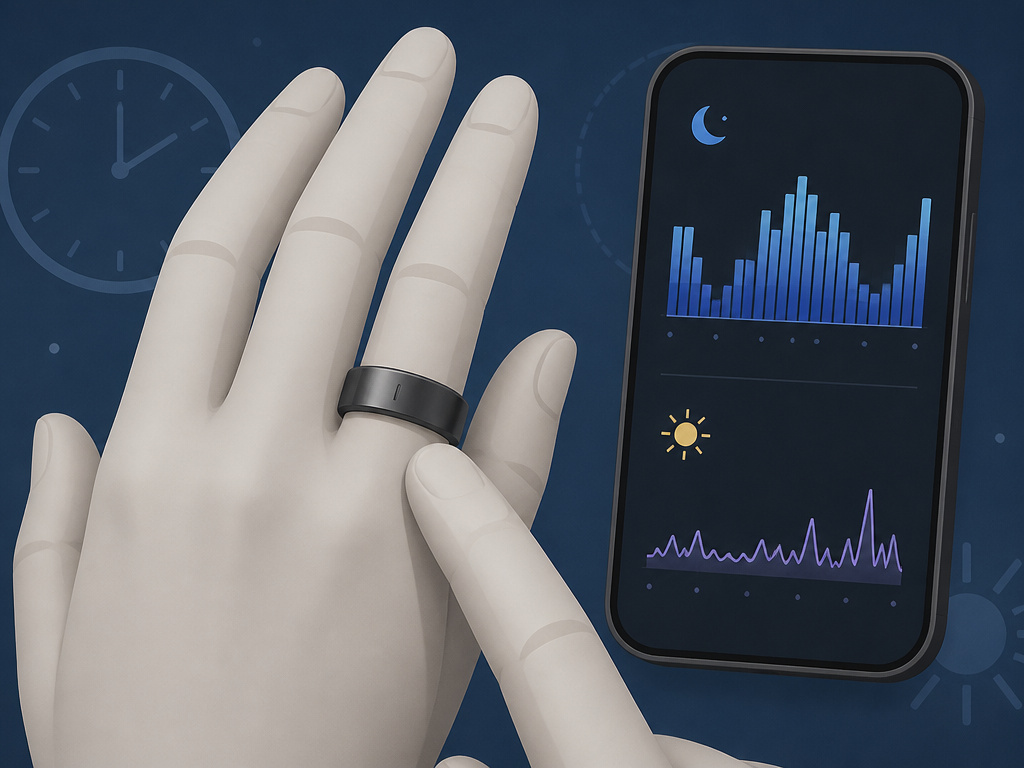
First, measure your sleep. Guessing is useless. I used to think I was a “light sleeper” until I wore an Oura ring for a month and saw the data. I was just going to bed too late and drinking caffeine too late. A tracker like Oura, Whoop, or even a smartphone app gives you objective feedback on duration, restlessness, and timing. Start low and go slow, change one variable at a time and watch the data.
Secure your minimum 3-hour blocks. This is your essential foundation. If you have a newborn or an erratic schedule, focus on protecting at least one solid 3-hour chunk. Go to bed 30 minutes earlier, not 2 hours. A small, steady step beats a big, unsustainable swing.
Manage light and time. Your circadian rhythm is set by light. Get bright light exposure (ideally sunlight) soon after waking. Dim lights and avoid screens for a period before bed. A consistent wake time is more powerful than a consistent bedtime for regulating your cycle.
Evaluate supplements strategically. Some supplements like ashwagandha may help with stress and sleep onset, but the fact sheet does not provide specific data on their effects. I’d tell you to take it for stress and sleep and treat any testosterone change as a side benefit. For sleep onset, low-dose melatonin may help, while higher doses can cause morning grogginess.
Common mistake: Using stimulants to power through the day and then adding supplements to fix the resulting poor sleep. This is a shortcut I do not recommend. Every time I tried it, my energy only improved once I fixed my sleep schedule.
Address the apnea risk. If you have symptoms (loud snoring, daytime fatigue, obesity), talk to a doctor. A home sleep test is a simple starting point. The goal is effective therapy, whether that’s CPAP, an oral appliance, or weight loss.
The Two-Way Street: Testosterone’s Effect on Sleep
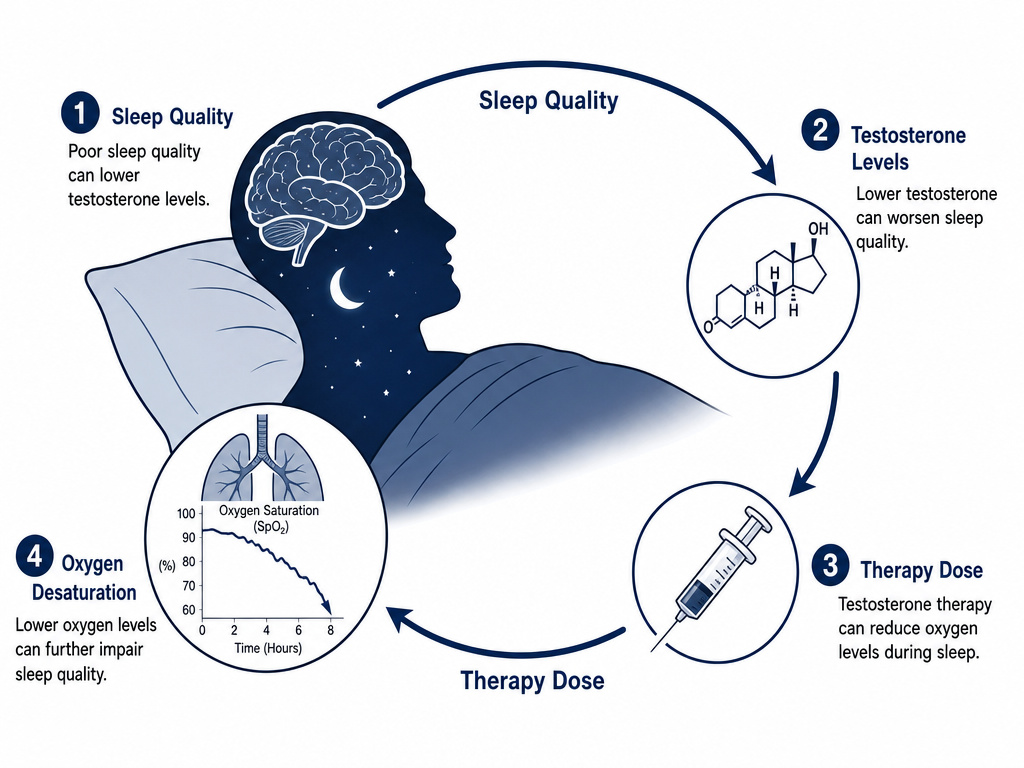
It’s not a one-way relationship. Introducing external testosterone changes the equation. The effect of testosterone administration on sleep depends on dose and context.
Replacement doses (prescribed for clinically low testosterone) may improve sleep quality for some men by alleviating the symptoms of low T, like anxiety and depression.
Supratherapeutic doses or anabolic steroid abuse are associated with abnormalities in sleep duration and architecture. More critically, even replacement-dose therapy can worsen sleep-disordered breathing, at least in the short term. One study found testosterone therapy worsened the oxygen desaturation index by 10 events per hour at the 7-week mark compared to placebo.
If you are on testosterone therapy and start snoring heavily or your partner notices you stopping breathing at night, bring it up with your doctor. Your therapy might be improving one biomarker while harming another critical system.
How does blue light from screens affect sleep and testosterone?

Using screens before bed can disrupt your sleep, and poor sleep directly impacts testosterone. The testosterone increase your body needs is sleep-dependent, meaning it requires at least three hours of solid sleep to begin. When blue light from phones or computers delays your sleep onset or fragments your sleep architecture, you risk cutting into that critical window. This can lower your overall sleep amount, and variability in morning testosterone in older men is directly linked to differences in how much sleep they get at night. For better sleep hygiene, avoid screens for a period before bed to help your body enter its natural, testosterone-supporting sleep cycle.
Can exercise improve sleep to boost testosterone?
Regular exercise supports both sleep quality and testosterone levels, but the relationship is nuanced. While the fact sheet doesn’t specify exercise protocols, we know that a reduction in weight predictably and linearly increases testosterone levels. Exercise is a key tool for weight management. Well-designed studies also show that restricting sleep decreases testosterone, so any activity that helps you achieve more consistent, higher-quality sleep is beneficial. Since the testosterone rhythm is sleep-dependent and peaks during sleep, use exercise to promote deeper, more uninterrupted sleep. Avoid intense workouts too close to bedtime, as they may interfere with falling asleep.
What should you eat for better sleep and testosterone?
Your diet plays a supporting role in creating the conditions for sleep-dependent testosterone release. Since a reduction in weight linearly increases testosterone, focusing on a balanced diet that helps you reach or maintain a healthy weight is a foundational step. Avoid large, heavy meals right before bed, as they can disrupt sleep architecture. While the fact sheet doesn’t list specific foods, the principle is clear: what you eat affects your sleep quality, and your sleep quality directly influences your hormonal profile. Aim for consistent meal timing and avoid stimulants like caffeine in the hours leading up to sleep to support uninterrupted rest.
Frequently Asked Questions
How to sleep better for testosterone?
Focus on duration, timing, and continuity. This protects the sleep architecture needed for the testosterone pulse. Address obvious disruptors like caffeine, alcohol, and screen time before bed.
Does sleeping naked increase testosterone?
There’s no direct research linking sleep attire to testosterone levels. The proposed benefit is around keeping testicular temperature cool, which is beneficial for sperm production. The effect on serum testosterone is likely minimal. The real benefit of sleeping naked is simply better sleep quality if it helps you stay at a comfortable temperature.
Does napping increase testosterone?
Daytime naps do not replicate the same sleep-stage progression as nocturnal sleep and are unlikely to trigger a significant testosterone pulse. However, a short nap can reduce cortisol (a stress hormone that can suppress testosterone). Think of napping as a stress-management tool, not a direct testosterone booster.
Can low testosterone cause insomnia?
Yes, it’s a two-way street. Low testosterone is associated with increased anxiety, depression, and metabolic issues, all of which can degrade sleep quality and make it harder to fall or stay asleep. If you have insomnia and other symptoms of low T, it’s worth discussing with a doctor and considering a blood test.
What is the #1 testosterone killer related to sleep?
Sleep fragmentation. It’s worse than simply short sleep. Waking up multiple times a night (from apnea, noise, pain, or anxiety) prevents you from achieving the sustained 3-hour blocks of normal sleep architecture. This directly disrupts the luteinizing hormone pulses that drive nightly testosterone production.
Before You Go
The goal is consistency. The research shows your body needs a reliable window of uninterrupted sleep to perform its nightly hormonal maintenance. Chase that before you chase a new supplement.
If you take away one action, let it be this: track your sleep. You can’t manage what you don’t measure. See where your actual duration and wake-ups fall. Then, change one thing, your bedtime, your caffeine cutoff, your evening routine, and watch the data for another week.
The relationship between sleep and testosterone is more about the rhythm and quality of your rest than a simple hour count. Fix the foundation first. Everything else, supplements, perfect diets, intense workouts, builds on a base of reliable recovery. Without that, you’re just adding expensive additives to an engine that’s out of oil.
