
How to Increase Testosterone Quickly: What Actually Works
This post contains affiliate links. As an Amazon Associate, we earn from qualifying purchases.
To increase testosterone quickly, address the largest, fastest-moving levers first: fix severe sleep deprivation, start heavy resistance training, and correct a nutrient deficiency like vitamin D or zinc. Improvements from these can begin within days to weeks. For a clinical deficiency, medical testosterone replacement therapy (TRT) is the only way to rapidly restore levels to the normal range, but it requires a formal diagnosis and carries significant risks.
The word “quickly” sets a trap. It makes you reach for a pill before you look at your lifestyle. The interventions that move the needle fastest are often the ones you can’t buy in a bottle, they’re the habits you have to rebuild, which is why many people search for how to increase testosterone quickly.
What follows is a map for the how to increase testosterone quickly question. We’ll walk through the four lifestyle levers you can pull this week, the realistic timeline for each, and the hard line where “quick” means talking to a doctor. We’ll also dismantle the common supplement myths so you don’t waste your money.
Key Takeaways
- Fix sleep first. Chronic sleep restriction below 6 hours can slash morning testosterone; recovering sleep can reverse that drop just as fast.
- Lift heavy, not long. The fastest exercise boost comes from compound lifts like squats and deadlifts, with acute testosterone spikes post-workout and longer-term baseline increases over 6-12 weeks.
- Correct a true deficiency. If bloodwork shows low vitamin D (<30 ng/mL) or zinc, supplementing can normalize levels and support testosterone production.
- Medical therapy is for a medical diagnosis. Testosterone Replacement Therapy (TRT) acts within weeks but is only for men with symptoms and consistently low serum testosterone per Endocrine Society guidelines.
- Most “boosters” are underdosed. Proprietary blends often hide ineffective doses of ingredients like ashwagandha or fenugreek; a PubMed systematic review on testosterone boosters found most over-the-counter products lack robust clinical evidence.
The 4-Step Framework for a Fast Boost
Speed comes from impact. Trying ten small things at once is slow. Doing one big thing correctly is fast, which is the core principle of how to increase testosterone quickly. This framework ranks interventions by their potential effect size and speed of action for the average man.
The most rapid improvements in testosterone occur when you reverse a major suppressant. Correcting severe sleep deprivation, ceashing chronic calorie restriction, or halting excessive endurance training can yield noticeable changes in days to weeks, as the body exits a stressed, catabolic state.
1. Sleep: The Overnight Lever
Your body produces the majority of its daily testosterone during deep, slow-wave sleep. Cut that short, and you cut the production pipeline.
A single night of bad sleep might not crash your levels, but string together a week of sleeping five or six hours, and the cumulative deficit is significant. The research is consistent: restricted sleep leads to a measurable decline in morning total testosterone. The recovery is just as measurable when sleep normalizes.
This is the fastest lever you control. It’s free. It doesn’t require willpower at the gym. It just requires you to be in bed, lights out, for 7-9 hours. If you snore heavily or wake up gasping, that’s a different issue, obstructive sleep apnea is a powerful suppressor of testosterone, and fixing it with a CPAP can lead to dramatic improvements. That’s a doctor conversation.
Where this goes sideways: Trying to “hack” sleep with supplements while still staring at a blue-lit screen until midnight. The screen light suppresses melatonin more effectively than any supplement can boost it. Turn the screens off an hour earlier. That’s the fix.
2. Training: Stress That Builds, Not Breaks
Exercise is a hormetic stress, the right dose builds you up, the wrong dose breaks you down. For a quick testosterone response, you want heavy, brief, and infrequent.
Compound lifts are the signal. Movements like squats, deadlifts, bench presses, and overhead presses engage massive muscle groups. This systemic stress triggers a sharp, acute rise in testosterone and growth hormone post-workout. This spike is temporary, but over time, these signals increase your baseline.
The opposite signal, long-duration cardio, can suppress levels if overdone. Marathon training is famous for it. This doesn’t mean avoid cardio; it means don’t make two-hour daily runs your foundation if your goal is raising testosterone. A 20-30 minute brisk walk or a few interval sprints are supportive. The best exercises for testosterone are the ones that challenge your strength, not just your endurance.
I got this wrong for years. I used to follow bodybuilding splits with hour-long, high-volume sessions six days a week. I was always tired. My natural testosterone timeline stretched out because I was in a perpetual state of recovery. When I switched to three weekly sessions built around those heavy compound lifts, the change in my energy, and my follow-up bloodwork, was the real evidence.
3. Diet: Fuel, Don’t Starve
Food isn’t magic. It’s fuel and raw material. Two major dietary mistakes crush testosterone quickly: eating too little, and missing specific nutrients.
First, calorie restriction. Your body reads a severe calorie deficit as famine. Systems not essential for survival, like reproduction, get dialed down. Testosterone production is one of those systems. If you’re trying to lose weight, aim for a modest calorie deficit, not a drastic cut. Crash diets are a fast track to low energy and low drive.
Second, nutrient gaps. The usual suspects are vitamin D, zinc, and magnesium. You can’t guess these. You need bloodwork. A vitamin D level below 30 ng/mL is common, especially in winter or if you work indoors. Supplementing to get into a normal range is one of the most well-supported nutritional interventions for hormonal health.
Zinc is trickier. Oysters get hyped because they’re extremely high in zinc. That’s a deficiency fix. If you’re not deficient, eating oysters does nothing extra. I looked this up after a month of forcing down canned oysters. The texture wasn’t worth it. I learned that
The goal is to eat for nutrient density. When I logged my food in Cronometer, a weekly serving of beef liver closed more vitamin and mineral gaps than the three supplements I was taking. It was a humbling lesson in food first.
| Dietary Lever | Fast Action | Realistic Timeline for Change |
|---|---|---|
| End Calorie Deficit | Stops the “famine” signal | Hormonal improvement within 2-3 weeks |
| Increase Healthy Fats | Provides cholesterol (testosterone precursor) | Baseline support, no acute spike |
| Correct Vitamin D Deficiency | Removes a direct block to production | Serum level rise in 4-8 weeks; hormonal effect in 8-12 weeks |
| Ensure Adequate Zinc | Supports enzymatic function in production | Corrects deficiency-related low T in 6-12 weeks |
4. Stress & Chemicals: The Silent Drains
Cortisol, your primary stress hormone, and testosterone share a precursor molecule (pregnenolone). Under chronic stress, your body shunts production toward cortisol, the “survive now” hormone, and away from testosterone, the “thrive later” hormone. You can’t out-supplement a high-stress life.
The fix isn’t another pill labeled “adaptogen.” It’s actual stress management. Ten minutes of focused breathing, a daily walk without your phone, or even just scheduling downtime. It’s not sexy, but it changes the biochemical math.
Then there’s the chemical environment. Compounds like BPA (in some plastics) and certain pesticides can act as endocrine disruptors. The effect size for any single exposure is small for most people, but why add another headwind? Swap plastic food containers for glass, and wash produce. It’s a minor tweak that removes a potential negative.
The Quick-Fix Trap: Supplements, “Boosters,” and Myths
This is where hope gets expensive. The supplement aisle is packed with products promising a rapid, natural boost. The supplement aisle is full of underdosed proprietary blends, exaggerated claims, and a few ingredients with mild, situational evidence.
The biggest trap is the proprietary blend. It’s a label that says “trust us” while hiding the dose of each ingredient. If a bottle says “TestoBlend: 500 mg” and lists ten herbs, you have no idea if you’re getting an effective dose of anything. A brand that hides doses doesn’t deserve your money.
Common mistake: Stacking five new supplements at once. It’s the fastest way to learn nothing. If something works, or causes side effects, you won’t know which pill is responsible. Change one thing at a time, track for 8 weeks, then decide.
So what does the evidence say? A PubMed systematic review on testosterone boosters examined over-the-counter products. The conclusion was that robust clinical evidence for significantly increasing serum total testosterone in healthy men is lacking for most. Some ingredients, like Eurycoma longifolia (Tongkat Ali) and ashwagandha, show promise in stressed or aging populations for modest improvements, but they are not magic bullets for everyone.
Ashwagandha, for instance, is better understood as a stress and sleep tool. Its potential effect on testosterone might be indirect, by lowering cortisol. If you’re not stressed, it likely does very little.
My strong opinion? Most men should fix sleep and get bloodwork before spending a dollar on any testosterone supplement. The money spent on a bottle of a “booster” is better spent on a vitamin D test or a session with a trainer to check your squat form.
When “Quick” Means Medical: Understanding Testosterone Replacement Therapy (TRT)
All the lifestyle changes in the world have a ceiling. If you have a clinical condition called hypogonadism, your body cannot produce adequate testosterone regardless of sleep or squats. Here, Testosterone Replacement Therapy (TRT) is the only way to quickly and substantially raise levels.
This is not a lifestyle enhancement; it’s a medical treatment with real risks and strict criteria. The Endocrine Society clinical practice guidelines are clear: diagnose hypogonadism only in men with symptoms and unequivocally, consistently low serum testosterone.
The Diagnostic Thresholds: What “Low” Actually Means
There is no universal number, but guidelines give ranges. The British Society for Sexual Medicine guidelines note that the prevalence of hypogonadal symptoms increases when Total Testosterone (TT) falls below 12 nmol/L (about 346 ng/dL). They suggest a threshold of 14 nmol/L (403 ng/dL) for considering TRT in men with pre-diabetes, based on data showing it can reduce progression to type 2 diabetes. However, the Endocrine Society recommends against testosterone therapy in men with type 2 diabetes as a means of improving glycemic control.
The key is “consistent.” A single low test isn’t enough. The FDA label for Androderm, a prescription patch, states diagnosis requires serum testosterone “measured in the morning on at least two separate days” below the normal range.
| Guideline | Treatment Threshold (Total Testosterone) | Key Context |
|---|---|---|
| British Society for Sexual Medicine (2023) | Consider TRT at <14 nmol/L (403 ng/dL) | For men with pre-diabetes |
| British Society for Sexual Medicine (2023) | Symptoms increase below 12.1 nmol/L (349 ng/dL) | General population marker |
| Endocrine Society (2018) | “Unequivocally and consistently low” | Must pair with symptoms; no single number given |
| FDA (Androderm Label) | Below normal range on two morning tests | Diagnostic requirement for prescription therapy |
The Risks and the Protocol
TRT is powerful, not benign. The Endocrine Society recommends against it for men planning fertility in the near term (it suppresses sperm production), and for men with breast or prostate cancer, or high PSA levels. It can elevate red blood cell count (hematocrit), increasing the risk of clots. Monitoring is essential.
The therapy itself works quickly. Injections, gels, or patches can bring serum levels into the mid-normal range within weeks. But it’s a lifelong commitment, and stopping it will return you to your baseline low state.
If you look at your lifestyle, see no major gaps, and still struggle with profound fatigue, low libido, and other symptoms, this is the conversation to have with a doctor. It’s the definitive answer when natural avenues are exhausted.
How Long Does It Really Take?
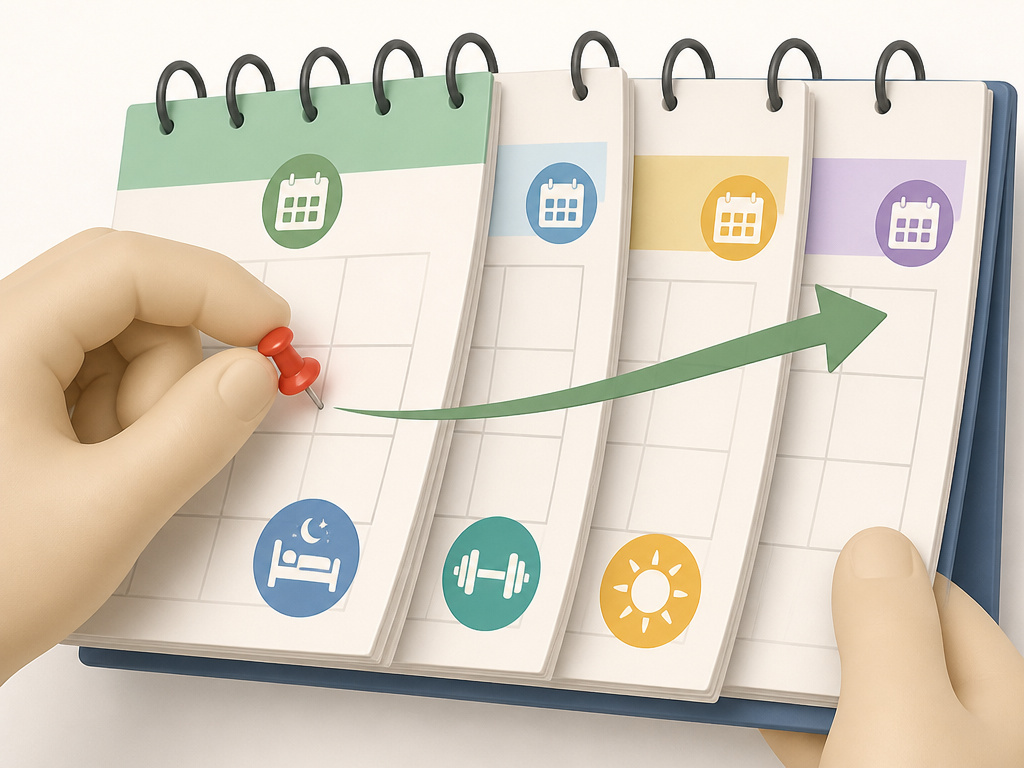
“Quickly” needs a calendar. Different interventions operate on different clocks. Managing expectations is how you stay consistent and avoid jumping to the next “fix” too soon.
- An acute hormonal spike can occur after a heavy strength training session. This is a temporary boost.
- Reversing acute suppressants like severe sleep debt or a drastic calorie deficit can lead to noticeable improvements.
- Meaningful physiological change requires consistent effort over time. This is when consistent resistance training begins to raise your baseline, when correcting a vitamin D deficiency shows up in improved levels, and when a doctor would re-check your levels after starting TRT.
- Maximum natural adaptation requires sustained effort over many months.
The realistic timeframe for boosting testosterone is measured in months, not days. The fastest path is to identify and remove your single biggest bottleneck, be it sleep, a nutrient gap, or overtraining, and give that change a full season to work.
How does alcohol affect testosterone levels?
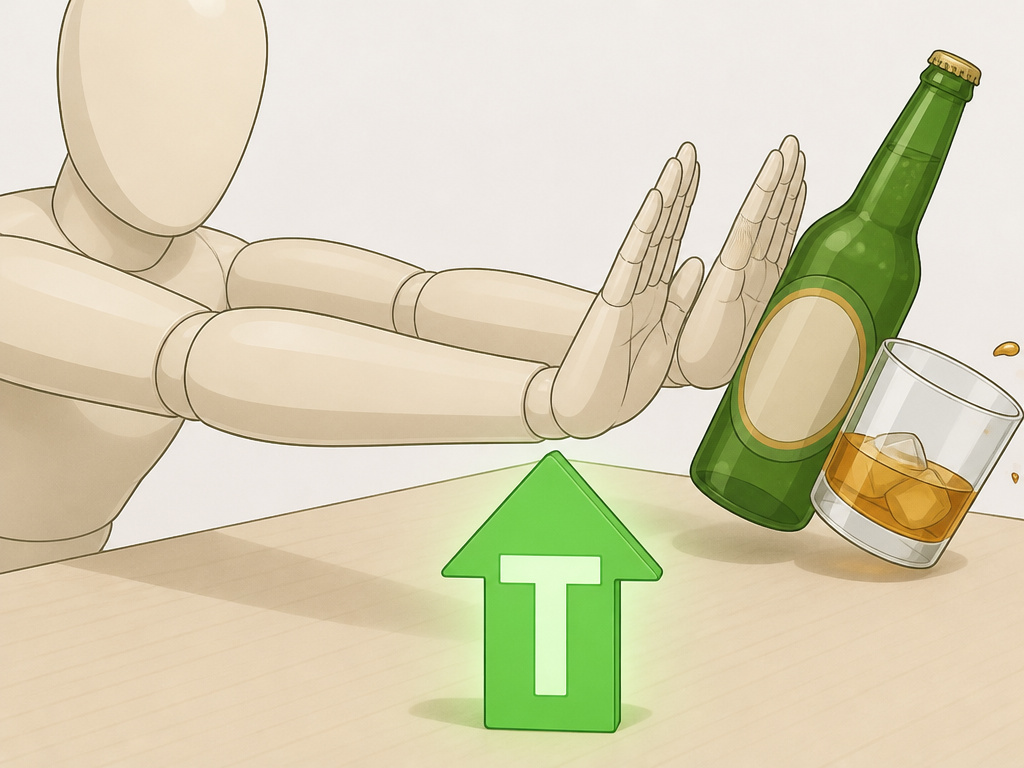
Alcohol consumption can directly lower testosterone. It disrupts the hormonal signaling needed for production and increases the conversion of testosterone into estrogen. For a quick boost, reducing or eliminating alcohol is a high-impact lever. This removes a direct suppressant, allowing your natural production to recover without interference. Reducing or eliminating alcohol removes a direct suppressant, allowing your natural production to recover. Focus on this single, clear action rather than spreading effort across many smaller changes. If you are considering therapy for low testosterone, clinicians will evaluate your overall health and lifestyle factors during assessment.
What are the signs of low testosterone?
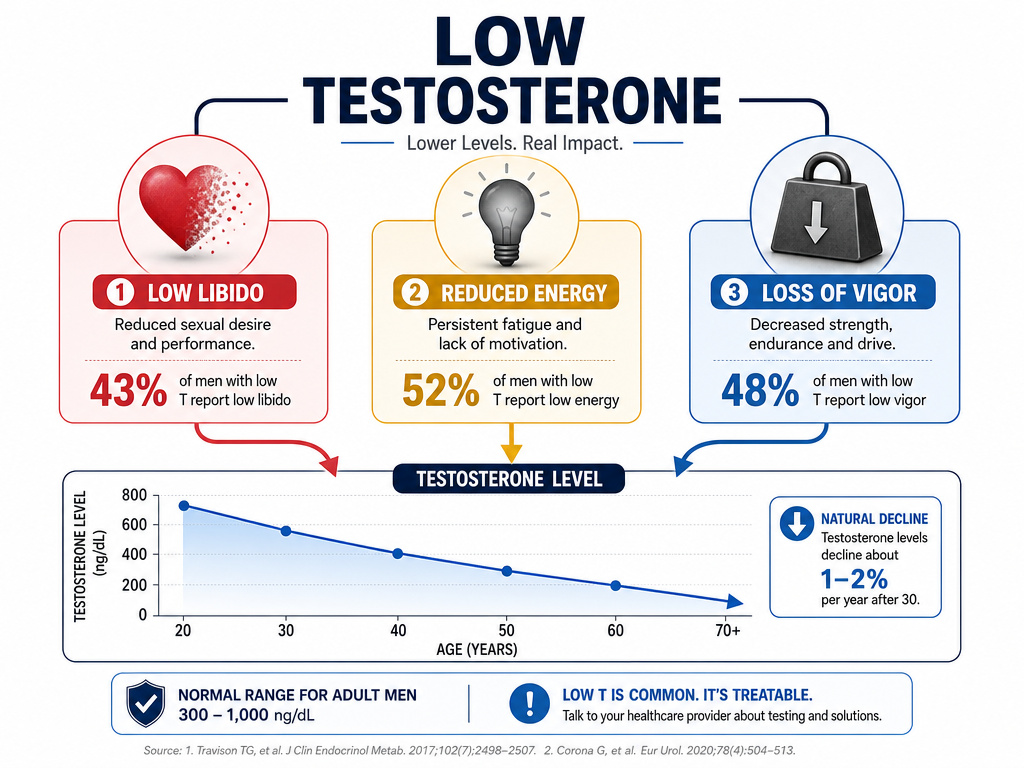
Symptoms often appear as a cluster including low libido, reduced energy, and loss of vigor. More specific signs can include erectile dysfunction, unexplained feelings of depression, and unexplained anemia. Research links certain symptoms to specific testosterone level ranges. For instance, loss of erections is often reported at lower levels, while reduced vigor and obesity may appear at moderately low levels. A formal diagnosis of hypogonadism requires both consistent symptoms and unequivocally low morning testosterone measurements confirmed on at least two separate tests. If you experience this symptom pattern, a clinical evaluation is the necessary next step.
Frequently Asked Questions
What is the #1 testosterone killer?
Chronic sleep deprivation is arguably the most common and potent lifestyle suppressant you can control. Consistently getting less than 6 hours of sleep per night can significantly reduce morning testosterone levels. Close behind are extreme calorie restriction and chronic, unmanaged stress.
What drink boosts testosterone?
No common drink is a reliable, direct booster. Pomegranate juice has some preliminary research, but effects are modest and not guaranteed. The more impactful approach is to avoid drinks that harm: excessive alcohol (which can suppress testosterone) and sugary sodas (which contribute to obesity and insulin resistance, both linked to lower levels).
Is 9.5 testosterone low?
Total Testosterone level of 9.5 nmol/L (about 274 ng/dL) is below the typical laboratory reference range for adult men (usually starting around 10-12 nmol/L or 300-350 ng/dL). According to the British Society for Sexual Medicine guidelines, symptoms become more prevalent below 12.1 nmol/L. A level of 9.5 nmol/L, especially if consistent and paired with symptoms like low energy or libido, warrants a discussion with a healthcare provider to investigate cause.
Can you boost testosterone in a week?
You can begin the process and feel some effects within a week. Drastically improving sleep quality, having a powerful weightlifting session, or halting a crash diet can shift your hormonal milieu quickly. However, a sustained, measurable increase in your baseline serum testosterone level takes longer, typically 6 to 12 weeks of consistent intervention.
Before You Go
The search for a quick fix usually leads to a bottle. The evidence leads to your daily habits.
Start with one blood test. Check your vitamin D and total testosterone. That data point tells you whether you’re trying to optimize a normal system or correct a broken one. If your levels are truly low and symptomatic, that’s a medical conversation, and no amount of ashwagandha will substitute. If they’re in range but on the lower side, your focus should be on lifestyle.
Your first step isn’t a purchase. It’s a commitment to seven hours of sleep tonight, or scheduling three heavy lifting sessions this week, or using an app to track your food for a few days to see where the gaps are. That’s what actually moves the needle. Everything else is just noise you can tune out.
