
Is Testosterone a Controlled Substance?
This post contains affiliate links. As an Amazon Associate, we earn from qualifying purchases.
Testosterone is a Schedule III controlled substance under the U.S. Controlled Substances Act (CSA). This means it has an accepted medical use but also a potential for abuse and dependence, requiring a prescription from a licensed provider and tracking through state Prescription Drug Monitoring Programs (PDMPs). The only exceptions are specific, finished pharmaceutical products that have received an explicit exemption from the DEA, such as Esterified Estrogens and Methyltestosterone tablets.
That Schedule III label, which answers the is testosterone a controlled substance question, is printed on the FDA-approved label for every prescription testosterone product, from Testim gel to Depo-Testosterone injections. It’s not a suggestion, it’s federal law. One source notes testosterone is a Schedule III controlled substance based on concerns about its performance-enhancing use in sports.
What follows is a breakdown of what Schedule III actually means for your access, the specific rules around prescriptions and travel, and the one notable product that sidesteps the entire Controlled Substances Act. We’ll also cover the state-level surveillance landscape, which varies dramatically depending on where you live.
Key Takeaways
- Testosterone is a Schedule III controlled substance under federal law, requiring a valid prescription and subject to PDMP tracking.
- In nearly half of U.S. States, law enforcement can access PDMP prescription data without a warrant, raising privacy concerns for patients.
- The only exemption is for specific esterified estrogen and methyltestosterone tablets, exempted because the estrogen combination reduces abuse potential.
- FDA-approved testosterone is indicated for men with low levels due to a recognized medical condition. However, sources disagree on its use for age-related decline: the FDA has requested updates to remove the limitation of use for age-related hypogonadism, while the Testim label states it is not known to be safe or effective for that purpose.
- Traveling with testosterone requires carrying it in its original pharmacy packaging with your name on the label to avoid legal issues at airport security.
Is Testosterone a Controlled Substance?
Open the official prescribing information for Testim gel or Depo-Testosterone injection. The first page states it clearly: “Contains testosterone, a Schedule III controlled substance.” This isn’t a marketing term. It’s a legal designation from the Drug Enforcement Administration (DEA) under the Controlled Substances Act.
The Controlled Substances Act sorts drugs into five schedules (I-V) based on their medical use and abuse potential. Schedule III drugs have a currently accepted medical use but also a potential for abuse that may lead to moderate physical dependence or high psychological dependence. Anabolic steroids, including testosterone, were placed in Schedule III by the Anabolic Steroid Control Act of 1990.
Testosterone is classified as a Schedule III anabolic steroid due to concerns about its performance-enhancing abuse in athletics. This federal scheduling makes prescription and dispensation trackable through state Prescription Drug Monitoring Programs (PDMPs).
The practical effect of the is testosterone a controlled substance designation is that every testosterone prescription is logged in a state database. Pharmacies check these PDMPs before filling, and law enforcement has varying levels of access to this data, a point we’ll dig into later. This system is designed to prevent “doctor shopping” and diversion, but it also creates a permanent record of your medical treatment.
Why Is Testosterone Controlled? The Abuse Potential
The government’s case for control rests on two pillars: documented abuse and specific health risks. The FDA and DEA point to the non-medical use of testosterone and other anabolic steroids to build muscle and enhance athletic performance. This isn’t theoretical. The label for Depo-Testosterone notes that abuse can lead to serious adverse reactions.
A key source of this concern is the documented pattern of abuse at doses far higher than those prescribed for hormone replacement. Bodybuilders and athletes might use doses far higher than those prescribed for hormone replacement, often stacking multiple steroids. This creates a clear public health rationale for control.
However, the landscape for legitimate, doctor-supervised use is different. The large TRAVERSE trial, which tracked over 5,200 men on AndroGel 1.62%, found no meaningful difference in major cardiovascular events compared to a placebo (7.0% vs. 7.3%). This data led the FDA to request updates to testosterone prescribing information in June 2026. It’s a crucial distinction: the abuse pattern that justifies scheduling is not the same as the risk profile of monitored clinical use.
The Legal vs. Illegal Use of Testosterone
This is the line that matters. Legal use means a prescription for an FDA-approved product to treat a specific medical condition.
Legal (With a Prescription):
- Diagnosis: Treatment for hypogonadism, where the body doesn’t produce enough testosterone due to conditions like Klinefelter syndrome, pituitary tumors, or chemotherapy damage.
- Source: A pharmacy, with a prescription from a licensed healthcare provider.
- Product: FDA-approved formulations like gels (Testim, AndroGel), injections (testosterone cypionate), patches, or buccal systems.
Illegal (Without a Prescription):
- Use: Taking testosterone for bodybuilding, athletic performance, or to self-treat symptoms of aging without a diagnosed medical condition.
- Source: Black market, online pharmacies without a valid prescription, or using someone else’s prescription.
- Product: Often counterfeit, mislabeled, or of unknown purity and concentration.
The FDA is clear: “None of the FDA-approved testosterone products are approved for use in men with low testosterone levels who lack an associated medical condition.” However, in a significant shift, the FDA requested updates to testosterone prescribing information in June 2026, including removing the limitation of use for men with age-related hypogonadism. This reflects new data but doesn’t change the controlled substance status, it just may change who can be prescribed it legally.
| Scenario | Legal Status | Key Reason |
|---|---|---|
| Using prescribed Testim for diagnosed hypogonadism | Legal | Valid prescription for an FDA-approved use. |
| Buying testosterone online without a prescription | Illegal | Possession of a Schedule III drug without a valid prescription. |
| Using a friend’s leftover testosterone cypionate vials | Illegal | Diversion of a controlled substance; prescription not in your name. |
| Doctor-prescribed testosterone for “low T” due to aging | A legal gray area evolving post-2026 | FDA labeling historically did not support this use, but recent updates are changing the landscape. |
The One Notable Exception: Exempted Combination Products
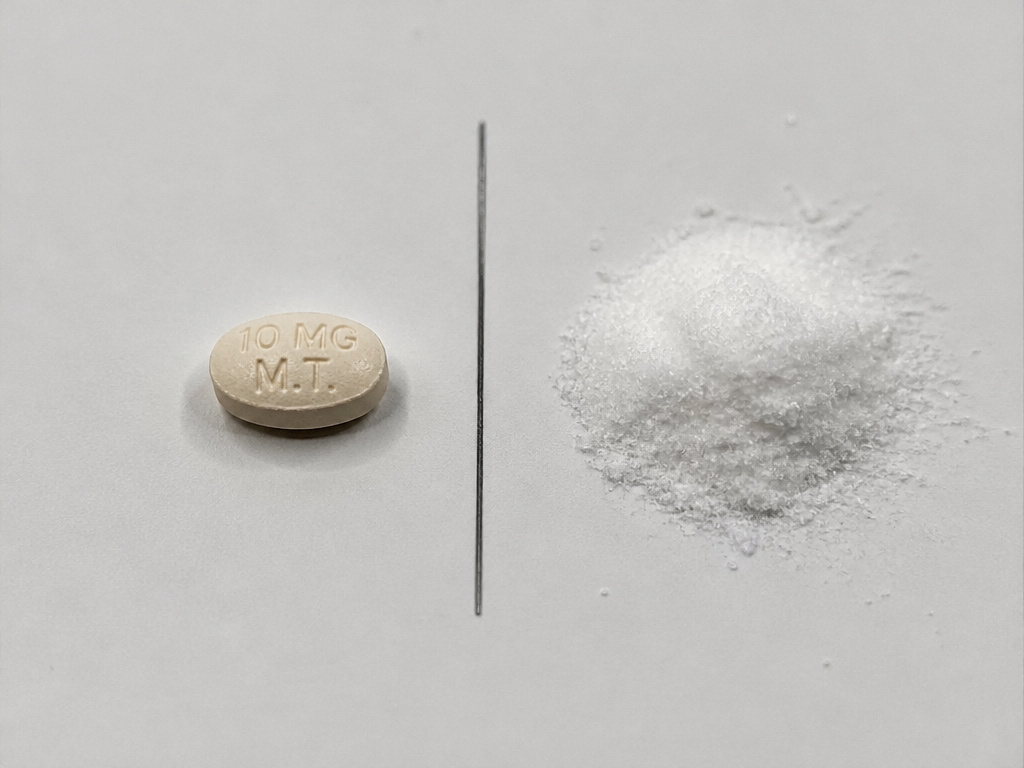
One exception confirms this rule. Not every product containing an anabolic steroid is controlled. In 2020, the DEA issued a final rule exempting two specific finished drug products from CSA control: Esterified Estrogens and Methyltestosterone 0.625/1.25mg tablets (H.S.) and 1.25/2.5mg tablets (D.S.).
The DEA and Department of Health and Human Services (HHS) determined that combining methyltestosterone with esterified estrogens reduces the potential for abuse. Why? The estrogen causes undesirable side effects like gynecomastia (breast tissue growth) and water retention, which are the opposite of what an abuser seeks. As the ruling noted, “bodybuilding internet forums advise users to avoid” such combinations.
The part nobody mentions: This exemption applies only to the finished tablet. The raw methyltestosterone powder used to manufacture it remains a Schedule III controlled substance. This carve-out shows the CSA is concerned with abuse potential in the final product’s form, not just the presence of a listed chemical.
How the Controlled Substance Status Affects You
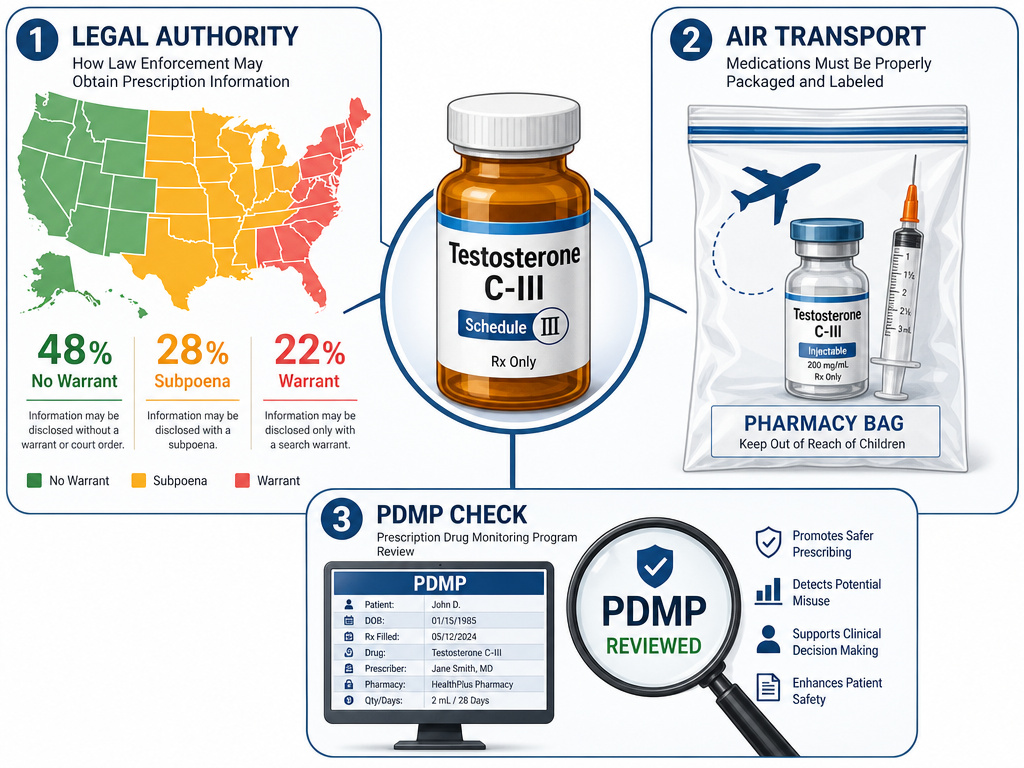
For a patient with a legitimate prescription, the “controlled” label translates into a series of practical hurdles and protections. It’s not just a legal footnote.
At the Pharmacy:
Your prescription cannot be refilled automatically. You need a new prescription from your doctor, and the pharmacy will check your state’s PDMP to ensure you’re not receiving similar controlled substances from other providers. Pharmacies must also follow strict inventory and security protocols for Schedule III drugs.
Travel Considerations:
Traveling, especially by air, requires planning. Always carry testosterone in its original pharmacy container with the label clearly showing your name and the prescribing doctor. A copy of your prescription or a doctor’s note is wise, particularly for international travel where laws vary. Don’t check it, keep it in your carry-on. Our guide on how to travel with testosterone legally covers the specifics for injections and gels.
The Privacy Trade-Off: PDMP Surveillance
Because it’s a controlled substance, your testosterone prescription is entered into your state’s Prescription Drug Monitoring Program database. A 2024 study in JAMA laid out a concerning picture of law enforcement access to this sensitive data:
- 24 states (48%) do not require a warrant or subpoena for law enforcement to access PDMP data.
- 14 states (28%) require a subpoena.
- 11 states (22%) require a warrant, the highest privacy standard.
- Among the 18 states with bans on gender-affirming care for minors, 10 do not require a warrant or subpoena for access.
This means in nearly half the country, your prescription history could be reviewed without a judge’s approval. For transgender patients or those in states restricting care, this creates a real chilling effect.
FDA-Approved Uses and Safety Information
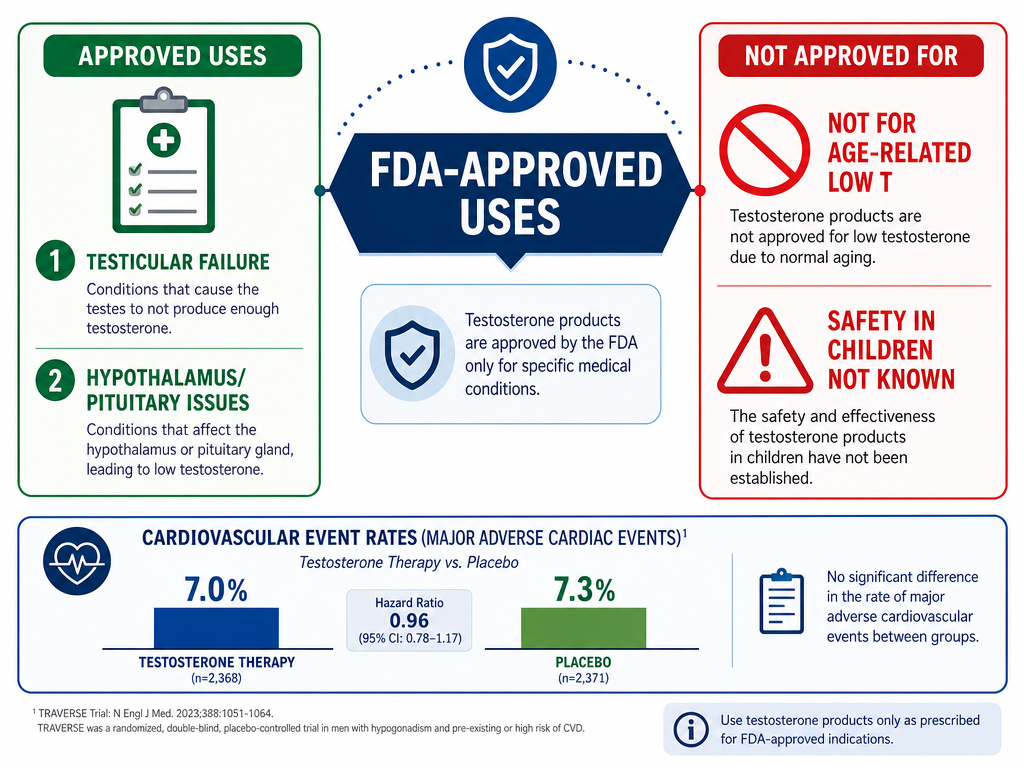
The FDA strictly defines who can be prescribed testosterone. Approved uses are for men with hypogonadism due to specific, associated medical conditions. These include testicular failure from genetic issues or chemotherapy, and problems with the hypothalamus or pituitary glands.
The official label for Testim gel adds two critical “not known” statements that often get overlooked:
- It is not known if Testim is safe or effective to treat men who have low testosterone due to aging.
- It is not known if Testim is safe or effective in children younger than 18 years old.
Cardiovascular safety has been a major debate. The Depo-Testosterone label states, “Long term clinical safety trials have not been conducted to assess the cardiovascular outcomes of testosterone replacement therapy in men.” Yet, the TRAVERSE trial, a large, FDA-required postmarket study, found major adverse cardiovascular events occurred in 7.0% of men in the AndroGel group compared with 7.3% of men in the placebo group. This disagreement in sources highlights the evolving nature of the evidence. This is why monitoring blood pressure and cardiovascular health during therapy is essential.
Calls for rescheduling or descheduling testosterone
There are no active, widespread calls to reschedule or deschedule testosterone from its current Schedule III status. The DEA has granted a specific exemption for one combination product, Esterified Estrogens and Methyltestosterone tablets, based on the finding that adding estrogen reduces abuse potential by causing undesirable side effects. However, this exemption applies only to that specific finished product; the raw methyltestosterone used in its manufacturing remains a controlled substance. The Schedule III classification is rooted in concerns about performance-enhancing abuse in sports. This status means prescriptions are tracked through state monitoring programs, and the legal requirements for law enforcement to access that data vary significantly from state to state.
Frequently Asked Questions
Is testosterone a schedule 2 or 3 drug?
Testosterone is a Schedule III controlled substance, not Schedule II. Schedule II drugs (like oxycodone) have a higher abuse potential and no refills are allowed. Schedule III drugs, while controlled, may allow refills as authorized by the prescriber.
Can you fail a drug test for testosterone?
Yes, you can fail a sports drug test. Organizations like the World Anti-Doping Agency (WADA) ban exogenous testosterone. For a standard employment drug screen, it’s less common but possible; you should disclose your prescription to the testing agency beforehand. The interaction of testosterone boosters and drug tests is a separate, but related, issue.
Why is estrogen not a controlled substance like testosterone?
Estrogen is not classified as an anabolic steroid with a high potential for performance-enhancing abuse. The Controlled Substances Act targets drugs with abuse potential for non-medical reasons. While estrogen has medical uses, it isn’t sought after to increase muscle mass or athletic performance, which is the primary abuse driver behind testosterone’s scheduling.
What are the penalties for illegal testosterone possession?
Penalties vary by state and the amount possessed, but possessing a Schedule III drug without a prescription can result in felony charges, fines, and imprisonment. Distribution or intent to sell carries heavier penalties. It also creates significant health risks from using unregulated, potentially contaminated products.
How does this affect access for transgender healthcare?
The controlled status creates additional barriers. It requires finding providers willing to prescribe, navigating pharmacy regulations, and facing potential PDMP surveillance, especially in states with restrictive laws. The tracking inherent in the system can deter both patients and providers.
Before You Go
The Schedule III label on testosterone is a permanent feature of the treatment landscape. It dictates how you get it, how you travel with it, and who can see that you have it. The system is built for control, not convenience.
If you’re considering testosterone therapy, start with a full medical workup to identify any reversible causes of low levels. Understand that a prescription means entering a system of monitoring, both medical (blood tests, blood pressure checks) and regulatory (PDMPs). The debate over its use for age-related decline is active, but the legal classification is fixed.
For legitimate patients, the key is documentation: keep your prescription current, use only your own medication, and always transport it in its labeled container. The rules are rigid, but navigable with the right information.
