
Is TRT Safe for Men With Heart Disease? The FDA Update
This post contains affiliate links. As an Amazon Associate, we earn from qualifying purchases.
For men with diagnosed hypogonadism and existing heart disease, the FDA labeling update shows prescription testosterone replacement therapy (TRT) is not linked to a higher risk of major heart attacks or strokes. The FDA removed the Boxed Warning about cardiovascular risk based on data from the TRAVERSE trial, where 7.0% of men on AndroGel had a major cardiac event versus 7.3% on placebo. However, TRT does carry a class-wide risk of raising blood pressure and can increase red blood cell counts, which requires careful monitoring, especially for those with unstable heart conditions.
That shift from warning to removal is a major regulatory change. It came from a specific, FDA-mandated safety trial that directly enrolled men with heart disease or high risk, the group everyone was worried about. A key question from that trial is ‘Is TRT safe for men with heart disease?’. The data is now clearer, but the decision is still about managing specific, known side effects against the proven benefits of treating low testosterone.
This guide walks through the trial data, explains the remaining warnings, and lays out the practical monitoring steps that make the difference between a safe protocol and a risky one. You’ll see where the FDA and cardiology guidelines still don’t fully align, and what to watch for from day one.
Key Takeaways
- The FDA removed the cardiovascular risk Boxed Warning for all testosterone products in February 2025, based on the TRAVERSE trial which found no significant difference in major cardiac events between TRT and placebo.
- TRT carries a class-wide risk of increased blood pressure, confirmed by FDA-required ambulatory blood pressure monitoring (ABPM) studies, making home monitoring essential.
- Erythrocytosis (elevated red blood cell count) is a common side effect of TRT that increases clotting risk; regular hematocrit checks are essential.
- Specialist society guidelines remain more cautious than the FDA for men with very recent heart attacks or strokes, often recommending a six-month waiting period.
- Prescribed, monitored TRT is not the same as unregulated steroid or SARM use, which involves higher, unmonitored doses and carries far greater cardiovascular risks.
The TRAVERSE Trial: The Pivotal 2023 Study
The whole conversation changed with one study. Before 2023, the FDA’s Boxed Warning about cardiovascular risk was based on older, observational reports. To settle the question, the agency mandated a specific postmarketing trial from the makers of AndroGel and Androderm.
The Testosterone Replacement Therapy for Assessment of Long-term Vascular Events and Efficacy Response in Hypogonadal Men (TRAVERSE) trial enrolled more than 5,200 men with preexisting cardiovascular disease or high risk. It tracked serious major adverse cardiovascular outcomes.
The design mattered, especially for the is trt safe for men with heart disease question. These were men with actual heart conditions or multiple risk factors, using a standard FDA-approved testosterone gel (AndroGel 1.62%) dosed to keep levels in the mid-normal limit of the reference range. This wasn’t about supraphysiologic bodybuilding doses; it was a real-world test of treatment for diagnosed hypogonadism.
The result was definitive. 7.0% of men in the testosterone group experienced a major cardiac event. In the placebo group, the rate was 7.3%. The difference was not statistically significant. The trial concluded testosterone was “noninferior” to placebo for cardiovascular safety in this population. This is the direct data that led the FDA to reassess the old warning.
The FDA’s 2025 Labeling Overhaul
The FDA issued class-wide labeling changes for every prescription testosterone product. This wasn’t a minor tweak. It was a direct regulatory response to the TRAVERSE data.
The update had three core parts, and understanding each one is key.
First, the agency directed the removal of language from the Boxed Warning related to an increased risk of adverse cardiovascular outcomes. This is the most visible change. A Boxed Warning is the FDA’s strongest safety alert. Removing it signals a major shift in the assessed risk profile.
Second, the FDA is adding the results of the TRAVERSE trial to all product labels. This grounds the safety information in the specific trial data, moving from general caution to cited evidence.
Third, and crucially, the action added new warnings about blood pressure. Results from completed ambulatory blood pressure monitoring (ABPM) studies confirmed a class-wide increase in blood pressure with testosterone use. So, while the severe cardiovascular event warning came down, a specific warning about a key cardiovascular risk factor went up.
Where the FDA and Specialist Guidelines Diverge
The FDA’s action is broad and based on trial data, but the is trt safe for men with heart disease debate continues in specialist circles. Societies like the American College of Cardiology and American Endocrine Society often give more granular, condition-specific advice, such as recommending avoiding TRT in men with very recent myocardial infarction, stroke, or revascularization. This is where a patient and doctor need to read the fine print.
The FDA’s labeling now applies to all men with hypogonadism and an associated medical condition, including those with heart disease, based on trial evidence. However, specialist society guidelines, such as those from the American College of Cardiology, often recommend more caution for specific high-risk subgroups, like those with very recent major cardiac events.
Where this goes sideways: Assuming the FDA’s broad removal means “no risk” for someone who had a heart attack last month. Specialist guidelines often recommend avoiding TRT for at least six months after a major cardiac event like a myocardial infarction (MI), stroke, or revascularization procedure.
The logic is about stability. The TRAVERSE trial enrolled men with preexisting CVD, but its exclusion criteria likely filtered out those in the most acute, unstable phase. Society guidelines err on the side of caution for this very high-risk subgroup.
Bottom line: The FDA gives the green light based on population-level data. Your cardiologist or endocrinologist may still pump the brakes based on your individual, recent history. Both positions are valid, and the discussion between them is where your personal safety plan gets built.
The Non-Negotiable Monitoring Checklist
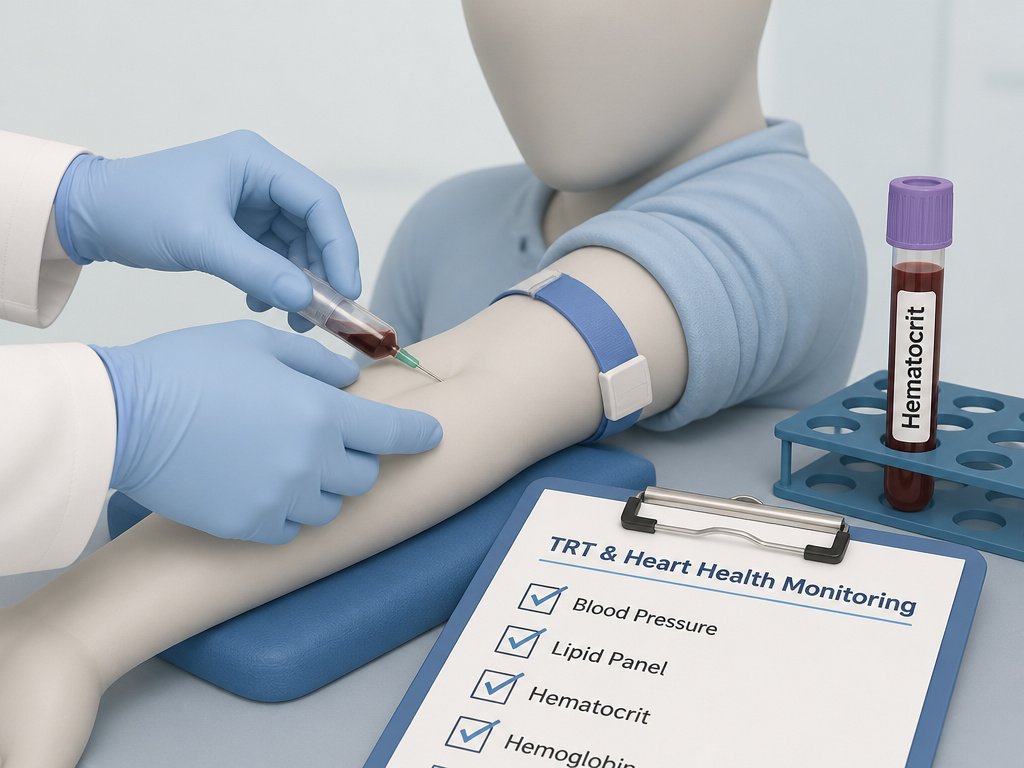
Safety on TRT is built on a schedule of specific checks. If you have heart disease, this list is your essential early-warning system. Here’s what a proactive monitoring protocol looks like, pulling from standard endocrine society guidelines.
| Test | Baseline | Follow-up Timing | Why It Matters for Heart Health |
|---|---|---|---|
| Testosterone Level | Required for diagnosis | 6–8 weeks after starting/changing dose; every 3–6 months once stable | Ensures dose keeps you in the mid-normal limit of the reference range, avoiding levels that could exacerbate risks. |
| Hematocrit | Yes | At 3–6 months, then annually (more often if elevated) | TRT stimulates red blood cell production. Erythrocytosis (high hematocrit) thickens blood, increasing blood clot risk and stroke potential. |
| Blood Pressure | Yes | Monthly home checks; at every clinical visit | FDA-confirmed class-wide increase. Home monitoring catches sustained elevations a single office visit might miss. |
| Lipid Panel | Yes | Repeat after 6–12 months | Testosterone can reduce HDL cholesterol. This needs tracking against your overall cardiac risk profile. |
| PSA (for men over 40 or with family history) | Yes | As recommended by your doctor based on baseline and risk | Part of general health monitoring while on TRT. |
The timing for injections is tighter. Because injected testosterone creates bigger peaks and troughs in hormone levels, doctors often recommend checking testosterone and hematocrit earlier.
This schedule exists because the body’s response isn’t instant. A change in dose or delivery method (like switching from gel to injection) can take 2–3 months to fully reflect in both your symptoms and your lab numbers.
Understanding the Specific Risks That Remain
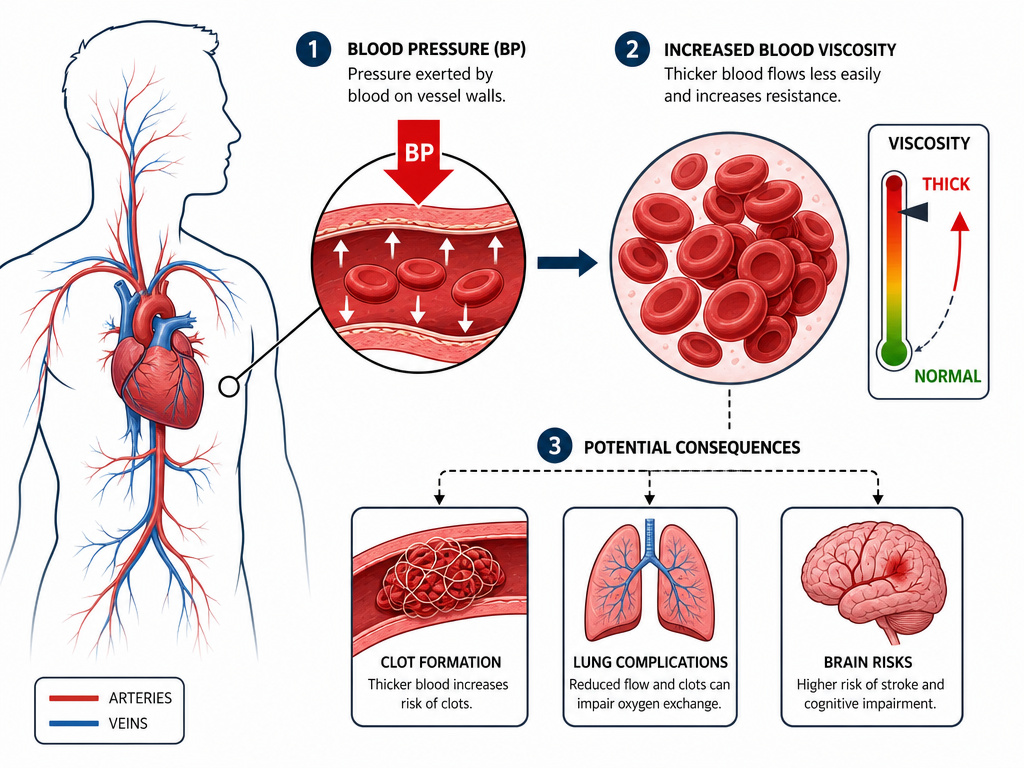
The TRAVERSE trial was reassuring for major cardiac events. But “no increased risk of heart attack” is not the same as “no side effects.” For men with heart disease, two TRT-related effects demand respect.
Blood Pressure: This is the FDA’s new, class-wide warning. The mechanism isn’t fully settled, but testosterone can promote sodium and water retention and affect vascular tone. For a heart already under strain, even a modest sustained increase in pressure adds workload. This is why a home monitor is a better tool than sporadic clinic readings.
Erythrocytosis: This is the most common pharmacologic side effect of TRT. Testosterone tells your bone marrow to make more red blood cells. While this can combat the anemia sometimes seen with low T, too much makes your blood viscous. Thick blood flows less easily, raising the risk of clotting events like deep vein thrombosis, pulmonary embolism, or stroke. If your hematocrit climbs too high, your doctor may need to lower your dose, switch delivery methods, or in some cases, recommend a therapeutic blood donation.
An individual patient data meta-analysis put numbers to these risks. It found that while cardiovascular event rates were similar to placebo, testosterone significantly increased the risks of edema and erythrocytosis. It also confirmed testosterone reduced total cholesterol, HDL, and triglycerides, which needs watching.
TRT vs. Non-Prescription “Alternatives”
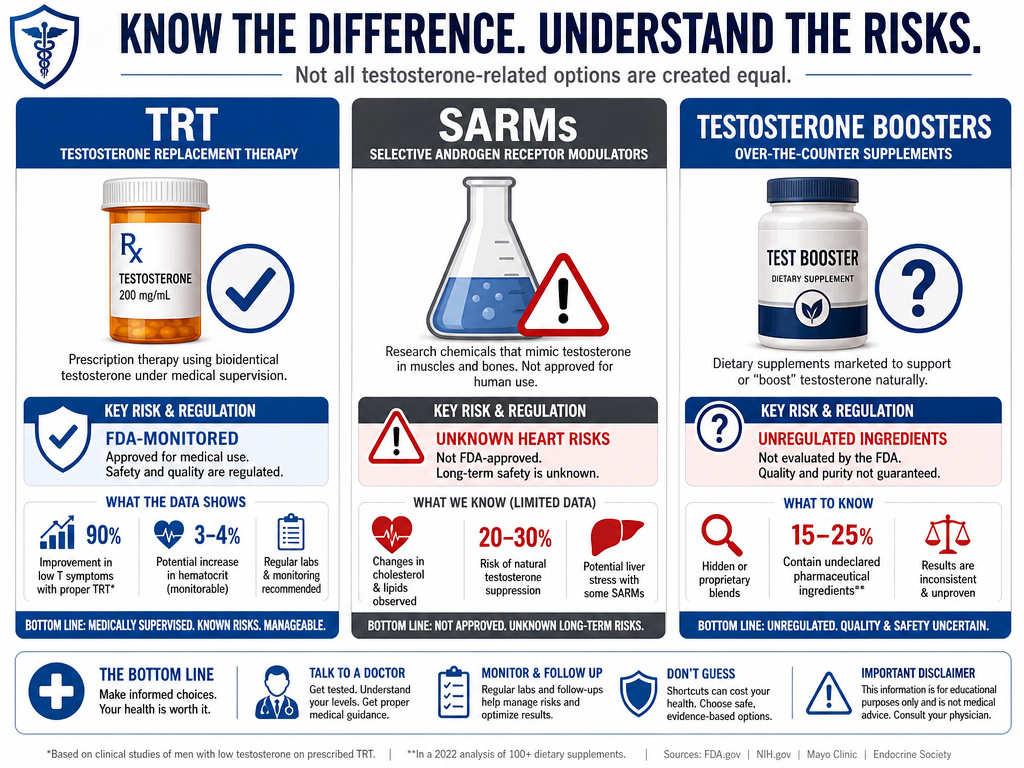
This is a critical distinction that gets blurred in online forums. The safety data from TRAVERSE and the FDA’s labeling apply only to FDA-approved testosterone products prescribed for diagnosed hypogonadism.
The risks are categorically different for the things people often lump under “steroids.”
- Cosmetic/Supraphysiologic Steroid Use: This involves doses much higher than those used in TRT, aiming for supraphysiologic levels. These doses dramatically increase the risks of hypertension, harmful lipid changes, and cardiomyopathy.
- SARMs (Selective Androgen Receptor Modulators): Marketed as a safer alternative, these research chemicals have scant long-term human safety data. They can still suppress natural testosterone production and have unknown effects on the cardiovascular system.
- Unregulated “Testosterone Boosters”: These are dietary supplements. They cannot contain actual testosterone. Their effects on hormone levels are minimal at best, and they carry the risk of undisclosed ingredients that may interact with heart medications.
Common mistake: Using the FDA’s update on prescription TRT to justify the safety of an unregulated steroid cycle or SARM stack. The monitoring, dose control, and purity guarantees vanish, and the risk profile skyrockets.
What to Do Before Starting (Or Restarting) TRT
If you have heart disease and are considering TRT, the conversation with your doctor needs structure. Walk in prepared. This isn’t just about getting a prescription; it’s about co-managing a chronic condition.
First, the diagnosis must be solid. True hypogonadism requires two separate morning blood tests showing testosterone levels below 270 ng/dL, alongside consistent symptoms like profound fatigue, low libido, and loss of muscle mass. “Low for your age” isn’t a diagnosis.
Next, establish a clear baseline. This means getting the essential blood work done before the first dose: a full lipid panel, hematocrit, PSA (if appropriate), and of course, testosterone. You can’t track changes if you don’t know the starting point.
Finally, have the “what if” talk. Ask your doctor:
- What is our plan if my blood pressure goes up?
- At what hematocrit level will we adjust my dose?
- What symptoms (like chest pain, sudden shortness of breath, or severe headache) should prompt an immediate call or visit?
For the man who had to stop TRT after a heart attack and now wants to restart, the discussion is even more nuanced. The benefits for his fatigue and strength must be weighed against the stability of his cardiac condition. Specialist society guidelines often recommend avoiding TRT for a period after a major cardiac event, such as within six months of a myocardial infarction, stroke, or revascularization. The restart dose is often lower, and the monitoring interval is shorter.
Who should not take testosterone replacement therapy
Testosterone replacement therapy is not intended for men who have not been diagnosed with a true medical condition causing low testosterone. The FDA states that its approved products are only for use in men who lack or have low testosterone levels in conjunction with an associated medical condition. They are not approved for use simply because a man’s testosterone levels decline with age. A proper diagnosis of hypogonadism requires confirmation with specific testing, typically involving two separate morning blood samples to be below 270 ng/dl. Starting TRT without a confirmed deficiency is not supported by the approved uses of these medications.
Frequently Asked Questions
Can you take TRT if you have atrial fibrillation (AFib)?
Proceed with extreme caution and under close cardiology supervision. While the TRAVERSE trial didn’t show an overall increase in cardiovascular events, the risks and benefits of TRT should be carefully weighed in patients with established cardiovascular disease or significant risk factors. TRT can increase red blood cell count (erythrocytosis), which is a known side effect. A thorough discussion of your individual risks and benefits is essential before starting.
Does the method of TRT (gel vs. Injection) affect heart risk?
The delivery method doesn’t change the fundamental cardiovascular risk profile, but it can influence side effect management. Gels provide steadier daily levels, which may lead to more stable blood pressure and hematocrit responses. Injections cause peaks and troughs, which can sometimes make erythrocytosis more pronounced and require more frequent monitoring. The choice often comes down to personal preference, cost, and how your body responds, not a clear-cut safety winner.
How does TRT interact with common heart medications?
There are no universally prohibited combinations, but interactions need managing. TRT can increase blood pressure, potentially reducing the effectiveness of your antihypertensive medications. It can also reduce HDL cholesterol. The most important step is to inform every doctor you see, your cardiologist, primary care physician, and hormone specialist, about all medications and supplements you take so they can watch for interactions.
Who should absolutely avoid TRT, even with the new FDA label?
Men with poorly controlled heart failure, severe untreated obstructive sleep apnea, untreated erythrocytosis (high red blood cell count), or active prostate or breast cancer should not start TRT. Men who have had a myocardial infarction, stroke, or major cardiac surgery within the past six months are typically advised to wait until their condition is stable, per specialist society guidelines, despite the FDA’s broader labeling.
Before You Go
The 2025 FDA update is significant. It moves prescription TRT for men with heart disease from a zone of major concern to one of manageable, monitored risk. The big, scary warning about heart attacks and strokes is gone, based on solid trial data.
But the job of managing the therapy got more specific, not easier. The new warnings about blood pressure and the ever-present risk of erythrocytosis mean monitoring is your lifeline. For a man with a stent or a history of heart failure, this treatment requires a partnership with your doctor, built on regular blood tests and honest conversations about any new symptoms.
The evidence says TRT can be safe for your heart if you have hypogonadism. The practice says that safety is earned, visit by visit, lab slip by lab slip. Start with the baseline, commit to the schedule, and keep the dialogue open. That’s how you use the new data to make an old, cautious conversation into a practical plan.
