
Metabolic Syndrome and Low Testosterone Link
This post contains affiliate links. As an Amazon Associate, we earn from qualifying purchases.
Low testosterone and metabolic syndrome are tightly linked in a bidirectional cycle. Low testosterone predicts a higher risk of developing metabolic syndrome, especially in younger and non-obese men, while the components of metabolic syndrome, particularly obesity and insulin resistance, actively suppress testosterone production. Breaking the cycle requires addressing both sides simultaneously.
That bidirectional link is the core of the problem. It means you can’t treat one without affecting the other, and it explains why isolated fixes often fail. The evidence for the metabolic syndrome and low testosterone link isn’t just association; it’s predictive.
What follows is a breakdown of the specific numbers that define the risk, the surprising demographics where the link is strongest, and a clear look at where the evidence on treatments like testosterone replacement therapy (TRT) actually stands, and where it’s still contested.
Key Takeaways
- Young men (20-39) with low testosterone face more than double the risk of developing metabolic syndrome compared to peers with normal levels.
- The link is strongest in non-overweight men (BMI <25), where low testosterone acts as an independent warning sign, not just a consequence of obesity.
- A single lab cutoff is misleading. Focus on symptoms and trends over time, not just whether a number is inside a lab’s printed range.
- Testosterone replacement therapy (TRT) can improve individual metabolic markers like waist size and blood sugar, but high-quality studies showing it prevents full-blown metabolic syndrome are still limited.
- Lifestyle intervention is the uncontested first step. Weight loss, even modest, reliably increases testosterone and improves every component of metabolic syndrome.
How Strong Is the Link? Key Numbers from Major Studies
The connection isn’t vague. Large, multi-year studies have put concrete numbers on the metabolic syndrome and low testosterone link.
The SHIP prospective cohort study followed 1,004 men for a median of 5.0 years (range 4.4–8.3). It found that men with total testosterone in the lowest age-specific quartile had a 38% increased risk of developing metabolic syndrome compared to those in the highest quartile. The raw, unadjusted risk was even higher (RR 1.52, 95% CI 1.25–1.85).
This 50–60 word, third-person blockquote covers a key technical finding: In the SHIP study, low baseline serum testosterone (lowest quartile) predicted a 38% increased relative risk (RR 1.38) of incident metabolic syndrome after 5 years. Risk was highest in young men aged 20–39 years (adjusted RR 2.06). The association remained after adjusting for age, smoking, and waist circumference, indicating testosterone is an independent predictor.
But age changes everything. When the SHIP researchers broke the data down, the risk wasn’t uniform.
| Age Group | Adjusted Relative Risk (RR) | What It Means |
|---|---|---|
| 20–39 years | 2.06 (95% CI: 1.29–3.29) | More than double the risk. Low testosterone is a powerful early warning sign in young men. |
| 40–59 years | 1.34 (95% CI: 1.00–1.81) | An RR of 1.34. The link is still present and significant in middle age. |
| 60–79 years | 1.00 (95% CI: 0.75–1.37) | No significant increased risk. In older men, age and other factors dominate the relationship. |
That table shows the most non-commodity insight in the whole discussion of the metabolic syndrome and low testosterone link: young men are the most vulnerable. A guy in his 20s or 30s with low testosterone has over twice the chance of developing high blood pressure, high blood sugar, and unhealthy cholesterol within a few years. That timeline surprises most people, who assume these are problems of middle age.
Other studies reinforce the strength of the link with different numbers:
- In the TRiUS observational registry, men with total testosterone in the lowest quartile (<206 ng/dL) had 2.66-fold higher odds of having metabolic syndrome than those in the highest quartile.
- The Ikaria study of elderly men found that even small changes mattered: every 10 ng/dL increase in total testosterone was associated with a 3% reduction in the odds of having metabolic syndrome.
I spent about a year treating the lab’s printed range like a pass/fail line. Then I saw two guys with nearly identical total testosterone levels, one barely functioning and one fine. The difference was their symptoms and their SHBG, not which side of an arbitrary cutoff they were on. My rule now: a number at the bottom of the range with no symptoms usually gets a recheck, not a fix. A mid-range number with fatigue, poor sleep, and low drive gets a closer look at free testosterone and SHBG. The causes of low testosterone are varied, and the number alone rarely tells the full story.
The Obesity Question: Cause, Consequence, or Mediator?
This is where sources genuinely disagree, and most articles gloss over it. Does obesity cause low testosterone, which then leads to metabolic syndrome? Or can low testosterone directly cause metabolic syndrome, even in lean men?
The evidence points to both pathways being real, depending on the person.
Pathway 1: Obesity as the Primary Driver (The Common Route)
For many, especially those who are overweight, central obesity is the engine. Excess fat, particularly visceral fat, increases the activity of an enzyme called aromatase, which converts testosterone into estrogen. It also promotes chronic, low-grade inflammation and insulin resistance, which further suppress testosterone production from the testes. In this model, low testosterone is largely a consequence of obesity.
- The Ikaria study concluded that body weight, lipids, and insulin resistance mediated the relationship between low testosterone and metabolic syndrome, while the MMAS study found low testosterone was an independent predictor in non-overweight men.
- A study of Japanese men found that including waist circumference in their analysis “largely weakened” testosterone’s association with other metabolic syndrome components.
This is one common vicious cycle: more fat can lead to less testosterone, which can make it harder to lose fat. However, in non-overweight men, low testosterone itself can be an independent risk factor for metabolic syndrome. It’s a major reason why the link between obesity and testosterone is so tight.
Pathway 2: Low Testosterone as an Independent Risk Factor (The Lean Guy Warning)
Here’s the part that gets missed. The Massachusetts Male Aging Study (MMAS) provided clear evidence that low testosterone can predict metabolic syndrome independently of obesity.
- In non-overweight men (BMI <25 kg/m²), low total testosterone and low sex hormone-binding globulin (SHBG) were strong predictors of who would develop metabolic syndrome over the subsequent ~15 years.
Where this goes sideways: Assuming every case of low T is just from being overweight. For a lean man with declining energy and a growing waistline, low testosterone might be the primary driver of metabolic dysfunction, not the result of it.
This distinction is critical for action. If you’re carrying significant extra weight, the priority is unequivocally fat loss. If you’re lean but still show signs of poor body composition and testosterone issues, the investigation needs to dig deeper into hormonal and metabolic health directly. Understanding how insulin resistance affects testosterone is a key piece of that puzzle, regardless of scale weight.
Can Treating Low Testosterone (TRT) Improve Metabolic Syndrome?
This is the million-dollar question for patients and doctors. The answer is nuanced, and high-quality sources disagree on the strength of the evidence.
What TRT Can Improve:
Multiple randomized controlled trials and meta-analyses show that testosterone replacement therapy in men with genuine deficiency leads to consistent improvements in specific components of metabolic syndrome:
- Waist circumference: Testosterone replacement therapy in men with genuine deficiency leads to consistent improvements in waist circumference.
- Insulin sensitivity: Measured improvements in HOMA-IR.
- Triglyceride levels: Modest reductions.
- HDL cholesterol: Slight increases.
These changes are mechanistically sound. Testosterone helps shift body fat from visceral to subcutaneous stores, improves cellular metabolism, and can reduce systemic inflammation. Understanding how testosterone affects metabolism explains these changes.
The Limits of the Evidence:
However, major guidelines urge caution. The 2019 European Academy of Andrology (EAA) guidelines note that “only few placebo-controlled RCTs specifically investigated metabolic outcomes as primary endpoint.”
- They cite the T4DM study, a large prevention trial, which “was unable to document a significant reduction in haemoglobin A1c” with testosterone therapy.
The takeaway isn’t that TRT doesn’t work. It’s that the leap from “improves some markers” to “prevents or reverses full metabolic syndrome and its long-term cardiovascular outcomes” hasn’t been conclusively made by large, long-term studies. TRT should be viewed as a potential component of treatment for men with symptomatic hypogonadism, not as a standalone metabolic fix.
For men with existing type 2 diabetes and testosterone issues, the picture is especially complex, as diabetes itself accelerates testosterone decline.
A Practical Action Plan: Breaking the Cycle
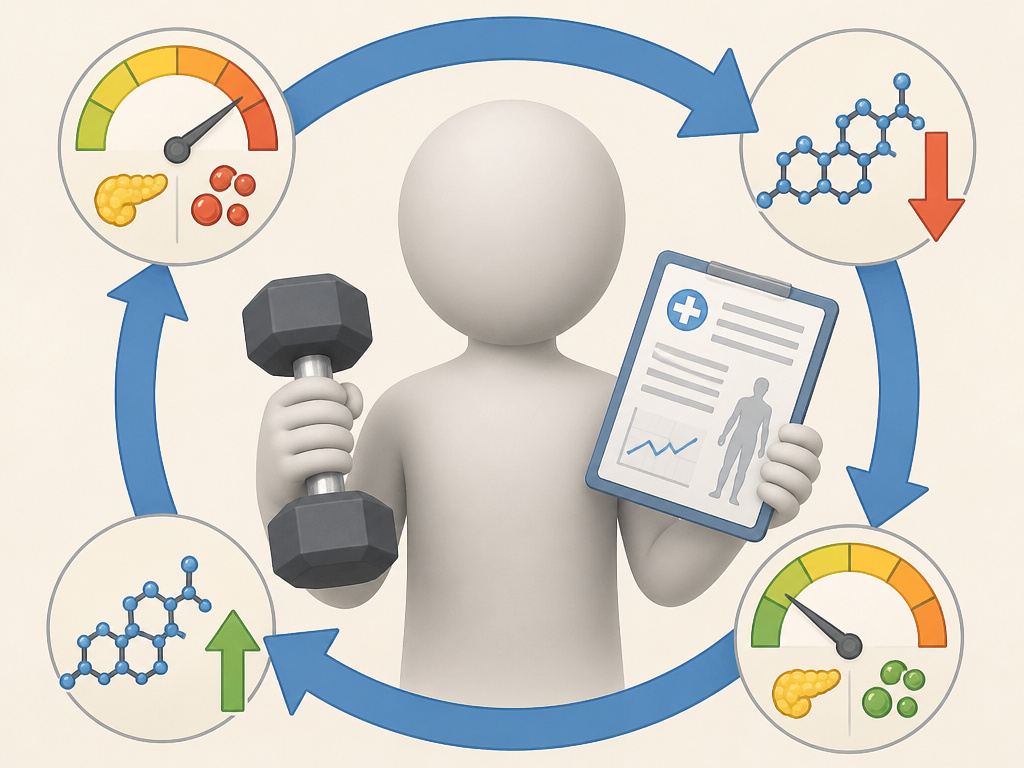
You need a strategy that attacks both sides of the cycle. Throwing supplements or medications at one piece rarely works if the underlying lifestyle drivers are intact.
1. Establish a True Baseline (Before You Do Anything)
Early on, I skipped straight to the ‘what do I take’ question. Now I tell people establishing a true baseline comes first. For metabolic and hormonal health, that means:
- Hormone Panel: Total and Free Testosterone, SHBG, Estradiol, LH, FSH. Get at least two morning draws, a week or two apart. A single number swings more than people expect.
- Metabolic Panel: Fasting Glucose and Insulin (to calculate HOMA-IR), Lipid Panel (Triglycerides, HDL), Blood Pressure, Waist Circumference.
- LH and FSH are the part everyone forgets. Low T with high LH suggests the testes are the problem. Low T with low or normal LH points to a signal issue in the brain (hypothalamus/pituitary). That single split informs every treatment discussion that follows.
2. Prioritize Lifestyle Intervention (The Uncontested Foundation)
This is essential. The evidence is rock-solid.
- Weight Loss: Weight loss, even modest, reliably increases testosterone and improves every component of metabolic syndrome. This is the single most effective intervention for overweight men.
- Strength Training: Resistance exercise directly stimulates testosterone production and builds muscle, which improves insulin sensitivity.
- Sleep & Stress Management: Chronic sleep deprivation and high cortisol levels are potent testosterone suppressors and worsen testosterone’s impact on metabolic health.
3. Evaluate Medical Treatment with Realistic Expectations
- TRT: Consider it if you have consistently low testosterone levels and significant symptoms and lifestyle efforts have plateaued. Understand its goal is to relieve hypogonadal symptoms; metabolic improvements are a potential bonus, not a guarantee.
- Metformin: For those with prediabetes or insulin resistance, this drug can improve metabolic parameters and may have modest benefits for testosterone.
- GLP-1 Agonists: Medications like semaglutide are powerful tools for weight loss and glycemic control, indirectly benefiting testosterone by reducing the primary suppressing factor (obesity).
The goal is to use these tools to restore a healthier cycle: better metabolism supports better hormones, which in turn supports a healthier metabolism. It’s a feedback loop, so you have to intervene at multiple points.
How do inflammation and fat cell hormones play a role?
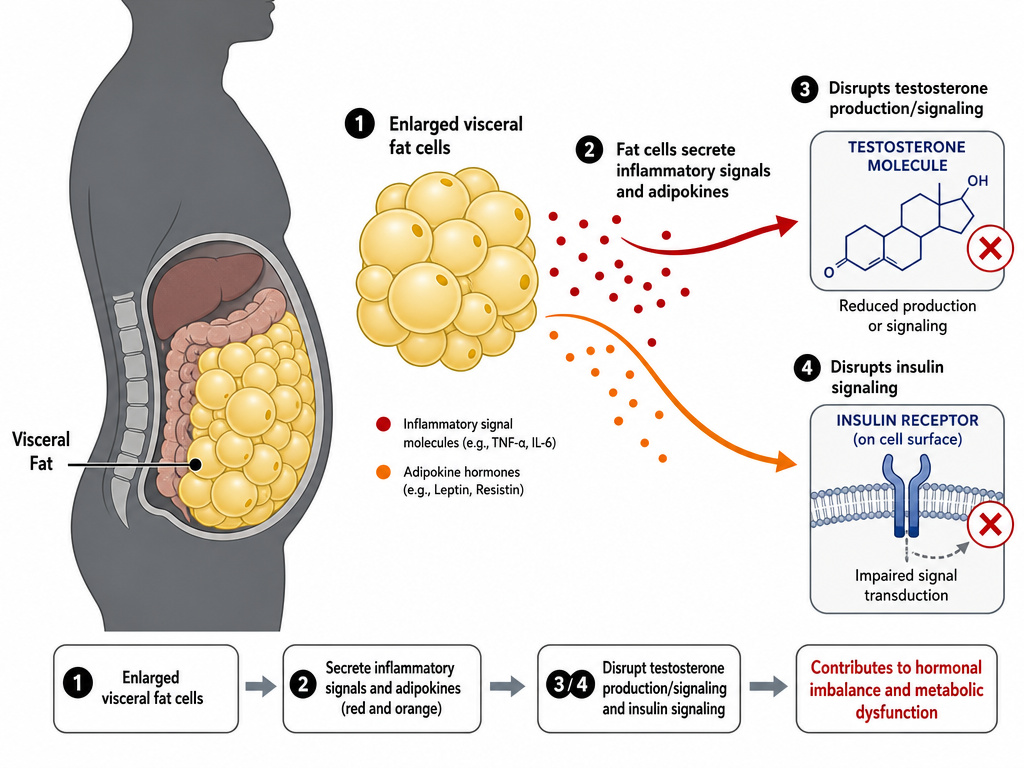
While the fact sheet does not provide specific data on inflammation or adipokines, these biological processes are central to the established link. Excess body fat, particularly visceral fat, acts as an active endocrine organ. It secretes inflammatory signals and hormones that can disrupt normal hormone function and insulin signaling. This chronic, low-grade state can both contribute to the development of metabolic syndrome and further suppress testosterone production. Managing body weight and improving metabolic health through diet and exercise are practical steps that can help address this underlying inflammatory environment.
Frequently Asked Questions
What are the signs of low testosterone?
Look for a cluster of symptoms, not just one. The classic triad includes low energy/fatigue, reduced sex drive and erectile function, and depressed mood or irritability. Physically, you might notice increased body fat (especially around the waist), loss of muscle mass, and difficulty recovering from exercise. A full list of low testosterone symptoms can help you track what you’re experiencing.
What comes first, metabolic syndrome or low testosterone?
It’s a classic “chicken or egg” scenario that operates as a cycle. Obesity and insulin resistance (core parts of metabolic syndrome) actively suppress testosterone production. Simultaneously, low testosterone makes it harder to maintain muscle mass and a healthy body weight, promoting further metabolic dysfunction. In young, lean men, low T might be the primary instigator. In most overweight individuals, obesity likely starts the cycle.
Can losing weight fix low testosterone?
Yes, often dramatically. For men who are overweight or obese, weight loss is the most effective natural way to increase testosterone levels. The reverse is also true: losing weight becomes much harder with low testosterone. This is why combining a calorie-controlled diet with strength training is so powerful, it tackles both sides of the equation at once.
Should I get on TRT to prevent heart disease or diabetes?
No. Testosterone replacement therapy is not approved for, and should not be used for, the primary prevention of cardiovascular disease or type 2 diabetes. The decision for TRT should be based on a confirmed diagnosis of hypogonadism with bothersome symptoms. Any potential metabolic benefits are secondary. Your focus for prevention should be on the lifestyle factors detailed above.
How is metabolic syndrome diagnosed?
Metabolic syndrome is diagnosed when a person has at least three of the following five criteria, often based on the Adult Treatment Panel III (ATP III) guidelines:
- Increased waist circumference (≥40 inches for men).
- Elevated triglycerides (≥150 mg/dL).
- Reduced HDL cholesterol (<40 mg/dL for men).
- Elevated blood pressure (≥130/85 mmHg or on medication).
- Elevated fasting glucose (≥100 mg/dL or on medication).
The Bottom Line
The link between low testosterone and metabolic syndrome is real, predictive, and strongest in populations most people overlook: young men and those who aren’t obese. The numbers from the SHIP study, a 2.06-fold risk for men 20-39, should be a wake-up call.
This isn’t just about treating a low number. It’s about recognizing that your hormonal health and your metabolic health are the same system. You can’t optimize one while ignoring the other.
Start with the tests, not the treatments. Get the full picture with hormone and metabolic panels. Then, attack the foundation with nutrition and exercise designed to improve body composition and insulin sensitivity. This approach reliably improves both sides of the equation. If symptoms persist after a genuine lifestyle effort, then, and only then, discuss adding medical interventions like TRT with a clear understanding of what they can and cannot do. Your goal is to break a cycle, not just manage a symptom.
