
Does Weed Lower Testosterone? What the Data Actually Shows
This post contains affiliate links. As an Amazon Associate, we earn from qualifying purchases.
The direct link between cannabis use and lower testosterone levels in men is not well-supported by modern human research. While animal studies and some older human trials suggest suppression, larger cohort studies and meta-analyses find no clinically significant association. The clearer, dose-dependent impact is on sperm count and quality, not circulating testosterone.
The data is a mess of contradictions. One study from 1974 finds no change, a reanalysis in 1984 says there’s a drop, and a massive 2021 review of nearly five thousand men concludes the link isn’t statistically significant. This isn’t a case of “more research needed”, it’s a case of the existing research pointing in wildly different directions on the question of does weed lower testosterone, which itself is the answer.
What follows is a walk through the conflicting evidence on the does weed lower testosterone question, the one area where the science is clear (sperm), the mechanism that might explain the noise, and what a practical approach looks like if you’re concerned about your hormonal health.
Key Takeaways
- Human studies on testosterone are inconclusive and conflicting; large reviews find no clinically meaningful link.
- The dose-dependent effect on sperm count and concentration is the strongest, most consistent finding.
- Animal research consistently shows testosterone suppression, but these results have not been robustly replicated in humans.
- If fertility is a concern, the sperm data is reason enough to moderate use or stop for several months.
- For general testosterone health, factors like sleep, chronic stress, and alcohol consumption are higher-impact levers to pull first.
The Short Answer: It’s Complicated
Open any forum thread on this topic and you’ll find two camps debating the does weed lower testosterone question. One cites a famous 1974 study in the New England Journal of Medicine where 27 chronic users showed no significant changes in plasma testosterone after 21 days of smoking. The other points to animal models where THC consistently causes testicular atrophy. Both are right, and that’s the problem.
The most definitive word we have comes from a systematic review in the Journal of Urology, which suggests the effect of cannabis on testosterone levels is largely undetermined. It concluded the effect of cannabis on testosterone levels is largely undetermined. Statistically, that’s a rounding error. The systematic review concluded the effect of cannabis on testosterone levels is largely undetermined.
Yet, you can’t ignore the animal data or the older human studies. A 1984 reanalysis of clinical data suggested testosterone dipped after a single marijuana cigarette and took at least 24 hours to recover. Another early study by Kolodny et al. Reported depressed plasma testosterone in heavy users. The conflict isn’t about bad science, it’s about different methods, different eras, and different definitions of “use.”
Where The Research Actually Agrees: Sperm
If the testosterone data is noisy, the sperm data sings in clear, sobering harmony. Multiple human studies converge on the same finding: cannabis use is associated with lower sperm count and concentration, and the effect is dose-dependent.
A Danish cohort study of over 1,200 men found that those using marijuana more than once a week had a 28% lower sperm concentration and a 29% lower total sperm count than non-users. Another study of 20 chronic users broke it down further: men smoking 10 or more times a week had an average sperm count of 26.6 million/mL, compared to 67.9 million/mL for those smoking 5 to 9 times a week.
| Study Focus | Key Finding | Implication |
|---|---|---|
| Danish Cohort (n=1,215) | >1x/week use linked to 28-29% lower sperm count/concentration | Regular use has a measurable, negative impact on semen parameters. |
| Chronic User Analysis (n=20) | 10+ uses/week: 26.6M/mL vs. 5-9 uses/week: 67.9M/mL | The effect is strongly dose-dependent; heavier use correlates with worse outcomes. |
| High-Dose Exposure (n=16) | Reduced sperm count observed 5-6 weeks after starting | The impact on sperm production has a predictable, several-week timeline. |
The timeline is specific, too. In a study where 16 chronic smokers were given a high dose for four weeks, the time to a measurably reduced sperm count was 5 to 6 weeks after starting. This isn’t a vague correlation; it’s a mechanism with a clock. The sperm connection is the strongest card in the deck for anyone concerned about cannabis and male fertility.
Animal Studies vs. Human Reality: The Great Disconnect
This is where people talk past each other. In animal models, the effect is dramatic and consistent. THC suppresses the hypothalamic-pituitary-gonadal (HPG) axis, lowers luteinizing hormone (LH), which is the signal for the testes to produce testosterone, and can lead to testicular atrophy. It’s a clean, mechanistic story.
Human studies stubbornly refuse to draw the same clear line. The Journal of Urology review states it plainly: while animal models show a role for cannabis in testicular atrophy and reduced libido, “these results have not yet been replicated in human studies.”
The hormone picture in humans is mixed. The same review notes that LH levels appear to be lowered by cannabis, which aligns with the animal mechanism. But for Follicle-Stimulating Hormone (FSH), which is crucial for sperm production, the Journal of Urology systematic review concludes levels are unchanged, but the Kolodny et al. Study found significantly lower FSH in heavy users, while the Cone et al. And Vescovi et al. Studies found no significant change. Even the FSH data has conflict: one older study found lower FSH in very heavy users (10+ cigarettes/week), while two others found no change.
Where this goes sideways: Assuming animal study results directly translate to human health. Rat physiology is a model, not a mirror. The consistent animal findings highlight a potential mechanism, but the inconsistent human data tells us the real-world effect is weaker, more variable, or dependent on factors we don’t yet measure well.
Does How Much and How Often Matter?
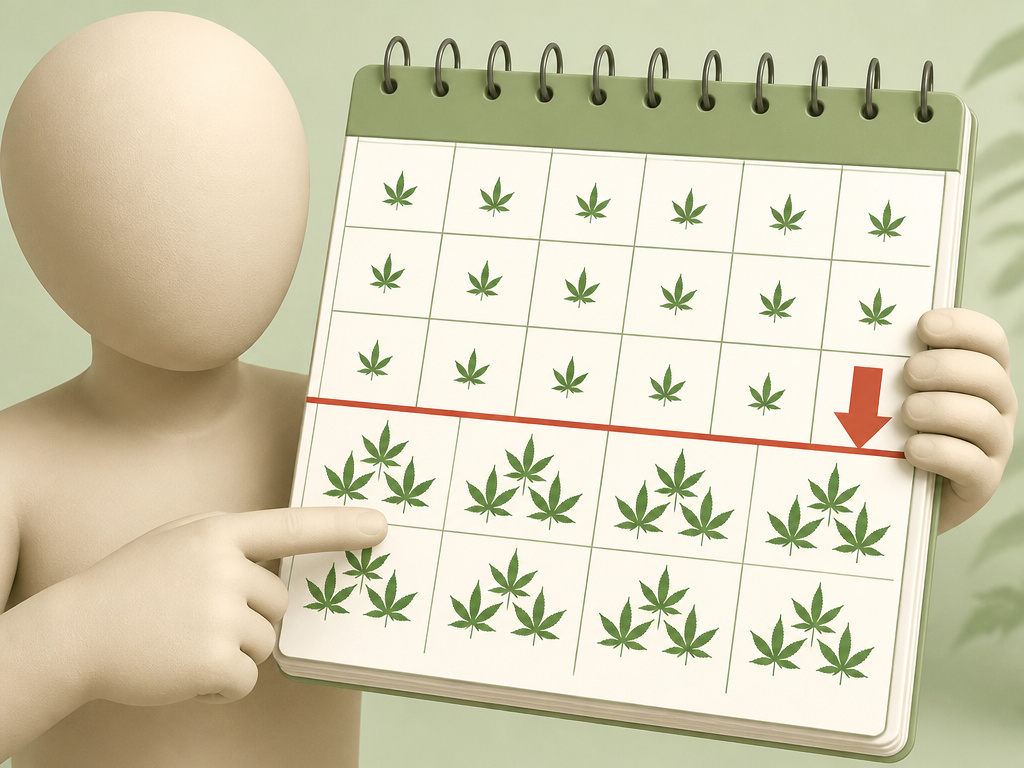
Absolutely. The research points to a threshold, not a linear slide. The sperm studies show a stark difference between moderate (5-9 times/week) and heavy (10+ times/week) use. The heavy users bore the brunt of the negative impact.
This dose-dependency might explain the conflict in testosterone studies. If only very heavy, chronic use pushes testosterone levels outside a normal range, then studies with a mix of moderate users might show no average effect. The association between cannabis use and testosterone levels in human studies is described as inconclusive. It’s not a simple “up or down” switch.
Think of it like alcohol. A drink or two likely has a negligible effect on hormones for most people. Chronic, heavy drinking is a different story. Cannabis might operate on a similar spectrum, where the consequences are tied to crossing a line of frequency and quantity that many occasional users never approach.
Other Factors That Swamp The Signal
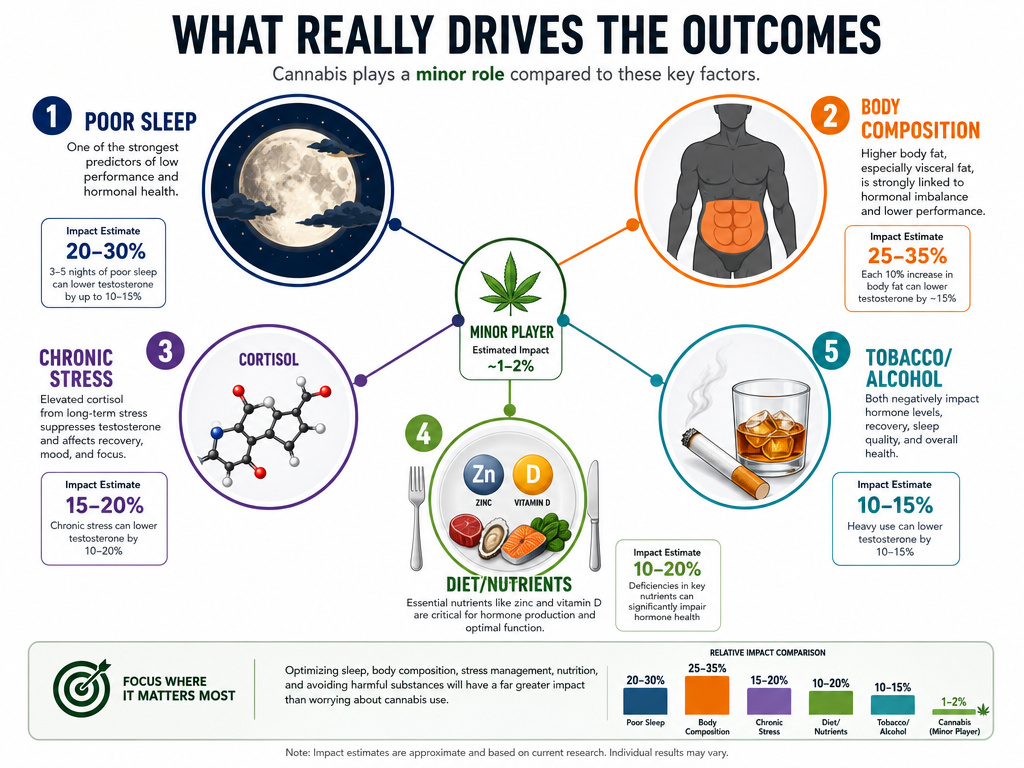
If you’re digging through this trying to find a simple yes/no for your own life, here’s the honest version: for the average guy, cannabis is a minor player in the testosterone theater. The stage is dominated by much bigger actors.
Your body’s testosterone production is far more sensitive to:
- Sleep quality and duration: One night of bad sleep can measurably lower T.
- Body composition: Excess body fat, especially visceral fat, aromatizes testosterone into estrogen.
- Chronic stress: Elevated cortisol directly suppresses the HPG axis.
- Overall diet and nutrient status: Deficiencies in zinc, vitamin D, and magnesium are common culprits in low T.
- Other substances: Smoking tobacco and heavy alcohol consumption have more robust negative associations than cannabis. Even common medications can have a significant impact.
Focusing solely on cannabis while neglecting these foundational pillars is like worrying about a draft in a house with no roof. It misses the point. The broader trend of declining testosterone in modern men is linked to these lifestyle and environmental factors, like pesticide exposure and ubiquitous plastics, not to the occasional joint.
What If You’re Trying to Conceive?
This is the one scenario where the data demands a clear, practical response. The sperm evidence is consistent enough to warrant action.
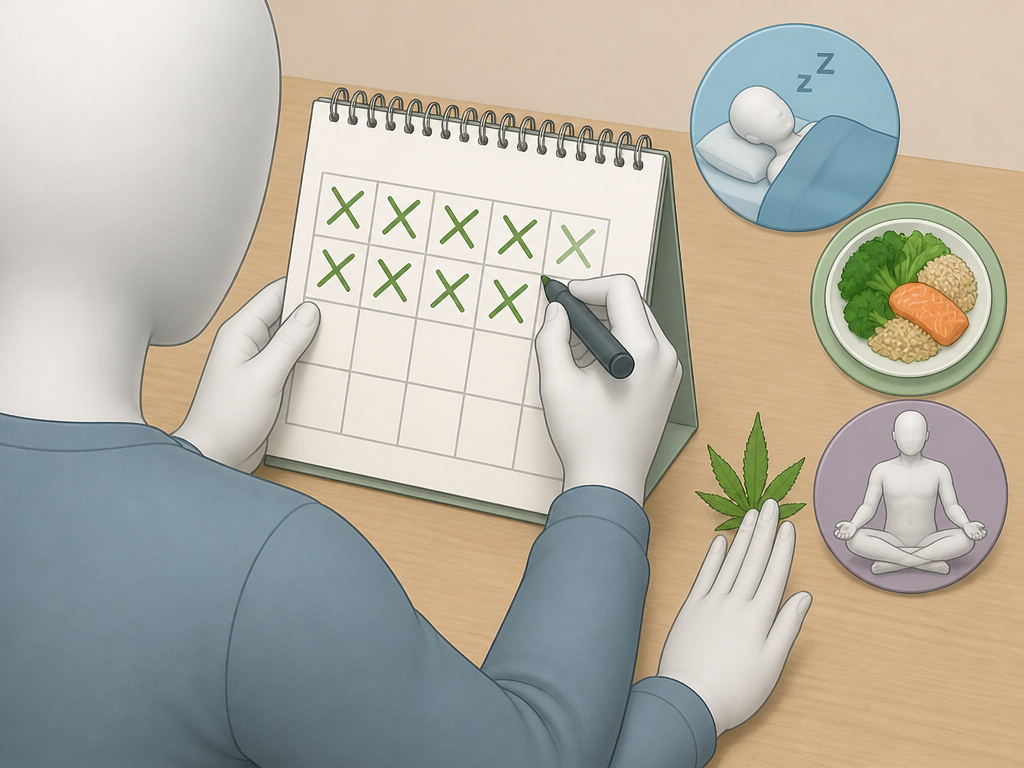
If you and your partner are trying to get pregnant, consider a period of abstinence. Spermatogenesis, the production of new sperm, takes a number of weeks. Given the study that showed sperm count dropping at the 5-6 week mark, a break of several months is a reasonable protocol to eliminate this particular variable. It’s a low-cost, no-risk experiment that addresses the clearest biological signal in the research.
During that time, you can channel energy into the factors that unquestionably support fertility and hormonal health: locking in 7-8 hours of sleep, managing stress, cleaning up your diet, and ensuring you’re not deficient in key nutrients like selenium and folate. These moves have positive effects with zero controversy.
Does Weed Cause Erectile Dysfunction or Hurt Sexual Health?
Research directly linking cannabis to erectile dysfunction in men is not conclusive. Animal studies have shown that cannabinoids can reduce libido and sexual function, but these results have not been reliably replicated in human studies. The more established connection is to sperm health. Studies have found that men who use marijuana more than once a week can have significantly lower sperm concentration and count. Since overall sexual health is complex, changes in sperm parameters from regular use could be a practical concern for fertility, even if a direct link to erectile function remains unclear.
Frequently Asked Questions
Does quitting weed boost testosterone?
There’s no direct study on “boosting” after quitting, because the baseline link is so weak. If your testosterone was being subtly suppressed by very heavy, chronic use, then cessation would likely allow it to return to your personal baseline. However, you’re unlikely to see a dramatic “boost” above your normal levels. The more noticeable recovery might be in sperm parameters over 3-6 months.
How bad is weed for testosterone?
For testosterone specifically, the evidence suggests it’s not very bad, if it’s bad at all for most users. The large, modern analyses don’t show a clinically meaningful effect. It’s far less impactful on T than chronic sleep deprivation, obesity, or very high stress.
Does smoking decrease testosterone?
Smoking tobacco has a more established negative relationship with testosterone and vascular health than smoking cannabis. The combustion byproducts and nicotine are the likely culprits. If you’re concerned about smoking’s effects, the delivery method itself, not just the cannabis, could be a factor. This is an area where vaping nicotine also introduces its own set of concerns.
What drugs mess with testosterone?
Many common medications can lower testosterone, including opioids, corticosteroids, some antidepressants, and certain antifungal or prostate medications. If you’re on prescription drugs and concerned about low T, a review with your doctor is a much higher priority than worrying about cannabis.
The Bottom Line
Here is the honest version. If you’re a heavy, daily user concerned about fertility, the sperm data is your sign to cut back or take a break for several months. If you’re an occasional user worried about your testosterone levels, you are almost certainly focusing on the wrong variable.
The research consensus, as seen in the Nature Reviews Urology cannabinoid signalling review, is that human evidence remains inconclusive. Don’t let dramatic headlines from animal studies or outdated research dictate your concern.
Test your levels if you’re worried. Get a blood panel. If your testosterone is low, look first at your sleep, your stress, your body fat, and your diet. Those are the dials that turn. Cannabis, for most men, is background noise in a much more complex hormonal symphony.
