
Does Smoking Lower Testosterone? The Science Says Both
This post contains affiliate links. As an Amazon Associate, we earn from qualifying purchases.
Smoking does not simply lower testosterone; the relationship is a medical contradiction. Multiple studies, including a 2016 systematic review, report smokers have higher total and free testosterone levels, while other studies, such as Briggs (1973) and Shaarawy and Mahmoud (1982), report significantly lower serum testosterone in smokers. However, other research and the long-term biological damage from smoking create a scenario where this short-term elevation masks a path to hormonal decline, particularly in bioavailable testosterone, fertility, and vascular health.
That apparent boost is the starting point for the confusion. It’s what leads to the dangerous myth that smoking is somehow good for male hormones, which is why many ask: does smoking lower testosterone? The elevation is likely a stress response, the body reacting to a toxin, and it comes with a heavy long-term invoice paid in inflammation, blood vessel damage, and compromised fertility.
What follows is a breakdown of the conflicting evidence, the three biological mechanisms that explain both the spike and the eventual drain, and a concrete recovery timeline for when you quit. This discussion maps a biochemical reality that most summaries gloss over.
Key Takeaways
- Observational studies consistently show smokers have higher total testosterone, but this may be an artifact of increased SHBG, not more usable hormone.
- The long-term damage from smoking, chronic inflammation and vascular harm, undermines the body’s ability to produce and use testosterone effectively over time.
- Sperm health and fertility are significantly impaired by smoking, independent of testosterone levels, with studies showing worse sperm morphology.
- Recovery begins quickly; significant hormonal and vascular improvements are measurable within weeks to months of quitting.
- Quitting is the single most effective intervention for long-term hormonal health, more impactful than any supplement taken while still smoking.
The Short-Term Spike vs. Long-Term Drain
Open any health forum and you’ll find two camps debating the does smoking lower testosterone question: one citing studies that smoking raises testosterone, the other insisting it destroys it. Both are referencing real, published science. The fifth Tromsø study, a large population survey, found smokers had 15% higher total testosterone and 13% higher free testosterone than never-smokers. A 2016 systematic review and meta-analysis of observational studies concluded smoking is associated with higher total testosterone in men. Data showing higher levels in smokers exists, alongside studies showing lower levels.
But here’s where most readers stop when they ask does smoking lower testosterone, and where the misunderstanding solidifies. This measured “total testosterone” is mostly protein-bound and inactive. The fraction that matters, bioavailable testosterone that your cells can actually use, tells a different story. A 2001 case-control study found that while total and free testosterone were higher in smokers, bioavailable testosterone showed no significant difference compared to never-smokers. The increase appears to be in the bound, stored hormone, not the ready-to-use kind.
The part nobody mentions: The short-term elevation in total testosterone is likely a stress response. Nicotine triggers the release of cortisol and adrenaline, which can temporarily stimulate testosterone production. It’s a biochemical alarm, not a sign of health.
Think of it like a warehouse. Smoking might increase the total number of boxes in the warehouse (total testosterone), but it also adds more padlocks (SHBG). The number of boxes you can actually open and use (bioavailable testosterone) stays the same, or may even decrease as the warehouse itself starts to decay from the long-term damage.
| Measurement | What It Means | Typical Finding in Smokers |
|---|---|---|
| Total Testosterone | All testosterone in the blood, both bound and free. | Often higher than in non-smokers. |
| Free Testosterone | The small, unbound fraction. | Can be higher, but may not reflect usable hormone. |
| Bioavailable Testosterone | Testosterone not bound to SHBG, ready for tissues to use. | Studies show no significant difference vs. Non-smokers. |
| SHBG (Sex Hormone Binding Globulin) | Protein that binds testosterone, making it inactive. | Often elevated, which traps the hormone. |
How Smoking Actually Messes With Your Hormones
The conflicting study results make sense when you look under the hood at the mechanisms. Smoking doesn’t have one effect; it has several, and they pull in opposite directions.
First, there’s the SHBG trap. Smoking increases levels of Sex Hormone Binding Globulin. This protein acts like a magnet for testosterone, binding to it and taking it out of circulation. This is a key reason why higher total testosterone doesn’t translate to more usable hormone. You can have a full tank, but a locked gas cap. This process is a direct contributor to the link between inflammation and low testosterone, as the inflammatory response triggered by smoking stimulates SHBG production.
Second, you have direct glandular damage. The toxins in cigarette smoke, particularly cadmium and other heavy metals, are directly toxic to Leydig cells in the testes, the factories where testosterone is made. This damage is cumulative. It’s why some older studies, such as Briggs (1973) and Shaarawy and Mahmoud (1982), show dramatically lower serum testosterone (31-42% lower in smokers), likely reflecting long-term, heavy exposure. This damage also impairs sperm production, which is why studies note worse sperm morphology in smokers independent of hormone levels.
Finally, there’s the vascular and inflammatory assault. Testosterone production requires healthy blood flow to the testes. Smoking damages the endothelium, the lining of blood vessels, restricting this crucial circulation. Smoking also creates a state of chronic inflammation, which suppresses the hypothalamic-pituitary-testicular axis (the hormonal chain of command for testosterone production). This is the same axis disrupted by chronic stress, creating a double-whammy for men under pressure who smoke.
The Real Cost: Fertility and Overall Health
Focusing solely on the testosterone number is a mistake. Even if the hormone panel looked identical, smoking wrecks fertility. A 2014 Taiwan study found that smokers (>10 cigarettes/day) had higher total testosterone. Other research has shown smoking is associated with worse sperm morphology. Misshapen sperm can’t fertilize an egg effectively. This is a direct toxin effect, a line item on smoking’s bill that doesn’t always show up on a hormone test.
Then there’s the broader health ledger. Smoking is a leading cause of erectile dysfunction (ED) precisely because of that vascular damage mentioned earlier. Testosterone is needed for libido, but healthy blood flow is required for performance. Smoking sabotages both. It also massively increases the risk of cardiovascular disease and certain cancers. Framing smoking as a potential testosterone “booster” while ignoring these catastrophic risks is like arguing a car runs faster after you remove the brakes, technically maybe, but practically suicidal.
Where this goes sideways: Assuming no change in testosterone means no harm. The fertility and vascular damage proceed on a separate track, with consequences that are often irreversible.
The hormonal picture also interacts powerfully with other lifestyle factors. For example, how obesity reduces testosterone is through increased inflammation and conversion of testosterone to estrogen in fat tissue. Smoking exacerbates inflammation, potentially accelerating this process. It’s a multiplicative negative, not an isolated one.
What Happens When You Quit? (The Recovery Timeline)
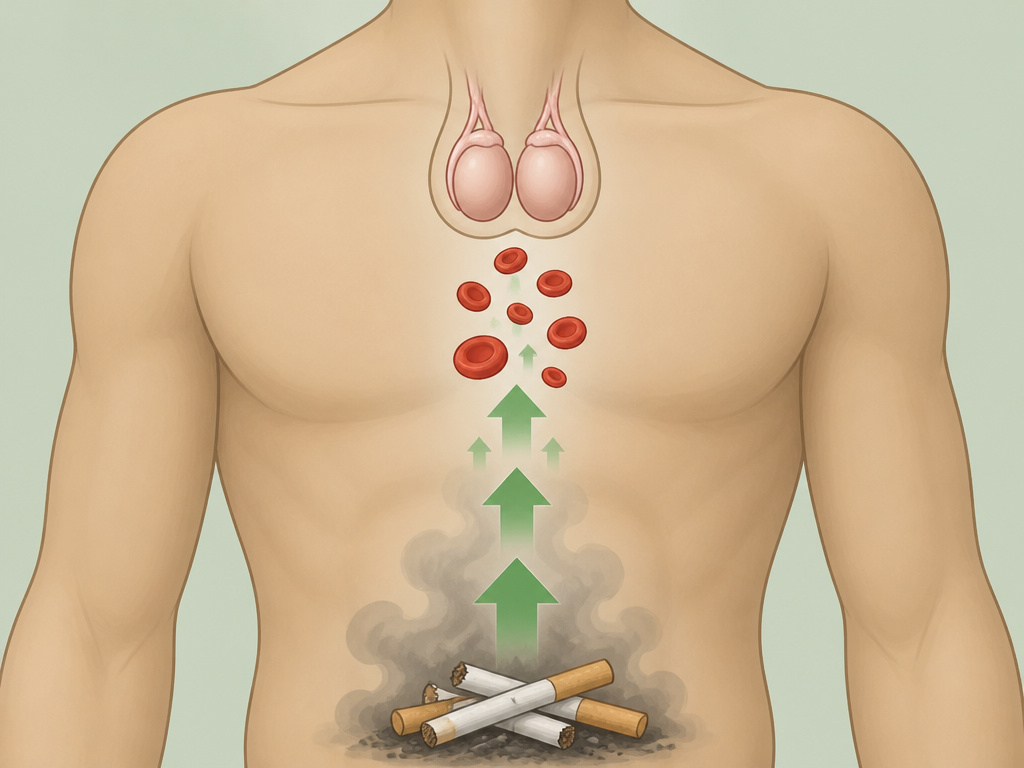
This is the part everyone searching this question actually wants to know: “If I stop, will my testosterone go up?” The answer is a definitive yes, and the timeline is more encouraging than you might think.
The body begins repairing itself almost immediately. Here’s what the recovery journey typically looks like:
- Within 72 hours: Nicotine is fully cleared from your body. Your sense of taste and smell start to improve. This is the hardest hump, but it’s purely chemical withdrawal.
- 2 Weeks to 3 Months: Circulation begins to improve as blood vessel function recovers. This is when many men notice improvements in erectile function. Energy levels often start to rise as oxygen delivery improves. The constant low-grade inflammatory response from smoking starts to diminish.
- 3 to 6 Months: This is a key window for hormonal rebalancing. As inflammation subsides and vascular health improves, the hormonal axis (HPG axis) can function without interference. Studies show measurable improvements in testosterone profiles and sperm quality within this period. The chronic stress load on your system also decreases significantly.
- 1 Year and Beyond: Your risk of heart disease drops dramatically. Lung function continues to improve. The long-term, toxin-induced damage to Leydig cells in the testes can begin to heal, allowing for more robust natural testosterone production. The benefits compound.
The timeline isn’t just about waiting. You can actively support it. This is where layering in positive lifestyle factors, like managing stress, improving sleep, and adopting a nutrient-dense diet, accelerates the process. Quitting smoking removes the major obstacle; these habits rebuild the foundation.
Nicotine Source Matters: Cigarettes, Vaping, and Pouches
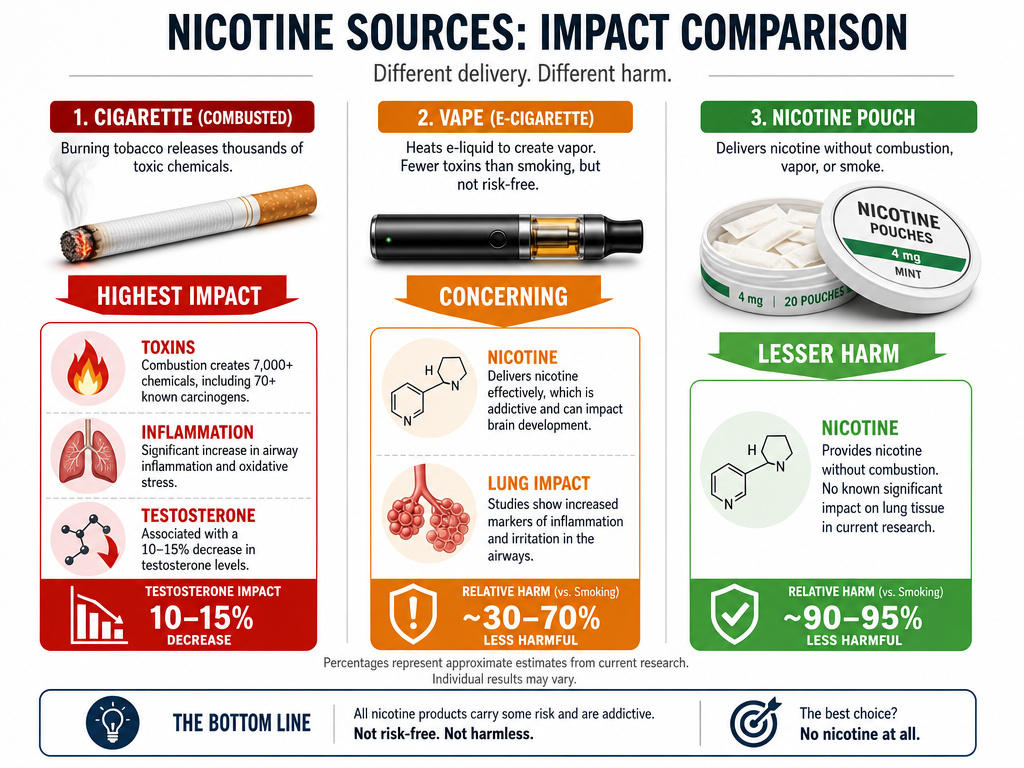
A common follow-up question is whether the damage comes from the nicotine or the smoke. This is a critical distinction most overviews miss.
- Cigarettes: The worst offender. You get the triple threat: nicotine, thousands of combustion toxins (tar, carbon monoxide, heavy metals), and the physical damage of smoke inhalation. The impact on inflammation, SHBG, and direct testicular toxicity is most severe.
- Vaping/E-Cigarettes: Removes the combustion toxins, but the effects of vaping on testosterone are still concerning. The nicotine delivery remains, with its impact on cortisol and SHBG. Also, the long-term safety of inhaling vaporized flavorants and carriers is unknown, and some early studies suggest they may provoke their own inflammatory response in lung tissue.
- Nicotine Pouches & Gum: These eliminate the inhalation pathway entirely. The primary effect is from the nicotine itself. This means you still get the potential for increased SHBG and the stress-response hormonal disruption, but you avoid the lung and vascular damage from smoke and vapor. It’s a lesser harm, but not a harmless option for hormonal health.
The choice between these focuses on risk reduction on a path to quitting. Switching from cigarettes to nicotine pouches can be a strategic step to remove the combustion toxins while you tackle the nicotine addiction itself.
A Practical Plan: Quitting and Supporting Recovery
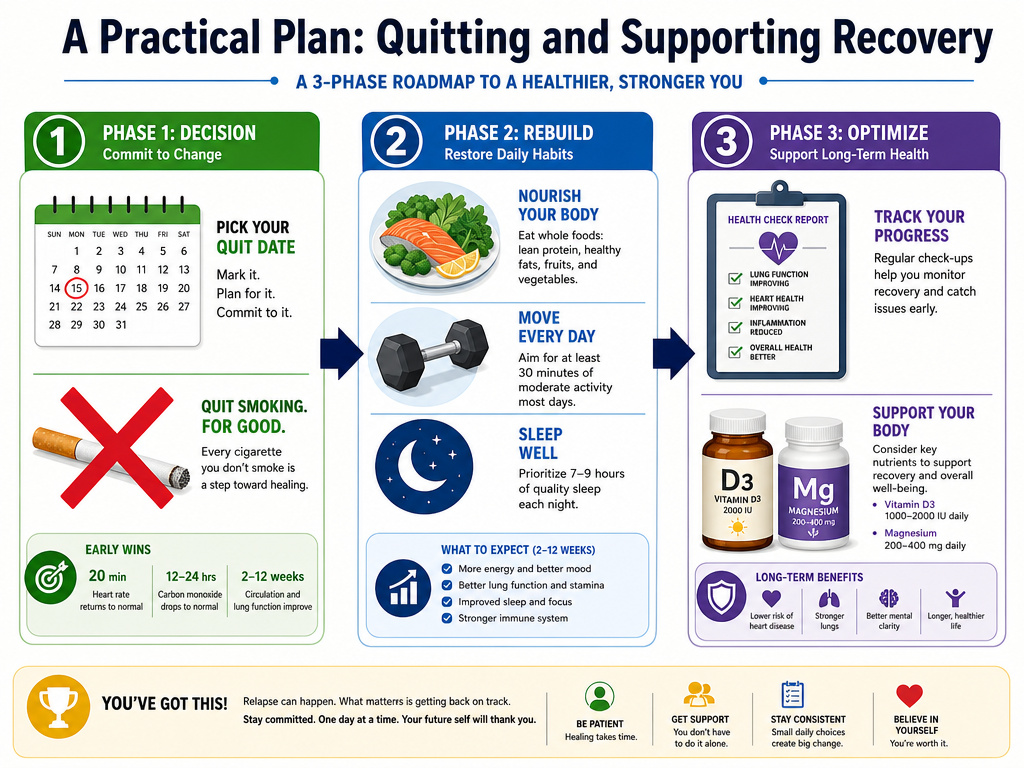
Knowing the science is one thing. Doing something about it is another. If you’re smoking and concerned about your hormones, here is a concrete, phased approach.
Phase 1: The Decision & First Step.
Choose your quit date. Tell someone. Get rid of all smoking paraphernalia. Decide on your nicotine replacement strategy (patch, gum, pouches) if needed, and have it ready. Understand that the first week is about beating chemical addiction, willpower is a finite resource, so set up your environment to not need it.
Phase 2: The Hormonal Rebuild (Weeks 2-12).
This is where you shift from just not smoking to actively recovering. Your body is now a cleaner system. Feed it the right materials.
- Anti-Inflammatory Diet: Double down on whole foods. Prioritize omega-3s (fatty fish), colorful vegetables (antioxidants), and lean protein. Severely limit processed carbs and sugars that fuel inflammation.
- Strategic Exercise: Don’t go all-out immediately. Start with daily walking and resistance training 2-3 times a week. Building muscle directly improves insulin sensitivity and creates a better environment for testosterone.
- Sleep Hygiene: This is essential. Testosterone is primarily produced during deep sleep. Aim for 7-8 hours of quality, uninterrupted sleep. This is more powerful for recovery than any supplement.
Phase 3: Long-Term Optimization (3+ Months).
Now you’re smoke-free. The habits from Phase 2 should be routines. This is the time to consider fine-tuning.
- Get Bloodwork: Check your total testosterone, free testosterone, SHBG, and a basic metabolic panel. This gives you a true baseline of your post-smoking hormonal landscape. It can reveal whether issues like low vitamin D or high estradiol are now your primary hurdles.
- Address Deficiencies: Based on bloodwork, common supportive supplements include Vitamin D3, Magnesium Glycinate, and Zinc (only if testing shows a deficiency). A basic stack like this supports hundreds of enzymatic processes, including hormone production.
- Manage Stress: Incorporate daily stress-management techniques. This could be meditation, breathwork, or time in nature. Lowering cortisol is one of the most direct ways to support healthy testosterone levels.
Natural ways to boost testosterone after quitting
Research on smoking’s direct effect is mixed, but quitting removes a major variable from your health equation. Focus on the fundamentals you can control. Prioritize consistent, quality sleep and manage chronic stress, as both are known to influence hormone regulation. Incorporate regular resistance training, like weightlifting, into your weekly routine. Support your body with a balanced diet rich in whole foods, ensuring adequate intake of essential nutrients. Maintaining a healthy body weight is also a key factor. These lifestyle pillars create the optimal internal environment for your body to find its natural hormonal balance after you stop smoking.
Testosterone Replacement Therapy (TRT) as an option
Given the conflicting data on whether smoking raises or lowers testosterone, a measured approach is crucial. TRT is a medical treatment for clinically diagnosed low testosterone, not a lifestyle supplement. If you have persistent symptoms like low energy, reduced libido, or mood changes after quitting smoking, consult a doctor. They will order specific blood tests to measure your levels. A diagnosis requires consistently low readings alongside symptoms. TRT is a serious, long-term commitment with potential side effects and requires ongoing medical supervision. Do not self-prescribe based on general claims about smoking’s effects; proper evaluation is essential.
Frequently Asked Questions
Will quitting smoking boost my testosterone?
Yes, but the boost may not be a simple spike on a chart. Quitting removes the inflammatory and vascular damage that suppresses your body’s natural production and utilization of testosterone. For many men, this leads to measurable increases in bioavailable testosterone, better energy, and improved libido within several months. The most significant “boost” is often to how you feel and function, not just a lab number.
Does vaping lower testosterone?
Vaping is less harmful than smoking cigarettes but is not harmless for hormones. The nicotine in e-cigarettes still increases SHBG and cortisol, which can disrupt the balance of bioavailable testosterone. The long-term effects of inhaled flavorants and carriers on inflammation are still unknown, posing a potential risk. For hormonal health, the goal should be nicotine cessation, not substitution.
How bad is smoking for testosterone?
The “badness” is multifaceted. In the short term, it can artificially elevate total testosterone while locking it away, making it unusable. In the long term, it causes inflammation, vascular damage, and direct toxicity to testicular cells, all of which undermine healthy testosterone production and fertility. It’s uniquely damaging because it creates the illusion of a benefit while setting the stage for decline.
Is it okay to smoke once a week?
From a purely hormonal perspective, occasional smoking is less damaging than daily use. However, the negative effects on blood vessel function and inflammation can occur even with intermittent exposure. Also, “once a week” easily becomes a slippery slope back to regular use for many people. It also does nothing to break the psychological addiction to nicotine. For optimal hormonal and overall health, the target is zero.
The Bottom Line
The research on smoking and testosterone maps a biological trade-off. Yes, several studies show a higher number for total testosterone in smokers. No, that does not mean smoking is good for your male hormones. That higher number likely represents a stress response and an increase in bound, inactive hormone, while the real-world outcomes, fertility, vascular health, energy, trend negatively.
This means the common search for a simple “yes it lowers” or “no it raises” answer is asking the wrong question. The right question is: “Does smoking support or undermine my long-term hormonal and reproductive health?” Every credible mechanism and long-term outcome study points squarely to “undermine.”
Quitting is the most powerful single intervention you can make. It’s more impactful than any testosterone booster, any supplement, any workout program you could start while still smoking. It removes the fundamental obstacle. The recovery timeline is real and encouraging, but it starts with putting out the last cigarette. After that, the work of rebuilding with smart lifestyle factors, for your hormones and your whole system, begins.
