
Does Testosterone Help You Lose Belly Fat? The RCT Data
This post contains affiliate links. As an Amazon Associate, we earn from qualifying purchases.
Testosterone replacement therapy (TRT) can help you lose belly fat, but the most pronounced effects are documented in a specific context: obese men with low-to-normal testosterone who are also on a hypocaloric diet. A 56-week randomised controlled trial found TRT reduced total fat mass by 2.9 kg and visceral (belly) fat area by 2678 mm² more than a placebo, while also protecting lean mass.
That finding from the 2016 RCT (PMC5054608) is the anchor point. It tells us the “does it work?” question has a conditional yes, not a universal one, and a common specific query is does testosterone help you lose belly fat. The effect size, the required calorie deficit, and the specific fat depot that shrinks, these are the details that separate a clinical outcome from a marketing claim.
What follows is a breakdown of that trial and others, the mechanism behind the fat loss, how to track changes beyond the scale, and the realistic timeline for seeing a difference in your waistline.
Key Takeaways
- The strongest evidence for testosterone reducing belly fat comes from a 56-week RCT in obese men on a hypocaloric diet, showing a 2.9 kg greater fat loss and a 2678 mm² greater visceral fat reduction versus placebo.
- Testosterone’s benefit is not just fat loss; it’s lean mass preservation. In the same trial, men on TRT regained 3.4 kg of lean mass lost during dieting, shifting weight loss to almost exclusively fat.
- A simple waist measurement can mislead. The A Body Shape Index (ABSI) correlated with fat mass loss in the trial, not lean mass or BMI, making it a better tracking tool for body composition changes.
- The effect on visceral fat may depend on the population. While the 2016 RCT in obese men found a significant reduction, a 2007 study in HIV+ men on antiretroviral therapy found no significant difference in visceral fat change between TRT and placebo.
- Testosterone is not a standalone fat-loss drug. The documented benefits occurred during a 10-week very low energy diet (VLED) followed by weight maintenance. Without a calorie deficit, the fat-loss signal weakens.
The 2016 RCT: The Core Evidence
Forget the vague promises. The clearest picture comes from a single study published in BMC Medicine. This PMC randomised controlled trial on testosterone was a 56-week, double-blind, placebo-controlled test on 100 obese men (BMI ≥30) with testosterone levels at or below 12 nmol/L.
The protocol was strict: a 10-week very low energy diet (VLED) followed by 46 weeks of structured weight maintenance. Men received intramuscular testosterone undecanoate (1000 mg at baseline, week 6, and every 12 weeks after) or a placebo.
The results weren’t immediate. After the initial 10-week diet phase, both groups lost similar weight. The divergence happened during the maintenance phase. The placebo group began to creep back up. The testosterone group held the line.
By week 56, the body composition difference was stark. Compared to placebo, the testosterone group had:
- Lost 2.9 kg more fat mass.
- Lost 2.8% more body fat percentage.
- Reduced visceral fat area by 2678 mm² more (measured by CT scan).
- Regained 3.4 kg more lean mass.
The trial authors concluded that testosterone treatment “shifts weight loss to almost exclusive fat mass loss.” The placebo group lost both fat and muscle on the diet; the testosterone group lost fat and preserved, even regained, muscle.
. It’s not just “testosterone helps with weight,” or the simple does testosterone help you lose belly fat question. It’s that, in a controlled calorie deficit, testosterone changes the quality of weight loss. You keep the metabolically active tissue (muscle) and shed the harmful tissue (visceral fat). That distinction is everything for long-term metabolism and why the simple scale weight is a liar.
How Testosterone Targets Belly Fat: The Mechanism
So how does a hormone tell your body to pull fat from your midsection? It’s not magic; it’s cellular mechanics. The relationship between low testosterone and belly fat is a two-way street. Belly fat, especially visceral fat, contains high levels of the enzyme aromatase, which converts testosterone into estrogen. More belly fat means more testosterone conversion, which can further lower your T levels, a vicious cycle.
Testosterone therapy interrupts this. Early PubMed research on abdominal adipose tissue pointed to a direct effect. This pilot study found that after just 6 weeks of testosterone, abdominal fat cells showed decreased activity of lipoprotein lipase (an enzyme that stores fat) and increased lipolytic responsiveness (the ability to break down fat). Crucially, these changes were confined to abdominal tissue, not fat in other areas like the thighs.
Think of your fat cells as having different “settings” in different body parts, which is central to the does testosterone help you lose belly fat mechanism. Testosterone seems to tweak the settings in abdominal fat to be less eager to store and more ready to release. This is why tracking just weight loss is insufficient. You want to know if you’re losing the right kind of fat.
Belly Fat vs. Subcutaneous Fat: Does TRT Target Both?
This is where the evidence gets nuanced. Not all belly fat is created equal. Subcutaneous fat is the pinchable layer under your skin. Visceral fat is the deep, hazardous fat that wraps around your organs. The 2016 RCT showed a clear win for TRT against visceral fat.
But another study tells a different story. A 2007 trial in HIV+ men with abdominal obesity on stable antiretroviral therapy found that testosterone treatment reduced subcutaneous abdominal fat compared to placebo. However, it found no significant difference in visceral fat change (0.3% vs 3.1% placebo).
| Fat Depot | 2016 RCT (General Obese Men) | 2007 RCT (HIV+ Men) |
|---|---|---|
| Visceral Fat | Significant reduction (-2678 mm² vs. Placebo) | No significant difference (0.3% vs. 3.1% placebo) |
| Subcutaneous Fat | Not separately reported | Significant reduction (vs. Placebo) |
| Takeaway | TRT effective against deep visceral fat. | TRT effective against pinchable subcutaneous fat, but not visceral in this specific population. |
Why the discrepancy? The population matters. The HIV+ men were on stable antiretroviral therapy, which itself can alter fat distribution (a condition called lipodystrophy). Their metabolic context was different. This is a critical detail most general articles miss: the promise of visceral fat loss from TRT is strong, but not absolute for every single person. Your underlying health plays a role.
How to Measure the Change (It’s Not Just the Scale)
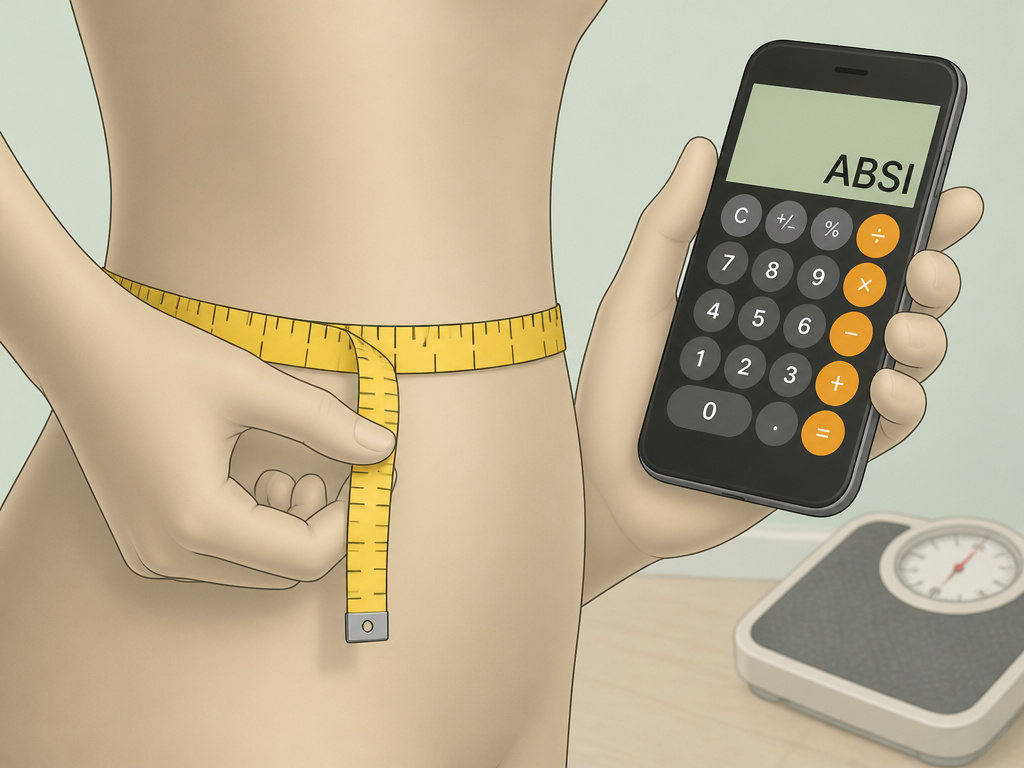
If you’re considering this path, you need better metrics. Body weight and BMI are famously poor indicators of body composition change. You could lose fat, gain muscle, and see no scale movement, a resounding success that looks like a failure.
The 2016 RCT used DXA scans and CT imaging. You likely don’t have that at home. But a 2019 secondary analysis of that same trial, published in the International Journal of Obesity, pointed to a simpler, more insightful tool: the A Body Shape Index (ABSI).
This Nature journal article on ABSI and testosterone found that ABSI, a calculation using waist circumference, height, and weight, decreased significantly in the testosterone group but not the placebo group. More importantly, changes in ABSI correlated with changes in fat mass, not with lean mass or BMI.
Where this goes sideways: Relying solely on waist circumference. ABSI beat it because it accounts for your overall body size. A shrinking waist on a shrinking frame might just mean you’re getting smaller overall. A shrinking ABSI suggests you’re specifically losing fat.
Here’s a practical tracking table:
| Metric | What It Tells You | The Pitfall |
|---|---|---|
| Scale Weight | Total mass change. | Cannot differentiate between fat loss, muscle loss, or water fluctuation. |
| Waist Circumference | Abdominal size change. | Doesn’t account for overall body size changes; can be skewed by posture/bloating. |
| Body Fat % (Smart Scale) | Estimated fat vs. Lean ratio. | Home devices are highly variable; useful for trends over months, not daily readings. |
| A Body Shape Index (ABSI) | Body shape relative to height/weight. | The 2019 study showed it best reflected the fat-loss-specific effects of TRT. |
| Strength & Belt Notches | Functional, real-world progress. | Subjective, but hitting new reps on compound lifts or tightening your belt are tangible wins. |
I learned this the hard way. I once tracked a supplement protocol with just weight and waist. The numbers barely budged for weeks, and I got discouraged. When I finally got a DXA scan, it showed I’d swapped 4 pounds of fat for 4 pounds of muscle. The mirror and my jeans had hinted at it, but I was too focused on the wrong numbers. Now, I use a combination: bi-weekly waist measurements, monthly progress photos, and the trend line from a smart scale, ignoring the daily noise.
The Critical Role of Diet and Exercise
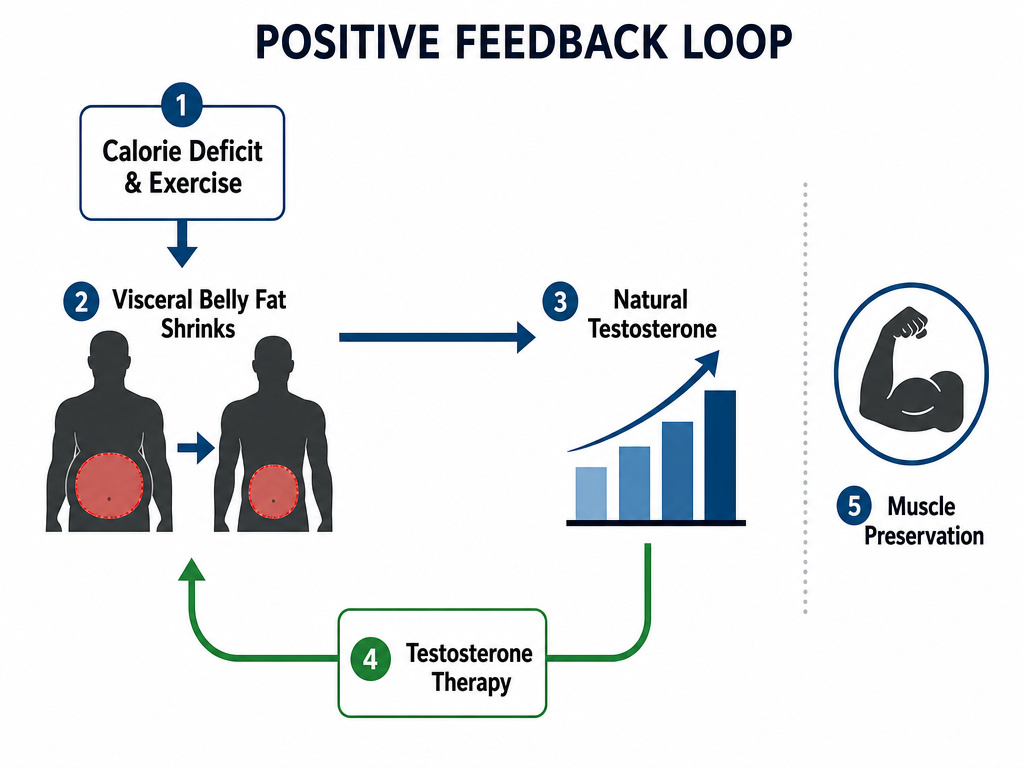
The headline of the 2016 RCT is often “Testosterone Reduces Belly Fat.” The subhead, which is the real story, is “…in obese men on a hypocaloric diet.” The testosterone did not work in a vacuum. It amplified the effects of a sustained calorie deficit.
This aligns with the broader connection between weight loss and testosterone. Losing fat, especially visceral fat, can itself boost natural testosterone production. It’s a positive feedback loop: TRT can help you lose fat more effectively, and losing fat can help improve your hormonal environment.
The regimen in the study was intense, a 10-week very low energy diet (VLED). That’s not sustainable or necessary for everyone. The principle, however, is: you must be in a calorie deficit. Testosterone is a tool that makes a well-executed diet more effective, primarily by preserving the muscle that dieting often sacrifices, not a license to eat poorly.
This muscle preservation is key for long-term metabolic health. Muscle is metabolically expensive tissue. The more you have, the higher your resting metabolic rate. By protecting lean mass, TRT helps prevent the metabolic slowdown that dooms many dieters to regaining weight.
Realistic Timeline: When Can You Expect to See Changes?
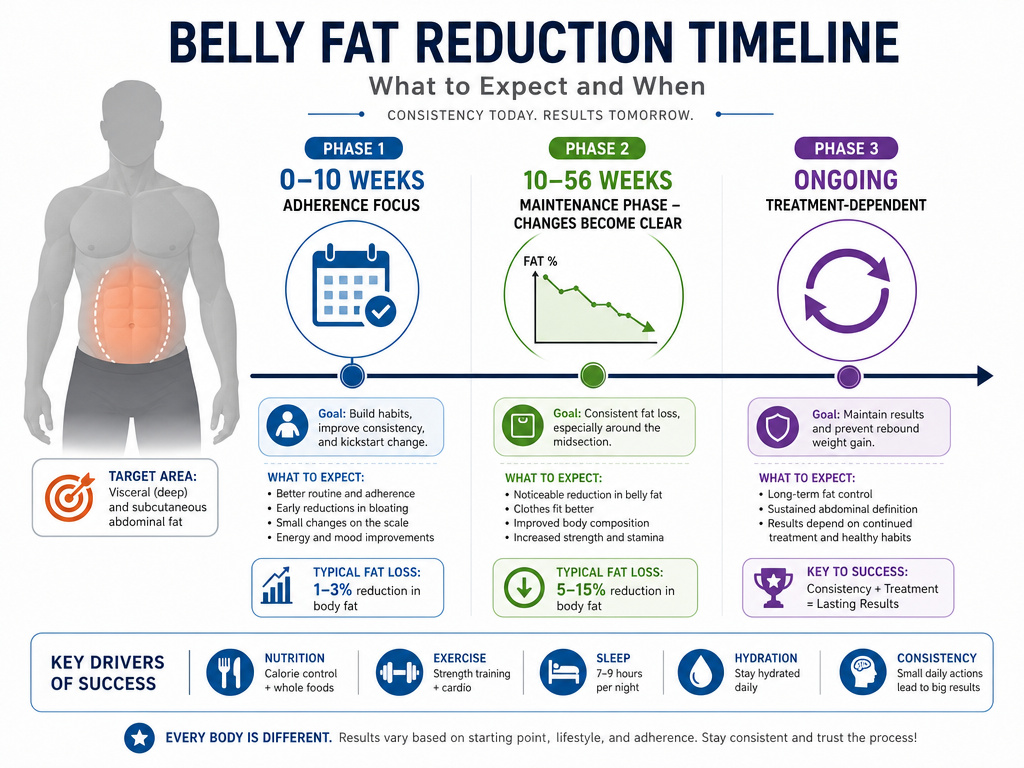
Clinical studies measure in weeks and months, not days. Here’s what the evidence suggests:
- 0-10 Weeks: In the 2016 RCT, body composition differences between groups were not significant during the initial rapid weight-loss phase. Your focus here is adherence to the diet.
- 10-56 Weeks (The Maintenance Phase): This is where the groups diverged. The fat-loss and lean-mass benefits of TRT became statistically clear over this long maintenance period. Don’t expect dramatic visual changes in the first month.
- Ongoing: The benefits appear to be treatment-dependent. A follow-up study noted that the body composition advantages were not sustained after cessation of testosterone treatment. This isn’t a “fix it and forget it” solution; it’s a therapy.
Managing expectations is part of the process. If you start TRT expecting a shredded abdomen in 30 days, you’ll be disappointed. The process is measured in belt notches over seasons, not in abs over weeks.
Potential Downsides and Considerations
Testosterone replacement therapy is a serious medical intervention, not a casual supplement. It requires a diagnosis of hypogonadism (clinically low testosterone) from a physician, typically confirmed by two morning blood tests.
Potential side effects can include:
- Increased red blood cell count (polycythemia), requiring periodic blood donation.
- Acne or oily skin.
- Acceleration of pre-existing prostate issues (hence the need for baseline and ongoing monitoring).
- Testicular shrinkage and reduced fertility.
- A potential increase in cardiovascular risk factors in certain individuals, though the data is contested.
Furthermore, the impact of obesity on hormone levels is profound. For some men with borderline low T, losing a significant amount of weight through diet and exercise alone may resolve the issue, making TRT unnecessary. It’s always the first-line intervention.
This is the standard of care. Any reputable clinic will discuss these points and insist on regular monitoring bloodwork. The “wellness clinics” that prescribe based on a single questionnaire are skipping the safety protocol.
Frequently Asked Questions
Does testosterone flatten your stomach?
It can contribute to a flatter stomach, but primarily by reducing visceral fat and preserving lean muscle mass during a calorie deficit. It is not a spot-reduction treatment. The flattening effect is a result of improved overall body composition, not a direct targeting of the abdominal area.
Does testosterone speed up fat loss?
The evidence suggests it doesn’t necessarily speed up the rate of total weight loss, but it changes the composition of that loss. As the 2016 RCT showed, men on TRT lost more fat and less muscle than those on placebo losing the same amount of weight. This makes the fat loss more efficient and metabolically beneficial.
Why do I feel so good on testosterone?
Increased energy, improved mood, and enhanced motivation are commonly reported subjective benefits. This psychological boost can be a powerful indirect tool for fat loss. Feeling better often translates to more consistent exercise, better dietary choices, and reduced stress, all of which support losing belly fat. It’s a compounding effect.
What is the downside to taking testosterone?
The primary downsides are the medicalization of your hormone levels (requiring lifelong monitoring), potential side effects (like elevated hematocrit), and cost/insurance hurdles. It also does not replace foundational health habits. The most common mistake is viewing TRT as a substitute for diet and exercise, rather than an adjunct to them.
Is TRT the same as steroid abuse?
No. TRT is a medically supervised treatment aimed at restoring testosterone levels to a normal, healthy physiological range. Anabolic steroid abuse typically involves supraphysiological (far above normal) doses of androgens, often in combination with other compounds, for the sole purpose of enhancing muscle growth and performance, with a much higher risk profile.
The Bottom Line
The data from the 2016 RCT is compelling: for obese men with low-to-normal testosterone, adding TRT to a hypocaloric diet leads to greater loss of belly fat and better preservation of muscle than dieting alone. The mean adjusted difference was 2.9 kg of fat mass and 2678 mm² of visceral fat.
But that “adjusted difference” is the key. It’s the gap between the TRT group and the placebo group, both of whom were dieting. The takeaway is that testosterone optimizes the results you get from the hard work of maintaining a calorie deficit, not that it melts fat on its own.
If your testosterone is clinically low, addressing it can remove a major barrier to improving your body composition. It can help break the cycle where belly fat and low testosterone reinforce each other. The goal is a healthier metabolic profile where you lose the dangerous visceral fat and keep the metabolically protective muscle, not just a smaller waist.
Start with a full set of blood tests and a talk with an endocrinologist or a trusted men’s health clinic. Understand that this is a long-term therapy, not a short-term fix. And pair it with the one intervention that the evidence absolutely requires: a sustained, managed approach to nutrition. Without that, even the most perfectly dosed testosterone won’t deliver the belly fat loss you’re looking for.
