
How Losing Weight Increases Testosterone?
This post contains affiliate links. As an Amazon Associate, we earn from qualifying purchases.
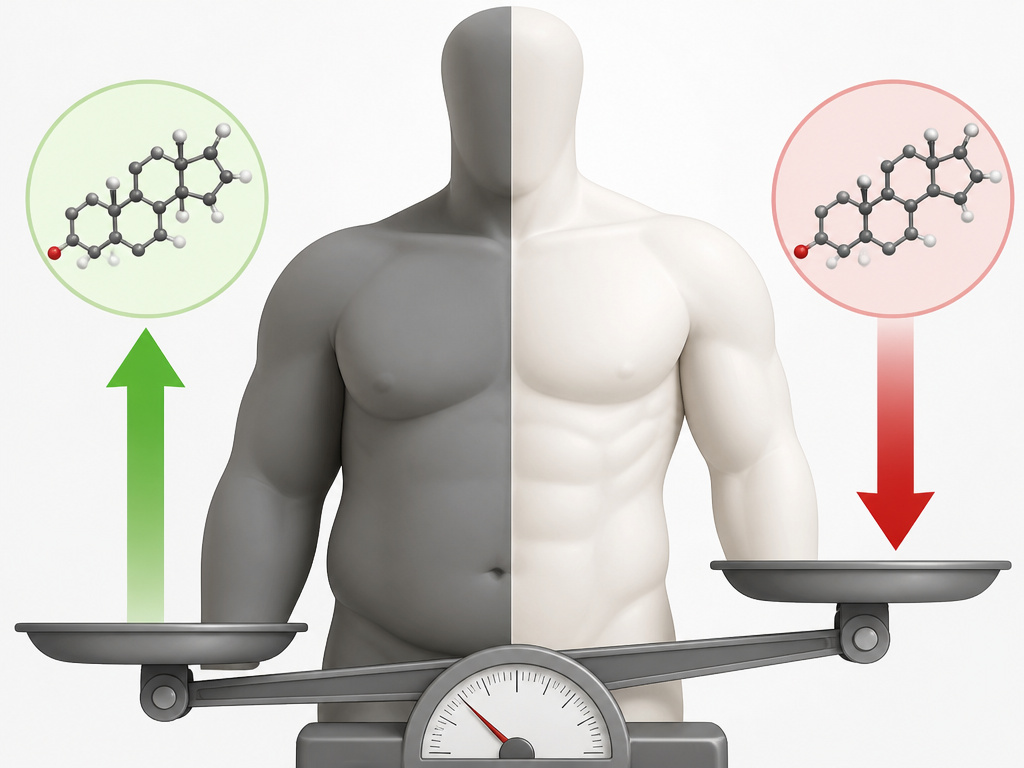
Losing weight increases testosterone by reversing the hormonal suppression caused by excess body fat. The primary mechanisms are reducing the activity of the aromatase enzyme (which converts testosterone into estrogen), improving insulin sensitivity, and raising levels of sex hormone-binding globulin (SHBG), which regulates active testosterone in the blood. For obese men, studies show a consistent, measurable rise in total testosterone, with larger gains from surgical weight loss than from diet alone.
The size of that increase is documented in specific numbers from clinical studies and meta-analyses, showing how losing weight increases testosterone. A Very Low-Calorie Diet protocol of 800 kcal/day for 12 weeks, for example, increased total testosterone from 6.97 nmol/l to 13.21 nmol/l. Bariatric surgery can produce even larger gains.
What follows is a breakdown of the three core biological pathways, the hard data on how much testosterone you can realistically expect to gain from different methods, and the critical caveats, like why this works for overweight men but can backfire for lean ones, and why a higher lab number doesn’t always translate to feeling better.
Key Takeaways
- The aromatase enzyme in fat tissue constantly converts testosterone into estrogen; less fat means less conversion and more available testosterone.
- Insulin resistance, common in obesity, directly suppresses testosterone production in the testes; improving insulin sensitivity through weight loss removes this blockade.
- Weight loss significantly increases sex hormone-binding globulin (SHBG), a carrier protein that regulates how much testosterone is active in your bloodstream.
- Bariatric surgery tends to produce larger testosterone increases than diet alone, but both are effective for men who start in an obese or overweight range.
- For lean, non-obese men, a 2021 systematic review found that 2 of 3 studies on calorie restriction reported significant decreases in total testosterone, while studies on obese/overweight men consistently report increases.
The Biological Link Between Fat and Testosterone
Excess body fat is an active endocrine organ that directly disrupts your hormonal balance through three well-understood pathways. Think of it like a factory that’s producing the wrong product, sending faulty signals, and gumming up the shipping department for the right one.
First, fat cells contain high levels of an enzyme called aromatase. This enzyme’s job is to convert testosterone into estrogen. The more fat you have, the more aromatase activity, and the more your testosterone gets transformed into estrogen. It’s a direct siphon. This is a primary reason why obesity lowers testosterone.
Second, obesity is tightly linked to insulin resistance. When your cells stop responding properly to insulin, your pancreas pumps out more of it to compensate. High insulin levels are a powerful direct inhibitor of testosterone production in the Leydig cells of the testes. They also lower SHBG production in the liver. Losing weight improves insulin sensitivity, which lifts this suppression. You can see how this creates a two-way street in our article on how testosterone affects metabolism.
Third, weight loss raises sex hormone-binding globulin (SHBG). SHBG is a carrier protein that binds to sex hormones like testosterone and estrogen, regulating their availability. Low SHBG, common in obesity, means more testosterone is free and rapidly cleared. Higher SHBG, achieved through weight loss, creates a larger, more stable reservoir of bound testosterone in circulation.
This hormonal disruption isn’t minor. In obese men, the combined effect of high aromatase, high insulin, and low SHBG can suppress testosterone production into the clinically hypogonadal range, creating a cycle where low T makes it harder to lose fat, which keeps T low.
How Much Can Testosterone Actually Increase?
The numbers matter. Vague promises of “boosting” hormones are useless. The research gives us concrete ranges, and they differ dramatically based on your starting point and the method you use.
For obese men, the evidence is strong and consistent. A key meta-analysis on obese men quantified the average gains. It found that weight loss through a Low-Calorie Diet (LCD) increased total testosterone by a Standardized Mean Difference (SMD) of 2.5 nmol/l (95% CI: 1.9-3.1). More intensive interventions like Bariatric Surgery (BS) produced larger gains, with an SMD of 7.2 nmol/l (95% CI: 6.0-8.4).
To put that in perspective, The increases in total testosterone from weight loss are substantial relative to baseline levels, clearly demonstrating how losing weight increases testosterone. An SMD of 7.2 represents a substantial shift within that range. This data is why many experts view significant weight loss as a first-line intervention for obesity-related low testosterone.
| Weight Loss Method | Average Increase in Total Testosterone (SMD) | Best For | Key Consideration |
|---|---|---|---|
| Low-Calorie Diet (LCD) | ~2.5 nmol/l | Men with moderate obesity seeking a non-surgical approach. | Requires sustained lifestyle change; gains are significant but typically smaller than surgery. |
| Bariatric Surgery (BS) | ~7.2 nmol/l | Men with severe obesity (BMI ≥40 or ≥35 with comorbidities). | Produces the largest hormonal shift; a major medical procedure with lifelong implications. |
| Combined Interventions | ~4.8 nmol/l (SMD) | Reflecting the average gain across all studied weight loss methods. | Highlights that any effective weight loss strategy can yield a meaningful testosterone increase. |
These figures come from population-level data. Your individual result will depend on your starting testosterone, the amount of weight you lose, your age, and your genetics. But they prove the effect is real, measurable, and sometimes dramatic.
Diet vs. Surgery: A Look at the Specific Protocols
The “how” determines the “how much.” Not all weight loss is created equal in the eyes of your endocrine system. The speed, magnitude, and method trigger different hormonal responses.
One studied dietary protocol is the Very Low-Calorie Diet (VLED), defined as 800 kcal/day. One landmark study followed this protocol for 12 weeks. The results were striking: total testosterone levels nearly doubled, rising from an average of 6.97 nmol/l to 13.21 nmol/l. SHBG also more than doubled. This study on a VLED protocol showed a sharp increase in total testosterone and SHBG.
Where this goes sideways: Jumping into an 800-calorie diet without medical supervision. This is a drastic intervention meant for specific clinical scenarios, not a self-prescribed hack. It can lead to nutrient deficiencies, muscle loss, and metabolic adaptation if done incorrectly.
Surgical weight loss, like gastric bypass, operates on a different scale and timeline. Research shows hormonal changes begin almost immediately. One study noted significant increases in both SHBG and total testosterone as early as three weeks post-surgery, with levels remaining elevated at the one-year follow-up. This rapid shift is documented in this study, which noted significant increases in SHBG and total testosterone as early as three weeks post-surgery.
The takeaway is that the degree of testosterone improvement is often proportional to the degree and durability of weight loss and metabolic repair. Weight loss from diet can yield a solid improvement in testosterone, illustrating the principle of how losing weight increases testosterone. Surgical weight loss typically yields a larger testosterone increase than diet alone.
Critical Caveats and Who Might Not Benefit
This isn’t a universal law of endocrinology. The rule “losing weight increases testosterone” has a crucial, often-overlooked condition: it applies to men who are overweight or obese. If you’re already lean, the equation flips.
A 2021 systematic review analyzed studies on calorie restriction in normal-weight men and found 2 of 3 studies reported significant decreases in total testosterone, contrasting with the consistent increases reported for obese/overweight men. Your body perceives a major calorie deficit as a stressor and a threat to resources. This is why a calorie deficit lowers testosterone for athletes or lean individuals.
Another critical caveat comes from a randomized controlled trial. Researchers found that while a 21 kg weight loss via VLED significantly increased serum testosterone, it resulted in no significant changes in questionnaire scores on sexual function. The lab numbers improved, but the men didn’t report feeling better in that specific domain. Hormones are one piece of a complex puzzle that includes psychological health, relationship dynamics, and blood flow.
Finally, age plays a role. That same meta-analysis that provided the SMD numbers also performed a nomogram analysis. It found that for a given amount of weight loss, younger men (≤40 years) gained more free testosterone but less total testosterone compared to older men (>40 years). The body’s partitioning of the hormonal benefit changes across the lifespan.
The Vicious Cycle and How to Break It

Understanding the link reveals a frustrating loop: low testosterone and obesity reinforce each other. Low T can reduce muscle mass, lower energy expenditure, and increase fatigue, making it harder to exercise and easier to gain fat, particularly visceral belly fat. This weight gain further suppresses testosterone, tightening the loop.
Common mistake: Trying to supplement your way out of the cycle without addressing the root cause. Taking a testosterone booster while remaining obese is like adding a higher-octane fuel to an engine clogged with sludge. You have to clean the engine first.
Breaking the cycle starts with accepting that weight loss is the primary treatment. This might mean:
- Getting a baseline. A blood test confirming low testosterone and assessing metabolic markers (like fasting insulin) provides a starting point and motivation.
- Choosing a sustainable method. For most, this isn’t a 800-calorie crash diet. It’s a moderate calorie deficit you can maintain, focusing on protein and whole foods to preserve muscle. Our guide on the best vitamins when losing weight covers key nutrients that support this process.
- Incorporating resistance training. Muscle is metabolically active and helps improve insulin sensitivity. It also helps counteract the muscle loss associated with low T.
- Patience and retesting. Hormonal changes follow fat loss, not the other day. Aim for a significant amount of weight loss, then retest your hormones to measure the impact.
The goal is to use weight loss to reset your system, making you more responsive to other natural methods to increase testosterone like improved sleep and stress management.
How This Compares to Testosterone Replacement Therapy (TRT)
When men discover they have low testosterone, TRT is often the first solution that comes to mind. It’s direct and powerful. But how does it stack up against the weight loss approach?
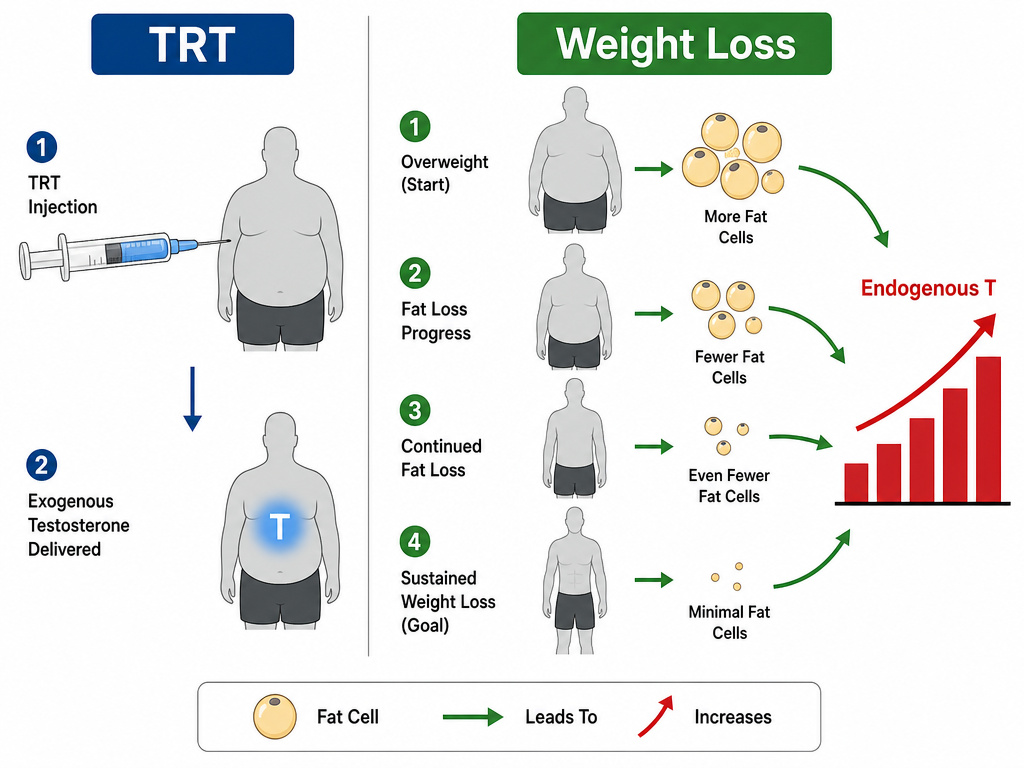
TRT provides an immediate, guaranteed increase in serum testosterone levels by introducing an external hormone. It can rapidly improve symptoms like fatigue, low libido, and mood. However, it’s a lifelong therapy that requires medical supervision, carries potential side effects (like erythrocytosis or suppressed natural production), and does nothing to address the underlying metabolic dysfunction of obesity.
Weight loss, in contrast, is a way to restore your body’s own natural hormone production. The increases shown in the studies, like the rise from 6.97 nmol/l to 13.21 nmol/l from a VLED, are your own endogenous testosterone rising. This approach treats the root cause, improves overall metabolic health (insulin sensitivity, inflammation, cardiovascular risk), and has no side effects other than the benefits of being leaner.
For the obese man with low T, the clinical guidance is often to attempt significant weight loss first. If testosterone remains low after reaching a healthier weight, then TRT becomes a more focused and appropriate conversation. It’s the difference between repairing the factory and simply importing the finished product.
Frequently Asked Questions
Can you gain testosterone by losing weight?
Yes, if you are overweight or obese. Clinical studies show consistent and sometimes dramatic increases in total testosterone for men in this category. The gain is a result of your body restoring its natural production by reducing hormonal interference from excess fat.
What is the number one testosterone killer?
For a large portion of the population, obesity is the primary driver of suppressed testosterone. The combination of high aromatase activity in fat cells, insulin resistance, and low SHBG creates a powerful triple-threat that lowers hormone levels. This is why the link between low testosterone and weight gain is so strong.
Does not ejaculating for 7 days increase testosterone?
The short-term effect of abstinence on testosterone is minor and transient. Some studies show a small peak around day 7, but levels quickly return to baseline. This practice does not produce a meaningful or sustained increase in testosterone compared to impactful lifestyle changes like weight loss, exercise, and sleep improvement.
Does Ozempic lower testosterone?
There is no direct evidence that semaglutide (Ozempic) lowers testosterone. In fact, by promoting significant weight loss and improving insulin sensitivity, it would be expected to have the opposite effect, potentially increasing testosterone in obese individuals. Its primary action is on appetite and blood sugar control, not direct hormonal suppression.
Before You Go
The data is clear: for men carrying excess weight, shedding fat is one of the most powerful levers you can pull for hormonal health. The increase isn’t theoretical; it’s quantifiable in nanomoles per liter. The mechanism isn’t mysterious; it’s a matter of silencing the disruptive signals coming from your fat tissue.
Start with a blood test. Know your numbers for total testosterone, SHBG, and fasting insulin. Then, pick a weight loss strategy you can stick to, not the most aggressive one, but the most sustainable. A 10% reduction in body weight is a solid, evidence-backed target that can yield a meaningful hormonal shift.
Remember, this is about fixing a system, not just a number. The benefit of weight loss goes far beyond what shows up on a hormone panel. It reshapes your metabolism, improves your healthspan, and breaks the cycle that made you feel stuck in the first place. Let that be the motivation, not just the promise of a higher score on a lab report.
