
How to Increase Testosterone Naturally: The 6 Levers
This post contains affiliate links. As an Amazon Associate, we earn from qualifying purchases.
To increase testosterone naturally, you must pull six specific levers: lose enough body fat (a 20% BMI reduction), prioritize 7-9 hours of quality sleep, manage chronic stress, perform regular resistance training, correct nutrient deficiencies (especially vitamin D and zinc), and avoid excessive alcohol. For most men, these strategies address underlying suppression and can yield modest, sustainable improvements. True “boosting” above a healthy baseline is largely a marketing myth.
The 20% BMI reduction figure is the threshold identified by the European Male Ageing Study data for a significant increase in free testosterone. That’s the kind of specific target most guides miss when discussing how to increase testosterone naturally. They tell you to lose weight, but not how much weight actually moves the needle on your labs.
What follows is a breakdown of those six levers, the evidence behind each, and a realistic timeline for the how to increase testosterone naturally question. You’ll also get a clear look at where supplements fit, and where they don’t. By the end, you’ll know which changes are worth your effort and how to track your progress without chasing ghosts.
Key Takeaways
- Aim for a 20% reduction in BMI for a measurable free testosterone increase, per European Male Ageing Study data.
- Persistent sleep deprivation cuts testosterone by 10–15%, making 7+ hours of quality sleep essential.
- Resistance training is the exercise priority, but don’t expect it to raise resting testosterone if you’re already active and healthy.
- Correct deficiencies first, particularly vitamin D and zinc; supplements here fix a problem, they don’t “boost” a normal level.
- Testosterone “booster” supplements lack consistent evidence; a 2021 guideline noted only 30% of human trials showed any improvement.
The 6 Levers You Can Actually Pull
Most advice on how to increase testosterone naturally is a vague soup of “exercise and eat right.” That’s not wrong, but it’s not actionable. The research points to six discrete areas where change produces a measurable result. Think of them as dials. Your job is to identify which of your dials is turned down.
Technical Snapshot: According to the British Society for Sexual Medicine guidelines, the prevalence of hypogonadal symptoms increases when total testosterone levels fall below 12.1 nmol/L. However, specific symptoms like loss of erections, diabetes, and reduced vigor correlate with different thresholds, 8, 10, and 15 nmol/L, respectively, highlighting that symptom relief, not just a number, is the goal of natural intervention.
1. Body Fat: The 20% BMI Rule
This is the most powerful lever, and it has a number attached. Data from the European Male Ageing Study, cited in major guidelines, shows a 20% reduction in BMI is required to produce a significant increase in free testosterone. The goal is moving from an obese or overweight BMI category into a healthier range.
The mechanism is direct. Excess body fat, especially visceral fat, increases the activity of an enzyme called aromatase, which converts testosterone into estrogen. More fat means more conversion, leaving less active testosterone in your system. One dramatic example comes from studies on bariatric surgery, where men with a mean baseline total testosterone of 229.53 ng/dL saw it rise to 388.38 ng/dL post-surgery. That’s a correction of a severe deficit through massive weight loss.
Where this goes sideways: Trying to “boost” testosterone with supplements while ignoring a high body fat percentage. You’re pouring water into a bucket with a large hole in the bottom. Fix the hole first.
2. Sleep: The Non-Negotiable 10-15%
If you’re cutting sleep to get to the gym earlier, you might be undermining the entire point. The Canadian Urological Association guideline states that persistent sleep deprivation or restriction lowers testosterone levels by approximately 10–15%. The issue is the chronic, cumulative deficit of sleep.
Sleep is when your body does most of its hormonal housekeeping, including the release of luteinizing hormone, which signals your testes to produce testosterone. Skimping on sleep raises cortisol (a stress hormone that further suppresses testosterone) and disrupts this nightly repair cycle. The effect isn’t subtle. Correcting persistent sleep deprivation can be a potent intervention for someone who’s chronically tired.
I learned this by tracking my own data. A month of consistent 7.5-hour nights, measured by a Whoop strap, correlated with more stable energy and better gym recovery than any supplement stack I’d tried before. The numbers on my watch were more convincing than any bottle label.
3. Stress Management: Cortisol’s Tax
Chronic stress imposes a direct tax on your testosterone production. The hormone cortisol and testosterone share a precursor molecule, pregnenolone. Under long-term stress, your body shunts more of this raw material into making cortisol, the “survival now” hormone, at the expense of testosterone, the “thrive later” hormone.
This addresses the unresolved, background anxiety that keeps your nervous system in a low-grade “fight or flight” mode for weeks or months. The physical signs are a constant tightness in your shoulders, poor sleep despite being tired, and a feeling of being wired but drained.
Common mistake: Using intense exercise as your only stress relief when you’re already chronically stressed. This can add more systemic stress, raising cortisol further. On high-stress days, a walk or gentle mobility work is often the smarter daily habit.
4. Exercise: Resistance Over Everything
The relationship between exercise and testosterone is the most misunderstood. A 2021 meta-analysis concluded that exercise training does not seem to affect resting total or free testosterone concentration in insufficiently active, eugonadal men, while other sources suggest exercise can result in modest increases. In plain English: if you’re healthy and already somewhat active, starting to work out probably won’t raise your baseline testosterone level.
So why is exercise on the list? For two key reasons. First, for men who are sedentary and overweight, starting a regimen, particularly resistance training, can help pull the body fat lever, which does raise testosterone. Second, acute bouts of exercise, especially heavy compound lifts like squats and deadlifts, cause a temporary spike in testosterone. While this spike is short-lived, the repeated stimulus helps maintain muscularity and metabolic health, which supports a healthier hormonal environment.
The priority is clear: lift heavy things. Cardio is great for health, but for supporting testosterone-related goals, resistance training is the main event.
| Exercise Type | Primary Benefit for Testosterone | Realistic Expectation |
|---|---|---|
| Heavy Resistance Training | Acute post-workout spike; supports muscle mass & fat loss. | Maintains a healthy anabolic environment; aids in achieving BMI goal. |
| High-Intensity Interval Training (HIIT) | Improves insulin sensitivity & metabolic health. | Indirect support by improving factors that suppress T. |
| Chronic Long-Duration Cardio | Can elevate cortisol if overdone; good for general health. | Potential negative impact if recovery is insufficient. |
5. Nutrition: Correct, Don’t “Boost”
The internet is full of “testosterone-boosting” food lists. The situation is less exciting: there are foods that prevent deficiency, and there are eating patterns that support metabolic health. Very few foods actively elevate testosterone in someone who is already well-nourished.
Your nutritional priorities should be:
- Sufficient Calories & Protein: Undereating is a surefire way to suppress hormones. Your body won’t prioritize reproduction and vitality if it thinks resources are scarce. I once spent a year eating egg-white omelets, afraid of cholesterol, and unintentionally cut 300 daily calories. My energy flatlined.
- Healthy Fats: Cholesterol is the literal building block for testosterone. Include sources like eggs, avocado, olive oil, and fatty fish.
- Micronutrient Sufficiency: This is where specific foods matter.
- Zinc: Crucial for testosterone synthesis. Oysters are famous because they are a rich source of zinc, which can help correct a deficiency. Red meat and pumpkin seeds are other good sources.
- Vitamin D: More of a hormone than a vitamin. Low levels are strongly correlated with low testosterone. Sunlight is best; fortified foods or a supplement are the next best thing.
- Magnesium: Involved in hundreds of processes, including hormonal regulation. Found in leafy greens, nuts, and dark chocolate.
A structured diet focusing on whole, nutrient-dense foods that increase testosterone support is your foundation. A weekly portion of beef liver, for example, can close more zinc, B12, and iron gaps than a handful of supplements.
6. Avoidance: The Subtractive Strategy
Sometimes, increasing testosterone is more about stopping what’s decreasing it. The two biggest offenders are excessive alcohol and extreme dieting.
- Alcohol: It’s a toxin. Your liver prioritizes metabolizing it, which can interfere with hormone clearance and increase estrogen conversion. Moderate consumption (1-2 drinks occasionally) is likely fine for most, but nightly drinks or binge drinking directly work against your goals.
- Crash Diets: Severe calorie restriction skyrockets cortisol and plummets testosterone. It tells your body you’re in a famine. Sustainable fat loss is a modest calorie deficit paired with resistance training to preserve muscle, not a brutal crash.
Pulling these six levers in concert is how you build a sustainable foundation. It’s slower than taking a pill, but the effects are real and compound over time.
What’s a Realistic Timeline for Increase?
This is the question everyone asks and most guides dodge. The timeline for increase depends entirely on which lever you’re pulling and how far you need to move it.
- Sleep & Stress: You might feel a subjective difference in energy and mood within 1-2 weeks of fixing chronic sleep deprivation or implementing daily stress-management techniques. The hormonal shift follows soon after.
- Exercise & Nutrition: Initial improvements in insulin sensitivity and well-being can happen in weeks. Measurable changes in total testosterone, especially if driven by fat loss, will take 3 to 6 months of consistent effort. Remember the 20% BMI target, that’s not a quick fix.
- Correcting a Deficiency: If you are genuinely deficient in vitamin D or zinc, correcting it with a dose can yield lab-measured improvements in 2-3 months.
The key is to manage expectations. A man who is overweight, stressed, and sleeping poorly might realistically see a meaningful improvement over several months of dedicated lifestyle change. That’s a meaningful improvement in how he feels. It is not a jump to 800 ng/dL. Understanding the realistic increase prevents disappointment and keeps you from chasing false promises.
The Supplement Reality Check
This is where the gap between marketing and science widens dramatically. The PubMed scoping review on nonpharmacological interventions and other primary sources paint a clear, two-tiered picture.
First, some supplements are effective for correcting a documented deficiency. This isn’t boosting; it’s fixing.
- Vitamin D: Effective if you are deficient. A PMC review of medicinal testosterone use and other studies show it can help normalize levels in that specific context.
- Zinc: Similarly, only useful if you are low. Long-term supplementation without a need can cause copper imbalance.
Second, there are “testosterone booster” blends. The evidence here is poor. The Canadian Urological Association guideline states that among human trials of these ingredients, only 30% demonstrated an improvement in testosterone levels. They recommend against their use due to unknown safety and efficacy.
However, a 2023 systematic review in the International Journal of Impotence Research did identify a few ingredients with possible efficacy for very specific groups:
- For Athletes: β-hydroxy β-methylbutyrate (HMB) and betaine.
- For Healthy Men: Eurycoma longifolia (Tongkat Ali) and Withania somnifera (Ashwagandha).
- For Men with Late-Onset Hypogonadism: Purified Shilajit extract (PrimaVie ™).
See the pattern? The effect is population-specific and generally modest. These are not universal “boosters.”
My stance: I treat proprietary blends as a red flag. If a company won’t tell you the exact dose of each ingredient in a “testosterone blend,” they haven’t earned your trust or your money. A basic stack of vitamin D and magnesium (if needed) does more foundational work than any 15-ingredient mystery formula.
When “Natural” Isn’t Enough: Seeing a Doctor
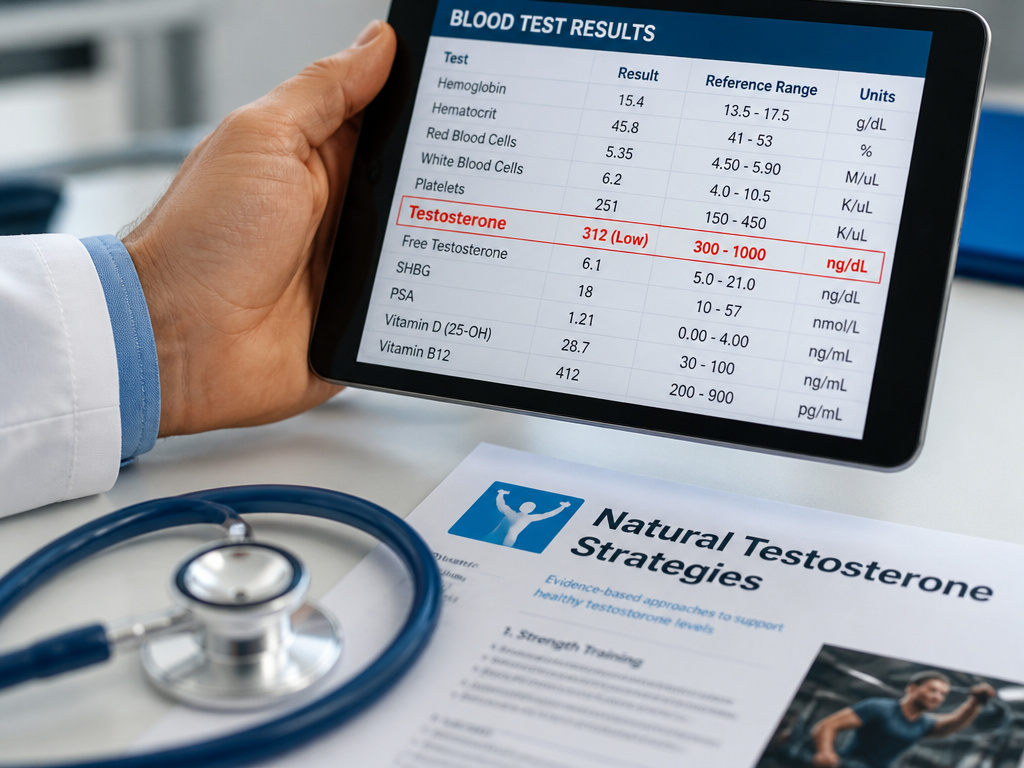
The British Society for Sexual Medicine guidelines provide crucial context. Testosterone deficiency (TD) is not a normal part of aging. The European Male Ageing Study found that 75% of men maintain normal levels into old age. The overall prevalence of true, symptomatic TD in men 40-79 is only 2.1%.
You should consult a doctor if:
- You have consistent symptoms (low libido, erectile dysfunction, profound fatigue, loss of muscle mass) and
- You’ve implemented the natural levers for 6+ months with little improvement and
- A blood test confirms consistently low total and free testosterone.
A doctor can diagnose primary hypogonadism (testes aren’t working) or secondary hypogonadism (signaling from the brain is off). This distinction matters. For some men with secondary hypogonadism, certain medications (like clomiphene) can restart natural production. For others, testosterone replacement therapy (TRT) is an option.
An important note from the BSSM: Testosterone therapy in men with pre-diabetes and levels at or below 14 nmol/L reduced progression to type 2 diabetes by 40% over two years. This has led them to recommend a threshold of 14 nmol/L for considering TRT in men with pre-diabetes, not the standard 12 nmol/L. This is a perfect example of how medical guidance evolves with new evidence.
How to avoid chemicals that lower testosterone

Your environment contains chemicals that mimic estrogen, a hormone that can suppress your natural testosterone production. These endocrine disruptors are found in many common plastics, personal care products, and food packaging. While the fact sheet does not list specific chemicals, the principle is clear: reducing your exposure can help maintain your hormonal balance. Focus on practical steps like choosing glass or stainless steel over plastic for food and drink, checking product labels for phthalates and parabens, and avoiding heating food in plastic containers. This is about removing a modern, silent drag on your system.
Frequently Asked Questions
How can I raise my testosterone quickly?
There are no healthy, sustainable ways to produce a large, rapid increase. The fastest meaningful changes come from fixing acute problems: going from 5 to 8 hours of sleep nightly, or immediately stopping a severe calorie deficit. For more targeted fast-acting methods, focus on sleep and stress first, as they can show effects in weeks.
What is the #1 testosterone killer?
Chronic, unmanaged stress is arguably the most pervasive suppressor. It elevates cortisol, which directly inhibits testosterone production and promotes abdominal fat storage, creating a vicious cycle. For many modern men, learning to down-regulate the nervous system is the highest-impact change.
Which foods increase testosterone?
No foods directly “boost” testosterone in well-nourished individuals. Foods support healthy levels by providing key nutrients: oysters and red meat for zinc; eggs and fatty fish for cholesterol and vitamin D; leafy greens and nuts for magnesium. The goal is to prevent deficiency.
What are signs of low testosterone in males?
Common signs include persistently low libido, difficulty building muscle or unexplained muscle loss, increased body fat (especially around the abdomen), chronic fatigue not relieved by sleep, and depressed mood. It’s the combination of symptoms that’s telling, not just one. A blood test is required for diagnosis.
Do natural methods work for men over 50?
Yes, the same levers apply. However, the realistic increase may be more modest due to the natural, gradual decline that occurs with age. The prevalence of true deficiency rises with age (5.1% in men 70-79 per EMAS), so the focus for men over 50 should be on preserving strength, maintaining a healthy weight, and optimizing metabolic health to support the body’s natural production.
The Bottom Line
Increasing testosterone naturally is a subtractive and corrective process, not an additive one. You’re removing suppression (excess fat, poor sleep, chronic stress) and correcting deficiencies (in nutrients like vitamin D). The ceiling for a healthy man is a modest, sustainable improvement, think 15-20%, not a doubling.
Start with the lever most out of whack in your life. For most, it’s sleep or body fat. Get a blood test to rule out a true deficiency before spending money on supplements. And remember, the goal isn’t a number on a lab report; it’s the resolution of symptoms like low energy and drive. If you’ve pulled all the natural levers consistently for six months and still feel off, that’s your signal to have a detailed conversation with a doctor. That’s the real, evidence-based path forward.
