
Low Testosterone and High Blood Pressure Link
This post contains affiliate links. As an Amazon Associate, we earn from qualifying purchases.
Low testosterone and high blood pressure are linked by a consistent, inverse correlation observed in multiple studies, as testosterone levels drop, blood pressure tends to rise. This association is strongest for systolic pressure and is heavily influenced by body weight and age. The relationship appears to be a two-way street, where conditions like obesity that lower testosterone also drive up blood pressure, creating a shared risk profile that needs a combined management approach.
That correlation is the starting point, not the whole story. The mechanism isn’t a simple hormone switch. It’s a web of shared pathways: vascular function, body composition, and metabolic health, which helps explain the low testosterone and high blood pressure link. Understanding this moves you from seeing two separate problems to managing one interconnected system.
What follows is a breakdown of the key studies, the important exceptions to the rule, and a practical framework for addressing both your hormone levels and your blood pressure numbers.
Key Takeaways
- The 2005 Nature study of 356 elderly men found free testosterone was 15% lower in hypertensive men and 21% lower in isolated systolic hypertensive men compared to normotensives, and correlated negatively with systolic blood pressure.
- Body Mass Index (BMI) is a powerful confounder, studies show testosterone has a “highly significant negative correlation” with BMI, which itself raises blood pressure.
- Testosterone Replacement Therapy (TRT) does not uniformly raise BP; a 2024 review of testosterone undecanoate showed median reductions of -12.5/-8.0 mmHg in hypogonadal men not on antihypertensive medication.
- Always differentiate correlation from causation, low T and high BP often share a common cause like metabolic syndrome, rather than one directly causing the other.
- Monitor blood pressure regularly if starting TRT, as individual responses vary and catching an early trend is safer than reacting to a crisis.
The 2005 Nature Study: A Sourced Baseline
Most discussions about testosterone and blood pressure eventually circle back to a specific 2005 study published in Hypertension Research. It provides a clear, controlled snapshot.
The researchers looked at 356 men aged 60 to 80 who were non-diabetic, non-smoking, and non-obese. They split them into three blood pressure groups: normotensive (BP <140/90 mmHg), hypertensive (BP >140/90 mmHg), and isolated systolic hypertensive (systolic >140 mmHg, diastolic <90 mmHg). Then they measured free testosterone.
Free testosterone levels were significantly lower in hypertensive men (-15%) and isolated systolic hypertensive men (-21%) compared to normotensive men. A significant negative correlation was found between free testosterone levels and systolic blood pressure in normotensive men (r=-0.35), isolated systolic hypertensive men (r=-0.67), and hypertensive men (r=-0.19). Free testosterone levels showed a highly significant negative correlation with BMI in all groups studied (p<0.001). . Key findings from the 2005 Nature study.
The numbers tell a consistent story. Lower hormone levels track with higher pressure, especially systolic, reinforcing the low testosterone and high blood pressure link. But the last line about BMI is the critical context. The study itself flags that testosterone “showed a highly significant negative correlation with BMI.” This means heavier men in the study had both lower testosterone and higher blood pressure. It’s a classic confounder.
Bottom line: This study is the cornerstone for the inverse correlation. It gives us specific percentages and correlation strengths, but it also explicitly ties the relationship to body weight.
How Testosterone Influences Blood Pressure Mechanisms
So, what’s the physiological connection? Testosterone isn’t just a sex hormone; it’s a vascular modulator. It influences blood pressure through several direct and indirect pathways.
The most direct is vasodilation. Testosterone promotes the relaxation of smooth muscle in blood vessel walls. It does this by enhancing the production of nitric oxide, a potent signaling molecule that tells arteries to widen. Less testosterone can mean less nitric oxide activity and stiffer, more constricted arteries. This contributes directly to higher systolic pressure, the force against your artery walls when your heart beats.
Indirectly, testosterone plays a major role in body composition. Lower levels are strongly associated with increased body fat, particularly visceral fat around the organs. This fat tissue is metabolically active, pumping out inflammatory cytokines and contributing to insulin resistance. Both inflammation and insulin resistance are key drivers of hypertension. This excess fat also increases aromatase activity, the enzyme that converts testosterone into estrogen, which further lowers your available testosterone in a feedback loop.
Finally, testosterone affects the sympathetic nervous system and renal function. It can influence how the kidneys handle sodium and fluid balance. While the mechanisms here are more complex and less clearly defined in humans, the overall picture is of a hormone that helps maintain vascular flexibility and metabolic efficiency. When levels fall, multiple systems can tilt toward higher pressure.
Where this goes sideways: Focusing only on the testosterone number. If your low T is secondary to high body fat and poor metabolic health, treating the hormone without addressing the root cause is like mopping the floor with the tap still running.
The Critical Confounder: Obesity and Metabolic Health
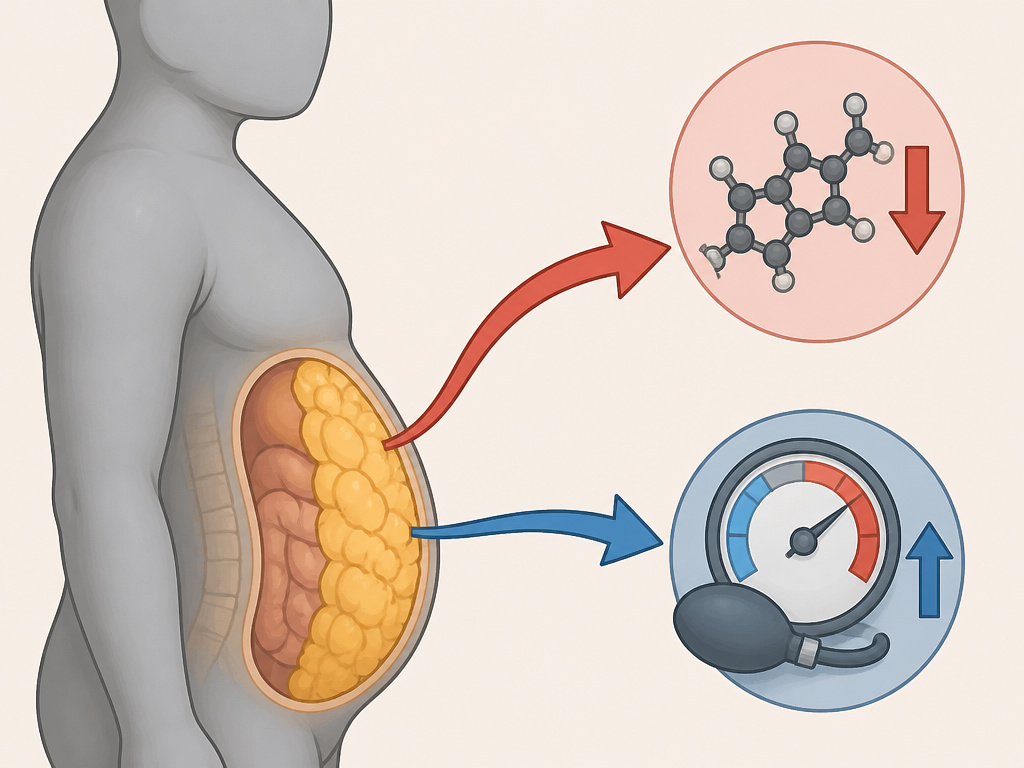
If you take one thing from this article, let it be this: obesity and metabolic health are the stage on which the low T-high BP drama plays out. They are not just supporting actors; they are often the directors.
The link between obesity and low testosterone is well-established. Adipose tissue, especially belly fat, increases the activity of aromatase. It also promotes a state of chronic, low-grade inflammation that can suppress the hypothalamic-pituitary-gonadal axis, the hormonal cascade that tells your testes to produce testosterone. The result is lower total and free testosterone.
Simultaneously, obesity is a primary driver of hypertension. The increased blood volume, higher cardiac output, insulin resistance, and vascular inflammation associated with excess weight all push blood pressure up. This creates a vicious cycle: obesity lowers testosterone, and the resulting hormonal profile makes it harder to lose fat, which sustains the high blood pressure.
This is why the condition of metabolic syndrome, a cluster of high blood pressure, high blood sugar, excess belly fat, and abnormal cholesterol, is so frequently found alongside low testosterone, illustrating the low testosterone and high blood pressure link. They are different symptoms of the same underlying metabolic dysfunction.
| Factor | Impact on Testosterone | Impact on Blood Pressure |
|---|---|---|
| Excess Visceral Fat | Increases aromatase (converts T to estrogen), promotes inflammation that suppresses production. | Increases blood volume, promotes insulin resistance and vascular inflammation. |
| Insulin Resistance | Can suppress gonadotropin release from the pituitary gland. | Causes sodium retention, increases sympathetic nervous system activity. |
| Chronic Inflammation | Disrupts the hypothalamic-pituitary-gonadal axis. | Damages blood vessel lining (endothelium), reduces nitric oxide availability. |
The table shows a shared root cause. This is why improving body composition through diet and exercise is often the most effective first-line strategy for improving both numbers.
Does TRT Raise or Lower Blood Pressure? The Data Conflict
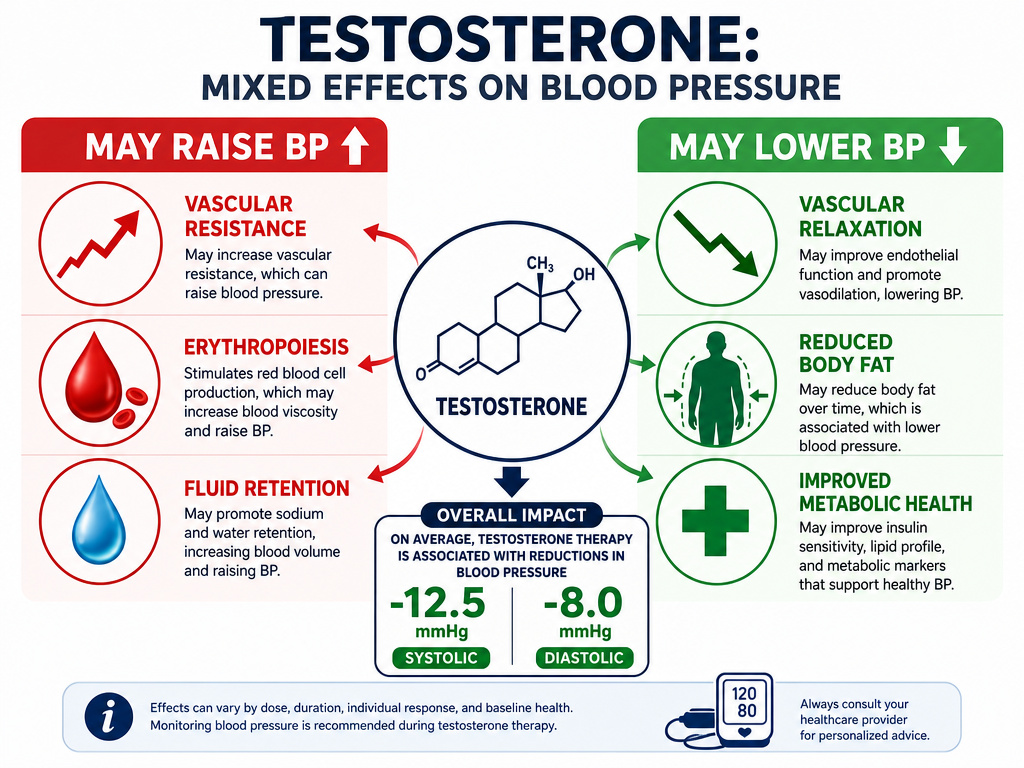
This is the million-dollar question for men considering treatment, and the answer is not uniform. The data contains a genuine conflict, which you need to understand.
On one hand, official prescribing information for many testosterone products includes a warning that therapy may increase blood pressure. This caution is based on the drug’s mechanism and a duty to list potential side effects. It leads many doctors to be hesitant.
On the other hand, clinical research often tells a different story. A 2024 review of testosterone replacement therapy blood pressure effects specifically looked at testosterone undecanoate injections. In hypogonadal men not on antihypertensive medication, the therapy was associated with median reductions of -12.5 mmHg systolic and -8.0 mmHg diastolic pressure. A meta-analysis (Li et al.) showed no significant alteration in BP from TRT overall.
So, why the disagreement? Individual response varies wildly. For men whose low T is tied to obesity and poor metabolic health, restoring normal levels can improve insulin sensitivity, reduce body fat, and lower inflammation, all actions that would lower BP. However, TRT can also stimulate erythropoiesis (increased red blood cell production), which thickens blood and can raise pressure. It may also cause fluid retention in some individuals.
Common mistake: Assuming TRT will automatically fix high blood pressure because of an inverse correlation. Therapy can lower it, raise it, or do nothing, it depends on your individual physiology and health status. You must monitor. A baseline reading and regular checks are important.
The key is vigilant monitoring, not assumption. If you start TRT, you must partner it with regular blood pressure checks. The goal is to catch any upward trend early, not to discover a problem at your next quarterly doctor’s visit.
Managing Both Conditions: A Practical Framework
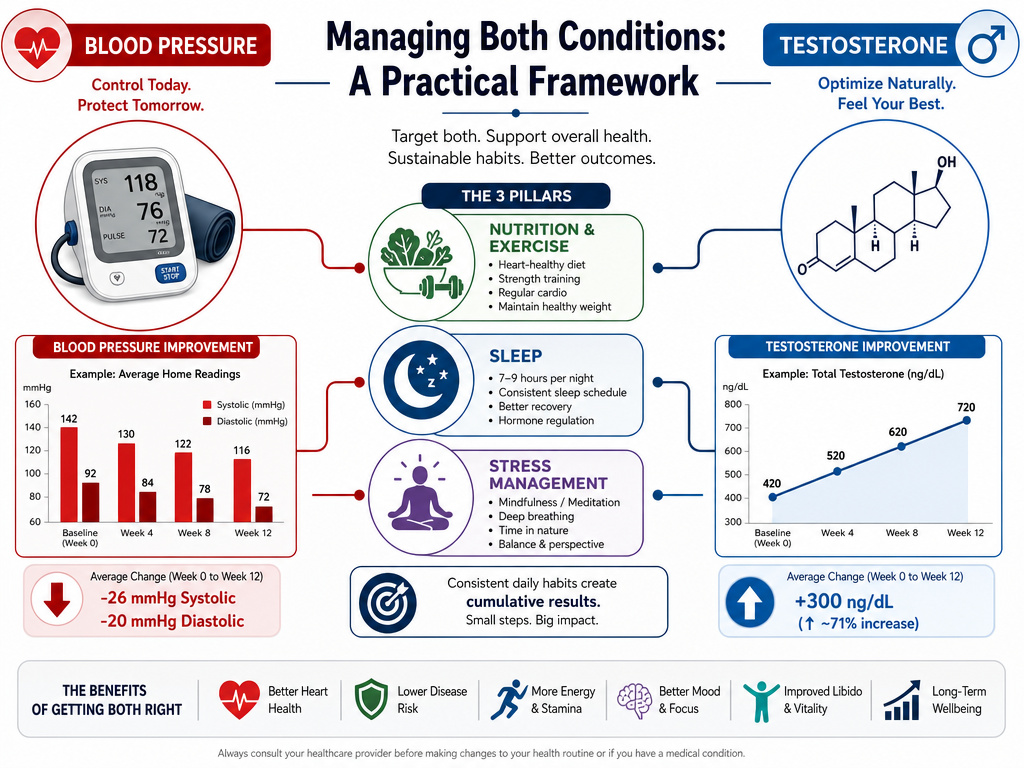
You’re not managing two separate issues. You’re managing your metabolic health, which will positively influence both your hormone profile and your cardiovascular system. Here’s a tiered approach.
First, Establish Your Baseline. You can’t manage what you don’t measure.
- Hormones: Get a full panel: Total Testosterone, Free Testosterone, SHBG, LH, FSH, and Estradiol. Do this twice, a few weeks apart, in the morning. A single test is a snapshot; two give you a trend.
- Cardiovascular: Get a lipid panel (cholesterol, triglycerides) and start home blood pressure monitoring. Take regular home readings to establish your true average, as clinic readings can be artificially high.
Second, Address Foundational Lifestyle Factors. This is where you can make the biggest difference.
- Nutrition: Prioritize whole foods, protein, and fiber. Reduce processed carbohydrates and sugars to improve insulin sensitivity. The goal is steady energy and reduced visceral fat.
- Exercise: Combine resistance training and cardio. Lifting weights is a potent stimulus for testosterone production and improving body composition. Cardio improves vascular health and directly lowers blood pressure.
- Sleep: Treat it as essential. Poor sleep, especially from conditions like sleep apnea, crushes testosterone and spikes blood pressure. Aim for adequate quality, uninterrupted sleep.
- Stress Management: Chronic stress elevates cortisol, which can suppress testosterone and contribute to hypertension. Find a sustainable practice, walking, meditation, breathwork.
Third, Consider Medical Interventions Carefully.
- If lifestyle optimization isn’t enough and you have clinically low testosterone with symptoms, discuss TRT and blood pressure with a knowledgeable doctor. Plan for mandatory BP monitoring.
- For blood pressure, standard antihypertensives are effective. Be aware that some classes, like beta blockers, may have downstream effects on hormone levels and energy.
- Never self-prescribe. The interplay between hormones, medications, and your unique health status requires professional oversight.
What are the symptoms of low testosterone?
While the fact sheet does not list specific symptoms, research on the link to high blood pressure provides a practical perspective. The study focused on non-diabetic, non-smoking, non-obese men aged 60 to 80, finding that lower testosterone levels were consistently associated with higher systolic blood pressure. This suggests that high blood pressure, particularly the systolic reading, could be a potential indicator of low testosterone levels in older men. If you are experiencing symptoms like persistent fatigue, reduced motivation, or changes in body composition, and also have elevated blood pressure, it may be worth discussing both conditions with a doctor. The connection is complex, as both low testosterone and high blood pressure can be influenced by common factors like body weight.
What causes low testosterone?
The provided research points to several interconnected factors. The study of older men found that free testosterone levels decreased with increasing age in all participants, regardless of their blood pressure status. It also reported a highly significant negative correlation between free testosterone and body mass index (BMI). This means that in the study groups, men with a higher BMI tended to have lower testosterone. While the fact sheet does not list other causes, this highlights that advancing age and higher body weight are key factors associated with declining testosterone levels. The research context suggests these factors often coexist with higher blood pressure, creating a common physiological pattern in older men.
Frequently Asked Questions
Can high blood pressure be caused by low testosterone?
It’s more accurate to say they are closely associated and share common causes, rather than one directly causing the other. Low testosterone and high blood pressure often co-occur because both are strongly influenced by obesity, poor metabolic health, and aging. Think of them as fellow travelers on the same road, not as a direct cause and effect.
Should I stop TRT if my blood pressure is high?
Do not stop medication without consulting your prescribing doctor. If your blood pressure increases after starting TRT, alert your physician immediately. They may adjust your testosterone dose, add or adjust a blood pressure medication, or investigate other causes like fluid retention or elevated red blood cell count (polycythemia). Abruptly stopping TRT can cause a crash in hormone levels and worsen symptoms.
What is the biggest cause of low testosterone?
For most men, the single biggest modifiable cause is excess body fat, particularly visceral fat. Obesity drives inflammation, increases estrogen conversion, and disrupts the hormonal signals for testosterone production. Other major causes include chronic stress, poor sleep (especially sleep apnea), certain medications, and underlying conditions affecting the testes or pituitary gland.
How to lower blood pressure while on testosterone?
The protocol is the same as for anyone, but with added vigilance. Commit to the foundational lifestyle changes, improved diet, consistent exercise, quality sleep, and stress reduction. Monitor your blood pressure at home weekly. Ensure your doctor checks your hematocrit and hemoglobin regularly to watch for polycythemia. If lifestyle isn’t sufficient, standard antihypertensive medications are effective and safe to use alongside TRT under medical supervision.
The Bottom Line
The link between low testosterone and high blood pressure is real, significant, and mediated largely through shared metabolic pathways. The 2005 study gives us the correlation, but your body fat, insulin sensitivity, and inflammation levels provide the context.
Approach this as one integrated system. Improving your metabolic health through nutrition, exercise, and sleep is the most powerful tool you have for positively influencing both numbers. If you pursue testosterone replacement therapy, do so with eyes wide open, it is a treatment, not a cure-all, and requires disciplined blood pressure monitoring.
Your action this week: If you haven’t already, get a home blood pressure monitor. Establish your real baseline outside the doctor’s office. That number, more than any theory, will guide your next step.
