
What Does Testosterone Do for Men: Symptoms and Treatments
This post contains affiliate links. As an Amazon Associate, we earn from qualifying purchases.
Testosterone is the primary male sex hormone, responsible for male physical development, maintaining muscle and bone mass, regulating sex drive and mood, and supporting metabolic health. Its levels peak in early adulthood and decline gradually with age, but a true deficiency, linked to specific medical conditions, affects a smaller portion of men than popular narratives suggest.
That definition covers the what, but it misses the how and the why. The story gets complicated fast because testosterone’s effects are woven into every system in the body, and the line between normal aging and a treatable deficiency is a major point of clinical debate. A core part of this debate is understanding what does testosterone do for men.
What follows is a breakdown of testosterone’s core jobs, the hard numbers on what “normal” actually means, the real-world evidence on treatment risks and benefits, and a clear path for what to do if you’re wondering about your own levels.
Key Takeaways
- Testosterone’s primary roles are masculinization during puberty, maintaining muscle mass and bone density, and regulating libido, mood, and red blood cell production.
- “Normal” levels vary widely by age and lab. For a man in his early 30s, a typical range is 359 to 498 ng/dL, but a single test is rarely diagnostic.
- The FDA and clinical guidelines disagree on who qualifies for treatment: the FDA approves testosterone only for men with low levels in conjunction with an associated medical condition, while some societies consider age-related symptomatic decline. In 2026, the FDA requested label updates removing the limitation stating safety and efficacy in age-related hypogonadism were not established, but the approval indication disagreement remains.
- Large trials like TRAVERSE found no increased cardiovascular risk with gel therapy, but treatment requires ongoing monitoring of hematocrit and prostate health.
- Before considering supplements or therapy, rule out sleep, stress, and diet—these mimic low testosterone symptoms perfectly and are far more common.
The Core Functions of Testosterone
Testosterone isn’t just about sex drive or muscles. It’s a system-wide regulator that starts its work before you’re born. During fetal development, it directs the formation of male reproductive organs. At puberty, it triggers the growth spurt, deepens the voice, and sparks the growth of body and facial hair.
In adulthood, its job shifts to maintenance. It signals your body to build and preserve lean muscle mass. It helps maintain bone density by stimulating bone-forming cells. It plays a key role in libido and erectile function, though it’s not the sole driver. Beyond that, it influences mood and cognitive function—low levels are correlated with fatigue, irritability, and difficulty concentrating. It also tells your bone marrow to make red blood cells, which is why low testosterone can contribute to anemia, a key point when you compare a what does testosterone do for men list.
This is the featured-snippet target: a 50-60 word, third-person summary of testosterone’s primary biological roles, free of pronouns and written for direct extraction by search engines.
The mechanism is straightforward. Testosterone is a steroid hormone, so it can pass directly into cells, bind to androgen receptors, and turn genes on or off. In muscle cells, it activates genes for protein synthesis. In bone cells, it promotes mineralization. In the brain, it influences neurotransmitter systems tied to motivation and reward. When levels are optimal, these systems hum along. When they’re not, things start to fray at the edges.
I used to assume every dip in my drive or energy was a hormonal problem. I started a simple log, rating my mood and energy 1-to-10 each night for three months alongside getting a few lab tests. The numbers were clear: my lowest scores tracked almost perfectly with nights I slept under six hours, not with any fluctuation in my testosterone levels. It was a humbling lesson. The hormone matters, but it’s not the only player on the field.
Normal Testosterone Levels & Testing
This is where confusion sets in. There is no universal “normal” number. Ranges depend heavily on age, the lab doing the testing, and even the time of day your blood is drawn.
According to Cleveland Clinic data, here’s a look at how typical total testosterone levels change with age:
| Age Range | Normal Total Testosterone Range (ng/dL) |
|---|---|
| 20 to 24 | 409 to 558 |
| 25 to 29 | 413 to 575 |
| 30 to 34 | 359 to 498 |
| 35 to 39 | 352 to 478 |
| 40 to 44 | 350 to 473 |
Levels are highest in the morning and decline throughout the day. That’s why any diagnostic test must be done before 10 a.m. Also, a single low reading isn’t enough. The Endocrine Society guideline requires “unequivocally and consistently low serum T concentrations,” confirmed with a second morning fasting test.
The big disagreement is in how common true deficiency is. One widely cited statistic, from Harvard Health, suggests more than a third of men over 45 may have lower-than-normal levels. However, a major primary source, the European Male Aging Study (EMAS), which evaluated over 3,000 men, found the overall prevalence of symptomatic testosterone deficiency was only 2.1% in men aged 40–79, a figure that directly informs the what does testosterone do for men discussion. It also showed that 75% of men maintain normal levels into old age.
Why the huge gap? The Harvard figure likely reflects the gradual, 1% to 2% yearly decline that comes with aging. The EMAS number applies a stricter definition: low levels plus multiple specific symptoms. This gets to the heart of the clinical debate: is the slow drift of aging a disease to treat, or just a fact of life?
Symptoms of Low and High Testosterone
Understanding the symptoms helps connect the dots between how the hormone works and how you might feel.
Low Testosterone (Hypogonadism) Symptoms:
- Sexual: Reduced libido, fewer spontaneous erections, erectile dysfunction.
- Physical: Loss of muscle mass, increased body fat (particularly around the abdomen), decreased bone density (osteoporosis), fatigue, reduced body hair.
- Emotional/Mental: Depressed mood, irritability, lack of motivation, difficulty with concentration and memory.
High Testosterone Symptoms:
- In Men: Acne, aggressive or mood-swing behavior, increased muscle mass (often from supraphysiological doses), and potential sleep apnea. Naturally occurring high levels are rare and usually linked to tumors.
- In Women: Irregular periods, acne, increased body hair (hirsutism), hair thinning, and a deepened voice. The most common cause is Polycystic Ovary Syndrome (PCOS).
Common mistake: Blaming fatigue and low mood solely on testosterone. Sleep deprivation, high stress, and poor diet produce nearly identical symptoms. Fix the lifestyle foundation first before investigating hormones.
It’s critical to view these symptoms as a cluster, not in isolation. Having one off day doesn’t mean you’re deficient. The BSSM guidelines emphasize that diagnosis hinges on the combination of consistent symptoms and corroborating lab work.
Testosterone Replacement Therapy (TRT): Benefits, Risks, and Reality
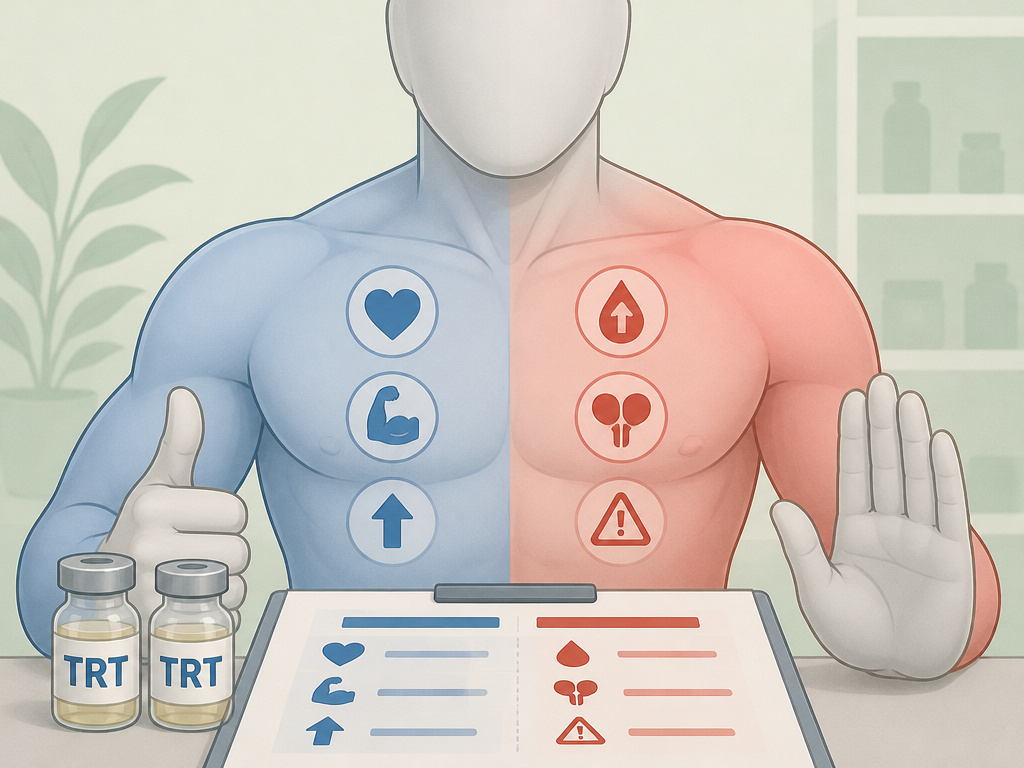
When lifestyle factors are optimized and lab tests confirm a true deficiency, testosterone replacement therapy (TRT) is an option. It’s a field with evolving evidence and significant nuance.
The Benefits: What TRT Can Do
For men with confirmed hypogonadism, TRT aims to restore levels to the mid-normal range. Evidence from trials like the Testosterone Trials (790 men over 65) shows it can:
- Improve sexual desire and erectile function.
- Increase lean muscle mass and reduce fat mass.
- Improve bone mineral density and strength.
- Correct anemia related to low testosterone.
- Improve mood and energy in some men.
Specific populations see particular benefits. For instance, the BSSM guidelines note that TRT in men with pre-diabetes and levels at or below 14 nmol/L can reduce progression to type 2 diabetes by 40% over two years.
The Risks and Required Monitoring
TRT is not without risks, which is why ongoing medical supervision is essential. The main concerns are:
- Elevated Hematocrit: Testosterone stimulates red blood cell production. If hematocrit gets too high, it increases the risk of blood clots, stroke, and heart attack. This requires regular blood monitoring.
- Prostate Health: While TRT does not appear to cause prostate cancer, it can stimulate the growth of existing cancer cells. A digital rectal exam and PSA test are required before starting and periodically during treatment.
- Sleep Apnea: TRT can worsen or precipitate sleep apnea.
- Infertility: Exogenous testosterone suppresses the body’s own production of luteinizing hormone (LH), which in turn shuts down sperm production. The Endocrine Society guideline recommends against starting therapy in men “planning fertility in the near term.”
Before you start: TRT is typically a lifelong commitment. The BSSM guidelines note that cessation of therapy results in relapse and reversal of benefits within 6 months. You must be prepared for indefinite monitoring of blood counts and prostate health.
The Formulation Choice: Gels, Injections, and Patches
FDA-approved formulations include topical gels (AndroGel), transdermal patches, buccal systems, and injections (like testosterone undecanoate). There’s a clinical disagreement here too. The American College of Physicians suggests considering intramuscular injections rather than transdermal formulations when beginning TRT to improve sexual function in men with age-related low testosterone, citing lower costs, while the Endocrine Society guideline makes no such formulation-specific recommendation, stating the choice should consider patient preference, pharmacokinetics, formulation-specific adverse effects, treatment burden, and cost.
| Formulation | Pros | Cons | Best For |
|---|---|---|---|
| Topical Gel | Easy daily application, steady levels | Risk of skin transfer to others, skin irritation | Men who prefer a daily routine and avoid needles |
| Injections | Less frequent dosing (every 1-12 weeks), cost-effective | Peaks and troughs in levels, injection-site pain | Men comfortable with injections, cost-conscious |
| Patches | Steady delivery, avoids transfer risk | High rate of skin irritation at application site | Men who cannot use gels due to transfer concerns |
The FDA vs. Clinical Guidelines Disagreement
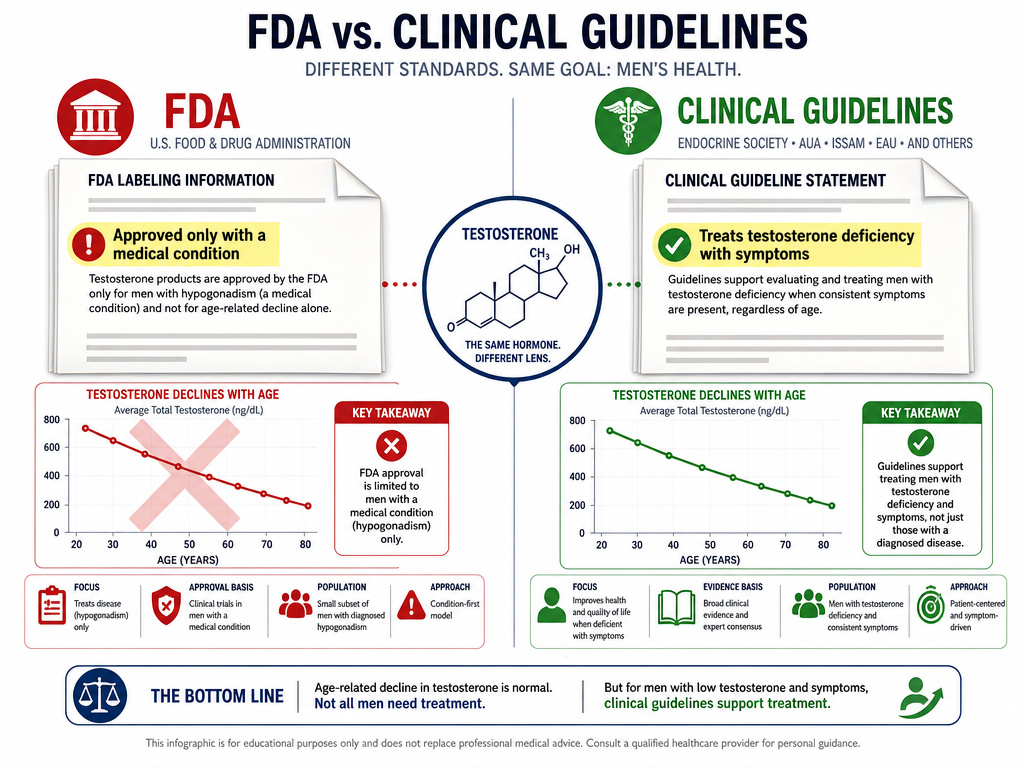
This is the most critical non-commodity insight in this space. Your eligibility for treatment can depend on whether your doctor follows the letter of the law or broader clinical practice.
- The FDA Stance: The FDA testosterone information page is clear. Testosterone is approved only for men with low levels “in conjunction with an associated medical condition” like testicular failure, genetic issues, or chemotherapy damage. It is not approved for “age-related hypogonadism.”
- The Clinical Guideline Stance: Societies like the Endocrine Society and the British Society for Sexual Medicine publish guidelines for treating “testosterone deficiency,” which often includes age-related decline with symptoms. This creates a legal gray area where a doctor can prescribe “off-label.”
The landmark TRAVERSE trial, which tracked more than 5,200 men receiving at least one dose of AndroGel 1.62%, directly addressed a major safety concern. It found no meaningful difference in major cardiovascular events (7.0% in the treatment group vs. 7.3% in the placebo group). This led the FDA in 2026 to remove the label limitation stating the safety in age-related hypogonadism was not established. The risk debate has cooled, but the approval indication disagreement remains.
When to See a Doctor and What to Expect
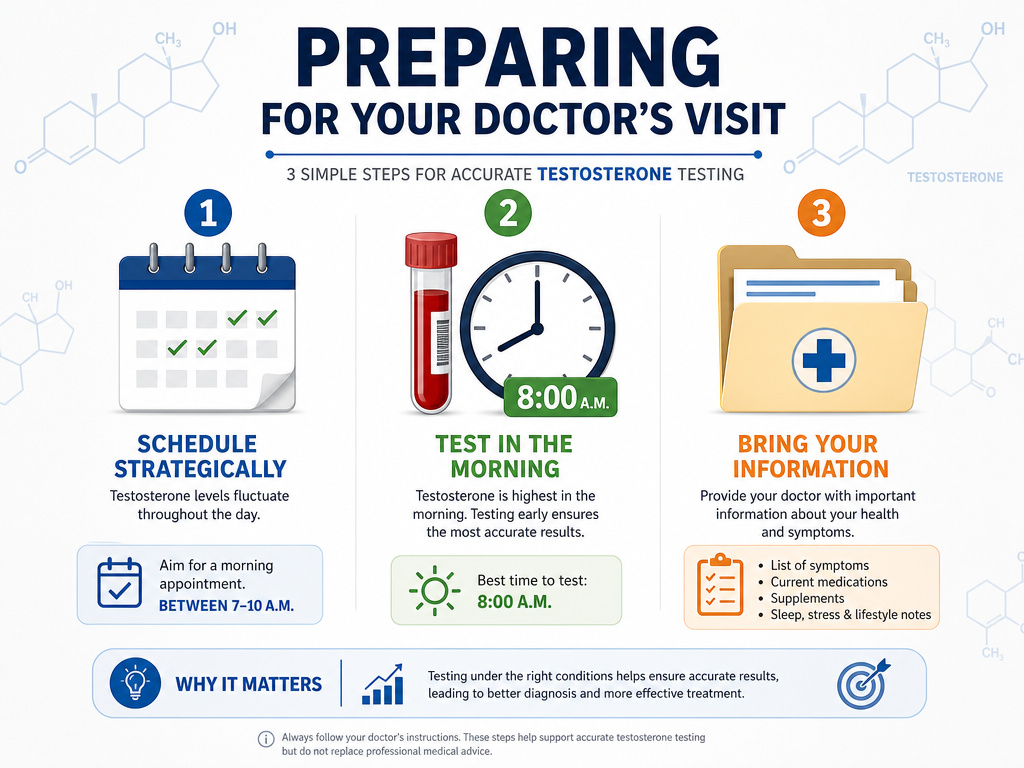
If you’re experiencing a cluster of the symptoms listed—especially if they’re affecting your quality of life—it’s reasonable to talk to your doctor. A urologist or endocrinologist is best suited for this.
Prepare for your appointment:
- Track your symptoms for a few weeks. Note fatigue, mood, sleep, and libido.
- Get your labs done correctly. Insist on a morning (before 10 a.m.) total testosterone test. Be prepared to do it twice for confirmation.
- Come with your history. Mention any past testicular injuries, chemotherapy, or pituitary issues.
Your doctor will likely also test LH and FSH to determine if the problem is with the testicles (primary) or the brain (secondary), and will check prolactin, hematocrit, and PSA.
If a treatable condition is found and you start TRT, expect follow-ups at 3, 6, and 12 months, then annually. This is to check testosterone levels, adjust dosage, and monitor hematocrit and PSA.
Symptoms and Causes of High Testosterone
While low testosterone gets more attention, levels can also be higher than normal. In men, this is often less common and typically not caused by lifestyle. A primary cause can be tumors on the testes or adrenal glands, which produce excess hormone. Certain genetic conditions or the use of anabolic steroids can also lead to elevated levels. Symptoms may include severe acne, increased body hair, aggressive or irritable moods, and sleep disturbances like insomnia. It’s important to consult a doctor if you experience these symptoms, as they can run tests to determine the underlying cause and rule out serious conditions.
Testosterone in Women
Testosterone is not just a male hormone; women produce it too, though in much smaller amounts. It plays a key role in maintaining bone strength, supporting muscle mass, and contributing to a healthy libido. Imbalances can occur, leading to symptoms. Abnormally high levels in women may result from conditions like polycystic ovary syndrome (PCOS) or adrenal disorders, potentially causing acne, excess facial hair, or menstrual irregularities. Conversely, low levels can contribute to reduced sexual desire, fatigue, and loss of bone density. Any concerns about hormonal balance should be discussed with a healthcare provider.
Frequently Asked Questions
What are the benefits of taking testosterone as a man?
For men with clinically diagnosed hypogonadism, the benefits of replacement therapy are well-documented. They include improved libido and erectile function, increased muscle mass and bone density, better mood and energy, and correction of anemia. It is not a performance enhancer for men with normal levels.
Does not ejaculating for 7 days increase testosterone?
There is no robust scientific evidence that short-term abstinence significantly raises serum testosterone levels. While a very small, temporary bump might occur, it’s not a meaningful or sustainable way to influence your hormonal health. The testosterone myths and facts are full of similar misconceptions.
What are the symptoms of low testosterone in a man?
The main symptoms are reduced sex drive, erectile dysfunction, fatigue, loss of muscle mass, increased body fat, depressed mood, difficulty concentrating, and decreased bone density. These must be persistent and occur together, not just as a single off day.
What are the side effects of taking testosterone?
The most common side effects of TRT are an increase in red blood cells (requiring monitoring), acne, sleep apnea worsening, breast tenderness, and testicular shrinkage. It can also suppress natural sperm production, impacting fertility. This is why treatment requires a doctor’s supervision and regular blood tests.
The Bottom Line
Testosterone is a crucial hormone, but it’s surrounded by hype, fear, and clinical disagreement. Its real-world impact is a mix of biology and context.
Start with the basics you control. The single most effective “testosterone hack” is a full night of sleep, managed stress, and a balanced diet. I’ve seen a two-week period of poor sleep tank my motivation and mood completely, mimicking textbook low-T symptoms that vanished when I recovered my sleep schedule. Your body’s signals are often about your habits, not just your hormones.
If symptoms persist, get two proper morning lab tests. That means two proper morning lab tests, not a single afternoon pinprick. Understand the numbers: a level of 350 ng/dL is normal for a 40-year-old but low for a 25-year-old. And know the debate: the FDA says you need a specific medical condition; some doctors will treat based on symptoms and age-related decline.
Finally, respect the process. If you and your doctor choose TRT, it typically requires long-term commitment and monitoring. The goal isn’t superhuman levels—it’s bringing a deficient system back into a healthy, sustainable range so you can feel like yourself again. Let the evidence, not the marketing, lead the way.
