
How Testosterone Affects Mood in Men: Signs and What to Do
This post contains affiliate links. As an Amazon Associate, we earn from qualifying purchases.
Testosterone influences mood in men by acting on brain pathways that regulate emotion, motivation, and stress response. In men with clinically low levels (hypogonadism), restoring testosterone to a normal range can improve depressive symptoms, energy, and irritability. However, in men with normal levels (eugonadal), raising testosterone further often yields minimal mood benefits and can increase risks of aggression or hypomania, especially at supraphysiologic doses above 500 mg per week.
The link between testosterone and mood isn’t a simple on/off switch. It’s a dose-dependent, context-sensitive modulation of a complex system. The research on how testosterone affects mood in men shows a clear pattern: benefits are most consistent and meaningful when you’re correcting a deficiency, not chasing a supernormal high.
What follows is a breakdown of the mechanisms, the conflicting clinical data on who benefits, the real risks of pushing levels too high, and practical steps to take if you suspect your mood is hormone-related.
Key Takeaways
- Correcting a deficiency helps; chasing a high backfires. The strongest mood benefits from testosterone therapy are seen in men with clinically low levels (hypogonadism). Raising levels in men who already have normal testosterone often does little for mood and can worsen aggression.
- Dose matters critically. A 2019 meta-analysis found a significant reduction in depressive symptoms was maintained only when testosterone dosages greater than 0.5 g/wk (500 mg/wk) were administered in trials. Lower doses often fail to show a clear effect.
- Age changes the equation. Evidence for mood improvement is weaker in trials where the average participant age is over 60, even if they are hypogonadal. The aging brain may respond differently.
- Route of administration influences results. Clinical subgroup analyses found that oral testosterone did not show a significant mood impact, unlike gels or intramuscular injections.
- Watch for the switch to hypomania. In one study using supraphysiologic doses (600 mg/wk), 4% of subjects became markedly hypomanic. This risk is low with standard replacement doses but is a real concern with abuse-level dosing.
The Brain Chemistry: How Testosterone Talks to Your Mood
Testosterone isn’t just a muscle hormone. It’s a neuroactive steroid that crosses the blood-brain barrier and directly influences the regions that govern how you feel. Think of it as a system-wide modulator, not a targeted neurotransmitter.
The primary pathway is the hypothalamic-pituitary-gonadal (HPG) axis. Your hypothalamus releases GnRH, which tells your pituitary gland to release LH, which then signals your testes to produce testosterone. This system has feedback loops built into the male brain. When testosterone is low, the brain shouts for more. When it’s high, it tells the system to quiet down.
Once in the brain, testosterone can be converted to estradiol (an estrogen) via aromatase or to dihydrotestosterone (DHT) via 5-alpha-reductase. These metabolites then bind to receptors throughout the limbic system—the brain’s emotional center—affecting key players:
- Dopamine pathways: Testosterone potentiates dopamine signaling in the mesolimbic pathway. This is your brain’s reward and motivation circuit. A well-tuned system supports drive, focus, and the feeling of pursuing goals. A sluggish one contributes to apathy and anhedonia (loss of pleasure), common in depression.
- GABA and glutamate: Testosterone and its metabolites influence the balance between these inhibitory and excitatory neurotransmitters. This affects overall neural excitability, anxiety levels, and stress resilience.
- Serotonin system: While the link is less direct, androgen receptors are present in serotonin-producing brain regions. Modulation here can influence mood stability, irritability, and aggression.
This is the core mechanism: testosterone and its metabolites act as volume knobs on the brain’s emotional and motivational circuitry. Low volume can mean flat mood and low drive. Cranking the volume too high can lead to static—irritability, impulsivity, and emotional instability.
The neurological effects are why symptoms like brain fog, lack of motivation, and emotional flatness often show up on the list of low testosterone symptoms in men. It’s not just about feeling tired; it’s about your brain’s chemical environment for processing rewards and emotions.
Low Testosterone and the Link to Depression
When the volume knob is turned down too low, the music falters. Clinically low testosterone (hypogonadism) is consistently associated with a higher prevalence of depressive symptoms. It’s not that low T causes depression in a singular way, but it creates a neurobiological state that is fertile ground for it.
The evidence here is more straightforward. Multiple observational studies show men with low testosterone are more likely to be diagnosed with depression. More tellingly, interventional studies where testosterone is given to hypogonadal men often show improvement. A key meta-analysis found a statistically significant effect size for mood improvement specifically in hypogonadal men.
The symptoms overlap significantly, which can confuse the picture:
| Symptom | Major Depression | Low Testosterone |
|---|---|---|
| Low Mood / Anhedonia | Core symptom: persistent sadness, loss of interest. | Common: emotional flatness, loss of joy in hobbies. |
| Fatigue / Low Energy | Very common, often debilitating. | Hallmark symptom: persistent tiredness, lack of vigor. |
| Irritability | Can be present, especially in men. | Very common: short fuse, easily annoyed. |
| Cognitive Issues | “Brain fog,” poor concentration. | “Brain fog,” difficulty focusing. |
| Sleep Disturbance | Insomnia or hypersomnia. | Often poor sleep quality. |
| Change in Appetite | Increase or decrease. | Not a direct symptom. |
This overlap is why screening is crucial. If you walk into a doctor’s office with fatigue, low mood, and brain fog, you could be describing classic depression or classic low T and depression. The link between low testosterone and depression is strong enough that current clinical guidelines suggest evaluating testosterone levels in men presenting with depression, especially if they have other suggestive symptoms like low libido or reduced muscle mass.
The ACP Evidence Report (Source 2) pooled data and found testosterone associated with a less-than-small improvement in depressive symptoms. The benefit is modest on a population level, but for the individual whose depression is fueled by a hormonal deficiency, correcting it can make a major difference.
Anxiety, Irritability, and the Myth of Universal Aggression
If depression is about the volume being too low, anxiety and irritability are often about the system being unstable. Testosterone’s relationship with these states is less about direct causation and more about modulation of threat response and emotional control.
Can low testosterone cause anxiety? Indirectly, yes. Low testosterone is linked to reduced GABA activity (your brain’s primary “calm-down” neurotransmitter) and can dysregulate the HPA axis, your body’s stress response system. This can leave you in a state of higher background nervousness, feeling on edge without a clear reason. It’s not the same as an anxiety disorder, but it can exacerbate one.
Irritability is one of the most frequently reported mood symptoms in men with low T. It’s that short-fuse feeling, where minor inconveniences provoke disproportionate frustration. This likely stems from the combined effect of low energy, poor sleep, and altered neurotransmitter balance reducing emotional resilience.
Now, the big question: does testosterone cause aggression? The pop-culture trope says yes. The science says: it depends massively on context and dose.
- In Hypogonadal Men: Restoring testosterone to normal levels typically reduces irritability and may improve emotional control. The man is no longer battling constant fatigue and frustration.
- In Eugonadal Men (Normal Levels): Here’s where studies conflict. The JAMA Psychiatry randomized controlled trial that used supraphysiologic doses (600 mg/wk) found testosterone significantly increased aggressive responses on a laboratory provocation test. However, another study in eugonadal men given testosterone found it did not increase aggressive behavior.
- The Dose is the Poison: The aggression signal appears strongest at very high, non-physiological doses. The supraphysiologic testosterone effects study highlights this risk. At replacement doses aimed at the mid-normal range, the risk of inducing pathological aggression is low.
Where this goes sideways: Assuming more testosterone always equals more confidence and assertiveness. Push levels too high, and that assertiveness can tip into antagonism, impulsivity, and damaged relationships. The goal is optimization, not maximization.
The 500 mg/wk Dosage Threshold That Separates Studies

When you dig into the clinical trials, a critical pattern emerges. The studies that show clear, significant mood benefits often use higher doses. The ones with murky or negative results frequently use lower ones.
This was quantified in a PubMed meta-analysis on depressive symptoms. The researchers found that a significant reduction in depressive symptoms was maintained in their statistical model only when testosterone dosages greater than 0.5 g/wk (500 mg/wk) were administered. This is a supraphysiologic dose, far above standard replacement therapy.
Let’s break down what this means:
| Dose Range | Typical Use | Mood Effect Evidence | Key Risk |
|---|---|---|---|
| Standard Replacement (50-100 mg/wk) | Treating hypogonadism. Aims for mid-normal serum range. | Modest improvement in depressive symptoms in hypogonadal men. Effect in eugonadal men is minimal. | Low when monitored. Polycythemia, acne, mild fluid retention. |
| Supraphysiologic (>500 mg/wk) | Research settings, performance enhancement/abuse. | Significant reduction in depressive symptoms in meta-analysis. Also used in studies showing induced hypomania. | Markedly increased. Hypomania, aggression, cardiovascular strain, severe estrogenic side effects. |
| Very Low or Inadequate Dosing | Some early studies, under-dosed protocols. | Often shows no significant effect, muddying the overall evidence base. | Treatment failure, persistence of symptoms. |
This threshold is crucial for interpreting the science. It suggests there may be a minimum effective dose for eliciting a measurable antidepressant effect from testosterone in a trial setting. However, this does NOT mean you need 500 mg/wk to feel better. In clinical practice, hypogonadal men often report improved mood and energy on standard replacement doses that bring them from, say, 200 ng/dL to 600 ng/dL.
The PubMed systematic review on exogenous testosterone and other major analyses have to contend with this dose heterogeneity. It’s a major reason why different studies come to different conclusions. When you mix low-dose and high-dose studies together, the overall signal can get washed out.
Who Actually Benefits? Age, Baseline Levels, and Variable Response
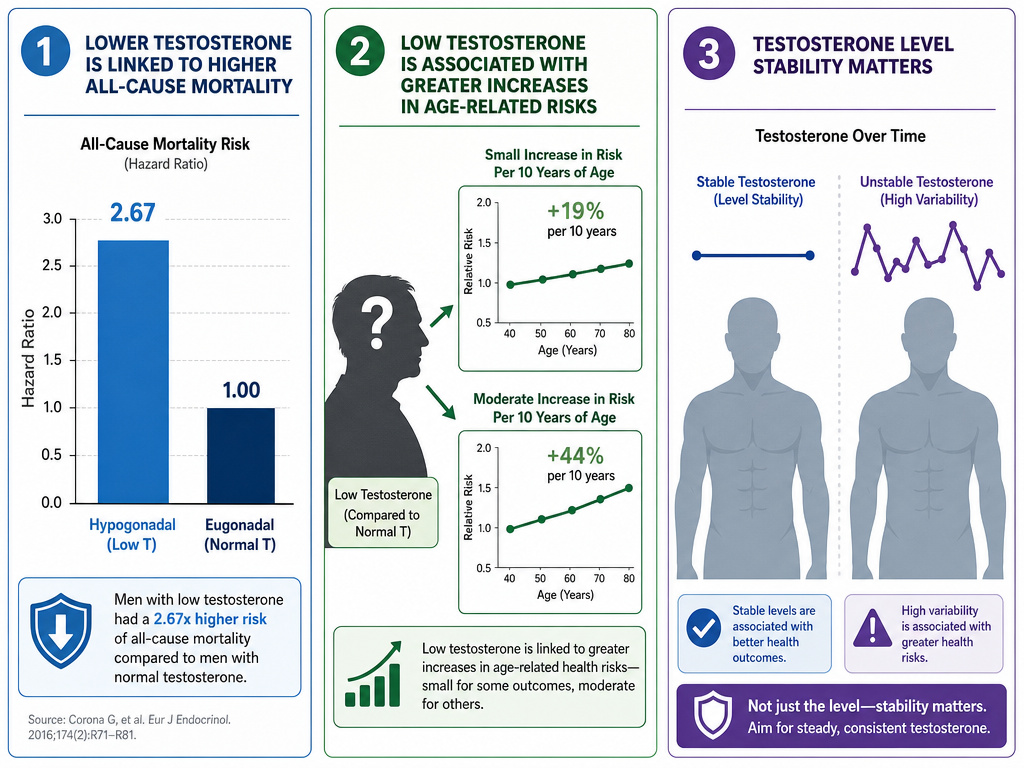
The most important question isn’t “Does testosterone affect mood?” It’s “Will testosterone improve my mood?” The answer depends on three key variables: your age, your starting testosterone level, and your individual brain chemistry, which are central to understanding how testosterone affects mood in men.
1. Hypogonadal vs. Eugonadal: The Biggest Divide
The data here is clear. The significant mood benefits are seen in men who start out low. A major meta-analysis found a statistically significant effect size for mood improvement in hypogonadal men but not in eugonadal men. Another study giving testosterone to eugonadal men concluded it produced only “detectable but minor mood changes.” If your levels are already normal, adding more testosterone is unlikely to be a mood miracle and is more likely to cause side effects.
2. The Age Factor
Does testosterone help with the grumpiness or low mood that can come with aging? The evidence is mixed, which explains why doctors are cautious.
- Sources disagree on efficacy in older men. Source 1 (PMID: 24501728) subgroup analysis showed the effect size on mood was not statistically significant in trials with a mean age >60 years. Conversely, Source 4 (NEJM TTrials, mean age ~72) found testosterone provided a small-to-moderate benefit for mood and depressive symptoms compared to placebo.
- Conversely, the New England Journal of Medicine study (the TTrials) in older men (average age ~72) with low testosterone found it provided a small-to-moderate benefit for mood and depressive symptoms compared to placebo.
- The testosterone treatment in older men question is complex. The aging brain has fewer androgen receptors and different neurochemistry. The benefit, if it exists, is likely smaller and slower to appear than in a younger hypogonadal man.
3. Unpredictable Individual Response
This is the wild card that frustrates patients and clinicians alike. The randomized trial on supraphysiologic doses highlighted this starkly: in men given 600 mg/wk of testosterone, 84% showed minimal psychiatric effects, while 4% became markedly hypomanic. The researchers noted that baseline measures could not predict who would be a responder. Two men with identical starting profiles can have completely different mood reactions to the same dose.
This variability is why the principle “start low and go slow” is essential in hormone therapy, especially given the complexity of how testosterone affects mood in men. It’s also why mood and mental state must be part of the monitoring conversation, not just blood counts and PSA levels.
Testosterone Therapy (TRT) and Antidepressants: A Complex Interaction
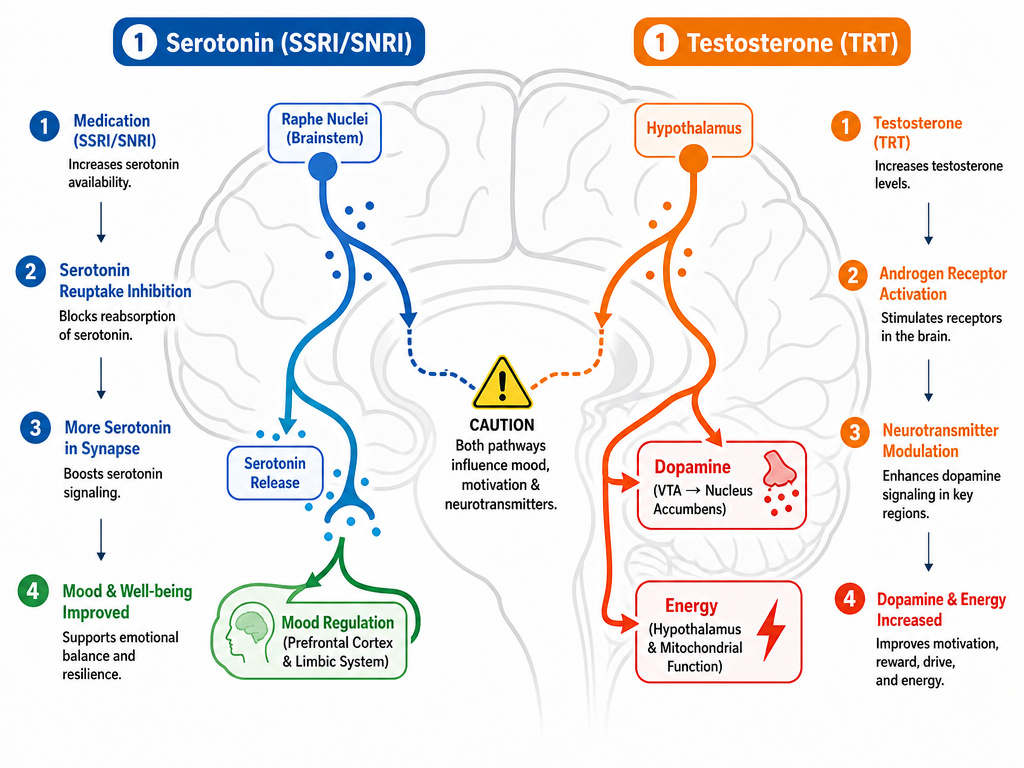
For men with both low testosterone and clinical depression, a common question arises: should I try TRT for depression, an antidepressant, or both? This is a decision for a psychiatrist and an endocrinologist, but understanding the interaction is key.
TRT as a Potential Adjunct
In hypogonadal men with depression, correcting the testosterone deficiency can sometimes improve depressive symptoms enough to reduce the needed dose of an antidepressant or improve response to it. Testosterone’s pro-dopamine and pro-energy effects can help counteract the fatigue and apathy that some antidepressants can cause or fail to address.
The Serotonin Consideration
Most common antidepressants (SSRIs, SNRIs) work primarily on the serotonin system. Testosterone’s mood effects operate more through dopamine, GABA, and neurosteroid pathways. They can work on parallel tracks. There’s no known dangerous pharmacological interaction, but the combined effect on mood is unpredictable.
The Risk of Switching
This is the critical caution. Both testosterone therapy (especially at high doses) and antidepressants carry a risk of inducing a manic or hypomanic episode in individuals with a latent bipolar tendency. Combining them could theoretically increase this risk. Any man starting TRT who is already on an antidepressant should be monitored for increased agitation, irritability, racing thoughts, or decreased need for sleep.
The Bottom Line on Combination
There is no blanket rule. For a hypogonadal man with severe depression, the best path is often to treat both conditions concurrently under close supervision. The testosterone therapy for the hormone deficiency and the appropriate medication and therapy for the depressive disorder. One does not necessarily replace the other.
Signs Your Mood Issues Might Be Hormone-Related (And What to Do Next)
How do you differentiate standard stress, aging, or clinical depression from a hormone-driven mood problem? Look for a constellation of specific symptoms. A single symptom like fatigue is a dead end. A constellation of specific symptoms points the way.
The Suggestive Cluster:
- Low Mood + Low Energy + Low Libido. This triad is classic. If your drive is gone in the bedroom, the gym, and your emotional life, hormones are a prime suspect.
- Irritability + Sleep Disturbance + Brain Fog. The irritability is persistent and feels tied to your exhaustion. The brain fog is like a cloud you can’t clear, affecting work.
- Loss of Muscle + Gained Fat + Low Motivation. Physical changes accompanying the mental ones. You’re not just feeling unmotivated; your body composition is shifting without a major lifestyle change.
What to Do First: Get Data, Not Supplements.
- See Your Doctor. This is always step one. Describe your symptoms in full, including the mood, energy, physical, and sexual aspects.
- Request Comprehensive Bloodwork. A total testosterone test is just the start. You need free testosterone (the active form), estradiol, SHBG, LH, and FSH. This panel helps distinguish primary testicular failure from a brain (pituitary) issue. Get it done in the morning, when levels are highest.
- Consider a Mental Health Screen. Be open to using a tool like the PHQ-9 for depression or GAD-7 for anxiety. This isn’t about dismissing a hormone issue; it’s about getting a complete picture. Depression in men and low T can be identical twins; testing helps tell them apart.
- Audit Lifestyle Foundations. No hormone intervention works optimally if sleep is poor, diet is junk, and stress is chronic. Address these. Magnesium and vitamin D deficiencies are common and can worsen both mood and hormone function. Fixing them is a low-risk, high-reward step.
If bloodwork confirms hypogonadism, you can have an informed discussion about testosterone and depression treatment options, including the potential benefits and risks of TRT. If levels are normal, you’ve ruled out a major contributor and can focus your energy on other causes with your doctor.
How does stress or cortisol affect testosterone?
Chronic stress elevates cortisol, which can directly suppress the body’s natural testosterone production. This hormonal interference happens at multiple levels, from the brain’s signaling to the testes. When the stress system is constantly active, the reproductive axis is often dialed down as a biological priority. Managing stress is therefore a foundational step for supporting healthy testosterone levels. Practical strategies include prioritizing sleep, incorporating regular physical activity, and developing routines that help the nervous system recover. Without addressing chronic stress, other efforts to support hormonal balance may be less effective.
Does testosterone affect mood in women?
Testosterone is a key neuroactive steroid in women as well, influencing energy, motivation, and overall sense of well-being. It acts directly on the brain, modulating neural circuits involved in mood regulation. While clinical research on testosterone’s mood effects in women is less extensive than in men, it is recognized as an important component of female hormonal balance. Significant changes in testosterone levels, whether due to natural aging, surgical menopause, or medical conditions, can correlate with shifts in mood. Women experiencing persistent low mood or fatigue alongside other symptoms should discuss a full hormonal evaluation with a healthcare provider.
Frequently Asked Questions
Can testosterone change a man’s mood?
Yes, significantly. Testosterone acts on brain pathways regulating emotion, motivation, and stress. In men with low levels, restoring it to normal can improve mood, energy, and reduce irritability. In men with normal levels, increasing it further usually has minimal positive mood effects and can increase risks of aggression or emotional instability.
What are the first signs of testosterone working for mood?
It’s not an overnight switch. The earliest signs, often within 3-6 weeks, are usually improved energy and sleep quality. A lifting of “brain fog” and a gradual return of motivation frequently follow. The improvement in core low mood or irritability may take 2-3 months of stable, optimized levels. If you feel jittery, overly aggressive, or euphoric within the first few weeks, that’s a sign the dose may be too high.
Why do men get grumpy as they age?
While declining testosterone can play a role, it’s rarely the sole cause. Aging brings other factors: chronic pain, sleep apnea, social isolation, retirement stress, and other health conditions. The testosterone and aggression link in aging is weak. It’s more accurate to view age-related grumpiness as a multifactorial issue where hormones might be one piece, alongside lifestyle, health, and psychological factors.
What are signs of too much testosterone from therapy?
Mood-related signs are key red flags: unusual irritability or aggression, feeling “wired” or anxious, racing thoughts, severely reduced need for sleep (feeling rested on 3-4 hours), and impulsive or reckless behavior. Physical signs include severe acne, rapid weight gain from fluid retention, and tender or swollen breasts (gynecomastia). Any of these warrant an immediate call to your prescribing doctor.
How does low testosterone affect motivation and drive?
Testosterone potentiates dopamine signaling in the brain’s reward pathway. When levels are low, this pathway becomes sluggish. The result isn’t just laziness; it’s anhedonia—a loss of the sense of pleasure or anticipation from activities you used to enjoy. This directly cripples drive and motivation, making it hard to start or follow through on tasks, from work projects to social plans. Correcting the deficiency can help restore the chemical “spark” that makes pursuit feel rewarding.
Before You Go
The relationship between testosterone and mood is one of balance, not brute force. The clearest takeaway from two decades of clinical research is this: testosterone therapy is a tool for correcting a deficiency, not a tool for enhancing normal function. If your levels are clinically low, restoring them can be a profound part of regaining your emotional and energetic footing. If your levels are normal, pushing them higher is far more likely to cause problems than it is to achieve some new level of well-being.
If you’re struggling with mood, start with the fundamentals your doctor can measure—bloodwork and a mental health screen—before considering any intervention. Let the evidence lead, not the promise on a label. The goal isn’t a number on a lab report; it’s a sustainable state where your energy, mood, and motivation are working in concert, not fighting against you.
