
How Testosterone and Dopamine Interact: A Personal Note
This post contains affiliate links. As an Amazon Associate, we earn from qualifying purchases.
Testosterone and dopamine interact through a complex, bidirectional relationship that shapes motivation, mood, and reward. Testosterone can alter dopamine signaling by changing the expression of key molecules like the dopamine transporter (DAT) and dopamine receptors in brain regions such as the substantia nigra and nucleus accumbens. However, the effect, whether it increases or decreases dopamine activity, depends entirely on the brain region, the method of administration, and the developmental stage.
The specific molecular changes are where the real story is. It’s not a simple on/off switch for motivation. The data from animal studies points to a precise, region-specific tuning of the dopamine system, which is central to understanding how testosterone and dopamine interact.
What follows is a breakdown of the core pathways, a look at the conflicting evidence you won’t find in most summaries, and what this means for understanding drive, mood, and common conditions like low motivation or ADHD. We’ll stick to what the primary research actually shows, not the oversimplified marketing claims.
Key Takeaways
- The interaction is region and route-specific. Subcutaneous testosterone raised dopamine in the rat neostriatum, but only intranasal delivery boosted it in the nucleus accumbens.
- In adolescent male rats, testosterone increased dopamine transporter (DAT) and vesicular monoamine transporter (VMAT) mRNAs in the substantia nigra, suggesting it can enhance the machinery for dopamine signaling.
- Major disagreements exist: one study found testosterone decreased nucleus accumbens dopamine in hamsters, while another review cited work showing it enhanced it in rats.
- Testosterone’s modulation of dopamine likely involves both androgen and estrogen receptors, though one key study argues the changes are “primarily androgen receptor-driven.”
- A single high dose of testosterone propionate given 24 hours before a neurotoxin significantly increased dopamine depletion in male mice, showing it can make the system more vulnerable.
The Core Pathways: Where Testosterone Meets Dopamine
Dopamine circuits, particularly the mesolimbic and nigrostriatal pathways, are the brain’s reward and motivation highways. Testosterone doesn’t just flood these roads; it adjusts the traffic signals and the number of lanes. The most consistent findings come from molecular studies in adolescent male rats, where rising testosterone during development leaves a clear signature.
In these animals, testosterone and its more potent form, dihydrotestosterone, increased the gene expression for the dopamine transporter (DAT) and the vesicular monoamine transporter (VMAT) in the substantia nigra. Testosterone also increased DAT protein in the cell body region. Think of DAT as the recycling pump that clears dopamine from the synapse, and VMAT as the loader that packs it into vesicles for release. Tweaking these changes how much dopamine is available and for how long.
This kind of molecular tuning in the adolescent nigrostriatal pathway suggests testosterone helps shape the developing dopamine system for adulthood, potentially influencing baseline motivation and reward sensitivity.
The same study found androgens increased dopamine receptor D2 mRNA and decreased D3 mRNA in the substantia nigra and striatum. Since D2 receptors are often inhibitory autoreceptors, this shift could represent a complex rebalancing act. It’s a foundational example of how testosterone affects the brain at a granular level.
The effects are not uniform, though. In male rats, testosterone decreased dopamine turnover (a marker of activity) in the medial preoptic area and anterior hypothalamus but increased it 3-fold in the median eminence. One hormone, three different outcomes depending on the zip code in the brain.
Does Testosterone Increase or Decrease Dopamine?
This is the question everyone wants a simple answer to, and the research refuses to give one. The effect is not universal; it’s a menu of possibilities dictated by where in the brain you look and how the hormone gets there.
A review article in PMC cites rodent work showing subcutaneous testosterone increased dopamine in the neostriatum, while intranasal testosterone enhanced it in the nucleus accumbens. This highlights a critical point: the route of administration matters. What happens with an injection may not mirror what happens with a more direct, brain-targeted delivery.
But then you have the contradictory evidence. In male hamsters, subcutaneous testosterone at 7.5 mg/kg did not increase nucleus accumbens dopamine, and subcutaneous testosterone at 37.5 mg/kg also did not increase it. Even more striking, intracerebroventricular testosterone at 2 μg/infusion actually decreased nucleus accumbens dopamine. This directly conflicts with the intranasal rat study mentioned in the review.
| Study Model | Administration Route | Brain Region | Effect on Dopamine | Source |
|---|---|---|---|---|
| Male Rats | Subcutaneous | Neostriatum | Increased | Review (Source 1) |
| Male Rats | Intranasal | Nucleus Accumbens | Enhanced | Review (Source 1) |
| Male Hamsters | Subcutaneous (7.5/37.5 mg/kg) | Nucleus Accumbens | No Increase | Study (Source 5) |
| Male Hamsters | Intracerebroventricular (2 μg) | Nucleus Accumbens | Decreased | Study (Source 5) |
So, does it increase or decrease dopamine in the reward center? The honest answer is that the PMC review of steroids-dopamine interactions and the testosterone and nucleus accumbens dopamine study are reporting different outcomes. This isn’t a flaw in the science, it’s a signal that the system of how testosterone and dopamine interact is nuanced. The nucleus accumbens isn’t a monolithic block; it has sub-regions, and testosterone’s impact might depend on precise localization and species-specific circuitry.
Androgen Receptors, Estrogen Receptors, or Both?
Once testosterone enters the brain, how does it actually signal to change dopamine machinery? Does it work primarily through androgen receptors (AR), or does it need to be converted to estradiol and act through estrogen receptors (ER)? Here, too, the sources don’t fully agree.
One study in adolescent male rats (Source 8) concluded that testosterone’s modulation of dopamine and related signaling molecules involves action through both androgen receptors (AR) and estrogen receptors (ERs). This makes biochemical sense, as the enzyme aromatase converts testosterone to estradiol in certain brain regions.
However, another study in adolescent male rats (Source 2) came to a different conclusion, finding that testosterone-induced changes in molecular indices of dopamine neurotransmission are primarily androgen receptor-driven events as estradiol had minimal effect.
Where this goes sideways: Assuming testosterone’s brain effects are solely about muscle-building androgen receptors. The evidence points to a dual-receptor system in some contexts, which complicates the picture of how supplements or therapies might work.
This receptor debate isn’t academic. If the primary action is through AR, then compounds that block AR might disrupt this modulation. If ERs are key players, then factors affecting aromatase activity (like body fat percentage) could indirectly influence dopamine signaling. It’s a layer of complexity in how testosterone and dopamine interact that most discussions of testosterone and mood gloss over.
The Real-World Impact: Motivation, Risk, and Vulnerability
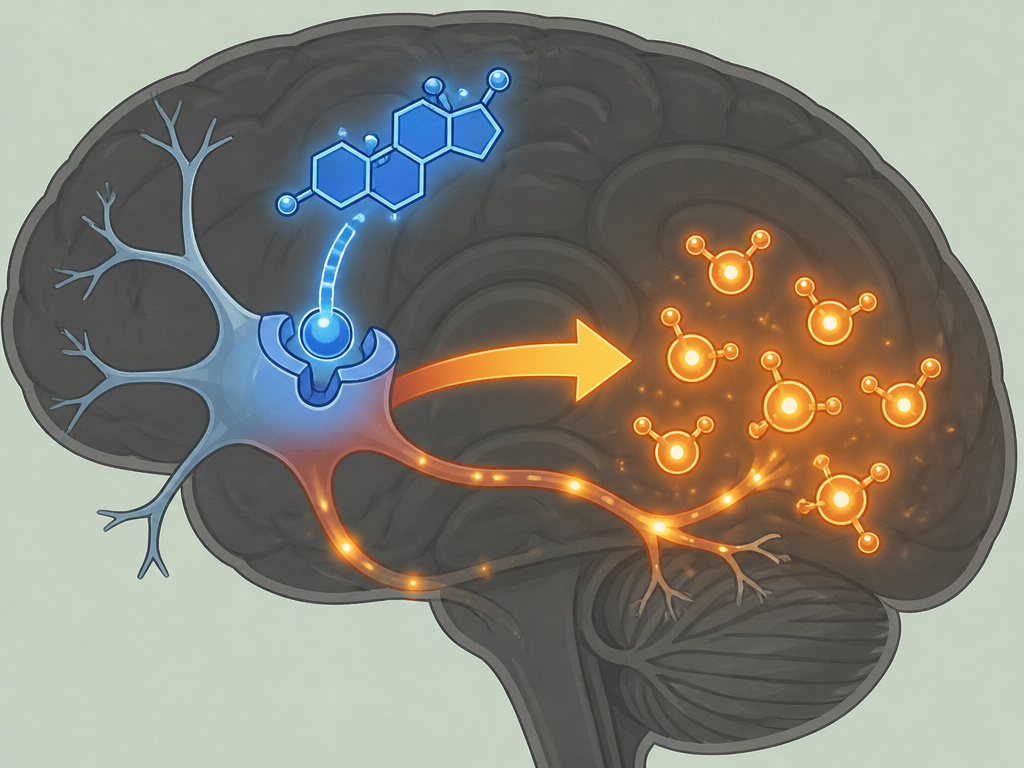
What does this molecular chess game mean for how you feel and act? The interaction lays a biological foundation for traits like drive, willingness to take on effort, and even vulnerability to certain substances.
The link to testosterone and motivation is the most cited. By tuning DAT levels and receptor balance in reward pathways, testosterone could set the baseline for how rewarding an effort feels. This dovetails with research on how androgens influence the choice to work hard for a reward, such as in studies of effort-based decision-making and dopamine.
It also provides a plausible mechanism for the observed links between testosterone and behaviors like testosterone and risk-taking. A dopamine system primed for sharper reward signals might lower the threshold for engaging in competitive or novel behaviors.
But there’s a potential dark side. In male mice, administration of testosterone propionate 24 hours prior to methamphetamine significantly increased striatal dopamine depletion. This same effect was not seen in female mice, as testosterone propionate failed to alter methamphetamine-induced dopamine depletion in females. This is a clear sex difference and a warning: elevated testosterone can potentially make the dopamine system more susceptible to damage from certain toxins. It’s a stark reminder that more hormonal stimulation isn’t always protective; sometimes it increases risk.
Low T, Low Dopamine, and Overlapping Symptoms
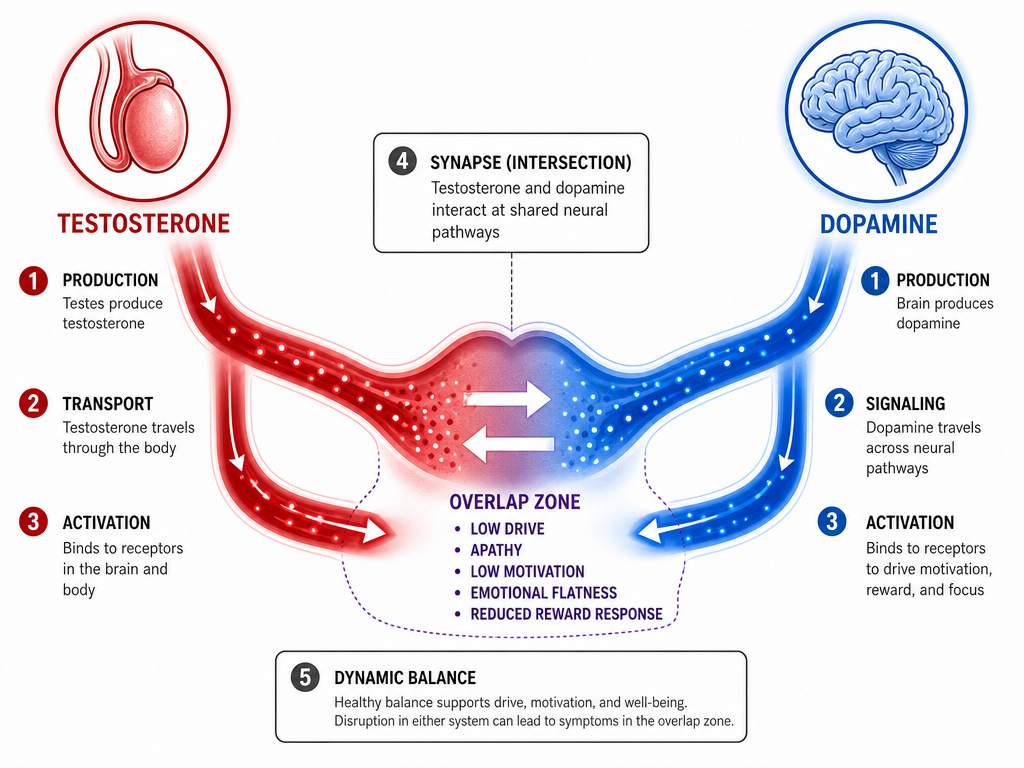
When someone experiences low energy, apathy, and lack of pleasure, it’s a classic diagnostic puzzle. Are the symptoms from low testosterone and depression, or from a dopamine-deficient state? The research suggests these systems are so intertwined that the cause and effect can blur.
Low testosterone could lead to downstream dampening of dopamine signaling, particularly if it reduces the expression of DAT or alters receptor ratios. This would manifest as low drive. Conversely, chronic stress or conditions that deplete dopamine could potentially disrupt the hypothalamic-pituitary-gonadal axis, contributing to lower testosterone. It’s a vicious cycle that can be hard to untangle.
This overlap is especially relevant in conditions like ADHD. The relationship between low testosterone and ADHD is an area of growing interest, as both systems are implicated in focus, executive function, and reward processing. Common treatments like stimulants (e.g., Adderall and testosterone) directly affect dopamine, creating another point of potential interaction that needs medical supervision.
The takeaway here is practical. If you’re dealing with persistent low motivation, checking both hormonal and mental health markers is wiser than assuming it’s one or the other. The solution is rarely just a testosterone booster or a dopamine supplement alone.
A Personal Note on Nootropic Stacks
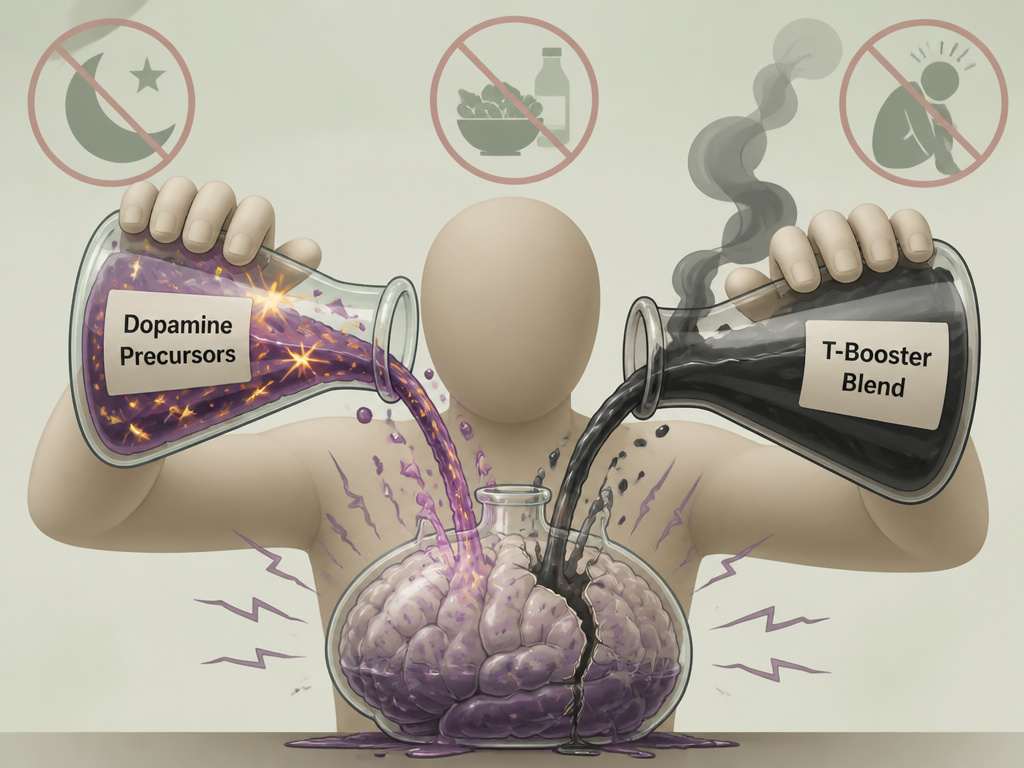
I once bought into the clean, marketed link between dopamine and drive. I ran a stack of L-tyrosine, a mucuna pruriens extract (which contains L-DOPA), and a proprietary “T-booster” blend, hoping to supercharge my motivation through both pathways.
After about four weeks, the result wasn’t heightened focus or sustainable energy. It was a persistent, background jitteriness and zero improvement in my actual productivity. I couldn’t tell which ingredient was the culprit, was it the direct dopamine precursor, the unknown herbal blend, or their interaction? It was a classic case of overkill, mistaking biochemical complexity for a simple engineering problem. I learned that the evidence for these “hormonal focus” blends in men with normal levels is exceptionally thin. Now, I treat any product claiming to merge testosterone and dopamine supplements for cognitive gain with deep skepticism.
Change one thing at a time. Start with the basics, sleep, diet, stress management, before layering in compounds that directly manipulate these precise and interconnected systems.
How do testosterone and dopamine affect exercise and muscle?
The interaction between testosterone and dopamine creates a powerful loop for physical drive and adaptation. Testosterone’s influence on dopamine systems in brain regions like the substantia nigra and striatum can shape motivation and reward signals related to exercise. This molecular tuning, primarily driven by androgen receptors, may help explain the heightened drive for physical activity and the reinforcing feeling of a workout. While the direct effect on muscle tissue is a separate process, this neurological partnership underpins the consistent pursuit of training. It’s a foundational system where hormonal signals adjust the brain’s reward circuitry to support the repeated effort needed for physical development.
What are natural ways to boost testosterone and dopamine together?
Lifestyle factors that support overall health are the most reliable tools for optimizing both systems. Regular physical activity, particularly resistance training and high-intensity exercise, provides a potent stimulus. Quality sleep is essential, as both hormone production and neurotransmitter balance are critically dependent on recovery. A diet focused on whole foods with adequate protein and healthy fats supplies the raw materials for hormone synthesis. Managing chronic stress is also key, as prolonged elevation of cortisol can disrupt both pathways. The goal is to create consistent, health-promoting habits that reduce systemic inflammation and support your body’s natural regulatory rhythms without relying on specific supplements or extreme protocols.
Does TRT affect dopamine and mood?
Research on how testosterone replacement therapy directly alters brain dopamine is complex and shows mixed results. In animal studies, the method of administration and brain region studied lead to different outcomes. For instance, some studies in male rats show subcutaneous or intranasal testosterone can increase dopamine in areas like the neostriatum or nucleus accumbens, while other work in hamsters found certain central infusions decreased it. The primary receptor mechanism is debated: one study (Source 2) concluded changes are primarily androgen receptor-driven, while another (Source 8) concluded action involves both androgen and estrogen receptors. This suggests TRT’s impact on mood and motivation likely depends on individual neurochemistry, the specific brain circuits involved, and how baseline levels interact with the treatment. It is not a guaranteed dopamine boost.
Frequently Asked Questions
Can testosterone replacement therapy (TRT) directly boost my motivation?
The relationship is not direct. TRT may influence the brain’s dopamine circuitry involved in drive and reward anticipation, but its effect depends heavily on the specific brain region and your baseline neurochemistry. It’s not a guaranteed motivational switch, as the interaction can sometimes even decrease dopamine activity in certain reward areas.
Does the age when testosterone levels change affect this interaction?
Yes, developmental stage is a critical factor. Research indicates rising testosterone during adolescence can durably alter the expression of dopamine transporters and receptors, shaping the system long-term. The effects seen in developing brains are often more pronounced and structurally different from those observed when hormone levels are manipulated in adulthood.
Why do some studies show opposite effects on dopamine levels?
Conflicting results arise from key differences in species, the method of testosterone administration (e.g., injection vs. Nasal), and the precise brain region being measured. A finding in the rat nucleus accumbens may not apply to the human prefrontal cortex, highlighting the system’s complex and region-specific nature.
Could testosterone make someone more susceptible to addiction?
Some evidence suggests it might influence vulnerability. By modulating dopamine signaling in reward pathways, testosterone could potentially alter the reinforcement value of certain stimuli. However, this is a nuanced risk factor, not a direct cause, as addiction involves numerous genetic, environmental, and neurobiological components beyond a single hormone.
The Bottom Line
The interaction between testosterone and dopamine is a masterclass in biological nuance. It’s not a volume knob for motivation; it’s a regional soundboard with separate controls for reuptake, release, and receptor sensitivity.
If you take one thing away, let it be this: the next time you read a claim that a supplement or habit “boosts both testosterone and dopamine,” remember the hamster study where high-dose testosterone decreased nucleus accumbens dopamine, and the mouse study where it increased neurotoxic vulnerability. More stimulation isn’t always better. The goal is balanced modulation, not maximal output.
Your approach should mirror the science: be specific and measured. Support overall brain and hormonal health through foundational habits first. If you explore supplementation, do so with an understanding that you are intervening in a delicate, bidirectional system. And when symptoms like low drive or anhedonia persist, let the overlapping symptoms of low T and low dopamine be a clue to investigate both systems with a professional, not a prompt to self-prescribe a stack.
