
Can Low Testosterone Be Reversed? The Step-by-Step Ladder
This post contains affiliate links. As an Amazon Associate, we earn from qualifying purchases.
Low testosterone can be reversed, but the success rate and method depend entirely on whether the cause is functional (often reversible) or organic (usually permanent). Functional cases, driven by obesity, poor sleep, or medications, may improve with lifestyle changes within 3 to 6 months. Organic cases from genetic conditions, pituitary tumors, or testicular damage typically require lifelong testosterone replacement therapy (TRT) to restore levels, not reverse the underlying cause.
That distinction is the whole game. It decides whether you spend six months fixing sleep and losing weight or start a conversation about a prescription. Most of the confusion and frustration around this topic comes from mixing up the two. A common question is: can low testosterone be reversed?
What follows: a breakdown of the two main types, the evidence on what actually works for each, a realistic timeline you can track, and the one lab result that tells you which path you’re on before you spend a dollar.
Key Takeaways
- The cause decides everything. Functional hypogonadism from obesity or sleep apnea has a real shot at reversal; organic hypogonadism from a pituitary tumor does not.
- Lifestyle changes alone are not universally endorsed as first-line therapy. The British Society for Sexual Medicine states current evidence does not support this recommendation for obesity-related cases, while other sources consider addressing reversible causes like obesity with lifestyle intervention a core management question.
- 60% to 70% of men discontinue prescribed testosterone therapy within the first year, often because initial placebo effects fade or expectations are mismatched.
- Always check LH and FSH levels in your initial bloodwork. This single split points toward a reversible (secondary) or permanent (primary) cause.
The Core Question: Functional vs. Organic Hypogonadism
You don’t treat a flat tire and a broken engine the same way. Medical guidelines frame low testosterone the same, by splitting it into two broad categories. This distinction is practical, separating a problem you can fix from one you manage.
Functional hypogonadism is often a system under stress. Think obesity, metabolic syndrome, chronic opioid use, or untreated sleep apnea. The body’s hormone-producing machinery, the hypothalamus and pituitary, is not broken but suppressed by another condition. The potential for reversal is the core management question here.
Organic hypogonadism involves irreversible damage to the hormone axis. This includes genetic conditions like Klinefelter syndrome, pituitary tumors, or testicular damage from injury, chemotherapy, or infection. The system itself is broken. As noted in a major review, this type “is easily diagnosed and treated” with replacement therapy, but the underlying cause isn’t reversed.
This 50-60 word, third-person blockquote defines the key clinical distinction for a featured snippet. Functional hypogonadism results from reversible suppression of the hypothalamic-pituitary-testicular axis, often by obesity or medications. Organic hypogonadism stems from permanent structural damage to the testes, pituitary, or hypothalamus. Diagnosis hinges on measuring luteinizing hormone (LH) and follicle-stimulating hormone (FSH) levels alongside total testosterone.
I spent about a year treating the lab’s printed range like a pass/fail line. Then I saw two men with nearly identical total testosterone levels, one barely functioning and one fine. The difference was their symptoms and their SHBG, not the cutoff. My rule now: a number at the bottom of the range with no symptoms usually gets a recheck, not a fix. A mid-range number with crushing fatigue and low drive means you look deeper at free testosterone and the underlying causes of low testosterone.
What Does “Reversal” Actually Mean? (Symptom vs. Blood Level)
When you ask the can low testosterone be reversed question, you’re really asking two questions. Can my blood level go back up? And will I feel better? The evidence shows these don’t always move together.
The AUA testosterone deficiency guideline sets a clear therapeutic target: the middle tertile of the normal reference range. A normal physiologic range of 450–600 ng/dL is also cited as a target for testosterone therapy. Hitting that number with treatment is one benchmark for biochemical reversal.
But a number on a lab slip isn’t the final goal. Symptomatic reversal is. Here’s where it gets messy. A 4.3-year follow-up from the European Male Ageing Study found that biochemical reversal of secondary hypogonadism was not associated with an improvement in symptoms. The blood level corrected, but how men felt didn’t reliably follow.
This gap explains the high dropout rate. Data shows 60% to 70% of men discontinue testosterone therapy within 12 months of the initial prescription. Why? An initial placebo-driven boost in energy or mood typically abates after about 6 months. If the underlying cause, like poor sleep or unmanaged stress, isn’t addressed, the prescription alone often feels like it stops working.
The Reversal Ladder: Step-by-Step from Cause to Action
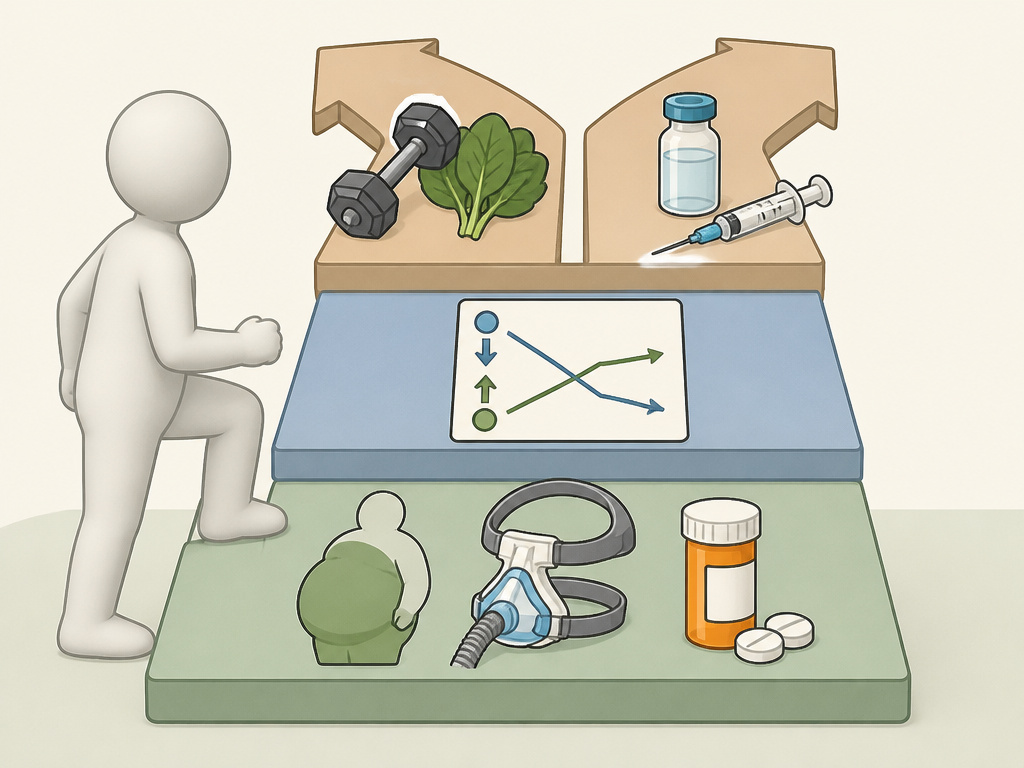
You need a sequence, not a scattershot approach. Jumping straight to supplements or wondering about a hypogonadism cure or can low testosterone be reversed is how you waste time and money. Follow this ladder. You move to the next step only if the one before it doesn’t apply or hasn’t worked after a genuine effort.
Step 1: Identify and Remove Suppressive Factors
This is for functional cases. Your body is smart. It downregates testosterone production when other survival priorities take over.
- Obesity & Metabolic Health: Adipose tissue converts testosterone to estrogen. Significant weight loss can reverse this.
- Sleep Apnea: Chronic oxygen deprivation is a massive stressor. Treating sleep apnea can improve morning testosterone levels within months.
- Medications: Opioids, certain antidepressants, and corticosteroids are known suppressors. A medication review with your doctor is step one.
- Excessive Alcohol & Chronic Stress: Both elevate cortisol, which directly competes with testosterone production.
Where this goes sideways: Assuming lifestyle changes are always the first and only answer. The British Society guidelines on testosterone explicitly state that “current evidence does not support the recommendation for lifestyle intervention alone as first-line therapy” for functional cases. They advocate for lifestyle change in conjunction with therapy, not instead of it.
Step 2: Get the Right Baseline Labs (The LH/FSH Split)
Early on, I skipped straight to the ‘what do I take’ question. Now I tell people a proper baseline comes first. You need at least two morning draws, a week or two apart, because a single number can swing wildly.
The most critical part everyone forgets? LH and FSH. This single split points your entire path.
| LH/FSH Pattern | Likely Diagnosis | Reversibility Potential |
|---|---|---|
| Low T, Low/Normal LH | Secondary (Hypogonadotropic) Hypogonadism | Higher. Problem is in the brain’s signaling (pituitary/hypothalamus). Often functional and reversible. |
| Low T, High LH | Primary (Hypergonadotropic) Hypogonadism | Lower. Problem is in the testes. Usually indicates permanent damage. |
If your LH is high, your pituitary is screaming at testes that can’t respond. That’s a strong indicator for testosterone replacement therapy (TRT) as the primary management path, not lifestyle reversal.
Step 3: Choose a Therapeutic Path Based on Step 2
Your lab results from Step 2 funnel you into one of these lanes.
For Functional (Secondary) Cases:
- Lifestyle Intervention: A dedicated 3–6 month trial of weight loss, sleep optimization, and stress reduction. Monitor symptoms and re-test. This is the core of any plan to increase testosterone naturally.
- Medication-Assisted Reversal: For some with secondary hypogonadism, drugs like clomiphene citrate can stimulate the pituitary to produce more LH/FSH, potentially restoring natural production. This is not TRT.
For Organic (Primary) Cases or Severe Functional Cases:
- Testosterone Replacement Therapy (TRT): This replaces the hormone your body can’t make. It’s a management strategy, not a reversal of the cause. It’s highly effective at restoring blood levels and often symptoms. The ACP clinical guideline on testosterone provides a framework for this decision, using a threshold of ≤300 ng/dL for age-related low testosterone.
- Alternative Therapies: In men wishing to preserve fertility, treatments like hCG may be used alongside or instead of TRT to stimulate testicular function.
The choice between natural testosterone optimization versus TRT is significant. A systematic review of testosterone treatment can help inform this decision by weighing the evidence for each approach.
Realistic Timelines: How Long Does Reversal Take?
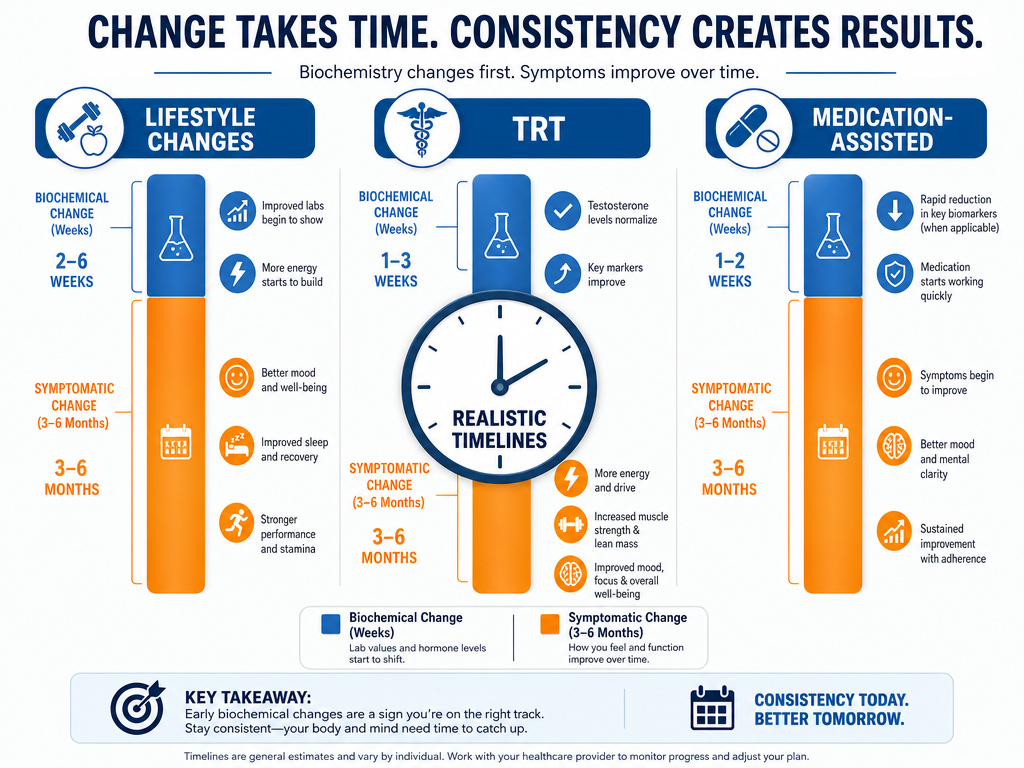
Hope is a plan with a timeline. Vague promises lead to frustration. Here’s what the evidence and clinical experience suggest.
Lifestyle Changes (Weight Loss, Sleep, Exercise):
- Biochemical Change: Studies show measurable increases in serum testosterone can begin within several weeks to months of sustained lifestyle change, particularly with weight loss.
- Symptomatic Change: This lags. You might feel slightly more energy in a month, but meaningful improvement in libido, mood, and drive often takes the full 3–6 month treatment trial period guidelines recommend. For more on this progression, see our analysis of the timeline for raising T.
Testosterone Replacement Therapy (TRT):
- Biochemical Change: Blood levels typically rise into the target range within weeks of starting therapy.
- Symptomatic Change: Initial effects (mood, energy) may be felt in weeks, but full stabilization and assessment of true benefit require the same 3–6 month trial. This is to separate real effect from the initial placebo boost.
Medication-Assisted (e.g., Clomiphene):
- Biochemical Change: LH and testosterone levels often rise within weeks.
- Symptomatic Change: Again, a 3–6 month trial is needed to see if the higher blood level translates to feeling better.
The biggest mistake is quitting a path at 8 weeks because you don’t feel transformed. The system doesn’t work that fast.
The Hard Limits: When Reversal Isn’t the Goal
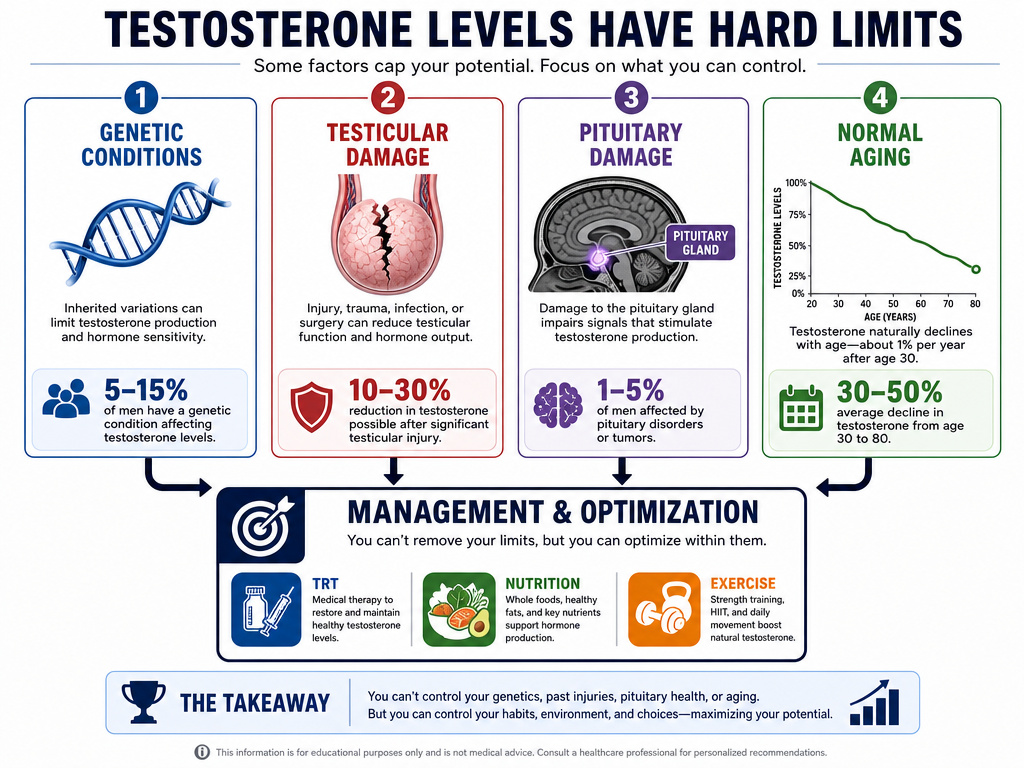
Managing expectations is part of ethical advice. Some causes of low testosterone have a very low chance of true reversal.
- Genetic Conditions (Klinefelter Syndrome): The testicular impairment is structural. TRT is the standard of care.
- Testicular Damage: From trauma, radiation, chemotherapy, or severe infection. The tissue is lost.
- Pituitary Tumors or Damage: If the gland is surgically removed or irrevocably damaged, it won’t recover.
- Normal Aging: A gradual, age-related decline is expected. The goal shifts from “reversal” to optimization, keeping levels as robust as possible for as long as possible through healthful living.
In these scenarios, the conversation changes. It’s not about whether hypogonadism can be cured. It’s about effective management, understanding the TRT pros and cons, and maintaining quality of life.
What are the risks and side effects of TRT?
Testosterone replacement therapy is not a simple fix and carries potential downsides. A significant portion of men stop treatment within the first year, with studies showing 60% to 70% discontinue within 12 months of the initial prescription. Initial improvements in how you feel may not last, as early symptomatic gains can be a placebo effect that typically fades after about six months. Achieving a normal testosterone level on a blood test does not guarantee you will feel better, as biochemical reversal has not been consistently linked to an improvement in symptoms. It is crucial to have a clear therapeutic target and a defined trial period with your doctor to assess if the benefits outweigh these risks for you.
Are there non-testosterone medical alternatives like SERMs or hCG?
For some men, the goal is to stimulate the body’s own natural testosterone production rather than replacing it from an outside source. This is a different medical strategy. These alternatives, which include medications like selective estrogen receptor modulators (SERMs) and human chorionic gonadotropin (hCG), are typically considered for specific types of low testosterone, particularly when fertility is a concern. They work by signaling the testicles to produce more testosterone on their own. Whether these options are suitable depends entirely on the underlying cause of your low testosterone, so a precise diagnosis is the essential first step before considering any treatment path.
When is testosterone treatment not recommended?
Testosterone therapy is not a one-size-fits-all solution and is actively discouraged in certain health situations. The most critical contraindication is a history of or active prostate cancer, as testosterone can potentially fuel the growth of these cells. Other serious conditions may also rule out treatment. This is why a thorough medical evaluation is mandatory before starting. Doctors need to rule out these specific risks. The decision to treat, or not to treat, hinges on balancing the potential symptom relief against the possibility of worsening an underlying serious health problem that must be addressed first.
Frequently Asked Questions
Can low testosterone return to normal on its own?
It can, but only if the cause is temporary. For example, testosterone levels suppressed by a cycle of prednisone or a period of extreme sleep deprivation may rebound once the suppressing factor is removed. Chronic causes like obesity or a pituitary tumor will not resolve spontaneously.
What are the biggest signs that low T might be reversible?
The strongest clues are a functional cause (obesity, poor sleep, certain medications), a lab pattern showing low testosterone with low or normal LH (secondary hypogonadism), and your age. Younger men with these factors have a higher likelihood of meaningful reversal through lifestyle correction.
How do you gain your testosterone back?
The path depends on the cause. First, identify and address reversible suppressors like excess body fat, sleep apnea, or problematic medications. This is the foundation of learning how to increase testosterone naturally. If labs point to primary testicular failure, then testosterone replacement therapy (TRT) is the method to “gain it back” by replacing what’s missing.
Can a man live a normal life with low testosterone?
Yes, many do. “Normal” is subjective. The question is about quality of life. Some men with mildly low levels have few symptoms. Others with the same levels are severely impacted. The decision to treat is based on the combination of consistently low levels and bothersome symptoms that affect your life. Effective management, whether through lifestyle or TRT, aims to restore that quality.
Before You Go
The evidence pulls in two directions. On one side, major reviews like the evidence report on testosterone treatment efficacy conclude testosterone has “little to no effect” on energy, mood, or cognition in older men. On the other, clinical practice sees men who report clear benefits from properly managed therapy.
Here’s how I reconcile it: Reversal is not a guaranteed ticket to feeling 25 again but a numbers game with odds set by your specific cause. Your first job is to get the LH and FSH result. That tells you if you’re playing a game you can win through your own actions, or one where the smarter move is to talk about effective replacement.
If your numbers point to a functional cause, commit to a single change for three months, fix your sleep, lose 10% of your body weight, address a medication, and then re-test. That’s how you learn what moves the needle for you. Stacking five new supplements while ignoring sleep apnea is the fastest way to learn nothing and spend a lot. Start simple, track consistently, and let the labs, not just your mood, guide the next step.
