
Can You Donate Blood on TRT? Eligibility, Risks, and Rules
This post contains affiliate links. As an Amazon Associate, we earn from qualifying purchases.
You can donate blood while on testosterone replacement therapy if you are otherwise healthy, meet all standard donor criteria, and your hematocrit and hemoglobin levels are within the acceptable range. However, a common side effect of TRT is polycythemia, an elevated red blood cell count, which may require therapeutic phlebotomy. In the US, programs like Carter BloodCare’s allow for more frequent draws under a doctor’s prescription as a treatment for elevated red cell counts, while UK guidelines from the Joint Professional Advisory Committee state blood donation should not be used to treat this condition.
The core conflict isn’t about the medication itself. It’s about why you need to donate. A standard blood donation at the standard interval is fine if you’re healthy. A therapeutic phlebotomy on a schedule more frequent than the standard donation interval (e.g., at a minimum 14-day interval) to manage a high red cell count is a medical treatment, and that changes the rules, the labeling, and which door you walk into at the blood center. A common question is: can you donate blood on TRT?
What follows is the map: the two separate pathways for TRT donors, the specific deferral rules that catch people, and the step-by-step process for your first visit. We’ll also look at what the data says about who is donating and how often.
Key Takeaways
- TRT itself is not a blanket disqualifier, but elevated hematocrit or hemoglobin is an automatic deferral at most centers.
- The US FDA allows therapeutic phlebotomy under prescription more frequently than the standard 8-week donation interval, but the blood bag must be specially labeled.
- In a large US study, TRT donors represented 1.6% of the donor base but contributed 2.2% of red blood cell units, indicating they donate more frequently.
- UK guidelines from the Joint Professional Advisory Committee explicitly state blood donation should not be used to treat medication-induced polycythemia, creating a major policy difference.
- Always check with your specific blood center about their TRT policy and whether you need a physician’s enrollment form before your first donation.
The Core Conflict: Donation for Health vs. Donation for Supply
Where this goes sideways: Assuming all blood centers view TRT the same way. The UK’s Joint Professional Advisory Committee and a US center like Carter BloodCare operate under fundamentally different principles on using donation to manage high hematocrit.
This is the first hurdle, and it’s a conceptual one. Most articles repeat that “TRT doesn’t disqualify you,” which is technically true but misses the point. The real question is: are you donating to help the blood supply, or are you donating as part of your TRT health management?
The UK’s professional guidelines are unambiguous when you compare a can you donate blood on trt policy. The Joint Professional Advisory Committee states: “Blood donation should not be used to prevent medication-associated polycythaemia or raised haematocrit.” Their position is that donation is a public health service, not a personal treatment. If your motivation to give blood is to treat a high red cell count, you are deferred and told to see your doctor.
Contrast that with Carter BloodCare in the US, which runs a specific program. Their materials state: “One of the possible side effects of testosterone therapy is an increase in red cell production. The treatment for this is to have some of the excess red cells drawn.” They operate under an FDA variance to provide this as a no-cost service.
Why does this matter for you? It sets the stage for everything that follows, the paperwork, the frequency, and even the type of donation you can give when navigating the can you donate blood on trt process. Your local center’s philosophy determines which rulebook you’re using.
The Two-Path System: Standard Donation vs. Therapeutic Phlebotomy
In practice, especially in the United States, TRT donors typically encounter one of two pathways. Which path you take depends on your health metrics and how often you need a draw.
| Pathway | Who It’s For | Key Requirement | Donation Frequency | Product Restrictions |
|---|---|---|---|---|
| Standard Blood Donation | TRT donors who meet all regular eligibility criteria and need phlebotomy every 8+ weeks. | Pass the standard health screening (Hb/Hct, weight, BP). | Minimum interval of once in 8 weeks between whole blood donations (per American Red Cross and FDA base rule). | Any product (whole blood, double reds, platelets). |
| Therapeutic Phlebotomy Program | TRT donors who need draws more frequently than every 8 weeks OR who do not meet all standard donor criteria. | Physician’s prescription/enrollment form diagnosing the need for therapeutic phlebotomy. | As prescribed (e.g., at a minimum 14-day interval at Carter BloodCare). The FDA permits more frequent draws than standard intervals. | Whole blood only. The collected unit is labeled with the donor’s condition. |
The FDA’s regulation (21 CFR Part 630 Subpart B) is what makes the second path possible. It states that for a therapeutic phlebotomy under prescription, you may be collected from “more frequently than once in 8 weeks,” provided the container label states the donor’s condition.
However, a key limitation exists. If you enroll in a therapeutic program like Carter BloodCare’s, you may only donate whole blood. You can only donate at a mobile drive if you are eligible for regular allogenic donation. The blood is still used, but it’s handled with the specific label.
For the majority of men on TRT whose hematocrit is well-managed, the first path, standard donation every 8 to 12 weeks, is the simplest. You walk in, pass the screen, and donate like anyone else.
Mandatory Deferrals: When You Cannot Donate on TRT
The part nobody mentions: It’s often not the testosterone that defers you. It’s the underlying reason you’re taking it, or a related health marker that’s out of range.
Based on the strictest available guidelines (from the UK’s JPAC), you must not donate if any of the following apply. Most US centers will defer you for similar reasons related to donor and recipient safety.
- Unmonitored or Illicit Use: The medication is not prescribed and monitored by a licensed healthcare practitioner.
- Known Polycythemia or Elevated Hct/Hb: You have a diagnosed polycythemia or a raised hematocrit/hemoglobin at the time of screening. This is the most common tripwire.
- Underlying Malignancy: The TRT is being used as part of treatment for a malignancy or any other condition that itself precludes donation.
- Pituitary-Derived Hormone History: You are a recipient of human gonadotrophin of pituitary origin (a permanent deferral). This is historical; most modern gonadotrophins are not pituitary-derived.
The hematocrit check is the gatekeeper. During the mini-physical, they’ll test your hemoglobin level. If it’s too high, you’re turned away that day. This is why you must monitor it consistently. You can’t guess this number.
I learned this the practical way. I watched my own hematocrit creep up over a couple of lab draws. It was a reminder that this number is not a vibe check, you need actual bloodwork. I also found that my hydration the day before the draw changed my reading by about a point, which is why I now try to get my labs drawn under the same conditions each time.
First-Time TRT Donor Checklist: Step-by-Step
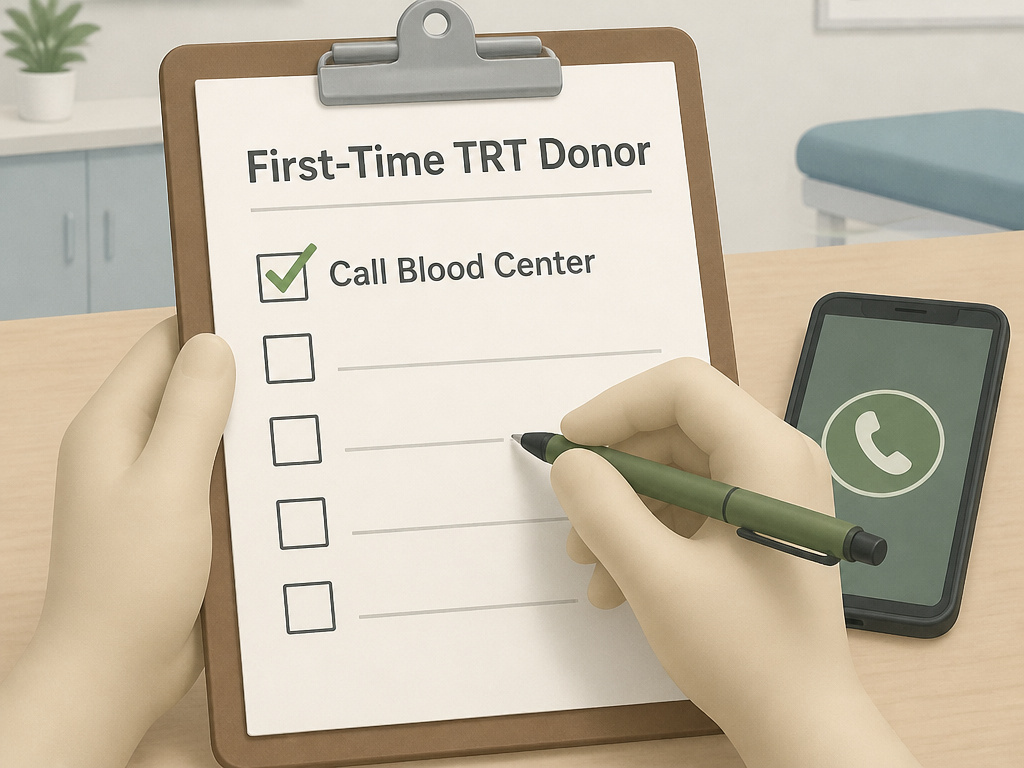
Ever wondered what actually happens when you show up as a TRT donor? This checklist walks you through it, so there are no surprises.
- Call Your Blood Center First. Don’t assume. Ask: “Do you have a specific policy or program for donors on testosterone replacement therapy?” Get the details on physician forms.
- Get Your Doctor’s Buy-In. If you might need therapeutic phlebotomy, discuss it at your next appointment. Your doctor may need to fill out an enrollment form specifying the draw frequency.
- Check Your Latest Labs. Know your numbers. If your hematocrit is already at the high end of the normal range, you’re at higher risk of being deferred at screening. This is the time to review with your doctor the necessary blood work for TRT.
- Hydrate Well the Day Before. Being well-hydrated makes the vein stick easier and can slightly improve your blood viscosity reading. Don’t overdo it, but don’t show up dehydrated.
- Bring Your TRT Prescription Info. Have the name of your medication and your prescribing doctor’s information handy. The health historian will ask about medications.
- Prepare for the Finger Stick. They will test your hemoglobin level. If it’s above the cutoff (which varies by center and sex), your donation ends here.
- Answer the Health Questionnaire Honestly. This includes questions about why you’re taking medication. Be clear that it’s doctor-prescribed TRT.
- Specify Your Path. Tell the staff at check-in: “I’m on prescribed TRT. I believe I’m here for a standard donation,” or “I have a therapeutic phlebotomy form from my doctor.”
- After Donating, Monitor. It’s normal to feel a bit tired. Rehydrate, eat the snacks provided, and avoid heavy exertion for the rest of the day. If you feel lightheaded, tell the staff immediately, don’t try to tough it out.
Skipping step 1 or 3 is where most first-timers waste a trip. A five-minute call can tell you if you need a form filled out three weeks in advance.
The Data on TRT Donors: Who Donates and How Often?
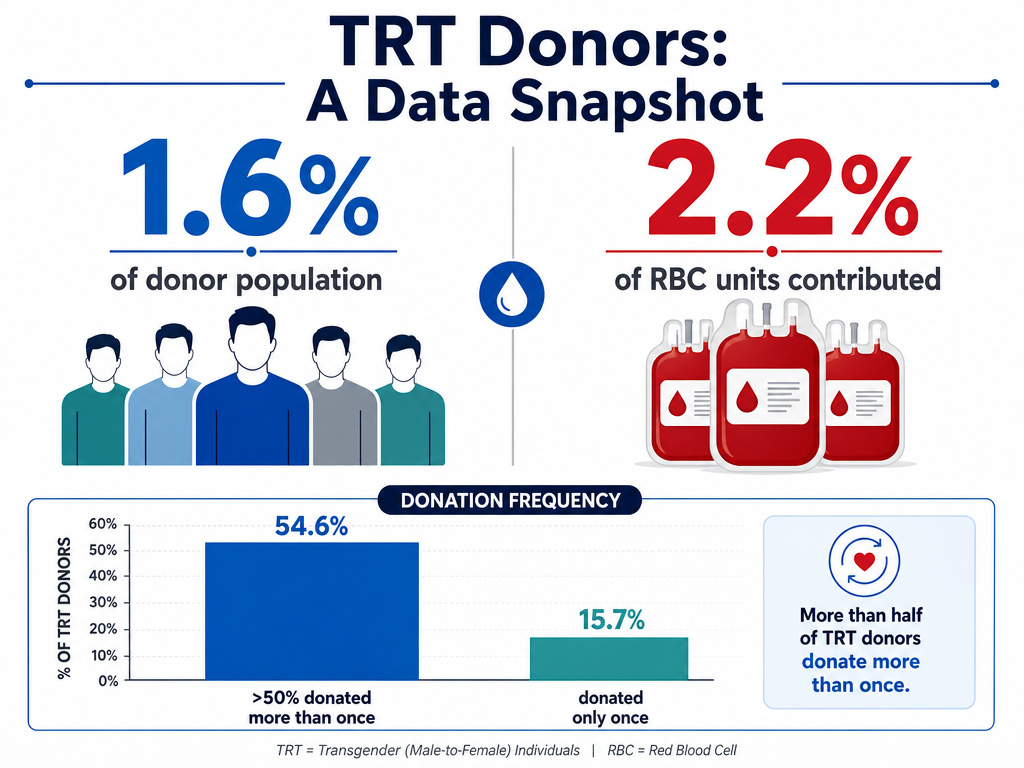
A 2020 study published in Transfusion and available on PMC analyzed data from over 500,000 US donors. TRT donors made up 1.6% of the donor population but supplied 2.2% of red blood cell units.
The numbers from a large US blood service research project show a clear picture. The data paints a clear picture of a small but highly active donor group.
The study looked at 16 regional blood centers over two years. It found that the typical TRT donor is overwhelmingly male (97%), white (80%), and over 40 (83%). More than half donated more than once during the two-year period.
The revealing stat is the 2.2% unit contribution. Since TRT donors were only 1.6% of people, they gave blood more often than the average donor. The study noted that 4.4% had 10 or more visits in two years, and about 1% donated more than 13 times, which requires intervals shorter than the standard 8-week rule.
This frequency is only possible under the therapeutic phlebotomy exception in the FDA donor eligibility regulations. It confirms that a subset of men are using donation as a consistent part of their health management, not just an occasional act of charity.
Managing the Most Common Hurdle: High Hemoglobin/Hematocrit
Your donation appointment ends at the finger stick. The machine beeps, the staff member looks at the number, and says, “I’m sorry, your hemoglobin is too high to donate today.” It’s frustrating, but it’s a safety rule.
What now? First, understand it’s a temporary deferral, not a ban. The strategy shifts from the donation center back to your doctor’s office.
- Review Your TRT Protocol: High hematocrit is a dose-dependent side effect. Your doctor may discuss lowering your testosterone dose or switching from weekly to more frequent, smaller injections to reduce the peak-and-trough effect that can stimulate red cell production.
- Assess Hydration & Timing: As I found, being dehydrated can concentrate your blood and raise the reading. Were you fasted? Had a lot of coffee? Did you have a vigorous workout yesterday? For consistency, schedule future monitoring blood work draws at the same time of day under similar conditions.
- Consider Therapeutic Phlebotomy: If your levels are persistently high and adjusting the protocol isn’t enough or isn’t desired, this is the formal medical answer. Your doctor writes the prescription, and you enter the therapeutic program at the blood center.
- Don’t Try DIY “Blood Thinning”: This is crucial. Do not self-prescribe aspirin, fish oil, or other supplements in an attempt to “thin your blood” to pass the hemoglobin test. This does not address the underlying elevated red cell mass and can create other risks, like unnecessary bleeding. The goal is to manage red blood cell production, not mask its measurement.
Anyone seeing their hematocrit near the high end should have a direct conversation with their doctor about dose, injection frequency, and whether donating blood makes sense for their specific health picture. Don’t try to fix it with supplements and guesswork.
Health risks of TRT like polycythemia and high hematocrit
Testosterone replacement therapy can increase red blood cell production, a condition known as polycythemia or raised hematocrit. Blood donation services have strict rules about this. You cannot donate if your motivation is to prevent or treat this medication-associated condition, or if you have known polycythemia or a raised hematocrit. The proper medical treatment for this side effect involves adjusting your testosterone dose or preparation under a doctor’s supervision. Therapeutic phlebotomy to remove excess red cells is a recognized medical treatment by some sources like Carter BloodCare, but it is managed separately from standard blood donation. Other sources, like the UK’s Joint Professional Advisory Committee, state blood donation should not be used to treat medication-associated polycythaemia.
Difference between TRT and anabolic steroid use for donation
The key difference lies in the source, purpose, and medical oversight of the treatment. To be eligible to donate, your testosterone must be prescribed and monitored by a registered health practitioner. This ongoing follow-up includes required hematocrit monitoring. If the medication is not prescribed or is used for a condition like malignancy, you will be deferred. There is a permanent deferral for recipients of human gonadotrophin of pituitary origin. Anabolic steroid use typically lacks this legitimate medical supervision and prescribed therapeutic intent, which is a fundamental requirement for donation eligibility under the rules.
Frequently Asked Questions
What’s the difference between donating blood and therapeutic phlebotomy on TRT?
The intent and the rules. A standard blood donation is a voluntary act to help the blood supply, and you must wait the required interval (e.g., at least 8 weeks) between whole blood donations. Therapeutic phlebotomy is a medical procedure prescribed by your doctor to treat a condition (like polycythemia from TRT). It can be done more frequently than the standard donation interval (e.g., at a minimum 14-day interval), but the collected blood unit is labeled with your condition. In many cases, the blood is still used for transfusion.
Can I donate plasma or platelets on TRT?
If you are eligible for standard donation (your hematocrit is normal and you meet all criteria), you can usually donate plasma or platelets. However, if you are enrolled in a therapeutic phlebotomy program, you are typically restricted to whole blood donation only. Always confirm with your local center, as some may have specific policies regarding apheresis donations for TRT patients.
Will my donated blood be safe for a recipient?
Yes. There is no evidence that blood from eligible, healthy TRT donors poses any unique risk to recipients. The blood undergoes the same rigorous infectious disease testing and processing as all donated blood. The primary concern is donor safety, ensuring that frequent donation does not lead to anemia or other issues for the person on TRT.
Does the method of TRT (gel vs. Injection) affect donation eligibility?
Not directly. Eligibility is based on your health status and blood counts, not the administration method. However, different methods can affect the stability of your testosterone levels, which may influence how your hematocrit responds. Injectable testosterone is more often associated with significant erythrocytosis than transdermal gels, but both require the same monitoring.
I was deferred for high hemoglobin. How long until I can try again?
You can try again as soon as your hemoglobin/hematocrit falls back within the acceptable range. This could be a matter of weeks if you and your doctor adjust your TRT protocol, or it could be after a therapeutic phlebotomy. There’s no set waiting period for a high hemoglobin deferral, it’s resolved when your next finger-stick test passes.
Before You Go
The rule that matters most is the one your local blood center uses. The UK’s prohibition on using donation as treatment and the US’s allowance for therapeutic phlebotomy under prescription represent two different worlds. Your first task is a phone call to find out which world you’re in.
If your hematocrit is managed and you pass the screen, donating at the standard interval is a straightforward way to contribute. But if your numbers are climbing, the conversation has to move from the donation chair to your doctor’s office. Adjusting your protocol is the first line of defense; a prescribed phlebotomy schedule is the formal solution.
One final, practical note from the data: TRT donors are a reliable source of blood units. If you’re eligible, your donations are needed. Just make sure you’re walking through the right door, the one for standard donors or the one for therapeutic patients, with the right paperwork in hand.
