
Causes of Gynecomastia in Men: A Clinical Breakdown
This post contains affiliate links. As an Amazon Associate, we earn from qualifying purchases.
The causes of gynecomastia in men stem from an imbalance between estrogen and testosterone action on breast tissue. This can be triggered by normal life stages (newborn, puberty, aging), underlying medical conditions (liver, kidney, or thyroid disease), specific medications, or substance use. True glandular enlargement must be distinguished from chest fat, called pseudogynecomastia, which requires no medical treatment.
Understanding the causes of gynecomastia in men is mechanical. Either estrogen activity is too high, testosterone activity is too low, or a drug directly blocks testosterone receptors. The result is the proliferation of a firm, rubbery disc of tissue under the nipple. Most cases are benign, but the process of figuring out which one you’re dealing with starts with your own two fingers.
What follows is a breakdown of the pathways, physiological, pharmacological, and pathological, that lead to this condition, exploring the causes of gynecomastia in men. This guide explains how to check yourself, what blood tests a doctor might order, when treatment is needed, and the evidence for options like tamoxifen versus surgery.
Key Takeaways
- The first diagnostic step is differentiating true glandular gynecomastia from chest fat (pseudogynecomastia) using a simple pinch test.
- Physiological causes (newborn, puberty, aging) are the most common and often resolve without intervention; most pubertal cases clear within a year.
- Medication risks vary wildly: antiandrogens (like those for prostate cancer) carry the highest risk, while common drugs like 5-alpha-reductase inhibitors (finasteride) have a lower but still measurable odds ratio.
- Persistent pain for over six months with normal blood work is a standard referral threshold to a breast clinic for further evaluation.
- Medical therapy (like tamoxifen) works best early, before fibrous tissue replaces the initial swollen glandular tissue, often rendering pills ineffective.
The First Step: Glandular Tissue vs. Fat
Before you spiral into researching rare tumors, do this check. Lie on your back. Place your thumb and forefinger on either side of one nipple. Slowly bring them together in a pincer movement, moving outward toward your chest wall. You’re feeling for a distinct, rubbery, often tender disc of tissue concentrically under the areola. That’s the classic sign of true gynecomastia.
If the area feels uniformly soft and you can’t isolate a firm mound, you’re likely feeling adipose tissue, pseudogynecomastia. It’s just fat. This distinction isn’t academic. Pseudogynecomastia warrants no blood tests, no referrals, and no medication. The management is dietary and exercise-focused.
A palpable disc of sub-areolar breast tissue, which may or may not be tender, is consistent with gynecomastia. Male breast enlargement entirely due to adipose tissue is called pseudogynecomastia.
Bottom line: Start with the physical exam. It tells you which diagnostic path you’re on.
The Most Common Cause: Hormonal Imbalance
Gynecomastia results from excessive estrogen action or deficient testosterone action on breast glandular tissue. Think of it as a seesaw. When the estrogen side dips too low or the testosterone side rises too high, the breast tissue gets the signal to grow.
Gynecomastia results from excessive estrogen action or deficient testosterone action on breast glandular tissue. Fat tissue, especially visceral fat around the abdomen, contains high levels of an enzyme called aromatase. This enzyme converts testosterone into estradiol. More body fat means more conversion, which can subtly tip the hormonal balance. This is a core reason obesity is a major risk factor, as fat tissue acts as a factory for estrogen synthesis.
Other times, the problem is low testosterone itself. If your body isn’t producing enough, the relative amount of estrogen is higher, even if your estrogen levels are technically normal. This is why conditions like hypogonadism are a direct cause. You can read more about the link between low testosterone and gynecomastia in our dedicated guide.
| Hormonal Scenario | Effect on Breast Tissue | Common Example |
|---|---|---|
| High Estrogen | Directly stimulates glandular growth. | Liver disease (impaired estrogen clearance), certain tumors. |
| Low Testosterone | Reduces inhibitory signal, allowing estrogen effect to dominate. | Aging (andropause), primary hypogonadism. |
| Increased Aromatization | Converts available testosterone into estrogen. | Obesity, anabolic steroid use (which can aromatize). |
| Receptor Blockade | Preets testosterone from acting, mimicking deficiency. | Antiandrogen drugs (e.g., for prostate cancer). |
Physiological Causes: Newborn, Puberty, and Aging
These are the “normal” causes, driven by natural hormonal shifts. They account for a huge percentage of cases and are often transient.
Newborn gynecomastia occurs due to placental transfer of maternal estrogen. It usually resolves within a few weeks after birth. Pubertal gynecomastia is incredibly common, affecting a significant portion of adolescent boys. It’s thought to be due to a transient imbalance as hormone systems come online. The good news: most cases of pubertal gynecomastia resolve in less than one year. The tenderness goes away first, often as the initial swollen tissue is replaced by firmer fibrous tissue.
Age-related gynecomastia in older men is also common. Prevalence is between 35%–65% in males aged 50–69 years in the UK. This is linked to the natural decline in testosterone production (andropause), an increase in body fat, and sometimes the effects of medications commonly used in this age group. It’s one of the reasons a sudden change in an older man should still be evaluated, to rule out the less common, pathological causes.
Medications and Substances: A Major Trigger
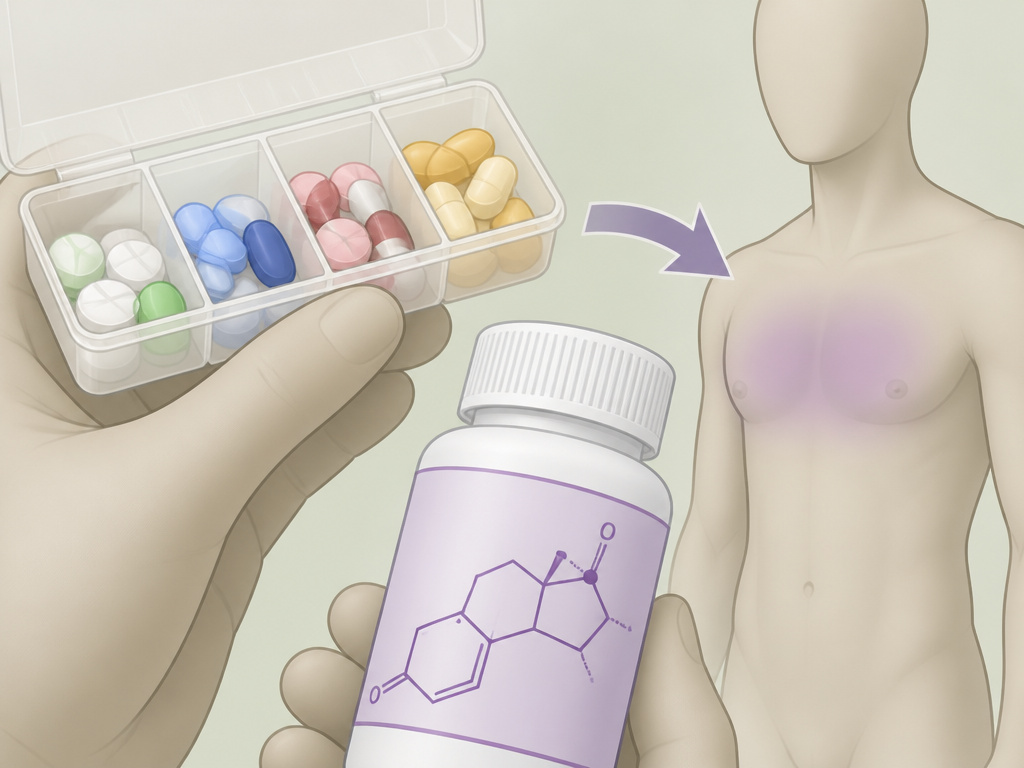
This is where the causes get very specific. A wide array of prescribed, over-the-counter, and recreational substances can trigger gynecomastia. The risk isn’t equal across the board.
A 2021 meta-analysis of randomized trials quantified the risk for several drug classes. The odds ratios tell the story:
- Antiandrogens (e.g., bicalutamide for prostate cancer): OR = 17.38. This is the highest pharmacological risk, directly blocking the testosterone receptor.
- Spironolactone (a diuretic): OR = 8.39.
- 5-alpha-reductase inhibitors (finasteride, dutasteride): OR = 1.77.
Other common culprits include:
- Psychiatric medications: Haloperidol, risperidone, diazepam.
- Heart & blood pressure meds: Digoxin, amiodarone, some calcium channel blockers, ACE inhibitors.
- Anti-ulcer drugs: Cimetidine, ranitidine (less common with newer PPIs).
- Recreational substances: Alcohol, marijuana, heroin, methadone, amphetamines.
- Herbal/Environmental: Lavender oil, tea tree oil, soy protein, and occupational exposure to phytoestrogens or phthalates.
Knowing which drug you’re on gives a clue to the timeline.
If you’re on medication and develop breast tenderness, review the side-effect profile with your doctor. Never stop a prescribed medication without consulting them first. There may be alternative drugs or strategies, like adding a medication to counteract the effect.
Underlying Medical Conditions
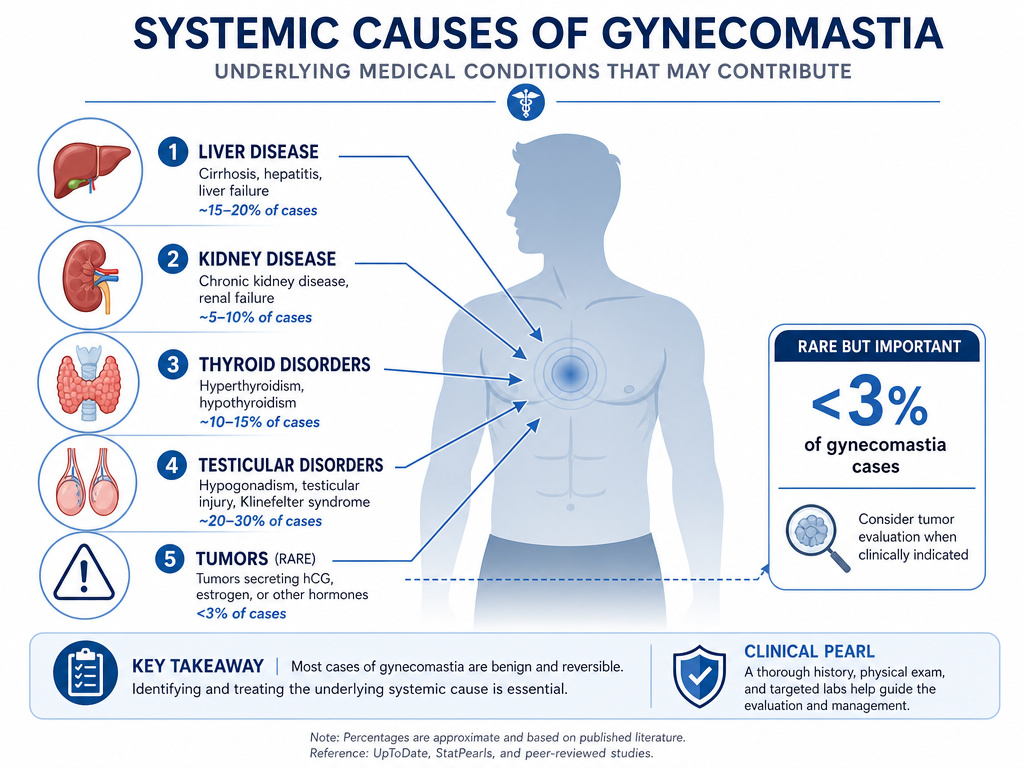
When gynecomastia isn’t physiological or drug-related, it can be a sign of an underlying disease. This is why a proper medical evaluation is crucial.
- Chronic Liver Disease (Cirrhosis): The liver metabolizes estrogen. When it’s failing, estrogen levels can rise. Notably, gynecomastia is also listed as a potential consequence of refeeding syndrome in chronic liver disease patients.
- Chronic Kidney Failure: Disrupts the hypothalamic-pituitary-gonadal axis and can lead to hormonal imbalances.
- Hyperthyroidism: An overactive thyroid can increase sex hormone-binding globulin (SHBG), which alters the balance of free, active hormones in the bloodstream.
- Hypogonadism (Testicular Failure): Primary testicular failure (from injury, infection, genetic conditions like Klinefelter syndrome) directly reduces testosterone production.
- Tumors: While rare (accounting for <3% of gynecomastia), hormone-secreting tumors of the testicles (Leydig cell, Sertoli cell, germ cell) or adrenal glands can be a cause. This is why a testicular exam is part of the workup.
Diagnosis: What Tests Will a Doctor Order?
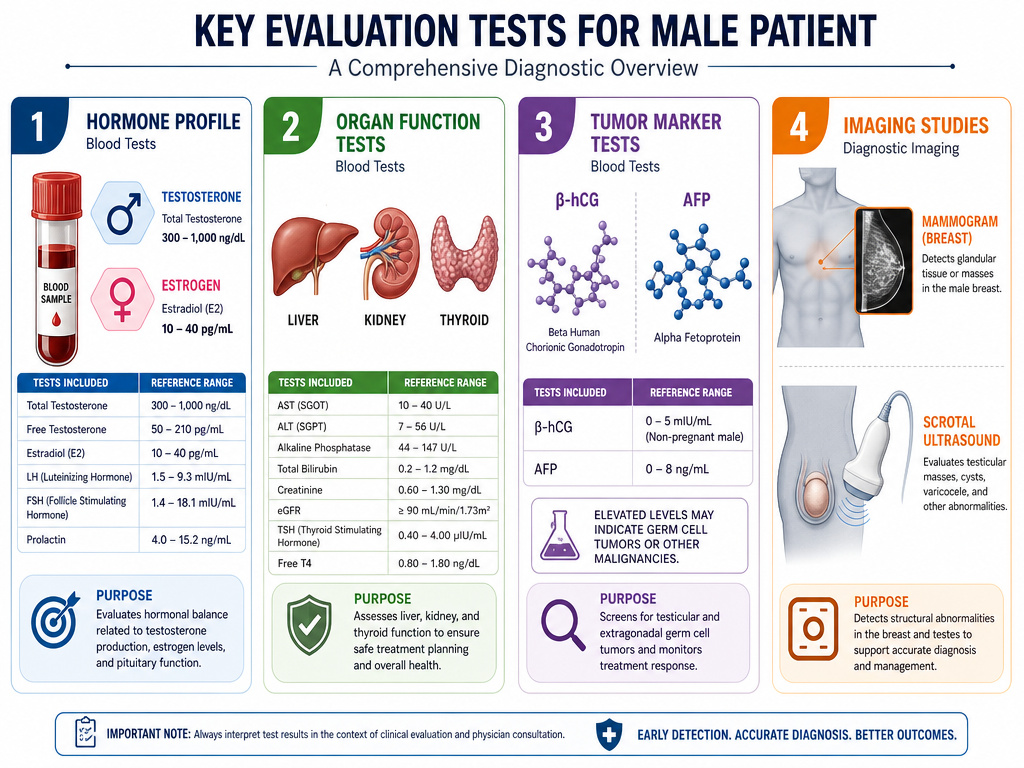
If you have true, palpable glandular tissue, the next step is identifying the cause. Guidelines differ slightly on the initial panel, but they converge on a core set of tests.
One primary care guideline recommends routine blood tests include: 9 a.m. Testosterone, liver, renal, and thyroid function tests, α-fetoprotein (AFP), and β-human chorionic gonadotrophic (HCG) test. In contrast, BMJ Best Practice suggests first tests to order include serum TSH, creatinine, and LFTs, with other tests to consider based on findings. The AFP and β-HCG are tumor markers to help rule out certain germ cell cancers.
BMJ Best Practice suggests a slightly different starting point, listing the first tests to order as serum TSH, creatinine, and LFTs, with a longer list of tests to consider based on findings. This reflects a practical, stepwise approach.
When imaging is used: A mammogram is an excellent tool to confirm the presence of glandular tissue and rule out malignancy. A review at the Mayo Clinic found that of benign mammographic findings in men, gynecomastia represented 62%. A review of all mammographic findings for men for a period of 5 years at Mayo Clinic in Jacksonville, FL, revealed a 1% rate of malignancy.
| Test Category | Specific Tests | What It Looks For |
|---|---|---|
| Hormonal Panel | Testosterone (total & free), Estradiol, LH, FSH, Prolactin | Hypogonadism, estrogen excess, pituitary issues. |
| Metabolic Panel | Liver Function Tests (LFTs), Renal Function, Thyroid (TSH) | Liver/kidney disease, hyperthyroidism. |
| Tumor Markers | β-hCG, α-Fetoprotein (AFP) | Testicular or other germ cell tumors. |
| Imaging (if indicated) | Mammogram, Testicular Ultrasound | Confirm gynecomastia pattern, rule out testicular mass. |
Treatment: From Watchful Waiting to Surgery
Most cases require no specific treatment. This is the most important point. Physiological gynecomastia, especially in puberty, often just needs time. The initial goal is to identify and treat any underlying cause (e.g., changing a medication, managing thyroid disease).
When is treatment considered? For persistent, painful gynecomastia of >6 months duration. The tissue often becomes fibrotic after this period, making medication less effective.
Medical Therapy:
- Tamoxifen: A selective estrogen receptor modulator (SERM). It’s the most studied medication. Alagaratnam treated 61 Chinese men with tamoxifen for a median of 2 months with 36 months of follow-up, demonstrating an 84% rate of complete regression of breast swelling. Lawrence et al used a 3- to 9-month course of estrogen receptor modifiers (tamoxifen or raloxifene) to treat 38 consecutive patients with persistent pubertal gynecomastia and demonstrated a mean reduction in breast nodule diameter of 2.1 cm. While one guideline states tamoxifen and anastrozole use is unlicensed in gynecomastia and should only be prescribed under advice from secondary care, studies have shown efficacy, such as an 84% rate of complete regression with tamoxifen treatment.
- Anastrozole: An aromatase inhibitor that blocks estrogen production. Evidence for its effectiveness is weaker than for tamoxifen in most cases of gynecomastia. It is also an off-label, specialist-guided treatment.
- Testosterone Replacement: Only if blood tests confirm clinically low testosterone levels. It can be part of managing TRT and gynecomastia, though TRT itself can sometimes exacerbate the issue if it aromatizes.
Surgical Therapy: This is the definitive treatment for persistent, fibrotic gynecomastia that causes psychological distress or physical discomfort. It involves liposuction (for the fatty component) and direct excision of the glandular disc (mastectomy). Surgery has high patient satisfaction rates for permanent removal.
Common mistake: Seeking medical therapy for long-standing, fibrotic gynecomastia. Pharmacotherapy is only likely beneficial if implemented before fibrous replacement occurs. After that, surgery is the only effective option.
Can Herbal Products Cause Gynecomastia?
Certain herbal products and supplements can contribute to the development of gynecomastia. The fundamental mechanism involves either increasing estrogen-like activity in the body or interfering with the normal action of testosterone. Some products may contain phytoestrogens, which are plant-derived compounds that mimic the effects of estrogen. Others might indirectly alter hormone balance by affecting liver function or sex hormone-binding globulin (SHBG) levels. If you develop breast tissue enlargement after starting a new supplement, consider it a potential trigger. Review all products you are taking with your doctor, as they can be included in the evaluation of drug-induced or environmental causes.
Frequently Asked Questions
What is the most common cause of male gynecomastia?
In adolescents, pubertal hormonal fluctuations are the most common cause. In adult and older men, the causes are more mixed, but medications and age-related hormonal shifts (often coupled with weight gain) top the list. In a series of young adult patients with gynecomastia aged 19 through 29 years, causes included idiopathic gynecomastia (58%).
How do men fix gynecomastia?
The “fix” depends on the cause and duration. For recent-onset, non-fibrotic cases due to a reversible cause (like a medication), treating the cause or using a short course of medication like tamoxifen may work. For long-standing, fibrotic tissue, surgical removal is the only effective permanent solution. For pseudogynecomastia (fat), the fix is through diet and exercise to reduce overall body fat.
Will gynecomastia ever go away on its own?
Yes, frequently. Most pubertal cases resolve within a year without any intervention. Newborn gynecomastia resolves within weeks. Gynecomastia caused by a short-term trigger (like a medication you stop taking) may also recede. However, once the glandular tissue has been replaced by fibrous tissue (usually after 12+ months), spontaneous resolution is very unlikely.
At what age is gynecomastia most common?
It has a bimodal distribution, peaking during puberty (ages 12-17) and again in older adulthood (ages 50-80). The prevalence in men aged 50-69 is notably high, between 35% and 65%.
The Bottom Line
The causes of gynecomastia map to a clear set of pathways: life-stage hormones, prescription pills, systemic illness, or substance use. The single most useful thing you can do is the physical check. That rubbery disc under the nipple changes the entire diagnostic and treatment conversation.
If you find it, don’t panic. The odds heavily favor a benign, treatable cause. The red flags are rapid, unilateral growth, pain, or associated symptoms like testicular lumps. That’s your cue for a prompt doctor’s visit. For the vast majority, the process involves a basic blood panel, perhaps a period of watchful waiting, and the reassurance that this is a common, manageable condition. Your next step is the simplest one: schedule that check-up.
