
Signs of Anabolic Steroid Abuse: What to Look For
This post contains affiliate links. As an Amazon Associate, we earn from qualifying purchases.
The signs of anabolic steroid abuse fall into three buckets: rapid, disproportionate muscle gain with specific physical changes like severe acne and gynecomastia; marked psychological shifts including aggression and mood swings; and lab work showing suppressed natural hormones, elevated hematocrit, and crashed HDL cholesterol. Abuse-level doses are 10 to 100 times higher than medical replacement, creating a distinct pattern that separates it from natural training or supervised testosterone therapy.
That pattern is what makes diagnosis possible. You can’t always spot a user by looks alone. The clinical guideline notes that assumption is becoming obsolete. Diagnosis shifts to connecting behavioral clues with concrete blood markers.
What follows breaks down each category with the specific numbers doctors use: the hematocrit level that triggers an urgent referral, the HDL threshold that points to steroid use, and the timeline for natural hormone recovery after stopping. We’ll also cover the contradictions in the guidelines themselves, because experts don’t always agree on the best way to confirm use.
Key Takeaways
- Abuse-level anabolic steroid doses are 10 to 100 times higher than physiologic replacement, creating a unique health signature.
- Watch for hematocrit above 0.52 in men or 0.48 in women; levels above 0.60 or 0.56 require urgent medical referral.
- A crashed HDL cholesterol below 0.8 mmol/L, especially without high triglycerides, is a strong indirect marker of steroid use.
- A level below 8 nmol/L after stopping warrants a repeat test in 8–12 weeks.
- Psychological dependence and muscle dysmorphia are core drivers; treatment must address these to prevent relapse.
The Physical Signs You Can See and Feel
Look past just big muscles. The physical signs of anabolic steroid abuse are side effects from a massive hormonal overload. The American Medical Association’s diagnostic guide lists specific exam findings a doctor should look for: acne, gynecomastia (breast tissue growth in men), cutaneous striae (stretch marks, especially on shoulders), testicular atrophy, and needle marks.
These happen because anabolic steroids are synthetic versions of testosterone. The body converts excess testosterone into estrogen, which can cause breast tissue growth. The androgenic effects ramp up oil gland activity, leading to severe, cystic acne often on the back and shoulders—not just typical face acne.
A complete physical examination should look for acne, gynecomastia, cutaneous striae, testicular atrophy, needle stick marks, elevated blood pressure, elevated glucose, decreased HDL, increased LDL, and abnormal liver function tests.
For women, the virilizing effects are pronounced and often irreversible. The National Institute on Drug Abuse notes voice deepening, decreased breast size, coarse skin, excessive body hair growth, and male-pattern baldness. Clitoral hypertrophy is a potential effect in women.
Where this goes sideways: Relying only on appearance. A clinical practice guideline points out that the “conventional assumption that one can readily identify users of AAS based on their physical appearance alone is becoming obsolete.” The physical signs might be subtle or concealed.
Psychological and Behavioral Red Flags
The psychological signs of anabolic steroid abuse can be the first noticeable change. It’s not just about being more competitive. The BMJ Best Practice guideline lists aggression, mood swings, and increased irritability as key diagnostic factors. This stems from the steroids’ direct impact on the central nervous system.
Users may also display classic signs of addiction: preoccupation with sourcing and administering drugs, continued use despite negative consequences, and anxiety about losing gains if they stop. A significant risk factor is a history of muscle dysmorphia (a body image disorder where a person believes they are too small or inadequately muscular, no matter their actual size).
Common mistake: Dismissing aggression as just “high testosterone.” The mood swings from steroid abuse are often volatile and uncharacteristic for the individual, cycling between euphoria and irritability.
One study cited by the NIDA found that 56 percent of users had never told their physician about their use. This secrecy is a major behavioral sign.
What Blood Work Reveals (The Hard Numbers)
This is where suspicion becomes evidence. Blood tests don’t lie, and they reveal the internal strain of steroid abuse. The essential blood testing for steroid patients guideline provides specific thresholds.
First, check the hematocrit: the percentage of red blood cells. Steroids stimulate red blood cell production. The guideline states an elevated hematocrit is >0.52 for males and >0.48 for females. For extremely raised levels (>0.60 for males, >0.56 for females), cessation is advised and an urgent referral to hematology is needed. This elevated hematocrit is a direct cardiovascular risk.
Next, look at lipids. Steroids hammer HDL (the “good” cholesterol). The guideline advises clinical investigation of steroid use in patients with low HDL (<0.8 mmol/L), especially if triglycerides aren’t also high. This is one of the most consistent lab findings.
The hormonal panel tells the story of suppression. Natural testosterone production shuts down. Luteinizing Hormone (LH) and Follicle-Stimulating Hormone (FSH), the brain’s signals to the testes, plummet. The guideline suggests patients with serum testosterone <8 nmol/L after stopping should have a repeat test in 8–12 weeks, with endocrinology referral only after about 24 weeks if levels haven’t recovered. This prolonged timeline is a hallmark of steroid-induced hypogonadism.
| Lab Marker | Steroid Abuse Indicator | Clinical Action |
|---|---|---|
| Hematocrit | Male >0.52, Female >0.48 | Reduce/stop steroids, repeat test. |
| Hematocrit (Critical) | Male >0.60, Female >0.56 | Urgent hematology referral. |
| HDL Cholesterol | <0.8 mmol/L | Investigate steroid use. |
| Testosterone | <8 nmol/L (post-cessation) | Repeat test in 8-12 weeks. |
| LH & FSH | Suppressed | Supports diagnosis of external androgen use. |
The catch with liver enzymes: Don’t assume elevated ALT/AST is always liver damage. Strenuous weight training alone can raise them. The guideline recommends if ALT is less than 3 times the upper limit, repeat testing 10–14 days after stopping heavy lifting to see if it normalizes.
Gender-Specific Signs and Symptoms
The effects diverge sharply between men and women due to the androgenic (masculinizing) power of these drugs.
In Men:
The signs are often a mix of desired anabolic effects and unwanted androgenic ones. This includes:
- Testicular atrophy: The testes shrink because the external source of testosterone tells the brain to stop signaling for natural production.
- Gynecomastia: Excess testosterone converts to estrogen, stimulating breast tissue growth. This is why users often take other drugs like aromatase inhibitors.
- Male-pattern baldness: Accelerated in those genetically predisposed.
The long-term health risks of steroid use for men heavily involve the cardiovascular system and lasting hormonal suppression.
In Women:
The changes are profoundly masculinizing and frequently irreversible:
- Voice deepening: Vocal cords thicken permanently.
- Clitoral hypertrophy: Enlargement of the clitoris.
- Menstrual irregularities or cessation (amenorrhea).
- Increased body hair (hirsutism) and scalp hair loss.
- Decreased breast size and increased muscle definition.
For adolescents of either sex, the stakes are higher. The NIDA warns that when a child or adolescent takes anabolic steroids, the resulting artificially high sex hormone levels can prematurely signal the bones to stop growing. This is a permanent consequence.
The Misuse Playbook: Cycling, Stacking, and Doses
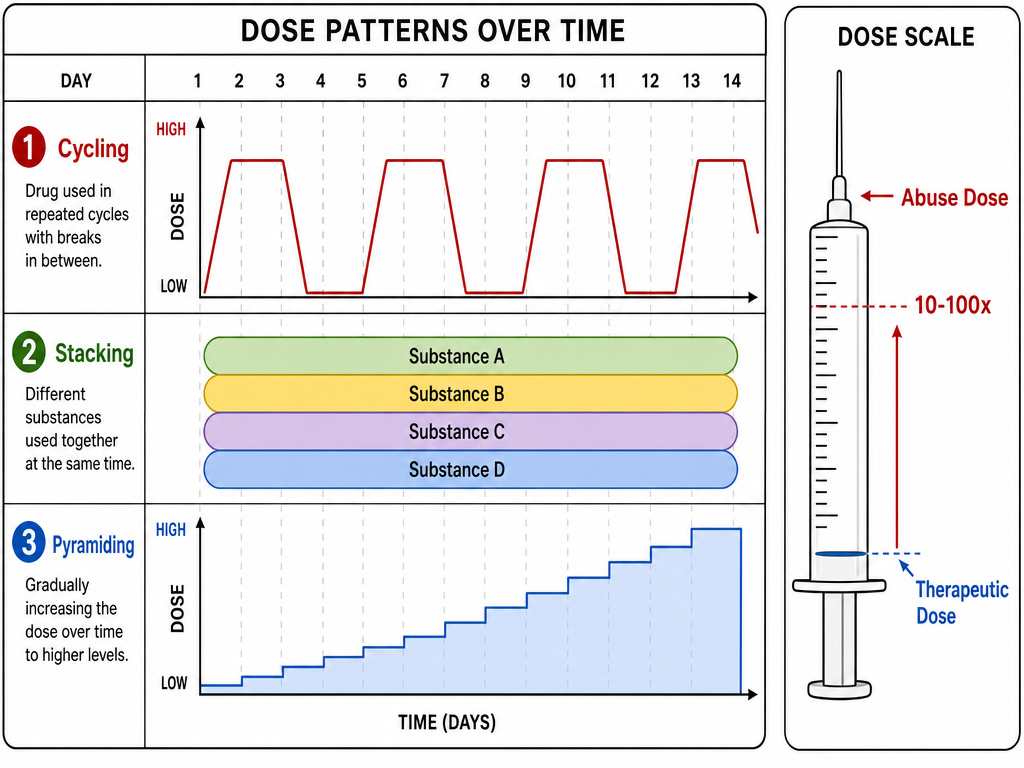
Understanding the methods helps explain the pattern of signs. Users rarely take one steroid continuously.
- Cycling: Using steroids for a period (e.g., 8-16 weeks), then taking a break. This is meant to minimize side effects and allow some hormonal recovery, though the latter is often incomplete.
- Stacking: Combining multiple steroids at once, believing it synergizes effects. This multiplies the toxic load on the liver, lipids, and cardiovascular system.
- Pyramiding: Gradually increasing the dose to a peak, then tapering down. This doesn’t prevent suppression.
The dose is the critical factor. The Merck Manual states athletes may use doses 10 to 50 times the physiologic replacement range, while BMJ Best Practice notes AASs are used at doses 10 to 100 times higher than those required to treat medical conditions. This massive overdose is what creates the dramatic signs and lab abnormalities.
This self-managed post cycle therapy is a whole other layer of the playbook, involving drugs like tamoxifen or clomiphene to try to restart natural testosterone production. Its variable success underscores that recovery isn’t guaranteed.
Withdrawal and Dependence: When Stopping Is the Problem

Dependence isn’t just about craving a high. It’s often rooted in a profound fear of losing hard-won muscle and returning to a state of perceived physical inadequacy (muscle dysmorphia). The withdrawal syndrome itself reinforces continued use.
Withdrawal from anabolic steroids can involve a range of symptoms related to the hypogonadal state that follows cessation.
The most significant medical issue is anabolic steroid-induced hypogonadism (ASIH). The hormonal axis can remain suppressed for a prolonged period after the last dose. This isn’t a short-term crash. Research on former users shows that low testosterone and hypogonadal symptoms can persist for a prolonged period. This prolonged state fuels depression and makes natural recovery a slow, uncertain process.
Treatment, as outlined by the NIDA, must address the root causes: psychological therapies for muscle dysmorphia, endocrine therapies to restore function, and treatment for co-occurring opioid dependence, which is not uncommon.
How Doctors Confirm Suspicions (And Where They Disagree)
If you bring concerns to a doctor, here’s the process. It starts with a non-judgmental conversation. The clinical diagnosis of steroid use guide states that if the physical exam and routine labs support the diagnosis, a physician should discuss direct testing for the presence of anabolic steroids.
The first-line tests, per BMJ Best Practice, include: urine toxicology, testosterone-to-epitestosterone ratio, serum testosterone/LH/FSH, lipid panel, LFTs, and CBC. The suppressed LH and FSH alongside high or normal testosterone is a classic discordance pointing to an external source.
Where sources disagree: On the utility of asking the patient and on the “best” test. One expert guideline states the best method to confirm use is a nonjudgmental inquiry. The Merck Manual implies this may not be reliable for surreptitious users and states there is no practical diagnostic test for surreptitious use in the general population, though hormone tests can be suggestive.
For elite athletes, the “biological passport” monitors individual biomarker baselines over time. For the general public, diagnosis relies on piecing together clinical suspicion, behavioral clues, and the indirect lab markers we’ve covered. It’s a puzzle, not a single yes/no test.
What are the risks of sharing needles for steroids?
Sharing needles to inject steroids carries significant health dangers beyond the drug’s side effects. A physical examination for steroid abuse includes checking for needle stick marks, which can be a visible sign of injection. The practice of sharing injection equipment dramatically increases the risk of transmitting blood-borne viruses. Medical guidelines for diagnosing steroid use recommend ordering tests for hepatitis and HIV serology as part of the initial workup. These infections can cause long-term liver damage, immune system problems, and other serious illnesses. Using sterile, single-use needles for every injection is a critical harm reduction step for anyone injecting substances.
Frequently Asked Questions
What are the symptoms of steroid withdrawal?
Withdrawal symptoms include severe fatigue, depression, loss of libido, insomnia, anxiety, decreased appetite, and muscle aches. The underlying cause is often a hypogonadal state where the body’s natural testosterone production has not yet recovered, which can last for many months.
What are the symptoms of taking too much steroid?
Extreme use amplifies the standard side effects, increasing the risk of severe hypertension, very high hematocrit, significant lipid abnormalities, and liver enzyme elevations. The risk of cardiovascular events is increased.
What are 5 common side effects of steroids?
Five of the most common physical side effects are: 1) Severe acne, particularly on back and shoulders, 2) Gynecomastia (breast tissue development in men), 3) Testicular atrophy, 4) Hypertension (high blood pressure), and 5) A drastic decrease in HDL (“good”) cholesterol.
Can you reverse the damage from steroid abuse?
Some effects, like certain hormonal changes, may be reversible upon cessation, while others, such as voice deepening in women and growth plate closure in adolescents, are permanent.
Before You Go
The most reliable sign isn’t a single symptom; it’s the pattern. Rapid muscle gain paired with specific physical changes, psychological shifts, and telltale lab work. The numbers from the guidelines give you concrete thresholds: a hematocrit creeping past 0.52, an HDL crashing below 0.8, a testosterone level stuck under 8 nmol/L long after stopping.
If you’re concerned for someone, approach the conversation without accusation. Focus on health monitoring, not judgment. Suggest a full physical and blood panel “to make sure everything’s okay,” framing it around the real cardiovascular and hormonal risks. The goal isn’t to catch them, but to connect them with medical oversight. For users themselves, understanding that natural testosterone recovery is a marathon, not a sprint, is the first step toward planning a safer path forward.
