
Long Term Effects of Anabolic Steroid Use
This post contains affiliate links. As an Amazon Associate, we earn from qualifying purchases.
The long-term effects of anabolic steroid use are damage to the cardiovascular system, suppression of natural hormone production, liver toxicity, psychiatric changes, and physical side effects like gynecomastia. These risks increase with dose and duration, and some, like certain forms of heart damage, may not fully reverse even after stopping. An estimated 1–3% of US inhabitants use these drugs, often underestimating the lag between cause and measurable effect.
The cardiovascular numbers are where the research gets specific. Systolic blood pressure increases, LDL cholesterol climbs, and the heart’s left ventricle can thicken and weaken. You won’t feel these changes until a problem announces itself, which is why the medical literature on the long term effects of anabolic steroid use treats it as a public health issue, not just a personal risk.
What follows breaks down each system, the evidence for reversibility, and the practical timelines for recovery that most forum anecdotes get wrong. By the end, you’ll know which risks are manageable and which are genuinely permanent, and why bloodwork is the only honest scorecard for what’s happening inside.
Key Takeaways
- Cardiac damage is a leading long-term risk. Steroids can cause left ventricular hypertrophy and dysfunction, with studies showing users’ hearts pumping below the normal 55% ejection fraction. Recovery is debated: the HAARLEM study demonstrated reversibility after a median ~8-month recovery period, while other studies indicate irreversibility, with former users showing persistent heart muscle thickening.
- Natural testosterone production shuts down. The hypothalamic-pituitary-testicular axis is suppressed. For high-dose use for more than one year, recovery can be significantly delayed and may require medical intervention like clomiphene.
- Infertility is a common and urgent consequence. Sperm production halts. The clinical management guideline states men using steroids for over one year might need clomiphene or hCG therapy to restart fertility months sooner than stopping alone.
- Psychiatric changes extend beyond “roid rage.” Long-term use is linked to dependence, anxiety, and depression, and cessation can trigger a distinct withdrawal syndrome that includes mood crashes.
- Liver and kidney stress is dose-dependent. Oral steroids are especially hepatotoxic, risking peliosis hepatis and tumors. Kidney damage comes from increased blood pressure and protein metabolism.
The Cardiovascular Cost: Heart Muscle and Blood Vessels
This is where the long-term bill comes due. Anabolic steroids don’t just raise blood pressure a bit; they remodel the heart’s structure and corrode the vascular system. The changes are silent for years, which is why a 30-year-old bodybuilder can feel invincible while echocardiogram readings tell a different story about the long term effects of anabolic steroid use.
The muscle of the heart, the left ventricle, thickens from the overload, a condition called left ventricular hypertrophy. It’s not the healthy thickening of an athlete’s heart. It’s a stiffer, less efficient muscle. Studies of long-term users have found left ventricular ejection fractions below normal limits. That’s a heart pumping significantly less blood with each beat.
A 2022 review in PMC on steroid-associated cardiomyopathy noted that the HAARLEM study found heart structure and function could return to baseline after a median recovery period of about eight months post-discontinuation. However, other studies in the same review contradict this, showing former users still had heart muscle thickening compared to never-users, even after being steroid-free for over a year.
The damage isn’t limited to the pump. The pipes take a hit, too. Meta-analyses have quantified average increases in systolic blood pressure and LDL cholesterol. This creates a perfect storm for atherosclerosis, plaque building up in arteries, raising the long-term risk for heart attacks and strokes, a central concern in the long term effects of anabolic steroid use. The risk of thromboembolic disorders, like blood clots, is elevated for users.
Bottom line: The cardiovascular system absorbs the heaviest long-term punishment. You can’t feel your ejection fraction dropping or your arteries stiffening, which makes baseline and follow-up cardiac screening essential for anyone with a history of use.
Hormonal Fallout: Suppression, Infertility, and Recovery
When you introduce high doses of external testosterone or its analogs, your body’s own production line shuts down. The brain’s pituitary gland stops sending signals (gonadotropins) to the testes. The result is steroid-induced hypogonadism, low testosterone caused by the drugs meant to boost it. This suppression is almost universal with sustained use.
The real concern is how long it takes to restart. Forum lore is optimistic; clinical data is not. The pivotal factor is duration of use.
| Duration of Use | Likely Recovery Path | Key Timeline |
|---|---|---|
| Less than 1 year | Often recovers with cessation alone. | Normal hypothalamic-pituitary-testicular axis function typically returns within 3 to 6 months after stopping. |
| More than 1 year (high-dose) | Recovery is slow and may be incomplete without help. | The lag time for normal sperm production can be “excessive.” Medical intervention like clomiphene or hCG may cut months off the wait. |
The clinical guide is blunt: for men who are infertile after high-dosage use for over a year, simply waiting might not be practical. Initiation of clomiphene or gonadotropin therapy after discontinuation might increase spermatogenesis and fertility months earlier. This is the core of medically supervised post cycle therapy. Clomiphene can boost gonadotropin and testosterone levels within 2 to 4 weeks in men with intact pituitary function and low or normal serum gonadotropin but low serum testosterone concentrations.
Where this goes sideways: Assuming natural production will snap back quickly because you “feel fine.” The pituitary’s restart sequence is slower than subjective mood or energy levels. Forum claims of rapid recovery are often not supported by clinical timelines.
Infertility is the issue that drives most men to a doctor. Spermatogenesis is suppressed during use and recovery can take longer than the recovery of serum hormone levels. If the goal is preserving or restoring male fertility, the timeline is measured in many months, not weeks. This makes the management of chronic AAS use, as noted in a clinical management review, a matter of “clinical judgment, and shared decision-making” with a physician.
Liver, Kidneys, and Psychiatric Impact
The toll extends far beyond the gym. The liver and kidneys process these compounds and their metabolites, and the brain is bathed in artificially high androgen levels that alter its chemistry long-term.
Liver Toxicity
Oral anabolic steroids (like Dianabol or Anadrol) are particularly harsh because they are 17-alpha-alkylated to survive first-pass metabolism. This same chemical trick makes them toxic to liver cells. Long-term risks include:
- Cholestasis: Bile flow stops, causing jaundice (yellowing skin/eyes), itching, and dark urine.
- Peliosis Hepatis: Blood-filled cavities form in the liver, which can rupture.
- Hepatic Adenomas and Carcinomas: Benign and malignant tumors. Long-term risks to the liver are significant.
Injectable steroids bypass the liver initially, placing less direct strain on it, but the overall metabolic burden remains.
Renal Stress
The kidneys face a double threat. The elevated blood pressure from steroid use damages the delicate filtering units (nephrons). Simultaneously, the high-protein diet and increased muscle metabolism that often accompanies use raise the kidneys’ workload to filter waste products. The kidneys face increased stress from elevated blood pressure and metabolic changes.
Psychiatric and Behavioral Changes
The stereotype of “‘roid rage” is a caricature of a more complex psychiatric picture. Long-term use is associated with:
- Dependence: Users can develop a psychological and physical dependence, continuing use despite known harms to maintain physique or avoid withdrawal.
- Mood Disorders: Increased risk of anxiety, depression, and hypomania. The crash in endogenous testosterone and other neurosteroids after cessation can trigger a severe depressive episode.
- Withdrawal Syndrome: Distinct from physical side effects, this includes fatigue, loss of appetite, insomnia, and low libido. The PMC steroid use management article notes that men treated with clomiphene or hCG after stopping tend to have fewer withdrawal symptoms.
These aren’t short-term mood swings. They are alterations in brain function that can persist, complicating recovery and quality of life. Recognizing the signs of anabolic steroid abuse is part of a honest assessment of long-term use.
Physical Side Effects and Permanent Changes

Some effects alter appearance in ways that are difficult or impossible to reverse. These are the visible signatures of long-term use that persist long after the cycle ends.
In Men:
- Gynecomastia: Breast tissue growth caused by the aromatization of testosterone into estrogen. Once glandular tissue forms, it often requires surgical removal.
- Male-Pattern Baldness: Accelerates in genetically predisposed men. The hair follicles miniaturize and die; this is permanent.
- Testicular Atrophy: The testes shrink significantly due to lack of use. Testicular atrophy occurs due to suppression and may improve with recovery of natural production.
- Acne and Skin Changes: Severe, cystic acne, especially on the back and shoulders, can lead to permanent scarring.
In Women: The androgenic effects are more pronounced and often irreversible due to women’s lower baseline testosterone.
- Virilization: Deepening of the voice (vocal cord thickening is permanent), facial/body hair growth, and enlargement of the clitoris.
- Menstrual Irregularities: Periods can stop entirely (amenorrhea) and fertility can be compromised.
- Breast Tissue Reduction: Loss of breast fat and glandular tissue.
For Adolescents: Use before the growth plates fuse can stunt final adult height. The androgens signal the plates to close prematurely, ending longitudinal bone growth. This is 100% irreversible.
These physical changes are the most blatant signs of steroid abuse. They serve as a constant, visible reminder of past use and complicate the social and psychological aspects of moving on.
How Long Does It Take for Hormone Levels to Recover?
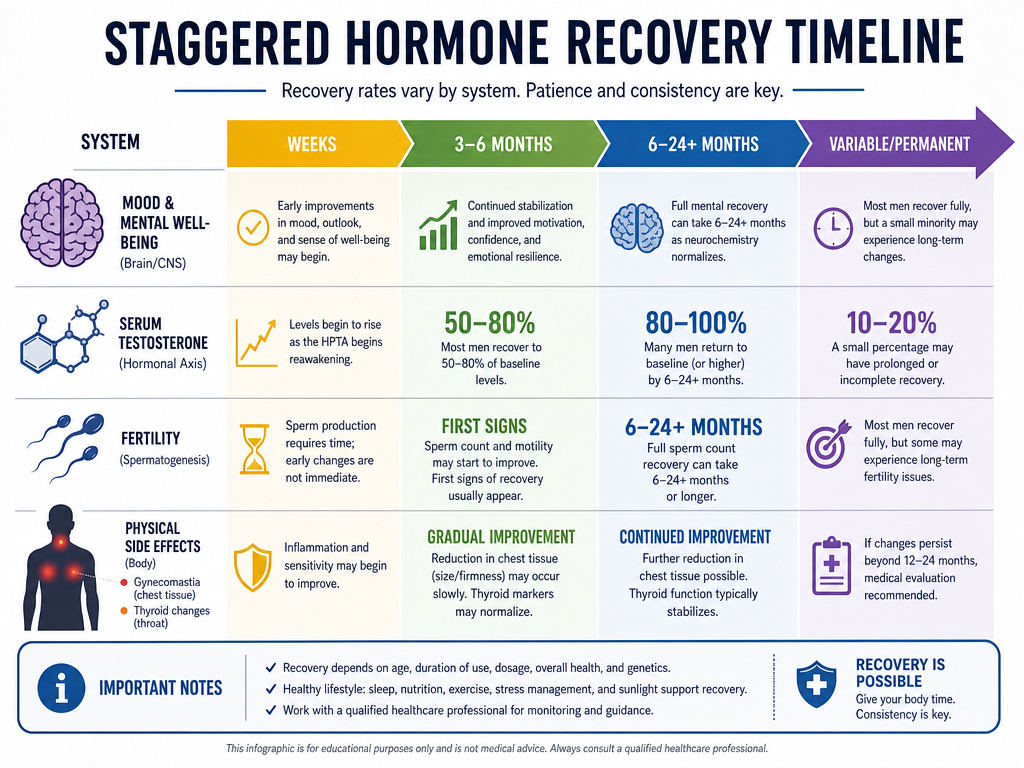
This is the question every user eventually asks. The answer isn’t a single date on a calendar; it’s a staggered process for different functions, heavily dependent on how long and how much you used.
The 1-Year Rule of Thumb
The clinical evidence points to a clear divide. A medical management of anabolic steroids review states: “Most men who use AASs for ≤1 year will recover normal hypothalamic-pituitary-testicular axis function within 3 to 6 months after discontinuation.” This is the best-case scenario.
For use for more than one year, especially at high doses, recovery is more challenging. The same review notes recovery of normal serum hormone levels “might be excessive” and the wait for normal sperm counts is even longer. This is where medical intervention for testosterone recovery becomes a practical discussion.
A Staggered Recovery Timeline
- Mood and Energy (Weeks): Subjective improvement can come in a few weeks, especially if withdrawal is managed.
- Serum Testosterone (3-12+ Months): For short-term users (≤1 year), serum testosterone typically recovers within 3 to 6 months. For long-term, high-dose users (>1 year), the time to recovery might be excessive.
- Sperm Production (6-24+ Months): Spermatogenesis is the slowest to restart. The recovery of normal spermatogenesis takes longer than the recovery of normal serum hormone levels. This is the core challenge of recovering testosterone for fertility purposes.
- Physical Side Effects (Variable): Testicle size returns with hormone recovery. Gynecomastia, hair loss, and voice changes are typically permanent without intervention.
The part nobody mentions: Recovery isn’t guaranteed to be 100%. Some men experience permanent sub-optimal function, a condition known as anabolic steroid induced hypogonadism.
The process underscores why a managed approach, contrasting sharply with the unsupervised nature of abuse, is a key difference between TRT vs steroids. Medical therapy is designed to avoid this profound suppression in the first place.
How Steroids Are Used: Cycling, Stacking, and Pyramiding
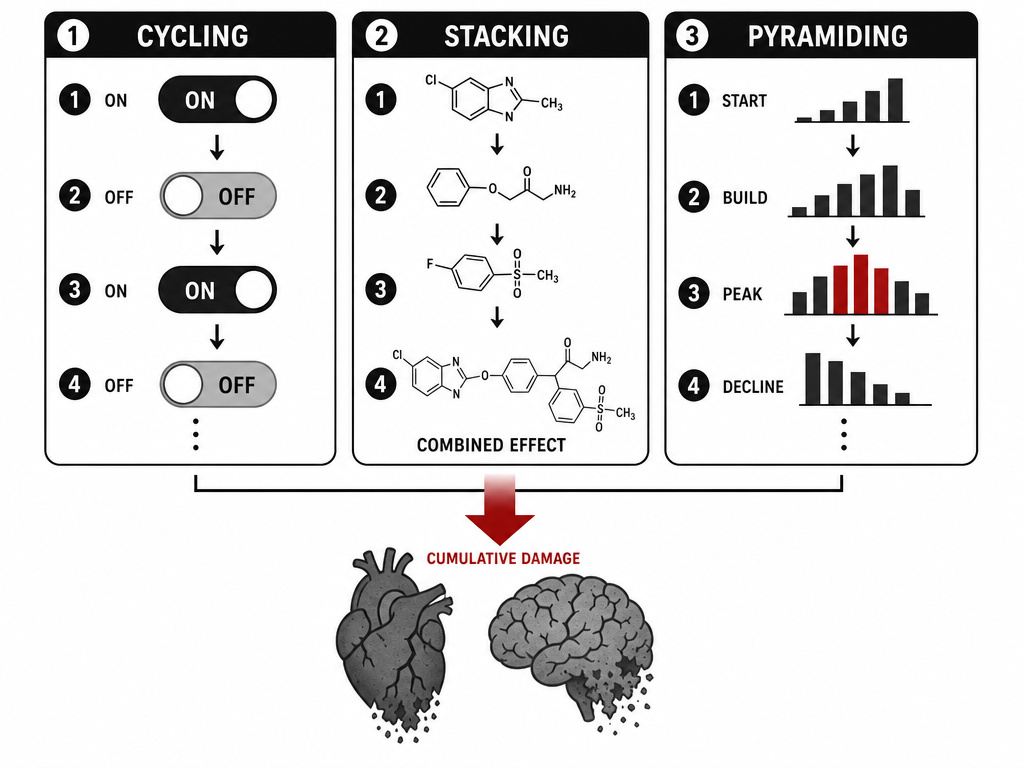
Users often adopt specific patterns to try to maximize gains and manage side effects. Cycling involves taking steroids for a set period, then stopping for a recovery phase. Stacking refers to using multiple types of steroids simultaneously, based on the belief that different compounds work synergistically. Pyramiding is a gradual increase in dosage to a peak, followed by a tapering down period. These practices are attempts to outmaneuver the body’s natural regulatory systems, but they do not prevent the long-term suppression of your hormonal axis or the structural damage to organs. The belief that these methods are protective is a dangerous misconception that delays confronting the real physiological costs.
Anabolic Steroids vs. Corticosteroids: Not the Same Thing
It’s a common point of confusion, but anabolic steroids and corticosteroids are completely different classes of drugs with opposite purposes. Anabolic steroids are synthetic versions of testosterone, designed to promote muscle growth and masculine characteristics. Corticosteroids, like prednisone, are anti-inflammatory medications used to treat conditions such as asthma, arthritis, and allergic reactions. They work by suppressing the immune system and reducing inflammation. Using the term ‘steroids’ for both is misleading; one builds tissue, while the other breaks down inflammatory processes. Mistaking them can lead to serious misunderstandings about their effects, risks, and legal status.
Frequently Asked Questions
Is TRT safer than anabolic steroids?
Yes, when properly prescribed and monitored. Legitimate testosterone replacement therapy (TRT) uses physiological doses to restore levels to a normal range, not supraphysiological doses to exceed them. It includes medical supervision, regular bloodwork to monitor hematocrit and lipids, and a legal, pure supply. The risks of medical testosterone are managed, not ignored.
Can heart damage from steroids be reversed?
The evidence is conflicting. Some studies, like the HAARLEM follow-up, show heart structure and function can improve after about eight months off. Other research, including a PMC study on long-term heart dysfunction, found former users still had measurable heart muscle thickening compared to never-users. The potential for reversal likely depends on the severity and duration of use, but some degree of change may be permanent.
What organ is most affected by anabolic steroids?
The cardiovascular system takes the most significant and potentially life-threatening long-term hit. However, for a specific organ, the liver bears the brunt of toxicity from oral steroids, risking irreversible damage like tumors. The endocrine system (hormone axis) is also profoundly and directly suppressed, affecting fertility, mood, and metabolism.
Are anabolic steroids the same as testosterone?
Not exactly. Testosterone is the primary natural androgen. Anabolic-androgenic steroids (AAS) are a large class of synthetic derivatives designed to amplify testosterone’s muscle-building (anabolic) effects while minimizing its masculinizing (androgenic) side effects, though this separation is imperfect. They all act on the same androgen receptors but with different chemical structures, potencies, and side-effect profiles.
What is post-cycle therapy (PCT)?
Post-cycle therapy is a protocol used after stopping anabolic steroids to help restart the body’s natural testosterone production. It typically involves medications like clomiphene citrate or human chorionic gonadotropin (hCG) that stimulate the pituitary gland to release gonadotropins, signaling the testes to resume function. A proper PCT protocol is based on bloodwork and clinical guidance, not forum templates.
The Bottom Line
The long-term effects of anabolic steroid use are a trade of immediate gains for deferred, systemic risk. The cardiovascular, hormonal, and psychiatric bills compound in silence, often for years.
If you’re assessing past use, one rule overrides all forum advice: get the bloodwork. A lipid panel, liver enzymes, and hormone panel (total testosterone, LH, FSH) give you the real starting line. Numbers don’t lie about your hormonal suppression or cardiac strain.
For anyone considering use, understand that the “cycle” is a myth. The body experiences a continuous exposure, and the clock on recovery starts only after the last dose, a clock that ticks much slower than you’ve been told. The medical literature is clear that managing the aftermath of long-term, high-dose use is complex and requires professional guidance. Your future health hinges on treating that reality with the seriousness it deserves.
