
Causes of Low Testosterone in Young Men: 5 Common Factors
This post contains affiliate links. As an Amazon Associate, we earn from qualifying purchases.
Low testosterone in young men is often caused by functional, reversible factors like obesity, opioid or steroid use, and chronic illness, not just genetics. The diagnosis hinges on two morning blood draws showing total testosterone below a guideline-specific threshold (e.g., < 300 ng/dL per the Endocrine Society, < 400 ng/dL for symptomatic men under 40 per Scovell et al.), paired with specific symptoms like crushing fatigue, not just a lab number.
That 300 ng/dL cutoff is where the confusion starts. Different medical societies can’t quite agree on the line, and a number without the context of symptoms and other hormones is just data, not a diagnosis. Understanding the causes of low testosterone in young men is a more complex clinical matter.
What follows: a breakdown of the five most common drivers for men under 40, the specific diagnostic thresholds that matter, and why the treatment path for a young man who wants kids looks completely different from the standard protocol.
Key Takeaways
- The most predictive symptom for men under 40 is a crushing lack of energy, not low libido.
- Diagnosis requires two morning blood draws a week apart; a single test is unreliable.
- Obesity is a primary driver—73% of men with low T in one major study were overweight or obese.
- Anabolic steroid use can suppress natural testosterone production for over 4 months after stopping.
- For young men wanting fertility, standard testosterone therapy (TRT) is usually the wrong choice.
The First Diagnostic Step: Symptoms vs. Numbers
Forget what you’ve heard about libido being the main sign. In young men, the canary in the coal mine is usually energy.
For men under 40, ‘lack of energy’ appears to be the most important symptom that predicted a total testosterone level of <400 ng/dL.
That’s from a study looking specifically at younger men. The classic triad of low drive, erectile dysfunction, and mood changes is more common in older populations. A guy in his 20s or 30s might still have a sex drive but feel like he’s running on empty all day. That distinction changes where you look first.
I spent about a year treating the lab’s printed range like a pass/fail line. Then I saw two guys with nearly identical total testosterone numbers, one barely functioning and one fine. The difference was their symptoms and their SHBG level, which determines how much hormone is actually available for your body to use. My rule now: a number at the bottom of the range with no symptoms usually gets a re-check in a few months, not an immediate fix. A mid-range number with fatigue, poor sleep, and low drive gets a closer look at free testosterone and SHBG.
The lab work is essential. You need a fasting serum testosterone level drawn between 7:00 and 11:00 AM, or within 3 hours of waking. And you need it done twice, on separate mornings. A single number can swing more than people expect.
Where Guidelines Disagree: The Moving Target of “Low”
You’ll see different numbers thrown around. This isn’t sloppy science; it’s a genuine debate about where to draw the clinical line.
| Guideline Source | Proposed Threshold (Total Testosterone) | Key Context |
|---|---|---|
| Endocrine Society | < 300 ng/dL | General clinical practice guideline for adult men. |
| Endocrine Society / CDC | < 264 ng/dL | Diagnostic for androgen deficiency in nonobese males. |
| Study (Scovell et al.) | < 400 ng/dL | Associated with hypogonadal symptoms in men under 40. |
| AUA Guideline (2018) | Consistently < 300 ng/dL | Based on two separate morning measurements. |
The takeaway? A result of 290 ng/dL might be flagged as low by one doctor and considered normal by another. This is why symptoms are half the diagnosis. The British Society for Sexual Medicine guidelines note that in men with pre-diabetes, testosterone therapy for those with levels of 14 nmol/L or below reduces progression to type 2 diabetes.
Primary vs. Secondary: The Axis Tells the Story
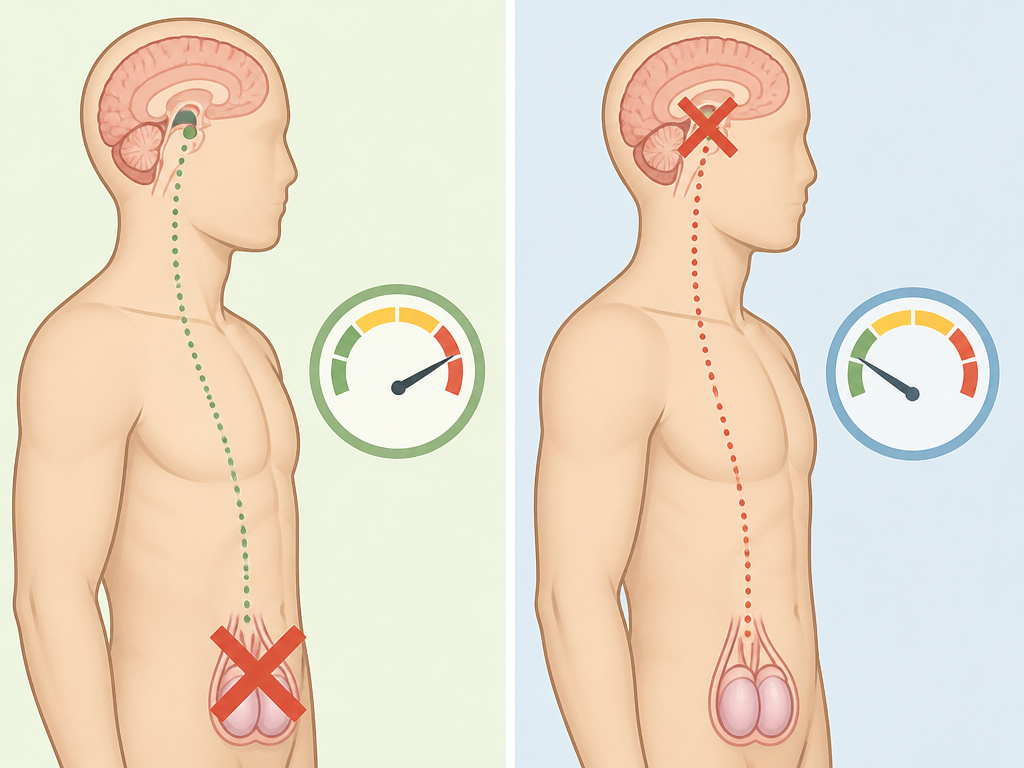
Once low testosterone is confirmed, the next step is figuring out the causes of low testosterone in young men. This splits into two main categories, and the treatment paths diverge completely.
Primary Hypogonadism (Hypergonadotropic)
This is a problem with the testicles themselves. They aren’t producing testosterone, so the pituitary gland screams for more by pumping out high levels of Luteinizing Hormone (LH) and Follicle-Stimulating Hormone (FSH).
- Common Causes: Genetic conditions (Klinefelter syndrome), trauma, infection (like mumps), chemotherapy, or undescended testicles.
- The Signal: Low T, High LH/FSH.
Secondary Hypogonadism (Hypogonadotropic)
This is a signaling problem. The hypothalamus or pituitary gland isn’t telling the testicles to work properly. LH and FSH levels are low or inappropriately normal.
- Common Causes: Obesity, opioid use, anabolic steroid use, pituitary tumors, excessive stress, or sleep apnea.
- The Signal: Low T, Low/Normal LH/FSH.
Common mistake: Jumping to treatment without checking LH and FSH. That single split decides whether a medication like clomiphene (which works on the pituitary) even makes sense to discuss with a doctor.
Early on, I’d skip straight to the ‘what do I take’ question. Now I tell people a baseline of total and free T, LH, FSH, and estradiol is required. LH and FSH are the part everyone forgets, but they point the way.
The 5 Most Common Reversible Causes
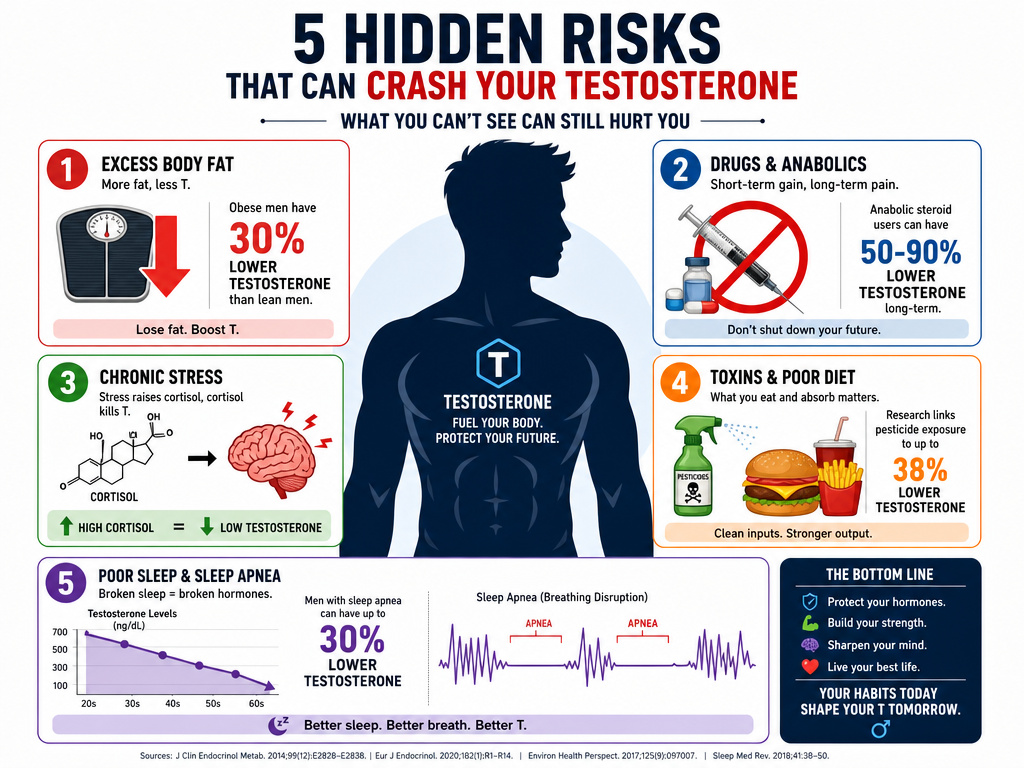
For young men, the causes of low testosterone in young men are often acquired and modifiable. These aren’t just associations; they have documented mechanisms and timelines.
1. Obesity and Metabolic Health
This is the heavyweight champion. The European Male Aging Study found 73% of men with reduced testosterone were overweight or obese. Men with a BMI over 30 had testosterone levels on average 5 nmol/l lower than those with normal weight.
- The Mechanism: Fat tissue, especially visceral fat, contains high levels of the enzyme aromatase, which converts testosterone into estrogen. It also promotes a state of chronic, low-grade inflammation that disrupts the hypothalamic-pituitary-gonadal (HPG) axis.
- The Fix: It’s reversible. Significant weight loss can restore testosterone levels, sometimes dramatically. It’s the first line of intervention before any medication is considered.
2. Substance and Medication Use
Certain drugs directly sabotage hormone production.
- Opioids: Chronic use disrupts the HPG axis within hours. Chronic opioid use disrupts the HPG axis and is associated with sexual dysfunction. The suppression is dose-dependent and often reversible upon cessation.
- Anabolic-Androgenic Steroids (AAS): This is a self-inflicted wound. A meta-analysis of 33 studies found AAS users had a significant reduction in endogenous testosterone (weighted mean difference -10.75 to -15.01 nmol/L). After stopping, gonadotropin levels may return in 13–24 weeks, but serum testosterone can remain suppressed beyond 4 months.
- Common Pain Relievers: Even over-the-counter drugs play a role. A randomized trial found young men taking ibuprofen had an 18% decline in their free testosterone to LH ratio after just two weeks, indicating compensated hypogonadism.
3. Chronic Illness and Extreme Stress
Your body prioritizes survival over reproduction. Chronic conditions like uncontrolled diabetes, liver or kidney disease, and HIV create a catabolic state that suppresses the HPG axis. Similarly, relentless psychological or physical stress elevates cortisol, which directly competes with and inhibits testosterone production. The body’s message is clear: now is not the time for building muscle or libido.
4. Endocrine Disruptors and Diet
The modern environment presents novel challenges.
- Pesticides: A Harvard study found men in the highest quartile of high-pesticide fruit and vegetable consumption (≥1.5 servings/day) had a 49% lower total sperm count than those in the lowest quartile. The effect on hormones is likely similar.
- Poor Diet: Poor diet can promote inflammation and insulin resistance, which may negatively affect testosterone levels.
5. Sleep Disorders
Undiagnosed obstructive sleep apnea (OSA) is a silent thief. The repeated nighttime oxygen deprivation and sleep fragmentation are massive stressors, spiking cortisol and crushing gonadotropin release. Treating OSA with a CPAP machine often leads to a measurable rebound in testosterone levels. It’s one of the most underrated checks on the list.
Why Treatment for Young Men Is Different
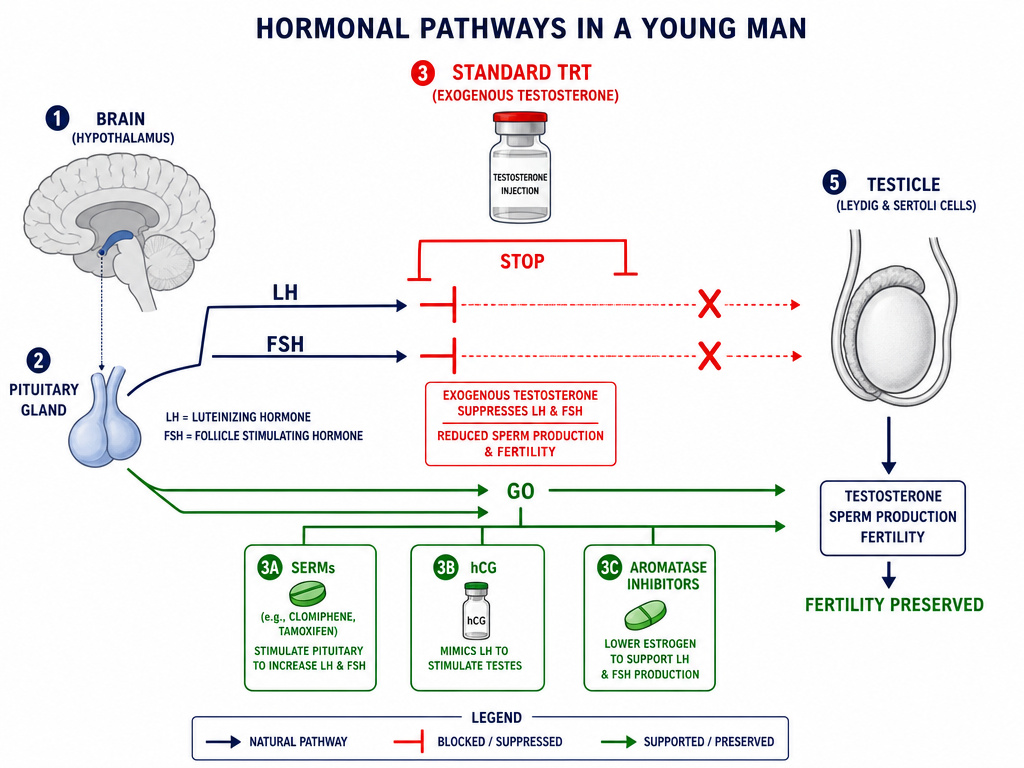
The biggest complication for a young man with low testosterone is future fertility. Standard testosterone replacement therapy (TRT) in the form of gels, patches, or injections will shut down natural sperm production. The British Society for Sexual Medicine guidelines state it clearly: “In younger men, T Therapy reduces LH and FSH levels and frequently causes infertility after 6-12 months.”
The good news? That infertility is reversible in 60–70% of men within 12 months of stopping TRT. But if you’re trying to conceive, you need a different approach.
Fertility-Preserving Options:
These aim to boost your body’s own production without shutting down the signal.
- Selective Estrogen Receptor Modulators (SERMs): Clomiphene citrate blocks estrogen receptors in the brain, tricking the pituitary into releasing more LH and FSH.
- Aromatase Inhibitors: Anastrozole blocks the conversion of testosterone to estrogen, raising the T/E2 ratio.
- Human Chorionic Gonadotropin (hCG): Mimics LH, directly stimulating the testicles to produce testosterone and sperm.
- Natesto (Intranasal Testosterone): A short-acting testosterone gel that may not suppress sperm production due to its pulsatile delivery, though data is still emerging.
These are complex, off-label protocols that require management by an endocrinologist or urologist specializing in male fertility. They are not DIY projects.
Can chemicals in the environment lower testosterone?
Everyday exposure to certain chemicals may disrupt the endocrine system. These endocrine disruptors can interfere with hormone production and function. While the fact sheet does not list specific chemicals, practical guidance involves being mindful of potential sources. This includes certain plastics, pesticides, and industrial compounds. A study noted that high consumption of fruits and vegetables with high pesticide residue was linked to poorer reproductive markers. To minimize risk, consider washing produce thoroughly and opting for organic varieties when possible. Reducing exposure to these environmental factors is a practical step for supporting overall hormonal health.
Frequently Asked Questions
What is the most common cause of low testosterone in a 25 year old?
For otherwise healthy young men, the most common causes are functional and reversible: significant obesity, chronic sleep deprivation (or untreated sleep apnea), or the recent use of anabolic steroids or opioids. Genetic or anatomical causes are less common but must be ruled out.
Can you fix low testosterone at a young age?
In many cases, absolutely. If the cause is modifiable like obesity, poor sleep, or medication use, correcting that root cause can restore levels. The key is accurate diagnosis—knowing whether it’s primary or secondary hypogonadism—before any treatment begins.
What is a dangerously low testosterone level?
There’s no universal “dangerous” level, as symptoms matter more. However, the Endocrine Society defines low testosterone as total T < 300 ng/dL. Levels persistently below 200 ng/dL, especially with symptoms, typically warrant a thorough medical evaluation to rule out serious underlying conditions.
Do testosterone boosters work for young men?
They are rarely the answer. Most over-the-counter “boosters” are underdosed proprietary blends. If a deficiency is confirmed, targeted supplementation (like Vitamin D or Zinc) can help only if you are genuinely deficient. For clinically low testosterone, evidence-based medical treatments overseen by a doctor are infinitely more effective and safer.
The Bottom Line
Start with the checklist before you chase a diagnosis. How’s your sleep? What’s your body composition? Are you on any medications? Get two morning testosterone draws with LH and FSH. That data, plus your symptoms, maps the route.
If your numbers are borderline but you feel fine, re-testing at a later time may be appropriate. If you’re exhausted with middling numbers, dig into free testosterone and SHBG. And if you want kids someday, walk into any doctor’s office knowing that standard TRT is probably the wrong tool for the job—the conversation needs to start with fertility-preserving options instead.
The goal isn’t just a higher number on a lab sheet. It’s fixing the system so it makes its own.
