
Does a Vegan Diet Lower Testosterone? What the Data Says
This post contains affiliate links. As an Amazon Associate, we earn from qualifying purchases.
Research shows vegan men often have higher total testosterone, but this is offset by higher levels of Sex Hormone-Binding Globulin (SHBG). Studies on free testosterone disagree: some find no difference (Allen et al.), while others find a small decrease (Key et al., Belanger et al.). The body’s feedback mechanism works to keep active androgen levels stable, meaning diet alone is not a strong determinant of circulating sex hormone levels in men.
That finding, stable bioavailable testosterone, is what most headlines miss. They fixate on the total number going up or down, which is like judging a car’s performance by the size of its gas tank instead of the fuel actually reaching the engine. The real story is in the binding protein, SHBG, and a separate hormone called Insulin-like Growth Factor-1 (IGF-1), which behaves differently. A common question in this context is: does a vegan diet lower testosterone?
What follows is a breakdown of the studies, a look at why soy and flax get too much blame, and practical steps to ensure your plant-based diet supports energy and drive, not undermines it.
Key Takeaways
- Vegan diets are linked to higher SHBG levels, which bind testosterone and can offset increases in total testosterone, leaving free testosterone unchanged.
- Mean IGF-1 is 9% lower in vegan men, a change linked to longevity and lower cancer risk, not low testosterone.
- The body’s feedback mechanism balances out small dietary changes to maintain stable bioavailable androgen levels.
- For optimal hormones, focus on adequate calories, protein, and key nutrients like zinc and vitamin D, not fearing soy.
- Junk-food veganism, low in nutrients, high in processed foods, poses a greater risk to health and hormones than a well-planned whole-food diet.
The Total vs. Bioavailable Testosterone Difference
You can’t talk about diet and testosterone without splitting the measurement in two. Total testosterone is the whole pool in your bloodstream. Bioavailable or free testosterone is the fraction that’s not bound to SHBG and is therefore active and able to signal to your tissues. This distinction is everything.
Observational studies have shown that a vegan diet is associated with small but significant increases in sex-hormone-binding globulin and testosterone concentrations in comparison with meat-eaters. However, these studies have not demonstrated that variations in dietary composition have any long-term important effects on circulating bioavailable sex hormone levels in men.
In the Allen et al. (2000) study of 233 vegan men, they had higher total testosterone than meat-eaters and higher SHBG, with no difference in free testosterone between groups. Another study of 51 vegans found a 7% higher total testosterone, a 23% higher SHBG, and a resulting 3% lower calculated free testosterone.
The body wants equilibrium. If a dietary shift nudges androgen production, the liver often produces more SHBG in response, mopping up the extra. It’s a built-in buffer. This is why the 2000 review in Nutrition Research Reviews concluded that, compared to factors like age and body weight, the does a vegan diet lower testosterone query is answered by noting that “nutrients do not appear to be strong determinants of sex hormone levels.” The system is designed to self-correct.
Where the Research Agrees and Disagrees
The studies don’t all tell the same story, and that’s normal science. Laying out the disagreements is more honest than pretending one clear answer exists.
| Study (Year) | Finding on Total Testosterone | Finding on Free/Bioavailable Testosterone | Key Note |
|---|---|---|---|
| Allen et al. (2000) | Higher in vegans. | No difference between groups. | Large study (233 vegans); considered robust. |
| Key et al. (1990) | 7% higher in vegans (not significant). | 3% lower calculated free testosterone (not significant). | Showed the SHBG-increase effect clearly. |
| Belanger et al. (1989) | Not primary measure. | Lower Free Androgen Index in vegetarians. | Used a different metric (FAI = T/SHBG). |
| Howie & Shultz (1985) | Lower in SDA vegetarians vs. Non-SDA meat-eaters. | Not measured. | Highlights confounding lifestyle factors in specific populations. |
The biggest disagreement is on the total testosterone number. The Allen et al. (2000) study found it higher in vegans, while the Howie & Shultz (1985) study found lower mean testosterone in SDA vegetarians compared to non-SDA meat-eaters. This inconsistency across different populations and study designs is a clue: total testosterone is a noisy metric that reacts to many things.
Multiple studies, including Allen et al. (2000), Key et al. (1990), and Belanger et al. (1989), found higher SHBG levels in plant-based groups. They also agree on the bottom-line result for active hormones. As the British Journal of Nutrition diet review states, there’s little evidence from intervention studies that diet is strongly related to serum androgen levels. The system has too many checks and balances.
The IGF-1 Factor: The Other Hormone That Changes
While bioavailable testosterone stays steady, another important hormone does not. The same large Allen study found mean serum Insulin-like Growth Factor-I (IGF-1) was 9% lower in vegan men.
This isn’t a bad thing. IGF-1 is a growth-promoting hormone. Higher lifelong levels are associated with increased risk of certain cancers, particularly prostate cancer. Lower IGF-1 is associated with longevity and lower cancer risk in some research. Think of it this way: a vegan diet might not change your testosterone fuel gauge, but it might gently downshift your cellular growth engine into a longer-lasting gear.
This is a crucial, underreported part of the hormones and diet research article. Worrying about does a vegan diet lower testosterone while ignoring a 9% shift in IGF-1 misses the forest for a single tree.
The Soy, Flax, and Licorice Reality Check
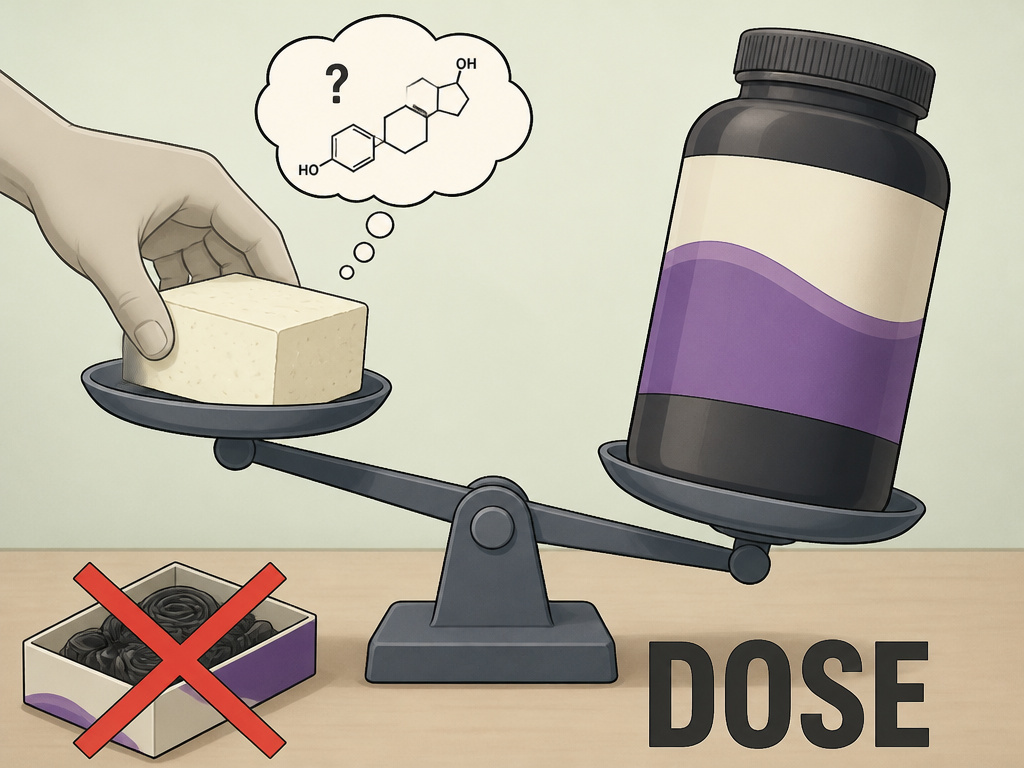
Headlines love to blame specific plants. The fear is phyto-oestrogens, plant compounds with a weak, estrogen-like structure. The theory is they block testosterone. The reality from human studies is far less dramatic.
Common mistake: Equating a serving of tofu with a concentrated supplement. Whole foods and isolated compounds have different effects.
The Allen et al. (2000) review is blunt: “The data on the effects of dietary phyto-oestrogens on sex hormone levels in men are too limited for conclusions to be drawn.” For supplements, it says the data is “too sparse for conclusions.” In plain English: we don’t have good evidence that normal dietary amounts of soy or flax move the needle on male hormones.
Normal dietary amounts of soy or flax are a different universe from high-dose supplements used in some research. I stopped worrying about that years ago.
Licorice is the one plant that deserves a footnote. Real black licorice containing glycyrrhizin, eaten in large daily amounts over time, can lower testosterone. It’s a useful reminder: dose matters. Consuming large daily amounts of licorice containing glycyrrhizin can lower testosterone.
What Actually Matters for Testosterone on a Vegan Diet
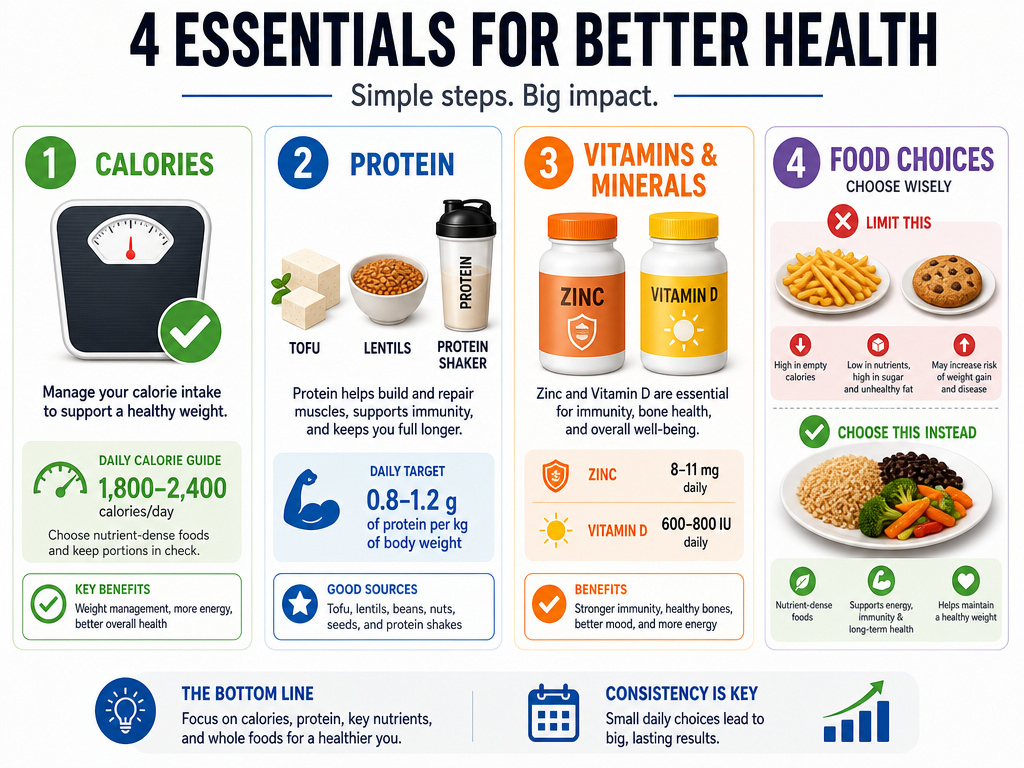
If the hormone levels are largely self-regulating, what should you focus on? The fundamentals that any diet can get wrong, which lead to low testosterone from deficiencies.
- Calorie Sufficiency. Chronic undereating is a surefire way to suppress testosterone. Your body prioritizes survival over reproduction. A vegan diet can be very high in volume and low in calories if you’re not careful. Track your calorie intake to ensure you’re not in a big deficit.
- Protein Intake. Hit your protein targets. It’s straightforward with legumes, tofu, tempeh, seitan, and protein powders if needed. Inadequate protein stresses the body and can impact hormone synthesis.
- Key Nutrients. This is where vegan supplements often earn their keep. Zinc and vitamin D are two of the most common key nutrient shortfalls linked to low testosterone. Supplements may help bridge nutrient gaps.
- Diet Quality. A “vegan” diet of fries, Oreos, and soda is not the same as one based on whole grains, legumes, vegetables, nuts, and seeds. The latter provides the micronutrients and fiber that support overall metabolic health, which is the true foundation for hormonal balance.
This is the practical work. It’s less sexy than blaming a soybean, but it’s what moves the needle. It’s also the core of any testosterone-supporting diet, plant-based or not.
Junk-Food Vegan vs. Whole-Food Vegan
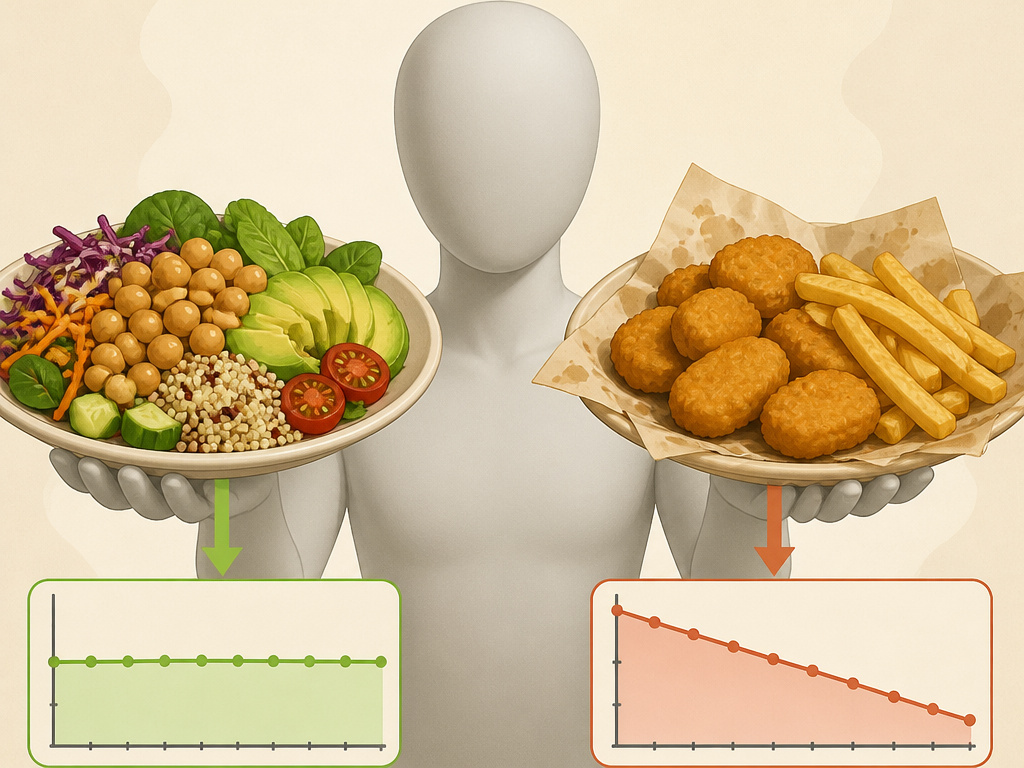
This is the critical distinction almost no one makes. When people worry about a “vegan diet,” they’re often picturing two very different things.
A whole-food vegan diet is rich in legumes, whole grains, vegetables, fruits, nuts, and seeds. It’s high in fiber, antioxidants, and micronutrients. This is the pattern associated with the hormone studies we’ve discussed, higher SHBG, stable free testosterone, lower IGF-1.
A junk-food vegan diet is high in refined flour, sugar, processed oils, and artificial ingredients. It’s low in fiber and essential nutrients. This pattern promotes inflammation, insulin resistance, and weight gain, all of which can negatively impact testosterone and overall health.
The takeaway is simple. If you’re eating a vegan diet for health, eat real food. The hormonal profile of someone living on processed meat alternatives and vegan snacks will look nothing like the participants in the positive research. This is why blanket statements about “vegan diets” are often useless.
Does a vegan diet cause erectile dysfunction?
Research on diet and sexual function in men does not show a direct link between a vegan diet and erectile dysfunction. Studies comparing hormone levels in vegans and meat-eaters find that while total testosterone measurements can vary, the levels of free or bioavailable testosterone, which is the hormone fraction that affects tissues, typically show no significant difference. The body’s regulatory systems work to maintain stable levels of active androgens. Since major factors like age and body weight have a much stronger influence on sexual health than specific nutrients, there is little evidence to suggest that adopting a vegan diet directly impairs sexual function or leads to ED.
Can a vegan diet improve prostate health?
The relationship between a vegan diet and prostate-specific markers is not fully established by current research. Some data indicates that vegan men have lower levels of insulin-like growth factor-I (IGF-I), a factor associated with cell growth, compared to meat-eaters. However, evidence directly linking dietary patterns to long-term changes in bioavailable sex hormone levels, which could influence prostate tissue, is limited. Reviews of the scientific literature conclude that nutrients are not strong determinants of these hormone levels compared to other factors. Therefore, while a diet rich in plants may support overall health, its specific impact on prostate health or PSA levels remains an area for further study.
Frequently Asked Questions
Does being vegan decrease testosterone?
No, a well-planned vegan diet does not decrease bioavailable (active) testosterone. Research shows it can increase total testosterone but also increase SHBG, a binding protein, resulting in no net change to the free testosterone your body can use.
Does soy lower testosterone in men?
Current evidence does not support the claim that dietary soy lowers testosterone in men. Major reviews, including the one in Nutrition Research Reviews, state the data is too limited to draw conclusions. Normal consumption of soy foods like tofu and tempeh is not a concern for testosterone levels.
What has a bigger impact on testosterone: diet or lifestyle?
Lifestyle factors like sleep quality, stress management, body weight, and physical activity have a much stronger and more consistent impact on testosterone levels than dietary composition. Chronic stress and poor sleep can significantly suppress testosterone, whereas the body tends to buffer out minor dietary changes.
Should vegan men take different supplements?
Vegan men should be particularly mindful of nutrients commonly lacking in plant-based diets that support hormonal health, such as Vitamin D, Zinc, and Vitamin B12. A vegan supplement guide focused on these can help prevent deficiencies that could indirectly affect testosterone.
Before You Go
The data is clear enough to act on. A vegan diet doesn’t lower your usable testosterone. It changes your hormone profile in other ways, like lowering IGF-1, which may be beneficial for long-term health. The fear around specific plants like soy and testosterone is overblown.
The real risk isn’t plants, it’s a poorly constructed diet. If you’re feeling low energy or drive on a plant-based diet, don’t blame the tofu. Audit the basics first: are you eating enough? Are you getting enough protein and key nutrients? Is your diet built on whole foods or processed substitutes?
Start there. That’s where the advantage is.
