
Does Soy Lower Testosterone? The Short Answer
This post contains affiliate links. As an Amazon Associate, we earn from qualifying purchases.
Soy does not significantly lower testosterone in healthy men at typical dietary or supplemental intake levels, according to multiple large meta-analyses of clinical studies. The 2021 meta-analysis of 41 studies and the 2025 dose-response meta-analysis of 8 RCTs both found no effect on total or free testosterone. However, one 2022 long-term trial using a high dose of soy protein isolate reported a progressive reduction in total testosterone over 18 months in men post-prostatectomy, highlighting that effects may differ by population, soy form, and study duration.
The data isn’t unanimous. That’s the part most summaries gloss over. You have three major reviews saying “no effect” sitting next to a couple of well-designed clinical trials that say “yes, under these specific conditions.” The gap between those conclusions is where the real answer lives, not in a blanket yes or no, but in the details of who, what, and for how long.
What follows is a walk through the clinical evidence, the doses that matter, the forms of soy that might, and a practical rule for where to draw your own line.
Key Takeaways
- Three major meta-analyses (2010, 2021, 2025) found no significant effect of soy or isoflavones on testosterone in men.
- One 2022 randomized controlled trial found that 19.2 g/day of soy protein isolate reduced total testosterone over 18 months in men after prostate surgery, but did not affect free testosterone.
- The testosterone-lowering effect may be specific to soy protein isolate, not isolated isoflavone supplements, and may require more than 4 months to appear.
- For healthy men, typical dietary soy (tofu, edamame) or moderate supplemental isoflavones (under 100 mg/day) are unlikely to impact hormone levels.
- The fear that soy causes feminizing effects like gynecomastia is not supported by clinical evidence at typical intake levels.
The Short Answer: What the Research Actually Says
The clinical evidence clusters into two groups. The first group, the large, aggregated reviews, finds nothing to worry about. The 2021 meta-analysis of 41 clinical studies concluded soy and isoflavones have no significant effect on total testosterone, free testosterone, estradiol, or SHBG in men. A 2010 ScienceDirect meta-analysis on soy protein of 32 reports came to the same conclusion. The most recent, a 2025 systematic review, found no significant effect of soy on testosterone levels.
The second group is smaller but specific. A PMC 18-month soy supplementation study from 2022 is the standout. It gave men who had undergone prostatectomy 19.2 grams of soy protein isolate daily (about 70 mg of total isoflavones). Over 18 months, it recorded a progressive reduction in circulating total testosterone and SHBG. The drop didn’t become substantial until between 4 and 8 months in. The authors note this effect might be tied to the soy protein itself, not just the isoflavones.
The Technical Snapshot: The 2022 RCT used a daily intervention of 19.2 g of whole soy protein isolate, delivering ~70 mg total isoflavones and ~24 mg of the specific isoflavone genistein. Decreases in testosterone and SHBG were not observed in the first few months but appeared progressively from 4 to 18 months.
So which one is right? Both are. The meta-analyses look at the broader picture across many types of men and interventions. The 2022 RCT looks deeply at one specific type of man (post-prostatectomy) and one specific form of soy (high-dose isolate over a very long time). The answer depends entirely on which scenario matches you.
Breaking Down the Conflicting Clinical Data
You can’t talk about soy and testosterone without a table. The disagreement isn’t an error, it’s a map of where the variables matter.
| Study (Type) | Population | Intervention | Duration | Effect on Total Testosterone |
|---|---|---|---|---|
| Meta-analysis (2021) | Men across 41 studies | Soy / Isoflavones (various) | Varies | No significant effect |
| Meta-analysis (2010) | Men across 32 reports | Soy / Isoflavones (various) | Varies | No significant effects |
| Systematic Review (2025) | Healthy adults (8 RCTs) | Soy (dose-response) | Varies | No significant effect (WMD: 12.26 pg/mL) |
| RCT (2022) | Males post-prostatectomy | 19.2 g/day Soy Protein Isolate | 18 months | Progressive reduction |
| Intervention Study (2003) | Healthy men | Soya flour supplementation | Short-term | Lowered serum testosterone |
The 2025 review is explicit: its finding of no effect applies to healthy adults. The 2022 RCT studied males post-prostatectomy, a group with a different hormonal baseline. The authors of that trial point out their findings align with two older studies but contrast with a one-year Japanese study that found no reduction. They hypothesize the Japanese subjects, with a habitual high-soy diet, might have been less sensitive to the intervention.
Where this goes sideways: Assuming all “soy” studies are the same. A handful of almonds is not a shot of almond oil, and a serving of tofu is not 20 grams of purified soy protein every day for a year and a half. The form and dose change the outcome.
This is why the question “does soy lower testosterone?” is almost useless on its own. The better questions are: “Does this amount of this form of soy, taken for this long, by someone like me, lower testosterone?” The table above starts to answer that.
Soy Protein vs. Isolated Isoflavones: Does Form Matter?
The 2022 RCT authors dropped a crucial footnote. They suggest the testosterone-lowering effect they observed might be attributable to the soy protein isolate, not to isolated isoflavone supplements. They cite evidence that “isoflavones are not responsible for soy protein-caused decrease.”
Think of it like this: an orange contains vitamin C, fiber, and water. Studying a massive dose of purified vitamin C tells you something about the vitamin, but not necessarily about eating an orange. The isoflavones in a soy isoflavone supplement are the vitamin C in this analogy. The soy protein isolate is more like the whole orange, but processed and concentrated.
| Soy Form | What It Is | Typical Use | Relevance to Testosterone Research |
|---|---|---|---|
| Whole Soy Foods (Tofu, Tempeh, Edamame) | Minimally processed soybeans. | Dietary intake. | Studied in some older interventions (e.g., 2003 soya flour study). Effects are mixed and likely dose-dependent. |
| Soy Protein Isolate | >90% protein, stripped of most carbs/fat. Used in shakes, bars, meat substitutes. | Sports nutrition, meal replacement. | The form used in the 2022 RCT that showed reduction. High, consistent daily dosing. |
| Isoflavone Extracts (Genistein, Daidzein) | Purified phytoestrogens from soy. | Sold as genistein or general isoflavone supplements for menopausal symptoms. | The subject of most meta-analyses. No significant effect found on male hormones at typical supplemental doses. |
Most of the panic over soy comes from extrapolating the effects of isolated phytoestrogens, plant compounds that can weakly bind to estrogen receptors. The body’s regulatory systems are buffers, not on/off switches.
The conversation about seed oils and testosterone has a parallel here. Isolated soybean oil is a concentrated source of polyunsaturated fats, but eating edamame isn’t the same as consuming that oil. The matrix matters.
What About Other Testosterone-Lowering Foods?
Soy isn’t the only food that gets flagged. When you look for lists of foods that may lower testosterone, you’ll find items like mint, licorice, and flaxseed. The evidence strength varies wildly.
Licorice is the one with surprisingly solid human data. Real black licorice containing glycyrrhizin can lower testosterone in studies, and it does so reliably enough that I pay attention. I once ate a large bag over a long drive and felt puffy and off the next day, a personal, unscientific nudge that the compound is bioactive. It’s a reminder that extreme intakes of anything can have effects.
Flaxseed contains lignans, another type of phytoestrogen. The data here is thinner and less consistent than for soy. For most people, a tablespoon of ground flax in oatmeal is a nutritional benefit, not an endocrine threat.
The broader point when you compare a does soy lower testosterone question to other factors is about context. Isolating a single food and blaming it for hormonal changes misses the forest for one strangely-shaped tree. Overall diet quality, calorie balance, fiber intake, and body fat percentage are larger levers on testosterone than any single serving of a plant food.
Common mistake: Swapping soy milk for dairy because of testosterone fears, while ignoring a diet high in processed foods and sugar. The second factor is a bigger driver of inflammation and hormonal dysregulation for most men.
Practical Intake: How Much Soy Is Too Much?
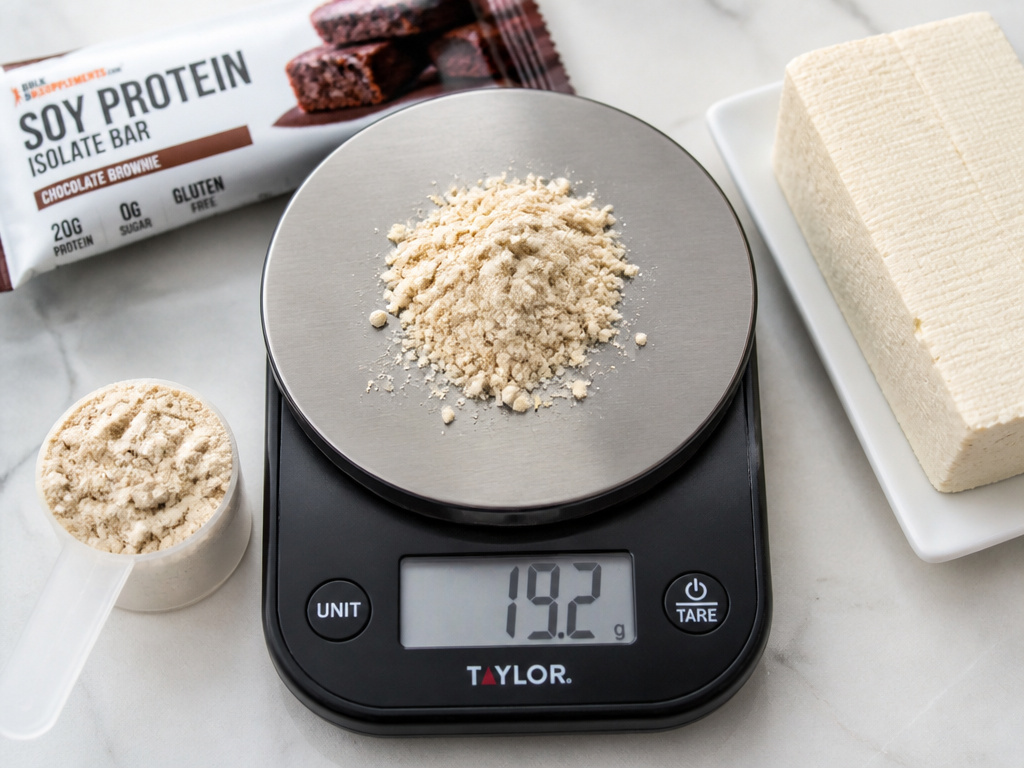
The studies give us grams and milligrams. Translating that to real life is the next step. The 2022 RCT used 19.2 grams of soy protein isolate daily. That’s roughly equivalent to:
- 2.5 scoops of a standard soy protein powder.
- A very large, soy-based protein bar plus a soy shake.
- A substantial daily intake, far above what someone gets from occasionally eating tofu or edamame.
The isoflavone dose in that study was about 70 mg total isoflavones per day. For comparison:
- 1 cup of cooked soybeans: ~20-30 mg
- 1 cup of soy milk: ~6-10 mg
- 1 serving of tofu (100g): ~8-15 mg
- A typical capsule of a soy isoflavone supplement: 50-100 mg
Asian populations, with habitual high soy intake, often consume isoflavones from food. The 2022 RCT authors suggested that populations with a high baseline soy diet (like the Japanese cohort in the study that found no effect) might not show further hormonal changes, a concept known as acclimation.
The part nobody mentions: If you’re concerned about soy, look at all your sources. That protein bar, that meat substitute, that shake powder, and that supplement might all be adding up. If your total daily isoflavone intake from all sources is consistently very high for months on end, you’re in a range closer to some clinical trials. If you’re having a few servings of whole soy foods a week, you’re orders of magnitude below that.
Addressing the Myths: Gynecomastia and Feminization

The most persistent fear is that soy will cause breast tissue growth in men (gynecomastia) or other feminizing effects. This stems from the “phytoestrogen” label and a handful of case reports (often involving massive, abnormal intakes).
A 2010 critical review in Fertility and Sterility explicitly examined this. It concluded that isoflavones do not exert feminizing effects on men at typical intake levels, even at high amounts consistent with traditional Asian diets.
The mechanism doesn’t support the fear. Phytoestrogens have a much weaker affinity for estrogen receptors than human estrogen. In some tissues, they can actually block the stronger human estrogen from binding, acting as an anti-estrogen. The male body also tightly regulates its sex hormone balance through feedback loops in the hypothalamus and pituitary gland. A weak dietary signal is easily drowned out by this system.
The clinical evidence on the does soy lower testosterone question backs this up. The meta-analyses that found no effect on testosterone also found no significant effect on estradiol (the primary estrogen) in men. If soy were exerting a strong feminizing effect, you’d expect to see a rise in estradiol levels, which the data does not show.
The Vegan Diet Question
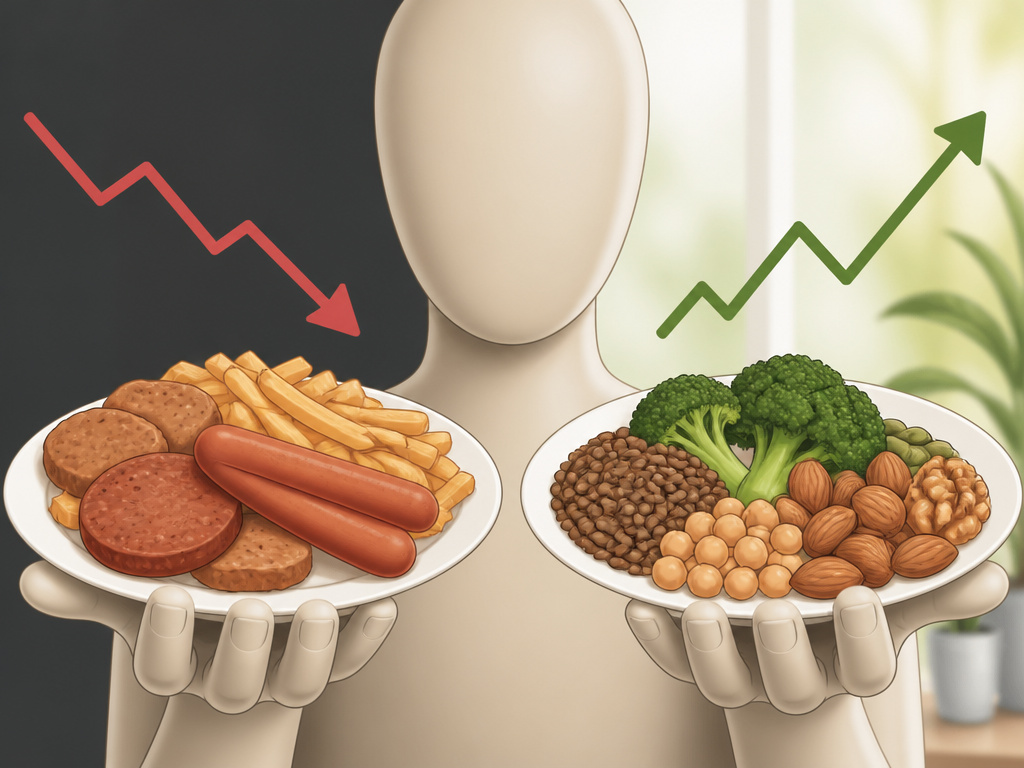
A related search is about the effects of a vegan diet on testosterone. Since vegans typically consume more soy, does their testosterone suffer? The research here looks at the overall dietary pattern, not just soy.
The takeaway is that a well-planned vegan diet does not appear to be a risk factor for low testosterone. The benefits of high fruit, vegetable, and legume intake likely outweigh any theoretical risk from the phytoestrogens in those plants.
It circles back to the whole-foods principle. A diet of processed vegan junk food (soy-based mock meats, refined carbs, seed oils) is a problem. A diet centered on beans, lentils, vegetables, nuts, and seeds is not.
When To Be Cautious: Specific Populations and Contexts
The evidence allows for a few sensible cautions. These aren’t alarms, but filters for your own situation.
- If you are consuming very high doses of soy protein isolate. This means using it as a primary protein source multiple times a day, every day, for months. You’re in the territory of the 2022 RCT.
- If you have a history of hormone-sensitive cancers (like prostate cancer) and are considering high-dose soy supplementation. The research in these groups is mixed, and it’s a discussion for your oncologist, not a blog article.
- If you are simultaneously exposed to multiple substances considered endocrine disruptors. The concern here is additive effect. If your diet is high in processed soy, your personal care products contain parabens and phthalates, and you’re stressed and sleep-deprived, the soy is the least of your problems, but it’s part of a cumulative load.
For the vast majority of healthy men, the data is reassuring. The 2003 PubMed soya flour testosterone study is an outlier in its outcome, and even it used a specific, supplemented form. Your block of tofu, your tempeh stir-fry, your edamame snack, they’re not on trial here.
Does Soy or Dairy Affect Hormones More?
Clinical research provides a clearer picture for soy than for dairy. Multiple large meta-analyses, including a 2021 review of 41 studies and a 2025 systematic review, have consistently found no significant effect of soy or its isoflavones on testosterone levels in healthy men. A smaller 2022 trial did find a reduction in total testosterone with long-term, high-dose soy protein isolate supplementation in a specific population. In contrast, the evidence for dairy’s direct effects on hormones like testosterone is less definitive and not as systematically aggregated. For practical guidance, focusing on overall dietary patterns and protein sources that support your health goals is more useful than isolating single food comparisons.
Frequently Asked Questions
Does soy decrease testosterone levels?
For most healthy men at typical dietary or supplemental intakes, the answer is no. Multiple meta-analyses aggregating dozens of clinical studies have found no significant effect. There are a few long-term, high-dose studies that show a reduction, but these involve specific populations (like men post-prostatectomy) and very high intakes of soy protein isolate (19+ grams daily) over many months.
Which foods decrease testosterone?
Beyond soy, foods and herbs with some evidence for lowering testosterone include real black licorice (due to glycyrrhizin), spearmint/peppermint in very high amounts (like daily therapeutic tea), and possibly high-dose flaxseed. However, the effect of normal culinary use of these foods is negligible for most people. A bigger impact comes from chronic overeating, high sugar intake, and excessive alcohol consumption.
Should I avoid soy as a male?
There is no clinical reason for a healthy male to avoid whole soy foods like tofu, edamame, or tempeh. The NIH clinical meta-analysis findings support this. You may choose to moderate intake if you are consuming multiple daily servings of soy protein isolate powder or highly processed soy-based meat substitutes, simply to vary your protein sources. Avoidance is an overreaction to the evidence.
Does ejaculating lower testosterone?
This is a common fitness myth. Short-term studies show testosterone can fluctuate slightly around ejaculation, but there is no evidence that frequent ejaculation leads to a sustained, clinically meaningful lowering of baseline testosterone levels. Lifestyle factors like sleep, stress, diet, and exercise have a far greater impact on your hormonal baseline.
Before You Go
The soy and testosterone debate is a lesson in reading past the headline. The broad, aggregated data from thousands of men says “no effect.” The deep, narrow data from a few specific trials says “maybe, under these conditions.” Both are true.
Your practical rule is simple: don’t fear the soybean. Don’t fear the tofu. Do pay attention if you’re stacking a soy protein shake, a soy-based bar, and a meat substitute every single day for months, that’s a pharmacological dose, not a food. In that case, the variable you’re testing isn’t “soy,” it’s “monotonous, ultra-processed diet,” and that’s rarely a winning strategy for anything, hormones included.
For everyone else, the hormonal energy spent worrying about soy is better invested in checking your vitamin D level, managing your stress, or getting an extra hour of sleep. Those levers move the needle. The soy in your stir-fry doesn’t.
