
Does Prednisone Lower Testosterone? The Evidence Explained
This post contains affiliate links. As an Amazon Associate, we earn from qualifying purchases.
Yes, long-term oral prednisone therapy can significantly lower testosterone levels. Studies show men on chronic treatment have significantly lower testosterone levels, with reported reductions of 33% or roughly 60% of control levels in different studies. The effect is dose-dependent and works by suppressing the hypothalamic-pituitary-testicular (HPT) axis. One study in athletes found no change in testosterone after 2 or 7 days of treatment with 60 mg/day prednisone.
The connection between a prescription and a hormone level isn’t always obvious, which is why the does prednisone lower testosterone question is so important. You take a drug for inflammation, asthma, or an autoimmune condition, and months later your energy, drive, and mood feel off. It’s easy to blame the illness or stress. The medication list is the first place I check now.
What follows is a breakdown of the evidence for the does prednisone lower testosterone query: the specific studies, the doses where the drop starts, the difference between a week and a year of use, and what the research says about recovery. We’ll also cover the practical side, what to ask your doctor, and why stacking new supplements before checking your prescriptions is a common mistake.
Key Takeaways
- Long-term oral prednisone use significantly lowers testosterone, with a strong inverse correlation (r = -0.78) between dose and serum level.
- The suppression mechanism targets the hypothalamic-pituitary-testicular (HPT) axis, disrupting the signal to produce testosterone.
- Acute, short-term use (like a 7-day burst pack) may not significantly impact testosterone, according to a 2015 study on athletes, while chronic therapy (months to years) has been shown in multiple studies to reliably suppress it.
- Inhaled corticosteroids (e.g., beclomethasone) at standard doses do not appear to significantly lower testosterone, highlighting the importance of the route of administration.
- Recovery of testosterone levels after stopping prednisone is possible, but the timeline varies and depends on the duration of therapy and individual health.
The Evidence: What the Studies Actually Say
The claim that prednisone lowers testosterone isn’t internet speculation. It’s documented in peer-reviewed literature going back decades. The numbers tell a clear story.
A 1986 study by MacAdams et al. Looked at men with chronic pulmonary disease on glucocorticoid therapy. It found serum testosterone was reduced in 14 of 16 patients. The mean level in treated patients was 211 ng/dL, compared to 449 ng/dL in the control group. The researchers calculated an inverse correlation between corticosteroid dosage and serum testosterone level of r = -0.78. That’s a strong, dose-dependent relationship.
Other studies reinforce this. Reid et al. (1985) reported that asthmatic men requiring more than 7.5 mg per day of prednisone had plasma testosterone concentrations at roughly 60% of control group levels. Wishart et al. (1990) found a 33% reduction in mean testosterone in men on long-term oral prednisolone (14.5 nmol/L vs. 21.7 nmol/L in controls).
This 1985 BMJ plasma testosterone study of asthmatic men established that the testosterone-lowering effect kicks in at doses above 7.5 mg per day, providing a clinical threshold that is still referenced today.
The effect isn’t limited to total testosterone. A 1996 study by Björntorp found the testosterone/SHBG ratio, a marker of biologically active, free testosterone, was significantly reduced in men receiving a mean of 16.3 mg/day of prednisolone. This matters because free testosterone is what your tissues actually use.
How Does Prednisone Lower Testosterone? (The HPT Axis Mechanism)
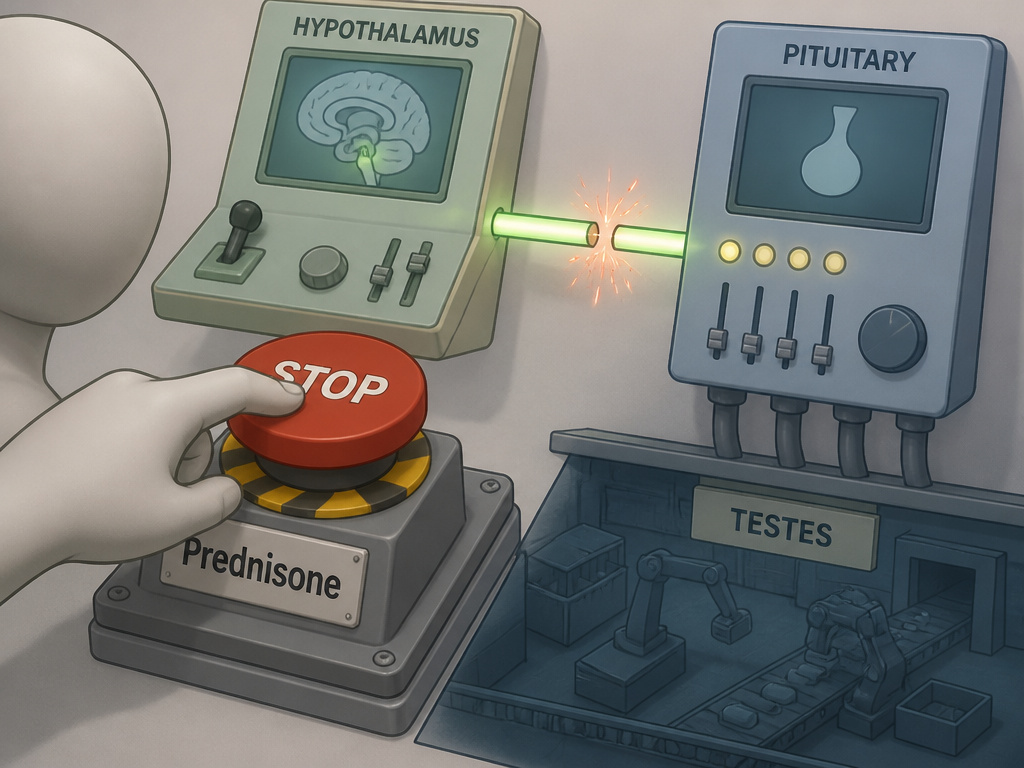
Prednisone doesn’t directly poison testosterone-producing cells. It works upstream, by disrupting the hormonal command chain known as the hypothalamic-pituitary-testicular (HPT) axis. Think of it like a factory where corporate headquarters (the hypothalamus) stops sending production orders to the plant manager (the pituitary), so the factory floor (the testes) sits idle.
Here’s the step-by-step breakdown:
- The Hypothalamus normally releases gonadotropin-releasing hormone (GnRH).
- The Pituitary Gland responds to GnRH by secreting luteinizing hormone (LH) and follicle-stimulating hormone (FSH).
- LH travels to the testes and signals Leydig cells to produce testosterone.
Glucocorticoids like prednisone suppress the release of GnRH from the hypothalamus. With the initial signal dampened, the entire cascade weakens. Research points to this as one proposed mechanism. The MacAdams study noted that gonadotrophin levels weren’t elevated, pointing to an “alteration of hypothalamic GnRH secretion.” However, the Reid et al. Study found raised FSH and LH levels, suggesting a direct action on the testis or reduction in adrenal substrate.
This systemic suppression is also why looking at your broader cortisol and testosterone balance is crucial. Chronic stress elevates cortisol, which can similarly suppress the HPT axis. Adding a potent synthetic glucocorticoid like prednisone is like pouring gasoline on that fire.
Dose, Duration, and Route: When Suppression Happens
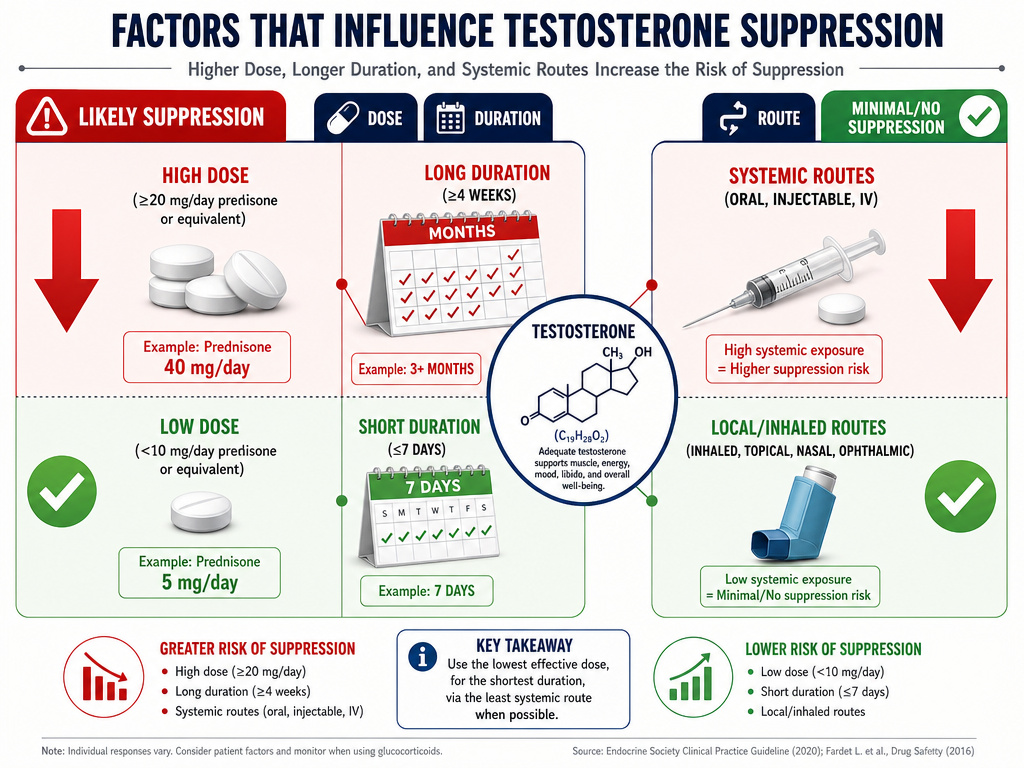
Not everyone on prednisone will experience the same drop in testosterone. Three key variables decide the impact: how much you take, how long you take it, and how you take it.
| Variable | Scenario with Likely Suppression | Scenario with Minimal/No Suppression |
|---|---|---|
| Dose | Daily doses >7.5 mg prednisone (Reid et al., 1985) | Lower dose regimens |
| Duration | Chronic therapy (months to years) | Acute, short-term use (e.g., a 5-7 day “burst”) |
| Route | Oral / Systemic (prednisone, prednisolone) | Inhaled (e.g., beclomethasone), Topical |
The difference between acute and chronic use is critical. A 2015 study by Collomp et al. Found no change in testosterone in athletes after 2 or 7 days of treatment with a high dose of 60 mg/day prednisone. The problem builds with time.
The route of administration is equally important. The same 1990 Wishart study that found a 33% drop from oral prednisolone also reported that testosterone was not significantly reduced in men using even high-dose inhaled beclomethasone.
Does It Affect Women and Athletes Differently?
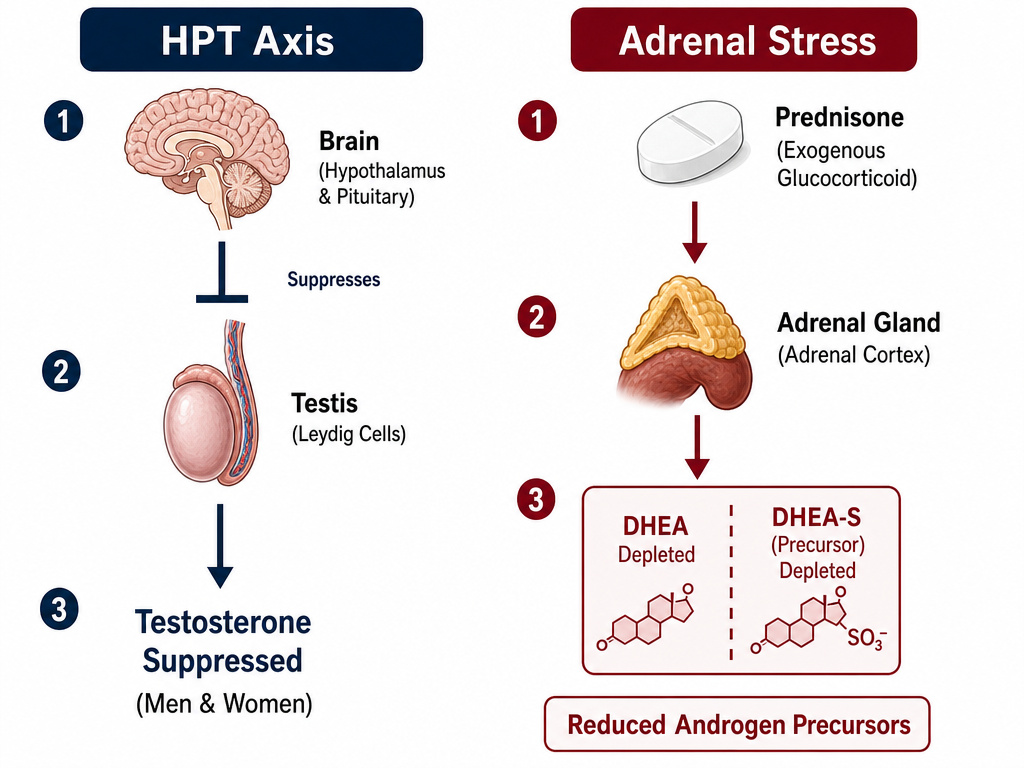
The research isn’t exclusive to men. A 1984 study in Fertility and Sterility by Steinberger et al. Looked at hyperandrogenic women (those with high testosterone) taking 7.5-10 mg/day of prednisone. It found their plasma testosterone levels were “significantly suppressed” by the therapy. This demonstrates the HPT axis suppression mechanism works regardless of sex, though the clinical implications differ.
Athletes represent another interesting edge case. The Collomp study that showed no acute testosterone change was done on recreationally trained male athletes. This study was done on recreationally trained male athletes. However, the study did find significant decreases in DHEA and DHEA-S, which are adrenal precursors to testosterone. This suggests that even short-term use can stress the adrenal contribution to the hormone pool, which matters for long-term hormonal health.
Where this goes sideways: Assuming a one-week prednisone pack is “harmless” for hormonal health. While it may not crash testosterone, the acute drop in adrenal precursors like DHEA was observed.
Other Sexual Side Effects and Impact on Libido
Low testosterone is rarely a solitary problem. It’s part of a cluster of symptoms. When prednisone lowers testosterone, other sexual side effects often follow.
- Low Libido: This is the most common complaint. Testosterone is a primary driver of sexual desire in men and plays a key role in women’s libido. When levels fall, interest often wanes.
- Erectile Dysfunction: Testosterone supports healthy blood flow and nitric oxide production in erectile tissue. While ED can have multiple causes, low T is a frequent contributor.
- Fatigue and Low Mood: These aren’t strictly sexual side effects, but they create a environment where sexual function struggles. Chronic fatigue from low T or the underlying illness being treated makes libido a low priority.
Recovery: How Long After Stopping Prednisone Does Testosterone Bounce Back?
This is the question everyone asks after learning about the suppression: “Is it permanent?” The evidence, while not offering a precise timetable, is reassuring.
The suppression caused by prednisone is generally reversible once the drug is discontinued. The HPT axis, once freed from suppression, can typically restart its normal signaling.
Factors that influence recovery time:
- Duration of Therapy: A patient on prednisone for two years will likely take longer to fully recover than someone on it for three months.
- Dosage: Higher doses create deeper suppression.
- Individual Health: Age, baseline testicular function, and overall health (including factors like how chronic stress lowers testosterone) play roles.
- Other Medications: Being on other drugs that lower testosterone, like certain opioids or antidepressants, can slow or complicate recovery.
There’s no standard “30-day rebound” guarantee. For some, levels may normalize within a few months. For others, especially after very long-term therapy, it can take six months to a year. The only way to know is through follow-up blood work. This is a conversation for your doctor, asking for a testosterone panel a few months after tapering off can provide clarity and peace of mind.
What to Do If You’re Concerned: Talking to Your Doctor
If you’re on long-term prednisone and experiencing symptoms of low testosterone, don’t stop your medication. The condition you’re treating is likely more immediately dangerous than hormonal suppression. Instead, systematize your approach.
- Document Your Symptoms. Note fatigue, low libido, mood changes, and muscle loss. Track them alongside your dose.
- Request Blood Work. Ask your doctor to check a total testosterone, free testosterone, and SHBG panel. This gives a snapshot. It’s best drawn in the morning.
- Review Your Full Medication List. Prednisone might not be the only factor. Have your doctor review all your prescriptions for other potential contributors, similar to checking the effects of antipsychotics or other medications known to reduce testosterone levels.
- Discuss the Treatment Trade-off. Is your current prednisone dose the minimum effective dose? Could you taper lower? Is there a non-steroidal alternative? This is a risk/benefit conversation.
- Address Foundational Health. You can’t control the prescription, but you can optimize sleep, manage stress (to lower that competing cortisol), and maintain a healthy diet. These actions support your HPT axis’s resilience.
Common mistake: Rushing to buy testosterone boosters or starting TRT without investigating prescription causes first. Supplements may not override a strong pharmaceutical suppressor like prednisone.
How does prednisone compare to other ‘testosterone killers’?
Prednisone is a systemic oral glucocorticoid, and its suppressive effect on testosterone is well-established. Research shows inhaled corticosteroids at common doses do not significantly lower testosterone. The impact of prednisone is often dose-dependent and linked to chronic use. Unlike some substances that might have a direct effect on the testicles, studies on prednisone point to a central mechanism, altering signals from the brain’s hypothalamus. This differentiates it from other potential disruptors that may act through different pathways. If you are concerned about multiple medications or lifestyle factors affecting your hormone levels, discussing the specific mechanisms and your full regimen with a doctor provides the clearest picture.
Can prednisone cause increased libido as a rare side effect?
The fact sheet and studies provided focus on testosterone suppression, not libido. Research documents that prednisone frequently lowers testosterone levels, which is more commonly associated with a decrease in sexual desire. However, medication side effects can be complex and vary between individuals. A temporary change in mood or energy levels from the medication could theoretically influence libido in rare cases, but this is not a documented or expected outcome from the clinical research on its hormonal effects. If you experience a significant or unexpected change in libido while taking prednisone, it is a topic to raise with your prescribing physician to explore all potential contributing factors.
Frequently Asked Questions
Does taking prednisone affect testosterone levels?
Yes, long-term oral prednisone therapy reliably lowers testosterone levels. Studies show reductions of 33-60% in men on chronic treatment compared to healthy controls. The effect is dose-dependent and results from suppression of the brain’s hormonal signaling to the testes.
What is the biggest side effect of prednisolone?
From an endocrine perspective, systemic side effects include suppression of the hypothalamic-pituitary-adrenal (HPA) axis and the HPT axis.
What is the #1 testosterone killer?
Does prednisone make it hard to get erect?
It can. By lowering testosterone, prednisone can contribute to erectile dysfunction. Testosterone is crucial for maintaining healthy blood flow and nitric oxide function in erectile tissue. Fatigue and low mood are also potential side effects of prednisone.
Before You Go
If you’re on prednisone and worried about your hormones, start with the prescription slip, not the supplement bottle. The evidence is clear that long-term use suppresses testosterone, and that effect is often reversible. Your first step is a direct conversation with the doctor who manages that prescription.
Ask about the possibility of a lower dose or a taper schedule. Request a morning testosterone blood test to establish a baseline. And if your symptoms are significant and your dose can’t be changed, that’s the point to discuss the risks and benefits of testosterone replacement therapy with a specialist. Managing a medication’s side effect is a standard part of chronic care, you just have to know which questions to ask.
