
Does Testosterone Affect Semen Volume? The Direct Answer
This post contains affiliate links. As an Amazon Associate, we earn from qualifying purchases.
Testosterone’s effect on semen volume depends entirely on whether it’s your natural level or medication. Low natural testosterone shows no significant link to lower volume in recent studies. However, taking exogenous testosterone (TRT or steroids) can severely suppress sperm production, but its direct impact on semen volume is less clear, one older study found volume unchanged even while seminal fluid quality dropped.
The 2020 data from the Journal of Clinical Medicine is the pivot point. It looked at over 800 subfertile men and found their semen volumes were statistically identical regardless of testosterone status. That flips a common assumption. The real fertility damage from testosterone therapy comes from crushing sperm counts, not necessarily from shrinking the fluid that carries them.
What follows: a breakdown of that 2020 study, the older research on what TRT actually does to seminal fluid, the critical difference between volume and count, and the sobering recovery timelines for men who stop testosterone.
Key Takeaways
- A 2020 study of 853 men found no significant difference in semen volume between those with low and normal testosterone.
- Exogenous testosterone (TRT/steroids) causes azoospermia (zero sperm) in a significant portion of users, but a 1974 study noted seminal volume remained unaffected.
- Recovery of sperm production after stopping TRT is slow and uncertain; studies show varying rates of persistent azoospermia; one study found 46.2% of men remained azoospermic after >6 months, while another found 21% remained azoospermic after a median of 4.5 months.
- The HPG axis negative feedback loop explains why external testosterone shuts down sperm production but may spare some semen volume from accessory glands.
- For fertility concerns, sperm count and motility are far more critical metrics than semen volume alone.
The Direct Answer: Low T vs. TRT
The question splits in two, and the core does testosterone affect semen volume question requires you to separate naturally low testosterone from the effects of taking testosterone as a drug.
For men with low endogenous testosterone, the link to semen volume is weak, which directly addresses the does testosterone affect semen volume inquiry. A 2020 study in the Journal of Clinical Medicine analyzed 853 subfertile men. It compared those with low total testosterone (under 264 ng/dL) to those with normal levels. The mean semen volume was 3.2 ± 1.79 mL in the low-T group and 3.23 ± 1.64 mL in the normal group, a difference so small it’s not statistically significant. The study concluded low testosterone was not significantly associated with altered semen parameters in that population. Your natural T level, by itself, isn’t a reliable predictor of how much fluid you produce.
Where this goes sideways: Confusing low semen volume with low testosterone. That 2020 study shows they often don’t correlate. If your volume is down, look at hydration, frequency of ejaculation, or prostate/seminal vesicle health before blaming hormones.
The mechanism changes completely when you introduce external testosterone, which reframes the does testosterone affect semen volume debate. This could be doctor-prescribed TRT or anabolic steroid use. Here, the dominant effect is on sperm production, not necessarily fluid volume. A 1974 study published in the Journal of Reproduction and Fertility is one of the few to look specifically at volume during long-term administration. Men given testosterone enanthate (200mg/week) for 21 weeks saw a dramatic fall in seminal fructose concentration (a key marker of seminal vesicle secretion), but the mean semen volume was reported as unaffected. The drug hammered the quality of the fluid, but not necessarily its total quantity.
This is a key distinction most men miss. When we talk about the link between testosterone and fertility, the catastrophic effect is on sperm manufacturing within the testes. The seminal fluid, mostly produced by the prostate and seminal vesicles, can be a separate conversation.
How Exogenous Testosterone Crushes Sperm Production (The HPG Axis)
To understand why TRT is so damaging to fertility, you need to understand the hypothalamic-pituitary-gonadal (HPG) axis. It’s a feedback loop your body uses to regulate hormone production.
Your hypothalamus releases GnRH, which tells your pituitary gland to release luteinizing hormone (LH). LH then travels to your testes and signals them to do two things: produce testosterone and produce sperm. When you inject or apply external testosterone, your brain detects the high levels in your blood. It thinks, “We have plenty of testosterone,” and shuts down the signal from the hypothalamus. No GnRH means no LH. No LH means your testes stop their production line. Sperm production halts.
This 2025 review in Nature Reviews Urology states that long-acting testosterone injections cause “complete HPG-axis suppression.” It’s not a slowdown; it’s a shutdown.
This is why the impact of anabolic steroids on male fertility is so severe. The body isn’t designed for a constant flood of external hormone. The result is azoospermia, an absence of sperm in the ejaculate. It’s a predictable, dose-dependent effect. This same mechanism is why TRT can cause testicular atrophy: the testes, no longer receiving LH signals, shrink from disuse.
| Testosterone Formulation | HPG Axis Suppression | Likely Impact on Spermatogenesis |
|---|---|---|
| Long/Intermediate-Acting Injections (e.g., Cypionate, Enanthate) | Complete | Severe suppression, high risk of azoospermia |
| Short-Acting Gels (Topical) | Incomplete | Possible maintenance, lower risk |
| Oral Formulations | Variable | Unpredictable, often suppressive |
The takeaway is brutal for fertility. If you’re on traditional TRT injections and trying to conceive, you’re likely shooting blanks. This is a well-documented iatrogenic (doctor-caused) issue, as noted in a PubMed article on iatrogenic infertility. The desire to treat low-T symptoms directly conflicts with the goal of preserving sperm production.
Recovery After Stopping Testosterone: Timelines and Odds
So you stop the testosterone. How long until sperm come back? The data here is sobering and highlights why this isn’t a decision to make lightly if future fertility is a concern.
Recovery is not guaranteed, and it takes months. A 2014 study in Fertility and Sterility followed 26 men who ceased exogenous testosterone. The mean time to their first semen analysis was 6.48 ± 5.33 months. Despite waiting that long, 46.2% of them (12 men) were still azoospermic. That’s nearly half showing no sperm at all after more than half a year.
A 2015 study in Urology presented slightly more optimistic but still serious numbers. After stopping, the median sperm concentration increased from 0 to 6.3 million/mL after a median follow-up of 4.5 months. However, 21% of men (8 out of 39) remained azoospermic.
Common mistake: Assuming fertility will bounce back immediately after the last injection. The HPG axis is in a deep hibernation. Waking it up takes time, and sometimes it doesn’t fully wake up.
The variation between studies (21% vs. 46% azoospermia) is important. It reflects different patient populations, durations of therapy, and types of testosterone used. But the consensus is clear: a significant minority of men will have persistent zero sperm counts long after stopping. The 2025 review notes that men with pre-existing HPG axis dysfunction may face “particularly protracted and uncertain recovery.”
This is the core of the dilemma around low testosterone and infertility. The treatment for the symptoms can create the very fertility problem you were worried about.
Semen Volume vs. Sperm Count: Why the Difference Matters
This is the most common point of confusion. Semen volume and sperm count are different parts of the ejaculate, governed by different systems.
- Semen Volume: This is the fluid itself. About 60-70% comes from the seminal vesicles, 20-30% from the prostate, and a small amount from the bulbourethral glands and testes. It’s a transport medium and energy source for sperm. Volume can fluctuate with hydration, frequency of ejaculation, and the health of those accessory glands.
- Sperm Count: This is the number of sperm cells within the semen. They are manufactured in the testes in a process (spermatogenesis) critically dependent on intratesticular testosterone, which is fueled by LH from the pituitary.
Testosterone therapy demolishes sperm count by shutting off LH. Its effect on semen volume is more indirect. The 1974 study showing unchanged volume but plummeting seminal fructose is the clue. The seminal vesicles might still produce fluid, but its nutritive quality for sperm is poor. You might have a normal-looking amount of fluid that’s essentially empty.
| Parameter | Primary Producer | Main Hormonal Driver | Effect of Exogenous Testosterone |
|---|---|---|---|
| Semen Volume | Seminal Vesicles, Prostate | Less directly hormone-dependent | Possibly unchanged; quality may degrade |
| Sperm Count | Testes (Seminiferous Tubules) | LH -> Intratesticular Testosterone | Severely suppressed, often to zero |
| Seminal Fructose | Seminal Vesicles | Androgen sensitivity | Can be significantly reduced |
When looking at supplements to increase sperm volume, you’re largely targeting the fluid-producing glands. When addressing fertility issues related to low testosterone, you’re targeting the hormonal engine of the testes. They are related but distinct battles.
Other Factors That Affect Semen Volume (It’s Not Just Hormones)
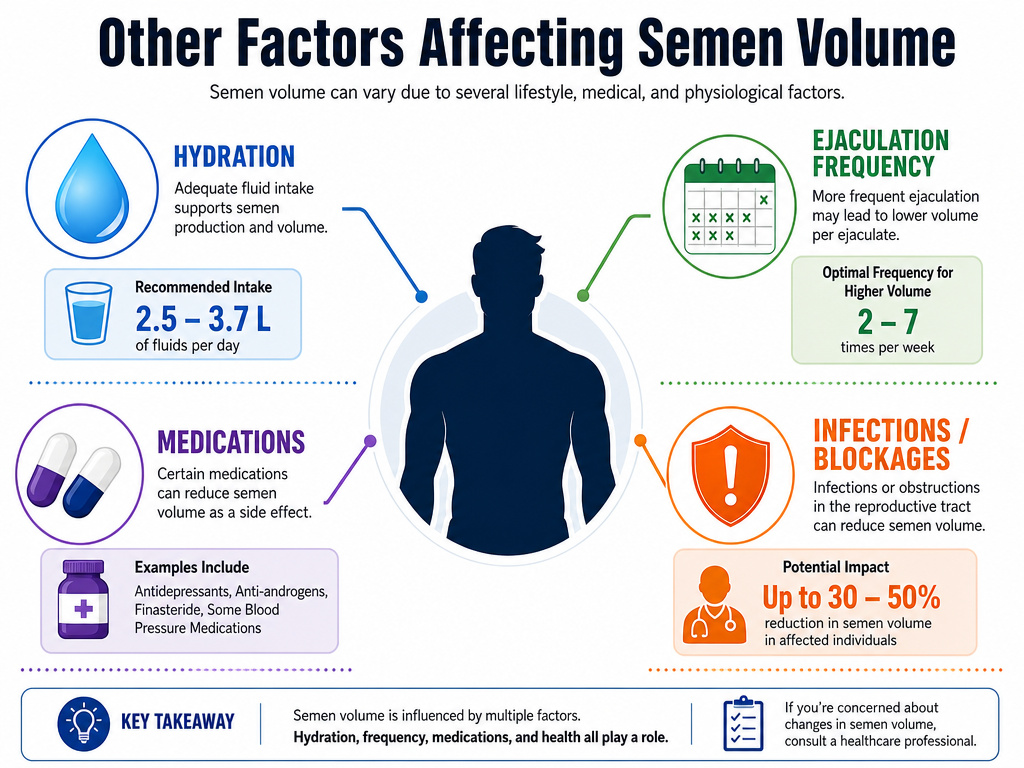
If you’re noticing a decrease in semen volume, testosterone is only one possible culprit, and as the 2020 study suggests, not a strong one. Before you get fixated on hormones, rule out these more common factors.
Hydration and Diet: Semen is mostly water. Chronic low fluid intake will reduce volume. Certain nutrients like zinc and selenium are important for prostate and seminal vesicle function, but massive deficiencies are needed to see a volume impact.
Ejaculation Frequency: This is the biggest daily driver. The more frequently you ejaculate, the less time your accessory glands have to replenish fluid stores. A shorter “refractory period” between ejaculations means lower volume per event. That’s normal.
Medications and Supplements: Some drugs have anticholinergic effects that can reduce glandular secretions. Certain antidepressants, blood pressure medications, and even antihistamines can be culprits. On the flip side, some men anecdotally report increased volume with supplements for semen volume containing ingredients like lecithin or pygeum, though robust clinical evidence is thin.
Blockages or Infections: Inflammation or infection of the prostate (prostatitis) or seminal vesicles can impair their function. Partial blockages in the ejaculatory ducts can also reduce output. These usually come with other symptoms like pain or changes in ejaculation sensation.
The Bottom Line: If you’re concerned about volume, track your water intake and ejaculation pattern for two weeks before you worry about a hormone panel. A sudden, persistent drop with no other explanation is worth a urologist visit to check gland health.
Low testosterone is linked to other sexual symptoms (low libido, ED)
While low natural testosterone may not strongly predict your semen volume, it is often connected to other sexual health issues. Men with low testosterone commonly experience symptoms like a reduced sex drive (low libido) and erectile dysfunction (ED). These symptoms can occur independently of changes in semen production. If you’re concerned about low testosterone, pay attention to these broader signs. Discussing all your symptoms with a doctor can help determine if low testosterone is a factor and guide appropriate next steps, which may involve looking beyond just semen analysis.
How low testosterone is diagnosed (blood test)
Diagnosing low testosterone requires a blood test. A doctor will typically measure your total testosterone level. For example, in research studies, a level below 264 ng/dL is often used as a threshold to define low testosterone. The test is straightforward and is the only definitive way to confirm a clinical deficiency. It’s important to have this test done in the morning when testosterone levels are naturally highest. Your doctor will interpret the results in the context of your symptoms to make an accurate diagnosis and rule out other potential causes.
Treatments for low testosterone (injections, gels, etc.)
Common treatments for low testosterone include injections, gels, and other formulations. However, these exogenous testosterone therapies can significantly impact fertility. Long-acting injections typically cause complete suppression of the body’s natural sperm production, often leading to azoospermia. Short-acting options like topical gels may allow for some maintenance of spermatogenesis due to incomplete suppression. If future fertility is a concern, discuss this with your doctor before starting treatment. Recovery of sperm production after stopping testosterone can be protracted and uncertain, especially for men with pre-existing hormonal axis dysfunction.
Frequently Asked Questions
Why am I ejaculating less volume?
The most likely reasons are increased ejaculation frequency or mild dehydration. Hormonal causes like low testosterone are a less common driver, according to recent research. Other factors include certain medications, aging (natural slow decline in glandular output), or underlying issues with the prostate or seminal vesicles.
Does TRT always kill sperm production?
For all practical purposes, yes, especially with injectable forms. The suppression of the HPG axis is profound and leads to azoospermia (zero sperm) in the vast majority of men. Some short-acting topical gels may cause less suppression, but they are not considered fertility-friendly. Anyone on TRT who wishes to preserve fertility should discuss add-on therapies like hCG with their doctor.
How long after stopping TRT does sperm come back?
Recovery timelines are long and variable. Studies show it takes a median of 4.5 to 6.48 months to see sperm return in a semen analysis. Crucially, studies report different rates of persistent azoospermia; one found 46.2% of men remained azoospermic after >6 months, while another found 21% remained azoospermic after a median of 4.5 months. Full recovery can take over a year, and for some men, it may be incomplete or not happen at all.
Can you take supplements to increase semen volume on TRT?
You can, but it’s addressing the wrong problem. Pills for semen volume might influence fluid output from the accessory glands. However, if TRT has made you azoospermic, you’re increasing the volume of fluid that contains no sperm. The priority for fertility is restoring sperm production, not fluid volume.
Before You Go
The relationship between testosterone and semen volume is a lesson in precision. Your natural level likely has little to do with it. The testosterone you inject, however, has everything to do with fertility, but by demolishing sperm count, not necessarily by changing the teaspoon of fluid you see.
The 2020 study is the clearest signal: don’t blame low T for low volume. Look at your water bottle and your calendar first. But if you are using exogenous testosterone, understand the bargain. You are trading reliable, often permanent infertility for the benefits of therapy. Have that conversation before you start. The data says that for a substantial number of men, that shutdown isn’t a temporary pause. It’s the new normal.
