
Does Too Much Protein Lower Testosterone?
This post contains affiliate links. As an Amazon Associate, we earn from qualifying purchases.
Consuming too much protein can lower testosterone, but only at sustained, extreme intakes exceeding 3.4 grams per kilogram of body weight per day. High- and moderate-protein diets (1.25–3.4 g/kg/day) do not consistently decrease total testosterone. The general population averages about 1.3 g/kg/day, and most athletes stay below the 3.4 g/kg threshold.
That 3.4 g/kg/day line is the one that matters. It comes from a 2022 meta-analysis that sorted through the noise. Below it, the hormone data is messy and inconsistent. Above it, the drop in total testosterone is clear, which directly addresses the question: does too much protein lower testosterone?
What follows is a breakdown of where that number comes from, what an “acute” protein meal does to your levels within hours, and why your total calories and whether you’re eating plants or animals might change the math entirely.
Key Takeaways
- The consistent drop in total testosterone is linked to very high-protein diets above 3.4 g/kg/day, a level most people never reach.
- A 2022 acute study found that a single high-protein meal caused a transient, 75–80 ng/dL decrease in serum testosterone for about 5 hours, independent of other hormones. However, a 2023 commentary states that high- and moderate-protein diets (1.25–3.4 g/kg/day) do not consistently decrease total testosterone.
- Animal protein intake shows a clearer association with lower testosterone in observational studies, while plant protein may have a neutral or positive link.
- Being in a calorie deficit lowers testosterone regardless of protein intake, making energy balance the dominant factor during dieting.
- For actionable advice, track your total intake for a week using an app like Cronometer before making any drastic changes.
The 3.4 g/kg Threshold That Decides It
Most of the confusion around protein and testosterone stems from fuzzy definitions. What one person calls a “high-protein” diet, another might call moderate. A 2023 commentary in Nutrition and Health proposed a clear, research-backed framework to end the debate.
They defined four bands:
- Low-protein: Below 1.25 g/kg/day
- Moderate-protein: 1.25–1.9 g/kg/day
- High-protein: 1.9–3.4 g/kg/day
- Very high-protein: Above 3.4 g/kg/day
The critical finding is that only the “very high-protein” category shows a consistent decrease in total testosterone. This is supported by a separate 2022 meta-analysis which found that low-carb, high-protein diets exceeding 3.4 g/kg/day decreased total testosterone by approximately 5.23 nmol/L. Diets with protein intake below this threshold showed no consistent decrease.
This 2023 commentary clarifies that only very high-protein diets (>3.4 g/kg/day) show a consistent decrease in total testosterone. High- and moderate-protein diets (1.25–3.4 g/kg/day) do not.
This puts the risk in perspective. The general population’s protein intake is approximately 1.3 g/kg/day. Even conventional bodybuilding or fitness “high-protein diets” rarely surpass 3 g/kg/day. The vast majority of athletes consume less than 3.4 g/kg/day. You have to be deliberately pushing extreme, sustained amounts to enter the zone where the hormone suppression signal becomes clear.
So, are you overdoing it? Unless you’re meticulously weighing every ounce of chicken and scoop of protein powder with the goal of maximizing grams, you probably aren’t. The first step isn’t to panic, it’s to measure. Use a tracking app for three days to see where you actually land.
The Acute Effect: What a Single Protein Meal Does
The research on long-term, high-protein diets tells one story, directly related to the does too much protein lower testosterone question. The research on what happens in the hours after you eat a protein shake tells a different, more immediate one.
A 2022 acute study published in the Journal of Endocrinological Investigation gave 11 healthy men a 400-calorie protein solution after an overnight fast. The result was a sharp, transient drop in testosterone.
Mean serum testosterone decreased from 415 ng/dL (control) to 340 ng/dL after protein ingestion, a 75 ng/dL decrease. The suppression lasted for approximately 320 minutes, or just over five hours, with a mean delta-testosterone decrease of 80 ng/dL observed at 200 minutes post-ingestion.
Where this goes sideways: Assuming a single high-protein meal reflects long-term hormonal adaptation. The acute drop is a short-term metabolic event, not a permanent state.
The mechanism here is intriguing. The drop in testosterone appeared to be independent of luteinizing hormone (LH) secretion from the pituitary gland. This suggests the protein is having a direct effect on the testes’ ability to produce testosterone, at least temporarily, rather than signaling the brain to slow production.
This is a useful distinction when you compare a does too much protein lower testosterone scenario. It means that the post-workout shake isn’t “killing your gains” for the long term. But it does show that your body’s hormonal environment is in constant flux based on what and when you eat. If you were to get a blood test 2-3 hours after a big steak, your reading might be lower than if you had fasted. This is a key detail most men miss when interpreting their own lab results, a nuance highlighted in this NIH clinical study on macronutrients.
Animal vs. Plant Protein: Does Source Matter?
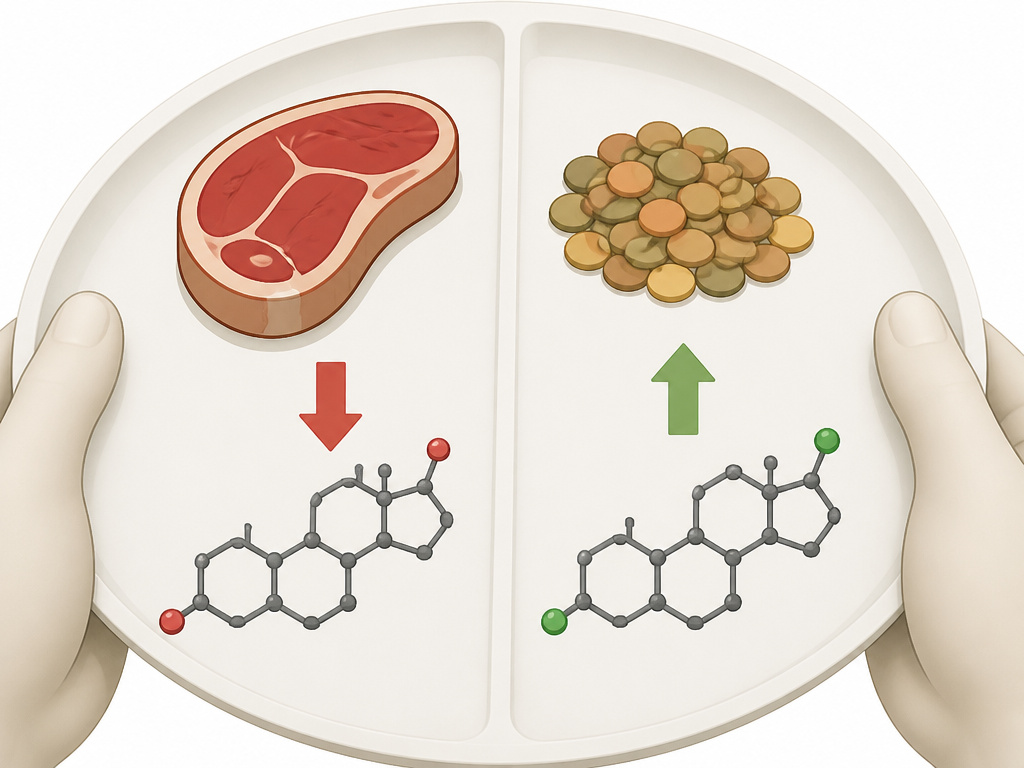
The protein on your plate isn’t just protein. It comes bundled with different fats, fibers, phytonutrients, and digestibility profiles. Emerging research suggests the source, animal or plant, might be as important as the amount for hormonal endpoints.
Observational data points to a split. Observational research indicates that the highest quartile of animal protein intake is associated with 1.2 nmol/L lower total testosterone compared to the lowest quartile. The association for plant protein went the other direction, showing a positive link with testosterone levels.
This aligns with earlier research, like a 2025 study on premenopausal women in the Fertility and Sterility journal, which also found higher animal protein intake associated with lower testosterone. While more research is needed, the consistent signal is that swapping some animal protein for plant sources may be a prudent lever to pull if you’re concerned about optimization.
| Protein Source | Observed Association with Testosterone | Considerations |
|---|---|---|
| Animal (meat, dairy, eggs) | Inverse association (higher intake linked to lower T) in observational studies. | Often comes with higher saturated fat. The full “matrix” of the food may influence hormones. |
| Plant (legumes, grains, nuts) | Neutral or positive association in observational data. | Contains fiber and phytonutrients. May support better blood sugar control, indirectly benefiting hormones. |
| Processed (protein isolates, bars) | Data is limited. Acute studies use these. | The rapid digestibility of isolates like whey may contribute to the acute hormonal dip. |
This isn’t a call to go vegan. It’s a suggestion to audit the balance in your own testosterone-supporting diet. If your plate is dominated by red meat and whey, introducing more lentils, beans, or tofu could be a simple, research-informed experiment.
The Overriding Factor: Energy Balance Trumps Protein
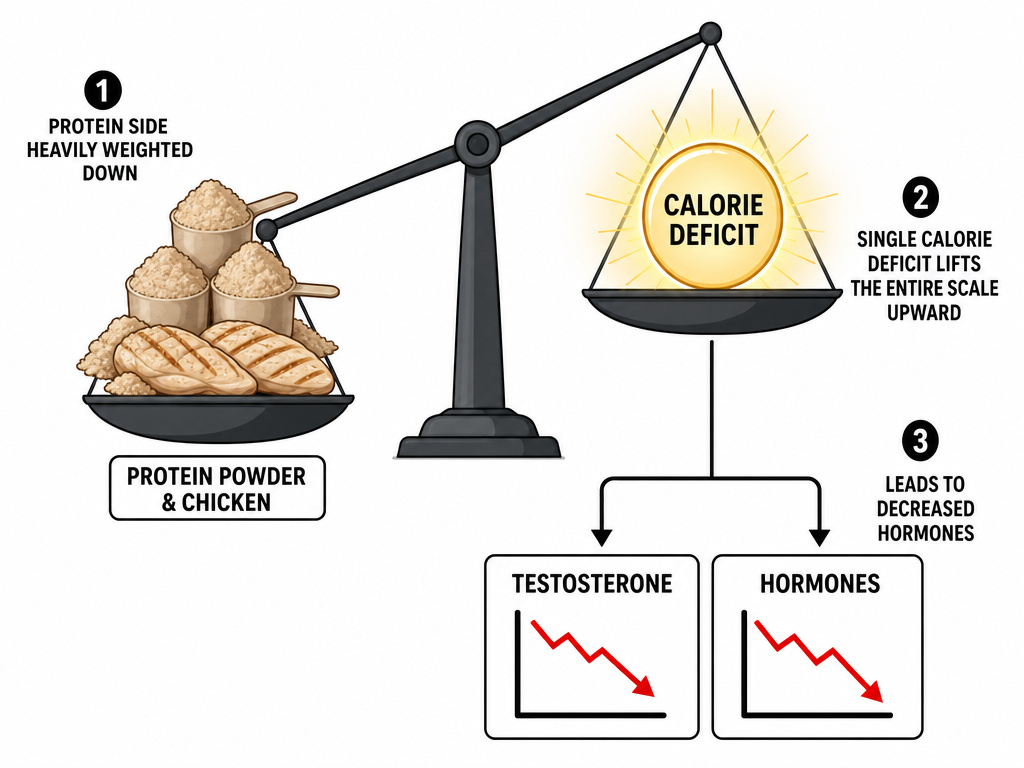
You can have the protein equation perfectly solved and still crash your testosterone if you get the bigger picture wrong. That bigger picture is energy balance, consuming enough total calories to support your body’s needs.
A 2014 trial found that testosterone decreased during an energy deficit regardless of protein intake (0.8, 1.6, or 2.4 g/kg/d), suggesting the catabolic state is a dominant factor.
The catabolic state of a calorie deficit is such a powerful hormonal disruptor that it overrides the specific effects of protein. Your body senses scarcity and downregulates non-essential functions, including reproduction, to preserve energy. This is a crucial piece of context often missing from the debate.
Common mistake: Blaming protein for low testosterone when the real culprit is a prolonged calorie deficit. In a deficit, hormones fall first.
This is why men on extreme cuts for bodybuilding shows often experience plummeting libido and mood, even while eating massive amounts of protein. They’ve won the protein battle but lost the energy war. If your goal is hormonal health, adequate total calories and dietary fat intake is essential. No amount of chicken breast will compensate for a severe, sustained energy shortage.
Who Actually Needs to Worry?
With the thresholds and contexts in mind, we can identify the profiles of men who might be flirting with the problematic intake zone.
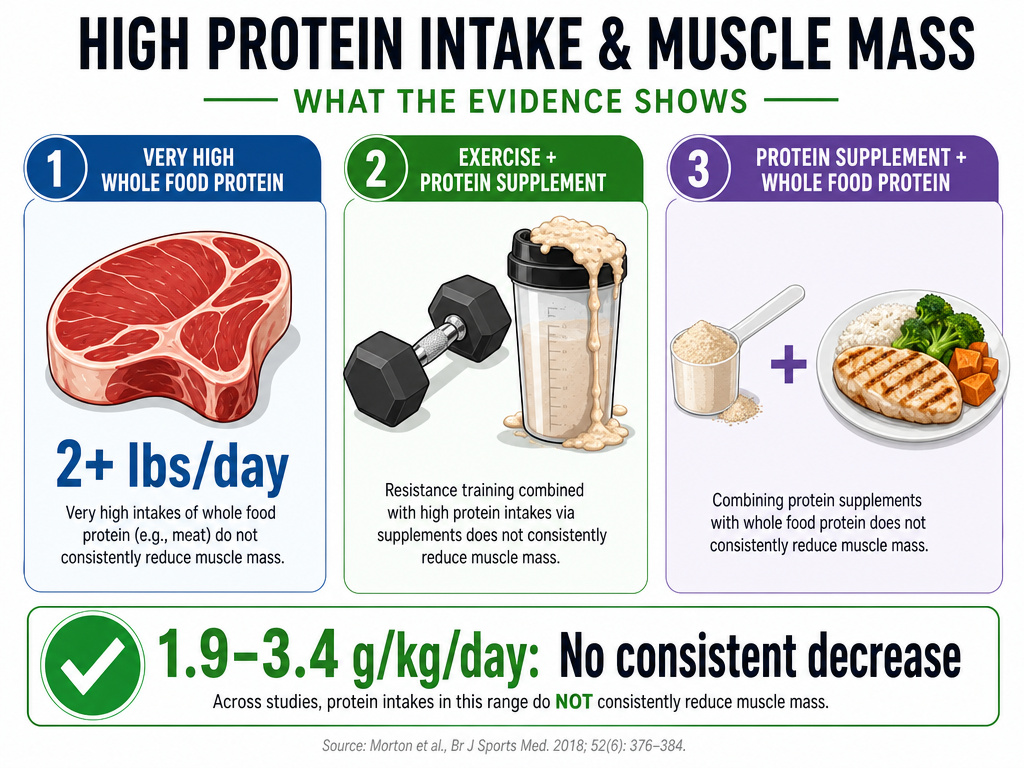
- The Extreme Diet Experimenter: This person is following a protocol like a meat-only carnivore diet with the goal of eating 2+ pounds of meat daily. It’s mechanically easy to surpass 3.4 g/kg/day on such a plan.
- The “More Is Better” Bodybuilder: An experienced lifter who believes pushing protein to extreme levels far beyond conventional recommendations is essential for growth, potentially layering multiple protein shakes on top of whole food meals.
- The Supplement Stacker: Someone who adds protein powder to every meal and snack, turning a moderate diet into a very high-protein one without realizing the cumulative dose.
For individuals consuming protein within the high-protein range (1.9–3.4 g/kg/day), the research is reassuring as it shows no consistent decrease in testosterone. You are solidly in the “high-protein” range that shows no consistent negative effect on testosterone.
How to Adjust Your Intake Without Guesswork
Worrying is not a strategy. Measuring is. If you’re curious or concerned about your own protein intake, follow this simple audit instead of making reactive cuts.
First, track your current intake for 3–7 days. Use an app like Cronometer or MacroFactor. Weigh your food when possible, especially for protein-dense items like meat, fish, and powder. Don’t estimate.
Second, calculate your g/kg/day. Take your average daily protein in grams and divide it by your body weight in kilograms. This is your number. Compare it to the bands:
- Below 1.25 g/kg/day: You might be under-eating protein.
- 1.25–3.4 g/kg/day: You’re in the safe, research-backed range.
- Above 3.4 g/kg/day: You’re in the extreme zone where a reduction may be prudent.
Third, adjust one variable at a time. If your number is above 3.4, don’t slash protein randomly.
- Option A: Reduce by 0.5 g/kg/day and hold for 4-6 weeks. See how you feel, perform, and if possible, retest your hormones.
- Option B: Shift some protein sources from animal to plant. Replace one daily serving of meat with lentils or tofu.
- Option C: Ensure your total calories are adequate. Add a serving of healthy carbohydrates or fats like rice, potatoes, or avocado to your meals.
The goal is to gather personal data, not to chase a study abstract. Your energy, gym performance, and libido are valuable biofeedback.
Do high-protein, low-carb diets lower testosterone?
Research indicates that the protein intake level is the key factor, not necessarily the carbohydrate content. A meta-analysis found that low-carb, high-protein diets with a protein intake greater than 3.4 grams per kilogram of body weight per day decreased total testosterone. However, diets with protein intake below this 3.4 g/kg/day threshold showed no consistent decrease in testosterone. Since conventional high-protein diets and the vast majority of athletes rarely surpass this very high intake level, most people following typical high-protein, low-carb plans are unlikely to see a consistent negative impact on their testosterone from the protein itself.
How does protein intake affect cortisol and testosterone?
The fact sheet does not contain specific information linking protein intake to cortisol levels. For practical guidance, consider that major hormonal shifts are often tied to overall energy balance and stress on the body. A significant calorie deficit or intense training without adequate recovery can elevate cortisol, which may then influence testosterone. Focusing on a balanced diet that supports your activity level and ensuring sufficient rest are foundational practices for managing cortisol.
Frequently Asked Questions
Can eating too much protein lower testosterone?
Yes, but only at sustained, extreme intakes above 3.4 grams of protein per kilogram of body weight per day. High- and moderate-protein diets (1.25–3.4 g/kg/day) do not consistently lower testosterone. Most people, including athletes, consume less than this threshold.
What is the #1 testosterone killer?
Chronic low energy availability, often from a prolonged calorie deficit, is one of the most powerful suppressors of testosterone.
Does not ejaculating for 7 days increase testosterone?
The evidence for this is weak and inconsistent. It is not a reliable strategy for boosting hormone levels.
What are the signs that I’m consuming too much protein?
However, hormonal symptoms like low libido or fatigue are more likely tied to overall calorie intake or other lifestyle factors.
Before You Go
The protein-and-testosterone story has been simplified into a scare tactic. The research paints a more precise, and less alarming, picture.
The 3.4 g/kg/day line is your guide. It’s a extreme intake, far beyond what’s necessary for muscle growth or health for the vast majority of men. If you’re below it, you can stop worrying about protein tanking your T. Your focus is better spent on the fundamentals: eating enough total food, sleeping well, and managing stress.
If you are above it, and you’ll only know by tracking, the fix isn’t complicated. Reduce your intake gradually by half a gram per kilo, or swap a few animal servings for plant-based ones. Give it a few weeks and listen to your body. The best protocol is the one that you can sustain, that supports your energy, and that doesn’t turn eating into a source of anxiety.
Change one thing at a time. Test it, track it, then decide.
