
How Testosterone Works Differently in Men and Women
This post contains affiliate links. As an Amazon Associate, we earn from qualifying purchases.
In men and women, testosterone works differently in three key ways: production quantity, circulating levels, and primary biological roles. A man’s body produces 7 to 8 times more testosterone than a woman’s, resulting in adult reference ranges of 260-865 ng/dL for men versus 8.7-46 ng/dL for women. In men, testosterone drives classic androgenic traits like muscle mass and facial hair, while in women it supports libido, bone health, and is readily converted into estradiol for other functions.
That difference in quantity isn’t just a number on a lab sheet. It changes how we measure the hormone, how we interpret symptoms, what “normal” even means for each sex, and how testosterone works differently in men and women. Getting the measurement wrong is common, and it starts with using the wrong test for the job.
What follows breaks down the mechanics: where the hormone comes from, how it travels in the blood, what it actually does in each sex, and the practical steps for getting a clear picture if you’re concerned about your levels and how testosterone works differently in men and women.
Key Takeaways
- Men produce 7 to 8 times more testosterone at the source (Leydig cells vs. Ovaries), setting the stage for all downstream differences.
- Standard direct immunoassays fail for measuring female and low male levels; the gold standard is LC-MS/MS.
- The “free hormone hypothesis” suggests only unbound testosterone is biologically active, making accurate free testosterone measurement critical for diagnosis.
- In women, testosterone is a key precursor for estradiol, and most androgen actions are likely mediated by intracellular conversion to DHT.
- Symptoms of imbalance have different thresholds in each sex, and a true female deficiency usually requires loss of both ovarian and adrenal production.
The 7-to-1 Production Ratio That Defines the Difference
The story starts at the source. In men, specialized cells in the testes called Leydig cells are the primary testosterone factories. In women, the ovaries and adrenal glands produce smaller amounts.
One study notes that testosterone production by Leydig cells in the testes of males is 7 to 8 times higher than that produced by the ovaries in females. This isn’t a slight variance; it’s an order-of-magnitude gap that explains how testosterone works differently in men and women and why the hormone’s role diverges so completely between the sexes.
According to the free hormone hypothesis, only the unbound or free fraction of testosterone is biologically active in target tissues. Accurate determination and harmonized reference ranges for free testosterone are necessary to diagnose androgen disorders in men and women.
Think of it like water pressure in two different plumbing systems. One is built for high pressure to service large demands (male development), while the other operates at a lower pressure for more nuanced, localized tasks (female physiology). Trying to diagnose a problem without knowing which system you’re looking at is pointless.
This production gap directly creates the different reference ranges every lab uses.
What “Normal” Actually Looks Like: Reference Ranges
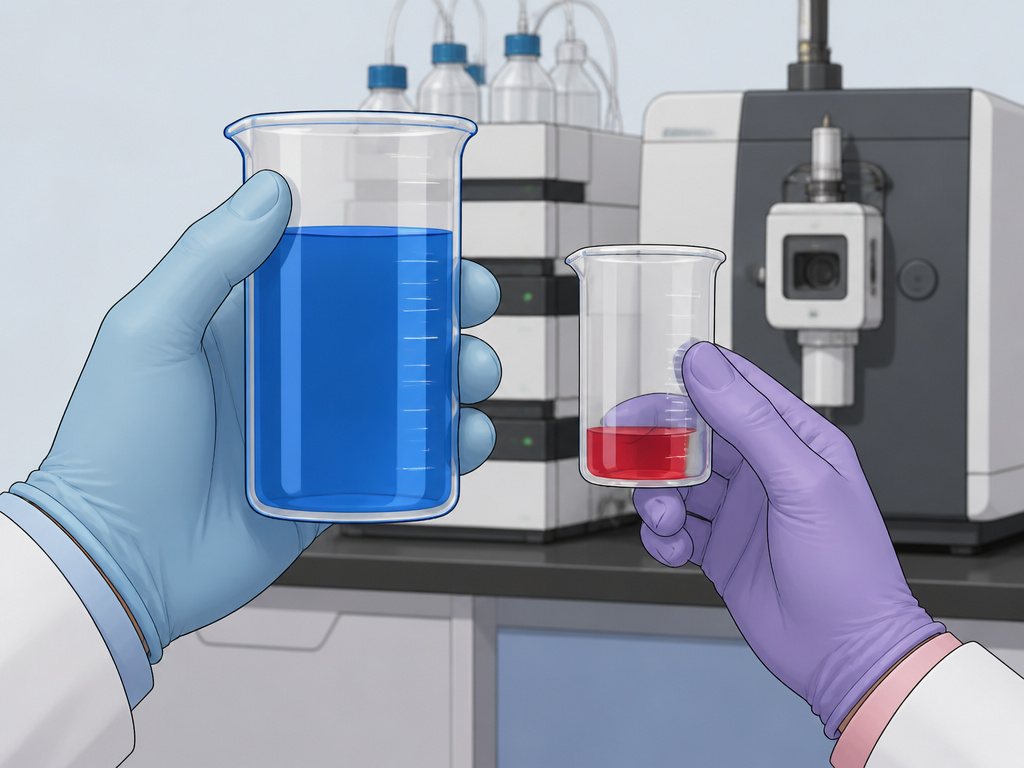
If you walk into a lab, the numbers they use to flag “high” or “low” are not the same for men and women. These reference intervals are based on mass spectrometry data from healthy populations.
| Population | Testosterone Reference Interval (LC-MS/MS) | Notes |
|---|---|---|
| Adult Men | 260 – 865 ng/dL (9 – 30 nmol/L) | Reflects high-end Leydig cell output. |
| Adult Women | 8.7 – 46 ng/dL (0.3 – 1.6 nmol/L) | About 1/20th of the male range. |
| Newborn Males (Minipuberty) | Distinct neonatal range | A temporary postnatal surge not applicable to older infants. |
The table makes the disparity visual. A value of 50 ng/dL is low for a man but well within the normal female range. This is the first place misdiagnosis happens—applying the wrong yardstick.
The LC-MS/MS (liquid chromatography/tandem mass spectrometry) method listed here is crucial. It’s the gold standard, especially for measuring the low concentrations found in women, children, and hypogonadal men. The Endocrine Society Position Statement is blunt: direct immunoassays “perform poorly at low T concentrations and should be avoided” for these groups. Many standard lab panels still use these less accurate immunoassays, which become notoriously unreliable below approximately 100 ng/ml.
Common mistake: Relying on a standard lab testosterone test without verifying the method. For women or men suspected of low T, an LC-MS/MS test is the only reliable starting point.
The Transport System: Bound, Free, and Bioavailable
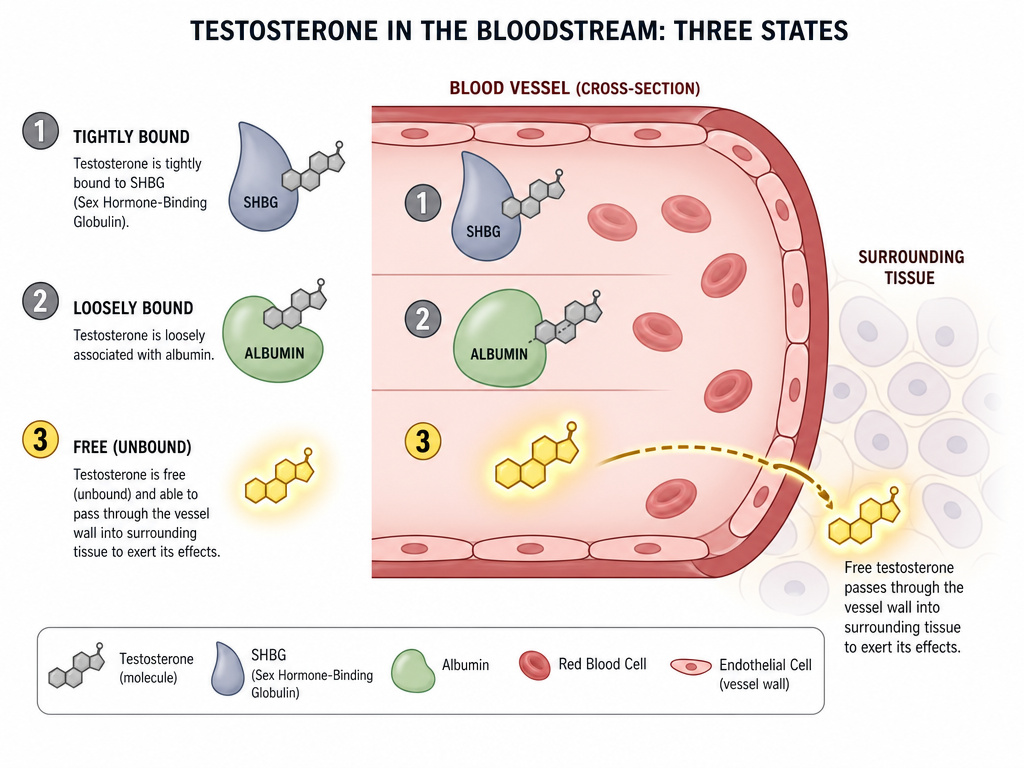
Once produced, over 98% of testosterone doesn’t float freely in the bloodstream. It’s bound to transport proteins, which control where it can go and what it can do. This makes understanding “free testosterone” essential for grasping its function.
- Sex Hormone-Binding Globulin (SHBG): This protein binds testosterone tightly. The hormone is essentially inactive while attached.
- Albumin: A weaker, more transient binding.
- Free Testosterone: The small, unbound fraction that is biologically active.
The prevailing view, called the free hormone hypothesis, is that only this free fraction can slip into tissues to exert effects. This makes measuring or calculating free testosterone critical, particularly when total testosterone levels are borderline.
This isn’t a contradiction but a reflection of complexity. Binding is not a simple on/off switch; it’s influenced by other hormones, health status, and likely differs between men and women. A recent reappraisal of testosterone’s binding in circulation argues that the old, simple linear models are inaccurate and may increase the risk of misclassifying men seeking therapy. Newer, multistep models are promising but their clinical experience is still limited.
The takeaway? Total testosterone is a useful snapshot, but it’s an incomplete one. For a functional understanding, especially in cases of symptoms with normal total T, free testosterone is the variable that matters.
Primary Biological Roles: Two Different Job Descriptions
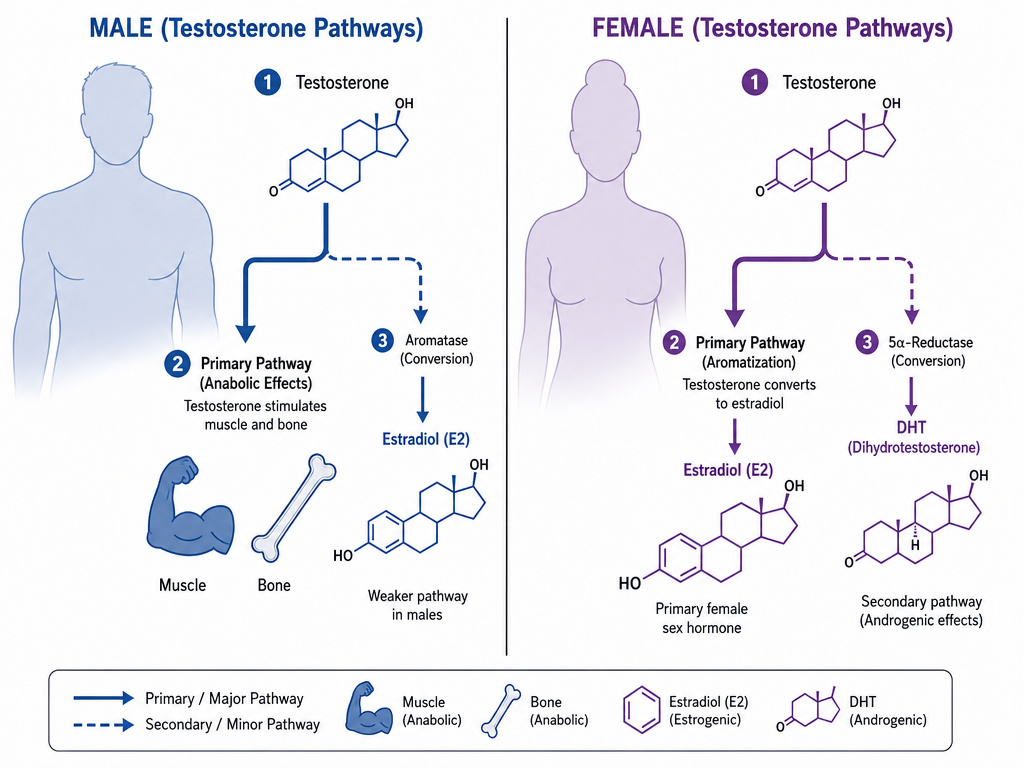
With different quantities and delivery systems come completely different job descriptions. Testosterone isn’t doing the same work in a man’s body as it is in a woman’s.
Testosterone’s Role in Men
In men, testosterone is the primary androgen, responsible for developing and maintaining male sexual characteristics. Its actions are largely direct.
- Development: Drives the formation of male genitalia in utero and prompts puberty (deepening voice, facial hair, muscle growth).
- Libido and Function: Fuels sexual desire and supports erectile function.
- Body Composition: Promotes muscle protein synthesis and influences fat distribution.
- Bone Health: Stimulates bone mineralization and growth.
- Mood and Cognition: Influences energy, motivation, and competitive drive.
A critical, often-overlooked pathway in men is conversion to estradiol. The enzyme aromatase converts testosterone into estradiol in various tissues. This isn’t a bug; it’s a feature. Estradiol derived from testosterone is essential for normal bone growth, bone metabolism during aging, and for the negative feedback that regulates other hormones (LH and FSH). A man with no estrogen activity will have osteoporosis and continued linear growth, despite normal testosterone.
Testosterone’s Role in Women
In women, testosterone is best understood as a crucial precursor and a local tissue modulator. Its actions are often indirect.
- Precursor for Estradiol: This is a major pathway. The vast majority of testosterone in women is converted by aromatase into estradiol, the primary female sex hormone. This local tissue conversion is physiologically significant.
- Libido Support: It contributes to sexual desire, though the link between serum levels and desire is complex and not clearly definitive.
- Bone and Muscle Health: Supports bone density and lean muscle mass.
- General Well-being: Influences energy, mood, and a sense of vitality.
Most androgen actions in women are likely mediated by intracellular conversion to the more potent DHT (dihydrotestosterone), not by circulating testosterone itself. This means serum levels may poorly reflect actual tissue-level androgen activity. In women, serum androgen levels are usually higher than estrogen levels, except during the preovulatory and midluteal phases when they are similar.
The Measurement Minefield: Why Getting It Right Is Hard
You can’t manage what you can’t measure accurately, and measuring testosterone is fraught with pitfalls that differ by sex.
For Women and Low-Range Men: The Assay Problem
The biggest hurdle is methodological. As noted, direct immunoassays are inaccurate below ~100 ng/dL. Since the entire female range and the low male range sit below this threshold, these common tests are useless for these groups. The Endocrine Society and other authorities state clearly: mass spectrometry (LC-MS/MS) is the required method.
Timing and Biological Variation
- For Men: Testosterone follows a diurnal rhythm, highest in the morning. The standard practice is to draw blood before 10 AM.
- The conservative approach is to test in the early follicular phase (days 2-5) if possible, but to interpret any result with caution due to normal fluctuation.
What to Measure: Total, Free, or Bioavailable?
This is the clinical crux. The Endocrine Society suggests that total testosterone measured by LC/MS in a qualified lab is most useful, though other validated assays may be appropriate. However, given the free hormone hypothesis, a strong case exists for directly assessing free testosterone via equilibrium dialysis (the gold standard) or a reliable calculation when symptoms are present but total T is unremarkable.
Symptoms and Deficiencies: Different Thresholds, Different Causes
The clinical picture of “low testosterone” looks different because the hormone’s baseline job is different.
Male Hypogonadism
This is a well-defined condition where the testes produce insufficient testosterone. Symptoms include low libido, erectile dysfunction, fatigue, loss of muscle mass, increased body fat, depressed mood, and decreased bone density. Diagnosis involves consistently low morning total testosterone levels on LC-MS/MS, often with elevated LH/FSH (primary) or low LH/FSH (secondary).
Female Androgen Deficiency
This is a more controversial and less common diagnosis. True deficiency usually occurs only when both ovarian and adrenal production are lost, as in panhypopituitarism or after bilateral oophorectomy with adrenal insufficiency.
Symptoms may include persistently low libido, fatigue, and a diminished sense of well-being. However, linking these symptoms directly to testosterone levels is tricky. Large placebo effects are common in studies, and as noted in the research, “to date, no clear evidence exists that definitively relates androgen levels to sexual desire.”
Frequently Asked Questions
What are the main health consequences of low testosterone in women versus men?
In women, clinically low testosterone is often linked to a decline in libido, persistent fatigue, and a reduced sense of well-being. It can also negatively impact bone mineral density over time, increasing osteoporosis risk. For men, deficiency more commonly manifests as reduced muscle mass, increased body fat, erectile dysfunction, and low energy levels.
Why is it so difficult to get an accurate testosterone test?
Many standard lab tests are calibrated for the high circulating levels typical in adult males and lack the sensitivity to measure the much lower concentrations found in females or deficient males accurately. This can lead to misleading results, making specialized testing methods like LC-MS/MS crucial for obtaining a reliable measurement in these cases.
Can women experience symptoms from having too much testosterone?
Yes, elevated testosterone in women can lead to symptoms like acne, excess facial or body hair (hirsutism), and scalp hair thinning. It may also disrupt menstrual cycles and is often associated with conditions like Polycystic Ovary Syndrome (PCOS), where the body’s hormonal balance is significantly altered.
How does testosterone therapy differ between men and women?
Treatment goals and dosages are fundamentally different due to the vast disparity in normal physiological ranges. Therapy for men aims to restore levels to the standard male range to address classic androgen-deficiency symptoms. For women, treatment uses much lower doses, focusing on alleviating specific symptoms like low libido without causing virilizing side effects.
Before You Go
The difference between male and female testosterone physiology isn’t academic. It’s the difference between using a wrench and a scalpel—similar tools, utterly different applications and tolerances.
If you’re looking at your own health, start with the right tool. For any suspicion of low levels in a woman or a man, an LC-MS/MS test is the gold standard and most reliable starting point, though other validated assays may be appropriate in some instances. Ignore a result from a standard immunoassay; it’s noise, not data. Understand that a “normal” total testosterone doesn’t rule out a functional deficiency if the free fraction is low. And finally, remember that in women especially, testosterone is part of a complex hormonal system, not a solitary driver. Chasing a single number without the full picture is a way to spend money and gain no clarity.
The evidence leads to a simple, if boring, truth: context is everything. The same molecule, in two different bodies, tells two completely different stories. Your job is to read the right one.
