
Is Low Testosterone Genetic? The Evidence and Your Risk
This post contains affiliate links. As an Amazon Associate, we earn from qualifying purchases.
Is low testosterone genetic? Yes, genetics can be a major factor. Your risk is shaped by both rare genetic disorders, like Klinefelter syndrome, and common gene variants that affect hormone production, transport, and sensitivity. A 2021 study found men in the highest genetic risk decile had a 4.98-fold higher chance of low testosterone than those in the lowest.
That number is a starting point, not a verdict. The genetic picture has two layers: a handful of well-defined syndromes and a much broader range of common DNA changes that nudge your baseline. Your actual testosterone level is where this genetic blueprint meets your lifestyle, health, and environment, which is why the core question is low testosterone genetic is so important.
What follows is a breakdown of the evidence, the rare disorders, the common gene variants, and the single lab test quirk that can mislead a diagnosis. By the end, you’ll know what a family history actually means, when genetic testing might be useful, and the one blood test you should question if your numbers feel off.
Key Takeaways
- Men in the top 10% of genetic risk have a nearly 5x higher chance of low testosterone, per a UK Biobank study.
- The SHBG gene variant rs6258 alters how testosterone is measured; standard lab calculations can be wrong for carriers, requiring a direct free T test.
- Klinefelter and Kallmann syndromes are clear genetic causes but are not typically inherited; they usually arise from spontaneous DNA errors.
- A total testosterone below 6.05 nmol/L or an estimated age of onset before 41 years can each signal a genetic link to isolated hypogonadotropic hypogonadism (IHH), even in mild adult cases.
- For most men, low T is polygenic and multifactorial, your genes set a range, but lifestyle choices determine where you land within it.
The Two-Track Answer: Rare Disorders vs. Common Genetics
The question “is low testosterone genetic?” needs two answers. One path leads to specific, often dramatic diagnoses a doctor can name. The other is a subtler, more common story about risk.
Track one is about genetic disorders. These are conditions like Klinefelter syndrome, where an extra X chromosome (XXY) leads to underdeveloped testes and often very low testosterone from puberty onward. Or Kallmann syndrome, where faulty genes disrupt the brain’s hormone signaling, causing absent puberty and a frequently absent sense of smell. These are definitive, usually diagnosed by specific genetic tests (karyotype or gene panels), and they account for a small percentage of cases. They’re also generally not passed down in families; they’re spontaneous glitches.
Track two is what modern genetics research is uncovering: polygenic risk. This concerns carrying a collection of common, tiny DNA variations that each shift your testosterone physiology a little. A variant might make your liver produce more sex hormone-binding globulin (SHBG), locking up circulating testosterone. Another might make your androgen receptors slightly less sensitive. Alone, they do very little. Together, across dozens or hundreds of loci, they establish your genetic baseline risk. This is the 4.98-fold risk story. It’s why low T often runs in families without a single, obvious “faulty gene” to point to.
Your job is to understand that both tracks exist, and that the second, more common one interacts with everything else in your life. The rest of this guide walks through both.
Clear-Cut Genetic Causes: When a Single Diagnosis Explains It
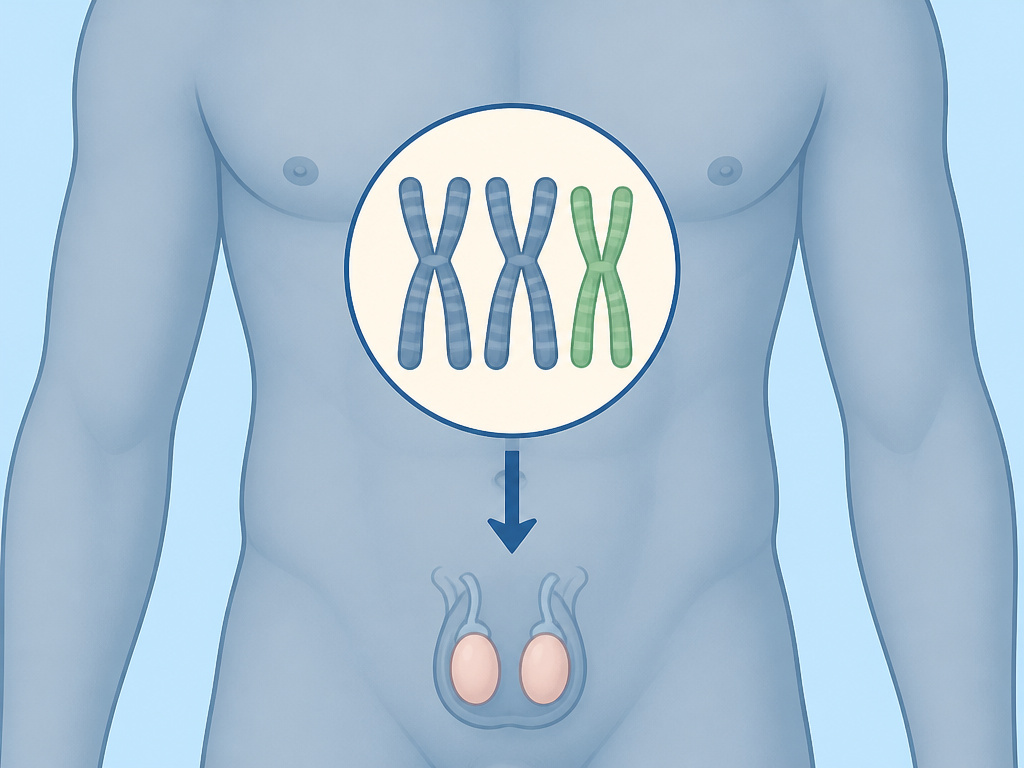
Some causes of low testosterone are textbook genetic. They’re often spotted early in life due to failed or delayed puberty, but milder forms can surface in adulthood during fertility workups. Knowing these exists frames the more complex picture.
Klinefelter syndrome (XXY) is the most common chromosomal disorder causing male hypogonadism. The extra X chromosome leads to small, firm testes that produce inadequate testosterone and sperm. Luteinizing hormone (LH) and follicle-stimulating hormone (FSH) are typically high, as the pituitary gland screams at unresponsive testes. Diagnosis is by karyotype. It’s almost never inherited from a parent; it’s a random error in egg or sperm formation.
Kallmann syndrome and broader isolated hypogonadotropic hypogonadism (IHH) are the flip side. Here, the problem is in the brain’s hypothalamus or pituitary. Genetic defects disrupt the production or signaling of gonadotropin-releasing hormone (GnRH), the master switch for testosterone production. The testes are fine but get no signal. Kallmann syndrome often includes anosmia (inability to smell). Many genes are implicated, and inheritance can be complex. A review in Nature Reviews Urology details how these genetic pathways affect therapy response.
Other inherited conditions can indirectly lower testosterone. Hemochromatosis, an iron overload disorder, can deposit iron in the pituitary gland, damaging its ability to signal the testes. Undescended testicles (cryptorchidism) that aren’t corrected early can impair long-term testicular function, and the tendency for testicles to not descend can have a genetic component.
The part nobody mentions: A teen with delayed puberty who can’t smell coffee or gasoline is a classic, quick clue for Kallmann syndrome. No supplement fixes a missing genetic signal from the brain.
These disorders are important to recognize because they require specific medical management, not lifestyle tweaks. They also highlight a key point: a major genetic cause is not the same as a heritable trait you pass to your kids. Klinefelter is usually a one-off event in a family tree.
The 4.98-Fold Genetic Risk: How Common Variants Stack Up
For every man with Klinefelter syndrome, there are thousands with low testosterone and no single dramatic cause. This is where large-scale genetics research changes the conversation. It shows low T is a classic complex trait, influenced by many genes and the environment.
The landmark study here is a 2021 UK Biobank genetic susceptibility study. Researchers analyzed genetic data from over 200,000 men, defining low testosterone (LowT) as a level below 8 nmol/L for that study, while other research uses a different threshold such as <300 ng/dL (~10.4 nmol/L). They found 141 genetic locations (loci) significantly linked to LowT, 94 of which were new discoveries.
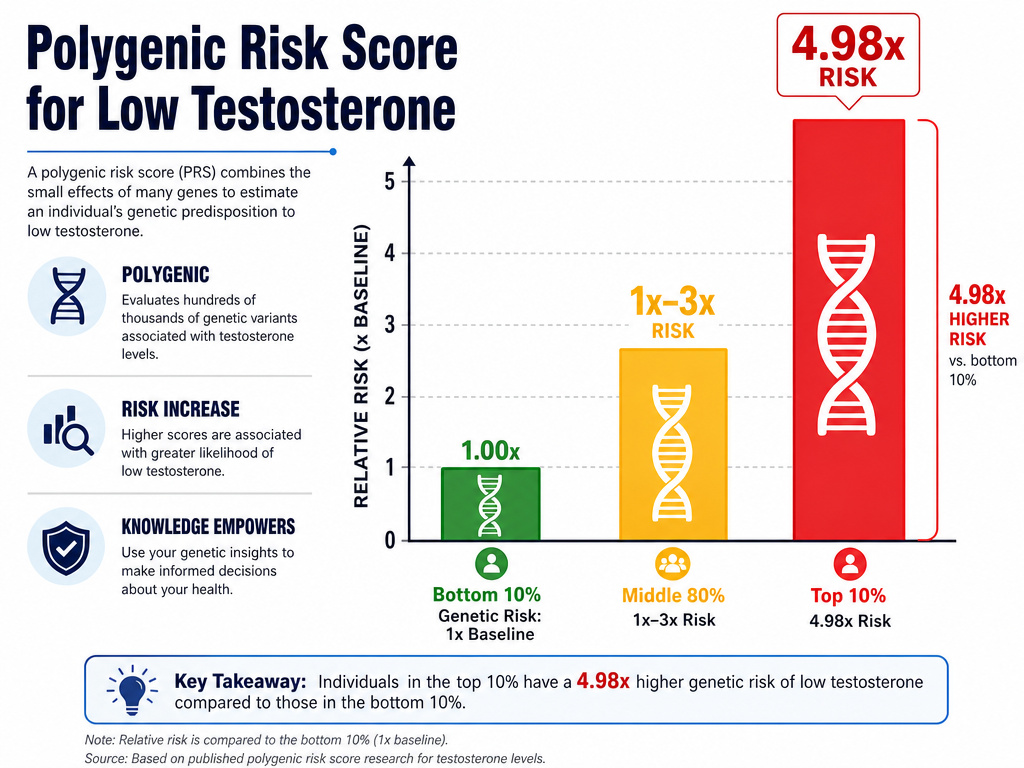
The real insight came when they built a polygenic risk score (GRS) from 42 of the most independent genetic variants. They split men into ten groups based on this score. The result? Men in the top 10% of genetic risk had a 4.98-fold higher odds of having LowT compared to men in the bottom 10%. That’s a nearly fivefold increase in risk based on DNA alone.
| Genetic Risk Decile | Relative Risk of Low T (<8 nmol/L) | Implied Action |
|---|---|---|
| Bottom 10% (Lowest GRS) | Baseline (1x) | Genetics are protective; focus on major lifestyle disruptors. |
| Middle 80% | 1x – 3x | Typical polygenic risk. Lifestyle is the primary lever. |
| Top 10% (Highest GRS) | ~5x | Strong genetic predisposition. Vigilance on reversible factors is critical. |
This doesn’t mean the top decile is doomed. It means their genetic “set point” is lower. A man in this group might see his testosterone dip below threshold with modest weight gain or poor sleep, where a genetically protected man wouldn’t. The genes load the gun; lifestyle often pulls the trigger.
This polygenic framework explains why low T clusters in families. You might inherit a combination of variants that lead to slightly higher SHBG, slightly lower Leydig cell function, and slightly less sensitive androgen receptors. None are catastrophic alone, but the sum nudges your system toward the lower end of the normal range.
SHBG: The Genetic Wild Card in Your Lab Results
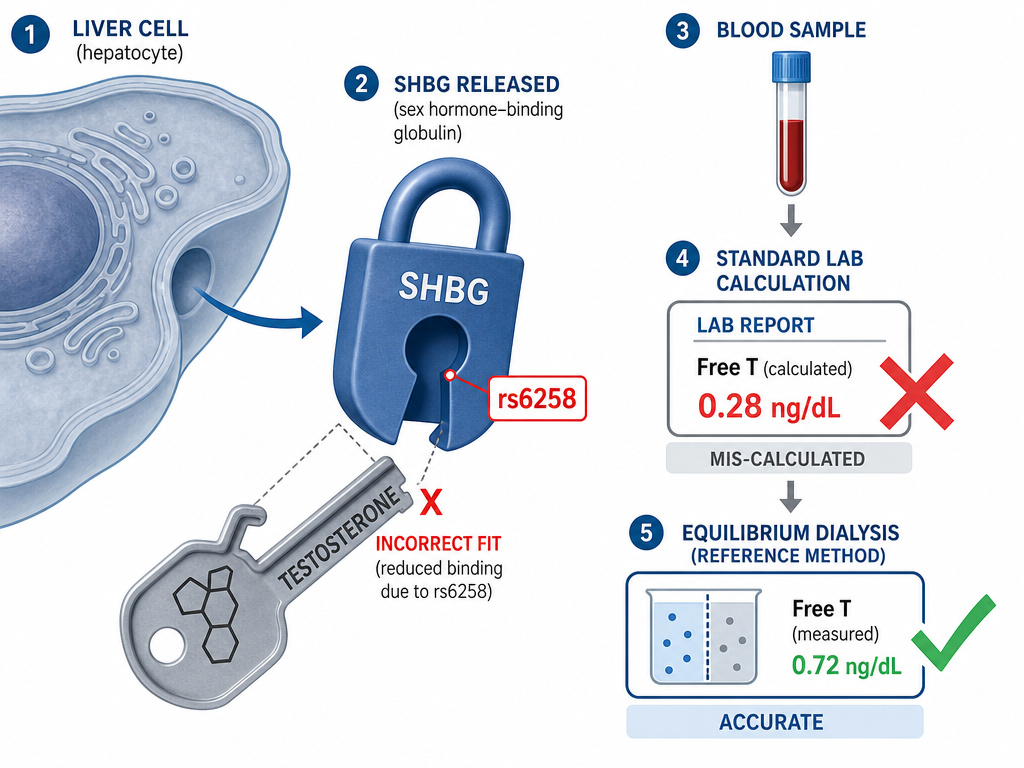
If you’ve had your testosterone tested, you’ve encountered sex hormone-binding globulin (SHBG). This liver-produced protein binds to testosterone, making it inactive. Only the tiny “free” fraction is biologically available. Your SHBG level is one of the strongest genetic determinants of your total testosterone number. Two specific gene variants show how deeply genetics can mess with the standard lab report.
Research published in PLOS Genetics pinpointed two SNPs (single nucleotide polymorphisms) in the SHBG gene: rs12150660 and rs6258. The rs6258 variant is particularly sneaky. It changes a single amino acid in the SHBG protein, altering its affinity for binding testosterone.
Men with three or more risk alleles across these SHBG variants had a 6.5-fold higher risk of low serum testosterone (defined as <300 ng/dL) than men with none.
Where this goes sideways: The rs6258 polymorphism means the standard “law-of-mass-action” equations most labs use to calculate free testosterone are inaccurate for carriers. The formula assumes a standard SHBG binding affinity. If your SHBG binds differently due to this variant, the calculation is wrong. Your reported “free testosterone” could be off by a significant margin, leading to misdiagnosis or missed diagnosis.
The fix is straightforward but not routine: equilibrium dialysis. This method directly measures free testosterone, bypassing the flawed calculation. If your total T is low-ish but your calculated free T is paradoxically “normal” (or vice versa), and you have symptoms, this genetic quirk is worth discussing with your doctor. It’s a perfect example of how a common genetic variant doesn’t change your biology as much as it changes how we measure it.
The Androgen Receptor: When Your Tissues Can’t Hear the Signal
Testosterone is only half the story. The other half is whether your body’s tissues can respond to it. This is where the androgen receptor (AR) gene comes in. A common polymorphism in this gene, the length of a CAG repeat sequence in exon 1, modulates how sensitive the receptor is.
Think of the androgen receptor as a loudspeaker for testosterone’s message. Longer CAG repeats act like a volume knob turned down. The signal (testosterone) is there, but the sound (androgenic effects) is muted. Shorter repeats make the receptor more sensitive, amplifying the effects of any given testosterone level.
This has real clinical implications, detailed in a Nature Reviews Urology paper. Men with longer CAG repeats may experience symptoms of low testosterone (low energy, poor muscle gain, reduced libido) even with mid-range or normal serum testosterone levels. Their tissues are “hearing” less of the hormone. Conversely, men with very short repeats might be hyper-responsive and do fine with lower circulating levels.
This genetic variation blurs the line between “normal” and “low.” It’s why two guys with identical total and free testosterone numbers can feel completely different. One man’s sufficient level is another’s deficiency, based on genetic reception. This is also a key reason why symptom assessment is as important as the lab number. The number tells you what’s in the bloodstream; your body tells you what’s getting through.
Milder Adult Cases Can Have a Genetic Foundation
The most counterintuitive genetic insight involves age of onset. We typically split low testosterone into congenital (present from birth) and acquired (due to aging, obesity, etc.). New research shows that divide isn’t always clean. A genetic foundation for severe disorders can also express as a milder, adult-onset form.
A study in the Journal of Clinical Medicine made this link. Researchers looked at men with isolated hypogonadotropic hypogonadism (IHH). They found that a total testosterone below 6.05 nmol/L combined with an estimated age of onset before 41 years had over 90% sensitivity for identifying patients who carried rare pathogenic gene variants for IHH.
This means a 35-year-old with modestly low T (say, 7 nmol/L) and low LH could, in fact, have a mild, oligogenic form of a disorder we associate with failed puberty. His condition has a shared genetic origin with severe congenital IHH.
This reframes “functional” or “idiopathic” low T in young-to-middle-aged men. It may not be purely lifestyle. There might be a genetic predisposition that’s unmasked by the ordinary stresses of adult life, rather than causing a complete pubertal failure. This is a key content gap most overviews miss: the spectrum of genetic involvement is wider than the textbook syndromes.
For clinical practice, it suggests that younger men (under 40) with unexplained, persistent low T and low/normal LH might be candidates for genetic counseling or testing, especially if they have a family history or other subtle clues like a reduced sense of smell.
Genetic Risk vs. Lifestyle: What Actually Moves the Needle?
So, how much is genetic? The UK Biobank study gives a number: the 4.98-fold relative risk between genetic extremes. But relative risk isn’t absolute risk. Your daily choices still dominate the equation for most people.
Think of it like body weight. Genetics influence your natural set point and how you store fat. But your actual weight is determined by calories in and calories out. Similarly, your genes set a potential range for your testosterone. Your lifestyle determines where you land in that range.
The major lifestyle factors, obesity (especially visceral fat), chronic stress, poor sleep, excessive alcohol, and certain medications, are potent testosterone suppressors. They can overwhelm a favorable genetic profile and catastrophically lower levels in a genetically vulnerable man.
The practical takeaway is a diagnostic sequence. Rule out the lifestyle drivers first. This is where focusing on “estrogenic” plastics or soy before addressing a 40-inch waist and four hours of sleep is a misallocation of effort. A full look at aging vs lifestyle factors is the logical first step.
For the man with a strong family history and healthy habits who still has low T, the genetic component is likely prominent. His path involves more precise diagnostics (like direct free T measurement, detailed pituitary testing) and potentially earlier discussion of therapeutic options, as his capacity for natural optimization may be genetically limited.
What to Do If You Suspect a Genetic Link
This involves a smarter clinical approach. If low testosterone runs in your family or you have persistent symptoms despite a clean lifestyle, here’s a structured way to investigate.
1. Get the Right Baseline Labs. This is essential. A single morning total testosterone test is a snapshot. You need a fuller picture, drawn on two separate mornings, 1-2 weeks apart:
- Total Testosterone
- Free Testosterone (preferably by equilibrium dialysis if available)
- LH and FSH
- SHBG
- Estradiol (Sensitive LC/MS/MS assay)
- Prolactin
- TSH
The LH and FSH result is the critical split. High LH with low T points to a primary testicular issue (like Klinefelter). Low or normal LH with low T points to a hypothalamic/pituitary issue (like IHH or a genetic variant affecting regulation). This split decides the entire next step.
2. Document Your Family History. Don’t just ask about “low T.” Ask male relatives about:
- Delayed puberty (voice change, shaving after age 16)
- Infertility or need for assisted reproduction
- Extremely tall stature with long limbs (a Klinefelter clue)
- Complete absence of sense of smell (Kallmann clue)
- Diagnosis of hemochromatosis or other endocrine disorders.
3. Consider Genetic Testing When Indicated. This is for cases with red flags.
- Very low T (<6.05 nmol/L) with onset before 41.
- Consistently low LH/FSH with no obvious cause (pituitary tumor, etc.).
- Physical signs like anosmia, very small testes, or features of Klinefelter.
- A history of undescended testicles or other congenital issues.
Testing might start with a karyotype (for Klinefelter) or move to a targeted hypogonadism gene panel ordered by an endocrinologist or genetic counselor. The goal is a precise diagnosis, which can clarify prognosis, treatment options, and implications for family planning.
4. Manage Expectations and Next Steps. A genetic diagnosis can be clarifying. For some, like Kallmann syndrome, effective treatments like GnRH therapy or gonadotropins exist and can restore fertility. For others with a high polygenic risk, the management focus intensifies on rigorously controlling the lifestyle factors they can. Understanding the genetic component can also inform the discussion on whether low testosterone can be reversed naturally or requires long-term therapy.
The goal is to move from worry to strategy. Genetics provides information that helps you and your doctor build a more effective, personalized plan.
Who should not get testosterone therapy
Testosterone replacement therapy is generally contraindicated for men with certain health conditions. This includes men with active or untreated prostate cancer or breast cancer, as testosterone can stimulate the growth of these cancers. Men with severe, untreated sleep apnea should also avoid TRT, as it can potentially worsen the condition. Those with a high red blood cell count (polycythemia) or a history of blood clots are at increased risk for complications. Men who are trying to conceive should not use TRT, as it suppresses sperm production. A thorough medical evaluation is necessary to identify these and other conditions before considering treatment.
Frequently Asked Questions
Can low testosterone be hereditary?
Yes, the risk of low testosterone can be hereditary, but it’s rarely as simple as a single gene passed from parent to child. More commonly, you inherit a combination of many common gene variants (a polygenic risk score) that make you more susceptible to lower levels. Rare single-gene disorders that cause low T, like some forms of Kallmann syndrome, can also be inherited in complex patterns. However, many clear genetic causes, like Klinefelter syndrome (XXY), are usually spontaneous and not inherited.
What are the biggest signs of low testosterone?
The classic signs are persistent low libido, erectile dysfunction, unexplained fatigue, loss of muscle mass, increased body fat (particularly around the abdomen), depressed mood, and difficulty concentrating. It’s the cluster of these symptoms, especially when they develop together, that’s more telling than any one issue. Remember, symptoms are what matter, a number on a lab sheet without symptoms isn’t necessarily a problem that needs treatment.
Do all men eventually get low testosterone?
No. Testosterone levels gradually decline with age in most men, but not all men fall below the clinical threshold for deficiency. The decline is highly variable. Some men in their 70s maintain robust levels, while others dip low in their 50s. Genetics play a role in this trajectory, but lifestyle factors like obesity, metabolic health, and physical activity are massive determinants. “Age-related decline” is not the same as a clinical diagnosis of hypogonadism.
How much does genetics contribute versus lifestyle?
For the average case of adult-onset low testosterone, lifestyle factors are the primary drivers for moving levels into the deficient range. However, genetics set the baseline range. Think of it as genetics loading the boat, and lifestyle determining how much water it takes on. A man with a high genetic risk (top decile) might develop low T with modest weight gain and poor sleep. A man with low genetic risk might need severe obesity and chronic illness to reach the same low level. The UK Biobank data suggests genetics can create up to a 5x difference in relative risk between the top and bottom deciles of genetic risk.
Before You Go
The genetic story of low testosterone is one of spectrums, not binaries. You’re not either “genetic” or “lifestyle.” You’re on a continuum where DNA establishes your personal ledger of risk, and your life choices make the daily entries.
If you take one thing from this, let it be this: get labs including two morning draws, LH/FSH, and a critical eye on free testosterone measurement before you tell any story about cause. That means two morning draws, LH/FSH, and a critical eye on how free testosterone was measured. A single number is a data point, not a diagnosis. The split between LH and testosterone is the most important piece of data you can have, it tells you if the problem is in the command center or the factory.
For the vast majority, the path forward is in the modifiable. Address sleep, manage stress, lose visceral fat, and limit alcohol. These actions have the highest probability of moving your level, regardless of your genetic hand. For the smaller group where genetics are the dominant force, that knowledge is power. It leads to precise testing, a clear understanding of what treatments for low testosterone are most appropriate, and realistic expectations about what can be optimized versus what needs to be managed.
Start with the basics you can control. Let the evidence, from your labs, your symptoms, and your family history, guide you to the next, more specific question. That’s how you move from wondering about inheritance to taking informed action.
