
Signs of High Testosterone in Women
This post contains affiliate links. As an Amazon Associate, we earn from qualifying purchases.
Signs of high testosterone in women include excess facial and body hair (hirsutism), acne, scalp hair thinning, irregular or absent periods, increased muscle mass, a deepened voice, clitoral enlargement (clitoromegaly), and mood changes like irritability or low mood. These symptoms stem from excess androgens, hormones like testosterone, androstenedione, and DHEAS, produced by the ovaries, adrenal glands, or, rarely, tumors.
These symptoms don’t arrive as a uniform list. They show up in patterns, and the speed of their onset tells you more than the symptom itself when you compare a signs of high testosterone in women checklist. A few stray chin hairs over years points one way; a sudden, coarse beard coming in over months points another.
What follows is a breakdown of the eight key signs, the biochemical thresholds that define “high,” and the diagnostic steps that separate common conditions like PCOS from rare but serious causes.
Key Takeaways
- The most common signs are hirsutism and acne, but a modified Ferriman–Gallwey score ≥8 is the clinical threshold for diagnosing excess hair growth.
- Rapid symptom onset (over months) or signs of virilization like clitoromegaly are medical red flags requiring prompt investigation for tumors.
- Blood tests are the only way to confirm high testosterone, but wait at least 3 months after stopping hormonal birth control for accurate results.
- Polycystic ovary syndrome (PCOS) is the underlying cause for up to 10% of all women with these symptoms.
- Oral contraceptives are a first-line treatment for managing hirsutism and acne when fertility isn’t desired, with effects reassessed after six months.
The 8 Physical Signs of High Testosterone in Women
The body speaks in changes. For hyperandrogenism, it’s a shift toward features mediated by male-pattern hormones. These eight signs are what doctors look for, but their severity and combination matter more than their mere presence.
1. Hirsutism (Excess Body Hair)
This isn’t about fine peach fuzz. Hirsutism means dark, coarse terminal hair growing in a male pattern: on the chin, upper lip, chest, lower abdomen, and inner thighs.
Where this goes sideways: Counting every stray hair. The clinical tool is the modified Ferriman–Gallwey index (mFG), which scores nine body areas. A score ≥8 is generally considered the threshold for hirsutism. Many women remove hair before a consult, so doctors often ask, “How much time do you spend removing hair each week?” The answer is a practical measure of burden.
The hair growth is driven by testosterone converted to dihydrotestosterone (DHT) in the hair follicle, which transforms fine vellus hairs into coarse terminal ones. This process is slow; hair you see today reflects hormone levels from months ago.
2. Acne and Oily Skin
Androgens stimulate sebaceous glands. The result is oily skin and persistent, often cystic acne along the jawline, chin, and back, areas rich in these glands.
It’s a common issue, with up to 20% of mid-teens and 15% of early 20s reporting acne, so it alone isn’t diagnostic. But when combined with hirsutism or irregular periods, it becomes a stronger piece of the hyperandrogenism puzzle. The ACOG hyperandrogenism screening guidelines stress that treatment for distressing acne should not be withheld during evaluation.
3. Female Pattern Hair Loss (Androgenic Alopecia)
High testosterone can have a paradoxical effect on the scalp. While it stimulates hair growth on the body, it miniaturizes hair follicles on the head. This leads to thinning hair, typically at the crown and frontal scalp, with widening of the part. The hairline usually remains intact, differentiating it from other alopecia types.
4. Irregular Menstrual Cycles or Amenorrhea
This is a core reproductive sign. Excess androgens disrupt the hormonal feedback loop between the ovaries, pituitary gland, and hypothalamus. This can prevent ovulation, leading to irregular, infrequent, or absent periods (amenorrhea). In one study of premenopausal women with androgen excess, irregular or absent periods was the most common reason for assessment, at 47.0%.
5. Increased Muscle Mass and Body Shape Changes
Some women notice easier muscle gain or a change in fat distribution, less subcutaneous fat and more visceral or abdominal fat. This can subtly alter body shape. It’s a less common and more subtle sign than hirsutism, but it reflects androgens’ anabolic effects.
6. Deepening of the Voice
Androgens can thicken the vocal cords. A noticeable, persistent deepening of the voice that isn’t related to a cold or shouting is a more specific sign of significant, long-standing androgen excess. It falls under the umbrella of virilization.
7. Clitoromegaly (Enlarged Clitoris)
This is a definitive sign of virilization, not just hyperandrogenism. The clinical definition is a clitoris length >10 mm or a clitoral index (length x width) >35 mm². Its presence significantly raises the index of suspicion for a serious underlying cause, like an androgen-producing tumor.
8. Mood and Libido Changes
The data here is less clear-cut than for physical signs. Some women report increased irritability, aggression, or anxiety. Others experience a low mood or depression, possibly linked to the distress of physical changes or associated conditions like PCOS. Libido changes are unpredictable; some women report an increase, others a decrease.
| Symptom | What to Look For | When It’s a Red Flag |
|---|---|---|
| Hirsutism | Coarse hair on chin, lip, chest, abdomen. MFG score ≥8. | Rapid progression over months. |
| Acne | Cystic, persistent acne on jawline and back. | When combined with other signs like irregular periods. |
| Hair Loss | Thinning at crown/frontal scalp, widening part. | Early onset or rapid progression. |
| Irregular Periods | Cycles >35 days or absent for 3+ months. | Primary symptom without other clear cause. |
| Voice Deepening | Persistent, noticeable lowering of pitch. | Any occurrence warrants investigation. |
| Clitoromegaly | Clitoral length >10 mm. | Always a red flag for virilization. |
What “High Testosterone” Actually Means Medically
In healthy women, the ovaries and adrenal glands produce about 40% to 50% of the body’s testosterone. “High” is defined by exceeding specific serum levels measured in nanomoles per liter (nmol/L) or nanograms per deciliter (ng/dL). The numbers matter because they guide the urgency and direction of the medical workup.
Liquid chromatography/mass spectrometry (LC-MS/MS) is the most reliable method for quantifying androgen excess in women. The widely available direct radio-immunoassay (RIA) has high variation at low levels and can miss mild elevations common in PCOS.
The key androgens measured are:
- Testosterone (T): The primary active androgen.
- Androstenedione (A4): A precursor hormone.
- Dehydroepiandrosterone sulfate (DHEAS): A marker of adrenal androgen production.
Research on 1,205 consecutively recruited women established thresholds for “severe” biochemical androgen excess. The patterns of hyperandrogenism in women study found that 31.4% had elevated levels of one or more of these androgens.
| Androgen | Severe Excess (Premenopausal, <50 y) | Severe Excess (Postmenopausal, >50 y) |
|---|---|---|
| Testosterone (T) | ≥5.0 nmol/L | ≥5.0 nmol/L |
| Androstenedione (A4) | >16.5 nmol/L | ≥13.0 nmol/L |
| DHEAS | ≥20.0 µmol/L | ≥20.0 µmol/L |
The most critical number is total testosterone >5 nmol/L (≈144 ng/dL). The Society for Endocrinology clinical guideline states this level warrants investigation for an androgen-producing tumor. Other sources specify slightly different tumor-warranting thresholds: LC/MS ≥150 ng/dL in premenopausal women or ≥64 ng/dL in postmenopausal women.
Where sources disagree: Thresholds for total testosterone vary. For severe androgen excess in premenopausal women, one source defines it as ≥5.0 nmol/L. For investigating an androgen-producing tumor, sources specify different thresholds: >5 nmol/L (≈144 ng/dL), LC/MS ≥150 ng/dL in premenopausal women, or >200 ng/dL for adolescents.
Primary Causes and Conditions
High testosterone is a symptom, not a diagnosis. The underlying causes fall into a few main categories, with PCOS being the most common by far. For more on causes, see this resource on hyperandrogenism causes.
Polycystic Ovary Syndrome (PCOS)
PCOS is the culprit in the vast majority of cases, affecting up to 10% of all women. It’s a complex metabolic and endocrine disorder where the ovaries produce excess androgens and ovulation becomes irregular. Diagnosis requires meeting at least two of three Rotterdam criteria: irregular periods, clinical or biochemical signs of hyperandrogenism, and polycystic ovaries on ultrasound.
Congenital Adrenal Hyperplasia (CAH)
This is a group of genetic disorders affecting cortisol production in the adrenal glands. The most common non-classic form (NCAH) can cause symptoms identical to PCOS, hirsutism, acne, and irregular periods, due to a buildup of androgen precursors. It’s diagnosed with a blood test for 17-hydroxyprogesterone.
Androgen-Producing Tumors
These are rare but serious. Ovarian or adrenal tumors can secrete large amounts of androgens, often leading to rapid-onset virilization (deep voice, clitoromegaly) over months. This is why rapid symptom progression is the biggest red flag.
Other Causes
- Hyperthecosis: A condition where nests of androgen-producing cells develop in the ovaries, often in postmenopausal women.
- Cushing’s Syndrome: Excess cortisol from the adrenal glands can also cause mild androgen excess.
- Medications: Some drugs, like anabolic steroids or certain progestins, can have androgenic side effects.
For many, the path leads to a PCOS diagnosis. But the goal of testing is to rule out the less common, more urgent causes.
How Doctors Diagnose High Testosterone

You can’t diagnose this from a symptom list alone. The process starts with a detailed history and physical exam, focusing on the speed of symptom onset and a formal hirsutism score. Then comes the blood work.
Before you start: Do not get tested while on hormonal birth control. Hormonal contraception of any type, including progestin-coated IUDs, suppresses natural androgen production. Wait at least 3 months after stopping for lab results to reflect your baseline physiology.
The standard diagnostic panel includes:
- Total Testosterone: Best measured via LC-MS/MS.
- Free Testosterone & SHBG: Free testosterone is hard to measure accurately (equilibrium dialysis is gold-standard but rare). A low Sex Hormone Binding Globulin (SHBG) level is often used as an indirect marker of high free testosterone.
- DHEAS: To assess adrenal contribution.
- Androstenedione (A4): Another key precursor.
- Prolactin & Thyroid Panel: To rule out other causes of irregular periods.
- 17-Hydroxyprogesterone: To screen for NCAH.
If testosterone is severely elevated (>5 nmol/L), imaging is the next step. A pelvic ultrasound looks at the ovaries. A CT or MRI of the adrenals may be needed. In complex cases, a GnRH stimulation test can help pinpoint an ovarian source, suppression of testosterone by more than 50% after 28 days suggests a benign ovarian cause.
Medical and Lifestyle Management Options
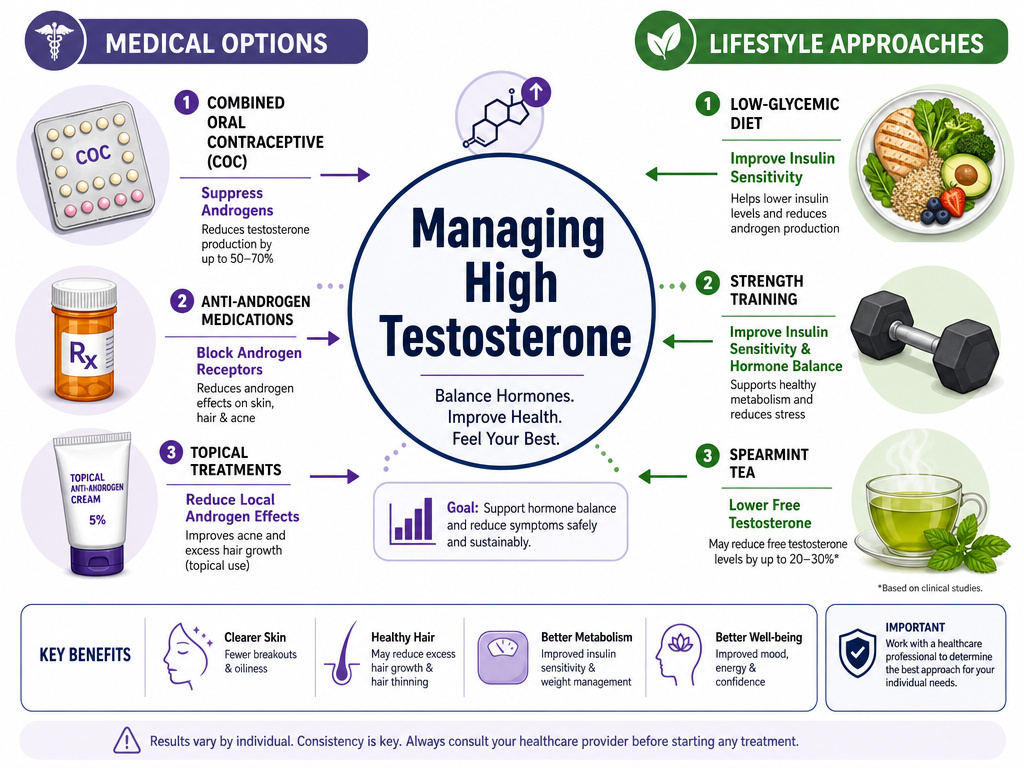
Treatment directly targets the underlying cause and the bothersome symptoms. The approach differs if you’re trying to conceive.
First-Line Medical Treatment (If Not Trying to Conceive)
- Combined Oral Contraceptives (COCs): These are the first-line therapy for hirsutism and acne. The estrogen component suppresses ovarian androgen production and raises SHBG, lowering free testosterone. Both low-dose (20 mcg) and average-dose (30-35 mcg) ethinyl estradiol work. Reassess symptoms after six months. Be aware of a small increased risk of venous thromboembolism, especially in obese women over 39 who smoke.
- Anti-Androgen Medications: Drugs like spironolactone or finasteride block androgen effects or production. They are often used alongside COCs but are not used during pregnancy.
- Topical Treatments: Prescription creams like eflornithine can slow facial hair growth.
Lifestyle and Natural Approaches
Lifestyle modification is foundational, especially for PCOS. It supports medical treatment but rarely replaces it for significant symptoms.
- Nutrition: A balanced, low-glycemic index diet can improve insulin sensitivity, which is often impaired in PCOS and drives further androgen production.
- Exercise: Regular activity, including strength training, improves insulin sensitivity and metabolic health.
- Stress Management: Chronic stress elevates cortisol, which can disrupt the entire HPA axis and exacerbate androgen production. This is the often-overlooked factor.
- Specific Supplements: Some natural methods to reduce high testosterone have supportive evidence. Inositol has shown benefit for PCOS-related metabolic and hormonal issues. Spearmint tea has demonstrated mild anti-androgen effects in some studies. Remember, these are supportive measures, not cures.
The timeline for improvement is measured in months, not weeks. Hair growth cycles are long; you might see less acne in 3-6 months, but a change in hirsutism can take 6-12 months of consistent treatment.
High Testosterone Symptoms Before and After Menopause
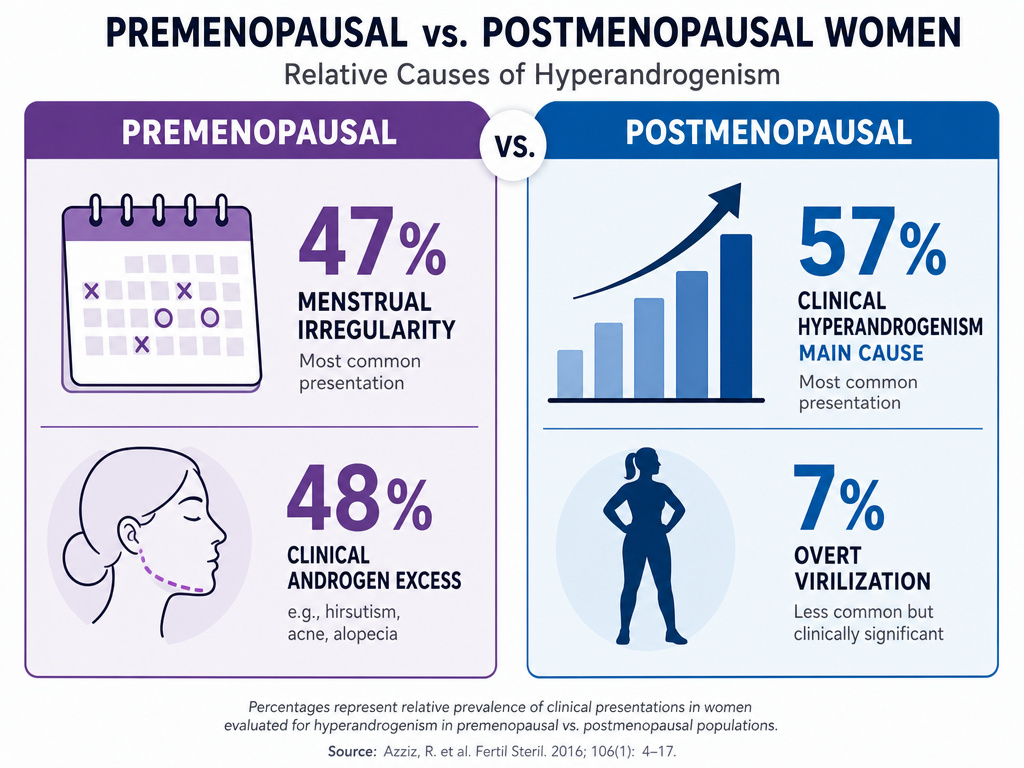
In premenopausal women with androgen excess, irregular or absent menstrual periods and clinical signs of androgen excess were the most common causes for assessment (47.0% and 48.0%, respectively). Severe androgen excess in this group is defined by specific thresholds for testosterone, androstenedione, and DHEAS. In postmenopausal women with androgen excess, clinical hyperandrogenism was the most frequent cause leading to measurement of serum androgens (57.0%). Overt virilization was a rare cause for androgen assessment, present in 0.5% of premenopausal and 7.0% of postmenopausal women with androgen excess. The specific laboratory thresholds defining severe excess differ between premenopausal and postmenopausal women.
Long-Term Health Risks of High Testosterone
Persistently elevated testosterone levels warrant medical investigation due to potential underlying causes. Specific thresholds for total testosterone, measured by reliable methods like liquid chromatography/mass spectrometry, are used to flag the need to investigate for androgen-producing tumors. These threshold values differ for premenopausal and postmenopausal women. While managing symptoms with treatments like oral contraceptives is common, these medications carry their own risks, such as an increased risk of blood clots, particularly for certain groups. The goal of treatment and investigation is to address both the symptoms and any serious underlying condition.
Frequently Asked Questions
How does a woman know if she has high testosterone?
You know by getting a blood test. While symptom checklists are helpful, a diagnosis of biochemical hyperandrogenism requires a blood test showing elevated levels of testosterone, androstenedione, or DHEAS. A clinical diagnosis (based on symptoms like hirsutism) is also used, especially in PCOS.
How can I flush excess testosterone in females?
You don’t “flush” hormones. The body metabolizes them. Effective management involves treating the root cause (e.g., with medication for PCOS) and supporting your liver’s natural detoxification pathways with good nutrition, hydration, and avoiding alcohol excess. Certain herbs like spearmint may have mild anti-androgen effects.
At what age is a woman’s testosterone the highest?
Testosterone levels peak in a woman’s 20s and then gradually decline. DHEAS, an adrenal androgen, also peaks in the 20s before a steady decline. However, symptoms of high testosterone often become most noticeable in the late teens to 30s, as androgens have cumulative effects on skin and hair.
Is fatigue a sign of high testosterone?
Not directly. Fatigue is not a classic symptom of hyperandrogenism. However, it is a very common symptom in associated conditions like PCOS, often due to insulin resistance, poor sleep, or the mental load of managing a chronic condition. If you’re fatigued, it’s more important to check for iron deficiency, thyroid issues, and sleep quality than to blame testosterone.
What’s the difference between high testosterone and PCOS?
High testosterone is a biochemical finding or a symptom. PCOS is a specific syndrome that frequently includes high testosterone as one of its diagnostic criteria. You can have high testosterone from other causes (like a tumor or CAH) without having PCOS. PCOS requires a specific combination of symptoms.
Before You Go
If you’re ticking off several symptoms from this list, the next step isn’t more internet research, it’s a conversation with your doctor, preferably a gynecologist or endocrinologist. Start by tracking your menstrual cycles and taking clear photos of any skin or hair changes over a few months. That objective record is more valuable than any subjective description.
Go in knowing that for the majority, the diagnosis is PCOS, a manageable condition. But respect the red flags: if your voice cracks, your body hair explodes, or you notice other changes over just a few months, move that appointment up. In the world of hormones, speed is information.
