
What Is Functional Hypogonadism: Symptoms and Treatment
This post contains affiliate links. As an Amazon Associate, we earn from qualifying purchases.
Functional hypogonadism is low testosterone caused by reversible external stressors, like obesity, certain medications, or extreme dieting, not by permanent damage to the testes or pituitary gland. The hallmark is low serum testosterone with low or inappropriately normal LH levels. This means the brain’s signaling system is suppressed, but the equipment itself is intact. For most people, correcting the underlying trigger can restore normal hormone function.
That distinction between a suppressed system and a broken one changes everything. It shifts the focus from lifelong hormone replacement to finding and fixing what’s holding your natural production back. The causes are wide-ranging, from carrying extra weight to taking prescription opioids for chronic pain, which is why understanding what is functional hypogonadism is crucial.
What follows is a breakdown of the triggers, the diagnostic tightrope walk to rule out permanent causes, and the realistic paths to reversal. We’ll also look at where expert guidelines disagree, because in endocrinology, the cleanest answer is often “it depends.”
Key Takeaways
- Functional hypogonadism is a diagnosis of exclusion, you must rule out permanent pituitary or testicular damage first.
- Obesity, diabetes, opioids, and extreme calorie restriction are leading reversible causes, not aging.
- Men with this condition can have normal sperm counts despite low testosterone, a key difference from organic hypogonadism.
- Opioid withdrawal typically leads to testosterone recovery within one month, highlighting the condition’s reversible nature.
- First-line treatment is addressing the root cause (e.g., weight loss, medication review); testosterone therapy is a second-line consideration.
Functional vs. Organic Hypogonadism: The Key Difference
You have a thermostat and a furnace. Organic hypogonadism is a broken furnace, the testes can’t produce testosterone even with a strong signal. Functional hypogonadism is a thermostat that’s been turned down because the house is too hot, too cold, or someone unplugged it. The furnace works fine; it’s just not getting the “on” signal.
The official definition from a 2023 review pins it down: functional hypogonadotropic hypogonadism (FHH) is characterized by low serum testosterone concentrations associated with low or inappropriately normal LH levels. The “functional” part means it’s driven by an outside stressor suppressing the hypothalamic-pituitary-gonadal (HPG) axis. The “organic” label is for anatomical problems, a pituitary tumor, genetic condition like Kallmann syndrome, or testicular injury.
This condition is a diagnosis of exclusion. Clinicians must first rule out organic causes through imaging and specific hormone tests before landing on a functional diagnosis.
This difference isn’t academic. It decides treatment. If the furnace is broken (primary hypogonadism), you need external testosterone. If the thermostat is turned down (secondary hypogonadism, which includes functional types), you first try to reset it. Jumping to testosterone replacement in a functional case can sometimes further suppress the very system you’re trying to wake up, which is why understanding what is functional hypogonadism is so important.
How Your Hormone Axis Gets Suppressed (The HPG Axis)
The HPG axis is a feedback loop between your brain and testes. Your hypothalamus releases GnRH, which tells your pituitary gland to secrete LH, which then tells your Leydig cells in the testes to make testosterone. Testosterone circles back to the brain to say “enough.” It’s a delicate, pulsatile conversation.
In functional hypogonadism, that conversation gets muted. The brain reduces GnRH and LH pulses in response to a perceived threat or stress. Think of it as a power-saving mode. The threat isn’t a damaged wire; it’s something the body interprets as “not a good time for reproduction.”
Common system-wide stressors include chronic inflammation from obesity, the metabolic dysregulation of diabetes mellitus, or the chemical signaling of certain drugs. The brain isn’t wrong, these conditions are suboptimal for health and fertility. The problem is the suppression becomes chronic, leading to the symptoms of low testosterone even though the testicular machinery is technically ready to go.
The Most Common Triggers and Causes
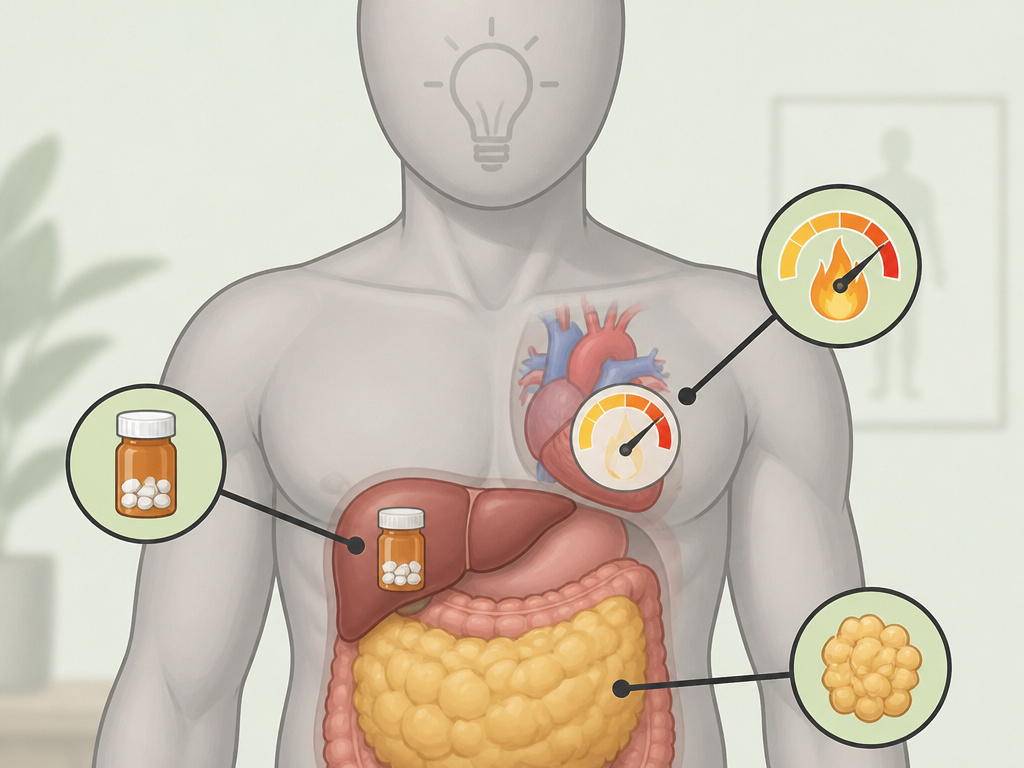
The list of things that can put your HPG axis into power-saving mode is long, but a few culprits account for the majority of cases. These aren’t rare diseases; they’re common modern health challenges.
Obesity and Metabolic Dysfunction. This is perhaps the most prevalent driver. Excess body fat, particularly visceral fat, promotes a state of chronic inflammation and increases the conversion of testosterone to estrogen. The resulting hormonal environment signals the brain to dial down production. A 2023 clinical guideline notes that men over 50 with a body mass index >25 kg/m2 and multiple comorbidities are the most common presentation.
Prescription and Recreational Drugs. Certain medications are notorious for this side effect. The research is stark on opioids: a 2023 review states the prevalence of male hypogonadism in opioid users is estimated between 19 and 86%. The effect depends on treatment duration, dosage, and the specific medication. Opioids act directly on the hypothalamus and pituitary. Glucocorticoids (like prednisone) and anabolic steroids also suppress the axis.
Low Energy Availability (Over-Exercise & Under-Eating). This is the male equivalent of hypothalamic amenorrhea in female athletes. When you burn significantly more calories than you consume, your body prioritizes essential functions over reproduction. One 2019 study defined FHH secondary to excessive exercise (>10 hours/week) or weight loss (>10% of body weight). It’s not about being fit; it’s about an energy deficit severe enough to trigger a survival response.
Other Systemic Illnesses. Chronic conditions like HIV infection are also associated with FHH, likely due to a combination of the illness itself, inflammation, and sometimes the medications used to manage it.
| Trigger Category | Specific Examples | How It Suppresses the HPG Axis |
|---|---|---|
| Metabolic | Obesity, Type 2 Diabetes | Chronic inflammation, increased aromatization (T to E2), insulin resistance. |
| Pharmacological | Opioids, Glucocorticoids | Direct action on hypothalamic μ-opioid receptors; altered cortisol feedback. |
| Energy Balance | >10 hrs/week exercise, >10% weight loss | Low energy availability signals a “famine” state, suppressing reproductive function. |
| Other Illness | HIV/AIDS | Systemic inflammation and potentially medication effects. |
Symptoms and the Surprising Fertility Angle
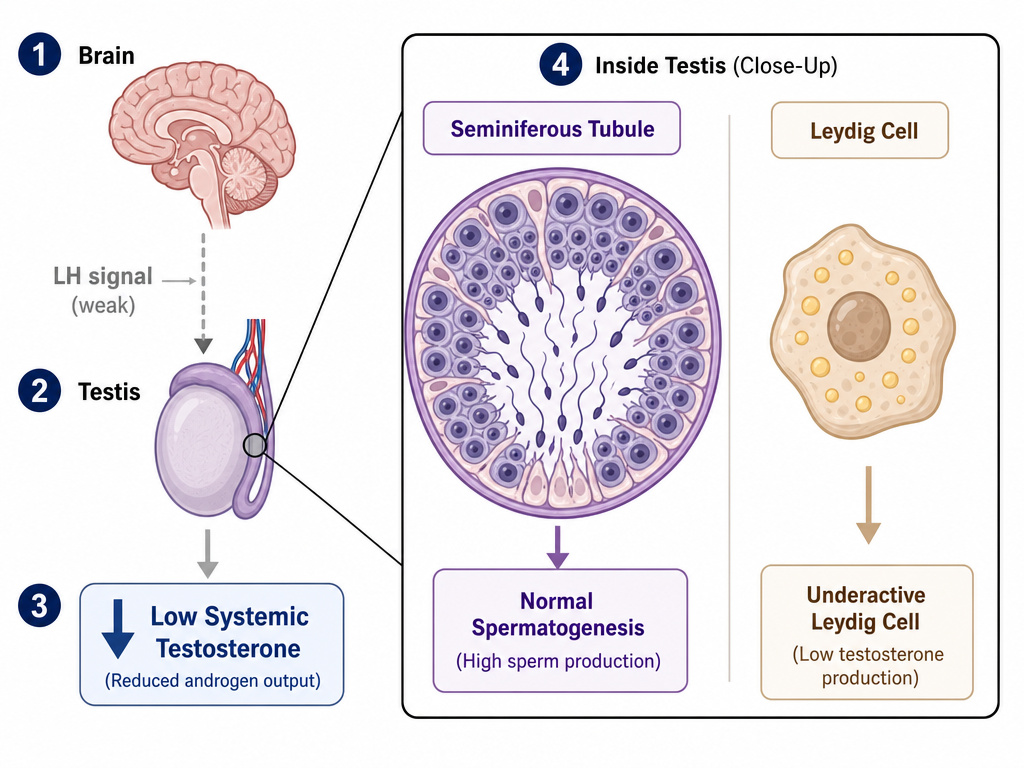
The symptoms look identical to any other form of low testosterone: low libido, erectile dysfunction, fatigue, reduced muscle mass, increased body fat, and mood changes like irritability or low motivation. You can’t tell the type from symptoms alone, which is a key part of the what is functional hypogonadism question.
Many people are surprised to learn that fertility can be normal. That same 2019 study found that men with FHH may have normal sperm counts despite low testosterone and LH. This is a major differentiator from organic hypogonadotropic hypogonadism (like Kallmann syndrome), where sperm production is usually absent or severely low. In functional cases, the testicular machinery for spermatogenesis is still getting just enough signal, or other local factors are supporting it, even while testosterone production for the rest of the body is dialed down.
Where this goes sideways: Assuming low sex drive means infertility. In functional cases, a man can still be fertile while experiencing other hypogonadal symptoms, contraception is still a consideration.
This also means that if fertility is a primary concern, the treatment focus should aggressively target the reversible cause rather than immediately adding testosterone, which can sometimes suppress sperm production further.
How Is Functional Hypogonadism Diagnosed?

Diagnosis is a process of elimination, a detective story where you rule out the permanent causes first. This is where skipping steps leads to misdiagnosis.
- Confirm Low Testosterone. This requires two separate morning blood tests (typically before 10 AM) showing consistently low total testosterone. A single test isn’t enough.
- Check LH and FSH. This is the critical step. In functional hypogonadism, LH will be low or in the “normal” range but inappropriately low for the level of testosterone. If LH is high, that points to a primary testicular problem.
- Rule Out Organic Causes. Your doctor will order other tests like prolactin (to screen for a pituitary tumor), iron studies (hemochromatosis), and often an MRI of the pituitary gland to look for structural issues. They’ll take a full history to rule out primary vs secondary hypogonadism from genetic conditions or past trauma.
- Identify the Functional Trigger. This is the detective work: reviewing all medications, assessing BMI and metabolic health, evaluating diet and exercise patterns, and screening for conditions like sleep apnea or diabetes.
The goal is to ensure no one misses a pituitary tumor while correctly identifying a reversible drug or lifestyle cause. It’s why a thorough hypogonadism diagnosis requires a careful clinician, not just a lab slip.
Treatment: Fix the Cause First, Medication Second
The gold-standard management is to remove the suppressor. This isn’t just conservative advice; it’s the most effective path to restoring your endogenous production.
Health Optimization is First-Line. For obesity-induced FHH, weight loss can significantly improve testosterone levels. For drug-induced cases, the review is clear: opioid withdrawal is typically followed by a recovery in serum testosterone levels within one month. If medically feasible, working with a pain specialist to reduce or change opioid regimens can be curative. For the over-trained, under-fueled individual, increasing caloric intake and reducing exercise volume is the direct fix.
The TRT Debate. This is where sources show a nuanced disagreement. Some guidelines, such as a 2024 review in The Lancet Diabetes & Endocrinology, state health optimisation remains the gold-standard management strategy, while the 2023 Frontiers review notes the need for testosterone replacement therapy (TRT) is not uncommon, and in conditions like obesity or HIV, TRT could be useful if lifestyle attempts fail. However, the 2023 Frontiers review presents a practical reality: the need for testosterone replacement therapy (TRT) is not uncommon. In cases of severe obesity or HIV where lifestyle changes are slow, TRT may be used alongside them to improve symptoms and body composition while the root cause is addressed.
The research on TRT in these cases shows it can improve sexual function and body composition. However, the same review notes it brings no significant changes in pain perception and quality of life in opioid users. The decision is individual, balancing symptom relief against the goal of restoring natural function.
| Scenario | First-Line Action | When TRT Might Be Considered |
|---|---|---|
| Obesity (BMI >30) | Structured weight loss program (diet + exercise). | If symptoms are severe and weight loss will be a long process. |
| Opioid Therapy | Consult prescriber to reduce dose, switch agent, or explore non-opioid options. | For chronic, unavoidable opioid use where withdrawal isn’t possible and symptoms are profound. |
| Low Energy Availability | Increase caloric intake, reduce exercise volume by ~20-30%. | Generally not indicated; correcting energy balance is the direct cure. |
| Glucocorticoid Use | Work with doctor to find lowest effective dose or alternative. | If long-term, high-dose steroids are mandatory (e.g., for autoimmune disease). |
Is It Reversible? The Prognosis
For true functional hypogonadism, the prognosis is generally good. Reversibility is the defining feature. Once the suppressing factor is adequately removed, the HPG axis tends to wake back up.
The timeline depends on the cause. The opioid data is encouraging, showing recovery within weeks. Weight loss can show hormonal improvements within a few months of sustained loss. The key is that the correction must be maintained, regaining weight or resuming the suppressing drug will likely cause testosterone levels to fall again.
This is why understanding whether hypogonadism is curable depends entirely on whether you can cure or control the underlying condition. You’re not curing hypogonadism as a disease; you’re removing the roadblock on the hormonal highway.
Frequently Asked Questions
How serious is functional hypogonadism?
It’s a serious signal of an underlying health problem, like obesity, a medication side effect, or an extreme lifestyle, but it is not typically a permanent, life-threatening endocrine condition itself. The seriousness lies in what’s causing it and the impact of low testosterone symptoms on your quality of life.
Is hypogonadism considered a disability?
No, a diagnosis of hypogonadism itself is not considered a disability. However, the severe symptoms (like profound fatigue or cognitive issues) or the underlying condition causing it (e.g., a pituitary tumor) could potentially contribute to a disability claim if they prevent you from working. This is a legal and medical determination made on a case-by-case basis.
What does someone with hypogonadism look like?
There is no single “look.” While classic stereotypes include low muscle mass and increased body fat, many men with hypogonadism appear outwardly normal. Symptoms like low energy, low libido, and depressed mood are internal. You cannot visually diagnose it.
What is the most common cause of hypogonadism?
However, across all ages, obesity and metabolic syndrome are among the most common drivers of functional hypogonadism. It’s increasingly a lifestyle-related condition.
Before You Go
The big picture with functional hypogonadism is that it’s a correctable problem, not a life sentence. The work is in the detective phase, finding the trigger with an honest look at medications, scale, and lifestyle.
If you’re looking at a diagnosis, take this to your doctor: push for the full differential. Ask, “Have we ruled out a pituitary issue?” and “Could any of my medications or my weight be the primary cause?” That conversation is the first step off the medication treadmill and toward a fix that addresses the root.
Change one thing at a time. If weight is the likely factor, focus there first and retest in six months. If it’s a medication, start that discussion with your prescriber. The goal isn’t just a better lab number; it’s your body running on its own fuel again.
