
Why Low Testosterone Causes Fatigue: What the Data Shows
This post contains affiliate links. As an Amazon Associate, we earn from qualifying purchases.
Low testosterone causes fatigue through multiple biological pathways: it reduces red blood cell production (raising anemia risk), decreases muscle mass and strength (increasing exertion), and can disrupt sleep and motivation. However, a clinical diagnosis requires both a confirmed low level (below 300 ng/dL on two morning tests) and concurrent symptoms, fatigue alone is not enough.
That requirement, low levels plus symptoms, is where the conversation gets real. Fatigue is a vague signal. Your thyroid, iron, sleep apnea, or stress could be the actual culprit. Understanding why low testosterone causes fatigue is key. The guidelines are clear: you don’t treat a lab number in isolation.
What follows is a breakdown of the mechanics, what the fatigue actually feels like, and a direct look at what treatment can, and according to some major medical bodies, cannot, reliably deliver for your energy.
Key Takeaways
- The official diagnostic threshold is a total testosterone below 300 ng/dL. A clinical diagnosis requires this low level confirmed on two separate morning blood draws, alongside symptoms like fatigue.
- Research shows low T fatigue is distinct, it’s a deep, persistent drain unrelieved by rest, often paired with a loss of drive and mental fog.
- Major medical guidelines disagree on treatment efficacy for fatigue; the AUA says evidence is “inconclusive,” the American College of Physicians recommends against initiating TRT for age-related low T to improve energy, and a 2022 NIH study found TRT reduced fatigue scores significantly after one year.
- Before considering testosterone, rule out hypothyroidism and anemia. TSH and a CBC are cheaper, faster tests that explain fatigue for many men.
- Lifestyle modifications like weight loss and improved sleep are first-line recommendations that can raise T levels and reduce symptoms without medication.
What Low Testosterone Fatigue Feels Like
It’s not just needing an extra cup of coffee. The fatigue linked to low testosterone has a specific texture that men consistently describe. It’s a heavy, persistent background drain that sleep doesn’t fix. You might clock eight hours and still wake up feeling like you ran a marathon.
The mental component is just as defining. This is often called “brain fog”, a difficulty concentrating, a sense that your thoughts are moving through syrup, and a frustrating lapse in short-term memory. You read a paragraph three times and the meaning just slides away. This ties directly to what researchers call diminished vitality and well-being, a non-sexual manifestation noted in some studies, though diagnostic criteria for hypogonadism can vary.
Then there’s the motivational vacuum. Projects you were passionate about now feel like burdens. Starting anything requires a huge mental push. This isn’t depression in the classic sense, though it can border on it; it’s more an absence of the internal spark that normally propels you. You’re not sad about the lawn needing to be mowed, you just can’t muster the slightest care about it, which is its own kind of exhaustion.
Where this goes sideways: Mistaking this fatigue for simple aging or stress. The difference is in its resistance to normal recovery. Good sleep, a vacation, or cutting back on work doesn’t touch it. That’s the signal to look deeper.
The Biological Link: How Low T Saps Your Energy
Fatigue isn’t a direct side effect of a hormone dropping. Understanding why low testosterone causes fatigue means seeing it’s the downstream result of several key bodily systems losing their primary coordinator. Testosterone is a master regulator, and when it’s low, the machinery starts to lag.
First, testosterone signals your bone marrow to produce red blood cells. This process is called erythropoiesis. Lower T means fewer red blood cells are made, which can lead to mild anemia. With fewer red blood cells to carry oxygen, your muscles and brain become oxygen-starved more quickly. You get winded walking up stairs, and your brain feels sluggish because it’s literally running on less fuel. This is a primary reason behind the established link between low testosterone and anemia and is central to why low testosterone causes fatigue.
Second, testosterone is fundamental for building and maintaining lean muscle mass. It promotes protein synthesis. When levels fall, you lose muscle and strength. Your body composition shifts toward more fat and less metabolically active tissue. Everyday physical tasks, carrying groceries, lifting a child, require a higher percentage of your maximum strength. You fatigue faster because the same work is objectively harder for your deconditioned body.
Finally, testosterone influences neurotransmitters in the brain related to motivation, reward, and mood, like dopamine. Low levels can blunt the feeling of drive and the sense of reward from completing tasks. This creates a psychological fatigue where everything feels like too much effort. It’s why low testosterone’s impact on motivation and energy is such a common double-whammy.
| Biological System | Testosterone’s Role | Result of Low T |
|---|---|---|
| Blood Production | Stimulates red blood cell creation in bone marrow. | Reduced oxygen transport, leading to quicker fatigue and breathlessness. |
| Muscle Metabolism | Promotes protein synthesis and maintains muscle mass. | Loss of strength and endurance; increased fat mass. |
| Neurological Function | Modulates dopamine and other motivation-related neurotransmitters. | Reduced drive, initiative, and sense of reward from activity. |
The AUA Diagnostic Rule: Low T + Symptoms
Here’s the critical filter that separates treatable hormone deficiency from general tiredness. According to the AUA clinical practice guideline on low testosterone, a diagnosis requires two concrete things happening together.
1. A Confirmed Low Level. The guideline defines low testosterone as a total testosterone level below 300 ng/dL. This isn’t based on a single test. The diagnosis “should be made only after two total testosterone measurements are taken on separate occasions,” both drawn in the early morning (before 10 a.m.) when levels are highest. A one-off low number is not diagnostic; the diagnosis requires two total testosterone measurements taken on separate occasions, both in the early morning.
2. The Presence of Symptoms. The lab number alone is meaningless. You must have the symptoms to match. Other common low testosterone symptoms like diminished libido, poor concentration, and irritability strengthen the case.
A total testosterone level below 300 ng/dL, confirmed on two early morning tests, combined with consistent symptoms like fatigue, meets the clinical definition of testosterone deficiency per the American Urological Association guideline.
This “and” is everything. I spent about a year treating the lab’s printed range like a pass/fail line. Then I saw two guys with nearly identical totals, one barely functioning and one fine. The difference was symptoms and SHBG, not the cutoff. My rule now: a number at the bottom of the range with no symptoms usually gets a recheck, not a fix.
Why Your Free T and SHBG Matter More Than One Number
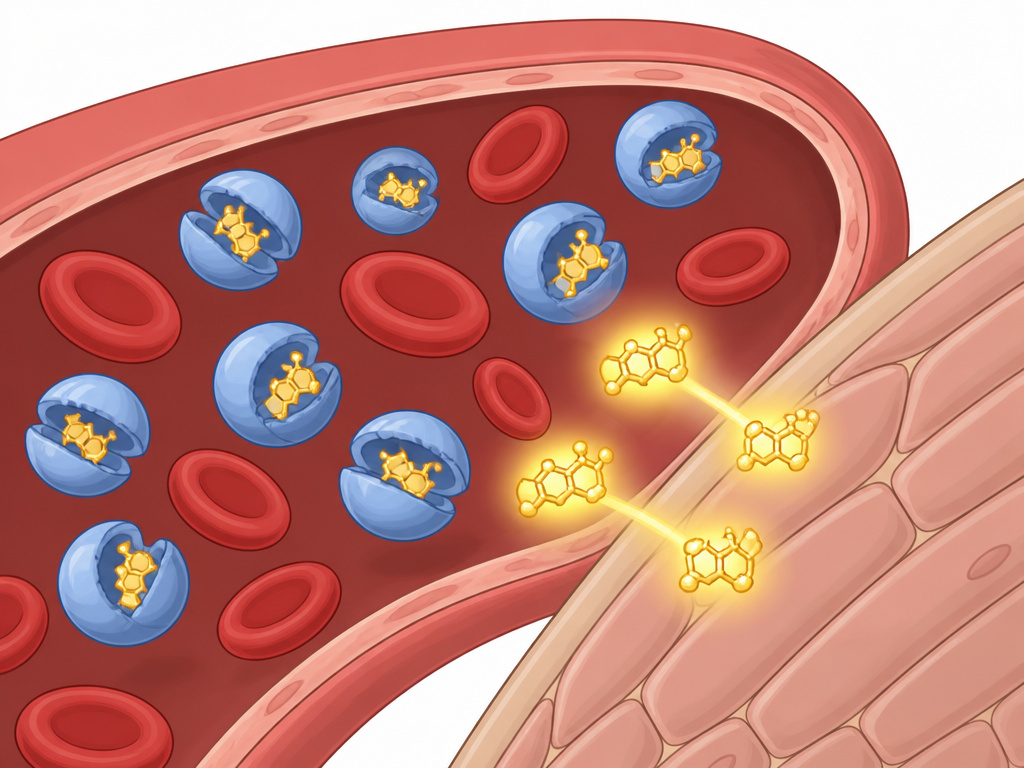
That 300 ng/dL cutoff is for total testosterone. But total T is just the hormone floating in your blood, both active and bound. A significant portion is tightly bound to a protein called Sex Hormone-Binding Globulin (SHBG), this portion is not available for your body to use. The hormone that actually affects your cells is free testosterone.
This is why the single cutoff can be misleading. A man can have a total testosterone of 350 ng/dL (technically “normal”) but have very high SHBG, locking up most of it. His free T could be in the gutter, and he’ll feel every bit as fatigued as someone with a total of 250 ng/dL. Conversely, a man with lower total T but also low SHBG might have adequate free T and feel fine.
This is why a proper baseline looks at the whole picture: total T, free T, and SHBG. It’s also why luteinizing hormone (LH) is a critical piece of the puzzle. LH is the signal from your brain telling your testes to make testosterone.
- Low T + High LH: Suggests primary hypogonadism, the testes aren’t responding properly to the signal.
- Low T + Low/Normal LH: Suggests secondary hypogonadism, the brain’s pituitary gland isn’t sending a strong enough signal.
This split decides the entire investigative path and what treatment options even make sense. LH and FSH are the part everyone forgets.
The Major Point of Contention: Does Treatment Actually Help Fatigue?
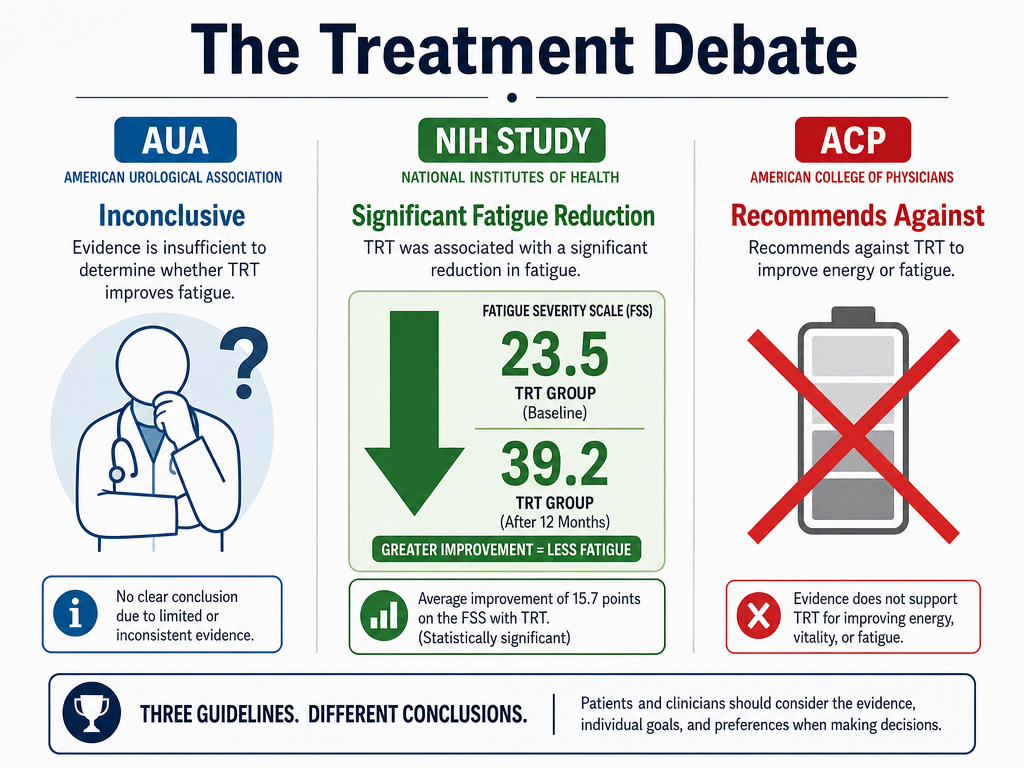
This is where the expert consensus fractures, and it’s vital you know it. The answer to “Will taking testosterone help my fatigue?” depends heavily on which medical authority you ask.
The AUA testosterone deficiency guideline states the evidence for testosterone therapy improving energy and fatigue is “inconclusive.” It cautiously says patients “may be counseled regarding the possibility of improvement.” This is a hesitant, maybe.
Contrast that with a 2022 NIH study on testosterone and fatigue. This study used the Fatigue Severity Scale (FSS) and found men on testosterone replacement therapy (TRT) for more than one year had significantly lower fatigue scores. The TRT group had an average FSS score of 23.5, compared to 39.2 in the newly diagnosed, untreated group. That’s a major difference in daily experience.
The American College of Physicians (ACP) has taken perhaps the strongest stance against using TRT for fatigue. In its 2020 guideline, it concluded TRT provides “little to no effect on… Energy and vitality” and only a “less-than-small improvement” in fatigue. Its recommendation? Clinicians should not initiate testosterone treatment for age-related low testosterone with the goal of improving energy or vitality.
| Guideline / Study | Conclusion on TRT for Fatigue | Recommendation |
|---|---|---|
| AUA (2018) | Evidence is “inconclusive.” Possible improvement. | Patients may be counseled on the possibility. |
| NIH Study (2022) | TRT >1 year associated with significantly lower fatigue scores (23.5 vs. 39.2 FSS). | Supports TRT for reducing fatigue in hypogonadal men. |
| ACP (2020) | “Little to no effect” on energy; “less-than-small improvement” in fatigue. | Recommends against initiating TRT for age-related low T to improve energy. |
Why the stark disagreement? Study design, patient selection, and how “fatigue” is measured. The ACP review looked broadly at age-related decline. The NIH study focused on men with clinically diagnosed hypogonadism. This is why an accurate diagnosis is step zero.
First, Rule Out These Common Fatigue Culprits
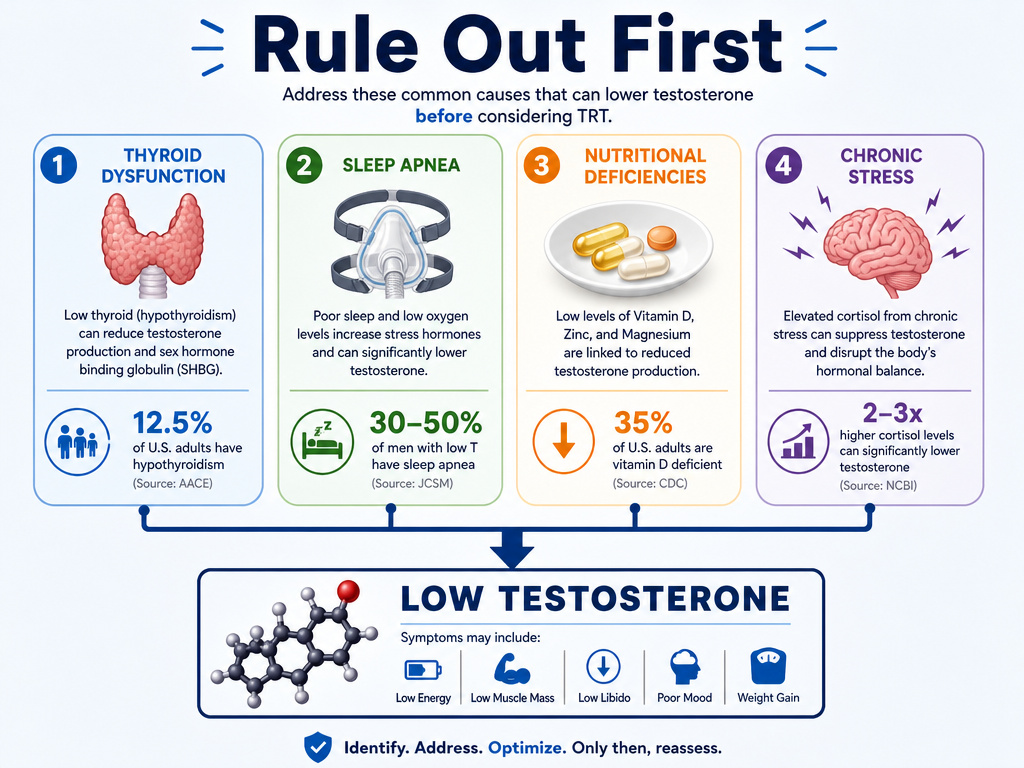
Jumping straight to testosterone as the cause of fatigue is the most expensive and often incorrect path. Several other conditions mimic low T fatigue perfectly and are far more common.
Hypothyroidism: An underactive thyroid is a classic cause of persistent fatigue, brain fog, low mood, and weight gain. Getting a TSH test is the cheapest, most underrated move a fatigued man can make. I spent money on a pile of T-support supplements before ever checking TSH. It was the dumbest order of operations I’ve ever followed. Understanding the similar symptoms between the two is crucial.
Sleep Apnea: This disrupts sleep architecture and plunges oxygen levels, leading to crushing daytime fatigue. It also directly suppresses testosterone production. You cannot accurately assess T levels if sleep apnea is untreated.
Nutritional Deficiencies: Low iron (even without full anemia), vitamin B12, vitamin D, and magnesium can all cause profound tiredness. A simple complete blood count (CBC) and metabolic panel can flag these.
Depression and Chronic Stress: These directly affect the hypothalamic-pituitary-gonadal axis, lowering testosterone, and have fatigue as a core symptom. It becomes a vicious cycle.
The process is elimination. A doctor should check these boxes before landing on testosterone as the primary culprit. The list of common causes for low T itself includes many of these intersecting issues.
What You Can Do Now: Energy Tips Before Any Treatment
While you navigate testing, you aren’t powerless. These evidence-backed steps can improve energy regardless of your ultimate diagnosis and align with first-line guideline recommendations.
Fix Your Sleep. This is essential. Testosterone is primarily produced during deep, restorative sleep. Disrupted or short sleep slashes your T production. Aim for 7-8 hours of quality, consistent sleep. The relationship between sleep and testosterone production is direct and powerful. Improve sleep hygiene: dark, cool room, no screens before bed, consistent wake time.
Lose Weight if Needed. High body fat, especially visceral fat, increases the conversion of testosterone into estrogen and promotes inflammation that further suppresses production. The AUA guideline explicitly states that weight loss “has the potential to increase total testosterone levels and/or reduce signs and symptoms.”
Manage Stress. Chronic high cortisol (the stress hormone) is a testosterone antagonist. It tells your body to prioritize survival over reproduction, dialing down T production. Meditation, walking, and hobbies that engage you can lower cortisol.
Review Your Supplements. While not a cure, ensuring adequacy in key nutrients supports overall energy metabolism. A magnesium supplement can improve sleep quality and cellular energy. Vitamin D deficiency is rampant and linked to fatigue. For some, these effective supplements for combating low energy provide a tangible boost while addressing root causes.
The difference between normal tiredness and chronic fatigue from low T
Normal tiredness resolves with rest. The fatigue linked to low testosterone is a persistent background drain that sleep does not fix. It is a heavy feeling of reduced energy and endurance that men consistently describe. This is not just needing an extra cup of coffee. Clinical guidelines list fatigue, reduced energy, and reduced endurance as patient-reported symptoms to note for a potential association with low testosterone. A diagnosis requires both these symptoms and low hormone levels measured on two separate mornings. If your fatigue feels unshakeable and is paired with other signs, it may point to an underlying hormonal cause rather than simple lifestyle fatigue.
Frequently Asked Questions
What does low testosterone fatigue feel like?
It feels like a heavy, persistent drain that a night’s sleep doesn’t fix. It’s often accompanied by “brain fog”, trouble concentrating and remembering things, and a distinct lack of motivation or drive to start or finish tasks. It’s a deep-seated tiredness that rest doesn’t resolve.
How to get energy with low testosterone?
Before any treatment, focus on foundational fixes: prioritize 7-8 hours of quality sleep nightly, engage in regular strength training and cardio, and reduce body fat if you’re overweight. These lifestyle changes are first-line recommendations in clinical guidelines and can raise testosterone levels naturally while improving energy.
Will taking testosterone help with fatigue?
Major medical guidelines disagree. The American Urological Association says evidence is “inconclusive” but allows for the possibility. A 2022 NIH study found testosterone replacement therapy significantly reduced fatigue scores after one year. The American College of Physicians, however, recommends against starting testosterone solely to improve energy from age-related decline. The answer depends on an accurate clinical diagnosis.
Does masturbation cause low testosterone?
No, this is a persistent myth. Scientific studies show that while testosterone levels can fluctuate slightly after ejaculation, they quickly return to baseline. Masturbation or sexual activity does not cause chronically low testosterone levels or contribute to long-term fatigue. The underlying causes of hypogonadism are related to health conditions, medications, or aging, not sexual habits.
Before You Go
The link between low testosterone and fatigue is real, but it’s a diagnosis of exclusion, not assumption. The clinical rule is strict: two morning tests below 300 ng/dL plus symptoms. Before you get there, rule out thyroid issues, sleep apnea, and basic deficiencies, they’re cheaper and more common fixes.
If you do land in the diagnostic category, know the treatment landscape is not unanimous. The guidelines debate its efficacy for fatigue, which means managing expectations is part of the process. The foundational work, sleep, weight, stress, exercise, isn’t just complementary. For many men, it’s the entire solution.
Start with a full panel of labs, not a guess. Look at total T, free T, SHBG, and LH. That picture, not a single number, tells the story. Your energy depends on getting that story right.
