
How Sleep Affects Testosterone: Key Takeaways Explained
This post contains affiliate links. As an Amazon Associate, we earn from qualifying purchases.
Sleep affects testosterone by directly regulating its production, primarily during deep sleep stages. Chronic sleep deprivation (less than 6-7 hours), severe obstructive sleep apnea, and total sleep loss over 24 hours are generally associated with lower testosterone levels, though the effect of short sleep in young men is debated. However, the relationship is nuanced, with factors like age, sleep timing, and underlying health conditions dramatically changing the impact.
That link between sleep and testosterone isn’t just about feeling tired. It’s a measurable, hormonal readout of your body’s recovery state, which is why understanding how sleep affects testosterone is so important.
What follows is a breakdown of the evidence, the thresholds that matter, and the practical levers you can pull. This section explains the immediate effect of a single night of poor sleep, the gradual impact of ongoing sleep loss, the role of conditions like apnea, and the scientific findings on supplements and shift work.
Key Takeaways
- Total sleep deprivation for 24 hours or more produces a significant drop, with an effect size of -0.67 Standardized Mean Difference (SMD).
- Severe obstructive sleep apnea (OSA) is strongly linked to low testosterone (SMD = -1.21), while mild cases show little effect, often pointing to obesity as a confounder.
- Losing sleep in the second half of the night (early waking) hurts morning testosterone more than a late bedtime, showing timing matters as much as duration.
- For shift workers, mean testosterone levels often stay stable, but the daily peak can shift by several hours to align with the new sleep schedule.
- Fix foundational sleep first before considering supplements; magnesium and ashwagandha may support sleep quality, but they address the symptom, not the root cause of deprivation.
The Acute vs. Chronic Sleep Loss Timeline
One night of bad sleep isn’t the same as six weeks of mild deprivation. The body’s response differs in speed and scale.
A single night of total sleep loss, or restricting sleep to just the first half of the night (like sleeping from 10:30 PM to 3:00 AM), can markedly decrease morning testosterone concentrations. The timing of the loss is critical. Research indicates that early awakening and wakefulness during the second half of the night reduces morning circulating testosterone more than losing sleep at the beginning of the night. Research indicates that early awakening and wakefulness during the second half of the night reduces morning circulating testosterone more than losing sleep at the beginning of the night.
Where this goes sideways: Assuming you can “catch up” on sleep over the weekend. A 2021 meta-analysis found the effect size for testosterone decrease grows from -0.67 SMD at 24 hours of total deprivation to -0.74 SMD at 40-48 hours. The deficit accumulates.
Chronic, mild restriction tells a different story. One Randomized Controlled Trial found that one week of restricting sleep to 5 hours per night lowered testosterone in young men by 10% to 15%, though a 2021 meta-analysis found short-term partial sleep deprivation had no significant effect on male serum testosterone. Another study on mild, long-term restriction (1.5 hours less sleep per night) showed a clear negative effect on testosterone at the 6-week endpoint.
The cross-sectional data adds another layer to the question of how sleep affects testosterone. A large US cohort study found serum testosterone decreased by 5.85 ng/dL for every hour of lost sleep, after adjusting for age and BMI. This kind of population study testosterone association helps map the dose-response relationship at a societal level.
| Sleep Scenario | Typical Impact on Testosterone | Key Research Insight |
|---|---|---|
| One Night Total Deprivation | Sharp next-morning decrease | Effect is potentiated by loss in the second half of the night. |
| 1 Week of 5-Hour Nights | 10-15% reduction | |
| Chronic Mild Restriction (6 weeks) | Significant cumulative decrease | Highlights the body’s inability to fully adapt to a small, consistent deficit. |
| Cross-Sectional Hourly Loss | -5.85 ng/dL per hour | Illustrates the linear relationship in large population data. |
The takeaway is that both acute and chronic loss matter, but the mechanisms differ. Acute loss disrupts the immediate production pulse. Chronic deprivation strains the entire hypothalamic-pituitary-testicular (HPT) axis, potentially altering the regulatory signals from the brain.
Does Sleep Deprivation Always Lower Testosterone? The Age Twist
Here’s where the simple story gets complicated. The blanket statement “poor sleep lowers testosterone” doesn’t hold for every demographic.
A 2024 cross-sectional study using NHANES data revealed a counterintuitive pattern. In young men (20-40 years), sleeping 6 hours or less was actually associated with higher testosterone levels. In middle-aged men (41-64 years), the opposite was true: sleeping 9 hours or more was associated with lower testosterone. For middle-aged women, the association was J-shaped, with both very short and very long sleep linked to lower levels.
This clashes with the interventional trials showing clear decreases in the context of how sleep affects testosterone. Why the discrepancy?
- Cross-sectional vs. Interventional: Population studies show associations, not causation. Younger men with high testosterone might simply need less sleep or have lifestyles that prioritize other activities.
- Adaptation vs. Disruption: A young body might temporarily buffer the hormonal impact of short sleep in a way an older body cannot.
- Underlying Health: In older cohorts, long sleep duration is often a marker of poor health, depression, or underlying illness, which themselves suppress testosterone.
The long-term data here is genuinely thin for these demographic splits. Anyone who tells you they have a definitive, one-size-fits-all sleep number is oversimplifying.
So, should a 25-year-old purposely skimp on sleep? Absolutely not. The negative impacts on cognition, immune function, and metabolic health are well-documented. The testosterone reading might be an outlier, not a license. This nuance is why understanding your own baseline through tracking is more valuable than chasing a generic optimal sleep duration for testosterone.
Sleep Disorders and Testosterone: The OSA & Obesity Knot
Obstructive Sleep Apnea presents a classic chicken-or-egg scenario for low testosterone. The link is strong, but untangling cause from effect is tricky.
A 2022 systematic review and meta-analysis confirmed that serum testosterone is significantly reduced in patients with severe OSA, with a large effect size (SMD = -1.21). The catch? This reduction was not observed in men with mild or moderate OSA. This threshold effect is a major clue.
The prevailing question is whether the low testosterone is caused by the sleep fragmentation and intermittent hypoxemia (low oxygen) of OSA, or if it’s primarily a consequence of the obesity that frequently accompanies severe OSA. Adipose tissue aromatizes testosterone into estrogen, and obesity independently disrupts the HPT axis.
Common mistake: Assuming treating low testosterone will fix sleep apnea. The reverse is often safer: treating the apnea can improve testosterone. A clinical review notes that erectile dysfunction, common in men with OSA, often improves when the sleep disorder is properly treated with CPAP therapy.
The research acknowledges this tangle. One review states the relationship “may be due to concomitant obesity,” while another stresses that men with OSA and more severe hypoxemia have lower levels. It’s likely a vicious cycle: obesity worsens OSA, OSA fragments sleep and stresses the body, and both processes synergistically suppress testosterone production.
If you snore loudly, gasp for air at night, and suffer from daytime fatigue, pursuing a sleep study is a higher priority than any supplement. Addressing severe obstructive sleep apnea could be the most impactful natural method for improving your hormonal health.
Circadian Rhythm and Shift Work: Does Timing Matter?

For the 15 million Americans working night shifts, the question isn’t just about duration, but timing. Does sleeping during the day disrupt testosterone?
The evidence here is surprisingly reassuring for overall levels. Studies of long-term shift workers show no significant effect of misaligned sleep on mean testosterone concentrations. Research on police officers on rotating shifts found the pattern and mean of testosterone did not differ between 2, 4, and 7 days of night work, nor after recovery days.
However, the rhythm changes. The body tries to align the testosterone peak with the new sleep schedule. One study found the peak shifted from around 8:30 AM in day workers to 12:30 PM in night workers—a 4-hour delay. When analyzed by the body’s internal circadian time rather than clock time, this delay shrank to about 1.5 hours and wasn’t statistically significant.
The part nobody mentions: The constant switching between day and night schedules (rotating shifts) is likely more disruptive than a stable night shift. Your hormone axis craves consistency.
This has a practical implication for testing. If you’re a night worker, your “morning” testosterone peak will occur in the late afternoon or early evening, relative to your wake-up time. Getting tested at a standard 8 AM clinic appointment would catch you at your hormonal trough, potentially leading to a misleadingly low reading. This circadian disruption needs to be factored into any clinical assessment.
The Supplement Question: Can Pills Fix Sleep for Testosterone?
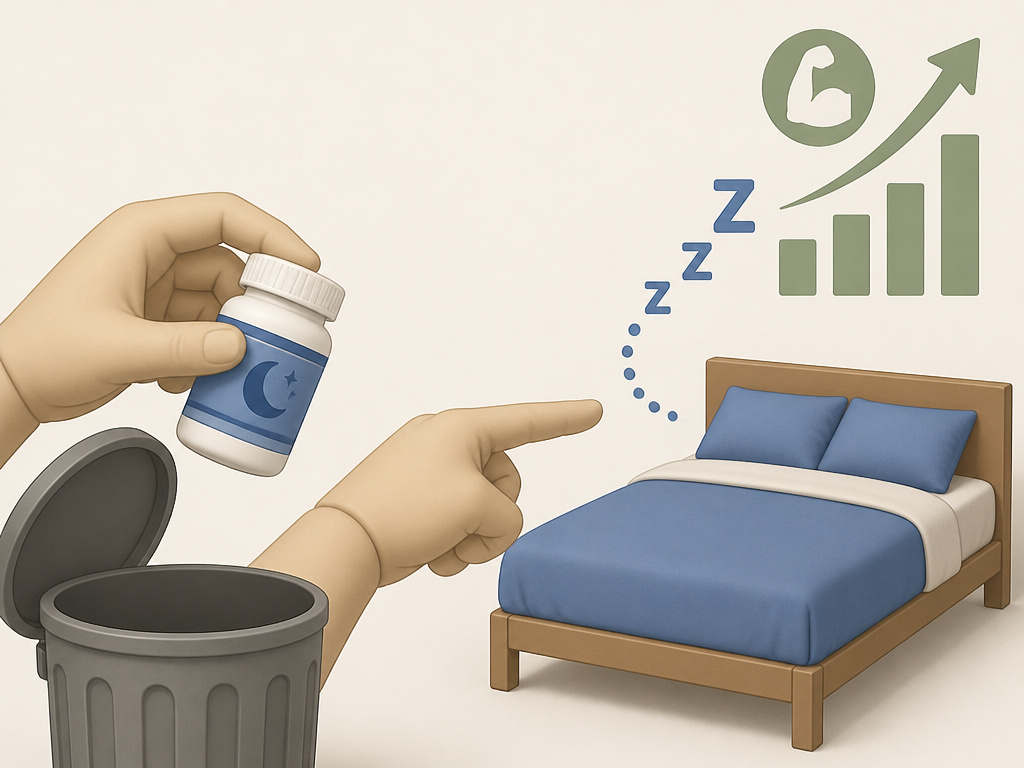
This is the part where my own experience shouts over the marketing. Using supplements as a band-aid for poor sleep hygiene is a losing strategy.
I took ashwagandha in the evening for about eight weeks while tracking sleep with a wearable. Sleep onset got a bit shorter—maybe 10 minutes—and I felt less wound up at night. I couldn’t honestly attribute any testosterone change to it because I wasn’t testing bloodwork concurrently. The research supports this: ashwagandha’s primary benefit is in modulating stress (cortisol), which can secondarily support sleep and hormonal balance. Take it for stress, and treat any downstream benefit as a bonus.
Similarly, I’ve found low-dose melatonin (0.5 to 1 mg) helpful for sleep onset, while the common 5-10 mg doses just lead to groggy mornings. There’s no strong evidence it directly boosts testosterone; its job is to signal sleep time.
The foundational supplements for sleep support are far less exotic:
- Magnesium Glycinate/Bisglycinate: Many are deficient. It supports muscle relaxation and GABA function. This is the first supplement I consider for anyone with restless sleep.
- Vitamin D: Low levels are correlated with poor sleep quality and low testosterone. Correcting a deficiency is a basic step, not an optimization.
Think of these not as testosterone boosters, but as sleep hygiene supports. They help create the conditions for quality sleep, which then allows natural testosterone production to proceed optimally. They cannot replace the core requirement of sufficient, consistent, dark, and cool sleep. Any worthwhile sleep optimization protocol starts with behavior, not bottles.
What are the symptoms of low testosterone?

When testosterone is low, the effects can be felt in several key areas. A common symptom is a reduced sex drive or low libido. Many men also report persistent fatigue and a lack of energy that isn’t resolved by rest. Mood changes, including irritability or feeling down, are another potential sign. For men with obstructive sleep apnea, erectile dysfunction is a frequent issue, and clinical improvement is often seen when the sleep disorder is properly treated. If you’re experiencing a combination of these symptoms alongside poor sleep, it’s worth considering how your rest patterns might be influencing your hormonal health.
Frequently Asked Questions
Does one night of bad sleep lower testosterone?
Yes, it can, especially if you lose sleep in the second half of the night. Experimental studies show one night of total sleep deprivation or restricted sleep (e.g., 4.5 hours) can markedly decrease morning testosterone levels. The effect is acute but significant.
What is the #1 sleep habit for healthy testosterone?
Consistency. Going to bed and waking up at roughly the same time every day, even on weekends, stabilizes your circadian rhythm. This regularity does more for your hormonal cycle than any single supplement or perfect sleep number.
Does sleeping a lot increase testosterone?
Not necessarily. While getting sufficient sleep (typically 7-9 hours for most adults) is crucial, excessively long sleep durations (≥9 hours) are often associated with lower testosterone in middle-aged men, usually because long sleep can be a marker of underlying poor health or depression.
Will 6 hours of sleep lower testosterone?
It depends on your age and what your body needs. For some young men, cross-sectional data shows an association with higher T. For many adult men, consistently getting insufficient sleep is a form of chronic sleep restriction that can lower testosterone over time, as shown in interventional studies.
The Bottom Line
The connection between sleep and testosterone is more than correlation; it’s a direct line from your brain to your testes. The research gives us clear danger zones: severe sleep apnea, chronic deprivation under 6 hours, and total sleep loss over 24 hours.
Start by tracking your sleep for two weeks—use your phone or a simple wearable. Note the duration and how you feel. If you average under 6.5 hours, focus on extending that time before you change anything else. If you suspect apnea, see a doctor.
For shift workers, the goal is rhythm stability. Protect your sleep window with blackout curtains and white noise, and understand that your “morning” peak has shifted.
Finally, let the evidence lead. The data shows that strategies to improve sleep for testosterone are foundational. Supplements like magnesium or ashwagandha can be supportive tools in that mission, but they are the second step, not the first. Fix the engine before you add the premium fuel.
