
Does Alcohol Lower Testosterone?
This post contains affiliate links. As an Amazon Associate, we earn from qualifying purchases.
Alcohol’s effect on testosterone is not a simple yes or no. It depends on three things: how much you drink, how often you drink, and a specific genetic trait that determines how you metabolize alcohol. Heavy drinkers with a common genetic trait have 4.37 times higher odds of testosterone deficiency. Moderate drinkers without the trait show little to no negative impact, and some studies even suggest a slight increase.
The genetic piece changes everything. Most of the scary headlines about alcohol and testosterone come from studies of chronic alcoholism or extreme binge drinking. A common question is, does alcohol lower testosterone? For the guy having a few beers on the weekend, the real risk is determined by whether his face turns red.
What follows is a breakdown of the actual numbers from recent research, the biological mechanism at play, and a clear guide on where your personal risk likely sits. You’ll see where studies disagree on the does alcohol lower testosterone question, what you can control, and how to think about alcohol if supporting your hormonal health is a priority.
Key Takeaways
- Your genetics are the biggest factor. Heavy drinkers who experience facial flushing have 4.37 times higher odds of testosterone deficiency.
- The threshold matters. Research defines heavy drinking as >8 drinks per week. Below that, risk plummets for most men.
- Conflicting data exists. Some large studies link moderate drinking to slightly higher testosterone, while others show a decrease from chronic use.
- The mechanism is indirect. Alcohol primarily stresses the liver and increases cortisol, which then disrupts the hormonal signal to produce testosterone.
- Change is measurable.
How Alcohol Disrupts Your Hormonal Assembly Line
Think of testosterone production like a factory with a central manager. The hypothalamus in your brain is the CEO. It sends a memo (GnRH) to the pituitary gland, the plant manager, which then issues work orders (LH and FSH) to the testes on the factory floor to produce the goods.
Alcohol doesn’t directly smash the factory. It corrupts the memos and stresses the shipping department.
First, it increases the stress hormone cortisol. Chronically high cortisol tells the hypothalamic CEO that there’s an emergency, so it dials back the memos for non-essential production like testosterone. Second, alcohol metabolism creates a toxic byproduct called acetaldehyde. Your liver has to prioritize cleaning this up, which can impair its ability to clear excess estrogen. When estrogen sticks around, it further signals the brain to slow testosterone output.
Acute high doses of alcohol (like 1.75 grams per kilogram of body weight) can cause a measurable drop in serum testosterone within 12 hours, with levels still depressed a full day later.
The liver’s role is critical here. A healthy liver regulates hormones. A stressed one, dealing with constant alcohol processing, can’t keep up. This is one reason why the impact of a single night of drinking differs from the effect of a steady, weekly habit. The system can rebound from an occasional shock. A constant drip of interference rewires the signaling, which is central to the does alcohol lower testosterone mechanism.
The Dose Makes The Poison: Heavy vs. Moderate Drinking
Where you land on the risk scale comes down to volume. The research provides a clear, numerical line.
A 2022 cross-sectional study defined heavy drinking as consuming more than eight standard drinks per week. In that study, heavy drinkers who also had the facial flushing trait had an average total testosterone level of 4.0 ng/mL, compared to 5.1 ng/mL in non-drinkers. That’s a tangible drop.
But look at the heavy drinkers who didn’t flush. Their average testosterone was not significantly different from non-drinkers. The dose alone wasn’t the sole culprit; it was the dose combined with a specific genetic inability to process alcohol efficiently.
| Drinking Group | Average Testosterone Level | % with Testosterone Deficiency (<3.5 ng/mL) |
|---|---|---|
| Non-drinkers | 5.1 ng/mL | 15.4% |
| Flushers, >8 drinks/week | 4.0 ng/mL | 36.0% |
| Flushers, ≤8 drinks/week | 5.2 ng/mL | 8.5% |
| Non-flushers, >8 drinks/week | Not significantly different | 18.0% |
The table shows the stark contrast. For flushers, crossing the eight-drink threshold flipped a switch. Their rate of testosterone deficiency more than quadrupled compared to when they drank lightly. For everyone else, heavy drinking didn’t move the needle in a statistically significant way in this study.
This is why blanket statements fail. A “heavy drinker” in one study might be having nine beers a week. In another, it might mean a pint of whiskey daily. The eight-drinks-per-week benchmark gives you a specific, research-backed line to consider.
The Genetic Wild Card: Facial Flushing and Risk
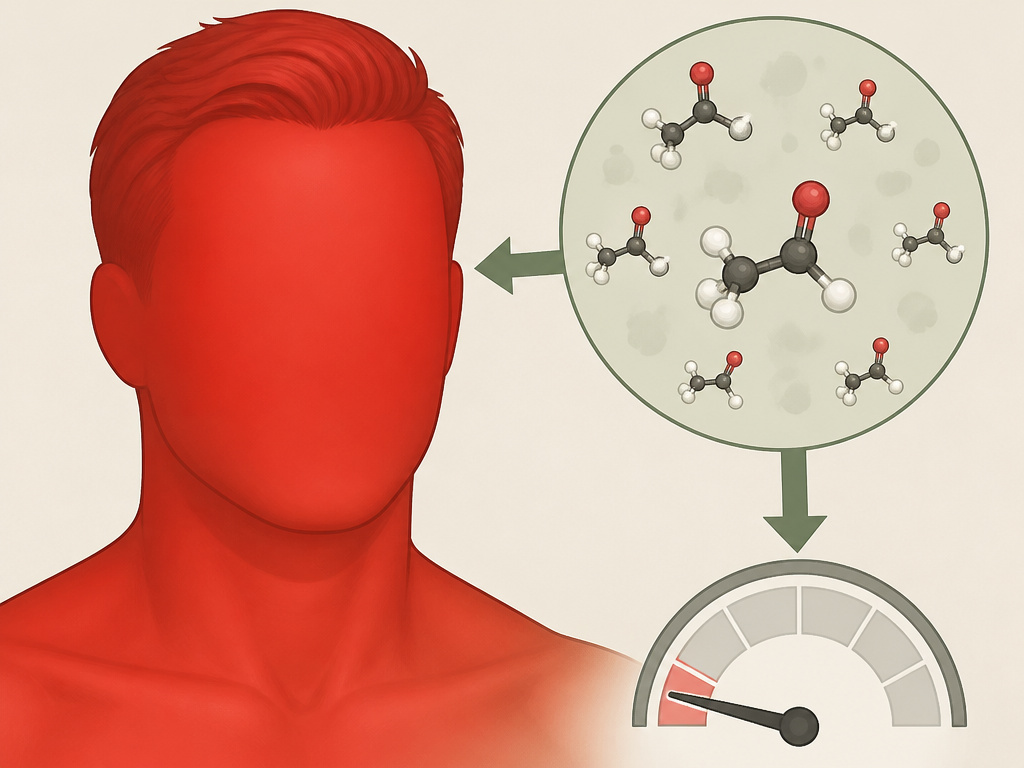
This is the most non-commodity insight in the data. Whether your face turns red after a drink isn’t just a social cue; it’s a billboard for your genetics.
The flush is caused by a deficiency in the enzyme aldehyde dehydrogenase 2 (ALDH2). This enzyme is responsible for breaking down toxic acetaldehyde. If you’re deficient, acetaldehyde builds up rapidly, causing the flush, a rapid heartbeat, and sometimes nausea. This common trait is especially prevalent in men of East Asian descent.
That toxic buildup isn’t just uncomfortable. The 2022 study found it’s biologically harmful at a hormonal level. Heavy drinkers with the flush had 4.37 times higher odds of testosterone deficiency compared to non-drinkers. The researchers concluded that for these men, the only safe advice is to limit intake to eight or fewer drinks per week—or not drink at all.
Where this goes sideways: Assuming all alcohol affects everyone the same. For a flusher, regular heavy drinking isn’t just a habit; it’s a direct chemical stressor that his body is poorly equipped to handle, with a clear hormonal tax.
If you flush, your body is giving you a real-time readout of metabolic stress. Ignoring that signal and pushing through the discomfort is where the documented risk to testosterone kicks in. Your system is already struggling to clear the toxin; adding a hormonal burden is the last thing it needs.
When Studies Disagree: The Moderate Drinking Debate
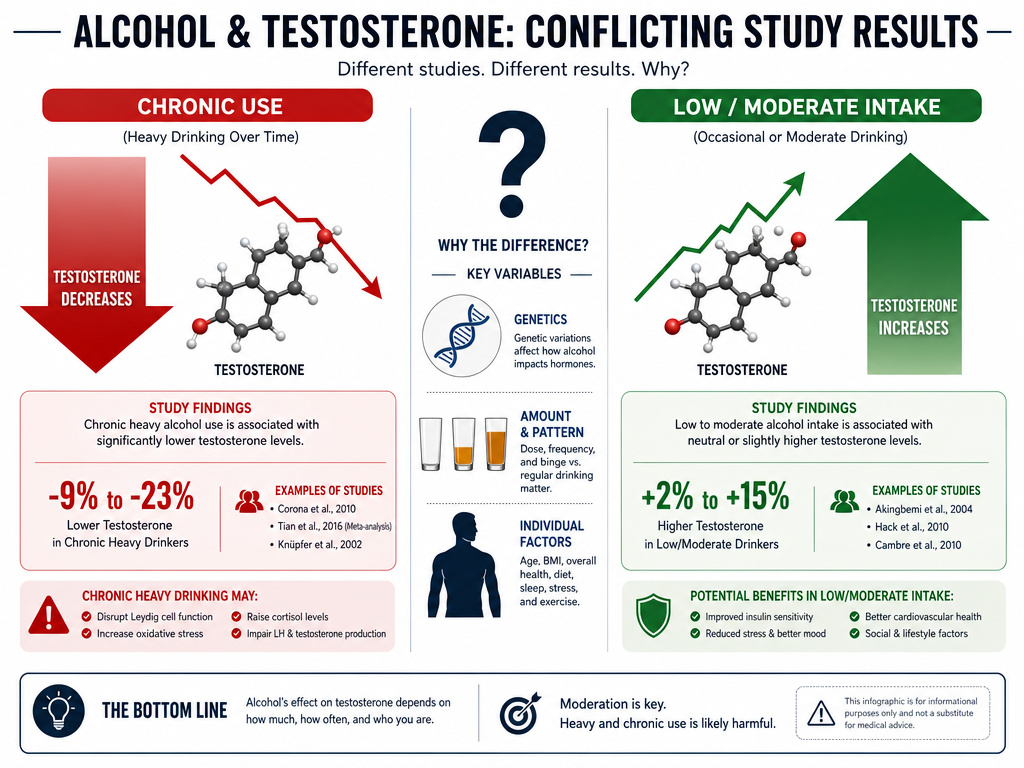
Here’s where it gets messy, and where an honest look at the science is crucial. Not all research points in the same direction.
A 2023 meta-analysis concluded that chronic alcohol consumption overall leads to a significant reduction in total testosterone, while a 2024 meta-analysis found no statistically significant overall effect. However, a more recent 2024 meta-analysis found no statistically significant overall effect. Its subgroup analysis even suggested a significant increase in testosterone with both low and moderate alcohol intake.
Furthermore, a large 2014 cross-sectional study of over 8,000 healthy men in Europe and the US found a linear association: higher alcohol consumption was linked to higher levels of both total and free testosterone.
Why the conflict?
- Study Populations Differ: The 2022 study highlighting the flush risk was on Korean men. The 2014 study showing a positive association was on European and American men. Genetic backgrounds and average drinking patterns vary.
- “Moderate” Isn’t Standardized: One study’s “moderate” is another’s “low.” Without a uniform definition, comparing outcomes is tricky.
- Health Status: Studies on otherwise healthy men might show different results than those that include men with underlying liver issues or alcohol use disorder.
The part nobody mentions: The studies showing benefits or no effect from moderate drinking are almost exclusively observational. They can show association, not prove causation. It’s possible that men who socially drink moderately are also more socially active, less chronically stressed, or have other lifestyle factors that support healthier testosterone levels.
The takeaway isn’t that science is broken. It’s that the real-world effect is nuanced and depends on a stack of variables. For a generally healthy, non-flushing man, moderate drinking likely has a minimal direct impact on testosterone, though studies disagree: some show a decrease, while others show an increase or no significant effect. The bigger risks to your T levels probably come from other areas, like chronic stress or excess body fat.
What This Means for Your Fitness and Health Goals
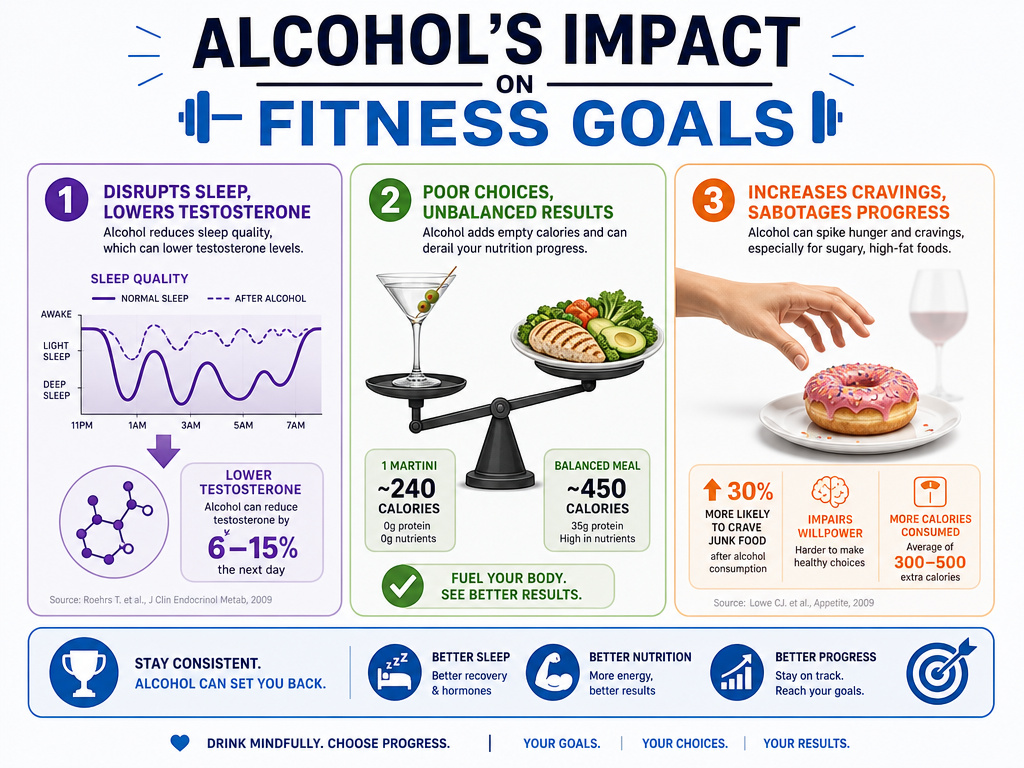
You’re probably reading this because you care about performance, body composition, and energy. Here’s the translation.
Testosterone supports muscle protein synthesis, recovery, and drive. Anything that significantly lowers it can blunt your progress. The data says if you’re a flusher and you drink heavily, you are very likely putting yourself at a disadvantage. Your recovery will be slower, and your gains harder to earn.
For the non-flushing individual focused on optimization, the question shifts from “Does it lower T?” to “Is it worth the trade-off?”
Even if the direct hormonal hit is small for you, alcohol still affects your goals in other ways:
- Sleep Disruption: It fragments sleep architecture, destroying deep sleep. Poor sleep is a known crusher of testosterone and growth hormone.
- Empty Calories: It provides energy with no nutritional benefit, making fat loss harder.
- Poor Decisions: It lowers inhibition, often leading to worse food choices (like high-sugar snacks) that further impact hormones.
I tracked my own waist measurement and sleep scores for months. Dropping alcohol for a stretch was the single clearest lever I pulled. My resting heart rate dipped, my sleep quality score on my tracker jumped, and my waist shrank—all of which create a better environment for hormones than any supplement. It was a cheap experiment with immediate feedback.
Practical Steps to Minimize Impact
You don’t have to choose between complete abstinence and neglect. If you drink, these strategies can help mitigate potential downsides.
- Know Your Limit. Use the eight-drinks-per-week research line as a personal checkpoint. If you’re consistently above it, you’re in the heavy drinking zone where risks increase.
- Listen to Your Face. If you flush, take it as a serious biological warning. Your risk profile is different. Strictly adhere to the low end of the limit or consider cutting it out.
- Prioritize Sleep. Never drink close to bedtime. Give your body at least 3-4 hours to metabolize the alcohol before you try to sleep to protect your sleep quality.
- Support Your Liver. On days you drink, stay extra hydrated and ensure your diet is rich in nutrients that support liver function. Think of it as preventive maintenance for your hormonal filter.
- Run a Self-Experiment. Pick a 4-6 week period and cut out alcohol completely. Track something simple: your morning energy, your sleep data, your gym performance, or your waist measurement. Personal data beats general advice every time.
Also, be aware that alcohol isn’t the only common substance that can interfere. Certain medications have a documented impact, and high sugar intake can create similar metabolic stress.
What are the symptoms of low testosterone?
Testosterone deficiency is clinically defined as a total testosterone level below a specific threshold. The symptoms can be broad and impact both physical and mental well-being. Common signs include persistent fatigue, reduced muscle mass, increased body fat, and a decline in libido or sexual function. Men may also experience mood changes, such as irritability or low motivation, and find it harder to concentrate. It’s crucial to recognize these potential signs, as they can significantly affect quality of life. If you suspect low testosterone, consulting a healthcare professional for proper evaluation is the recommended first step, as these symptoms can overlap with other health conditions.
How does alcohol affect sperm and semen quality?
While the fact sheet focuses on testosterone levels, alcohol’s impact on male reproductive health extends to sperm production and quality. Heavy drinking is a known risk factor for disrupting the hormonal signals needed for healthy sperm development. The process can be impaired at multiple levels, from the brain’s signaling to the function of the testes themselves. For men concerned about fertility, managing alcohol intake is a practical consideration. Reducing consumption or avoiding binge drinking can be a positive step, as the body’s ability to produce viable sperm is closely tied to overall hormonal balance and testicular health.
Does alcohol affect testosterone in women?
The provided research data specifically concerns male testosterone levels. In women, testosterone is also produced, though in much smaller amounts, and plays a role in libido, bone density, and muscle strength. The general principle that alcohol can disrupt endocrine function applies to both sexes. Excessive consumption may interfere with the hormonal pathways in women, potentially affecting the balance of testosterone and other key hormones like estrogen. For women looking to support their hormonal health, being mindful of alcohol intake is a common-sense approach, as the body’s hormonal systems are interconnected and sensitive to external stressors like alcohol.
Frequently Asked Questions
How much does alcohol lower your testosterone?
There is no single number. For heavy drinkers with the facial flushing genetic trait, one study found average levels dropped from 5.1 ng/mL to 4.0 ng/mL, and their odds of deficiency were 4.37 times higher. For non-flushers drinking moderately, many studies show little to no decrease, and some even show a slight increase.
Will testosterone increase after quitting drinking?
Yes, especially if you were a heavy drinker. The recovery timeline depends on the duration and severity of use. Removing the stress on your liver and cortisol system allows your hormonal axis to normalize. Improvements in sleep from quitting can also support testosterone levels.
Does beer lower testosterone more than other alcohol?
The primary agent is ethanol, so the alcohol type (beer, wine, spirit) is less important than the total alcohol content and your consumption pattern. However, beer often contains phytoestrogens from hops, which could theoretically add another layer of hormonal interference, though the clinical significance in moderate consumption is debated.
Can you drink on testosterone replacement therapy (TRT)?
It’s generally not recommended. TRT is often prescribed in part because of underlying issues like fatty liver disease, which alcohol exacerbates. Drinking can also increase the metabolism of testosterone, making your protocol less effective and stable. Always follow your prescribing clinician’s advice.
Before You Go
The science clears the fog: if you’re a flusher, the evidence is strong enough to treat heavy drinking as a direct threat to your hormonal health. For everyone else, the direct testosterone impact of moderate drinking appears minimal, but the indirect costs to sleep and recovery are real.
The most powerful step you can take is the self-experiment. Your body’s response is the only data point that truly matters. Measure something—anything—before and after a dry month. That answer will be more valuable than any population study.
And remember, the goal of understanding this is empowerment, not anxiety. Hormonal health is a system. Alcohol is one input. Managing it consciously, just like you manage stress or diet, is how you take control of the output. The good news is that, unlike some causes of low T, this one is almost entirely within your power to reverse.
